- Product Description Description
- Table of Contents TOC
- List of Table & Figure LOT
- Get Free Sample PDF Sample PDF
Market Size, 2025
$110 MnMarket Estimate, 2026
$114.53 MnMarket Forecast, 2034
$158 MnCAGR, 2026–2034
4.12%North America ECMO Market Size, Growth, Trends & Forecast (2026–2034)
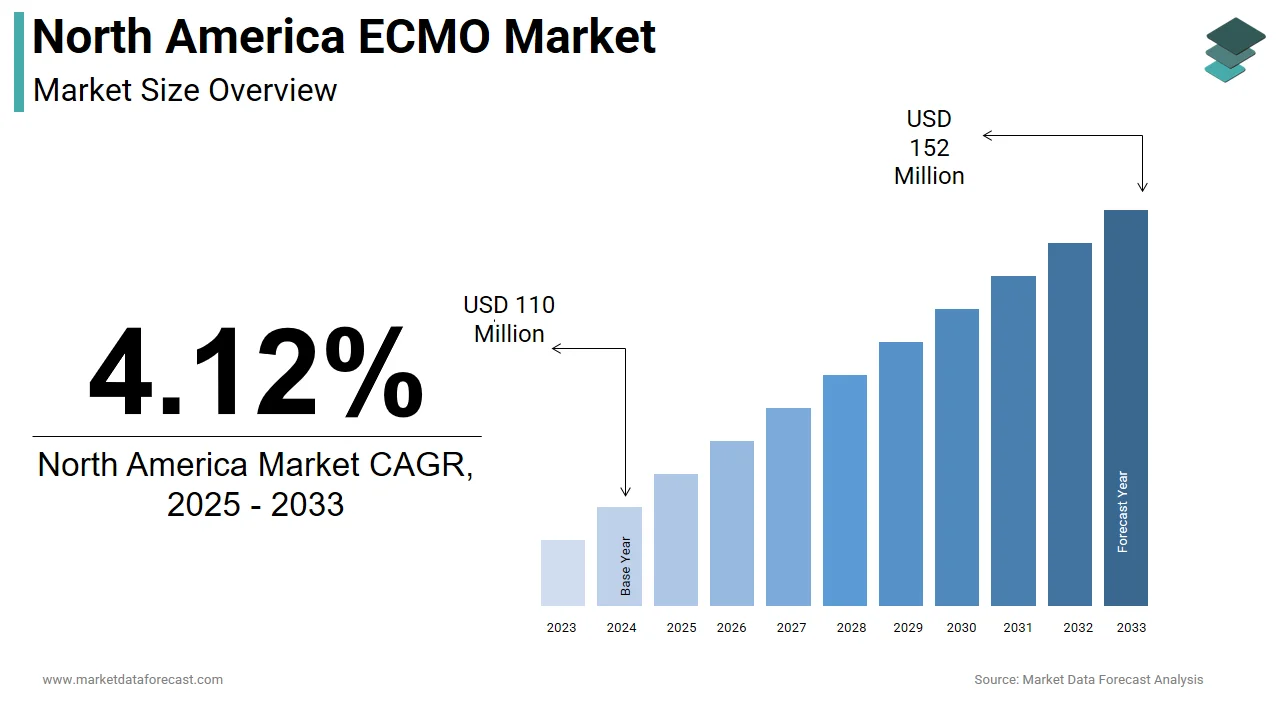
The size of the North America extracorporeal membrane oxygenation (ECMO) machine market was valued at USD 110 million in 2025, is anticipated to reach USD 114.53 million in 2026, and is expected to expand up to USD 158 million by 2034, registering a compound annual growth rate (CAGR) of 4.12% during the forecast period from 2026 to 2034. Driven by robust healthcare infrastructure, rising prevalence of severe cardiopulmonary conditions, technological advancements in miniaturization, and expanding critical care protocols, the market demonstrates steady regional momentum.
Key Executive Metrics (At-a-Glance)
- 2025 Base Valuation: USD 110.00 Million
- 2026 Current Valuation: USD 114.53 Million
- 2034 Forecast Valuation: USD 158.00 Million
- Compound Annual Growth Rate (CAGR): 4.12% (2026–2034)
- Dominant Country Market: United States (accounting for an 88.1% market share in 2025, driven by advanced infrastructure and high healthcare expenditure)
- Second Dominant Country Market: Canada (holding a 10.3% share supported by a centralized single-payer healthcare system and regional centers of excellence)
Core Market Drivers
- Rising Cardiopulmonary Disease Burden: Escalating incidences of acute respiratory distress syndrome (ARDS), chronic obstructive pulmonary disease (COPD), ischemic heart disease, and cardiogenic shock requiring mechanical circulatory support.
- Device Miniaturization & Portability: Continuous innovations in bearingless centrifugal pumps, real-time integrated monitoring consoles, and portable units that facilitate safe patient interhospital and intra-hospital transport.
Primary Market Restraints & Challenges
- High Procedural & Operational Costs: Substantial expenses tied to disposable circuits, intensive care unit resources, and complex reimbursement frameworks or strict private insurance criteria.
- Staffing Shortages & Regulatory Hurdles: Critical scarcity of qualified clinical perfusionists and specialized multidisciplinary teams, compounded by rigorous Class III medical device regulatory approval pathways.
North America ECMO Market Segmentation Breakdown
| Category Dimension | Largest Segment / Leader | Fastest-Growing Segment |
|---|---|---|
| By Modality | Veno-Venous (VV) ECMO (55.6% Share in 2025) | Veno-Arterial (VA) ECMO (CAGR of 8.2% from 2026–2034) |
| By Application | Respiratory Application (60.3% Share in 2025) | Extracorporeal Cardiopulmonary Resuscitation - ECPR (CAGR of 9.5%) |
| By Country | United States (88.1% Share in 2025) | United States (Fastest expansion via specialized centers & ECPR adoption) |
Major Industry Players Profiled
Key multinational corporations leading the North American extracorporeal membrane oxygenation market include Getinge Group, Medtronic plc, LivaNova PLC, XENIOS AG, Terumo Corporation, MicroPort Scientific Corporation, NIPRO Corporation, OriGen Biomedical Inc., ALung Technologies Inc., and EUROSETS S.r.l..
North America ECMO Market Size
The size of the North America extracorporeal membrane oxygenation machine market was worth USD 110 million in 2025. The North America market is anticipated to grow at a CAGR of 4.12% from 2026 to 2034 and be worth USD 158 million by 2034, up from USD 114.53 million in 2026.
ECMO stands for Extracorporeal Membrane Oxygenation. It is an advanced life support machine that temporarily takes over the work of the heart and lungs when those organs are too sick or weak to function on their own. This technology pumps blood out of the body through an artificial lung to add oxygen and remove carbon dioxide before returning it to the bloodstream. The region stands as a global leader in the adoption and innovation of ECMO technology driven by robust healthcare infrastructure and high prevalence of severe cardiopulmonary conditions. According to the Centers for Disease Control and Prevention, cardiovascular disease accounts for more than 900,000 deaths in the United States annually, driving substantial market requirements for mechanical circulatory support systems. As per the American Heart Association, approximately 800,000 people in the United States suffer a stroke each year, accentuating the clinical demand for advanced extracorporeal support and life-saving interventions. In addition, according to the Administration for Community Living, the population of individuals aged 65 and older in the United States is expected to grow to 22% by 2040, expanding the patient pool susceptible to advanced respiratory and cardiac conditions. Regulatory frameworks established by the Food and Drug Administration ensure stringent safety standards for device manufacturing while reimbursement policies from Medicare and private insurers facilitate patient access. These clinical and demographic factors establish a complex yet vital ecosystem for the continued expansion of extracorporeal life support technologies across the continent.
MARKET DRIVERS
Rising Prevalence of Severe Cardiopulmonary Diseases
The escalating incidence of acute respiratory distress syndrome and refractory heart failure drives the growth of the North America ECMO market. According to the National Institutes of Health, acute lung injury and acute respiratory distress syndrome affect approximately 190,000 patients each year in the United States, driving a severe clinical demand for specialized mechanical ventilation trial strategies. ECMO provides a crucial bridge to recovery or transplantation for these critically ill patients when standard therapies fail. As per the American Lung Association, more than 16 million people in the United States are diagnosed with chronic obstructive pulmonary disease, expanding healthcare initiatives to mitigate severe lung function decline. Additionally, the rising burden of ischemic heart disease contributes to increased demand for ventricular assist devices and ECMO as interim solutions during surgical interventions. According to the Extracorporeal Life Support Organization, utilization of temporary mechanical circulatory support for profound cardiogenic shock exhibits expanding clinical growth within specialized critical care units. Clinical guidelines from the Extracorporeal Life Support Organization recommend early initiation of ECMO in severe cases to prevent multi-organ failure. This medical consensus drives hospital procurement decisions and justifies the high capital investment required for establishing ECMO programs. The integration of ECMO into standard protocols for severe pneumonia and sepsis further expands its application scope beyond traditional cardiac surgery settings.
Technological Advancements and Miniaturization of Devices
Continuous innovation in circuit design and pump technology greatly enhances the safety and usability of these systems and thereby fuels the expansion of the North America ECMO market. As per studies, modern integrations of bearingless centrifugal pump designs mitigate systemic hemolysis and thrombogenic complications by removing stagnant fluid zones within the circuit. Modern ECMO consoles feature integrated monitoring systems that provide real-time data on blood flow, oxygen saturation, and pressure levels, allowing clinicians to make precise adjustments. According to the U.S. Food and Drug Administration, premarket review pathways dictate stringent assessment protocols for advanced extracorporeal components to minimize prime fluid demand and related physiological volume stresses. Manufacturers such as Medtronic and Getinge have introduced portable ECMO units that facilitate patient transport within hospitals and between facilities, enhancing clinical flexibility. As per clinical curricula outlined by the American Society of ExtraCorporeal Technology, standard simulation modules are actively utilized for training and validating the core technical proficiencies of student and clinical perfusionists. Furthermore, the development of biocompatible coatings on oxygenator membranes extends the duration of safe usage from days to weeks. These technological improvements lower the barrier to entry for community hospitals and increase confidence among healthcare providers. The shift toward less invasive cannulation techniques also reduces procedural complications, making ECMO a more viable option for a broader patient demographic, including neonates and elderly individuals.
MARKET RESTRAINTS
High Procedural Costs and Limited Reimbursement Coverage
The substantial financial burden associated with ECMO therapy hampers the expansion of the North American ECMO market. This trend is particularly visible in community healthcare settings. According to the Healthcare Cost and Utilization Project, the mean total healthcare cost for a single hospitalization involving continuous extracorporeal membrane oxygenation in the United States stands at $967,647. This high expenditure stems from the expensive disposable circuits, specialized staffing requirements, and intensive care unit resources needed for continuous monitoring. Many private insurance providers impose strict criteria for coverage, often limiting reimbursement to specific indications such as bridge-to-transplant or severe ARDS. As per KFF, intensive care constraints and localized resource shortfalls during critical infection surges directly impact the availability and operational costs of specialized extracorporeal life support infrastructure. Smaller rural hospitals lack the financial reserves to absorb uncompensated care costs, leading to disparities in access to life-saving technology. Additionally, the lack of standardized billing codes for various ECMO configurations complicates revenue cycle management for healthcare institutions. According to the National Center for Biotechnology Information, macroeconomic assessments of intensive care unit resource utilization emphasize that structural hospital reimbursement dynamics fluctuate based on specific clinical documentation frameworks and variable diagnosis codes. These financial uncertainties force hospital administrators to carefully evaluate the return on investment for ECMO equipment. Consequently, many potential users defer adoption until clearer reimbursement pathways are established, limiting the overall penetration of the technology in underserved areas.
Shortage of Trained Perfusionists and Clinical Staff
The critical scarcity of qualified perfusionists and multidisciplinary teams capable of managing ECMO therapy is a major operational constraint in the North American ECMO market. As per the American Board of Cardiovascular Perfusion, approximately 4,000 active clinical perfusionists manage the delivery of extracorporeal support services across critical care ecosystems. This ratio is insufficient to support the growing number of ECMO programs, particularly during peak seasons or public health emergencies. According to the Extracorporeal Life Support Organization, international patient registries track clinical deployment configurations to provide descriptive data on survival outcomes for patients requiring prolonged pulmonary support. However, academic programs for perfusion science are limited, with only a handful of accredited institutions producing new graduates annually. As per the Bureau of Labor Statistics, employment of respiratory therapists is projected to grow 12 percent over the decade, driving expanded staffing demands within inpatient critical care settings. High burnout rates among critical care staff further exacerbate the shortage, as ECMO demands 24-hour vigilance and rapid response capabilities. Hospitals often struggle to recruit and retain staff willing to work in high-stress environments with on-call responsibilities. This workforce gap limits the number of patients who can be safely managed on ECMO and restricts the expansion of services to new facilities. Without adequate human capital, the availability of advanced hardware remains underutilized.
MARKET OPPORTUNITIES
Expansion into Portable and Transportable ECMO Systems
The development of compact and battery-operated ECMO devices sets the stage for market participants to extend care beyond traditional intensive care units, which is likely to accelerate the growth of the North America ECMO market. As per the Journal of Cardiothoracic and Vascular Anesthesia, portable ECMO systems enable interhospital transfer of critically ill patients, reducing the risks associated with conventional ambulance transport. This capability allows regional centers of excellence to accept referrals from remote locations, thereby expanding their patient base and revenue streams. As per the National Highway Traffic Safety Administration, the coordination of specialized medical transport services continues to rise under designated educational guidelines to ensure the structured delivery of advanced life support care. Manufacturers are investing in ruggedized designs that withstand vibration and temperature fluctuations during air and ground transit. Additionally, portable units facilitate intra-hospital mobility, allowing patients to undergo diagnostic imaging or physical therapy while on support, which improves clinical outcomes. The Society of Critical Care Medicine highlights that early mobilization of ECMO patients reduces muscle wasting and shortens hospital stays. Insurance payers are increasingly recognizing the cost-effectiveness of transferring stable patients to lower acuity settings using portable devices. This trend encourages hospitals to invest in versatile systems that serve both stationary and mobile applications. Furthermore, the integration of telemedicine capabilities with portable ECMO allows remote specialists to monitor patients in real time, enhancing safety during transport. These innovations open new revenue channels and improve the overall value proposition of ECMO therapy.
Integration of Artificial Intelligence and Remote Monitoring
The incorporation of artificial intelligence algorithms and cloud-based monitoring platforms offers significant opportunities for the North America ECMO market. This helps to enhance clinical decision-making and operational efficiency in ECMO care. As per the National Library of Medicine, AI-driven predictive analytics can identify early signs of circuit clotting or hemodynamic instability, allowing preemptive interventions that prevent adverse events. Several technology firms are developing smart sensors that continuously analyze blood parameters and transmit data to centralized dashboards accessible by multidisciplinary teams. According to the American Medical Informatics Association, health informatics applications are expanding across critical care environments to streamline communication workflows and facilitate remote specialist interventions. The connectivity supports the establishment of virtual ECMO networks where experienced centers guide smaller hospitals in managing complex cases. Such collaborations democratize access to expertise and improve standardization of care protocols. Additionally, machine learning models can optimize anticoagulation dosing based on individual patient physiology, reducing the risk of bleeding or thrombosis. The Food and Drug Administration has begun approving software as a medical device for critical care applications, paving the way for wider adoption. Hospitals leveraging these digital tools report improved patient survival rates and reduced length of stay. The ability to aggregate large datasets from multiple centers also facilitates research and quality improvement initiatives. This digital transformation positions ECMO providers at the forefront of precision medicine and value-based care.
MARKET CHALLENGES
Regulatory Hurdles and Complex Approval Processes
Navigating the rigorous regulatory landscape for medical device approval is a persistent obstacle for manufacturers introducing novel ECMO technologies in the region, which slows down the growth of the North America ECMO market. As per the Food and Drug Administration, the premarket approval process for Class III medical devices such as ECMO circuits and pumps requires extensive clinical trials and documentation that can take several years to complete. Changes in material composition or software algorithms often trigger additional review cycles, delaying market entry and increasing development costs. As per the Medical Device Innovation Consortium, collaborative frameworks and early feasibility studies reduce regulatory uncertainty to safely accelerate clinical trial timelines for medical device technologies. Furthermore, differences in regulatory requirements between the United States and Canada necessitate separate submission processes, which strain resources for global companies. According to Health Canada, the complete transition from the legacy Canadian Medical Devices Conformity Assessment System to the Medical Device Single Audit Program standardizes international quality management regulations. Manufacturers must also adhere to post-market surveillance requirements, which involve tracking adverse events and submitting periodic safety updates. Failure to comply can result in recalls or fines, damaging brand reputation and market share. The complexity of these regulations slows the pace of innovation and limits the availability of cutting-edge solutions for clinicians. Companies must maintain dedicated regulatory affairs teams to navigate these challenges effectively.
Risk of Complications and Liability Concerns
The inherent risks associated with chemotherapy, including bleeding, infection, and limb ischemia, generate significant liability concerns for healthcare providers and manufacturers in the North America ECMO market. As per the Extracorporeal Life Support Organization Registry, major complications occur in approximately 30 to 40 percent of adult ECMO cases, necessitating careful patient selection and monitoring. Hemorrhagic events are particularly common due to the systemic anticoagulation required to prevent circuit clotting, leading to legal disputes over standard of care. Malpractice insurance premiums for hospitals offering ECMO services are substantially higher than for other critical care units, reflecting the elevated risk profile. According to the American Hospital Association, medical center risk management protocols continue to evolve to reduce critical care adverse events and bolster internal clinical quality audits. Manufacturers face product liability claims if device failures contribute to patient harm, requiring robust quality control and indemnification clauses. These legal pressures influence hospital purchasing decisions as institutions prefer vendors with proven safety records and comprehensive support services. Additionally, the ethical dilemmas surrounding withdrawal of ECMO support in futile cases create emotional and legal complexities for clinical teams. Clear communication and documented consent processes are essential but do not eliminate the risk of litigation. This environment of high-stakes medicine requires constant vigilance and defensive practice patterns that can impact clinical autonomy and innovation adoption.
REPORT COVERAGE
| REPORT METRIC | DETAILS |
| Market Size Available | 2025 to 2034 |
| Base Year | 2025 |
| Forecast Period | 2026 to 2034 |
| Segments Covered | By Modality, Application, and Region. |
| Various Analyses Covered | Global, Regional and Country-Level Analysis, Segment-Level Analysis, Drivers, Restraints, Opportunities, Challenges; PESTLE Analysis; Porter’s Five Forces Analysis, Competitive Landscape, Analyst Overview of Investment Opportunities |
| Countries Covered | United States, Canada, Mexico, Rest of North America |
| Market Leaders Profiled | Getinge Group, Medtronic plc, LivaNova PLC, XENIOS AG, Terumo Corporation, MicroPort Scientific Corporation, NIPRO Corporation, OriGen Biomedical Inc., ALung Technologies Inc., and EUROSETS S.r.l.
|
SEGMENTAL ANALYSIS
By Modality Insights
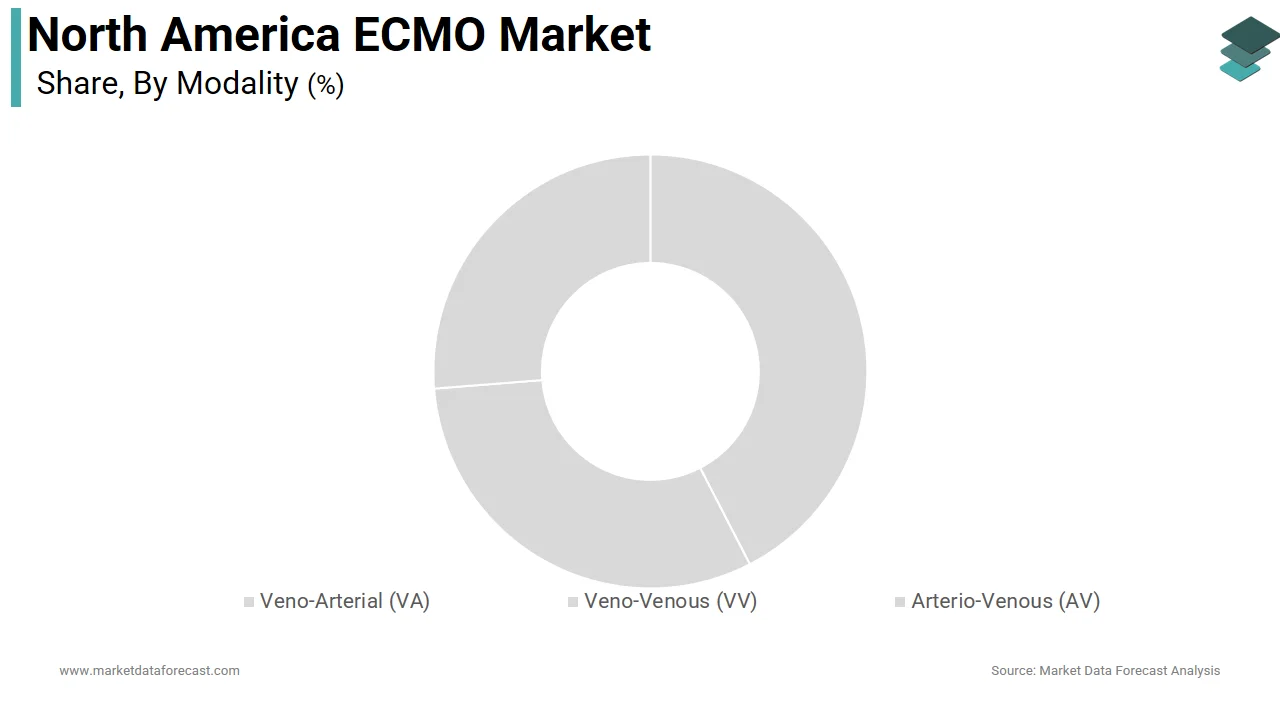
The Veno-Venous (VV) ECMO dominated the North America ECMO market and accounted for a 55.6% share in 2025. This dominance of the segment was driven by its primary application in severe respiratory failure, where cardiac function remains preserved. In addition, this modality is preferred because it provides adequate gas exchange without the complexity and risks associated with arterial cannulation.
The leading position of this segment is bolstered by the high incidence of acute respiratory distress syndrome and severe pneumonia, which are the most common indications for extracorporeal life support in adults. The Centers for Disease Control and Prevention reports that lower respiratory infections remain a leading cause of hospitalization, particularly among elderly populations and those with comorbidities. Veno-venous ECMO serves as a critical rescue therapy when conventional ventilation strategies reach their limits, allowing the lungs to rest and heal. As per the Extracorporeal Life Support Organization Registry, adult respiratory support configurations represent a substantial majority of all logged clinical runs within the international active database. The COVID-19 pandemic further accelerated the adoption of this modality as hospitals faced surges of patients with refractory hypoxemia. Clinical trials such as the EOLIA trial have validated the efficacy of early veno-venous ECMO initiation, improving survival rates in severe cases. This established clinical protocol ensures consistent demand for VV circuits and oxygenators across major medical centers.
Veno-venous ECMO is favored over other modalities due to its relatively simpler cannulation process and lower risk of major complications such as stroke or limb ischemia. According to the Society of Thoracic Surgeons, veno-venous cannulation protocols utilizing percutaneous femoral and jugular access paths optimize venous drainage without requiring direct arterial wall intersection. As per the American Heart Association, advanced arterial cannulation configurations carry distinct risks of localized vascular disruption and distal ischemic events during mechanical support deployment. Consequently, clinicians prefer VV ECMO for patients with isolated respiratory failure to minimize iatrogenic harm. The Extracorporeal Life Support Organization data reveals that mortality rates associated with VV ECMO are generally lower than VA ECMO when adjusted for patient severity, reflecting the safer profile of the procedure. Additionally, VV-ECMO does not require systemic anticoagulation to the same extent as VA-ECMO, reducing the risk of hemorrhagic complications. This safety advantage makes it suitable for a broader range of patients, including those with contraindications to aggressive anticoagulation. The ease of management and favorable outcome profile reinforce its position as the leading modality in the North American market.
The Veno-Arterial (VA) ECMO segment is expected to exhibit a noteworthy CAGR of 8.2% from 2026 to 2034 due to increasing use in cardiogenic shock and cardiac arrest scenarios.
The rapid growth of Veno-Arterial ECMO is fueled by the escalating burden of cardiogenic shock and end-stage heart failure, which require immediate mechanical circulatory support. According to the American Heart Association, the expanding prevalence of chronic heart failure across the United States population drives continuous demand for advanced mechanical circulatory infrastructure. Veno-arterial ECMO provides both respiratory and hemodynamic support, making it the only ECMO modality capable of sustaining patients with severe cardiac dysfunction. VA ECMO serves as a bridge to decision recovery or transplantation, offering a lifeline for patients who would otherwise face fatal outcomes. The aging population contributes to this trend as older adults are more susceptible to acute decompensated heart failure following myocardial infarction. Clinical registries indicate that survival rates for cardiogenic shock patients supported by VA ECMO have improved due to better patient selection and management protocols. This expanding clinical indication drives hospital investment in VA-capable systems and trained personnel.
The integration of veno-arterial ECMO with high-risk percutaneous coronary interventions and structural heart procedures is accelerating its adoption in specialized cardiac centers. As per the Journal of the American College of Cardiology, protected PCI procedures using mechanical support have grown significantly as operators tackle complex lesions in patients with poor left ventricular function. VA ECMO provides stable hemodynamics during these intricate procedures, allowing cardiologists to perform lengthy interventions without compromising patient safety. As per the American College of Cardiology, advanced tertiary medical centers are increasing their capital investments in multidisciplinary hybrid cardiac catheterization suites to handle complex circulatory emergencies. This synergy between interventional cardiology and critical care expands the utility of VA ECMO beyond traditional emergency settings. Additionally, the rise of transcatheter aortic valve replacement in high-risk patients creates new opportunities for prophylactic ECMO support. Manufacturers are developing compact consoles specifically designed for catheterization labs, facilitating seamless integration into procedural workflows. These technological and clinical advancements position VA ECMO as a vital tool in modern interventional cardiology, driving its rapid growth trajectory.
By Application Insights
The respiratory application segment led the North America ECMO market and captured a 60.3% share in 2025. This leading position of the segment was attributed to the high volume of patients with severe lung injury and failure.
The prominence of this segment is further reinforced by the high prevalence of severe lung injuries, including acute respiratory distress syndrome, pneumonia, and viral pneumonitis. As per the Centers for Disease Control and Prevention, influenza and other respiratory viruses cause hundreds of thousands of hospitalizations annually in the United States, with a subset progressing to severe respiratory failure. The National Institutes of Health states that ARDS has a mortality rate of up to 40 percent, necessitating advanced support like ECMO when mechanical ventilation fails. The recent global health crises highlighted the critical role of ECMO in managing refractory hypoxemia, leading to permanent expansion of respiratory ECMO programs. Hospitals have established dedicated respiratory ECMO teams to manage these cases efficiently, ensuring timely initiation and weaning. The availability of robust clinical data supporting ECMO use in severe pneumonia reinforces its status as a standard of care. This consistent clinical demand ensures that respiratory applications remain the primary driver of market volume.
Well-established clinical guidelines and standardized protocols for respiratory ECMO contribute significantly to its market leadership. As per the American Thoracic Society evidence-based guidelines, ECMO is recommended for selected patients with severe ARDS, providing clear criteria for initiation and management. These guidelines reduce variability in practice and increase confidence among intensivists in deploying ECMO for respiratory failure. Standardization facilitates multi-center collaboration and data sharing, which further refines best practices. Insurance payers are more likely to reimburse respiratory ECMO procedures due to the strong evidence base and guideline endorsement, reducing financial barriers for hospitals. The widespread acceptance of respiratory ECMO as a legitimate therapeutic option encourages investment in infrastructure and equipment. Academic centers continue to publish outcomes data demonstrating improved survival and reduced ventilator-associated complications. This strong foundation of clinical validation and operational readiness sustains the leading position of respiratory applications in the North America ECMO market.
The Extracorporeal Cardiopulmonary Resuscitation (ECPR) segment is predicted to witness the highest CAGR of 9.5% during the forecast period owing to evolving resuscitation science and improved survival outcomes.
The swift expansion of ECPR is driven by paradigm shifts in resuscitation science that recognize the potential of mechanical support for refractory cardiac arrest. As per the American Heart Association, out-of-hospital cardiac arrest affects over 350000 individuals annually in the United States, with survival rates remaining low despite conventional CPR. ECPR offers a chance for survival in selected patients by restoring perfusion immediately after arrest, allowing time for definitive treatment of the underlying cause. Emergency medical services are increasingly integrating ECPR protocols, enabling rapid deployment of mobile ECMO teams. This prehospital or early in-hospital initiation minimizes ischemic injury and improves prognosis. The growing network of ECPR-capable centers facilitates regional coordination and patient transfer. Public awareness campaigns and dispatcher-assisted CPR also play a role in identifying potential ECPR candidates. These advancements transform ECPR from an experimental procedure to a viable standard of care in specialized centers, driving its rapid adoption.
The establishment of mobile ECMO teams and regional networks is a key factor accelerating the growth of the ECPR segment. According to the Journal of Emergency Medical Services, prehospital emergency networks are deploying mobile resuscitation assets to establish timely extracorporeal life support channels for refractory cardiac arrest cases. These teams consist of specialized perfusionists, nurses, and physicians who can initiate ECMO on-site, reducing transport time and ischemic damage. Regional collaborations enable resource sharing and standardized training, improving overall system efficiency. Data from the Extracorporeal Life Support Organization shows that centers with mobile ECMO capabilities report higher volumes of ECPR cases and better patient outcomes. Insurance coverage for ECPR is expanding as evidence of cost-effectiveness accumulates. The ability to save lives in previously futile scenarios creates strong institutional support for ECPR programs. This infrastructure development positions ECPR as the fastest-growing application in the North America ECMO market.
COUNTRY LEVEL ANALYSIS
U.S. ECMO Market Analysis
The United States was the top performer in the North America ECMO market and held an 88.1% share in 2025. This supremacy of the segment was propelled by its advanced healthcare infrastructure, high healthcare expenditure, and large patient population. According to the Extracorporeal Life Support Organization, North America maintains extensive life-support networks with over 270 registered adult ECMO programs navigating regional clinical demand. The presence of leading medical device manufacturers such as Medtronic and LivaNova fosters innovation and local availability of advanced systems. As per the Centers for Medicare and Medicaid Services, specific Medicare Severity Diagnosis-Related Groups dictate the standardization of hospital reimbursement pathways for clinical ECMO procedures. The high prevalence of cardiovascular and respiratory diseases creates a substantial demand base. Academic medical centers in the US are at the forefront of ECPR and portable ECMO research, driving clinical adoption. However, high operational costs and staffing shortages pose challenges to widespread expansion. The regulatory environment under the Food and Drug Administration ensures rigorous safety standards, which influences product design and market entry. Despite these hurdles, the robust funding for critical care research and strong clinical expertise sustain the United States' leadership in the regional ECMO market.
Canada ECMO Market Analysis
Canada was the next prominent country in the North America ECMO market and occupied a 10.3% share in 2025 because of a centralized healthcare system and focused regional centers of excellence. The country has fewer ECMO centers compared to the United States but maintains high standards of care and outcomes. According to the Canadian Institute for Health Information, tracking patient resource allocations reveals a steady increase in advanced life-support utilization at regional hubs, including Toronto, Vancouver, and Montreal. The provincial health systems fund ECMO procedures, ensuring universal access for eligible patients regardless of ability to pay. This single-payer model simplifies reimbursement but may limit the speed of technology adoption due to budget constraints. Health Canada regulates medical devices, ensuring alignment with international safety standards. As per the Canadian Critical Care Trials Group, multicenter evaluations increasingly substantiate restrictive transfusion thresholds to optimize clinical outcomes for intensive care patients. Collaboration with United States centers facilitates knowledge exchange and training. However, geographic vastness poses logistical challenges for patient transport and mobile ECMO deployment. The aging population and rising chronic disease burden are driving gradual expansion of ECMO services. Canada focuses on quality and efficiency rather than volume, distinguishing its market dynamics from its southern neighbor.
COMPETITIVE LANDSCAPE
The competition in the North America ECMO market is characterized by a concentrated landscape dominated by a few multinational corporations with established technological advantages and strong clinical relationships. Major players compete primarily on product performance, safety profiles, and comprehensive service support rather than price alone due to the critical nature of the technology. Innovation in circuit biocompatibility and pump miniaturization serves as a key differentiator as hospitals seek to reduce complications and improve patient outcomes. The high barrier to entry resulting from stringent regulatory requirements and significant research and development costs limits the presence of new competitors. Established companies leverage their extensive distribution networks and training resources to maintain loyalty among perfusionists and critical care teams. Collaborative efforts with clinical societies help shape guidelines and standardize practices favoring incumbent brands. However, increasing demand for portable and transportable systems creates opportunities for niche players to introduce specialized solutions. Intellectual property protections further consolidate market power among leading firms. This environment fosters continuous improvement in device design and clinical support services as participants strive to meet the evolving needs of complex critical care patients across the region.
KEY MARKET PLAYERS
The leading companies operating in the North America extracorporeal membrane oxygenation machine market include:
- Getinge Group
- Medtronic plc
- LivaNova PLC
- XENIOS AG
- Terumo Corporation
- MicroPort Scientific Corporation
- NIPRO Corporation
- OriGen Biomedical Inc.
- ALung Technologies Inc.
- EUROSETS S.r.l.
TOP PLAYERS IN THE MARKET
- Medtronic plc maintains a dominant presence in the North America ECMO market through its comprehensive portfolio of centrifugal pumps and oxygenators designed for adult and pediatric care. The company leverages its extensive distribution network to supply critical care devices to major hospitals and academic centers across the United States and Canada. Medtronic recently launched next generation biocompatible circuits that reduce thrombogenic risk and improve patient safety during prolonged support. This innovation strengthens its reputation for clinical excellence and reliability. The company also invests heavily in educational programs for perfusionists and critical care teams, ensuring proper device utilization. By integrating advanced monitoring technologies into its consoles, Medtronic enhances real-time decision-making capabilities. These strategic initiatives solidify its position as a trusted partner in extracorporeal life support while driving adoption of its premium product lines in high acuity settings.
- Getinge AB contributes significantly to the North America ECMO market by offering versatile and portable extracorporeal life support systems that cater to diverse clinical needs. The company focuses on providing integrated solutions that combine pumps, oxygenators, and cannulas for seamless operation in intensive care units and transport scenarios. Getinge recently expanded its service infrastructure in the United States to provide faster technical support and maintenance for hospital clients. This enhancement improves operational uptime and customer satisfaction. The company also collaborates with leading medical centers to conduct clinical research on portable ECMO applications for interhospital transfer. These partnerships validate the efficacy of its devices in mobile settings and promote wider acceptance among emergency medical services. By emphasizing mobility and ease of use, Getinge addresses the growing demand for flexible life support options. These efforts reinforce its competitive stance in the evolving North American landscape.
- LivaNova PLC plays a vital role in the North American ECMO market by supplying advanced cardiopulmonary bypass and ECMO technologies known for their precision and durability. The company serves a broad customer base including cardiac surgery departments and critical care units requiring reliable mechanical circulatory support. LivaNova recently introduced updated software algorithms for its pump systems that optimize flow dynamics and minimize hemolysis. This technological upgrade enhances patient outcomes and reduces complications associated with long-term support. The company also engages in continuous training initiatives for healthcare professionals to ensure safe and effective device management. By focusing on product innovation and clinical education, LivaNova builds strong relationships with key opinion leaders in the field. These actions demonstrate its commitment to advancing extracorporeal therapy standards. This dedication helps the company maintain a robust footprint in the competitive North American market.
TOP STRATEGIES USED BY THE KEY MARKET PARTICIPANTS
Key players in the North America ECMO market primarily employ product innovation and clinical education strategies to strengthen their competitive positions. Companies invest heavily in research and development to create miniaturized and biocompatible devices that reduce complications and improve patient mobility. Strategic partnerships with academic medical centers facilitate clinical trials and real-world evidence generation, which supports regulatory approvals and guideline inclusion. Manufacturers also focus on expanding service networks to ensure rapid technical support and maintenance for hospital clients. Training programs for perfusionists and critical care staff are prioritized to address workforce shortages and ensure safe device utilization. Digital integration features such as remote monitoring and data analytics are increasingly incorporated to enhance clinical decision-making. Pricing strategies often involve bundled offerings of disposables and capital equipment to secure long-term contracts. These multifaceted approaches allow participants to navigate regulatory complexities and demonstrate value to healthcare providers while driving adoption of advanced extracorporeal life support technologies.
MARKET SEGMENTATION
This research report on the North America extracorporeal membrane oxygenation machine market is segmented and sub-segmented into the following categories.
By Modality
- Veno-Arterial (VA)
- Veno-Venous (VV)
- Arterio-Venous (AV)
By Application
- Respiratory
- Cardiac
- Extracorporeal Cardiopulmonary Resuscitation (ECPR)
By Country
- United States
- Canada
- Mexico
- Rest of North America