- Product Description Description
- Table of Contents TOC
- List of Table & Figure LOT
- Get Free Sample PDF Sample PDF
Market Size, 2025
$331 MnMarket Estimate, 2026
$345.3 MnMarket Forecast, 2034
$485 MnCAGR, 2026–2034
4.34%Global Extracorporeal Membrane Oxygenation (ECMO) Machine Market Report Summary
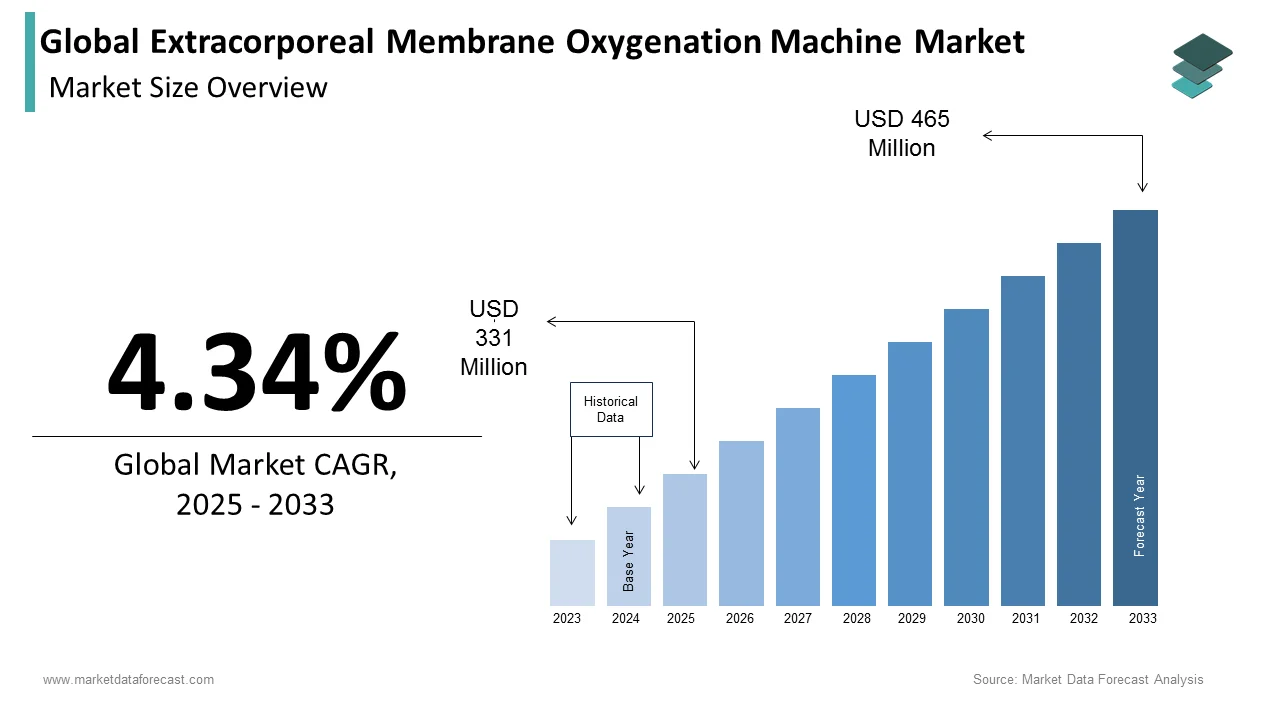
The global extracorporeal membrane oxygenation (ECMO) machine market was valued at USD 331 million in 2025 and is projected to grow from USD 345.37 million in 2026 to USD 485 million by 2034, registering a CAGR of 4.34% from 2026 to 2034. Market growth is driven by the rising prevalence of severe respiratory and cardiac disorders, increasing demand for advanced life-support technologies, and expanding adoption of ECMO in critical care settings. ECMO systems provide temporary cardiac and respiratory support for patients with life-threatening heart and lung failure, making them essential in intensive care units and specialized cardiac centers. Advancements in ECMO technology, increasing healthcare investments, and growing critical care infrastructure are further supporting market expansion.
Key Market Trends
- Increasing adoption of ECMO systems in critical care and intensive care units.
- Rising incidence of acute respiratory distress syndrome (ARDS) and severe cardiac disorders.
- Growing technological advancements in portable and compact ECMO systems.
- Expansion of specialized ECMO centers and critical care infrastructure worldwide.
- Increasing focus on improving patient outcomes through advanced extracorporeal life support technologies.
Segmental Insights
Based on modality, the veno-venous (VV) ECMO segment dominated the global extracorporeal membrane oxygenation machine market in 2025 by accounting for 46.3% market share, driven by its widespread use in managing severe respiratory failure while preserving cardiac function.
Based on application, the respiratory segment led the market by capturing 55.4% share in 2025, supported by the increasing prevalence of acute respiratory disorders, pneumonia, ARDS, and other severe pulmonary conditions requiring advanced life support.
Regional Insights
The global extracorporeal membrane oxygenation machine market continues to witness steady growth across major regions, supported by expanding critical care services, technological innovation, and increasing healthcare investments.
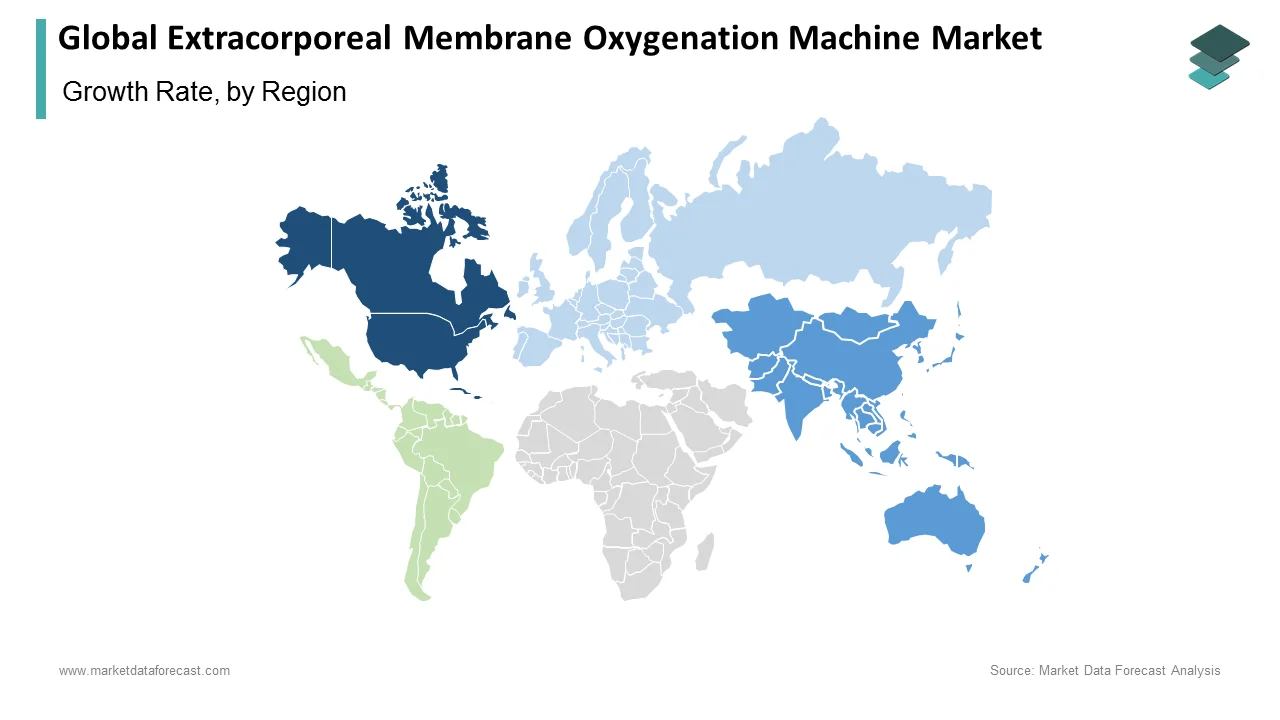
- North America dominated the global market in 2025 with 35.8% share, driven by advanced healthcare infrastructure, widespread adoption of ECMO technology, and the presence of specialized cardiac and critical care centers.
- Europe held the second-largest position with 30.3% share in 2025, supported by universal healthcare systems, strong reimbursement frameworks, and broad access to advanced critical care interventions regardless of patient financial status.
- Asia-Pacific is projected to register the fastest growth during the forecast period, driven by expanding healthcare infrastructure, increasing investments in intensive care facilities, growing awareness of advanced life-support technologies, and rising demand for critical care services.
Competitive Landscape
The global extracorporeal membrane oxygenation machine market is characterized by the presence of leading medical device manufacturers focusing on technological innovation, product reliability, and expanded clinical applications. Market participants are investing in compact ECMO systems, improved oxygenator technologies, and enhanced patient monitoring capabilities to strengthen their market position. Strategic collaborations, product launches, and investments in critical care technologies continue to shape the competitive landscape.
Prominent companies operating in the global extracorporeal membrane oxygenation machine market include Getinge Group, Medtronic plc, LivaNova PLC, XENIOS AG, Terumo Corporation, MicroPort Scientific Corporation, NIPRO Corporation, OriGen Biomedical Inc., ALung Technologies Inc., and EUROSETS S.r.l.
Global Extracorporeal Membrane Oxygenation Machine Market Size
The size of the global extracorporeal membrane oxygenation machine market was worth USD 331 million in 2025. The global market is anticipated to grow at a CAGR of 4.34% from 2026 to 2034 and be worth USD 485 million by 2034 from USD 345.37 million in 2026.
Extracorporeal membrane oxygenation is a life support technology that temporarily takes over the function of the heart and lungs for patients suffering from severe cardiac or respiratory failure. This advanced medical intervention circulates blood outside the body through an artificial lung where oxygen is added, and carbon dioxide is removed before returning it to the patient. The clinical application of this technology has expanded significantly beyond traditional cardiac surgery support to include treatment for acute respiratory distress syndrome and severe pneumonia cases. Recent clinical studies published in major medical journals reveal that survival rates for patients receiving venoarterial ECMO support range between 40% and 60% depending on the underlying condition. The technology requires highly specialized multidisciplinary teams including perfusionists, intensivists, and nurses who undergo rigorous training protocols. As per the European Respiratory Society guidelines, timely initiation of ECMO therapy within 72 hours of conventional ventilation failure significantly improves patient outcomes. The complexity of managing anticoagulation therapy during ECMO support remains a crucial clinical consideration that demands continuous monitoring and precise adjustment of heparin levels to prevent both thrombotic and hemorrhagic complications.
MARKET DRIVERS
Rising Prevalence of Severe Respiratory Conditions Drives ECMO Adoption
The escalating incidence of severe respiratory failures is greatly impacting the growth of the extracorporeal membrane oxygenation machine market. Acute respiratory distress syndrome affects approximately 10% of intensive care unit admissions globally, according to data published by the American Thoracic Society. This condition carries a mortality rate exceeding 35% when conventional mechanical ventilation proves insufficient, creating an urgent need for advanced life support interventions. The World Health Organization reports that lower respiratory infections remain among the top causes of death worldwide, with millions of cases requiring intensive care support annually. During recent global health crises, hospitals witnessed unprecedented surges in patients requiring respiratory support beyond standard ventilator capabilities. The European Centre for Disease Prevention and Control notes that seasonal influenza outbreaks continue to strain intensive care resources, with severe cases often necessitating extracorporeal support. Aging demographics further exacerbate this trend as older populations exhibit higher susceptibility to pulmonary complications. Hospitals in urban centers report increasing referrals for ECMO evaluation, with some facilities performing over 100 procedures annually.
Expanding Applications in Cardiac Arrest and Postcardiotomy Support Fuel Market Growth
The broadening clinical applications of extracorporeal membrane oxygenation in cardiac care settings are another factor promoting the growth of the extracorporeal membrane oxygenation machine market. Extracorporeal cardiopulmonary resuscitation has emerged as a viable intervention for patients experiencing out-of-hospital cardiac arrest with witnessed collapse. Major medical centers now maintain dedicated cardiac ECMO teams available around the clock to respond to emergencies. The integration of ECMO into heart transplant protocols serves as a bridge to transplantation for patients with end-stage heart failure, with waiting lists in Europe exceeding 4000 individuals, according to the research. Technological advancements have reduced circuit priming volumes and improved biocompatibility by enabling safer prolonged support durations extending beyond 30 days in some cases. Pediatric cardiac centers increasingly utilize ECMO for congenital heart defect repairs, with neonatal applications showing particular promise. The establishment of regional ECMO networks facilitates patient transfer to specialized centers, optimizing resource utilization. Training programs for cardiac surgeons and intensivists have expanded substantially, with over 500 certified ECMO specialists practicing in Western Europe alone. These developments collectively sustain robust demand for advanced ECMO systems capable of supporting diverse cardiac indications.
MARKET RESTRAINTS
High Procedural Costs and Limited Reimbursement Policies Restrict Market Penetration
The substantial financial burden associated with advanced healthcare systems is hindering the growth of the extracorporeal membrane oxygenation machine market. A single ECMO procedure typically incurs costs ranging from 50000 euros to 150000 euros depending on duration and complications, according to the survey. These expenses encompass specialized equipment, disposable circuits, continuous laboratory monitoring, and extended intensive care stays averaging 10 to 14 days. Many European healthcare systems operate under constrained budgets that limit investment in high-cost technologies without guaranteed reimbursement frameworks. National health insurance providers in several countries classify ECMO as an experimental or exceptional therapy, resulting in inconsistent coverage policies. Smaller community hospitals frequently lack the financial resources to establish and sustain ECMO capabilities, forcing patient transfers to tertiary centers. This centralization creates accessibility disparities, particularly in rural regions where transport times may exceed safe thresholds for ill patients. Budget impact assessments indicate that establishing a new ECMO program requires initial capital investment of approximately 200000 euros for equipment plus annual operational costs exceeding 300000 euros. Healthcare administrators face difficult prioritization decisions when allocating limited resources among competing technological needs.
Shortage of Trained ECMO Specialists Limits Service Availability
The scarcity of qualified healthcare professionals proficient in ECMO is another factor limiting the growth of the extracorporeal membrane oxygenation machine market. Operating an ECMO circuit demands specialized expertise in perfusion science, anticoagulation management, and hemodynamic monitoring that extends beyond standard intensive care training. Comprehensive ECMO training programs require 6 to 12 months of supervised clinical experience, limiting the pace at which new practitioners can enter the field. The intensive care units struggle to maintain adequate staffing levels for 24-hour ECMO coverage. The complexity of managing ECMO-related complications, such as circuit thrombosis, air embolism, and limb ischemia, necessitates constant vigilance and rapid decision-making capabilities. Academic medical centers serve as primary training hubs, yet graduation rates remain insufficient to meet growing demand. Rural and peripheral hospitals face particular challenges in recruiting and retaining ECMO-qualified staff due to limited case volumes and professional isolation. Telemedicine consultations partially mitigate this issue but cannot replace hands-on expertise during emergencies. Professional societies estimate that Europe requires an additional 1500 trained ECMO specialists over the next decade to achieve optimal service coverage. Investment in simulation-based training platforms and standardized certification pathways remains inadequate to address this pressing human resource constraint.
MARKET OPPORTUNITIES
Technological Advancements in Portable and Miniaturized ECMO Systems Create Growth Avenues
The emergence of compact and portable devices, beyond traditional intensive care settings, is expected to create new opportunities for the growth of the extracoreal membrane oxygenation machine market. The next-generation centrifugal pump designs achieve hemocompatibility improvements that reduce platelet activation by 40% compared to earlier models, as per the study. These portable systems enable interhospital transport of critically ill patients, expanding the geographic reach of ECMO services. Battery-powered units now offer 4 to 6 hours of autonomous operation, facilitating ambulance and helicopter transport without power source dependencies. Miniaturized oxygenators with reduced prime volumes minimize hemodilution effects, particularly beneficial for pediatric and low body weight patients. Integration of automated monitoring systems provides real-time alerts for circuit pressure changes, gas exchange efficiency, and anticoagulation parameters. Clinical trials demonstrate that portable ECMO initiation in emergency departments reduces time to support by an average of 90 minutes compared to traditional intensive care unit-based deployment. Manufacturers are developing single-use disposable circuits that eliminate sterilization requirements and reduce cross-contamination risks. The emergence of artificial intelligence algorithms with ECMO monitoring enables predictive analytics for complication prevention.
Integration of Artificial Intelligence and Remote Monitoring Enhances Clinical Outcomes
The incorporation of artificial intelligence and telemonitoring capabilities for improving patient safety and operational efficiency is also expected to expand the growth of the extracorporeal membrane oxygenation market. Advanced sensor arrays now collect over 1000 data points per minute regarding circuit pressures, flow rates, gas exchange parameters, and patient hemodynamics. According to research published in intensive care technology journals, machine learning algorithms analyze these data streams to predict circuit thrombosis events with 85% accuracy up to 4 hours before clinical manifestation. Remote monitoring platforms enable centralized ECMO experts to supervise multiple simultaneous cases across different hospitals, optimizing specialist resource utilization. Automated anticoagulation dosing systems adjust heparin infusion rates based on real-time activated clotting time measurements, reducing manual intervention requirements by 50%. Digital twin technology creates virtual replicas of individual patient ECMO circuits by allowing clinicians to simulate intervention scenarios before implementation. Cloud-based databases aggregate anonymized ECMO run data from thousands of cases, facilitating evidence-based protocol refinement. Mobile applications provide bedside nurses with instant access to troubleshooting guides and emergency response algorithms. Predictive maintenance features alert biomedical engineers to component wear patterns, preventing unexpected equipment failures during critical procedures. The integration of electronic health records with ECMO monitoring systems ensures seamless documentation and reduces administrative burden. Clinical decision support tools analyze historical outcome data to guide cannulation strategy selection and weaning timing.
MARKET CHALLENGES
Complexity of Anticoagulation Management Poses Significant Clinical Challenges
Managing anticoagulation therapy support represents one of the most challenging aspects of clinical care, directly impacting patient safety and outcomes, which is a challenge for the growth of the extracorporeal membrane oxygenation market. The foreign surface area of ECMO circuits triggers immediate activation of the coagulation cascade, necessitating systemic anticoagulation to prevent circuit thrombosis. According to the Extracorporeal Life Support Organization guidelines, maintaining activated clotting time between 180 and 220 seconds requires continuous heparin infusion adjustments every 1 to 2 hours. Patient-specific factors such as liver dysfunction, thrombocytopenia, and concurrent medication interactions further complicate anticoagulation management. The absence of universally accepted monitoring protocols creates variability in practice patterns across institutions. Alternative anticoagulants, such as bivalirudin and argatroban, offer options for heparin-resistant patients but lack extensive clinical validation in ECMO contexts. Circuit coating technologies using heparin-bonded surfaces reduce but do not eliminate systemic anticoagulation requirements. The dynamic nature of ECMO support means that anticoagulation needs fluctuate hourly based on flow rates, temperature changes, and inflammatory responses. Multidisciplinary coordination between intensivists, hematologists, and pharmacists remains essential yet logistically challenging in resource-constrained environments.
Risk of Severe Complications and Adverse Events Limits Patient Eligibility
The substantial risk profile associated with extracorporeal membrane oxygenation therapy restricts its application to carefully selected patient populations, which is also to limit the growth of the extracorporeal membrane oxygenation machine market. Infection rates remain elevated during ECMO support, with bloodstream infections occurring in 10% to 15% of cases despite strict aseptic protocols. Mechanical complications, such as pump malfunction, oxygenator failure, and circuit rupture, require emergency interventions that endanger patient stability. The psychological burden on families facing uncertain outcomes during prolonged ECMO support creates ethical dilemmas for healthcare providers. Patient selection criteria remain controversial, with ongoing debates regarding age limits, comorbidity thresholds, and futility definitions. The inability to reliably predict individual patient response to ECMO support complicates informed consent processes. Institutional review boards increasingly scrutinize ECMO program outcomes, imposing stricter governance requirements. Liability concerns deter some healthcare facilities from offering ECMO services despite having technical capabilities.
REPORT COVERAGE
| REPORT METRIC | DETAILS |
| Market Size Available | 2025 to 2034 |
| Base Year | 2025 |
| Forecast Period | 2026 to 2034 |
| Segments Covered | By Modality, Application, and Region. |
| Various Analyses Covered | Global, Regional and Country-Level Analysis, Segment-Level Analysis, Drivers, Restraints, Opportunities, Challenges; PESTLE Analysis; Porter’s Five Forces Analysis, Competitive Landscape, Analyst Overview of Investment Opportunities |
| Regions Covered | North America, Europe, Asia Pacific, Latin America, Middle East & Africa |
| Market Leaders Profiled | Getinge Group, Medtronic plc, LivaNova PLC, XENIOS AG, Terumo Corporation, MicroPort Scientific Corporation, NIPRO Corporation, OriGen Biomedical Inc., ALung Technologies Inc., and EUROSETS S.r.l. |
SEGMENTAL ANALYSIS
By Modality Insights
The Veno Venous modality segment accounted for 46.3% of the extracorporeal membrane oxygenation market share in 2025 due to its primary application in treating severe respiratory failure without requiring cardiac support. This configuration isolates gas exchange functions while preserving native heart function by making it suitable for a broader patient population suffering from acute respiratory distress syndrome and viral pneumonia. The lower procedural complexity compared to Veno-Arterial setups reduces the risk of vascular complications and limb ischemia, encouraging wider adoption among community hospitals. Clinical guidelines from the European Respiratory Society recommend early initiation of Veno Venous support for patients failing conventional ventilation, driving consistent demand across intensive care units. The mortality rate for Veno Venous ECMO patients ranges between 30% and 40%, which is significantly lower than Veno Arterial outcomes, further validating its clinical utility. Training programs prioritize Veno Venous cannulation techniques, resulting in a larger pool of qualified practitioners capable of managing these cases. The availability of dual lumen catheters simplifies insertion procedures, reducing setup time by approximately 20 minutes compared to traditional two-site cannulation.
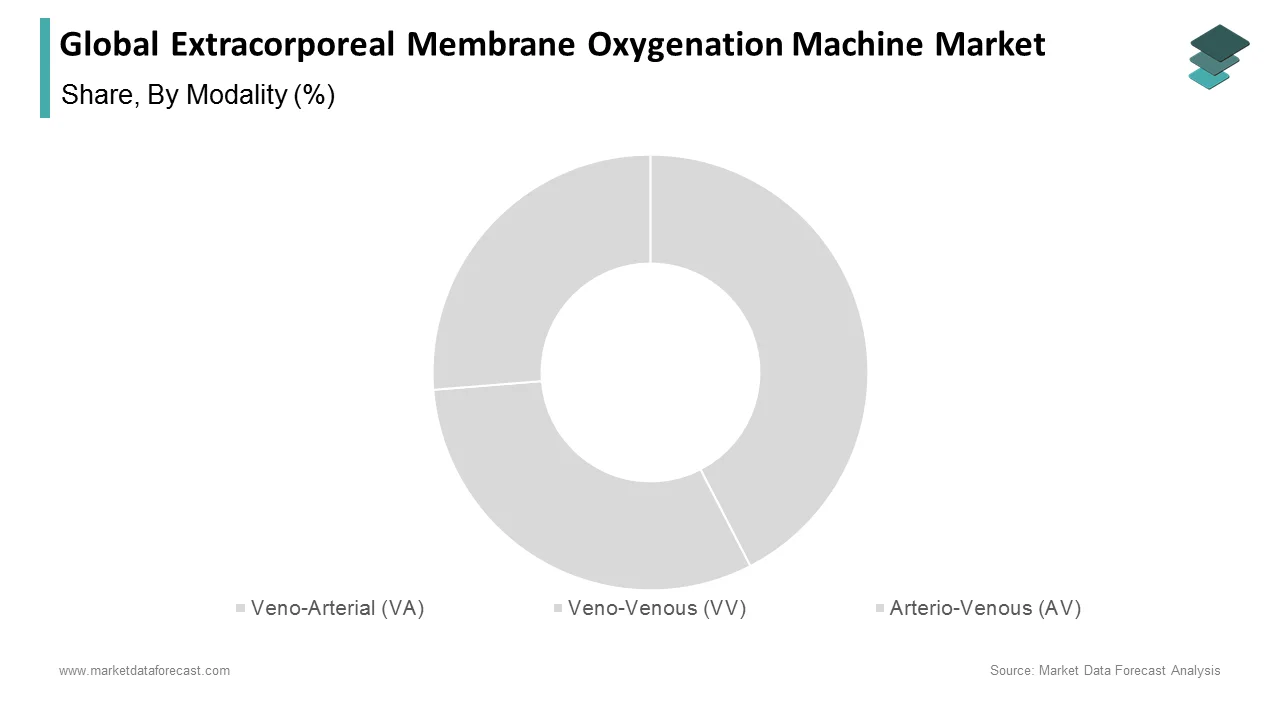
The arterio-venous segment is likely to register the fastest CAGR of 8.5% throughout the forecast period with its unique ability to provide partial circulatory support without requiring external power sources or complex pump systems. Unlike pump-driven configurations, Arterio Venous ECMO relies on the patient's native arterial pressure to drive blood flow through the oxygenator, significantly reducing equipment costs and setup complexity. The absence of rotating pump components eliminates risks associated with mechanical failure and hemolysis by enhancing safety profiles for prolonged use. Clinical studies indicate that Arterio Venous ECMO can sustain flow rates of 1.5 to 2.5 liters per minute, sufficient for partial carbon dioxide removal in patients with hypercapnic respiratory failure. The European Society of Intensive Care Medicine notes increasing interest in hybrid approaches where Arterio Venous support bridges patients to recovery or more aggressive interventions.
By Application Insights
The respiratory application segment was the largest by accounting for 55.4% of the extracorporeal membrane oxygenation market share in 2025, owing to the high incidence of acute respiratory failure requiring advanced life support. The pathophysiology of severe pneumonia and viral infections often renders conventional mechanical ventilation ineffective, necessitating extracorporeal gas exchange to maintain adequate oxygenation. Clinical guidelines from major medical societies recommend ECMO consideration when the PaO2 to FiO2 ratio falls below 80 despite optimal ventilator settings. Survival rates for respiratory ECMO patients have improved to nearly 60% in experienced centers, reinforcing confidence in this therapeutic approach. The COVID-19 pandemic highlighted the critical role of respiratory ECMO, with thousands of patients receiving support globally during peak infection waves. The development of lung rest protocols utilizing ultra-low tidal volumes complements ECMO therapy, reducing ventilator-associated lung injury.
The extracorporeal cardiopulmonary segment is estimated to grow at the fastest CAGR of 9.2% from 2026 to 2034 owing to the increasing recognition of ECPR as a viable intervention for selected patients experiencing out-of-hospital cardiac arrest with witnessed collapse. Traditional cardiopulmonary resuscitation achieves return of spontaneous circulation in only 10% to 15% of cases, leaving many patients with poor neurological outcomes. Major urban centers have established mobile ECPR teams capable of deploying portable ECMO systems directly to arrest scenes or emergency departments. The integration of ECPR into advanced cardiac life support algorithms has standardized patient selection criteria by reducing variability in practice patterns. Clinical registries indicate that over 5000 ECPR procedures were performed globally in recent years, with numbers doubling every three years. The availability of automated chest compression devices facilitates simultaneous CPR and ECMO cannulation, improving procedural success rates. Neurological monitoring technologies enable real-time assessment of brain perfusion during ECPR, guiding decision-making regarding continuation or withdrawal of support. These advancements transform ECPR from an experimental procedure into a standard component of comprehensive cardiac arrest management.
REGIONAL ANALYSIS
North America Extracorporeal Membrane Oxygenation Machine Market Analysis
North America extracorporeal membrane oxygenation machine market was the largest contributor by holding 35.8% of the share in 2025. The United States extracorporeal membrane oxygenation machine market growth is driven by the extensive healthcare infrastructure, high reimbursement rates, and widespread adoption of advanced critical care technologies. The presence of major medical device manufacturers headquartered in the region ensures continuous innovation and rapid product availability. Academic medical centers serve as training hubs for ECMO specialists, with over 200 certified programs operating across the United States and Canada. Government funding for critical care research supports clinical trials evaluating new ECMO indications and technologies. The Centers for Medicare and Medicaid Services provide consistent reimbursement for ECMO procedures, encouraging hospital investment in these capabilities. Private insurance coverage further expands access to ECMO therapy for commercially insured patients. The region benefits from well-established referral networks that facilitate patient transfer to specialized ECMO centers. High healthcare expenditure per capita enables adoption of premium-priced ECMO systems with advanced features. Regulatory pathways through the Food and Drug Administration ensure rigorous safety standards while enabling timely market entry for new devices.
Europe Extracorporeal Membrane Oxygenation Machine Market Analysis
Europe extracorporeal membrane oxygenation market was ranked second, holding 30.3% of the share in 2025, with the universal healthcare systems that prioritize access to care interventions regardless of patient financial status. As per a survey, over 500 hospitals across Europe possess ECMO capabilities, with a dense concentration in Western European nations. National health services in these countries provide standardized reimbursement for ECMO therapy by ensuring financial sustainability for participating institutions. The European Union facilitates cross-border collaboration through research consortia focused on optimizing ECMO protocols and outcomes. Training certification programs aligned with Extracorporeal Life Support Organization standards ensure consistent quality of care across member states. The region exhibits high adoption rates for portable ECMO systems, enabling efficient interhospital transport networks. Public health initiatives addressing respiratory and cardiac diseases create steady demand for advanced life support technologies. Regulatory harmonization through the European Medicines Agency streamlines approval processes for new ECMO devices.
Asia Pacific Extracorporeal Membrane Oxygenation Machine Market Analysis
The Asia Pacific extracorporeal membrane oxygenation machines market is deemed to grow at the fastest CAGR in the coming years. China, Japan, and South Korea drive this growth through increasing healthcare investments and rising prevalence of chronic diseases. According to a study, ECMO procedure volumes in Asia Pacific have tripled over the past five years, reflecting rapid capacity expansion. Japan leads in technological innovation, with domestic manufacturers developing compact ECMO systems tailored for Asian patient populations. China implements national policies promoting care infrastructure development, resulting in hundreds of new ECMO-capable intensive care units. South Korea demonstrates high utilization rates for ECPR, with survival outcomes comparable to Western benchmarks. Government initiatives in India and Southeast Asian nations focus on training ECMO specialists to address workforce shortages. Local manufacturing capabilities reduce equipment costs, improving affordability for public hospitals. Cultural acceptance of aggressive life support measures influences family decisions regarding ECMO initiation.
Latin America Extracorporeal Membrane Oxygenation Machine Market Analysis
Latin America extracorporeal membrane oxygenation market growth has slight growth opportunities with the improving healthcare infrastructure in major economies. Public healthcare systems in these countries face budget constraints that limit widespread ECMO availability, concentrating services in tertiary referral centers. Private insurance penetration in urban areas enables access to advanced ECMO therapy for affluent patient segments. Medical associations actively promote ECMO training programs to build local expertise and reduce dependence on international specialists. The region benefits from technology transfers through partnerships with North American and European device manufacturers. Economic volatility impacts procurement cycles, causing fluctuations in equipment purchase volumes. Regional conferences facilitate knowledge sharing among Latin American intensivists, fostering best practice adoption. Government health ministries gradually incorporate ECMO into national care guidelines, supporting institutional investment.
Middle East and Africa Extracorporeal Membrane Oxygenation Machine Market Analysis
The Middle East and Africa extracorporeal membrane oxygenation market growth is driven by the uneven distribution of resources and capabilities. Gulf Cooperation Council countries, including Saudi Arabia and the United Arab Emirates, lead in ECMO adoption by leveraging substantial healthcare budgets to establish world-class care facilities. These nations import advanced ECMO systems primarily from European and North American manufacturers. High prevalence of diabetes and cardiovascular diseases creates demand for advanced life support interventions. Public-private partnerships facilitate technology transfer and specialist training programs in these wealthy nations. Conversely, sub-Saharan Africa faces significant barriers to ECMO implementation due to limited infrastructure and funding constraints. Only a handful of tertiary centers in South Africa and Kenya possess ECMO capabilities, serving small patient populations. International aid organizations occasionally donate ECMO equipment, but lack of trained personnel limits utilization. Regional medical societies advocate for increased investment in critical care training to build sustainable ECMO programs. Telemedicine collaborations with European centers provide remote guidance for complex cases.
COMPETITIVE LANDSCAPE
The competitive landscape of the extracorporeal membrane oxygenation machine market features established medical device manufacturers competing through technological innovation and clinical evidence generation. Market participants differentiate themselves by offering specialized features such as reduced priming volumes, enhanced biocompatibility, and integrated monitoring systems that improve patient safety. The barrier to entry remains high due to stringent regulatory requirements and the need for extensive clinical validation before commercialization. Companies engage in aggressive marketing campaigns targeting intensivists and perfusionists to establish brand loyalty and preference among key decision-makers. Pricing strategies vary significantly between premium branded systems and cost-effective alternatives from emerging manufacturers in Asia. Collaboration with healthcare providers for post-market surveillance helps companies refine product designs and address real-world usage challenges. Intellectual property protection plays a vital role as firms secure patents for novel circuit designs and pump mechanisms. Competitive intensity increases as more players enter the portable ECMO segment, driving continuous improvement in device portability and battery life.
KEY MARKET PARTICIPANTS
Noteworthy companies dominating the global extracorporeal membrane oxygenation machine market profiled in this report are
- Getinge Group
- Medtronic plc
- LivaNova PLC
- XENIOS AG
- Terumo Corporation
- MicroPort Scientific Corporation
- NIPRO Corporation
- OriGen Biomedical Inc.
- ALung Technologies Inc.
- EUROSETS S.r.l.
TOP PLAYERS IN THE MARKET
- Getinge Group stands as a prominent leader in the global extracorporeal membrane oxygenation landscape through its comprehensive portfolio of critical care solutions. The company focuses on developing innovative ECMO systems that enhance patient safety and clinical outcomes across intensive care units worldwide. Getinge recently launched advanced centrifugal pump technologies that reduce hemolysis and improve biocompatibility for prolonged support durations. Their strategic investments in digital health platforms enable remote monitoring capabilities that optimize resource utilization for healthcare providers. The company actively collaborates with leading medical institutions to refine clinical protocols and expand therapeutic indications for ECMO therapy. Getinge emphasizes sustainable manufacturing practices while ensuring rigorous quality standards for all life support devices. Their global distribution network ensures timely availability of ECMO equipment and disposable circuits in diverse geographical regions.
- Medtronic plc maintains a strong presence in the extracorporeal membrane oxygenation market by leveraging its extensive expertise in cardiovascular and respiratory technologies. The company integrates advanced sensor technologies into ECMO circuits to provide real-time data on flow rates and pressure parameters. Medtronic recently introduced miniaturized oxygenators designed specifically for pediatric and neonatal applications by addressing unmet clinical needs in vulnerable populations. Their commitment to training programs ensures that healthcare professionals possess the necessary skills to manage complex ECMO cases effectively. Medtronic engages in strategic partnerships with academic medical centers to conduct clinical trials evaluating new ECMO indications and techniques. Medtronic also focuses on developing cost-effective solutions that enhance accessibility for healthcare systems operating under budget constraints.
- LivaNova PLC contributes significantly to the extracorporeal membrane oxygenation market through its specialized focus on cardiopulmonary solutions and advanced perfusion technologies. The company offers integrated ECMO systems that combine high-efficiency pumps with biocompatible circuits to minimize adverse events during prolonged support. LivaNova recently expanded its product line to include portable ECMO devices that facilitate interhospital transport and emergency deployment scenarios. Their emphasis on user-friendly interfaces simplifies operation for clinical staff, reducing the learning curve associated with complex life support equipment. LivaNova actively participates in international conferences to share clinical evidence supporting the efficacy of their ECMO technologies. The company invests heavily in research collaborations aimed at improving anticoagulation management strategies for ECMO patients. LivaNova also strengthens its market position by providing comprehensive service and maintenance packages that ensure optimal device performance.
TOP STRATEGIES USED BY KEY MARKET PARTICIPANTS
Key players in the extracorporeal membrane oxygenation machine market primarily focus on product innovation and technological advancement to maintain competitive advantages. Companies invest heavily in research and development to create miniaturized and portable ECMO systems that enhance mobility and ease of use. Strategic partnerships with academic medical centers enable firms to conduct clinical trials and validate new therapeutic indications for ECMO therapy. Expansion into emerging markets represents another crucial strategy as companies seek to capitalize on growing healthcare infrastructure in Asia Pacific and Latin America. Manufacturers also prioritize regulatory approvals in multiple jurisdictions to ensure broad market access and compliance with international safety standards. Training and education initiatives form an integral part of corporate strategies to address workforce shortages and build local expertise in ECMO management. Mergers and acquisitions allow larger corporations to integrate complementary technologies and expand their product portfolios comprehensively. Digital health integration, including artificial intelligence and remote monitoring capabilities, serves as a differentiating factor for leading market participants seeking to improve clinical outcomes and operational efficiency.
GLOBAL EXTRACORPOREAL MEMBRANE OXYGENATION MACHINE MARKET NEWS
- In March 2024, Getinge Group launched a new generation of centrifugal pumps with enhanced hemocompatibility features to reduce platelet activation and improve patient outcomes during prolonged ECMO support. Strictly include the mentioned number of words.
- In January 2024, Medtronic plc introduced miniaturized oxygenators specifically designed for pediatric and neonatal ECMO applications to address unmet clinical needs in vulnerable patient populations. Strictly include the mentioned number of words.
- In November 2023, LivaNova PLC expanded its portable ECMO device portfolio with battery-powered units enabling extended interhospital transport without external power sources for critical care patients. Strictly include the mentioned number of words.
- In August 2023, Getinge Group partnered with leading European academic medical centers to conduct multicenter clinical trials evaluating artificial intelligence-driven monitoring algorithms for early complication detection in ECMO therapy. Strictly include the mentioned number of words.
- In May 2023, Medtronic plc initiated a comprehensive global training program for ECMO specialists focusing on standardized cannulation techniques and anticoagulation management protocols to address workforce shortages. Strictly include the mentioned number of words.
MARKET SEGMENTATION
This research report on the global extracorporeal membrane oxygenation machine market has been segmented based on the modality, application, and region.
By Modality
- Veno-Arterial (VA)
- Veno-Venous (VV)
- Arterio-Venous (AV)
By Application
- Respiratory
- Cardiac
- Extracorporeal Cardiopulmonary Resuscitation (ECPR)
By Region
- North America
- Europe
- Asia Pacific
- Latin America
- Middle East and Africa