- Product Description Description
- Table of Contents TOC
- List of Table & Figure LOT
- Get Free Sample PDF Sample PDF
Market Size, 2025
$10.01 BnMarket Estimate, 2026
$10.76 BnMarket Forecast, 2034
$19.24 BnCAGR, 2026–2034
7.53%North America Active Implantable Medical Devices Market Size
The size of the North America active implantable medical devices market was worth USD 10.01 billion in 2025. The North America market is anticipated to grow at a CAGR of 7.53% from 2026 to 2034 and be worth USD 19.24 billion by 2034 from USD 10.76 billion in 2026.
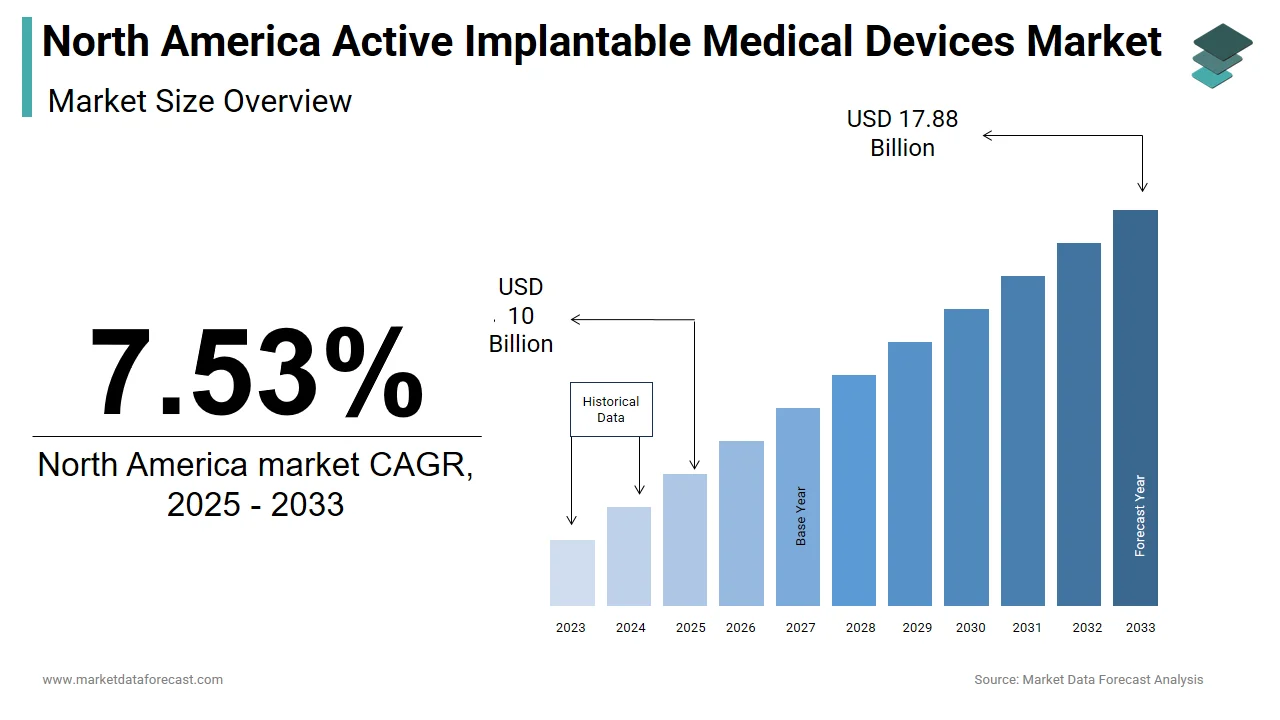
Active Implantable Medical Devices (AIMDs) are specialized, surgically implanted medical devices that rely on an internal power source (like a battery) to function and remain in the body long-term. These critical technologies include cardiac pacemakers, implantable cardioverter defibrillators, neurostimulators, and cochlear implants, which rely on internal power sources such as batteries to function autonomously. The region represents a global hub for medical innovation driven by advanced healthcare infrastructure and high adoption rates of cutting-edge therapies. According to official data from the Centers for Disease Control and Prevention, cardiovascular diseases remain the leading cause of death in the United States, driving a severe national mortality burden that underscores the vital necessity for advanced cardiac rhythm management solutions. The U.S. Census Bureau shows that by 2030, one in five Americans will be aged 65 or older, representing a massive population shift that expands the demographic footprint for medical device interventions. Regulatory oversight by the Food and Drug Administration ensures rigorous safety standards while facilitating the approval of novel technologies through breakthrough device designations. The integration of remote monitoring capabilities has transformed patient care, allowing clinicians to track device performance and patient health metrics in real time. This technological evolution reduces hospital readmissions and improves quality of life for patients with chronic conditions. The market is characterized by continuous innovation in battery longevity, miniaturization, and biocompatible materials, ensuring sustained growth and improved clinical outcomes across the continent.
MARKET DRIVERS
Rising Prevalence of Chronic Cardiovascular and Neurological Disorders Fuels Demand
The escalating incidence of chronic cardiovascular and neurological conditions is a major factor propelling the North America Active Implantable Medical Devices Market. Cardiovascular diseases affect millions of individuals requiring long-term management through devices such as pacemakers and defibrillators to regulate heart rhythms and prevent sudden cardiac arrest. According to the American Heart Association, nearly half of all adults in the United States have some form of cardiovascular disease, establishing a vast disease landscape that underpins the long-term demand for advanced cardiac therapeutics. Furthermore, the prevalence of neurological disorders such as Parkinson’s disease and essential tremor is increasing due to an aging population, necessitating interventions like deep brain stimulation. As per the Parkinson's Foundation, nearly 1 million Americans are living with Parkinson's disease, creating a substantial patient population that may transition to neurostimulation therapies as chronic symptoms advance. These chronic conditions require durable and reliable active implants that can function for extended periods without frequent replacement surgeries. The clinical efficacy of these devices in improving survival rates and quality of life has led to widespread acceptance among healthcare providers and patients. As diagnostic capabilities improve, more patients are identified earlier in the disease progression, expanding the eligible population for implantation. This growing patient base creates a steady stream of procedural volume, ensuring robust market expansion. The alignment between clinical necessity and technological capability ensures that active implantable devices remain indispensable tools in modern medicine.
Advancements in Miniaturization and Battery Technology Enhance Device Longevity
Technological breakthroughs in miniaturization and energy storage systems significantly drive the adoption of AIMDs by addressing key patient concerns regarding size and maintenance, which in turn boosts the expansion of the North America active implantable medical devices market. Modern devices are becoming increasingly compact, allowing for less invasive surgical procedures and reduced recovery times, which appeals to both surgeons and patients. Clinical data indexed by the National Center for Biotechnology Information confirms that battery chemistry optimization has successfully extended the operational lifespan of standard implantable cardiac devices to over ten years, heavily reducing the long-term frequency of battery replacement surgeries. This improvement minimizes the risk of surgical complications and lowers the overall burden on the healthcare system. The development of leadless pacemakers exemplifies this trend, where the entire device is small enough to be implanted directly into the heart chamber, eliminating the need for transvenous leads that are prone to fracture and infection. The Heart Rhythm Society indicates that leadless pacing systems eliminate lead- and pocket-related complications, driving specialized clinical adoption for eligible cardiac patients. Additionally, advancements in wireless charging technology are being explored to eliminate the need for surgical battery replacements entirely. These technical enhancements improve patient compliance and satisfaction by reducing the physical and psychological impact of living with an implanted device. Manufacturers continue to invest heavily in research and development to push the boundaries of what is technically feasible, ensuring that devices remain at the forefront of medical innovation. This relentless pursuit of improvement sustains market momentum and encourages early adoption of next-generation products.
MARKET RESTRAINTS
High Costs of Procedures and Limited Reimbursement Policies Restrict Access
The substantial financial burden associated with the implantation and maintenance of active medical devices limits access for certain patient populations in the region, which hampers the growth of the North America active implantable medical devices market. The total cost of care includes not only the price of the device but also surgical fees, hospital stays, and ongoing monitoring services, which can amount to tens of thousands of dollars per procedure. Surveys from the Kaiser Family Foundation demonstrate that high deductibles and rising out-of-pocket maximums under private insurance plans place significant cost-sharing burdens on patients, creating potential financial hurdles for elective major procedures. Furthermore, reimbursement policies from Medicare and private insurers are subject to frequent changes and strict coverage criteria that may exclude newer technologies or specific patient groups. The Centers for Medicare & Medicaid Services highlight that the gap between securing regulatory clearance and achieving comprehensive insurance coverage determinations can stall commercial utilization for novel medical devices. Hospitals and clinics may hesitate to adopt expensive new technologies if they are uncertain about adequate compensation, leading to slower diffusion of advanced devices. The complexity of billing and coding requirements adds administrative burdens that discourage some providers from offering these specialized services. Economic disparities further exacerbate the issue, with uninsured or underinsured individuals facing insurmountable costs. This financial friction slows down the rate of adoption, particularly in rural or underserved areas where healthcare resources are already strained. Until reimbursement frameworks become more predictable and comprehensive, the high cost of care will remain a persistent obstacle to market growth.
Stringent Regulatory Requirements and Lengthy Approval Processes Delay Market Entry
The rigorous regulatory landscape governed by the Food and Drug Administration imposes stringent safety and efficacy standards that prolong the time required to bring new devices to the North America active implantable medical devices market. Manufacturers must conduct extensive preclinical testing and multi-phase clinical trials to demonstrate that their devices are safe and effective, which can take several years and cost millions of dollars. According to the U.S. Food and Drug Administration, Class III medical devices undergo rigorous Premarket Approval (PMA) reviews with a standard federal target of 180 days, though total cycles can extend depending on the necessity of clinical panel reviews. This lengthy approval process delays patient access to innovative treatments and increases the financial risk for developers who must sustain operations without revenue from the new product. Strategic whitepapers from the Advanced Medical Technology Association emphasize that evolving global compliance guidelines and changing documentation formats can introduce operational complexities for manufacturers navigating device approval pipelines. Small and medium-sized enterprises often lack the resources to navigate these complex regulatory pathways effectively, limiting competition and innovation in the sector. Post-market surveillance requirements also impose ongoing obligations on manufacturers to monitor device performance and report adverse events, adding to operational costs. The fear of regulatory scrutiny may discourage companies from pursuing radical innovations in favor of incremental improvements to existing approved products. This cautious approach slows the pace of technological advancement and restricts the diversity of solutions available to clinicians and patients.
MARKET OPPORTUNITIES
Integration of Remote Monitoring and Digital Health Platforms Expands Care Models
The seamless integration of active implantable devices with remote monitoring systems and digital health platforms offers a transformative opportunity to enhance patient care and operational efficiency, which is likely to contribute to the growth of the North America active implantable medical devices market. Modern implants equipped with wireless connectivity allow clinicians to monitor device status and patient physiology in real time, enabling early detection of complications and proactive intervention. The Journal of the American College of Cardiology demonstrates that remote monitoring of implantable cardioverter-defibrillators substantially reduces all-cause hospital mortality and improves survival rates by facilitating rapid clinical intervention during arrhythmic events. This shift toward home-based care reduces the burden on healthcare facilities and lowers overall treatment costs while improving patient convenience. The proliferation of smartphone applications and cloud-based data analytics enables patients to engage more actively in their own health management, fostering better adherence to treatment plans. According to the Centers for Disease Control and Prevention, national telehealth utilization sustained significant growth post-pandemic, expanding clinical opportunities for remote patient monitoring and connected device ecosystems. Manufacturers can leverage these digital connections to offer value-added services such as predictive maintenance and personalized health insights, strengthening customer loyalty. Payers are increasingly recognizing the cost-saving potential of remote monitoring, leading to broader coverage and reimbursement support. This convergence of hardware and software opens new revenue streams for device makers who can transition from selling products to providing comprehensive care solutions. The ability to generate large datasets from implanted devices also facilitates research and development of more targeted therapies.
Expansion into Emerging Therapeutic Areas Such as Obesity and Mental Health
The application of active implantable technology is expanding beyond traditional cardiac and neurological indications into emerging therapeutic areas such as obesity management and mental health treatment, which provides significant growth potential for the North America active implantable medical devices market. Vagus nerve stimulation and gastric electrical stimulation are gaining traction as effective interventions for treatment-resistant depression and obesity, respectively, addressing conditions that have limited pharmacological options. National health statistics compiled by the Centers for Disease Control and Prevention confirm that over 40% of adults in the United States have obesity, establishing a massive public health landscape that drives widespread demand for multi-disciplinary therapeutic interventions. Clinical trials have demonstrated that these devices can help patients achieve significant weight loss and improve metabolic health without the risks associated with bariatric surgery. Similarly, the rising prevalence of mental health disorders has spurred interest in neuromodulation techniques that offer alternatives to medication for patients who do not respond to conventional therapies. Regulatory approvals for these new indications are paving the way for broader clinical adoption and reimbursement coverage. Manufacturers are investing in specialized devices tailored to these unique anatomical and physiological requirements, differentiating their portfolios. This diversification reduces dependence on mature markets and positions companies at the forefront of next-generation therapeutic innovations. The social and economic impact of successfully treating these chronic conditions further drives institutional support and investment.
MARKET CHALLENGES
Risk of Device Malfunction and Cybersecurity Vulnerabilities Threatens Patient Safety
The inherent risk of device malfunction and the growing threat of cybersecurity breaches are significant challenges to the North America Active Implantable Medical Devices Market. As devices become more connected, they become vulnerable to hacking and unauthorized access, which could potentially allow malicious actors to alter device settings or disrupt therapy delivery. Patients and providers are increasingly concerned about the privacy of health data transmitted by these devices and the potential for life-threatening interference. Manufacturers face the dual challenge of ensuring physical reliability while implementing advanced encryption and authentication measures that do not compromise device performance or battery life. The complexity of updating software in implanted devices without surgical intervention further complicates risk management. Liability concerns arising from cyber incidents create legal and reputational risks for manufacturers who must demonstrate due diligence in protecting patient safety. Regulatory bodies are tightening requirements for cybersecurity testing and post-market monitoring, forcing companies to invest heavily in security infrastructure. Balancing innovation with impenetrable security remains a difficult task that requires continuous vigilance and collaboration with cybersecurity experts.
Shortage of Skilled Professionals for Implantation and Device Management
A critical shortage of trained healthcare professionals capable of performing complex implantation procedures and managing active medical devices constrains growth and limits patient access in the North America active implantable medical devices market. The implantation of devices such as deep brain stimulators and leadless pacemakers requires highly specialized skills and extensive experience, which are not uniformly available across all healthcare facilities. The workforce deficit is exacerbated by the aging of the current medical workforce and the lengthy training periods required for specialization. The scarcity of skilled technicians and nurses trained in device programming and troubleshooting further strains the healthcare system, leading to longer wait times for patients. Hospitals struggle to recruit and retain qualified staff due to competitive labor markets and high burnout rates. This human resource bottleneck limits the capacity of healthcare systems to absorb the growing volume of implant procedures. Educational institutions and professional societies are working to expand training programs, but the pipeline remains insufficient to meet rising demand. The full potential of active implantable technologies cannot be realized without adequate staffing levels. As a result, many patients are left underserved.
REPORT COVERAGE
| REPORT METRIC | DETAILS |
| Market Size Available | 2025 to 2034 |
| Base Year | 2025 |
| Forecast Period | 2026 to 2034 |
| Segments Covered | By Product and Region. |
| Various Analyses Covered | Global, Regional and Country-Level Analysis, Segment-Level Analysis, Drivers, Restraints, Opportunities, Challenges; PESTLE Analysis; Porter’s Five Forces Analysis, Competitive Landscape, Analyst Overview of Investment Opportunities |
| Countries Covered | UK, France, Spain, Germany, Italy, Russia, Sweden, Denmark, Switzerland, Netherlands, Turkey, the Czech Republic, and the Rest of Europe. |
| Market Leaders Profiled | Medtronic plc, Abbott Laboratories, Boston Scientific Corporation, BIOTRONIK SE & Co. KG, LivaNova PLC., Cochlear Limited, MED-EL, Sonova Holding AG, William Demant Holding A/S, and Nurotron Biotechnology Co. Ltd. |
SEGMENTAL ANALYSIS
By Product Insights
The implantable cardiac pacemakers segment was the largest in the North America active implantable medical devices market and occupied a commanding share in 2025. This supremacy of the segment was credited to the high prevalence of bradycardia and heart block conditions among the aging population. The main growth enabler is the increasing incidence of arrhythmias that require continuous electrical stimulation to maintain adequate heart rates and prevent syncope or heart failure. The demographic shift toward an older population significantly amplifies this demand as the risk of conduction system disease rises sharply with age. Technological advancements such as dual chamber pacing and rate responsive algorithms have improved clinical outcomes, making these devices the preferred choice for long-term management. The established reimbursement landscape for pacemaker procedures ensures broad patient access across both public and private insurance plans. Furthermore, the reliability and longevity of modern lithium iodine batteries reduce the need for frequent replacements, enhancing patient quality of life. The widespread familiarity among electrophysiologists with implantation techniques further supports high procedural volumes. This combination of clinical necessity, demographic tailwinds, and technological maturity solidifies the dominance of implantable cardiac pacemakers in the regional market.
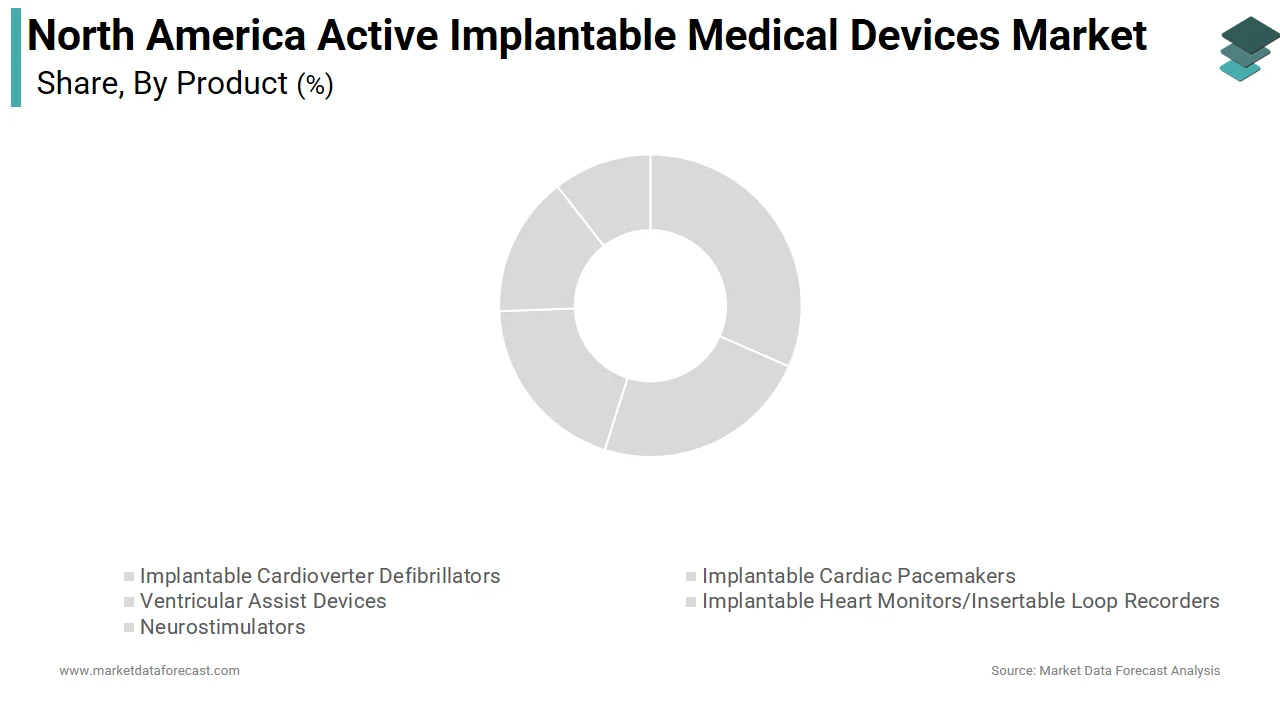
The subcutaneous implantable cardioverter defibrillator segment is expected to exhibit a noteworthy CAGR of 12.5% between 2026 and 2034 due to the distinct advantage of avoiding transvenous leads, which are associated with significant long-term complications such as lead fracture, infection, and venous occlusion. The device is implanted entirely under the skin, leaving the heart and blood vessels untouched, which simplifies future interventions and reduces surgical complexity. Regulatory approvals and favorable reimbursement policies in the United States have accelerated adoption among electrophysiologists seeking safer alternatives for primary prevention patients. The growing awareness of lead-related complications among healthcare providers drives the shift away from traditional transvenous systems. Manufacturers are investing in miniaturization and enhanced sensing algorithms to improve specificity and reduce inappropriate shocks. This technological evolution combined with strong clinical evidence positions the subcutaneous implantable cardioverter defibrillator as the most dynamic growth segment in the cardiac rhythm management sector.
COUNTRY LEVEL ANALYSIS
U.S. Active Implantable Medical Devices Market Analysis
The United States led the North America Active Implantable Medical Devices Market and captured an 8.5.1% share in 2025. This leading position of the US market was attributed to its advanced healthcare infrastructure and high expenditure on medical technologies. The country serves as the global hub for innovation, with major manufacturers headquartered domestically driving rapid adoption of next-generation devices. According to official reporting from the Centers for Medicare & Medicaid Services, national health expenditures in the United States reached 4.3 trillion dollars during the 2021–2022 statistical period, with chronic diseases and hospital inpatient services driving a substantial share of total national spending. The presence of world-class research institutions and favorable regulatory pathways through the Food and Drug Administration facilitates quick market entry for novel implants. In addition, the National Center for Biotechnology Information confirms that hundreds of thousands of cardiac implantable electronic devices are utilized annually across the United States, illustrating a massive procedural volume to sustain cardiac rhythm management. The robust reimbursement framework provided by Medicare and private insurers ensures patient access to expensive active implants despite high out-of-pocket costs. The aging baby boomer population creates a sustained demand pipeline for chronic disease management solutions. Additionally, the high prevalence of obesity and diabetes contributes to increased cardiovascular complications requiring device intervention. Strong physician training programs and specialized heart centers ensure high-quality care delivery. The competitive landscape encourages continuous innovation in battery life, miniaturization, and remote monitoring capabilities. These factors collectively maintain the United States' position as the undisputed leader in the regional market.
Canada Active Implantable Medical Devices Market Analysis
Canada holds a noteworthy share of the North America Active Implantable Medical Devices Market owing to the universal coverage provided through provincial health plans, which ensures that all citizens have access to necessary implantable therapies regardless of income. The country’s market is known for a publicly funded healthcare system that prioritizes cost-effectiveness and equitable access. Moreover, the Canadian Institute for Health Information highlights that while clinical demand for pacemakers and defibrillators remains steady, regional expenditure growth is heavily moderated by provincial health budgets and centralized public procurement frameworks. The Canadian Agency for Drugs and Technologies in Health conducts rigorous assessments to determine the clinical value and cost-benefit of new devices before recommending them for public funding. As per data from the Canadian Cardiovascular Society, implantation rates for pacemakers and defibrillators are steady, but growth is moderated by budget constraints and centralized procurement processes. The government emphasizes preventive care and early diagnosis to reduce the burden of advanced disease requiring complex implants. Rural and remote communities face challenges in accessing specialized electrophysiology services, prompting initiatives to expand telemedicine and remote monitoring capabilities. Collaborations between provincial health authorities and manufacturers help negotiate favorable pricing for high-volume purchases. The focus on health technology assessment ensures that only devices with proven clinical benefits are widely adopted. Despite slower adoption rates for premium-priced innovations, Canada remains a stable and important market for essential active implantable medical devices.
COMPETITIVE LANDSCAPE
The competition in the North America Active Implantable Medical Devices Market is characterized by intense rivalry among established multinational corporations and emerging niche players striving for technological superiority. Leading companies compete primarily on clinical efficacy, device reliability, and integration with digital health platforms rather than price alone due to the critical nature of these life-sustaining technologies. The market features high barriers to entry driven by stringent regulatory requirements from the Food and Drug Administration and substantial capital needs for research and development. Innovation drives competitive advantage as firms introduce leadless systems and smart implants that offer superior safety profiles and patient convenience. Intellectual property protection plays a crucial role, with companies fiercely defending patents related to battery technology and sensing algorithms. Collaboration with academic institutions and clinical centers accelerates the validation of new therapies and builds physician trust. The shift toward value-based care encourages manufacturers to demonstrate cost-effectiveness through reduced hospitalizations and improved long-term outcomes. Competitive intensity is heightened by the rapid pace of technological change requiring continuous investment in next-generation solutions. Customer loyalty is reinforced by comprehensive service support and educational resources for healthcare professionals. This dynamic environment fosters a culture of continuous improvement and patient-centric innovation across the industry.
KEY MARKET PLAYERS
The leading companies operating in the North America active implantable medical devices market include:
- Medtronic plc
- Abbott Laboratories
- Boston Scientific Corporation
- BIOTRONIK SE & Co. KG
- LivaNova PLC
- Cochlear Limited
- MED-EL
- Sonova Holding AG
- William Demant Holding A/S
- Nurotron Biotechnology Co. Ltd.
TOP PLAYERS IN THE MARKET
- Medtronic plc stands as a global leader in medical technology with a dominant presence in the North America active implantable medical devices sector. The company offers a comprehensive portfolio including cardiac pacemakers, defibrillators, and neurostimulation systems that address critical chronic conditions. Medtronic recently launched its next-generation leadless pacemaker system, which minimizes surgical complications and enhances patient quality of life. The firm continues to invest heavily in remote monitoring technologies, allowing clinicians to track device performance in real time. By expanding its digital health ecosystem, Medtronic strengthens relationships with healthcare providers and improves patient outcomes. Strategic collaborations with research institutions drive innovation in battery longevity and miniaturization. These efforts reinforce its reputation for clinical excellence and technological advancement, ensuring sustained leadership in the competitive North American market.
- Abbott Laboratories is a major contributor to the North American active implantable medical devices market through its innovative cardiac rhythm management and neuromodulation solutions. The company is renowned for its pioneering work in leadless pacing technology and subcutaneous implantable defibrillators that reduce long-term risks. Abbott recently received regulatory approval for advanced sensing algorithms that improve arrhythmia detection accuracy and reduce inappropriate therapies. The firm focuses on integrating artificial intelligence into device software to enhance diagnostic capabilities and personalize patient care. Its commitment to minimally invasive procedures appeals to both surgeons and patients seeking faster recovery times. Abbott also emphasizes robust cybersecurity measures to protect patient data transmitted by connected devices. These strategic initiatives solidify its position as a key innovator driving the evolution of active implantable therapies in the region.
- Boston Scientific Corporation plays a pivotal role in the North America active implantable medical devices market with a strong focus on cardiac and neurostimulation technologies. The company provides a wide range of implantable cardioverter defibrillators and spinal cord stimulators designed to improve patient safety and efficacy. Boston Scientific recently introduced a new platform for deep brain stimulation that offers precise targeting for movement disorders. The firm leverages advanced materials science to create durable and biocompatible devices that withstand the harsh internal environment. Its investment in clinical evidence generation supports broader reimbursement coverage and physician adoption. Boston Scientific also prioritizes sustainability in manufacturing processes, aligning with corporate social responsibility goals. By delivering high-quality, reliable products and fostering strong customer support, the company maintains a competitive edge and drives growth in the dynamic North American healthcare landscape.
TOP STRATEGIES USED BY KEY MARKET PARTICIPANTS
Key players in the North America Active Implantable Medical Devices Market employ several strategic approaches to maintain competitiveness and drive growth. Product innovation remains central as companies develop miniaturized devices with extended battery life and enhanced connectivity features. Manufacturers invest heavily in research and development to integrate artificial intelligence and machine learning for improved diagnostic accuracy. Strategic partnerships with healthcare providers and technology firms facilitate the adoption of remote monitoring platforms and digital health ecosystems. Companies also focus on regulatory engagement to accelerate approval processes for novel therapies and expand indications for existing devices. Mergers and acquisitions are utilized to broaden product portfolios and access new therapeutic areas such as obesity and mental health. Sustainability initiatives emphasizing recyclable materials and energy-efficient production strengthen brand reputation. Comprehensive clinical training programs for physicians ensure proper device utilization and optimize patient outcomes. These strategies collectively support long-term market leadership and adaptation to evolving healthcare needs.
MARKET SEGMENTATION
This research report on the North America active implantable medical devices market is segmented and sub-segmented into the following categories.
By Product
- Implantable Cardioverter Defibrillators
- Transvenous Implantable Cardioverter Defibrillators
- Biventricular Implantable Cardioverter Defibrillators (ICDs)/Cardiac Resynchronization Therapy Defibrillators (CRT-Ds)
- Dual-Chamber Implantable Cardioverter Defibrillators
- Single-Chamber Implantable Cardioverter Defibrillators
- Subcutaneous Implantable Cardioverter Defibrillator
- Transvenous Implantable Cardioverter Defibrillators
- Implantable Cardiac Pacemakers
- Ventricular Assist Devices
- Implantable Heart Monitors/Insertable Loop Recorders
- Neurostimulators
- Spinal Cord Stimulators
- Deep Brain Stimulators
- Sacral Nerve Stimulators
- Vagus Nerve Stimulators
- Gastric Electrical Stimulators
- Implantable Hearing Devices
- Active Hearing Implants
- Passive Hearing Implants
By Country
- United States
- Canada
- Mexico
- Rest of North America