- Product Description Description
- Table of Contents TOC
- List of Table & Figure LOT
- Get Free Sample PDF Sample PDF
Market Size, 2025
$4.92 BnMarket Estimate, 2026
$5.89 BnMarket Forecast, 2034
$24.67 BnCAGR, 2026–2034
19.62%Executive Summary: North America Neonatal Phototherapy Equipment Market
- Market Scope: Comprehensive regional market evaluation of neonatal phototherapy equipment across North America covering equipment types, end-user settings, clinical applications, and country-level distribution frameworks.
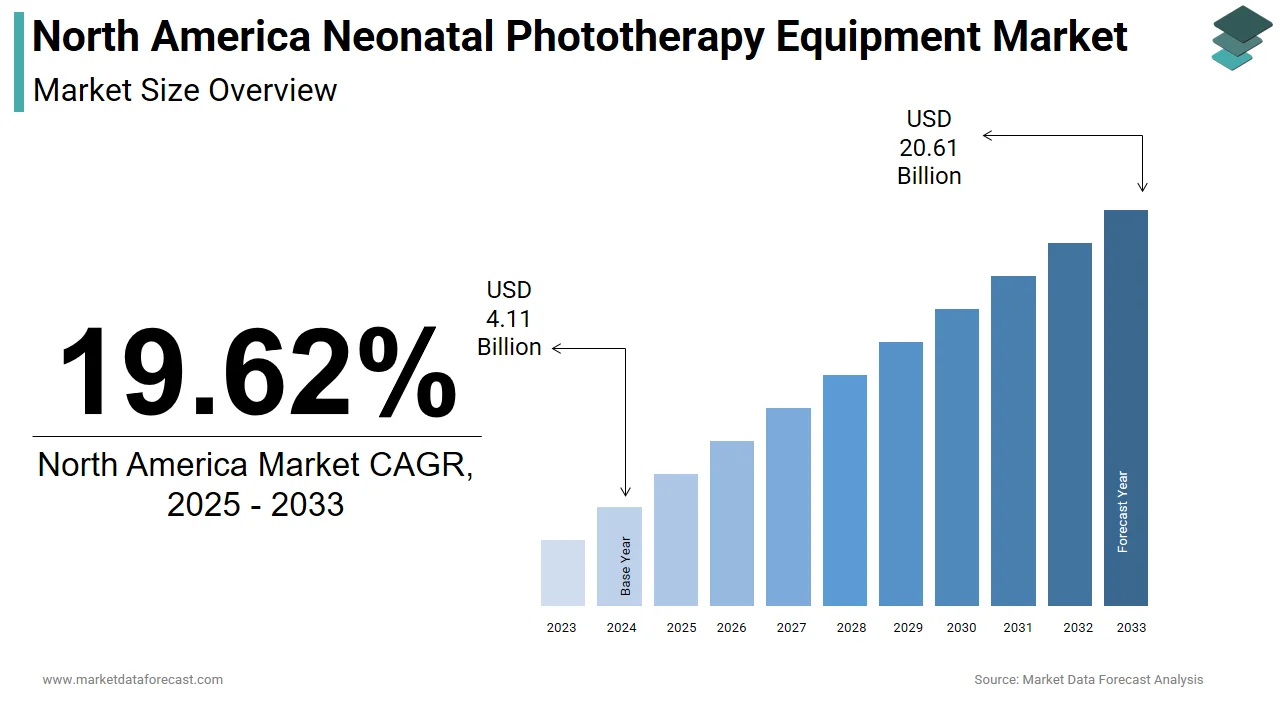
- Market Valuation: Valued at USD 4.92 billion in 2025, estimated at USD 5.89 billion in 2026, and projected to reach USD 24.67 billion by 2034, registering a remarkable CAGR of 19.62% from 2026 to 2034.
- Primary Growth Drivers: High prevalence of neonatal jaundice (affecting approx. 60% of newborns in the US), cost-effective healthcare limitations, family-centered infant care advantages, increasing government and institutional investments, rising sales of LED-based systems, and FDA approvals for home-based phototherapy devices.
Key Market Segment Metrics (2026–2034)
| Category | Leading Segment (2025 Position) | Fastest-Growing / Preferred Segment |
|---|---|---|
| By Type | LED Phototherapy Equipment (led demand due to energy efficiency, minimal hyperthermia risks, and high adoption) | LED-based and Home-Based Phototherapy Equipment |
| By End User | Hospitals & Clinics (dominant healthcare settings for acute neonatal management) | Home Users (expanding rapidly with portable, FDA-approved home care devices) |
| By Application | Neonatal Jaundice Management (primary clinical indication) alongside skin disease treatments. | |
| By Country / Region | United States (market leader holding the most prominent position backed by advanced healthcare infrastructure) | Canada (predicted to grow fastest during the projection period due to increasing awareness and healthcare build-out) alongside Mexico and Rest of North America. |
Major Market Players & Market Structure
Market Structure: Highly competitive medical device sector featuring established international healthcare leaders and specialized manufacturers competing on advanced LED technology, safety compliance, and home-care device portability.
Key Companies: Herbert Waldmann GmbH & Co. KG, GE Healthcare, Atom Medical Corporation, National Biological Corp., Solarc Systems Inc., Philips Lighting Holding B.V., Phoenix Medical Systems Pvt. Ltd., Nice Neotech Medical Systems Pvt. Ltd., and Natus Medical Incorporated.
North America Neonatal Phototherapy Equipment Market Size
The size of the North America neonatal phototherapy equipment market was worth USD 4.92 billion in 2025. The market is anticipated to grow at a CAGR of 19.62% from 2026 to 2034 and be worth USD 24.67 billion by 2034, up from USD 5.89 billion in 2026.
Neonatal phototherapy equipment is a specialized medical device designed to treat hyperbilirubinemia or jaundice in newborn infants through the application of specific wavelengths of light. The demand for these devices is intrinsically linked to neonatal health outcomes and the prevalence of preterm births, which heighten susceptibility to elevated bilirubin levels. According to the Centers for Disease Control and Prevention, approximately 10% of babies born in the United States are preterm, creating a substantial patient pool requiring intensive care interventions including phototherapy. Regulatory standards set by the Food and Drug Administration ensure safety and efficacy, driving innovation in light-emitting diode technology. Healthcare providers increasingly prioritize equipment that minimizes disruption to infant sleep and feeding schedules.
MARKET DRIVERS
High Prevalence of Preterm Births Driving Clinical Demand
The elevated incidence of preterm births, as premature infants possess immature liver functions that significantly impair their ability to process bilirubin effectively, is escalating the growth of the North America neonatal phototherapy equipment market. These infants are at a substantially higher risk for developing severe hyperbilirubinemia due to increased red blood cell breakdown and reduced hepatic conjugation capacity. This statistical correlation directly fuels the demand for advanced phototherapy units in neonatal intensive care units across hospitals. The complexity of caring for preterm infants necessitates equipment that offers precise irradiance control and thermal stability to prevent hypothermia. Healthcare facilities are investing in high-efficiency LED-based systems that provide consistent therapeutic doses without causing overheating. The growing number of multiple births further exacerbates this demand, as twins and triplets have higher rates of prematurity.
Stringent Regulatory Standards Promoting Technological Advancement
The rigorous regulatory framework established by health authorities by mandating the adoption of safer and more effective technologies is another attribute promoting the growth of the North America neonatal phototherapy equipment market. According to the Food and Drug Administration, medical device manufacturers must adhere to strict performance standards regarding spectral output and irradiance uniformity to ensure patient safety and treatment efficacy. This regulatory pressure compels companies to phase out older fluorescent technologies in favor of light-emitting diode systems that offer superior precision and longevity. The emphasis on evidence-based practice drives healthcare providers to procure equipment with validated clinical outcomes. Manufacturers respond by integrating smart sensors and monitoring capabilities that provide real-time feedback on delivery parameters. This regulatory environment fosters innovation and raises the baseline quality of care available to newborns.
MARKET RESTRAINTS
High Initial Costs of Advanced LED Systems Restraining Adoption
The substantial upfront investment required for advanced light-emitting diode-based phototherapy systems, particularly for smaller healthcare facilities and rural clinics, is hindering the growth of the North America neonatal phototherapy equipment market. The financial burden is prohibitive for community hospitals operating on tight margins where budget allocations for neonatal care are often limited. As per data from the American Hospital Association, nearly 30% of rural hospitals face significant financial challenges that restrict their ability to invest in new medical equipment upgrades. The high capital expenditure delays the transition to energy-efficient and durable LED technologies, which offer lower long-term operational costs. Smaller facilities may continue to use outdated equipment that requires frequent bulb replacements and generates excessive heat, increasing maintenance burdens. The lack of standardized reimbursement rates for specific phototherapy technologies further complicates procurement decisions. Hospitals struggle to justify the return on investment when older methods remain clinically acceptable, albeit less efficient.
Limited Awareness of Home-Based Phototherapy Options
The limited awareness among parents and healthcare providers regarding the viability and safety of home-based phototherapy options is hindering the growth of the North America Neonatal Phototherapy Equipment Market. According to the Journal of Perinatology, many pediatricians remain hesitant to prescribe home phototherapy due to concerns about monitoring accuracy and parental compliance with treatment protocols. This clinical hesitation restricts the market potential for portable and rental devices that could alleviate hospital congestion and reduce healthcare costs. The perception that hospital care is inherently safer leads to unnecessary admissions for conditions that could be managed effectively at home. Insurance providers often lack clear policies covering home phototherapy equipment rentals, creating additional barriers to access. The lack of standardized training programs for caregivers on using home devices further exacerbates provider reluctance.
MARKET OPPORTUNITIES
Integration of Smart Monitoring Technologies Creating Opportunities
The integration of smart monitoring technologies and Internet of Things connectivity, by enhancing treatment precision and enabling remote patient management, is solely attributed to promote new opportunities for the growth of the North America neonatal phototherapy equipment market. Smart phototherapy units equipped with sensors can continuously monitor irradiance levels, skin temperature, and infant positioning, ensuring optimal therapeutic delivery without manual intervention. As per data from the Healthcare Information and Management Systems Society, remote monitoring capabilities can reduce nursing workload by automating documentation and alerting staff only when adjustments are needed. This efficiency gain allows healthcare providers to manage more patients effectively while maintaining high standards of care. The ability to transmit data to electronic health records facilitates seamless coordination among multidisciplinary teams. Parents can also access real-time information through mobile applications, reducing anxiety and improving engagement in the care process. Manufacturers are collaborating with software developers to create interoperable systems that integrate with existing hospital infrastructure. This technological convergence opens new revenue streams through subscription-based services and data analytics platforms.
Expansion of Telehealth Services Supporting Home Care Models
The rapid expansion of telehealth services by facilitating the safe and effective implementation of home-based treatment protocols is another factor to fuel the growth of the North America neonatal phototherapy equipment market. According to the American Medical Association, telehealth visits accounted for over 30% of all outpatient consultations in recent years, highlighting the shift toward virtual care models. Integrating phototherapy equipment with telehealth platforms allows clinicians to remotely monitor infant progress, adjust treatment parameters, and provide immediate guidance to parents. As per data from the Centers for Medicare and Medicaid Services, reimbursement policies for telehealth services have expanded, making it financially viable for providers to offer remote management of jaundice cases. This support encourages the adoption of portable phototherapy devices that can be rented or purchased for home use. The convenience of home treatment reduces hospital readmission rates and lowers overall healthcare costs for insurers. Parents benefit from the comfort of their own environment, which promotes bonding and breastfeeding continuity. Manufacturers are developing user-friendly devices with simplified interfaces and built-in communication features to support this model. Partnerships between device makers and telehealth providers create bundled offerings that appeal to value-conscious consumers.
MARKET CHALLENGES
Reimbursement Uncertainties for Newer Technologies Challenging Growth
The uncertainties surrounding reimbursement policies for newer phototherapy technologies, by creating financial risks for healthcare providers and manufacturers is a huge challenge for the growth of the North American neonatal phototherapy equipment market. Many payers classify innovative features such as smart monitoring or LED efficiency as experimental or cosmetic rather than medically necessary, resulting in claim denials. Hospitals hesitate to invest in premium devices if they cannot guarantee adequate reimbursement to cover acquisition and maintenance costs. The lack of specific coding for newer technologies forces providers to use generic codes that may not reflect the true value of the equipment. This ambiguity stifles innovation as companies struggle to recover research and development expenses.
Supply Chain Disruptions Affecting Component Availability
The ongoing volatility in global supply chains and raw material availability, by impacting production timelines and product costs, is also to decline the growth of the North America neonatal phototherapy equipment market. The manufacturing sector has faced persistent disruptions due to geopolitical tensions and logistical hurdles, affecting the availability of key components such as semiconductors and specialized LEDs. These cost increases are often passed on to healthcare providers, making equipment less affordable in a price-sensitive market. Delays in shipping from overseas suppliers further exacerbate inventory shortages, leading to stockouts of critical devices during peak demand periods. Manufacturers relying on just-in-time inventory systems are particularly vulnerable to these fluctuations, forcing them to hold larger safety stocks, which ties up capital. The scarcity of specific chips affects the production of smart phototherapy units, slowing down the launch of innovative products. Small and medium-sized enterprises face greater difficulties in negotiating favorable terms with suppliers compared to larger corporations. Ensuring supply chain resilience requires diversification of sourcing strategies and investment in local manufacturing capabilities, which involve high upfront costs and time.
REPORT COVERAGE
| REPORT METRIC | DETAILS |
| Market Size Available | 2025 to 2034 |
| Base Year | 2025 |
| Forecast Period | 2026 to 2034 |
| Segments Covered | By Type, End User, Application, and Country. |
| Various Analyses Covered | Global, Regional, and Country-Level Analysis, Segment-Level Analysis, Drivers, Restraints, Opportunities, Challenges; PESTLE Analysis; Porter’s Five Forces Analysis, Competitive Landscape, Analyst Overview of Investment Opportunities |
| Countries Covered |
|
| Market Leaders Profiled | Herbert Waldmann GmbH & Co. KG, GE HealthCare, Atom Medical Corporation, National Biological Corp., Solarc Systems Inc., Dragerwerk AG & Co KGaA, Philips Lighting Holding B.V., Phoenix Medical Systems Pvt. Ltd., Nice Neotech Medical Systems Pvt. Ltd., Natus Medical Inc, and Others. |
SEGMENTAL ANALYSIS
By Type Insights
The LED phototherapy equipment segment held a dominant share of the North America Neonatal Phototherapy Equipment Market in 2025 due to its superior energy efficiency, longer lifespan, and enhanced safety profile compared to traditional fluorescent systems. The dominance of LED phototherapy equipment is primarily driven by its exceptional energy efficiency, which significantly reduces operational costs for healthcare facilities managing high volumes of neonatal patients. According to the U.S. Department of Energy, LED lighting systems consume up to 75% less energy than incandescent and fluorescent lighting, resulting in substantial electricity savings for hospitals operating continuous medical devices. LED units generate minimal heat, reducing the need for additional cooling systems in neonatal wards and preventing thermal stress on infants. This reduction in maintenance labor and material costs makes LED systems economically attractive for both large medical centers and smaller clinics. The direct correlation between lower total cost of ownership and procurement decisions ensures that LED technology remains the preferred choice for hospital upgrades.
The fiber optic phototherapy equipment segment is likely to grow at the fastest CAGR of 7.8% during the forecast period. The unique ability to allow continuous skin-to-skin contact between mother and infant during treatment, which is crucial for emotional bonding and breastfeeding success. According to the World Health Organization, early and continuous skin-to-skin contact improves breastfeeding rates by 30% and enhances infant physiological stability. Traditional overhead units often require separating the infant from the parent or placing them in an incubator, which can disrupt this critical interaction. As per data from the Academy of Breastfeeding Medicine, fiber optic blankets can be wrapped around the infant while being held or breastfed, enabling simultaneous therapy and nurturing. This flexibility is highly valued by parents and healthcare providers who prioritize family-centered care models. The portable nature of fiber optic devices allows treatment to continue in postpartum rooms rather than restricting it to the neonatal intensive care unit. This decentralization of care reduces parental anxiety and promotes a more positive hospital experience. The growing emphasis on holistic neonatal care drives the adoption of these versatile devices.
By End User Insights
The hospitals and clinics segment was the largest by capturing 56.4% of the North America Neonatal Phototherapy Equipment Market share in 2025, with the concentration of high-risk neonatal cases including preterm infants and those with severe hyperbilirubinemia, who require immediate and intensive medical intervention. According to the Centers for Disease Control and Prevention, over 90% of preterm births occur in hospital settings where specialized neonatal intensive care units are equipped to manage complex respiratory and metabolic conditions. These facilities possess the necessary infrastructure, such as incubators and continuous monitoring systems, that integrate seamlessly with advanced phototherapy equipment. Severe jaundice cases often co-occur with other complications such as sepsis or hemolytic disease, requiring multidisciplinary management only available in hospital environments. The availability of trained neonatologists and nurses ensures safe administration of intensive phototherapy, which involves higher irradiance levels and strict temperature control. Hospitals also have immediate access to laboratory services for frequent bilirubin testing, allowing for real-time adjustment of treatment protocols.
The home users segment is lucratively growing at the fastest CAGR of 9.5% during the forecast period, with the shift towards decentralized care and cost containment strategies. The increasing preference for family-centered care models that prioritize parental involvement and comfort during neonatal treatment. According to the Patient Experience Journal, families report higher satisfaction scores when medical interventions can be performed in the home environment, reducing stress and promoting bonding. As per data, home-based phototherapy allows mothers to maintain breastfeeding routines and sleep patterns, which are often disrupted in hospital settings. This continuity of care supports infant weight gain and emotional stability, contributing to better overall outcomes. Parents are becoming more empowered through education programs that teach them how to safely operate portable phototherapy devices under remote clinical supervision. The psychological benefit of staying in a familiar environment reduces parental anxiety and improves adherence to treatment schedules. Healthcare providers are increasingly recognizing the value of home care in reducing hospital-acquired infections and promoting mental well-being for both infants and parents.
By Application Insights
The neonatal jaundice management segment accounted for 44.2% of the North America Neonatal Phototherapy Equipment Market share in 2025. The high incidence of physiological hyperbilirubinemia, which affects a significant proportion of newborns in the first week of life. According to the American Academy of Pediatrics, approximately 60% of full-term infants and 80% of preterm infants develop visible jaundice requiring monitoring and potential intervention. This widespread prevalence creates a consistent and high-volume demand for phototherapy equipment in birthing centers and hospitals. The critical need to prevent this outcome ensures that phototherapy remains a standard protocol in neonatal care. Healthcare providers routinely screen all newborns for bilirubin levels, leading to early identification and treatment initiation. The universal nature of this condition means that virtually every facility delivering babies must have access to phototherapy devices. This baseline requirement sustains the segment's market leadership regardless of fluctuations in other disease categories.
The skin disease treatment segment is likely to grow at the fastest CAGR of 6.2% from 2026 to 2034 with the expanding indications for light therapy in dermatological conditions. The increasing diagnosis and management of various neonatal dermatological conditions such as eczema, psoriasis, and vitiligo using specialized light therapy. As per data, the use of narrowband UVB therapy for pediatric skin conditions has increased by 15% annually as clinicians seek non-systemic alternatives to avoid side effects associated with oral medications. Phototherapy offers a targeted approach that minimizes exposure to healthy skin, while effectively reducing inflammation and itching. The development of safer LED-based devices with specific wavelengths tailored for dermatological use has expanded the applicability of phototherapy beyond jaundice. Parents are increasingly seeking natural and non-invasive treatments for their children, driving demand for home-based dermatological phototherapy units.
COUNTRY LEVEL ANALYSIS
U.S. Neonatal Phototherapy Equipment Market Analysis
The United States was the top performer of the North America Neonatal Phototherapy Equipment Market by holding 89.1% of the share in 2025 due to its advanced healthcare infrastructure, high prevalence of preterm births, and robust reimbursement mechanisms. According to the Centers for Disease Control and Prevention, the preterm birth rate in the United States remains around 10.4%, generating consistent demand for neonatal intensive care equipment, including phototherapy units. The presence of major manufacturers and stringent FDA regulations drive high standards for equipment quality and safety. Private insurance coverage and Medicaid programs facilitate access to both hospital and home-based phototherapy services. The trend towards value-based care encourages the adoption of efficient LED and fiber optic systems that reduce length of stay.
Canada Neonatal Phototherapy Equipment Market Analysis
Canada neonatal phototherapy equipment market was ranked second, holding a 9.1% share in 2025, with publicly funded healthcare systems and a strong emphasis on equitable access to neonatal care services. According to Statistics Canada, the rate of preterm births in Canada is approximately 8%, which is slightly lower than the United States but still drives substantial demand for phototherapy equipment. As per data from the Canadian Institute for Health Information, public spending on hospital care ensures that most neonatal units are well equipped with standard phototherapy devices. The government supports research and development in medical technologies, fostering innovation in local universities and companies. Home care programs are expanding to support families in remote areas, increasing demand for portable units. Regulatory harmonization with international standards facilitates the entry of global manufacturers. The focus on family-centered care promotes the adoption of fiber optic and home-based solutions.
COMPETITIVE LANDSCAPE
The competition in the North America Neonatal Phototherapy Equipment Market is characterized by a mix of established global medical device manufacturers and specialized niche players striving to differentiate through innovation and service quality. Large multinational corporations dominate the hospital segment with integrated high-end systems leveraging their strong research and development capabilities and extensive distribution networks. Smaller companies compete aggressively in the home care and portable device segments by offering cost-effective and user-friendly alternatives that appeal to parents and outpatient clinics. Price competition remains intense for standard LED units, leading to frequent promotional activities and value-added services. Differentiation increasingly relies on features such as portability, ease of use, and integration with telehealth platforms rather than just clinical efficacy. Regulatory compliance with safety standards serves as a significant barrier to entry, ensuring that only qualified manufacturers can participate. Customer support and after-sales service have become critical competitive factors as consumers seek guidance on device operation and maintenance.
KEY MARKET PLAYERS
The leading companies operating in the North America neonatal phototherapy equipment market include:
- Herbert Waldmann GmbH & Co. KG
- GE HealthCare
- Atom Medical Corporation
- National Biological Corp.
- Solarc Systems Inc.
- Drägerwerk AG & Co. KGaA
- Philips Lighting Holding B.V.
- Phoenix Medical Systems Pvt. Ltd.
- Nice Neotech Medical Systems Pvt. Ltd.
- Natus Medical Inc.
TOP PLAYERS IN THE MARKET
- GE HealthCare Technologies Inc maintains a strong presence in the North America Neonatal Phototherapy Equipment Market through its comprehensive portfolio of advanced neonatal care solutions. The company actively collaborates with hospitals to integrate phototherapy units with existing incubator systems for seamless patient management. Recently, GE HealthCare launched new LED-based phototherapy devices that offer precise irradiance control and enhanced energy efficiency for neonatal intensive care units. The firm invests heavily in research and development to improve light uniformity and reduce heat emission, ensuring infant safety and comfort. GE HealthCare also provides extensive training programs for clinical staff on optimal device usage and maintenance protocols. Its commitment to innovation and quality reinforces its reputation as a trusted partner in neonatal healthcare.
- Natus Medical Incorporated contributes significantly to the North American neonatal phototherapy equipment market by offering specialized fiber optic and LED phototherapy systems designed for effective jaundice treatment. The company leverages its expertise in neonatal care to develop portable and lightweight devices that facilitate home-based therapy and hospital use. Recently, Natus Medical expanded its distribution network in Canada and the United States to improve access to its BiliBlanket Plus system among healthcare providers and families. The firm engages in educational initiatives to raise awareness about the benefits of early intervention and home care options for mild to moderate jaundice. Natus Medical also focuses on enhancing product durability and ease of cleaning to meet strict hygiene standards in clinical settings. Its strategic emphasis on patient-centric solutions and caregiver support drives adoption of its technologies.
- Dragerwerk AG & Co KGaA plays a pivotal role in the market by providing high-quality medical technology, including integrated phototherapy solutions for neonatal care. The company combines its engineering excellence with clinical insights to create devices that ensure consistent therapeutic light delivery. Recently, Drager introduced new modules for its incubators that feature advanced LED phototherapy capabilities, allowing for continuous monitoring and treatment without moving the infant. The firm partners with healthcare institutions to optimize workflow efficiency and improve patient safety through innovative design features. Drager also supports sustainability initiatives by developing energy-efficient equipment that reduces environmental impact and operational costs. Its focus on reliability and precision makes its products a preferred choice for critical care environments.
TOP STRATEGIES USED BY KEY MARKET PARTICIPANTS
Key players in the North America Neonatal Phototherapy Equipment Market primarily employ strategies such as continuous product innovation focused on improving energy efficiency and patient comfort through advanced LED and fiber optic technologies. Companies increasingly engage in strategic partnerships with healthcare providers and insurance companies to facilitate reimbursement and promote home-based care models. Expansion of distribution channels through online platforms and specialized medical suppliers allows manufacturers to reach both institutional and individual consumers effectively. Educational initiatives targeting parents and clinicians help drive awareness about the safety and efficacy of modern phototherapy devices. Manufacturers also focus on regulatory compliance and quality assurance to maintain trust and meet stringent safety standards.
MARKET SEGMENTATION
This research report on the North America Neonatal Phototherapy Equipment Market has been segmented and sub-segmented into the following categories
By Type
- Conventional Phototherapy Equipment
- LED Phototherapy Equipment
- Fiber Optic Phototherapy Equipment
By End User
- Hospital & Clinics
- Home Users
By Application
- Skin disease treatment
- Neonatal Jaundice Management
By Country
- U.S
- Canada
- Rest of North America