- Product Description Description
- Table of Contents TOC
- List of Table & Figure LOT
- Get Free Sample PDF Sample PDF
Market Size, 2025
$0.55 BnMarket Estimate, 2026
$0.58 BnMarket Forecast, 2034
$0.83 BnCAGR, 2026–2034
4.54%Executive Summary: North America Pregnancy Testing Market
- Market Scope: Comprehensive North American pregnancy testing market analysis covering product types (strip tests, midstream kits, cassettes, and digital tests), test types, distribution channels, country-level landscapes, and technological innovations.
- Market Valuation: Valued at USD 0.55 billion in 2025, estimated at USD 0.58 billion in 2026, and projected to reach USD 0.83 billion by 2034, registering a compound annual growth rate (CAGR) of 4.54% from 2026 to 2034.
- Primary Growth Drivers: Escalating first-time-age pregnancies, rising rates of unplanned pregnancies, technological advancements yielding quick and accurate digital test formats, increasing demand for self-detecting home kits, and strong consumer awareness regarding family planning and reproductive health. Key market restraints include the high cost of advanced kits, low adoption rates in certain demographics, potential inaccuracies (false positives/negatives), and strict regulatory compliance requirements.
Key Market Segment Metrics (2026–2034)
| Category | Leading Segment (2025 Position) | Fastest-Growing Segment |
|---|---|---|
| By Product Type | Pregnancy Test Kits (Midstream and strip tests captured the majority share due to affordability, ease of use, and rapid availability) | Digital Tests (expanding rapidly driven by consumer preferences for clear digital readouts and higher sensitivity features) |
| By Test Type | hCG Urine Test (dominates over-the-counter and self-testing segments owing to non-invasive home usability) | hCG Blood & Fertility Tests (witnessing steady integration within specialty clinics and advanced family planning) |
| By Distribution Channel | Pharmacies & Drug Stores (led distribution via widespread over-the-counter retail access) | Online Retail (growing rapidly due to discreet purchasing options and e-commerce expansion) |
| By Country | The United States (dominated the regional market backed by key industry players, millennial demographic trends, and high disposable income) | Canada (projected to record steady growth supported by high healthcare standards and expanding digital health adoption) |
Major Market Players & Market Structure
Market Structure: Highly competitive consumer diagnostics and medical device landscape featuring major multinational corporations focusing on joint marketing, product differentiation, sensitivity improvements, and eco-friendly innovations (e.g., biodegradable kits).
Key Companies: Abbott Laboratories, Cardinal Health, Church & Dwight, Germaine Laboratories, Kent Pharmaceuticals, Piramal Enterprises, Prestige Brands Holdings, Procter & Gamble Co., Quidel Corporation, and SPD Swiss Precision Diagnostics.
North America Pregnancy Testing Market Size
The North America Pregnancy Testing Market is projected to grow from USD 0.55 billion in 2025 to USD 0.58 billion in 2026 and reach USD 0.83 billion by 2034, registering a CAGR of 4.54% from 2026 to 2034.
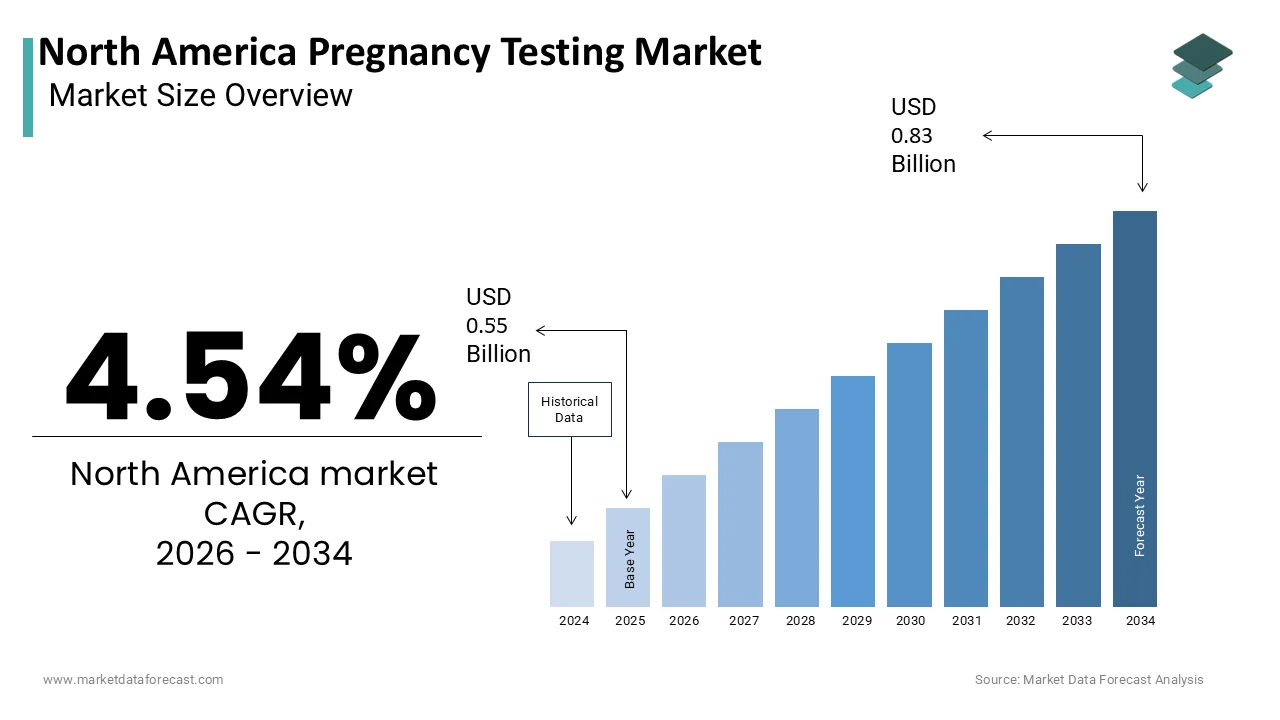
Pregnancy testing is designed to detect human chorionic gonadotropin levels in urine or blood to confirm pregnancy status. This sector includes home-use test kits, clinical laboratory assays, and point-of-care devices that cater to both planned and unplanned pregnancies across the United States, Canada, and Mexico. According to the Centers for Disease Control and Prevention, approximately 3.6 million births occur annually in the United States, underscoring the consistent baseline demand for accurate early detection methods. As per data from the Guttmacher Institute, nearly half of all pregnancies in the United States are unintended,d highlighting the critical need for accessible and reliable testing options for timely decision-making. Regulatory bodies such as the Food and Drug Administration maintain strict oversight on device accuracy and safety, ensuring high standards for consumer products. The shift toward personalized healthcare and increased awareness of reproductive health further drives the adoption of advanced testing solutions.
MARKET DRIVERS
High Prevalence of Unintended Pregnancies Driving Demand for Accessibility
The significant rate of unintended pregnancies and the widespread adoption of home-based and over-the-counter pregnancy testing solutions are solely promoting the growth of the North America pregnancy testing market. According to the Guttmacher Institute, approximately 45% of all pregnancies in the United States are unintended, creating an urgent need for discreet and immediate confirmation methods for women seeking to make timely reproductive health decisions. As per statistics from the Canadian Community Health Survey, similar trends are observed in Canada, where access to confidential testing is crucial for individuals navigating complex healthcare systems. This demographic reality directly influences market dynamics as consumers prioritize convenience, privacy,y and speed when selecting testing products. The availability of highly sensitive home test kits allows users to obtain results within minutes without visiting a clinic,c thereby reducing barriers to access. Public health initiatives promoting sexual health education further increase awareness of early detection benefits, encouraging proactive testing behavior. Retail pharmacies and online platforms have expanded their offerings to include diverse test formats catering to varying consumer preferences and budget constraints.
Increasing Focus on Early Prenatal Care and Maternal Health Outcomes
The growing emphasis on early prenatal care and improved maternal health outcomes, significantly propelling the growth of the North America pregnancy testing market. According to the American College of Obstetricians and Gynecologists, initiating prenatal care during the first trimester reduces the risk of complications such as preterm birth and low birth weight by up to 50%. This clinical imperative directly drives market expansion, as healthcare providers recommend sensitive testing methods to ensure prompt enrollment in prenatal programs. The integration of pregnancy testing into routine wellness visits and telehealth consultations further facilitates early detection. Insurance coverage for preventive care services under the Affordable Care Act encourages women to seek confirmation and subsequent care without financial burden. Manufacturers respond by developing tests with lower detection thresholds capable of identifying pregnancy days before a missed period. This alignment between clinical guidelines and consumer behavior ensures steady demand for high-performance testing products that support optimal maternal and fetal health throughout the pregnancy journey.
MARKET RESTRAINTS
Stringent Regulatory Requirements for Device Approval
The rigorous regulatory frameworks governing the approval and marketing of pregnancy testing devices are hindering the growth of the North America pregnancy testing market. According to the Food and Drug Administration, Class II medical devices, including home pregnancy tests,s require extensive premarket notification and validation studies to demonstrate substantial equivalence to existing predicates. As per data from the Medical Device User Fee Amendments, the average review time for new diagnostic submissions can extend beyond 90 days with additional delays if clinical data requirements are not fully met. The need for continuous post-market surveillance and adherence to quality system regulations further adds to operational burdens. Any deviation from strict labeling and accuracy standards can result in recalls or warning letters, damaging brand reputation and consumer trust. Consequently, companies may hesitate to introduce novel features or technologies due to the uncertainty and expense associated with regulatory compliance.
Consumer Awareness Regarding Home Test Accuracy
Persistent consumer awareness regarding the accuracy and reliability of home pregnancy tests compared to clinical laboratory results is also inhibiting the growth of the North America pregnancy testing market. According to a survey published by the Journal of Medical Internet Research,h approximately 20% of users report false negative results due to improper usage or testing too early in the pregnancy cycle. Misleading marketing claims about early detection capabilities often exacerbate these issues when real-world performance does not match expectations. The lack of standardized user instructions across different brands contributes to variability in results. Furthermore, the emotional stress associated with potential pregnancy amplifies the impact of any perceived inaccuracies. Manufacturers face challenges in educating consumers on proper testing protocols and interpreting results correctly.
MARKET OPPORTUNITIES
Integration of Digital Health and Smart Connectivity Features
The integration of digital health technologies and smart connectivity into pregnancy testing devices for enhancing user experience and data management is expected to bolster new opportunities for the growth of the North America pregnancy testing market. According to the Pew Research Center, over 85% of adults in the United States own a smartphone, creating a vast platform for connecting physical tests with digital applications for result tracking and health monitoring. As per data from the Mobile Health Network, apps that integrate with Bluetooth-enabled pregnancy tests have seen a 40% increase in downloads over the past two years, indicating strong consumer interest in connected health solutions. This technological synergy directly benefits the market by offering added value beyond simple binary results,s such as ovulation tracking and prenatal care reminders. Manufacturers can leverage this trend to develop ecosystems that provide personalized insights and connect users with healthcare providers for immediate follow-up. The ability to store and share historical data securely appeals to tech-savvy consumers who prioritize comprehensive health management. Additionally, digital platforms enable companies to gather anonymized data for research and product improvement. This innovation pathway allows brands to differentiate themselves in a crowded market by offering holistic reproductive health solutions rather than standalone diagnostic tools, driving premium pricing and customer loyalty.
Expansion into Telehealth and Remote Consultation Services
The rapid expansion of telehealth services for pregnancy testing manufacturers to integrate their products with remote medical consultations and counseling services are additionally to escalate the growth of the North America pregnancy testing market. This shift directly creates demand for testing kits that are prescribed or recommended during virtual visits and shipped directly to patients' homes. Manufacturers can partner with telehealth providers to bundle testing products with consultation services,s creating seamless care pathways. This model enhances accessibility for individuals in rural areas or those with limited mobility. Furthermore, it allows for immediate medical guidance upon positive results, thus improving continuity of care. Regulatory changes permitting reimbursement for telehealth services further support this model.
MARKET CHALLENGES
Market Saturation and Intense Price Competition
The high level of market saturation and intense price competition among numerous established and generic brands to profitability and brand differentiation are to act as a major barrier to the growth of the North American pregnancy testing market. According to the Consumer Healthcare Products Association, the over-the-counter pregnancy test segment is dominated by a few major players, who control over 70% of retail shelf space, leaving limited room for new entrants. Small and mid-sized companies struggle to gain visibility against aggressive marketing campaigns from industry giants. The commoditization of basic testing products makes it difficult to justify premium pricing without distinct technological advantages. Consequently, companies must invest heavily in branding and niche product development to stand out, which increases operational costs. This environment creates pressure to constantly innovate while maintaining affordability,y challenging the sustainability of smaller players and limiting the diversity of affordable options available to price-sensitive consumers in the long term.
Variability in Insurance Reimbursement Policies
Inconsistent insurance reimbursement policies for pregnancy testing services and devices create financial barriers and administrative complexities for both consumers and healthcare providers. The variability in insurance reimbursement policies also hinders the growth of the North American pregnancy testing market. Over-the-counter pregnancy tests vary significantly across different insurance plans, with many requiring a prescription for reimbursement, which adds an extra step and cost for users. This variability directly affects market dynamics by discouraging some individuals from purchasing higher-quality or digital tests due to lack of financial support. Healthcare providers also face challenges in billing for point-of-care tests performed in clinics, leading to inconsistent adoption of rapid testing protocols. The complexity of navigating insurance requirements creates friction in the patient journey, potentially delaying confirmation and care initiation. Manufacturers must navigate this fragmented reimbursement landscape by offering flexible pricing models and advocating for policy changes.
REPORT COVERAGE
| REPORT METRIC | DETAILS |
| Market Size Available | 2025 to 2034 |
| Base Year | 2025 |
| Forecast Period | 2026 to 2034 |
| Segments Covered | By Product Type, Test Type, and Country. |
| Various Analyses Covered | Global, Regional & Country Level Analysis, Segment-Level Analysis; DROC, PESTLE Analysis, Porter's Five Forces Analysis, Competitive Landscape, Analyst Overview of Investment Opportunities |
| Country Covered | The U.S., Canada, and the rest of North America |
| Market Leader Profiled | Abbott Laboratories, Cardinal Health, Church & Dwight, Germaine Laboratories |
SEGMENTAL ANALYSIS
By Product Insights
The pregnancy test kits segment was the largest,y holding 34.8% of the North America Pregnancy Testing Market share in 2025 due to their superior convenience, ease of use, and high accuracy, which align with consumer preferences for discreet home testing. According to the Consumer Healthcare Products Association, over 70% of women in the United States prefer using home pregnancy test kits rather than visiting a clinic for initial confirmation due to privacy concerns and immediate results. This statistical evidence highlights a direct correlation between user convenience and market dominance as manufacturers design kits that require minimal effort and provide clear visual indicators. The availability of multi-pack options further enhances value for consumers who may need to retest, ensuring brand loyalty and repeat purchases. Retailers prioritize shelf space for these popular formats,s driving visibility and accessibility. The simplicity of midstream tests, ts which do not require sample collection in a separate container, ner reduces the risk of contamination and user error. User-centric design ensures that pregnancy test kits remain the primary choice for early detection, solidifying their leading position in the product segment across North America.
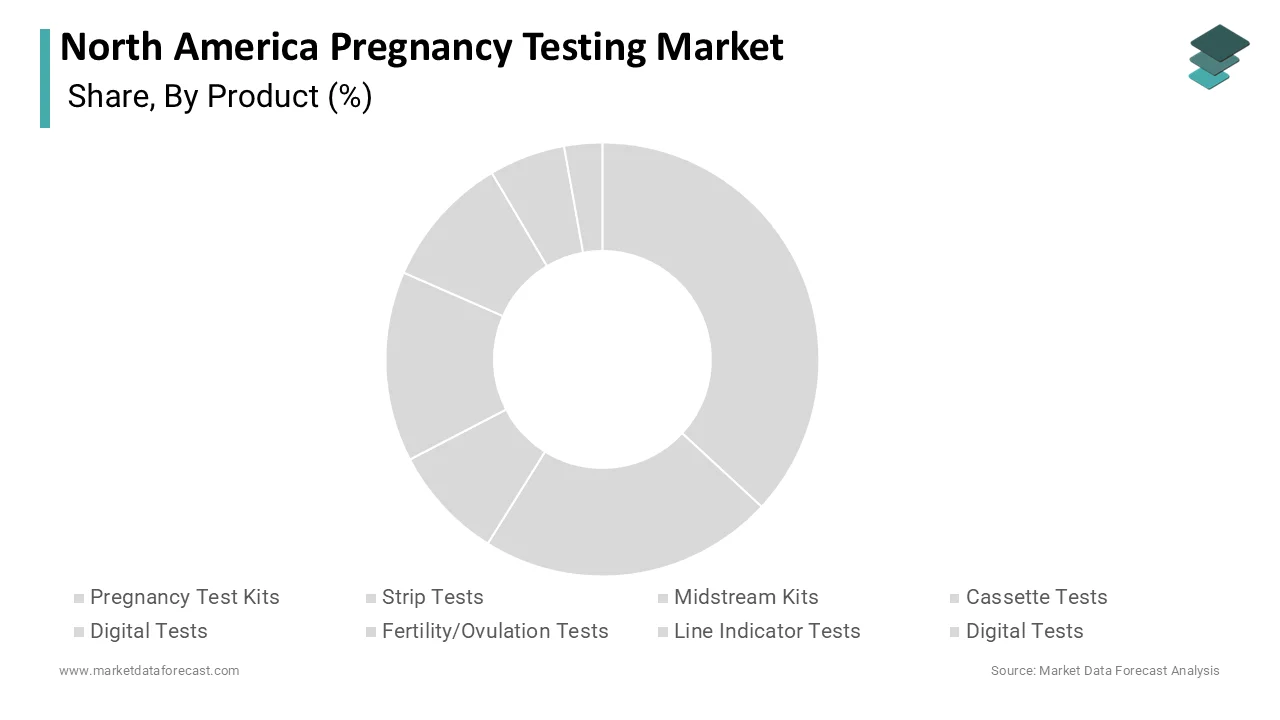
The digital pregnancy tests segment is likely to witness the fastest CAGR of 11.6% during the forecast period due to their integration of smart technology and elimination of interpretation errors associated with line-based tests. According to the Journal of Medical Internet Studies, digital tests reduce user misinterpretation rates by over 80% compared to traditional strip tests by providing clear word-based results such as pregnant or not pregnant. This trend directly benefits the market as tech-savvy users prefer devices that offer definitive answers without the stress of deciphering faint lines. The incorporation of Bluetooth connectivity in some models allows results to be synced with mobile applications for tracking and sharing with healthcare providers. This digital ecosystem enhances user engagement and provides additional value through personalized health insights. Manufacturers are leveraging this growth by introducing features such as countdown timers and progress indicators, which improve the user experience.
By Test Type Insights
The HCG urine tests segment held a dominant share of the North America Pregnancy Testing Market in 2025 due to their non-invasive nature,e ease of administration, and suitability for home use. As per data from the American College of Obstetricians and Gynecologists, urine tests are recommended as the first line of screening for suspected pregnancy because they are highly accurate when used after a missed period and cost-effective for widespread use. This clinical preference directly drives market dominance, as urine tests are accessible over the counter without a prescription. The ability to collect samples privately at home removes barriers related to clinic visits and scheduling. Manufacturers have optimized urine test sensitivity to match clinical standards, ensuring reliability. Public health campaigns promoting home testing further reinforce this practice. The low cost of production allows for competitive pricing,g making these tests affordable for a broad demographic.
The LH urine tests segment is swiftly emerging as the fastest CAGR of 12.2% from 2026 to 2034 due to rising awareness of fertility tracking and proactive family planning among couples in North America. According to the Resolve The National Infertility Association, 1 in 8 couples in the United States experience difficulty getting pregnant or sustaining a pregnancy, driving demand for ovulation prediction tools. This growing focus on fertility directly boosts market growth,h as LH tests help identify the fertile window, increasing chances of successful conception. Women are increasingly educated about their reproductive cycles through digital apps and health resources,s leading to higher adoption of ovulation kits. Manufacturers are bundling LH tests with pregnancy tests, ts creating comprehensive fertility monitors. The shift toward delayed childbearing in urban areas further amplifies the need for precise ovulation tracking.
By Distribution Channel Insights
The pharmacies segment was the largest, accounting for 49.1% of the North America Pregnancy Testing Market share in 2025 due to the high level of consumer trust in pharmaceutical retailers and the immediate availability of products. According to the National Community Pharmacists Association, over 80% of Americans live within five miles of a community pharmacy, making them the most accessible point of purchase for over-the-counter health products. This accessibility directly drives market dominance, as individuals often seek testing products urgently and prefer the convenience of local pickup. Pharmacists are perceived as trusted health advisors who can guide product selection and usage, enhancing consumer confidence. The presence of reputable national chains ensures consistent stock and quality assurance. Insurance flexible spending accounts often cover purchases at pharmacies,s further incentivizing this channel. The ability to consult with staff regarding privacy and accuracy reinforces the preference for pharmacy purchases. This combination of proximity, trust,t and professional support ensures that pharmacies remain the primary distribution channel for pregnancy testing products across the region.
The online retail segment is likely to witness the fastest CAGR of 10.6% during the forecast period, with the unparalleled privacy and discretion it offers to consumers. This privacy preference directly fuels market growth as individuals seek comfortable and confidential shopping experiences. Online platforms allow users to research products, read reviews,s and compare prices without pressure. The anonymity of online transactions appeals to younger demographics and those in conservative communities. Subscription services offered by online retailers ensure regular supply of testing kits for those tracking fertility. This convenience and discretion make online retail an increasingly attractive option for consumers prioritizing privacy in their health purchasing decisions.
COUNTRY LEVEL ANALYSIS
The United States Pregnancy Testing Market Analysis
The United States was the largest contributor, holding 89.1% of the North America Pregnancy Testing Market share in 2025, with its large population,n high healthcare expenditure, re and advanced retail infrastructure. As per data from the Guttmacher Institute, the high rate of unintended pregnancies and strong culture of home health management drive consistent demand for over-the-counter testing products. The presence of major global manufacturers and innovative startups fosters competition and product diversity. Regulatory clarity from the Food and Drug Administration ensures high safety standards, building consumer trust. The widespread adoption of digital health apps integrates seamlessly with home testing kits,s enhancing utility. Insurance coverage variations influence purchasing patterns, ns but out-of-pocket affordability remains high for basic tests.
Canada States Pregnancy Testing Market Analysis
Canada pregnancy testing market was ranked second, holding an 11.2% share in 2025, with universal healthcare coverage and growing interest in natural family planning methods. As per data, access to pregnancy tests is widespread in community pharmacies, with increasing online penetration in rural areas. Government funding for sexual health education promotes early detection and responsible family planning. The rising cost of living has increased demand for cost-effective home testing options over clinical visits. Cultural emphasis on privacy and autonomy supports the home testing trend. Regulatory alignment with international standards facilitates product availability. The market is expanding as digital health initiatives gain traction and consumers seek integrated reproductive health solutions. This stable environment ensures consistent demand and gradual adoption of advanced testing technologies across the country.
COMPETITIVE LANDSCAPE
The competition in the North America Pregnancy Testing Market is characterized by intense rivalry among established multinational corporations and emerging niche brands who strive to differentiate through technological innovation and brand reputation. Major competitors focus on developing high-sensitivity tests that offer earlier detection and reduced error rates to appeal to discerning consumers. Product differentiation is achieved through digital integration, smart connectivity,y and ergonomic designs that enhance user experience and convenience. Price competition remains significant, particularly in the standard strip test segment where private label alternatives from retailers exert pressure on branded products. Companies must balance affordability with perceived quality to maintain market share. Strategic partnerships with healthcare providers and telehealth platforms are increasingly common to expand reach and credibility. Regulatory compliance and clinical validation serve as key barriers to entry, ensuring that only reputable players dominate the shelf space. Marketing efforts heavily emphasize trust, accuracy,y and ease of use to influence purchasing decisions.
KEY MARKET PLAYERS
Some of the companies that are playing a dominating role in the North America Pregnancy Testing Market include:
- Abbott Laboratories
- Cardinal Health, Inc.
- Church & Dwight Co., Inc.
- Germaine Laboratories, Inc.
- Kent Pharmaceuticals
- Piramal Enterprises Ltd.
- Prestige Brands Holdings, Inc.
- Procter & Gamble Co.
- Quidel Corporation
- SPD Swiss Precision Diagnostics GmbH
TOP LEADING PLAYERS IN THE MARKET
- Church & Dwight Inc. maintains a strong presence in the North American pregnancy testing market through its flagship Clearblue brand, which is widely recognized for innovation and reliability in home pregnancy testing. The company consistently invests in research and development to introduce advanced digital tests with smart connectivity features that integrate with mobile applications for comprehensive fertility tracking. Recent actions include the launch of new ovulation and pregnancy test bundles designed to support women throughout their conception journey. Church & Dwight actively collaborates with healthcare professionals to promote early detection and accurate result interpretation. Their strategic focus on user-friendly design and high sensitivity ensures consumer trust and loyalty.
- Procter & Gamble Company contributes significantly to the North American pregnancy testing market with its First Response brand, which is renowned for its early detection capabilities and high accuracy standards. The company leverages its extensive global supply chain and retail partnerships to ensure widespread availability of its pregnancy test products in major pharmacies and supermarkets. Recent initiatives involve enhancing product packaging with clearer instructions and introducing compact designs for greater discretion and portability. Procter & Gamble focuses on educational campaigns that empower women with knowledge about early pregnancy signs and testing best practices. They have also integrated digital resources that provide personalized support and guidance post-testing. By prioritizing brand trust and clinical validation, Procter & Gamble reinforces its reputation for quality and reliability.
- QuidelOrtho Corporation plays a pivotal role in the market by offering a diverse portfolio of rapid diagnostic tests,s including highly sensitive pregnancy assays for both home and clinical use. The company combines expertise from Quidel and Ortho Clinical Diagnostics to deliver innovative solutions that meet stringent regulatory standards and clinical needs. QuidelOrtho actively partners with healthcare providers to streamline workflow efficiency and ensure accurate diagnostics. They invest heavily in manufacturing capabilities to support consistent product quality and availability. Their dedication to scientific rigor and customer support enables them to address evolving diagnostic requirements and strengthen their position as a trusted provider of reliable pregnancy testing solutions in North America.
TOP STRATEGIES USED BY KEY MARKET PARTICIPANTS
Key players in the North America Pregnancy Testing Market primarily employ product innovation strategies to differentiate their offerings through enhanced sensitivity, digital connectivity,y and user-friendly designs. Companies focus on expanding distribution networks by strengthening partnerships with major pharmacy chains and e-commerce platforms to ensure broad accessibility. Strategic marketing campaigns emphasize brand trust, accuracy,y and early detection capabilities to build consumer loyalty and drive preference. Manufacturers invest in educational initiatives to inform users about proper testing techniques and reproductive health management. Mergers and acquisitions are utilized to consolidate market position and acquire complementary technologies such as fertility tracking apps. These multifaceted strategies enable companies to maintain competitive advantages and respond effectively to changing consumer preferences and regulatory requirements in the dynamic healthcare sector.
NORTH AMERICA PREGNANCY MARKET NEWS
-
In December 2017, Lia Diagnostics Inc., an American Company, developed the first biodegradable pregnancy kits. The test will be available in the U.S. market in 2018.
-
In March 2017, the failed batches of the Genesis Biotech PregSure digital test were the subject of an urgent recall. As a result, Minco Import and Export's One Step Pregnancy Test was removed from the registered sponsor, and the supply ceased.
MARKET SEGMENTATION
This research report on the North America pregnancy testing market has been segmented and sub-segmented into the following categories.
By Product
- Pregnancy Test Kits
- Strip Tests
- Midstream Kits
- Cassette Tests
- Digital Tests
- Fertility/Ovulation Tests
- Line Indicator Tests
- Digital Tests
By Test Type
- HCG Blood Test
- HCG Urine Test
- LH Urine Test
- FSH Urine Test
By Distribution Channel
- Hospitals & Specialty Clinics
- Pharmacies
- Online Retail
- Others (Supermarkets and Specialty Retail)
By Country
- The United States
- Canada
- Rest of North America