- Product Description Description
- Table of Contents TOC
- List of Table & Figure LOT
- Get Free Sample PDF Sample PDF
Market Size, 2025
$2.80 BnMarket Estimate, 2026
$3.02 BnMarket Forecast, 2034
$5.51 BnCAGR, 2026–2034
7.81%Executive Summary: North America Safety Syringes Market
- Market Scope: Regional analysis of the North American safety syringes market covering technology types, therapy segments, end users, country-level insights, and needlestick injury prevention regulations.
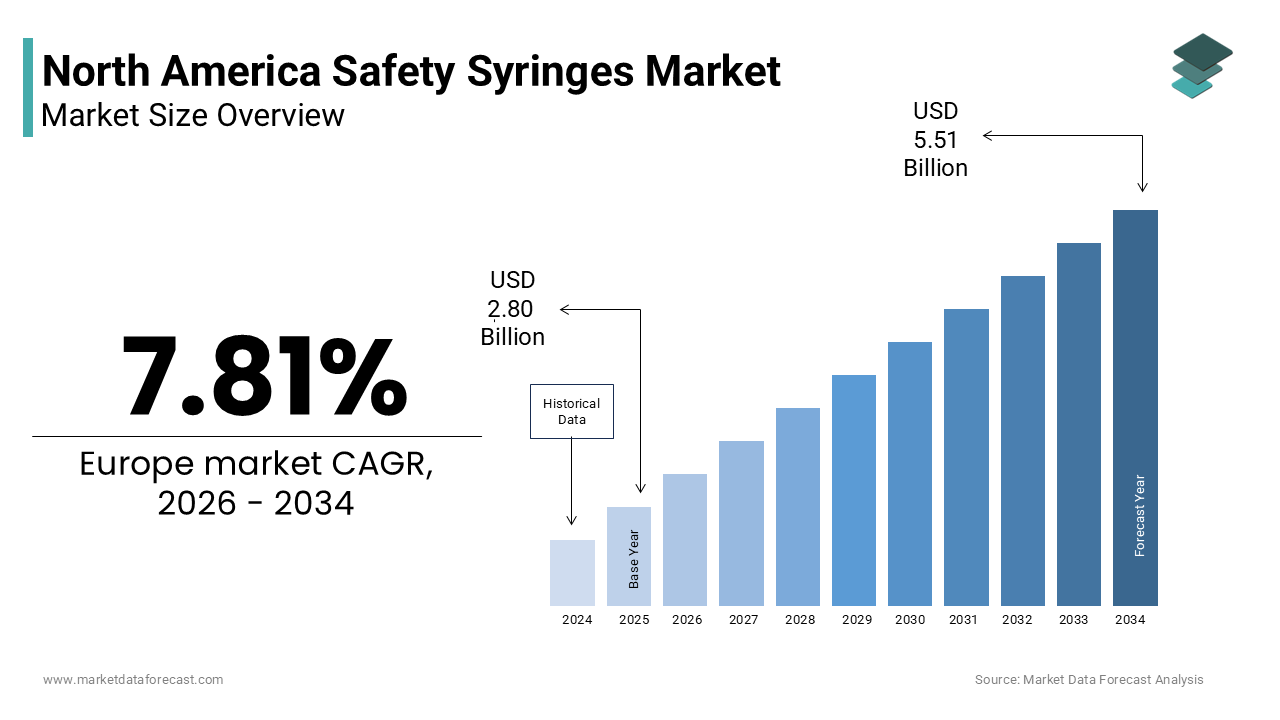
- Market Valuation: Valued at USD 2.80 billion in 2025, estimated at USD 3.02 billion in 2026, and projected to reach USD 5.51 billion by 2034, registering a solid CAGR of 7.81% from 2026 to 2034.
- Primary Growth Drivers: High prevalence of chronic conditions like diabetes and rising needlestick injuries; stringent government legislation mandating safety-engineered devices (e.g., Needlestick Safety and Prevention Act); and growing geriatric population bases.
Key Market Segment Metrics (2026–2034)
| Category | Leading Segment / Position | Segment Details / Breakdown |
|---|---|---|
| By Technology | Retractable Safety Syringes & Non-Retractable Safety Syringes | Retractable and non-retractable configurations drive adoption across clinical environments based on safety mechanisms. |
| By Therapy | Insulin, GLP-1, Tuberculosis & Growth Hormones | Insulin and GLP-1 therapy applications lead volume demands due to surging diabetes prevalence and metabolic care requirements. |
| By End User | Hospitals & Home Care | Hospitals and acute care settings form the primary deployment baseline, supplemented by expanding home-care self-administration. |
| By Country / Region | The United States (Dominant Market) & Canada (Promising Growth) | The US leads via high healthcare spending, supportive legislation (Needlestick Safety and Prevention Act), and advanced infrastructure; Canada grows steadily through adoption initiatives. Additional coverage includes Rest of North America. |
Major Market Players & Market Structure
Market Structure: Highly competitive medical device sector driven by major global healthcare corporations and specialized safety syringe innovators focusing on ergonomic mechanisms.
Key Companies: Covidien plc, Retractable Technologies Inc., Becton, Dickinson & Company, Terumo Corporation, Unilife Corporation, Revolutions Medical Corporation, Smiths Medical, Sol-Millennium, Ultimed Inc., and Axel Bio Corporation.
North America Safety Syringes Market Size
The North America safety syringes market size was valued at USD 2.80 billion in 2025 and is estimated to reach USD 5.51 billion by 2034 from USD 3.02 billion in 2026, registering a CAGR of 7.81% from 2026 to 2034.
The safety syringes are medical devices designed to prevent accidental needlestick injuries and reduce the transmission of bloodborne pathogens among healthcare workers and patients. This critical sector includes auto disable syringes retractable needles and shielded systems that comply with stringent occupational safety regulations across the United States, and Canada. According to the Centers for Disease Control and Prevention, many percutaneous injuries occur annually among hospital based healthcare personnel in the United States, elevating the persistent risk associated with conventional injection devices. The Occupational Safety and Health Administration mandates the use of engineering controls such as safety engineered sharps to mitigate these hazards thereby driving institutional adoption. The rising prevalence of chronic diseases requiring frequent self-administration further amplifies demand for user friendly safety features in home care settings. Regulatory bodies continue to update guidelines to address emerging risks in ambulatory surgical centers and long term care facilities. Manufacturers are innovating with passive safety mechanisms that require no additional activation steps ensuring consistent protection.
MARKET DRIVERS
Stringent Regulatory Mandates and Occupational Safety Standards Drive Adoption
The implementation of rigorous regulatory mandates and occupational safety standards is amplifying the growth of the North America safety syringes market. According to the Occupational Safety and Health Administration, the Needlestick Safety and Prevention Act requires all healthcare employers to use safer medical devices, including safety engineered sharps to protect workers from exposure to bloodborne pathogens. This federal legislation has compelled hospitals and clinics across the United States to replace conventional syringes with safety variants resulting in a significant shift in procurement practices. Furthermor, provincial regulations in Ontario and British Columbia mandate the use of needleless systems or safety engineered devices in all healthcare settings leading to near universal compliance in major medical centers. The legal liability associated with noncompliance acts as a strong deterrent against the use of traditional needles forcing healthcare administrators to prioritize safety products. These regulations are regularly updated to include new types of safety mechanisms ensuring that technological advancements are rapidly integrated into clinical practice. The correlation between regulatory enforcement and product uptake is direct as institutions face substantial fines and reputational damage for failing to adhere to safety protocols.
Rising Prevalence of Chronic Diseases Increases Injection Frequency
The escalating prevalence of chronic diseases such as diabetes and autoimmune disorders due to the increased frequency of therapeutic injections required for management is additionally fuelling the growth of the North America safety syringes market. According to the Centers for Disease Control and Prevention, over 37 million adults in the United States have diabetes representing approximately 11.3% of the population many of whom require daily insulin administrations. This large patient base creates a continuous and high volume demand for reliable and safe injection devices that minimize the risk of injury during self-administration. The shift toward home based care for these conditions necessitates safety syringes that are easy to use and provide automatic protection after use to prevent accidental sticks in domestic environments. Pharmaceutical companies are increasingly pairing their injectable drugs with pre filled safety syringes to enhance patient compliance and safety. The aging population further exacerbates this trend as older adults are more susceptible to chronic conditions requiring regular injectable treatments.
MARKET RESTRAINTS
High Cost of Safety Mechanisms Restricts Budget Constrained Facilities
The elevated cost of safety syringes compared to conventional needles, which is limiting their adoption in budget constrained healthcare facilities and smaller practices. This factor is restraining the growth of the North America safety syringes market. According to the American Hospital Association, the average cost of a safety engineered syringe is approximately two to three times higher than that of a standard disposable syringe imposing a significant financial burden on healthcare providers operating with tight margins. This price disparity is particularly challenging for rural clinics and independent physician practices that lack the purchasing power of large hospital networks. The recurring nature of these purchases means that the cumulative cost over time is substantial discouraging some providers from fully transitioning to safety products. Reimbursement rates for outpatient services often do not adequately cover the additional expense of safety devices leaving providers to absorb the difference. This economic pressure leads to inconsistent adoption rates where some facilities may revert to cheaper alternatives or delay upgrades.
Resistance to Change and Training Requirements Hinder Implementation
The resistance to change among healthcare professionals and the extensive training requirements associated with new safety devices hinder the efficient implementation of safety syringes in clinical settings, which is also impeding the growth of the North America safety syringes market. Additionally, effective use of passive safety mechanisms requires comprehensive training programs that can take several hours to complete for each staff member. The logistical challenge of training a large workforce especially in facilities with high turnover rates creates operational hurdles and increases administrative costs. Some healthcare providers report that improper activation of safety features due to inadequate training can lead to false sense of security or even increased injury risk. The learning curve associated with switching from conventional to safety syringes can temporarily reduce productivity leading to reluctance among staff to embrace the new technology. These human factors and operational disruptions slow down the rate of adoption and create friction in the transition process, despite the clear safety benefits offered by these advanced devices.
MARKET OPPORTUNITIES
Expansion into Home Healthcare and Self Administration Creates Opportunities
The expanding scope of home healthcare and the growing trend toward self-administration of medications is to create new opportunities for the growth of the North America Safety Syringes Market. According to the National Association for Home Care and Hospice, the number of patients receiving skilled nursing care at home has increased in recent years driven by the desire to reduce hospital readmissions and lower healthcare costs. This shift creates a demand for user friendly safety syringes that allow patients and caregivers to administer injections safely without professional supervision. Furthermore, as per the FDA the approval of more biologic drugs in pre filled safety syringe formats has simplified the self-injection process for conditions such as multiple sclerosis and rheumatoid arthritis. These devices often feature intuitive mechanisms that automatically shield the needle after use reducing the risk of accidental injury in domestic settings. The convenience and safety offered by these products encourage pharmaceutical companies to bundle them with their therapies enhancing patient adherence. The aging population prefers aging in place which further fuels the demand for home based medical supplies including safety injection devices. Manufacturers can capitalize on this trend by developing compact and discreet safety syringes tailored for personal use.
Technological Innovations in Passive Safety Mechanisms Enhance User Experience
The continuous technological innovations in passive safety mechanisms by improving usability and ensuring consistent protection for healthcare workers and patients is also to boost the growth of the North America safety syringes market. According to the Biomedical Engineering Society, recent advancements in spring loaded retraction systems have reduced the force required to activate safety features by making them more ergonomic and less prone to user error. These passive devices automatically engage upon completion of the injection eliminating the need for manual activation which is a common source of failure in older active safety models. Additionally, the integration of smart sensors in next generation safety syringes allows for dose tracking and adherence monitoring providing valuable data for chronic disease management. This digital integration appeals to healthcare providers seeking to optimize patient outcomes through data driven insights. Manufacturers are also focusing on reducing the size and weight of safety mechanisms to improve comfort during prolonged use. The development of eco-friendly materials for safety syringes addresses growing environmental concerns and appeals to sustainability focused healthcare institutions. These innovations differentiate products in a competitive market and drive replacement cycles as facilities upgrade to more advanced and efficient devices.
MARKET CHALLENGES
Supply Chain Disruptions Impact Availability and Pricing
The persistent supply chain disruptions by affecting the availability and pricing of components is a major challenge for the growth of the North America safety syringes market. These disruptions are exacerbated by global logistical bottlenecks and geopolitical tensions that impact the flow of raw materials from international suppliers. The volatility in raw material costs also translates into fluctuating prices for end users making budget planning difficult for healthcare facilities. Dependence on single source suppliers for specialized safety mechanisms increases vulnerability to production halts caused by labor strikes or natural disasters. These supply chain vulnerabilities create uncertainty in the market and can hinder the ability of healthcare providers to maintain consistent safety standards. Addressing these challenges requires diversification of supply sources and investment in local manufacturing capabilities, which are capital intensive and time consuming to establish.
Environmental Concerns Regarding Medical Waste Management Pose Challenges
The growing environmental concerns regarding the disposal of medical waste containing safety syringes, as healthcare facilities face stricter regulatory scrutiny is also to inhibit the growth of the North America safety syringes market. The complex design of safety syringes which often includes multiple materials such as plastics metals and springs makes them more difficult to recycle compared to standard syringes. The lack of standardized recycling programs for medical plastics means that most safety syringes end up in landfills or incinerators contributing to environmental pollution. Healthcare providers are under pressure to adopt sustainable practices but limited options for eco-friendly disposal of safety devices create a dilemma. Manufacturers face demands to develop biodegradable or easily recyclable safety syringes, which requires significant research and development investment.
REPORT COVERAGE
| REPORT METRIC | DETAILS |
| Market Size Available | 2025 to 2034 |
| Base Year | 2025 |
| Forecast Period | 2026 to 2034 |
| CAGR | 7.81% |
| Segments Covered | By Technology, Therapy, End Users and Region. |
| Various Analyses Covered | Global, Regional & Country Level Analysis, Segment-Level Analysis, DROC, PESTLE Analysis, Porter’s Five Forces Analysis, Competitive Landscape, Analyst Overview of Investment Opportunities |
| Regions Covered | The United States, Canada, Rest of North America |
| Market Leaders Profiled | Covidien plc, Retractable Technologies Inc., Becton, Dickinson & Company, Terumo Corporation, Unilife Corporation, Revolutions Medical Corporation, Smiths Medical, Sol-Millennium, Ultimed Inc., Axel Bio Corporation, and Others. |
SEGMENTAL ANALYSIS
By Technology Insights
The non-retractable safety syringes segment was the largest by holding 41.2% of the North America Safety Syringes Market share in 2025 due to their cost effectiveness ease of manufacturing and widespread acceptance among healthcare providers. The growth of the segment is majorly driven by the lower production costs and simpler manufacturing processes compared to retractable alternatives. According to the American Hospital Association, healthcare facilities report that non retractable safety devices are approximately 30% less expensive than retractable systems allowing hospitals to maintain strict safety standards, while managing operational budgets effectively. This price advantage is crucial for large volume purchasers such as integrated delivery networks that consume millions of syringes annually. Furthermore, outpatient clinics prefer non retractable designs due to their reliability and reduced risk of mechanical failure during high pressure clinical scenarios. The simplicity of these devices means they require minimal training for staff reducing the administrative burden associated with new product introductions. Manufacturers benefit from established supply chains and standardized production lines, which ensure consistent quality and availability. The correlation between lower acquisition costs and high usage rates sustains the market leadership of this segment as healthcare providers seek balanced solutions that offer safety without prohibitive expenses.
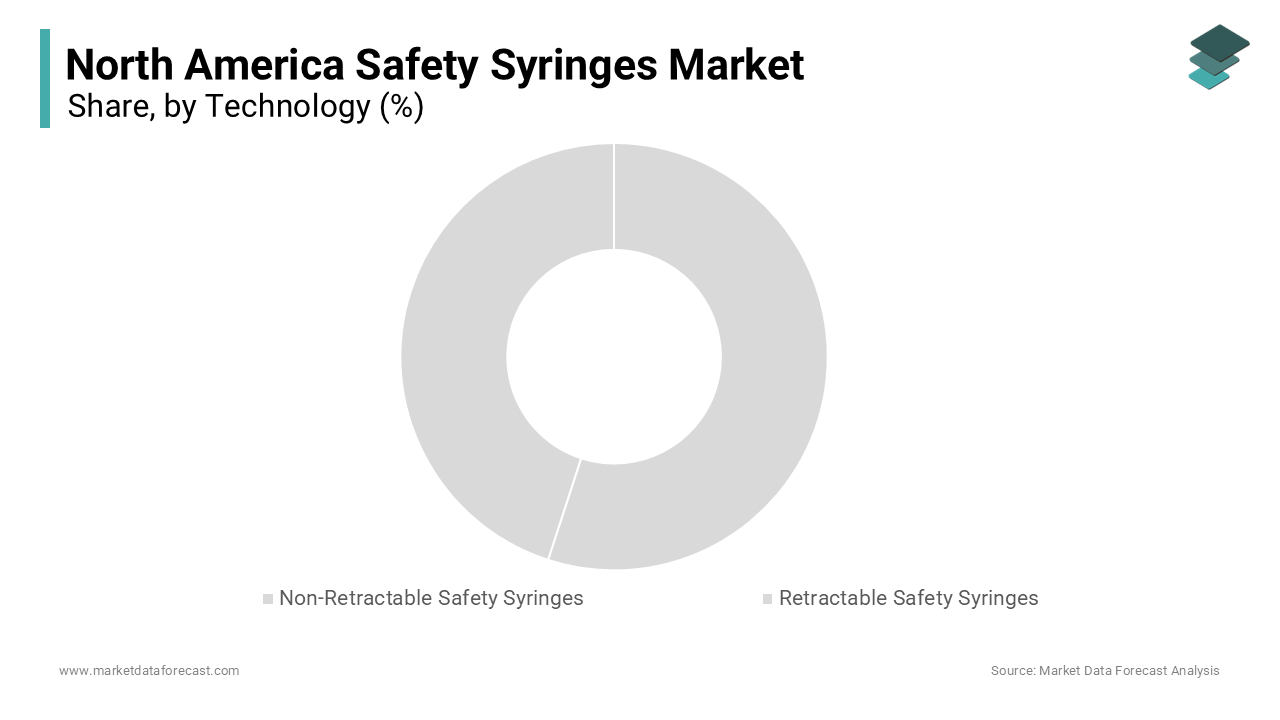
The retractable safety syringes segment is likely to witness a fastest CAGR of 8.5% during the forecast period. The rapid growth of retractable safety syringes is fueled by their superior safety profile which eliminates the risk of accidental needlestick injuries through automatic needle retraction. According to the Centers for Disease Control and Prevention, facilities that switched to fully automatic retractable syringes reported a 60% reduction in sharps injuries compared to those using manual shield devices demonstrating the enhanced protection offered by this technology. This significant improvement in worker safety drives institutional procurement decisions as hospitals prioritize zero injury goals. Additionally, as per the Occupational Safety and Health Administration recent guidelines emphasize the preference for passive safety devices that do not rely on user activation making retractable syringes the ideal choice for compliance. The automatic retraction mechanism ensures that the needle is never exposed after use removing the possibility of human error during disposal. Healthcare administrators view the higher initial cost of retractable syringes as a worthwhile investment given the substantial savings associated with reduced post exposure prophylaxis and workers compensation claims. The growing awareness of bloodborne pathogen risks among healthcare workers further accelerates the demand for these advanced devices.
By Therapy Insights
The insulin segment was the largest by capturing 45.3% of the North America Safety Syringes Market share in 2025 due to the high prevalence of diabetes and the necessity for daily subcutaneous injections. According to the Centers for Disease Control and Prevention, approximately 37.3 million people in the United States have diabetes representing 11.3% of the population with millions more requiring daily insulin therapy to manage their condition. This vast patient base generates a consistent and high-volume demand for safe and reliable injection devices. The chronic nature of the disease means that patients require a steady supply of safety syringes for lifelong management creating a recurring revenue stream for manufacturers. The shift toward intensive insulin regimens which involve multiple daily injections further increases the consumption of safety devices. Healthcare providers emphasize the importance of using safety syringes to prevent accidental sticks in home settings where family members may be involved in care.
The GLP-1 segment is expected to grow at a CAGR of 12.5% during the forecast period with the rising popularity of glucagon like peptide 1 agonists for weight management and type 2 diabetes treatment. The explosive growth in the use of GLP-1 agonists for weight management is the primary factor driving the rapid expansion of this segment in the North America Safety Syringes Market. These medications are administered via subcutaneous injection using safety syringes or auto injectors leading to a surge in demand for these devices. Additionally, as per the American Society for Metabolic and Bariatric Surgery prescriptions for GLP-1 weight loss drugs increased by 300% in the last two years reflecting a societal shift toward medical weight management. The chronic nature of obesity treatment means that patients require long term weekly injections sustaining the demand for safety devices. Manufacturers are rapidly scaling up production of safety syringes specifically designed for these high volume therapies. The broadening insurance coverage for weight loss medications further accelerates access and usage.
By End Users Insights
The hospitals segment was accounted in holding a significant share of the North America Safety Syringes Market in 2025 due to the high volume of injections administered in acute care settings and stringent regulatory compliance requirements. According to the American Hospital Association, US hospitals perform over 100 million injections annually ranging from vaccinations to contrast media administration necessitating a constant supply of safety syringes. This high throughput creates a substantial and steady demand for disposable safety devices. Furthermore, as per the Joint Commission accreditation standards require hospitals to demonstrate compliance with needlestick prevention protocols by making the use of safety engineered sharps mandatory for maintaining certification. The legal and financial risks associated with occupational injuries compel hospital administrators to prioritize the procurement of high-quality safety syringes. Large group purchasing organizations negotiate bulk contracts that ensure consistent supply and competitive pricing for hospital networks.
The home care segment is likely to grow at a fastest CAGR of 9.2% from 2026 to 2034 with the shift toward outpatient care and the increasing prevalence of chronic diseases requiring self-administration. The strategic shift toward outpatient care and the increasing preference for self-administered therapies among patients with chronic conditions. This transition places the responsibility of injection administration on patients and informal caregivers who require safe and easy to use devices. Additionally, reimbursement policies increasingly favor home based treatments for conditions such as rheumatoid arthritis and multiple sclerosis, driving the demand for safety syringes in domestic settings. The convenience of home care combined with the availability of user-friendly safety devices empowers patients to manage their health independently.
COUNTRY ANALYSIS
The United States Safety Syringes Market Analysis
The United States was the largest contributor in the North America Safety Syringes Market by accounting for 90.1% of share in 2025 due to its advanced healthcare infrastructure and stringent regulatory environment. According to the Centers for Disease Control and Prevention, the implementation of the Needlestick Safety and Prevention Act has mandated the use of safety engineered sharps in all healthcare settings driving widespread adoption across the country. This federal mandate ensures that hospitals clinics and ambulatory surgical centers consistently purchase safety syringes to comply with occupational safety standards. The presence of major pharmaceutical companies and medical device manufacturers in the US fosters innovation and rapid commercialization of new safety technologies. The rising prevalence of chronic diseases such as diabetes and obesity further amplifies the demand for safety syringes in both clinical and home care settings. The robust reimbursement landscape for preventive care and chronic disease management supports the affordability and accessibility of these devices.
Canada Safety Syringes Market Analysis
Canada was ranked second in the North America Safety Syringes Market by holding 8.2% of share in 2025 with a publicly funded healthcare system and strong commitment to worker safety. According to the Canadian Centre for Occupational Health and Safety, provincial regulations in jurisdictions such as Ontario and British Columbia strictly mandate the use of safety engineered devices to protect healthcare workers from bloodborne pathogens. These regulations drive consistent procurement of safety syringes by public hospitals and community health centers across the country. Furthermore, the aging population and increasing incidence of chronic diseases have led to rise in the number of injections administered in home care settings over the past five years. This trend boosts the demand for user friendly safety syringes that can be safely used by patients and caregivers. The Canadian government's focus on reducing healthcare associated infections further supports the adoption of advanced safety technologies. Local distribution networks and partnerships with global manufacturers ensure timely availability of products. The emphasis on equitable access to healthcare means that safety standards are maintained uniformly across urban and rural areas.
COMPETITIVE LANDSCAPE
The competitive landscape of the North America Safety Syringes Market is characterized by intense rivalry among established global manufacturers and specialized niche players striving for leadership in safety technology. Major companies compete vigorously on the basis of product reliability ease of use and cost effectiveness to secure contracts with large hospital networks. Patent protections for specific safety mechanisms create barriers to entry but also drive competitors to develop alternative technologies. Strategic mergers and acquisitions are common, as companies seek to broaden their product portfolios and enter new geographic segments. The presence of strong group purchasing organizations means that price competition remains fierce despite the premium nature of safety devices. Companies are increasingly focusing on value added services such as training and waste management solutions to differentiate themselves. Regulatory compliance serves as a baseline requirement forcing all participants to maintain high-quality standards.
KEY MARKET PLAYERS
Companies playing a dominant role in the North American safety syringes market include
- Covidien plc
- Retractable Technologies Inc.
- Becton, Dickinson & Company
- Terumo Corporation
- Unilife Corporation
- Revolutions Medical Corporation
- Smiths Medical
- Sol-Millennium
- Ultimed Inc.
- Axel Bio Corporation
Key Market Players Analysis
Becton Dickinson and Company
Becton Dickinson and Company maintains a prominent position in the North America Safety Syringes Market through its extensive portfolio of innovative injection devices. The company actively collaborates with healthcare institutions to develop customized safety solutions that address specific clinical needs and regulatory requirements. Recently, Becton Dickinson expanded its manufacturing capacity in the United States to ensure a reliable supply chain for critical safety syringes. This strategic investment enhances product availability and reduces lead times for hospital networks. The company also launched advanced passive safety mechanisms that simplify usage for healthcare workers while maximizing protection against needlestick injuries. These initiatives demonstrate the companys commitment to improving occupational safety and patient outcomes, across the region.
Terumo Corporation
Terumo Corporation plays a significant role in the North America Safety Syringes Market by offering high quality retractable and non-retractable safety devices. The company has strengthened its market presence by introducing eco-friendly syringe designs that reduce medical waste and align with sustainability goals. Recently Terumo partnered with major group purchasing organizations in Canada to facilitate broader access to its safety products in public healthcare facilities. This collaboration ensures competitive pricing and consistent supply for regional hospitals. The company also invested in research and development to create ergonomic syringes that minimize hand fatigue during high volume procedures. Terumo continues to expand its educational programs for nurses focusing on proper activation techniques and injury prevention.
Nipro Medical Corporation
Nipro Medical Corporation contributes significantly to the North America Safety Syringes Market through its specialized focus on passive safety technologies. The company offers a diverse range of auto disable and retractable syringes that meet stringent regulatory standards for infection control. Recently Nipro Medical introduced a new line of ultra-thin wall safety syringes that improve flow rates and patient comfort during injections. This innovation addresses clinical demands for more efficient drug delivery systems. The company also established a dedicated customer support team to assist healthcare providers with product selection and training. These strategic actions enable the company to compete effectively in a dynamic market driven by safety and performance requirements.
Top Strategies Used by Key Market Participants
Key players in the North America Safety Syringes Market primarily employ product innovation and strategic partnerships to maintain their competitive advantage. Companies frequently invest in research and development to create passive safety mechanisms that enhance user compliance and reduce injury risks. This approach helps differentiate their offerings in a crowded marketplace. Another major strategy involves forming alliances with group purchasing organizations and healthcare networks to secure long term supply contracts. Manufacturers also focus on expanding their production capabilities locally to mitigate supply chain disruptions and ensure timely delivery. Additionally, firms are developing sustainable product lines using recyclable materials to address environmental concerns.
MARKET SEGMENTATION
This research report on the North American safety syringes market has been segmented and sub-segmented into the following categories.
By Technology
- Non-Retractable Safety Syringes
- Retractable Safety Syringes
By Therapy
- Insulin
- GLP-1
- Tuberculosis
- Growth Hormones
By End Users
- Hospitals
- Home Care
By Country
- The United States
- Canada
- Rest of North America