- Product Description Description
- Table of Contents TOC
- List of Table & Figure LOT
- Get Free Sample PDF Sample PDF
Market Size, 2025
$23.10 BnMarket Estimate, 2026
$24.71 BnMarket Forecast, 2034
$42.36 BnCAGR, 2026–2034
6.97%North America Soy Desserts Market Size, Trends, and Forecast (2025–2034)
The North America soy desserts market size was valued at USD 23.10 billion in 2025, stands at USD 24.71 billion in 2026, and is anticipated to reach USD 42.36 billion by 2034, expanding at a compound annual growth rate (CAGR) of 6.97% during the forecast period from 2026 to 2034. Growth is heavily driven by the high prevalence of lactose intolerance, rising consumer demand for vegan and sustainable alternatives, and continuous R&D advancements in flavor masking and texture enhancement.
Key Executive Metrics (At-a-Glance)
- 2025 Base Valuation: USD 23.10 Billion
- 2026 Current Valuation: USD 24.71 Billion
- 2034 Forecast Valuation: USD 42.36 Billion
- Compound Annual Growth Rate (CAGR): 6.97% (2026–2034)
- Dominant Distribution Channel: Hypermarkets and Supermarkets (48.3% share in 2025)
- Fastest-Growing Distribution Channel: Food and Drink Specialists (9.7% CAGR)
- Leading Country Market: United States (78.5% share in 2025)
Core Market Drivers
- Dairy-Free Shift: Rising lactose malabsorption rates and growing adoption of flexitarian and plant-based diets among millennials and Gen Z.
- Nutritional Superiority: Complete amino acid profiles and cholesterol-lowering properties of soy protein driving health-conscious consumer spending.
Primary Market Restraints & Challenges
- Sensory Perception: Consumer resistance linked to traditional beany/chalky aftertastes caused by lipoxygenase enzymes.
- Intense Plant-Based Competition: Aggressive positioning and market encroachment from alternative dessert bases like almond, oat, and coconut.
North America Soy Desserts Market Segmentation Breakdown
| Segment Category | Largest Segment | Fastest-Growing Segment |
|---|---|---|
| By Distribution Channel | Hypermarkets and Supermarkets | Food and Drink Specialists (9.7% CAGR) |
| By Region | United States (78.5% share) | Canada & Rest of North America |
Major Industry Players Profiled
Key corporations shaping the North American soy desserts market include Tofutti Brands Inc., So Delicious Dairy Free, Nestlé USA, Turtle Mountain, The Hershey Company, Dean Foods Co., Danone Group, WhiteWave Services, Alpro, Now Foods, Hain Celestial, Kerry, and Archer Daniels Midland Company.
North America Soy Desserts Market Size
The North America soy desserts market size was valued at USD 23.10 billion in 2025 and is expected to reach USD 42.36 billion by 2034 from USD 24.71 billion in 2026, growing at a CAGR of 6.97% from 2026 to 2034.

The soy desserts are consumers seeking dairy-free, lactose-intolerant-friendly, and vegan alternatives without compromising on taste or texture. Soy desserts have gained traction as a nutritious and environmentally friendly substitute for traditional dairy-based sweets with increasing awareness around health, sustainability, and ethical consumption.
According to the Plant Based Foods Association (PBFA), plant-based desserts have experienced double-digit growth in North America over the past five years, with soy-based options playing a significant role in this expansion. Soy desserts are particularly popular among health-conscious millennials and Gen Z consumers who prioritize clean-label ingredients and sustainable sourcing. The United Soybean Board reports that demand for soy-based food innovations has surged due to advancements in flavor masking and texture improvement technologies, which have significantly enhanced the sensory appeal of soy desserts.
MARKET DRIVERS
Rising Demand for Lactose-Free and Vegan Alternatives
The growing consumer shift toward lactose-free and vegan dietary choices is accelerating the growth of the North America Soy Desserts Market. According to the National Institute of Diabetes and Digestive and Kidney Diseases (NIDDK), an estimated 65% of the U.S. population experiences some form of lactose malabsorption, making dairy-free alternatives increasingly essential. This trend is further reinforced by the rising number of individuals identifying as vegan or flexitarian, with data from the Vegetarian Resource Group indicating that approximately 2% of U.S. adults follow a plant-based diet full-time, while many more adopt it selectively. In response, manufacturers are expanding their soy dessert portfolios to include non-dairy ice creams, custards, and frozen yogurts fortified with vitamins and calcium to mimic the nutritional profile of conventional dairy desserts. Retailers like Whole Foods, Kroger, and Target have also expanded shelf space dedicated to plant-based desserts, reflecting strong market demand.
Health Consciousness and Nutritional Benefits of Soy-Based Ingredients
The heightened emphasis on health and wellness around high-protein, low-saturated-fat food choices is greatly influencing the growth of the North America Soy Desserts Market. Soy is recognized for its complete amino acid profile, making it a preferred plant-based protein source. According to the American Heart Association (AHA), soy protein can help lower LDL cholesterol levels when used as a substitute for animal protein, reinforcing its heart-healthy image. Additionally, soy desserts often contain isoflavones naturally occurring compounds linked to improved bone density and hormonal balance, which is making them especially appealing to women and aging populations. Consumers are also showing interest in functional ingredients, prompting brands to incorporate added nutrients such as probiotics, fiber, and omega fatty acids into soy desserts.
MARKET RESTRAINTS
Consumer Perception of Beany Flavor and Textural Limitations
The lingering consumer perception of a beany or chalky aftertaste associated with soy-based products is restricting the growth of the North America Soy Desserts Market. As per research conducted by the Institute of Food Technologists (IFT), the presence of lipoxygenase enzymes and oligosaccharides in soy can contribute to undesirable flavors if not adequately masked or processed. Market players have attempted to address this issue through enzyme treatments, ultra-high temperature processing, and the use of natural flavor modifiers. However, achieving consistent taste and texture across different product formats remains a technical hurdle.
Availability and Competition from Alternative Plant-Based Dessert Options
The growing availability and popularity of alternative plant-based dessert bases such as almond, oat, coconut, and cashew is also declining the growth of the North America Soy Desserts Market. These substitutes have captured considerable market share due to their neutral flavor profiles, creamy textures, and aggressive branding positioning as “cleaner” or “easier-to-digest” options. This competitive landscape poses a challenge for soy-based dessert manufacturers, who must contend with shifting consumer preferences and extensive marketing efforts by rival categories.
MARKET OPPORTUNITIES
Expansion of Functional and Fortified Soy Dessert Varieties
The development of functional and fortified dessert formulations designed to deliver targeted health benefits is posing new opportunity for the growth of the North America Soy Desserts Market. Consumers are increasingly seeking indulgent food items that also offer nutritional advantages, such as improved digestion, immune support, cognitive function, and energy enhancement. According to the International Food Information Council (IFIC), over 60% of U.S. consumers look for functional ingredients in everyday food products, including desserts. For example, certain soy-based frozen desserts now feature added vitamin D, calcium, and B12 to replicate the nutritional profile of dairy, while others integrate MCT oils and botanical extracts aimed at enhancing mental clarity and mood regulation. Furthermore, partnerships with registered dietitians and health influencers are helping brands educate consumers on the functional benefits of soy desserts.
Growth of Private Label and Store Brand Offerings in Retail Channels
The proliferation of private label and store-brand soy dessert is leveraging the growth of the North America soy desserts market. They are launching proprietary lines that offer competitive pricing, quality assurance, and strategic shelf placement as major retailers recognize the growing demand for plant-based desserts. According to Brick Meets Click, a leading food industry research firm, private-label plant-based products accounted for over 25% of all plant-based frozen dessert sales in the U.S. in 2023. This strategy allows retailers to capture price-sensitive consumers who are open to plant-based alternatives but hesitant to pay a premium. It also enables greater control over formulation, packaging, and marketing messaging tailored to specific customer segments. Moreover, store brands benefit from exclusive promotions, loyalty program incentives, and optimized supply chain efficiencies, giving them a competitive edge in attracting repeat buyers.
MARKET CHALLENGES
Regulatory Scrutiny and Labeling Standards for Soy-Derived Ingredients
The evolving regulatory environment surrounding labeling standards, health claims, and genetically modified organism (GMO) disclosures related to soy-derived ingredients is impeding the growth of the North America Soy Desserts Market. The U.S. Food and Drug Administration (FDA) and the U.S. Department of Agriculture (USDA) impose strict guidelines on how plant-based products can be marketed, particularly when they reference terms like "dairy-free," "milk-free," or "ice cream. Additionally, the implementation of the National Bioengineered Food Disclosure Standard (NBFDS) in 2022 mandates clear labeling for foods containing bioengineered ingredients, which applies to a large portion of commercially available soybeans in the U.S., as reported by the USDA Economic Research Service (ERS). Some consumers also express confusion over the differences between organic, non-GMO, and conventional soy sources, affecting brand trust and product selection. Companies must invest in transparent labelling, third-party certifications, and consumer education initiatives to navigate these complexities effectively.
Price Sensitivity and Premium Positioning of Specialty Soy Desserts
The price sensitivity is also a factor declining the growth of the North America Soy Desserts Market as many specialty soy dessert products are positioned at a premium compared to conventional dairy desserts and even some alternative plant-based options. According to data from IRI, a leading market research firm, the average retail price for a pint of soy-based frozen dessert is approximately 15–20% higher than that of a comparable dairy-based product. While core plant-based consumers may accept the premium, mainstream buyers especially during economic downturns often opt for cheaper substitutes despite nutritional trade-offs.
REPORT COVERAGE
| REPORT METRIC | DETAILS |
| Market Size Available | 2025 to 2034 |
| Base Year | 2025 |
| Forecast Period | 2026 to 2034 |
| CAGR | 6.97% |
| Segments Covered | By Distribution Channel and Region |
|
Various Analyses Covered | Regional & Country Level Analysis, Segment-Level Analysis, DROC, PESTLE Analysis, Porter’s Five Forces Analysis, Competitive Landscape, Analyst Overview on Investment Opportunities |
| Regions Covered | The United States, Canada, Mexico, and Rest of North America |
| Market Leaders Profiled | Turtle Mountain, The Hershey Company, Dean Foods Co, Danone Group, WhiteWave Services, Alpro, Now Foods, Hain Celestia, Kerry, Archer Daniels Midland Company, Hershey Company., and others |
SEGMENTAL ANALYSIS
By Distribution Channel Insights
The hypermarkets and supermarkets segment dominated the North America Soy Desserts Market by accounting for 48.3% of share in 2025 with the widespread availability of soy desserts in major retail chains such as Walmart, Kroger, Albertsons, and Costco, which offer extensive plant-based product selections to meet growing consumer demand. The convenience of accessing a wide range of soy dessert brands under one roof, coupled with frequent promotional activities and endcap displays, enhances visibility and purchase likelihood. Moreover, private-label initiatives from leading retailers have expanded the accessibility of affordable soy dessert options, further reinforcing this segment’s stronghold.
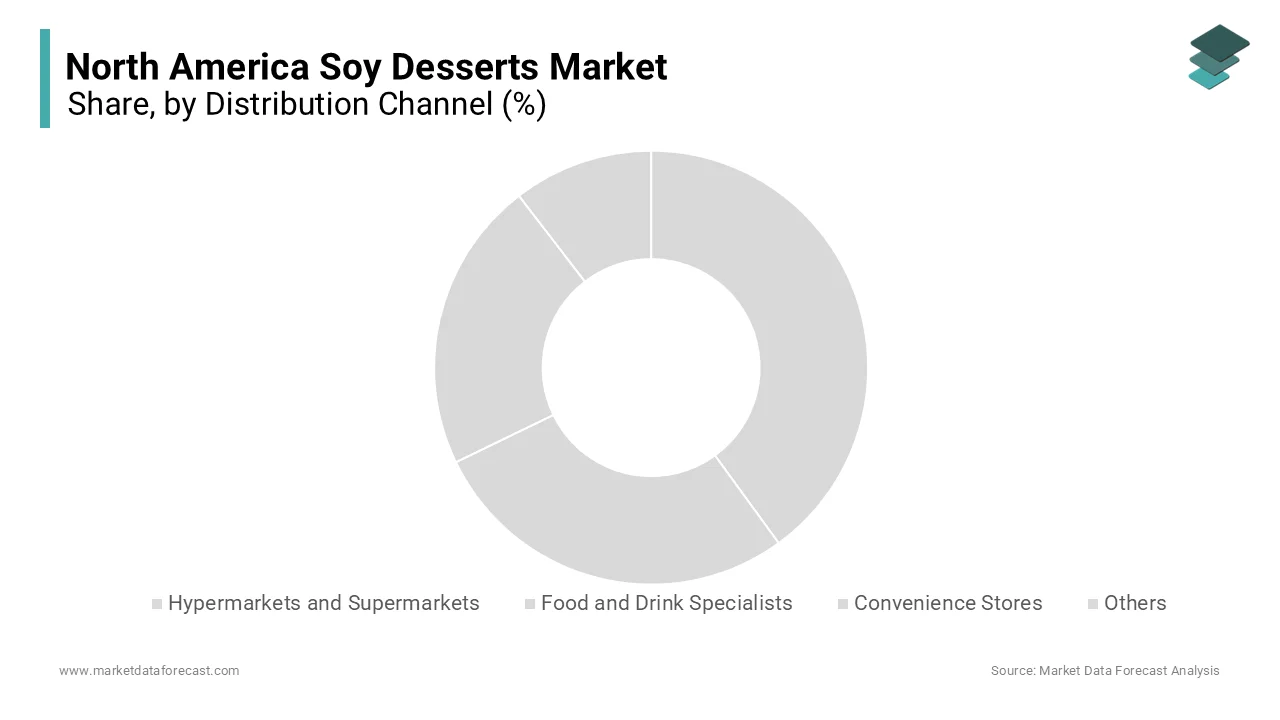
The food and drink segment is growing lucratively with an anticipated CAGR of 9.7% during the forecast period. These specialty stores include organic markets, health food shops, vegan cafes, and niche grocers that cater specifically to health-conscious and plant-based consumers. As reported by the Plant Based Foods Association (PBFA), specialty retail outlets have played a crucial role in introducing new soy dessert formulations to early adopters and influencing broader market acceptance. Additionally, many food and drink specialist locations host tasting events, educational sessions, and in-store promotions that help demystify plant-based ingredients like soy and encourage trial among skeptical consumers.
REGIONAL ANALYSIS
United States
The United States was the largest contributor in the North America Soy Desserts Market by accounting for 78.5% of share in 2025. According to the Plant Based Foods Association (PBFA), the U.S. plant-based frozen dessert category surpassed USD 500 million in retail sales in 2023, with soy-based variants playing a significant role in this expansion. Major cities such as New York, Los Angeles, and San Francisco lead in terms of per capita consumption, supported by a dense network of health-focused retailers and direct-to-consumer e-commerce platforms. The U.S. also benefits from a well-established regulatory framework that supports clear labeling and marketing of plant-based products. Additionally, national campaigns by organizations like the American Heart Association promoting heart-healthy protein sources have indirectly boosted soy dessert awareness.
Canada
Canada Soy Desserts Market held 16.2% of the share in 2025 with the increasing health consciousness, government support for sustainable food systems, and a growing number of plant-based consumers in urban centers like Toronto, Vancouver, and Montreal. As per Statistics Canada, the number of Canadians identifying as vegetarian or vegan has steadily increased over the past decade, with nearly 3% of the population following a fully plant-based diet. In addition, the Canadian government has been proactive in promoting plant-based food innovation through funding programs such as the Canadian Agricultural Partnership (CAP), which supports research into plant protein development. Retailers like Loblaws and Sobeys have responded by expanding their own plant-based product lines, including soy-based frozen treats. Furthermore, Canadian consumers exhibit a preference for locally sourced and environmentally friendly food options, which soy desserts can fulfill when produced sustainably.
KEY MARKET PLAYERS AND COMPETITIVE LANDSCAPE
Leading players in the North America Soy Desserts Market include Turtle Mountain, The Hershey Company, Dean Foods Co, Danone Group, WhiteWave Services, Alpro, Now Foods, Hain Celestia, Kerry, Archer Daniels Midland Company, and the Hershey Company.
The competition in the North America Soy Desserts Market is intensifying as both established food manufacturers and emerging plant-based startups vie for consumer attention. With rising demand for dairy-free and sustainable dessert options, the landscape has become increasingly crowded, prompting brands to differentiate themselves through product formulation, ingredient transparency, and targeted branding strategies.
Incumbent players benefit from strong brand recognition, extensive distribution networks, and well-established supply chains, allowing them to maintain dominance in traditional retail channels. However, smaller niche brands are gaining traction by focusing on clean-label ingredients, unique flavor profiles, and localized marketing efforts aimed at health-conscious millennials and Gen Z consumers.
Retailers are also playing a growing role in shaping market dynamics by launching private-label soy dessert lines that compete directly with national brands on price and accessibility. Meanwhile, innovations such as low-sugar formulations, organic certifications, and climate-friendly packaging are becoming key battlegrounds for differentiation.
TOP PLAYERS IN THE MARKET
Tofutti Brands Inc.
One of the leading players in the North America Soy Desserts Market is Tofutti Brands Inc., a pioneer in plant-based frozen desserts and soy-based alternatives. The company has been instrumental in introducing soy desserts to mainstream consumers through its wide range of non-dairy ice creams, frozen yogurts, and dessert mixes. Tofutti’s commitment to allergen-free and cholesterol-free products has positioned it as a trusted brand among lactose-intolerant individuals and vegan consumers.
So Delicious Dairy Free
Another major contributor is So Delicious Dairy Free, a brand under the Riviana Foods umbrella. Known for its innovative approach to plant-based desserts, So Delicious offers a variety of soy-based frozen desserts that combine creamy texture with nutritional benefits. The brand plays a key role in expanding consumer acceptance by offering indulgent yet health-conscious options in mainstream retail channels.
Nestlé USA
Nestlé USA also holds a strong presence in the market with its plant-based frozen dessert line, including soy-based offerings under brands like Häagen-Dazs and Nestlé Naturals. Leveraging its global R&D capabilities, Nestlé has introduced fortified soy desserts that align with evolving dietary preferences, which is contributing significantly to the mainstream adoption of plant-based frozen treats across North America.
TOP STRATEGIES USED BY KEY PLAYERS
Key players in the North America Soy Desserts Market are leveraging product innovation and diversification to capture broader consumer interest. Companies are continuously launching new flavors, formats, and functional variants enriched with probiotics, vitamins, and plant-based proteins to cater to evolving taste preferences and wellness trends.
Another strategy involves expanding distribution networks and enhancing retail partnerships . Leading brands are strengthening their presence in mass-market retailers, natural food stores, and e-commerce platforms to ensure widespread availability and visibility, particularly in high-growth urban centers.
Additionally, firms are investing heavily in consumer education and brand storytelling through digital marketing, influencer collaborations, and sustainability messaging. Companies aim to build long-term brand loyalty and drive repeat purchases among health-conscious and ethically motivated consumers by promoting the nutritional benefits and environmental advantages of soy desserts.
RECENT HAPPENINGS IN THE MARKET
- In February 2025, Tofutti Brands launched a new line of organic soy-based frozen desserts, targeting health-conscious consumers seeking certified organic and non-GMO options, which is reinforcing its position in the premium plant-based dessert segment.
- In June 2023, So Delicious Dairy Free expanded its retail footprint by securing exclusive shelf placements in major U.S. grocery chains by enhancing product visibility and accessibility for mainstream shoppers exploring plant-based options.
- In October 2025, Nestlé USA partnered with a leading nutrition technology firm to develop enhanced texture profiles for its soy-based frozen desserts, which is aiming to improve mouthfeel and reduce consumer resistance related to beany aftertaste.
- In March 2023, a regional soy dessert startup secured a strategic investment from a prominent plant-based venture capital fund by enabling accelerated product development and nationwide distribution expansion into specialty and natural food retailers.
- In November 2025, a Canadian-based soy dessert brand entered into a co-branding collaboration with a popular vegan café chain, which is introducing limited-time menu items designed to introduce soy desserts to new customer segments through experiential retail.
MARKET SEGMENTATION
This research report on the North America soy desserts market has been segmented and sub-segmented based on the following categories.
By Distribution Channel
- Hypermarkets and Supermarkets
- Food and Drink Specialists
- Convenience Stores
- Others
By Country
- The United States
- Canada
- Rest of North America