- Product Description Description
- Table of Contents TOC
- List of Table & Figure LOT
- Get Free Sample PDF Sample PDF
Market Size, 2025
$9.99 BnMarket Estimate, 2026
$10.83 BnMarket Forecast, 2034
$20.70 BnCAGR, 2026–2034
8.43%Executive Summary: North America Thin Film Drugs Market
- Market Scope: Comprehensive North America thin film drugs market analysis covering product categories, disease indications, distribution channels, country frameworks, and advanced drug delivery adoption metrics.
- Market Valuation: Valued at USD 9.99 billion (2025), estimated at USD 10.83 billion in 2026, and projected to reach USD 20.70 billion by 2034, registering a robust CAGR of 8.43% (2026–2034).
- Primary Growth Drivers: Rising R&D investments, high demand for efficient drug delivery systems, improved patient compliance, precise dosing, and superior bioavailability over traditional dosage forms. Key restraints include high treatment costs relative to cheaper alternatives, strict regulatory approval hurdles, and mucosal irritation limitations associated with high-dose oral thin films.
Key Market Segment Metrics (2026–2034)
| Category | Leading Segment (2025 Position) | Fastest-Growing Segment |
|---|---|---|
| By Product | Oral Thin Film (OTF) (dominated regional adoption due to patient convenience and ease of transit) | Transdermal Thin Film solutions |
| By Disease Indication | Opioid dependence, schizophrenia, and migraine management (led therapeutic indications) | Nausea, vomiting, and specialized CNS disorder treatments |
| By Distribution Channel | Retail pharmacies and hospital pharmacies (held the highest dispensing share) | E-commerce and online drug store platforms |
| By Country | United States (dominated regional market share backed by strong technology adoption and product launches) | Canada (expanding rapidly through R&D investments in polymeric thin films) |
Major Market Players & Market Structure
Market Structure: Highly specialized North American pharmaceutical landscape featuring major global pharmaceutical companies and dedicated drug-delivery innovators competing intensely on polymer technology, regulatory approval pipelines, and patient-centric formulations.
Key Companies: Pfizer Inc., Novartis AG, Wolters Kluwer, Solvay, Allergan plc., Sumitomo Dainippon Pharma Co. Ltd., Indivior Plc., MonoSol Rx, IntelGenx Corp., and ZIM Laboratories Limited.
 Download Free Sample Report
North America Thin Film Drugs Market Size
The North America thin film drugs market was valued at USD 9.99 billion in 2025. The market is estimated at USD 10.83 billion in 2026 and is projected to reach USD 20.70 billion by 2034, growing at a CAGR of 8.43% from 2026 to 2034.

Thin film drugs are solid dosage forms that dissolve rapidly in the oral cavity without water. This innovative delivery system addresses adherence challenges among pediatric, geriatric, and psychiatric patient populations, who struggle with traditional tablets or capsules. According to the Centers for Disease Control and Prevention, approximately 60% of adults in the United States have at least one chronic disease, while 40% have two or more, creating a substantial base for long term medication management requiring simplified administration. Manufacturers leverage advanced polymer technologies to ensure stability and precise dosing in ultra-thin formats.
MARKET DRIVERS
Rising Prevalence of Dysphagia and Aging Population Demographics
The increasing prevalence of dysphagia and the expanding geriatric population, as an accessible alternative to solid oral dosage forms, which is propelling the growth of the North America thin film drugs market. As per the United States Census Bureau, the population aged 65 and older will reach 95 million by 2060, doubling from 2020 levels, which significantly amplifies the need for age-appropriate medication delivery systems. Thin films eliminate the need for water and reduce choking risks, ensuring safer administration for patients with neurological conditions or age-related muscle weakness. Healthcare providers increasingly prescribe these formulations to prevent aspiration pneumonia and improve nutritional intake in vulnerable groups. The convenience of portable packaging supports independent living for seniors managing multiple chronic conditions. Caregivers benefit from simplified administration protocols, reducing medication errors and resistance in dementia patients.
Enhanced Patient Adherence Through Improved Convenience and Palatability
The superior patient adherence through improved convenience and palatability is ascribed to boosting the growth of the North America thin film drug market. As per the World Health Organization, adherence to long term therapies for chronic diseases averages only 50% in developed countries, leading to poor health outcomes and increased hospitalization rates. Thin films address non-adherence by offering pleasant flavors, rapid dissolution, and discreet administration, which appeals particularly to pediatric and psychiatric populations resistant to traditional pills. The American Academy of Pediatrics highlights that taste masking and ease of administration are critical factors in improving compliance among children who often reject bitter medications. Rapid absorption through the oral mucosa bypasses first-pass metabolism for certain drugs, providing faster onset of action, which reinforces patient confidence in treatment efficacy. Mental health patients benefit from supervised administration options that prevent chewing or spitting out medications, ensuring consistent therapeutic levels. The portability of thin films allows patients to maintain regimens during travel or work without carrying water bottles. Insurance payers recognize the cost savings associated with improved adherence, reducing emergency visits and complications.
MARKET RESTRAINTS
Complex Manufacturing Processes and High Production Costs
The intricate manufacturing requirements and elevated production costs are restricting the growth of the North America thin film drugs market. The production of uniform thin films demands precise control over solvent casting, drying temperatures, and polymer mixing to ensure consistent drug loading and dissolution profiles. The specialized equipment for thin film fabrication is capital intensive and requires rigorous validation to meet Current Good Manufacturing Practice standards set by the Food and Drug Administration. These technical complexities limit the number of qualified contract manufacturing organizations capable of producing high-quality films at scale. The cost per unit for thin films remains substantially higher than compressed tablets, discouraging price-sensitive payers and generic manufacturers from entering the segment. Small batch sizes for niche indications further exacerbate economies of scale issues, making it difficult to compete with low-cost legacy products. Regulatory scrutiny on residual solvents and impurities adds layers of quality control testing, increasing operational expenses. Manufacturers face challenges in scaling up from laboratory prototypes to commercial volumes without compromising film integrity.
Limited Drug Loading Capacity and Stability Concerns
The restricted drug loading capacity and inherent stability is hindering the growth of the North America thin film drugs market. Thin films typically accommodate only low-dose medications due to physical size limitations and the need for rapid dissolution without leaving residue. Many chronic disease treatments require higher doses that cannot be practically delivered via a single dissolving strip, necessitating multiple films, which reduces patient convenience. Stability issues related to moisture sensitivity and temperature fluctuations further complicate storage and distribution requirements for polymer-based matrices. Active pharmaceutical ingredients may degrade or crystallize within the film matrix over time, affecting bioavailability and shelf life. Packaging must provide robust barrier protection against humidity, increasing material costs and environmental footprint. Formulators struggle to incorporate hydrophobic drugs without compromising transparency or mechanical strength.
MARKET OPPORTUNITIES
Expansion into Pediatric and Geriatric Specific Therapeutic Areas
The targeted development of thin film drugs for pediatric and geriatric specific therapeutic areas is substantially to leverage new opportunities for the growth of the North America thin film drugs market. The Food and Drug Administration encourages the development of child-friendly formulations through initiatives like the Best Pharmaceuticals for Children Act, which provides incentives for studying off-patent drugs in pediatric populations. Thin films offer precise dosing flexibility and appealing flavors that address the lack of approved liquid or crushable options for many pediatric indications. Similarly, the geriatric segment benefits from films that manage symptoms of Alzheimer’s disease, Parkinson’s disease, and depression without requiring swallowing coordination. Manufacturers can collaborate with academic medical centers to conduct clinical trials demonstrating safety and efficacy in these vulnerable groups. Regulatory pathways for orphan drugs and pediatric exclusivity offer extended market protection and pricing power. Partnerships with nursing homes and pediatric clinics facilitate direct distribution channels.
Integration with Digital Health and Smart Packaging Solutions
The integration of thin film drugs with digital health technologies and smart packaging solutions is also set to level up the growth of the North America thin film drug market. Smart packaging embedded with sensors can track when a film is removed from its blister pack, providing real-time data to healthcare providers and caregivers. Interoperability standards enable seamless integration of medication adherence data into electronic health records. This connectivity supports remote patient monitoring programs, particularly for chronic conditions like epilepsy or schizophrenia, where missed doses have severe consequences. Thin films are ideal candidates for such integration due to their individual unit-dose nature and flat geometry suitable for sensor embedding. Pharmaceutical companies can partner with technology firms to develop apps that remind patients to take their medication and confirm ingestion. Insurance providers may offer rebates for patients using smart adherence tools, reducing overall healthcare costs.
MARKET CHALLENGES
Regulatory Hurdles and Bioequivalence Demonstration Complexities
The stringent regulatory hurdles and complexities in demonstrating bioequivalence are a significant challenge for the growth of the North America thin film drugs market. The Food and Drug Administration requires comprehensive pharmacokinetic studies to prove that thin films deliver the active ingredient at rates comparable to reference listed drugs, which can be technically difficult due to variable saliva flow and oral mucosa permeability. Regulators scrutinize manufacturing processes closely to ensure uniformity in film thickness and drug distribution, which affects dissolution rates. Any deviation in production parameters can lead to batch failures and delayed approvals. The lack of standardized guidance specific to all types of oral dissolving films creates uncertainty for applicants navigating the approval pathway. Clinical trials must account for diverse eating, drinking, and speaking behaviors that influence film disintegration.
Consumer Acceptance and Perception Issues
The persistent consumer acceptance issues and misconceptions about efficacy is additionally to limit the growth of the North America thin film drugs market. Many patients associate small lightweight films with insufficient potency or view them as novelty items rather than serious medications. The American Pharmacists Association notes that patient education gaps often lead to limited awareness of alternative dosage forms, particularly among older adults accustomed to traditional pills. Some users report unpleasant textures or lingering tastes that detract from the overall experience despite flavor masking efforts. Healthcare providers may hesitate to prescribe thin films due to unfamiliarity with handling instructions or concerns about stability outside original packaging. Misunderstandings about storage requirements such as keeping films dry can lead to product degradation and perceived failure. Marketing efforts must overcome deep-seated habits and trust barriers built over decades of tablet use. Negative experiences with early-generation films can tarnish the entire category's reputation.
REPORT COVERAGE
| REPORT METRIC | DETAILS |
| Market Size Available | 2025 to 2034 |
| Base Year | 2025 |
| Forecast Period | 2026 to 2034 |
| Segments Covered | By Product, Disease Indication, Distribution Channel, and Region. |
| Various Analyses Covered | Global, Regional and Country-Level Analysis, Segment-Level Analysis, Drivers, Restraints, Opportunities, Challenges; PESTLE Analysis; Porter’s Five Forces Analysis, Competitive Landscape, Analyst Overview of Investment Opportunities |
| Countries Covered | United States, Canada, Mexico, Rest of North America |
| Market Leaders Profiled | Pfizer Inc., Novartis AG, Wolters Kluwer, Solvay, Allergan plc., Sumitomo Dainippon Pharma Co. Ltd., Indivior Plc., Aquestive Therapeutics Inc., MonoSol Rx, IntelGenx Corp., ZIM Laboratories Limited, Adare Pharmaceuticals, and IntelGenx Corp. |
SEGMENTAL ANALYSIS
By Product Insights
The oral thin film segment was the largest, accounting for a significant share of the North America thin film drugs market in 2025 with its superior patient compliance and rapid onset of action for systemic drug delivery. The ease of administration without water makes it ideal for pediatric and geriatric populations who struggle with swallowing solid dosage forms. This demographic reality directly fuels demand for oral films as they eliminate choking risks and ensure consistent medication intake. Oral films bypass first-pass metabolism for certain drugs, allowing for faster therapeutic effects, which is crucial in acute conditions like migraine or nausea. Manufacturers leverage advanced polymer technologies to create stable and palatable films that maintain drug potency until ingestion. The convenience of portable packaging supports independent living for seniors and busy professionals. Regulatory support for patient-centric design further encourages the development of oral thin films over traditional tablets.
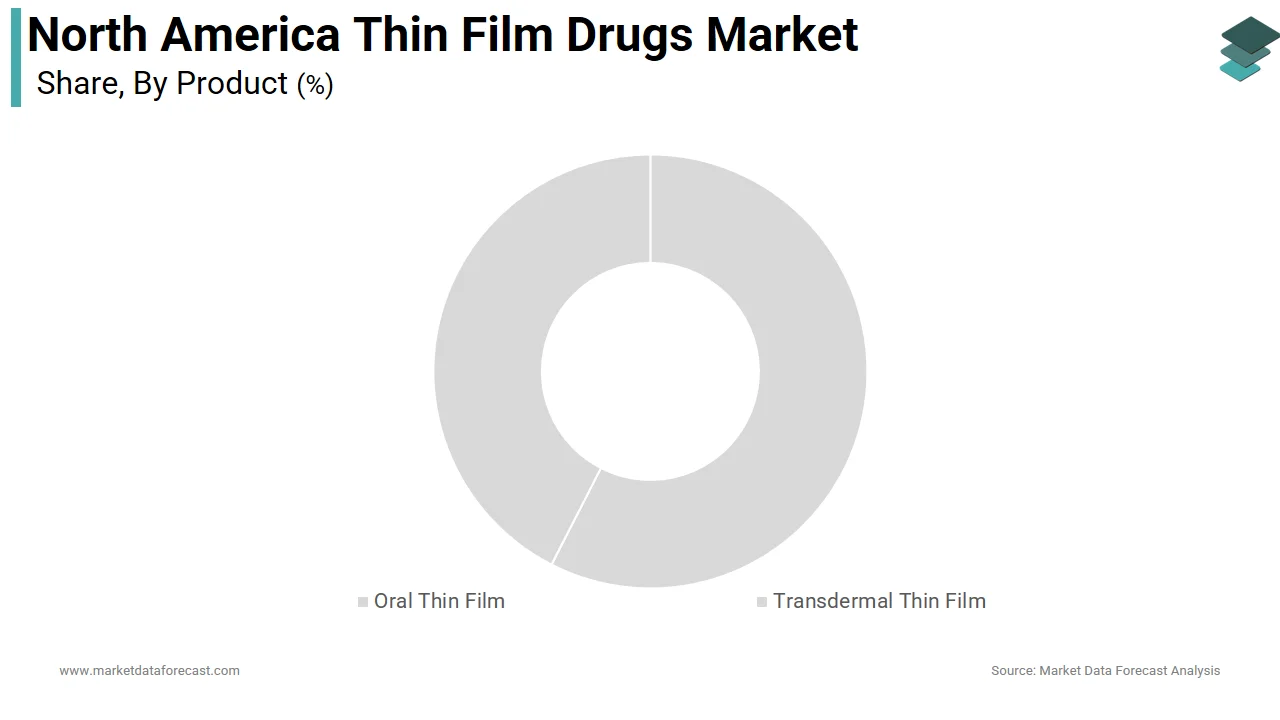
The transdermal thin film segment is likely to exhibit the fastest CAGR of 11.9% throughout the forecast period with the advancements in permeation enhancers and the demand for non-invasive sustained release therapies. Transdermal films offer controlled drug delivery over extended periods, reducing dosing frequency and improving patient quality of life. Transdermal films provide a steady plasma concentration of medication, minimizing peaks and troughs associated with oral dosing. The Journal of Controlled Release highlights that novel microneedle-integrated films can enhance skin permeability for larger molecules, expanding the range of treatable conditions beyond small lipophilic drugs. This technological innovation opens new therapeutic areas, including hormone replacement therapy and cardiovascular management. Patients prefer transdermal systems for their discretion and ease of use compared to patches or injections. Healthcare providers recommend these films for patients with polypharmacy issues to reduce pill burden. Regulatory approvals for new transdermal formulations are accelerating as safety profiles improve.
By Disease Indication Insights
The schizophrenia indication segment was the largest, holding 44.6% of the North America thin film drugs market share in 2025, with the need for assured medication adherence in psychiatric care. Non-adherence to antipsychotic medications is a major cause of relapse and hospitalization, making supervised administration formats highly valuable. Oral thin films allow caregivers or healthcare providers to visually confirm ingestion, preventing cheeking or spitting out of pills. This feature is particularly important in institutional settings and home care environments where monitoring is essential. The American Psychiatric Association guidelines emphasize the importance of formulation choice in improving long term adherence and stability in psychotic disorders. Rapid dissolution ensures that patients receive the full dose quickly, reducing anxiety associated with swallowing large tablets. Films also offer dose flexibility, which is useful during titration phases of treatment. The stigma associated with mental illness makes discreet administration formats appealing to patients. Insurance payers support these formulations due to reduced emergency room visits and inpatient stays resulting from better disease management.
The opioid dependence indication segment is likely to grow with the ongoing opioid crisis and the expansion of medication-assisted treatment programs. Buprenorphine thin films have become a preferred option for sublingual administration due to their safety profile and ease of use compared to tablets. Thin films reduce the risk of diversion and misuse because they are difficult to crush or inject compared to traditional tablets. The Food and Drug Administration has approved several buprenorphine film formulations specifically designed to deter abuse and improve patient compliance. Rapid dissolution under the tongue ensures efficient absorption and quick onset of withdrawal relief, encouraging patients to stay in treatment. Telemedicine expansions have increased access to prescriptions for these films, allowing remote monitoring and refills. Healthcare providers appreciate the convenience of prescribing films that do not require special storage or handling. Public health initiatives promote medication-assisted treatment as a standard of care, driving adoption.
By Distribution Channel Insights
The retail pharmacies segment was the largest, capturing 56.8% of the North America thin film drugs market share in 2025 due to their widespread accessibility and established role in dispensing prescription medications. Patients prefer picking up medications from local pharmacies where they can consult with pharmacists about proper usage and storage of thin films. Pharmacists play a crucial role in educating patients on how to handle and administer thin films correctly to ensure efficacy. Retail chains have extensive networks that facilitate consistent supply and availability of branded and generic thin film products. Insurance plans often mandate retail pharmacy pickup for maintenance medications, including those for chronic conditions treated with films. The convenience of one-stop shopping for health and wellness products drives foot traffic to these locations. Retailers invest in inventory management systems to track high-value specialty items like thin films. Partnerships with manufacturers ensure timely restocking and promotional support.
The e-commerce segment is expected to grow at the fastest CAGR of 12.3% during the forecast period, with the digital health adoption and the convenience of home delivery. Online pharmacies offer privacy and ease of ordering, which appeals to patients managing sensitive conditions like mental health disorders or opioid dependence. US adults use online platforms for health information and services, indicating a strong shift towards digital healthcare interactions. E-commerce platforms integrate with telemedicine services, allowing seamless prescription transmission and direct-to-consumer shipping of thin films. This model reduces barriers for rural patients or those with mobility issues who struggle to visit physical pharmacies. Subscription services for chronic medications ensure automatic refills and consistent supply, improving adherence. Digital platforms provide detailed product information and video tutorials on film administration, enhancing user confidence. Competitive pricing and discounts available online attract cost-conscious consumers.
COUNTRY LEVEL ANALYSIS
U.S. Thin Film Drugs Market Analysis
The United States was the top performer in the North America thin film drugs market by occupying 86.4% of the share in 2025, with advanced healthcare infrastructure and a high prevalence of chronic diseases. High healthcare expenditure enables adoption of premium dosage forms like thin films that offer improved adherence and convenience. The Food and Drug Administration actively supports innovation in drug delivery systems through expedited review pathways for patient-centric formulations. Major pharmaceutical companies headquartered in the US lead global development of thin film technologies for psychiatric pain and addiction treatments. Insurance coverage for branded thin films is more prevalent in the US compared to other regions, facilitating market penetration. The presence of key market players and robust manufacturing capabilities strengthens the domestic supply chain. Patient advocacy groups promote awareness of alternative dosage forms for dysphagia and pediatric care.
Canada Thin Film Drugs Market Analysis
Canada thin film drugs market was ranked second, holding a 9.8% share in 2025, with universal healthcare coverage and growing acceptance of innovative drug delivery systems. Health Canada regulates thin film drugs under strict safety and efficacy guidelines, ensuring high quality standards for imported and domestically produced products. The Canadian Institute for Health Information notes that prescription drug spending continues to rise, reflecting increased utilization of specialized medications, including thin films for chronic conditions. Provincial health plans increasingly cover cost-effective formulations that reduce hospitalizations due to non-adherence. The aging population in Canada drives demand for dysphagia-friendly medications, particularly in long-term care facilities. Canadian pharmacies are integrating digital tools to support patient education on new dosage forms. Collaborations between Canadian research institutions and pharmaceutical firms foster innovation in polymer technologies. The market benefits from close trade ties with the United States, facilitating timely access to new product launches. Public health initiatives focus on improving medication management for seniors and children. Growing awareness of mental health issues increases demand for adherent formulations like antipsychotic films.
COMPETITIVE LANDSCAPE
The competitive landscape of the North America thin film drugs market features a mix of specialized innovators and established pharmaceutical manufacturers vying for leadership in niche therapeutic areas. Specialized companies like Aquestive Therapeutics leverage proprietary technologies and deep clinical expertise to dominate segments such as psychiatry and addiction treatment. These firms emphasize patient-centric design and superior bioavailability to differentiate their offerings from generic alternatives. Large pharmaceutical companies enter the market through licensing agreements or acquisitions to incorporate thin film platforms into their existing portfolios. Competition intensifies around patent expirations as generic manufacturers seek to develop cost-effective versions of branded thin films. Regulatory hurdles and manufacturing complexities create high barriers to entry, limiting the number of qualified competitors. Price sensitivity varies between branded innovations and generic equivalents, influencing payer preferences and formulary inclusion.
KEY MARKET PLAYERS
The leading companies operating in the North America thin film drugs market include:
- Pfizer Inc.
- Novartis AG
- Wolters Kluwer
- Solvay
- Allergan plc.
- Sumitomo Dainippon Pharma Co. Ltd.
- Indivior Plc.
- Aquestive Therapeutics Inc.
- MonoSol Rx
- IntelGenx Corp.
- ZIM Laboratories Limited
- Adare Pharmaceuticals
TOP PLAYERS IN THE MARKET
- Aquestive Therapeutics Inc. is a pioneer in the North American thin film drugs market specializing in proprietary oral thin film technology for complex central nervous system disorders. The company focuses on developing patient-centric formulations that improve adherence and bioavailability for conditions like schizophrenia and opioid dependence. Recent actions include expanding manufacturing capabilities at its commercial facility in Whippany, New Jersey, to support growing demand for its lead products. Aquestive actively engages with key opinion leaders to promote the clinical benefits of thin films over traditional tablets. The company invests heavily in research and development to create next-generation films with enhanced stability and taste masking properties. Strategic partnerships with distribution networks ensure broad accessibility across retail and hospital pharmacies.
- IntelGenx Technologies Corp contributes significantly to the North America Thin Film Drugs Market through its versatile VersaFilm platform, which supports various therapeutic applications. The company specializes in creating oral thin films for pain management, mental health, and sexual wellness indications. IntelGenx collaborates with pharmaceutical partners to license its technology for specific drug molecules, enhancing market reach. The company focuses on optimizing production processes to reduce costs and improve scalability. Investments in intellectual property protection safeguard its innovative formulations from competition. These strategies reinforce its reputation as a reliable partner for companies seeking advanced oral delivery solutions.
- Adare Pharmaceuticals plays a vital role in the North America Thin Film Drugs Market by offering contract development and manufacturing services for oral dissolving films. The company leverages its expertise in formulation science to help clients bring innovative products to market efficiently. Recent actions include upgrading its manufacturing facilities to increase capacity and meet stringent quality standards. Adare works closely with biotech and pharmaceutical companies to develop customized thin film solutions for diverse therapeutic areas. The company emphasizes speed to market and regulatory compliance as key competitive advantages. Strategic alliances with raw material suppliers ensure consistent supply chain reliability. Adare also invests in analytical testing capabilities to support product development and quality control.
TOP STRATEGIES USED BY THE KEY MARKET PARTICIPANTS
Key players in the North America Thin Film Drugs Market employ strategic partnerships with pharmaceutical companies to expand their product portfolios and reach new therapeutic areas. These collaborations facilitate technology licensing and co-development agreements that accelerate innovation and market entry. Companies invest heavily in research and development to enhance formulation stability, taste masking, and bioavailability of thin film drugs. Regulatory engagement is prioritized to navigate complex approval pathways and secure expedited reviews for patient-centric designs. Manufacturing scalability is addressed through facility upgrades and automation to reduce production costs and improve efficiency. Digital health integration is explored to support medication monitoring and remote prescribing. Pricing strategies balance premium value with accessibility to capture diverse payer segments. Quality assurance remains central to maintaining trust and compliance with strict regulatory standards.
MARKET SEGMENTATION
This research report on the North America Thin Film Drugs Market has been segmented and sub-segmented into the following categories:
By Product
- Oral Thin Film
- Transdermal Thin Film
By Disease Indication
- Schizophrenia
- Migraine
- Opioid Dependence
- Nausea and Vomiting
By Distribution Channel
- Hospital Pharmacies
- Drug Store
- Retail Pharmacies
- E-Commerce
By Country
- U.S
- Canada
- Rest of North America