- Product Description Description
- Table of Contents TOC
- List of Table & Figure LOT
- Get Free Sample PDF Sample PDF
Market Size, 2025
$259 MnMarket Estimate, 2026
$272.47 MnMarket Forecast, 2034
$409 MnCAGR, 2026–2034
5.2%North America Western Blotting Market Size, Growth, Trends & Forecast (2026–2034)
The North America western blotting market size was valued at USD 259 million in 2025, stands at USD 272.47 million in 2026, and is projected to reach USD 409 million by 2034, registering a compound annual growth rate (CAGR) of 5.2% during the forecast period from 2026 to 2034. Growth is propelled by escalating chronic disease prevalence, extensive government and private funding for biomedical research, rising biopharmaceutical R&D investments, and rapid technological advancements in automated digital protein detection systems.
Key Executive Metrics (At-a-Glance)
- 2025 Base Valuation: USD 259 Million
- 2026 Current Valuation: USD 272.47 Million
- 2034 Forecast Valuation: USD 409 Million
- Compound Annual Growth Rate (CAGR): 5.2% (2026–2034)
- Dominant Country Market: United States (holding 85.3% of the regional share backed by robust life sciences infrastructure and massive biomedical funding)
- Fastest-Growing Country Market: Canada (driven byprecision medicine initiatives, expanding biotech firms, and specialized research centers)
Core Market Drivers
- Chronic Disease Burden: Rising incidence of cancer and neurodegenerative disorders driving biomarker discovery and protein expression analysis.
- Robust Biomedical Funding: Multi-billion dollar allocations from public bodies like the NIH and CIHR enabling advanced laboratory procurement and high-throughput research.
- Technological Innovation: Integration of automation, cloud-based data management, and chemiluminescent/fluorescent digital imaging systems to improve data reproducibility.
Primary Market Restraints & Challenges
- Alternative Technologies: Shift toward high-throughput methods like mass spectrometry-based proteomics, ELISA, and microfluidic platforms.
- Technical Complexity & Regulation: Multi-step protocol variability, antibody specificity challenges, and strict FDA validation standards governing clinical translation.
North America Western Blotting Market Segmentation Breakdown
| Segment Category | Largest Segment | Fastest-Growing Segment |
|---|---|---|
| By Product | Consumables (holding 48.2% share due to recurring depletion in every workflow) | Instruments / Imagers (growing at 6.8% CAGR via digital imaging adoption) |
| By Application | Biomedical & Biochemical Research (foundational role in basic scientific inquiry) | Disease Diagnostics (growing at 7.2% CAGR for confirmatory testing) |
| By End User | Academic & Research Institutes (holding 55.4% share across universities and centers) | Pharmaceutical & Biotechnology Companies (growing at 7.5% CAGR for biologics pipeline) |
| By Country | United States (85.3% share) | Canada |
Major Industry Players Profiled
Key enterprises shaping the North America western blotting market include Bio-Rad Laboratories, Inc., Thermo Fisher Scientific, Inc., GE Healthcare, Advansta, Inc., LI-COR Biosciences, PerkinElmer Inc., Bio-Techne Corporation, Merck KGaA, F. Hoffmann-La Roche Ltd., and Cell Signaling Technology.
 Download Free Sample Report
North America Western Blotting Market Size
The size of the North America western blotting market was worth USD 259 million in 2025. The North American market is anticipated to grow at a CAGR of 5.2% from 2026 to 2034 and be worth USD 409 million by 2034, up from USD 272.47 million in 2026.

The North American western blotting market represents a critical segment of the life sciences industry dedicated to the detection and quantification of specific proteins within complex biological samples. This analytical technique remains a gold standard in molecular biology laboratories across the United States, Canada, and Mexico for validating protein expression, confirming antibody specificity, and investigating post-translational modifications. The process involves separating proteins by gel electrophoresis, transferring them to a membrane, and detecting them using labeled antibodies, which provides the high specificity and sensitivity required for rigorous scientific inquiry. According to the National Institutes of Health, biomedical research funding in the United States exceeded 47 billion USD in recent fiscal years, supporting extensive basic and translational research that relies heavily on protein analysis techniques. As per the Centers for Disease Control and Prevention, chronic diseases such as cancer and neurological disorders affect millions of Americans annually, driving the need for precise diagnostic tools and biomarker discovery platforms. The region boasts a dense concentration of pharmaceutical companies, academic institutions, and contract research organizations that utilize western blotting for drug development, quality control, and clinical diagnostics. Data from the American Cancer Society indicates that over 1.9 million new cancer cases are diagnosed each year in the United States alone, necessitating robust protein profiling methods to understand disease mechanisms and therapeutic responses. This sustained scientific activity, combined with advanced laboratory infrastructure, establishes North America as a pivotal hub for western blotting technologies and consumables, ensuring continuous demand for high-quality reagents and instrumentation.
MARKET DRIVERS
Escalating Prevalence Of Chronic Diseases And Cancer Research Initiatives
The rising burden of chronic diseases, particularly cancer and neurodegenerative disorders, serves as a primary catalyst for the adoption of western blotting techniques in North America. Protein analysis is indispensable for identifying biomarkers, understanding disease pathways, and validating therapeutic targets, which are critical steps in developing effective treatments. According to the American Cancer Society, approximately 609820 people are projected to die from cancer in the United States in a single year, underscoring the urgent need for advanced diagnostic and research tools. Western blotting allows researchers to detect specific protein alterations associated with tumor progression and resistance to therapy, enabling personalized medicine approaches. Furthermore, the National Institute on Aging reports that Alzheimer’s disease affects more than 6 million Americans aged 65 and older, creating a significant demand for protein profiling to study amyloid beta and tau protein aggregates. Pharmaceutical companies and academic laboratories extensively use western blotting to validate drug candidates and assess their impact on target proteins. As per data from the Pharmaceutical Research and Manufacturers of America, the biopharmaceutical sector invested over 100 billion USD in research and development in recent years, with a substantial portion allocated to oncology and neuroscience projects. This intense focus on discovering novel therapies and understanding molecular mechanisms ensures a steady and growing demand for western blotting reagents, antibodies, and detection systems across the region.
Robust Government Funding For Biomedical Research And Development
Substantial financial support from government agencies and private foundations significantly drives the growth of the western blotting market in North America by enabling extensive scientific exploration and technological advancement. The National Institutes of Health in the United States is the largest public funder of biomedical research globally, providing billions of dollars annually to universities, hospitals, and research institutes. According to the NIH budget data, federal funding for biomedical research reached record levels exceeding 47 billion USD, facilitating the procurement of advanced laboratory equipment and consumables, including those used for western blotting. Similarly, in Canada, the Canadian Institutes of Health Research allocates significant resources to support health-related studies that often involve protein analysis for understanding infectious diseases and genetic disorders. These funds empower researchers to conduct high-throughput experiments and validate findings using reliable techniques like western blotting, which is considered essential for peer-reviewed publications and regulatory approvals. As per statistics from the National Science Foundation, academic institutions in North America spend billions on research equipment, maintenance, and upgrades, ensuring that laboratories remain equipped with state-of-the-art technology. This consistent influx of capital not only sustains existing research programs but also encourages the adoption of newer, more sensitive Western blotting kits and automated systems, thereby expanding the market base and fostering innovation in protein detection methodologies.
MARKET RESTRAINTS
Emergence Of Advanced Alternative Protein Detection Technologies
The introduction of sophisticated alternative protein detection methods, as researchers seek faster and more quantitative solutions, is limiting the growth of the North American western blotting market. Techniques, such as enzyme-linked immunosorbent assay ELISA mass spectrometry, and proximity ligation assays, offer higher throughput and better quantification capabilities compared to the semi-quantitative nature of western blotting. Many core facilities are shifting towards mass spectrometry-based proteomics due to its ability to analyze thousands of proteins simultaneously without the need for specific antibodies. This shift reduces the reliance on western blotting for large-scale screening applications, although it remains relevant for validation purposes. Furthermore, the development of microfluidic-based protein analysis platforms provides rapid results with minimal sample consumption, appealing to laboratories focused on efficiency and cost reduction. The complexity and time-consuming nature of western blotting, which can take several days to complete, further incentivizes researchers to explore quicker alternatives.
High Complexity And Technical Variability Of The Procedure
The inherent technical complexity and variability associated with western blotting procedures, by increasing the risk of experimental failure and reproducibility issues, is impeding the growth of the North America western blotting market. The multi-step process involving sample preparation, gel electrophoresis, transfer blocking, and antibody incubation requires precise optimization and skilled personnel to achieve consistent results. Many western blot experiments may fail or produce ambiguous results due to variations in antibody quality, buffer conditions, or transfer efficiency. This lack of standardization leads to wasted resources, time, and reagents, discouraging some laboratories from adopting the technique for routine diagnostics or high-throughput screening. Additionally, the issue of antibody specificity remains a concern as non-specific binding can lead to false positives, compromising data integrity. A significant proportion of commercially available antibodies lack proper validation for western blotting applications, exacerbating reproducibility challenges. Regulatory bodies, such as the Food and Drug Administration, have emphasized the need for rigorous validation of analytical methods in drug development, which places additional pressure on laboratories to ensure their western blotting protocols meet strict standards.
MARKET OPPORTUNITIES
Integration Of Automation And Digital Imaging Systems
The integration of automation and advanced digital imaging systems by enhancing reproducibility, efficiency, and data quality is setting up new opportunities for the growth of the North American western blotting market. Automated western blotting platforms streamline the entire workflow from sample loading to image acquisition, reducing human error and variability, while significantly decreasing processing time. These systems often incorporate chemiluminescent or fluorescent detection modules that provide quantitative data with high dynamic range, addressing one of the major limitations of traditional film-based methods. Furthermore, the use of digital imaging software allows for precise band analysis normalization and archival of raw data, which is increasingly required by journals and regulatory agencies for transparency. There is a growing emphasis on digital documentation and quantitative analysis in protein research, driving the demand for compatible imaging hardware. Companies are also developing cloud-based platforms for remote data analysis and collaboration, enabling researchers to share and interpret results more effectively.
Expansion Into Clinical Diagnostics And Personalized Medicine
The expansion of western blotting applications into clinical diagnostics and personalized medicine, as healthcare providers seek precise tools for disease monitoring and treatment selection, is expected to escalate the growth of the North America western blotting market. While traditionally confined to research laboratories, western blotting is increasingly being validated for clinical use in diagnosing conditions, such as Lyme disease, HIV, and certain autoimmune disorders, where specific protein markers are critical. Western blotting remains a confirmatory test for Lyme disease following positive screening results, highlighting its continued relevance in clinical settings. The rise of personalized medicine, which tailors treatments based on individual patient profiles including protein expression patterns, further drives the demand for accurate and sensitive detection methods. The number of FDA-approved drugs with biomarker information has increased significantly, requiring robust validation techniques like western blotting to ensure therapeutic efficacy. Additionally, the development of point-of-care Western blotting devices aims to bring this technology closer to patients, enabling rapid diagnosis in outpatient settings.
MARKET CHALLENGES
Stringent Regulatory Requirements And Validation Standards
Navigating stringent regulatory requirements and validation standards when transitioning from research to clinical applications is a huge challenge for the growth of the North America western blotting market. Regulatory bodies, such as the Food and Drug Administration, impose rigorous guidelines on the validation of analytical methods used in drug development and diagnostics, ensuring accuracy, precision, and reproducibility. The guidance documents require laboratories to demonstrate that their western blotting protocols are robust and fit for purpose, which involves extensive documentation and quality control measures. This regulatory burden increases the time and cost associated with bringing new western blotting kits and antibodies to market, limiting the speed of innovation. Furthermore, the lack of universal standards for antibody validation creates inconsistencies across different laboratories, making it difficult to compare results and meet regulatory expectations. Compliance with Good Laboratory Practice and Good Manufacturing Practice regulations also requires significant investment in infrastructure and training, which can be prohibitive for smaller companies.
Supply Chain Vulnerabilities And Reagent Quality Consistency
The supply chain vulnerabilities and inconsistencies in reagent quality, by affecting the reliability and availability of components, are also expected to hinder the growth of the North American western blotting market in the coming years. The production of high-quality antibodies, enzymes, and membranes relies on complex biological processes that are susceptible to batch-to-batch variations, impacting experimental outcomes. The supply chain disruptions during recent global events led to significant delays in the delivery of essential reagents, causing project setbacks and increased costs. Many laboratories depend on a limited number of suppliers for specialized antibodies, which creates dependency risks and limits options for sourcing alternatives. These quality issues force researchers to spend considerable time and resources optimizing protocols and validating reagents before use, reducing overall productivity. Additionally, geopolitical tensions and trade policies can affect the import of raw materials and finished products, further destabilizing the supply chain.
REPORT COVERAGE
| REPORT METRIC | DETAILS |
| Market Size Available | 2025 to 2034 |
| Base Year | 2025 |
| Forecast Period | 2026 to 2034 |
| Segments Covered | By Product, Application, End User, and Region. |
| Various Analyses Covered | Global, Regional and Country-Level Analysis, Segment-Level Analysis, Drivers, Restraints, Opportunities, Challenges; PESTLE Analysis; Porter’s Five Forces Analysis, Competitive Landscape, Analyst Overview of Investment Opportunities |
| Countries Covered | United States, Canada, Mexico, Rest of North America |
| Market Leaders Profiled | Bio-Rad Laboratories, Inc., Thermo Fisher Scientific, Inc., GE Healthcare, Advansta, Inc., LI-COR Biosciences, PerkinElmer Inc., Bio-Techne Corporation, Merck KGaA, F. Hoffmann-La Roche Ltd., and Cell Signaling Technology. |
SEGMENTAL ANALYSIS
By Product Insights
The consumables segment accounted in holding 48.2% of the North America western blotting market share in 2025 due to their recurring nature and essential role in every experimental workflow. Unlike instruments, which are capital investments with long lifespans, consumables, such as antibodies, membranes, buffers, and detection reagents, are depleted with each use, necessitating continuous replenishment. A high volume of experiments is conducted across academic, pharmaceutical, and clinical laboratories. The specificity and sensitivity of Western blotting results depend heavily on the quality of antibodies and membranes, making researchers willing to invest in premium consumables to ensure data reliability. Furthermore, the increasing complexity of biological questions being addressed requires specialized kits for post-translational modification analysis and low-abundance protein detection, further boosting consumable sales.
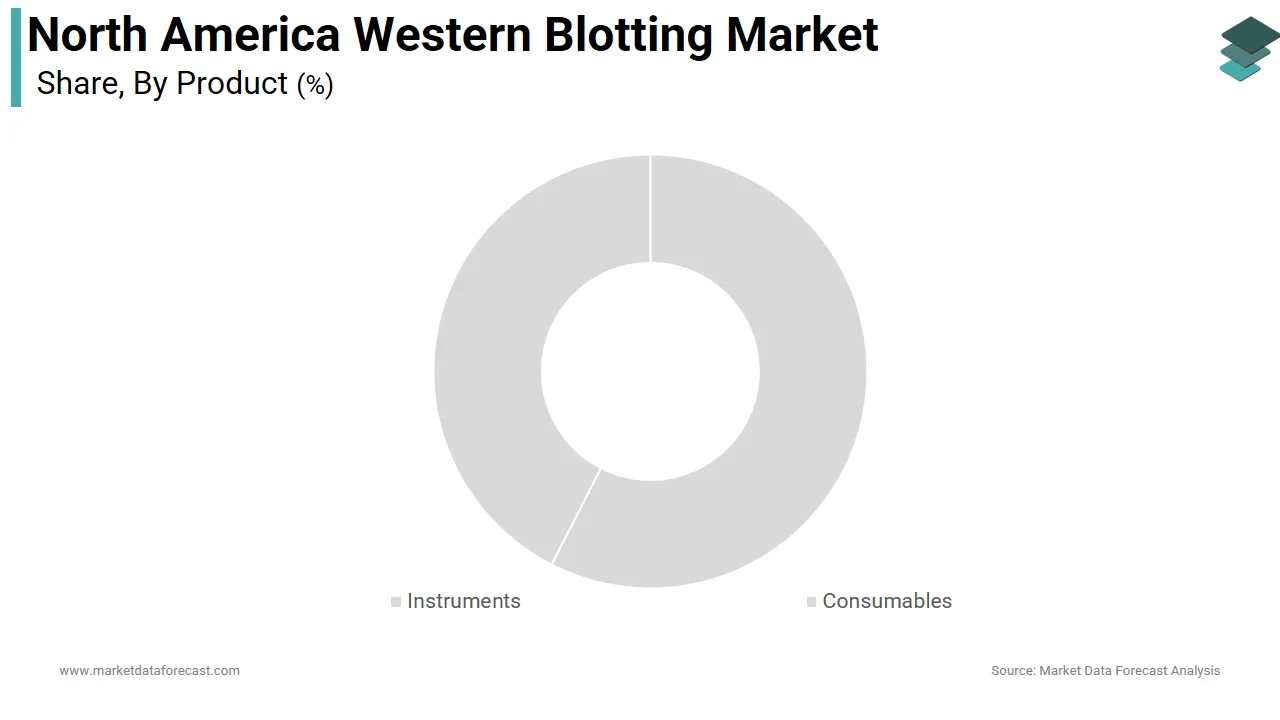
The imagers segment is to witness the fastest CAGR of 6.8% during the forecast period with the transition from traditional film-based detection to digital imaging systems, which offer superior sensitivity quantification and data management capabilities. Researchers are increasingly adopting chemiluminescent and fluorescent imagers to achieve higher dynamic ranges and multiplexing abilities, which are essential for modern proteomics studies. The ability of fluorescent imagers to detect multiple proteins simultaneously on a single membrane reduces sample consumption and experimental time, appealing to high-throughput environments. Furthermore, regulatory agencies, such as the Food and Drug Administration, encourage the use of digital records for audit trails and data integrity in drug development workflows, driving pharmaceutical companies to invest in advanced imaging hardware. Manufacturers are also integrating artificial intelligence software with imagers to automate band analysis and reduce user bias, enhancing the appeal of these systems.
By Application Insights
The biomedical and biochemical research segment accounted for a dominant share of the North America western blotting market in 2025, with the foundational role of western blotting in understanding protein function expression levels, and interactions in basic scientific inquiry. Academic institutions and government-funded research centers extensively utilize this technique for validating hypotheses and characterizing novel biological pathways. The technique remains the gold standard for confirming protein presence and size, making it indispensable for peer-reviewed publications and grant approvals. Data from PubMed indicates that thousands of scientific papers referencing western blotting are published each year from North American authors, reflecting its entrenched position in the research ecosystem. Furthermore, the rise of omics technologies has not replaced but rather complemented western blotting as a validation tool for mass spectrometry and genomic findings. The availability of well-characterized cell lines and animal models in North America further facilitates extensive protein profiling studies.
The disease diagnostics segment is estimated to grow at the fastest CAGR of 7.2% from 2026 to 2034, with its role in confirmatory testing for infectious and autoimmune diseases. While primarily a research tool, western blotting is clinically validated for diagnosing conditions, such as HIV, Lyme disease, and Hepatitis C, where specific antibody profiles are required for definitive diagnosis. The increasing prevalence of chronic infectious diseases and the need for accurate differentiation between similar pathogens boost the demand for clinical-grade Western blotting kits. The approval of several diagnostic assays utilizing western blot principles for detecting rare autoimmune disorders is expanding their clinical utility. Furthermore, the growing emphasis on personalized medicine requires precise protein biomarker identification to guide treatment decisions, particularly in oncology and neurology. As per the Clinical and Laboratory Standards Institute guidelines for laboratory testing, which emphasize the need for highly specific confirmatory methods to avoid false positives, western blotting provides. The integration of automated western blotting systems in clinical laboratories enhances throughput and reduces turnaround time, making it more viable for routine diagnostic use.
By End User Insights
The academic and research institutes segment accounted in holding 55.4% of the North America western blotting market share in 2025, with the vast number of universities, colleges, and independent research organizations conducting fundamental biological research and training future scientists. These institutions serve as the backbone of scientific discovery, where western blotting is a staple technique taught in undergraduate and graduate laboratories and used extensively in thesis projects. The consistent influx of students and faculty ensures a steady demand for educational kits and research-grade reagents. Data from the Association of American Universities indicates that member institutions collectively receive billions in federal research funding supporting large-scale projects that rely on protein analysis. Furthermore, academic core facilities provide shared resources, including western blotting equipment and expertise to multiple research groups, amplifying usage rates. The academic labs prioritize cost-effective and versatile solutions, making them key consumers of standard Western blotting consumables.
The pharmaceutical and biotechnology companies segment is projected to grow at the fastest CAGR of 7.5% during the forecast period, with the intensifying pipeline of biologics and targeted therapies. These companies utilize western blotting extensively for drug target validation, quality control, and mechanism of action studies during preclinical and clinical development phases. The regulatory requirement for rigorous characterization of drug products necessitates precise protein quantification and purity assessment, which western blotting provides. Data from the Food and Drug Administration shows an increase in the number of biologic license applications requiring detailed analytical data, including western blot results for batch consistency. Furthermore, the rise of contract research organizations supporting pharmaceutical giants has expanded the user base for high-throughput and automated Western blotting systems.
COUNTRY LEVEL ANALYSIS
United States Western Blotting Market Analysis
The United States was the outperformer in the North America western blotting market by holding 85.3% of the share in 2025 due to its robust biomedical research infrastructure and strong pharmaceutical industry presence. The high expenditure on life sciences research and a dense network of academic institutions and private laboratories are accelerating the growth of the market in this country. The United States accounts for nearly half of the global biomedical research funding, enabling extensive procurement of advanced Western blotting instruments and consumables. The presence of major life science companies, such as Thermo Fisher Scientific, Bio Rad, and Cell Signaling Technology, fosters innovation and easy access to cutting-edge technologies. The employment in medical and clinical laboratory roles is projected to grow significantly, reflecting the expanding capacity for diagnostic and research activities. The Food and Drug Administration’s stringent regulatory framework drives the adoption of validated and standardized western blotting protocols in drug development and clinical diagnostics. The high prevalence of chronic diseases such as cancer and Alzheimer’s stimulates research into protein biomarkers, further fueling market demand. The substantial investment in oncology research ensures continuous utilization of western blotting for target validation and therapeutic monitoring.
Canada Western Blotting Market Analysis
Canada western blotting market was ranked second by holding 12.3% of the share in 2025, with the strong government support for health research and a growing biotechnology sector. The country is home to several renowned research centers, such as the SickKids Hospital in Toronto and the Montreal Neurological Institute, which utilize western blotting for studying genetic and neurological disorders. Furthermore, the Canadian government’s emphasis on improving healthcare outcomes through precision medicine initiatives drives the adoption of advanced diagnostic tools, including western blotting for biomarker validation. The number of biotech firms has increased significantly, with many focusing on protein therapeutics and diagnostics. The integration of western blotting into clinical trials and quality control processes ensures steady market growth. Additionally, collaborations with international research networks enhance the exchange of best practices and technologies, further strengthening Canada’s role in the regional market.
COMPETITIVE LANDSCAPE
The competition in the North America Western Blotting Market is intense and characterized by the presence of established global leaders alongside specialized niche players who strive to differentiate themselves through innovation and quality. The drive for automation and digitization has become a key differentiator, as laboratories seek to improve reproducibility and throughput in response to increasing regulatory scrutiny. Companies are also competing based on technical support and educational resources, providing researchers with the knowledge needed to optimize their workflows. Price sensitivity remains a factor, particularly in academic settings, but the demand for high-quality and validated products often outweighs cost considerations in pharmaceutical and clinical environments.
KEY MARKET PLAYERS
Companies playing a dominant role in the North America Western blotting market profiled in this report are
- Bio-Rad Laboratories, Inc.
- Thermo Fisher Scientific, Inc.
- GE Healthcare
- Advansta, Inc.
- LI-COR Biosciences
- PerkinElmer Inc.
- Bio-Techne Corporation
- Merck KGaA
- Hoffmann-La Roche Ltd.
- Cell Signaling Technology
TOP PLAYERS IN THE NORTH AMERICA MARKET
- Thermo Fisher Scientific maintains a dominant presence in the North America western blotting market through its extensive portfolio of reagents, antibodies, and instrumentation. The company provides comprehensive solutions ranging from gel electrophoresis systems to advanced digital imagers that cater to diverse research needs. Thermo Fisher has also expanded its digital ecosystem by integrating cloud-based data management tools with their imaging systems, allowing researchers to store and analyze results efficiently. These initiatives demonstrate a strong commitment to enhancing workflow efficiency and data integrity for academic and pharmaceutical customers across the region while fostering long-term loyalty through reliable product performance and technical support services.
- Bio Rad Laboratories is a key contributor to the North America western blotting market, known for its innovative electrophoresis and blotting technologies. The company offers a wide array of products, including precast gel transfer systems and detection reagents that streamline the western blotting process. Recently, Bio-Rad introduced automated western blotting platforms that significantly reduce hands-on time and improve consistency for high-throughput applications. They have also strengthened their position by expanding their educational resources and training programs for researchers, ensuring proper utilization of their technologies. Bio Rad continues to invest in developing multiplexing capabilities and fluorescent detection methods, which address the growing demand for quantitative protein analysis. These strategic moves enhance their competitive edge by providing robust and user-friendly solutions that meet the evolving requirements of modern life science laboratories.
- Cell Signaling Technology specializes in high-quality antibodies and signaling pathway kits, making it an important player in the North America western blotting market. The company is renowned for its rigorous validation processes, which ensure superior specificity and sensitivity for protein detection. Recent efforts include the expansion of their phospho-specific antibody library and the introduction of optimized buffers for challenging protein targets. Cell Signaling Technology has also launched interactive online tools and protocols to assist researchers in experimental design and troubleshooting. Their commitment to quality and customer support has established them as a trusted partner for scientists seeking reliable and reproducible western blotting results in both academic and industrial settings.
TOP STRATEGIES USED BY KEY MARKET PARTICIPANTS
Key players in the North America Western Blotting Market primarily focus on product innovation and strategic collaborations to maintain their competitive edge. Companies invest heavily in research and development to create advanced automated systems and high-sensitivity reagents that improve accuracy and efficiency. Partnerships with academic institutions and pharmaceutical firms facilitate the adoption of new technologies and provide valuable feedback for product enhancement. Additionally, manufacturers emphasize digital integration by offering software solutions for data analysis and management, which aligns with regulatory requirements for data integrity. Expanding distribution networks and providing comprehensive technical support further strengthen customer relationships.
MARKET SEGMENTATION
This research report on the North America western blotting market is segmented and sub-segmented into the following categories.
By Product
-
Instruments
-
Consumables
By Application
-
Biomedical & Biochemical Research
-
Disease Diagnostics
By End User
-
Academic & Research Institutes
-
Pharmaceutical & Biotechnology Companies
By Country
- United States
- Canada
- Mexico
- Rest of North America