- Product Description Description
- Table of Contents TOC
- List of Table & Figure LOT
- Get Free Sample PDF Sample PDF
Market Size, 2025
$775 MnMarket Estimate, 2026
$814.5 MnMarket Forecast, 2034
$1213 MnCAGR, 2026–2034
5.1%Global Western Blotting Market Size, Growth, Trends & Forecast (2025–2034)
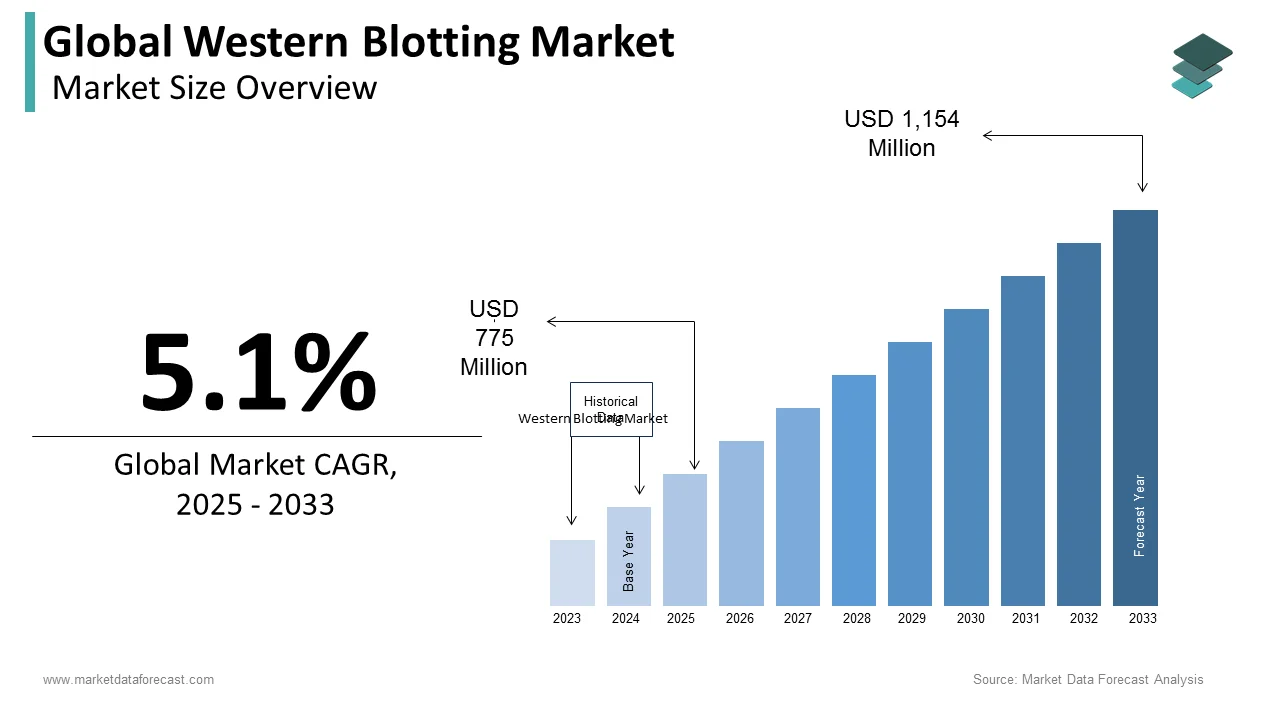
The size of the global western blotting market was valued at USD 775 million in 2025, is anticipated to reach USD 814.53 million in 2026, and is projected to scale up to USD 1,213 million by 2034, registering a compound annual growth rate (CAGR) of 5.1% during the forecast period from 2026 to 2034. Driven by the rising prevalence of infectious and chronic diseases, expanding proteomics research, and continuous technological advancements in protein detection systems, the industry continues to grow across global research and diagnostic sectors.
Key Executive Metrics (At-a-Glance)
- 2025 Base Valuation: USD 775 Million
- 2026 Current Valuation: USD 814.53 Million
- 2034 Forecast Valuation: USD 1,213 Million
- Compound Annual Growth Rate (CAGR): 5.1% (2026–2034)
- Dominant Product Segment: Consumables (account for the major share due to recurring demand for reagents, kits, and antibodies)
- Fastest-Growing Product Segment: Instruments (estimated to grow at a considerable CAGR backed by high-throughput systems and advanced imagers)
- Dominant Application Segment: Biomedical & Biochemical Research (leading the market via government and pharma R&D spending)
- Fastest-Growing Application Segment: Disease Diagnostics (projected at the highest CAGR driven by infectious and chronic disease screening)
- Dominant End-User Segment: Pharmaceutical and Biotechnology Companies (dominating due to targeted therapies and drug discovery workflows)
- Fastest-Growing End-User Segment: Academic and Research Institutes (registering the highest CAGR through molecular biology and genetics studies)
- Dominant Region: North America (holding the largest market share backed by established infrastructure and high R&D funding)
- Fastest-Growing Region: Asia-Pacific (witnessing the highest CAGR propelled by expanding biopharmaceutical and diagnostic sectors in China, India, and Japan)
Core Market Drivers
- Infectious & Chronic Diseases: Growing patient populations dealing with HIV/AIDS, Lyme disease, cancer, and neurological disorders requiring protein identification and tracking.
- Proteomics & R&D Expansion: Rapid advancements in proteomics research, personalized medicine frameworks, and high-throughput protein analysis needs.
Primary Market Restraints & Challenges
- Technical Complexity & Skill Gaps: High optimization requirements (e.g., gel concentration, separation) and a shortage of professional lab technicians.
- Alternative Technologies: The rise of automated and high-sensitivity platforms like ELISA, RIBA, and Alpha Screen technology shifting focus away from traditional semi-quantitative methods.
Global Western Blotting Market Segmentation Breakdown
| Segment Category | Leading Sub-Segment | Fastest-Growing Sub-Segment |
|---|---|---|
| By Product | Consumables (driven by constant demand for specialized reagents, kits, and antibodies) | Instruments (propelled by advancements in chemiluminescent and fluorescent imagers) |
| By Application | Biomedical & Biochemical Research (anchored by drug discovery and protein expression studies) | Disease Diagnostics (projected at the highest CAGR due to rising infectious disease screening) |
| By End User | Pharmaceutical & Biotechnology Companies (leading via preclinical evaluation and quality control) | Academic & Research Institutes (registering the highest CAGR through public-private grants and projects) |
| By Region | North America (largest share driven by well-funded research hubs and major key players) | Asia-Pacific (highest CAGR powered by life sciences investments in China, India, and Japan) |
Major Industry Players Profiled
Key enterprises shaping the competitive global western blotting market include Bio-Rad Laboratories, Inc., Thermo Fisher Scientific, Inc., GE Healthcare, Advansta, Inc., LI-COR Biosciences, PerkinElmer Inc., Bio-Techne Corporation, Merck KGaA, F. Hoffmann-La Roche Ltd., and Cell Signaling Technology.
Global Western Blotting Market Size
The size of the global western blotting market was worth USD 775 million in 2025. The global market is anticipated to grow at a CAGR of 5.1% from 2026 to 2034 and be worth USD 1,213 million by 2034 from USD 814.53 million in 2026.
MARKET DRIVERS
The growing prevalence of HIV/AIDS is one of the key factors propelling the western blotting market growth.
According to Joint United Nations Programme on HIV/AIDS (UNAIDS), approximately 38.4 million people worldwide lived with HIV in 2021. In addition, western blotting is also used to detect Borrelia burgdorferi (Bb), which causes Lyme disease. In addition, mad cow disease, hepatitis, and feline immunodeficiency are diseases involving a western blot to identify specific proteins. Therefore, any noticeable growth in the incidence of these diseases is anticipated to boost the western blotting market.
The growing number of R&D activities and increasing incidence of chronic diseases further fuel the growth rate of the western blotting market.
Western blotting techniques are increasingly being used in molecular biology research, especially in protein analysis and characterization, and this trend is likely to continue in the coming years and favor market growth. The growing usage of western blotting in biomedical and biotechnological research, drug discovery, and personalized medicine drives market growth. The growing patient population of chronic diseases contributes to the growth of the western blotting market. The prevalence of chronic diseases such as cancer, cardiovascular disorders, and neurological disorders is on the rise worldwide. Western blotting techniques are being used in the diagnosis, prognosis, and therapeutic development of chronic diseases. The growing prevalence of chronic diseases is expected to fuel the usage of these techniques for the treatment management of chronic diseases in the coming years and drive market growth.
An increasing number of advancements in proteomics research support the growth of the western blotting market.
Western blotting is one of the essential tools in proteomics research and is used for protein analysis and characterization. The growing number of advancements in proteomics technologies and the need for high-throughput protein analysis is anticipated to accelerate the demand for western blotting techniques and boost market growth. Technological advancements in western blotting promote market growth. Western blotting techniques have experienced several technological improvements in recent years, resulting in improved sensitivity, specificity, and ease of use. These advancements in western blotting techniques have further contributed to the increased adoption of these techniques by healthcare professionals and researchers.
The rapidly growing pharmaceutical and biotechnological industries in emerging nations, increasing investments for drug discovery and development, rising emphasis on personalized medicine, and growing investments for life sciences research by governments, academic institutions, and private organizations further fuel the growth rate of the global western blotting market.
MARKET RESTRAINTS
The lack of skilled and professional lab technicians to perform this technique necessitates a high degree of experimental environment optimization such as protein separation and gel concentration are expected to hinder the growth of the western blotting market. Furthermore, the emergence of alternative technologies is anticipated to diminish market growth. Alpha Screen technology, for instance, is a new and susceptible homogeneous bead-based platform for detecting biomolecules. The method eliminates the need for time-consuming wash steps and detects any interesting molecule, primarily from protein complexes. Besides that, the western blot technique is a semi-quantitative procedure that can only provide an estimate. This flaw is also supposed to stifle market expansion. Be that as it may, the emergence of alternative technologies is anticipated to restrain the market's growth. Furthermore, stringent regulations and high procedural efficiency requirements for accurate results will likely challenge the western blotting market in the coming years. Despite their importance in molecular biology and other biotechnological research, western blotting products need a complex life cycle during development. These factors often challenge small to medium manufacturing hubs and biotechnology institutes. Clinical research has seen a lot of recent advancements. As a result of these advances, researchers are shifting their attention away from traditional western blotting techniques and modern techniques like ELISA and RIBA (Recombinant Immunoblotting Assay), which will provide better results than the traditional technique.
REPORT COVERAGE
| REPORT METRIC | DETAILS |
| Market Size Available | 2025 to 2034 |
| Base Year | 2025 |
| Forecast Period | 2026 to 2034 |
| Segments Covered | By Product, Application, End-User, and Region. |
| Various Analyses Covered | Global, Regional and Country-Level Analysis, Segment-Level Analysis, Drivers, Restraints, Opportunities, Challenges; PESTLE Analysis; Porter’s Five Forces Analysis, Competitive Landscape, Analyst Overview of Investment Opportunities |
| Regions Covered | North America, Europe, Asia Pacific, Latin America, Middle East & Africa |
| Market Leaders Profiled | Bio-Rad Laboratories, Inc., Thermo Fisher Scientific, Inc., GE Healthcare, Advansta, Inc., LI-COR Biosciences, PerkinElmer Inc., Bio-Techne Corporation, Merck KGaA, F. Hoffmann-La Roche Ltd., and Cell Signaling Technology. |
SEGMENTAL ANALYSIS
By Product Insights
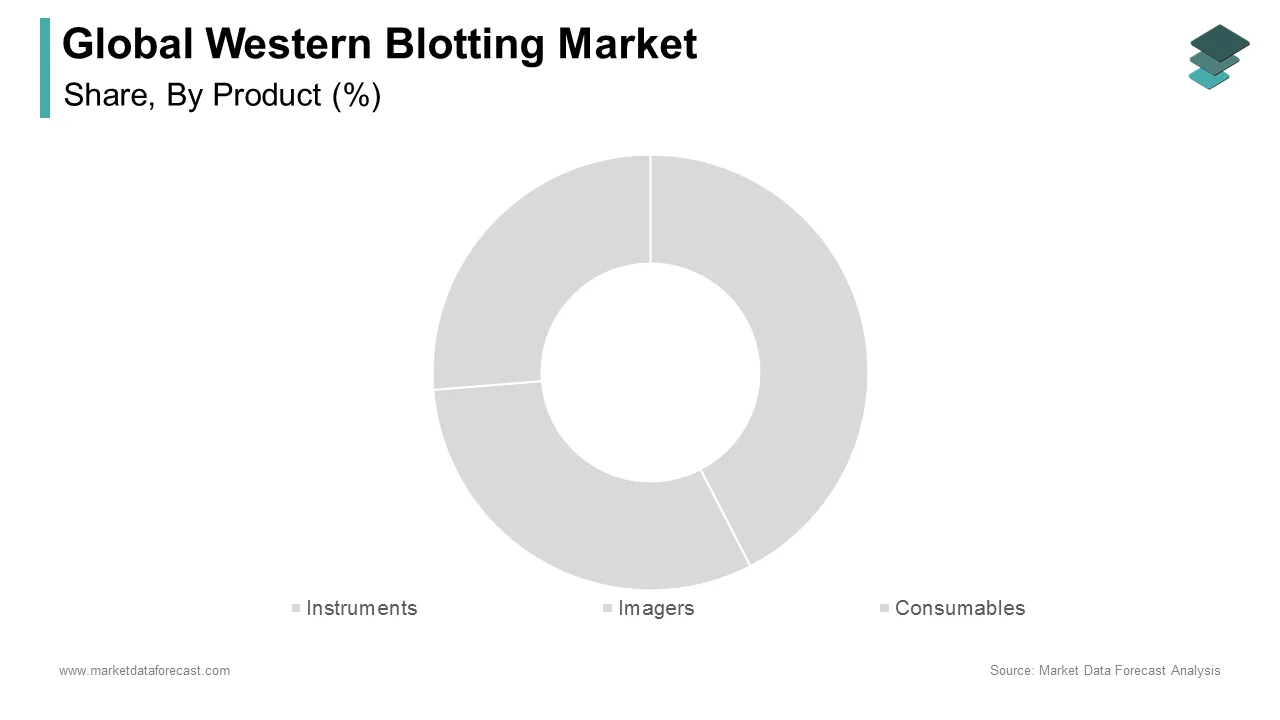
The consumables segment is expected to account for the major share of the global western blotting market during the forecast period. The ongoing demand for reliable and high-quality products, a growing number of research and development activities in areas such as proteomics, molecular biology, and drug discovery, and the introduction of novel and improved reagents and detection systems for enhanced Western blotting performance drive the growth of the consumables segment. The rising availability of a wide range of primary and secondary antibodies targeting specific proteins and post-translational modifications and the rapid adoption of standardized protocols and quality control Middle East and Africasures to ensure reproducible results further contribute to the growth rate of the segment.
The instruments segment is estimated to grow at a considerable CAGR during the forecast period. The continuous demand for advanced and efficient instruments, rapid adoption of Western blotting techniques in research and diagnostic laboratories for protein analysis, and technological advancements in instrument design support segmental growth. The rising focus on improving the sensitivity, accuracy, and reproducibility of Western blotting results and increasing demand for high-throughput Western blotting systems to accommodate large sample volumes further boost the segmental growth.
By Application Insights
The biomedical & biochemical research segment is expected to lead the western blotting market during the forecast period owing to increased government spending on proteomics research and a rise in R&D spending by pharmaceutical & biotechnology companies in drug discovery and development. The rising focus on understanding the role of proteins in various biological processes and diseases and the increasing demand for protein expression profiling, post-translational modification analysis, and protein-protein interaction studies propel the growth of the biomedical and biochemical segment. The growing number of advancements in proteomics research and the continuous development of new antibodies and detection methods for protein analysis further favor the growth rate of the segment.
On the other hand, the disease diagnostics segment is projected to grow at the highest CAGR during the forecast period owing to the rise in prevalence and incidences of HIV, HSV, HBV, and Lyme disease, among others. The growing prevalence of chronic diseases, such as cancer, infectious diseases, and autoimmune disorders, and the increasing number of advancements in personalized medicine and the use of protein biomarkers for disease diagnosis, prognosis, and treatment selection contribute to the growth of the disease diagnostics segment. The rising adoption of Western blotting in clinical laboratories for the detection of disease-specific antibodies or protein markers and the development of multiplexing technologies for simultaneous analysis of multiple proteins in a single assay fuel the growth rate of the segment.
By End-User Insights
The pharmaceutical and biotech companies segment is predicted to dominate the market during the forecast period. Factors such as the rising focus on targeted therapies and personalized medicine, growing investment in drug discovery and development, and stringent quality control requirements for biopharmaceutical products primarily drive segmental growth. The rapid adoption of Western blotting in preclinical and clinical research studies for the evaluation of drug efficacy and safety further fuels the growth rate of the pharmaceutical and biotech companies segment.
The research institutions segment is expected to register the highest CAGR during the forecast period owing to the ongoing research activities in fields such as molecular biology, cell biology, genetics, and biochemistry, which require protein analysis techniques like Western blotting. The availability of funding for research projects and grants from academic institutions and government organizations, growing collaborations between academic institutes and industry players for research and development, and rising demand for training and education programs related to protein analysis techniques, including Western blotting, contribute to the segmental growth.
REGIONAL ANALYSIS
North America Western Blotting Market Analysis
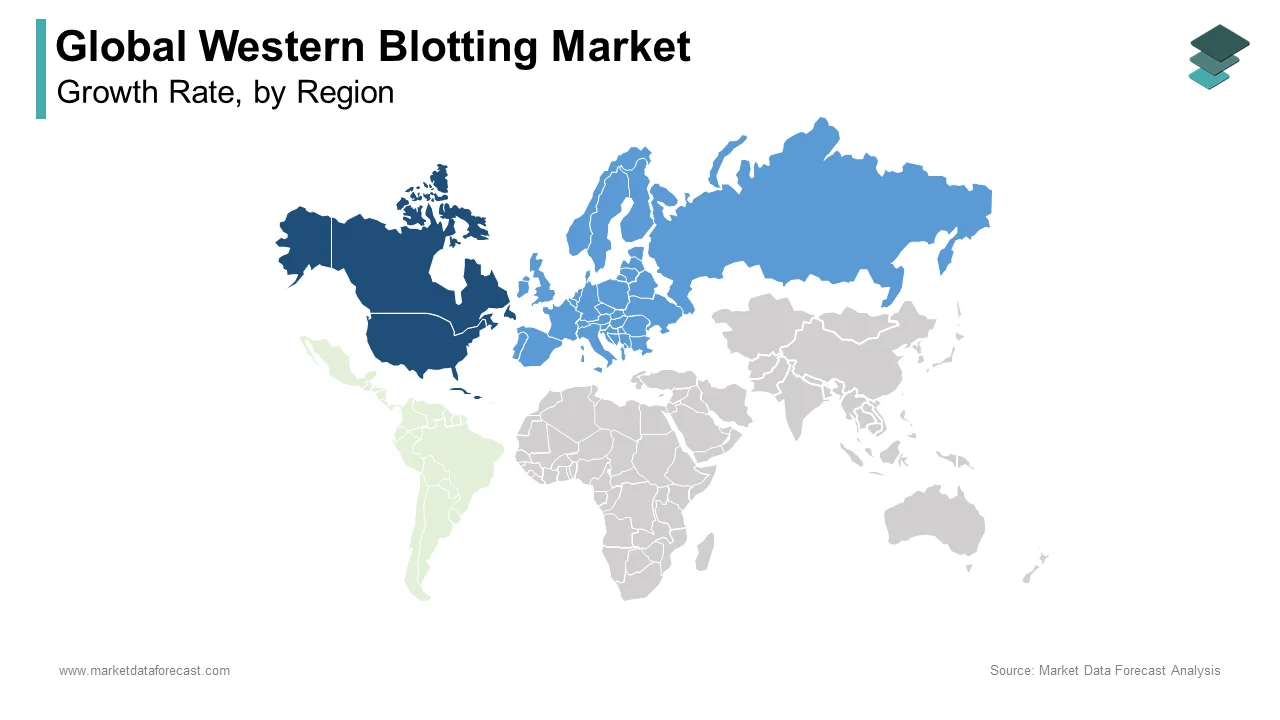
North America is predicted to account for the largest share of the global market during the forecast period. The presence of well-established research infrastructure, high prevalence of chronic diseases, and strong presence of key market players in North America majorly drive the North American market growth. Technological advancements in Western Blotting techniques, growing research funding,g, and favorable government initiatives further boost the growth rate of the North American market. The U.S. held the leading share of the North American market in 2024 and is anticipated to account for the major share of the North American market during the forecast period owing to the presence of advanced healthcare infrastructure and significant research and development activities.
Europe Western Blotting Market Analysis
Europe is another prominent region for the western blotting market and captured a considerable share of the global market in 2024. The European market is also expected to hold a substantial share of the global market during the forecast period. An increase in the number of people diagnosed with HIV is one of the major factors propelling the European market. According to the European Centers for Disease Prevention and Control, an estimated 104765 new HIV cases were found in the European region in 2020, and approximately 2.2 million people were diagnosed between 1990 and 2020. Growing R&D activities, rapid adoption of personalized medicine, supportive government policies and funding, and the presence of prominent academic and research institutes primarily boost the growth of the European market. The growing prevalence of chronic diseases and technological advancements in proteomics research further promote the growth rate of the European market. Germany, the United Kingdom, and France had the leading share of the European market in 2024 and the same trend is likely to repeat throughout the forecast period due to the growing prevalence of cardiovascular diseases and cancer in these countries.
Asia-Pacific Western Blotting Market Analysis
The Asia-Pacific is anticipated to witness the highest CAGR in the global market during the forecast period, emphasizing India, China, and Japan. The growing biopharmaceutical industry in the Asia-Pacific region, the increasing healthcare expenditure, the rising focus on research and development activities, and the growing prevalence of chronic diseases majorly drive the APAC market growth. Technological advancements in healthcare infrastructure and the presence of a large population base further boost the growth rate of the APAC market. Furthermore, China in Asia-Pacific is expected to showcase significant growth during the forecast period owing to the rapidly growing diagnostic and pharmaceutical industries.
Latin America Western Blotting Market Analysis
Latin America had a considerable share of the global market in 2024 and is predicted to grow at a healthy CAGR during the forecast period. The rising awareness and adoption of advanced diagnostics, increasing research and development activities, and the expansion of pharmaceutical and biotechnology industries in the Latin American region drive the regional market growth. The growing prevalence of chronic diseases, the improvement of healthcare infrastructure, and the increasing number of initiatives from the Latin American governments to enhance healthcare services further propel the growth of the Latin American market. Brazil, followed by Mexico, led the market in Latin America in 2024.
Middle East and Africa Western Blotting Market Analysis
The Middle East and Africa are forecasted to grow at a steady CAGR during the forecast period owing to the increasing number of improvements in the healthcare infrastructure in the countries of Middle East and Africa, growing research and development activities, and rising adoption of personalized medicine.
KEY MARKET PLAYERS
Some of the companies dominating the global western blotting market are
- Bio-Rad Laboratories, Inc.
- Thermo Fisher Scientific, Inc.
- GE Healthcare
- Advansta, Inc.
- LI-COR Biosciences
- PerkinElmer Inc.
- Bio-Techne Corporation
- Merck KGaA
- F. Hoffmann-La Roche Ltd.
- Cell Signaling Technology
MARKET SEGMENTATION
This market research report on the global western blotting market has been segmented and sub-segmented based on the product, application, end-user, and region.
By Product
- Instruments
- Gel Electrophoresis Instruments
- Blotting Systems
- Wet Blotting Systems
- Semi-Dry Blotting Systems
- Imagers
- Chemiluminescent Imagers
- Fluorescent Imagers
- Other Imagers
- Consumables
- Reagents
- Kits
- Other Consumables
By Application
- Biomedical & Biochemical Research
- Disease Diagnostics
- Agriculture
By End User
- Academic & Research Institutes
- Pharmaceutical & Biotechnology Companies
By Region
- North America
- Europe
- Asia Pacific
- Latin America
- The Middle East and Africa