- Product Description Description
- Table of Contents TOC
- List of Table & Figure LOT
- Get Free Sample PDF Sample PDF
Market Size, 2025
$601 MnMarket Estimate, 2026
$720 MnMarket Forecast, 2034
$3,056 MnCAGR, 2026–2034
19.8%Global Nanocellulose Market Report Summary
The global nanocellulose market was valued at USD 601.34 million in 2025, is estimated to reach USD 720.41 million in 2026, and is projected to reach USD 3,056.57 million by 2034, growing at a CAGR of 19.8% during the forecast period. Market growth is driven by increasing demand for sustainable and lightweight materials, rising environmental concerns, and expanding applications across packaging, composites, and biomedical sectors. Nanocellulose is widely valued for its high strength, biodegradability, and renewability. The growing shift toward eco friendly materials and advanced material innovation is further supporting rapid global market expansion.
Key Market Trends
- Rising demand for sustainable and biodegradable materials is driving market growth.
- Increasing use in lightweight and high strength composites is boosting demand.
- Growing adoption in packaging and biomedical applications is supporting market expansion.
- Expansion of research and development activities is enhancing product innovation.
- Stringent environmental regulations are encouraging the use of bio based materials.
Segmental Insights
- Based on type, the microfibrillated cellulose segment was the largest and held a majority share of the global nanocellulose market in 2025. This dominance is attributed to its superior mechanical properties and wide applicability across industries.
- Based on application, the composites and packaging segment led the global nanocellulose market in 2025, driven by increasing demand for sustainable alternatives to conventional materials.
Regional Insights
- The global nanocellulose market is experiencing rapid growth across regions, supported by innovation and sustainability initiatives.
- North America was the largest contributor, accounting for 35.6% of the global nanocellulose market share in 2025, driven by strong research capabilities, technological advancements, and increasing adoption of bio based materials.
Competitive Landscape
The global nanocellulose market is highly competitive, with key players focusing on research and development, production scaling, and strategic collaborations to strengthen their market position. Companies are investing in advanced material technologies, sustainable production processes, and commercialization efforts. Prominent players in the global nanocellulose market include Innventia Sweden, American Process US, FP Innovations Canada, Cellulose Canada, Stora Enso Finland, Kruger Canada, Daicel FineChem Japan, Borregaard Norway, Nippon Paper Japan, and UPM Kymmene Oyj Finland.
Global Nanocellulose Market Size
The global nanocellulose market size was valued at USD 601.34 million in 2025 and is projected to reach USD 3,056.57 million by 2034 from USD 720.41 million in 2026, growing at a CAGR of 19.8%.

Nanocellulose refers to a family of sustainable, high-performance nanomaterials derived from natural cellulose fibers, typically found in plant cell walls, wood, and even certain bacteria. These materials including cellulose nanocrystals and cellulose nanofibrils exhibit exceptional mechanical strength thermal stability and barrier properties making them ideal for diverse industrial applications. The market is increasingly driven by the global shift toward sustainable alternatives to petroleum based plastics and synthetic composites. According to the Food and Agriculture Organization of the United Nations global wood production reached approximately 4 billion cubic meters in recent years providing an abundant and renewable raw material base for nanocellulose extraction. Furthermore, data from the European Commission indicates that the European Union aims to recycle 55 percent of plastic packaging waste by 2030 under its Circular Economy Action Plan, creating a favorable regulatory environment for bio-based innovations. The unique ability of nanocellulose to reinforce polymers while maintaining biodegradability positions it as a critical component in green manufacturing. As per the United States Department of Agriculture research into bio based materials has intensified with significant funding allocated to develop scalable production methods. The integration of nanocellulose into packaging automotive and biomedical sectors reflects a broader industrial commitment to sustainability and performance enhancement. This convergence of environmental imperatives and technological advancement defines the current landscape of the nanocellulose industry fostering innovation and strategic partnerships across global supply chains.
MARKET DRIVERS
Stringent Environmental Regulations And Plastic Bans Drive Adoption Of Bio Based Alternatives
The implementation of stringent environmental regulations and widespread bans on single-use plastics serves as a primary factor for the adoption of nanocellulose in various industrial sectors, which boosts the expansion of the nanocellulose market. Governments worldwide are enforcing policies aimed at reducing plastic pollution and promoting circular economy principles which directly benefit bio based materials. According to the European Environment Agency, roughly 17.5 million tons of plastic waste are generated annually from municipal sources in the EU, with the recycling rate for plastic packaging reaching approximately 42.1%. The United Nations Environment Programme indicates that more than 100 countries have implemented some form of restriction on single use plastics driving demand for biodegradable packaging solutions. Nanocellulose offers a viable substitute due to its high strength barrier properties and compostability. As per the Organisation for Economic Co-operation and Development, global plastic production and use are projected to increase by 70% by 2040 compared to 2020 levels unless significant policy interventions occur. Manufacturers in the packaging industry are increasingly incorporating nanocellulose into films and coatings to enhance durability while ensuring environmental compliance. The automotive sector is also leveraging these regulations to replace synthetic composites with lightweight bio based materials to improve fuel efficiency and reduce carbon footprints. Thus, regulatory pressure acts as a powerful driver compelling industries to innovate and integrate nanocellulose into their product portfolios to meet sustainability targets and avoid penalties.
Growing Demand For Lightweight And High Strength Materials In Automotive And Aerospace Industries
The increasing demand for lightweight and high strength materials in the automotive and aerospace industries significantly propels the growth of the Nanocellulose Market. Manufacturers in these sectors are constantly seeking materials that reduce vehicle weight without compromising structural integrity to improve fuel efficiency and reduce emissions. According to the International Council on Clean Transportation reducing vehicle weight by 10 percent can improve fuel efficiency by 6 to 8 percent making lightweighting a critical strategy for meeting emission standards. Data from the Society of Automotive Engineers indicates that the use of bio based composites reinforced with nanocellulose can reduce component weight by up to 20 percent compared to traditional glass fiber composites. Nanocellulose exhibits a tensile strength higher than steel on a weight basis making it an ideal reinforcement agent for polymer matrices. As per updated EU regulations supported by the European Automobile Manufacturers Association, the industry now aims to reduce CO2 emissions from new cars by 55 percent by 2030. Aerospace companies are also exploring nanocellulose for interior components and non structural parts to lower overall aircraft weight and improve payload capacity. The superior mechanical properties of nanocellulose combined with its renewable nature align with the sustainability goals of these industries. Hence, the pursuit of performance enhancement and regulatory compliance in transportation sectors creates a robust demand for nanocellulose based composites.
MARKET RESTRAINTS
High Production Costs And Energy Intensive Processing Methods Restrain Market Expansion
The high production costs and energy intensive processing methods required to isolate and refine nanocellulose from raw biomass restrict the expansion of the nanocellulose market. The current manufacturing processes involving mechanical disintegration chemical hydrolysis or enzymatic treatment require substantial energy input and specialized equipment leading to elevated operational expenses. According to the United States Department of Energy the cost of producing nanocellulose remains significantly higher than conventional fillers such as calcium carbonate or glass fiber limiting its widespread commercial adoption. The National Renewable Energy Laboratory and industry techno-economic analyses indicate that energy consumption during mechanical fibrillation accounts for 40 to 60 percent of total production costs, posing a major economic barrier. As per the European Bioeconomy Strategy while investments in bio based technologies are increasing the scale up of production facilities remains slow due to financial risks and technical complexities. The lack of standardized and cost effective production protocols further hinders market penetration particularly in price sensitive applications such as packaging and construction. Small and medium sized enterprises often struggle to compete with established material suppliers who benefit from economies of scale. Consequently the high cost structure restricts the ability of manufacturers to offer competitive pricing slowing the transition from pilot scale to industrial scale production. Addressing these economic challenges through process optimization and technological innovation is crucial for market growth.
Limited Standardization And Regulatory Frameworks Create Uncertainty For Investors
The lack of comprehensive standardization and clear regulatory frameworks for nanocellulose creates uncertainty for investors and manufacturers, which hinders the nanocellulose market growth. Unlike established industrial materials nanocellulose lacks universally accepted definitions testing methods and safety guidelines which complicates product validation and market entry. According to the International Organization for Standardization, while several key standards for nanocellulose terminology and characterization have been established, the inherent morphological complexity of the material leads to ongoing challenges in ensuring universal consistency across quality and performance metrics. Data from the European Chemicals Agency indicates that the regulatory status of nanomaterials remains complex with varying requirements across different jurisdictions creating compliance burdens for multinational companies. As per the National Institute for Occupational Safety and Health (NIOSH), the absence of specific regulatory occupational exposure limits and harmonized hazard classification for nanocellulose poses challenges for risk assessment and workplace safety management. This regulatory ambiguity discourages investment in large scale production facilities as companies face potential future liabilities and retrofitting costs. Additionally the lack of standardized terminology leads to confusion among consumers and downstream users regarding product specifications and applications. Manufacturers must navigate a fragmented regulatory landscape increasing administrative costs and time to market. So, the uncertainty surrounding legal and safety standards acts as a significant restraint limiting the confidence of stakeholders and slowing the commercialization of nanocellulose products.
MARKET OPPORTUNITIES
Expansion Into Biomedical And Pharmaceutical Applications Presents Significant Growth Avenues
The integration of nanocellulose into biomedical and pharmaceutical applications offers a lucrative opportunity for nanocellulose market expansion. This expansion is due to its biocompatibility, biodegradability, and unique mechanical properties. Nanocellulose is increasingly used in wound dressings tissue engineering scaffolds and drug delivery systems offering superior performance compared to synthetic polymers. According to sources, the global demand for advanced wound care products is rising due to an aging population and chronic wounds; the WHO focuses on clinical guidelines and access to care rather than market creation for bio-based materials. The Journal of Controlled Release indicates that nanocellulose based hydrogels exhibit excellent water retention and mechanical strength making them ideal for sustained drug release applications. As per the Medical Devices Regulation (MDR) framework, the approval process for medical devices in Europe has actually become more stringent and rigorous since 2021 to ensure safety, rather than more "streamlined. Researchers are exploring the use of nanocellulose in 3D printing of tissues and organs leveraging its ability to mimic the extracellular matrix. The antimicrobial properties of modified nanocellulose further enhance its utility in infection control. Pharmaceutical companies are investing in clinical trials to validate the efficacy and safety of nanocellulose based therapies. This diversification into high value medical applications allows manufacturers to command premium prices and reduce dependence on commodity markets. Hence, the biomedical sector represents a high growth avenue driven by technological advancements and healthcare needs.
Development Of Flexible Electronics And Smart Packaging Solutions Drives Innovation
The development of flexible electronics and smart packaging solutions provides significant prospects for the nanocellulose market. This leverages its transparency, flexibility, and barrier properties. Nanocellulose films are being integrated into flexible displays sensors and wearable devices due to their optical clarity and mechanical robustness. According to the Institute of Electrical and Electronics Engineers the market for flexible electronics is projected to grow substantially driven by consumer demand for wearable technology and internet of things devices. Data from Smithers Pira indicates that the smart packaging market is expanding as brands seek interactive and informative packaging solutions to enhance consumer engagement. Nanocellulose serves as an excellent substrate for printed electronics due to its smooth surface and thermal stability. The European Commission (via Horizon Europe and the Circular Bio-based Europe Joint Undertaking) is the specific body that has significantly increased targeted funding for the industrial development of sustainable bio-based electronic components. The ability of nanocellulose to block oxygen and moisture extends the shelf life of perishable goods making it valuable for active packaging applications. Manufacturers are collaborating with tech firms to create biodegradable sensors and circuits reducing electronic waste. This convergence of sustainability and technology positions nanocellulose as a key material in the next generation of electronic and packaging innovations. Consequently the electronics and smart packaging sectors offer diverse avenues for product differentiation and market expansion.
MARKET CHALLENGES
Supply Chain Volatility For Raw Biomass Impacts Production Stability
Instability in the raw biomass supply chain is creating major impediments for the Nanocellulose Market. As the primary feedstock, any disruption to this resource impacts overall production. Fluctuations in the availability and price of wood pulp agricultural residues and other cellulose sources can disrupt manufacturing operations and increase costs. According to the Food and Agriculture Organization of the United Nations climate change and extreme weather events have impacted forest productivity and agricultural yields leading to inconsistent raw material supplies. The European Forest Institute indicates that bark beetle infestations and droughts in Europe have reduced timber availability affecting the pulp and paper industry which supplies much of the raw material for nanocellulose. As per the United States Department of Agriculture trade tensions and logistical disruptions have further exacerbated supply chain uncertainties increasing lead times and transportation costs. Manufacturers relying on specific types of biomass face heightened risks if local sources become scarce or expensive. The seasonal nature of agricultural residues also complicates inventory management requiring robust storage and preservation strategies. Additionally competition for biomass from other bio based industries such as biofuels and bioplastics intensifies pressure on supply. These supply chain complexities require manufacturers to diversify sourcing strategies and invest in resilient logistics networks. Therefore, maintaining consistent production levels and controlling costs remain persistent challenges for the industry.
Technical Challenges In Scaling Up Production And Maintaining Quality Consistency
Technical issues in scaling up production and maintaining quality consistency pose significant hurdles for the Nanocellulose Market. While laboratory scale production yields high quality nanocellulose translating these processes to industrial scales often results in variations in particle size distribution crystallinity and purity. According to research, achieving uniform dispersion of nanocellulose in polymer matrices remains a technical bottleneck due to its hydrophilic nature and poor compatibility with hydrophobic polymers, affecting the performance of final composites. The Technical Association of the Pulp and Paper Industry indicates that batch to batch variability is a common issue in current production facilities leading to rejection rates and inefficiencies. As per the European Commission Joint Research Centre the lack of standardized characterization methods makes it difficult to compare products from different suppliers hindering quality assurance. The aggregation of nanocellulose fibers during drying and processing further complicates handling and integration into existing manufacturing lines. Manufacturers must invest in advanced process control technologies and real time monitoring systems to ensure consistency which increases capital expenditure. Additionally the high viscosity of nanocellulose suspensions poses challenges for pumping and mixing requiring specialized equipment. These technical barriers slow the adoption of nanocellulose in high precision applications where consistency is critical. Overcoming these scaling issues requires continuous research and development collaboration between academia and industry to optimize production protocols.
REPORT COVERAGE
| REPORT METRIC | DETAILS |
| Market Size Available | 2025 to 2034 |
| Base Year | 2025 |
| Forecast Period | 2026 to 2034 |
| CAGR | 19.8% |
| Segments Covered | By Type, Application, and Region. |
| Various Analyses Covered | Global, Regional & Country Level Analysis, Segment-Level Analysis, DROC, PESTLE Analysis, Porter’s Five Forces Analysis, Competitive Landscape, Analyst Overview of Investment Opportunities |
| Regions Covered | North America, Europe, Asia Pacific, Latin America, Middle East and Africa. |
| Market Leaders Profiled | Innventia (Sweden), American process (us), FP innovations (Canada), cellulose (Canada), stora enso (Finland), Kruger (Canada), diesel fine chem (japan), borregaard (Norway), Nippon paper (japan), and upm-kymmene Oyj (inland), and Others. |
SEGMENTAL ANALYSIS
By Type Insights
The microfibrillated cellulose segment held the majority share of the Nanocellulose Market in 2025. This supremacy of the segment is credited to its relatively lower production costs and broad applicability across various industrial sectors. Unlike cellulose nanocrystals which require harsh acid hydrolysis microfibrillated cellulose is primarily produced through mechanical disintegration making it more scalable and economically viable for large volume applications. According to the Forest Products Laboratory of the United States Department of Agriculture mechanical fibrillation processes are well established in the pulp and paper industry allowing for easier integration into existing manufacturing infrastructure. The material serves as an effective rheology modifier reinforcing agent and barrier coating in packaging composites and personal care products. Its ability to form strong hydrogen bonded networks enhances the mechanical properties of host materials without significantly increasing weight. Furthermore the availability of raw materials such as wood pulp and agricultural residues ensures a stable supply chain. Manufacturers prefer microfibrillated cellulose for applications where extreme purity or specific crystalline structures are not critical requirements. This balance of performance cost and availability solidifies its leadership in the market landscape. The dominance of the microfibrillated cellulose segment is further reinforced by its strong adoption in the packaging and composite materials industries which represent the largest end use sectors. Manufacturers utilize microfibrillated cellulose to enhance the strength barrier properties and printability of paper based packaging reducing the need for plastic liners. According to the Confederation of European Paper Industries (CEPI), the European pulp and paper industry contributes to a much larger €3.8 billion EU-industry investment through public-private partnerships for bio-based innovation, while CEPI itself reports that its members make approximately €5.5 billion in total annual investments across the sector. The material improves oxygen and grease resistance extending the shelf life of food products while maintaining compostability. In composites microfibrillated cellulose acts as a lightweight reinforcement filler in automotive and construction materials improving durability and reducing carbon footprints. Regulatory pressures to reduce single use plastics further accelerate the shift toward bio based packaging solutions. Consequently the high volume demand from these mature industries ensures that microfibrillated cellulose remains the dominant type in the nanocellulose market.
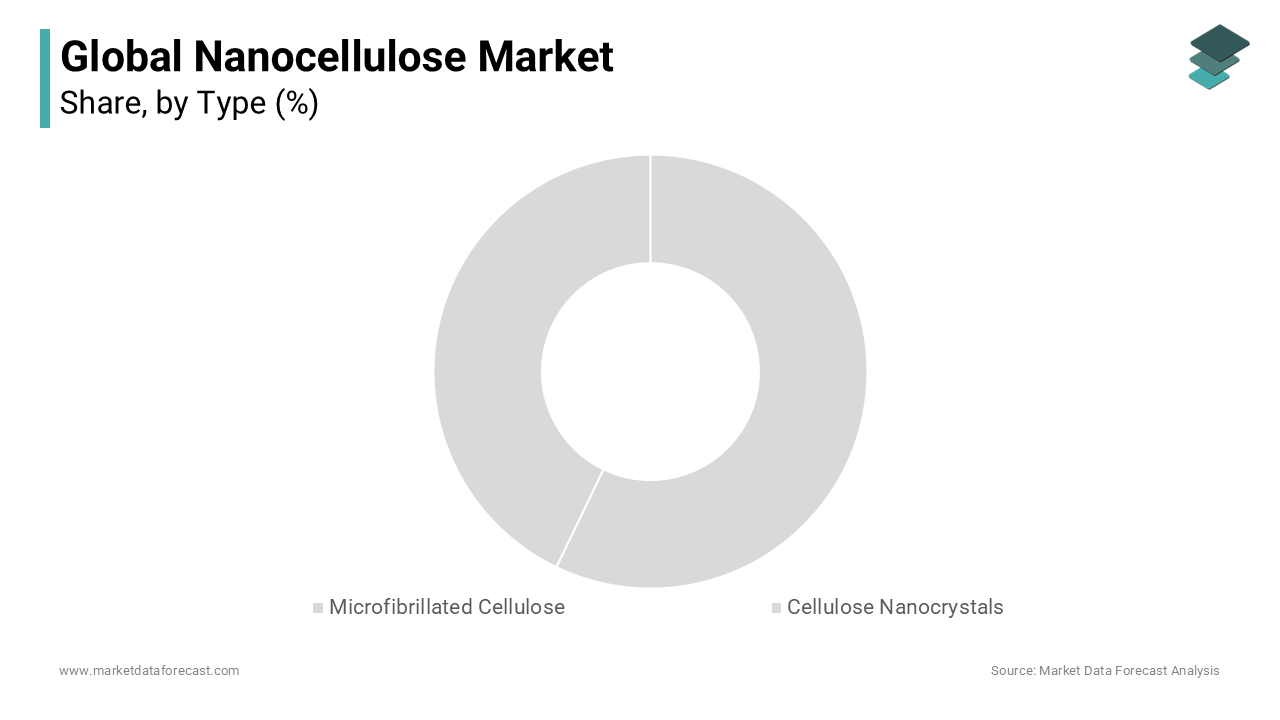
The cellulose nanocrystals segment is likely to experience the fastest CAGR of 18.5% from 2026 to 2034 due to the superior mechanical properties and high aspect ratio of cellulose nanocrystals which make them ideal for high value specialized applications. According to the National Institute of Standards and Technology cellulose nanocrystals exhibit a tensile modulus comparable to steel and Kevlar on a weight basis offering exceptional reinforcement capabilities. The unique optical properties of cellulose nanocrystals including birefringence and iridescence enable their use in flexible displays and anti counterfeiting labels. As per the American Chemical Society research into chiral nematic structures formed by cellulose nanocrystals has opened new avenues in photonics and sensor technologies. These high value applications command premium prices offsetting the higher production costs associated with acid hydrolysis. The automotive and aerospace industries are increasingly exploring cellulose nanocrystals for lightweight structural components to meet stringent emission standards. Additionally the pharmaceutical sector utilizes cellulose nanocrystals for drug delivery systems due to their biocompatibility and surface functionalization potential. Consequently, the combination of exceptional performance and diverse high-tech applications drives the accelerated growth of this segment. The rapid expansion of the cellulose nanocrystals segment is further accelerated by advancements in green extraction methods that improve sustainability and reduce environmental impact. Traditional production involves sulfuric acid hydrolysis which generates hazardous waste and requires extensive neutralization processes. According to the Green Chemistry Journal recent innovations in enzymatic and oxidative treatments have significantly reduced the environmental footprint of cellulose nanocrystal production. The advancements align with regulatory frameworks such as the EU Green Deal which promotes sustainable industrial practices. As per the United States Department of Energy funding for bio based material research has increased supporting the development of scalable and cleaner production technologies. The ability to produce high purity cellulose nanocrystals with minimal waste appeals to environmentally conscious manufacturers and consumers. Furthermore the improved consistency and quality of green extracted nanocrystals enhance their suitability for sensitive applications in electronics and biomedical devices. Companies are investing in proprietary green technologies to differentiate their products and capture market share. This shift toward sustainable production methods not only addresses regulatory concerns but also lowers long term operational costs. Thus, the adoption of green extraction techniques supports the robust growth trajectory of the cellulose nanocrystals segment.
By Application Insights
The composites and packaging led the Nanocellulose Market in 2025. This leading position of the segment is supported by stringent regulatory pressures and corporate sustainability goals driving the replacement of synthetic materials. Governments worldwide are implementing bans on single use plastics and mandating higher recycled content in packaging forcing manufacturers to seek bio based alternatives. According to the European Commission, the Single Use Plastics Directive targets the separate collection of 90% of plastic beverage bottles by 2029 and aims for all plastic packaging to be recyclable or reusable by 2030, creating significant demand for sustainable alternatives like nanocellulose. Data from the Ellen MacArthur Foundation indicates that only 14 percent of plastic packaging is currently recycled globally highlighting the urgent need for compostable alternatives. Nanocellulose offers excellent barrier properties against oxygen and moisture making it ideal for food packaging applications. In composites nanocellulose reinforces bioplastics and natural fiber matrices improving mechanical strength and thermal stability. The automotive industry utilizes these composites for interior panels and trim parts to reduce vehicle weight and improve fuel efficiency. The versatility of nanocellulose in both rigid and flexible packaging formats ensures broad market penetration. Consequently the convergence of regulatory mandates and performance benefits solidifies the dominance of the composites and packaging segment. The leadership of the composites and packaging segment is further strengthened by the successful integration of nanocellulose into mainstream manufacturing processes which enhances scalability and cost effectiveness. Major packaging producers have developed compatible coating and extrusion technologies that allow for the seamless incorporation of nanocellulose into existing production lines. According to the Forest Products Laboratory of the United States Department of Agriculture pilot scale trials have demonstrated that nanocellulose coatings can be applied using standard roll to roll equipment minimizing capital investment. This vertical integration reduces supply chain risks and ensures consistent quality. As per the Society of the Plastics Engineers the compatibility of nanocellulose with common biopolymers such as polylactic acid and starch facilitates the production of fully bio based composite materials. Manufacturers benefit from the ability to customize material properties by adjusting nanocellulose concentration and dispersion methods. The growing availability of standardized nanocellulose grades simplifies procurement and formulation for downstream users. Retailers are increasingly demanding sustainable packaging solutions from suppliers driving adoption across the value chain. Thus, the ease of integration and established supply chains ensure that composites and packaging remain the primary application area for nanocellulose.
The biomedical and pharmaceuticals segment is on the rise and is expected to be the fastest growing segment in the market by witnessing a CAGR of 22.3% during the forecast period owing to the rising demand for advanced wound care products and tissue engineering scaffolds that leverage the biocompatibility and mechanical strength of nanocellulose. The high water retention capacity and porous structure of nanocellulose mimic the extracellular matrix supporting cell proliferation and tissue regeneration. Researchers are developing 3D printed scaffolds using nanocellulose for bone and cartilage repair offering personalized treatment options. The antimicrobial properties of modified nanocellulose further enhance its utility in preventing hospital acquired infections. Pharmaceutical companies are exploring nanocellulose as a carrier for controlled drug delivery systems improving therapeutic efficacy. Consequently the critical healthcare needs and technological advancements drive the exceptional growth of this segment. The swift growth of the biomedical and pharmaceuticals segment is further fueled by innovation in drug delivery systems and diagnostic tools that utilize the unique surface chemistry of nanocellulose. Nanocellulose can be functionalized with various ligands and drugs enabling targeted delivery and sustained release profiles. The high surface area of nanocellulose allows for high drug loading capacities making it efficient for potent medications. Nanocellulose is also being integrated into biosensors for real time monitoring of physiological parameters such as glucose levels in diabetic patients. The transparency and flexibility of nanocellulose films make them ideal for wearable diagnostic devices. Collaborations between material scientists and medical professionals are accelerating the translation of laboratory findings into clinical applications. Regulatory support for innovative medical technologies further facilitates market entry. Thus, the versatility of nanocellulose in diagnostics and therapeutics ensures sustained high growth in the biomedical sector.
REGIONAL ANALYSIS
North America Nanocellulose Analysis
North America dominated the global Nanocellulose Market and accounted for a 35.6% share in 2025. This dominance of the North American market is driven by strong research infrastructure and significant government funding for bio-based materials. The region is home to leading academic institutions and national laboratories that pioneer nanocellulose extraction and application technologies. According to the United States Department of Agriculture the BioPreferred Program mandates the use of bio based products in federal procurement creating a stable demand base. While the National Nanotechnology Initiative (NNI) as a whole has received funding requests of approximately 1.99 billion USD annually (e.g., FY 2023), the National Science Foundation (NSF) typically accounts for roughly 400 million to 500 million USD of that total, rather than the full billion-plus amount individually. The presence of major pulp and paper companies in Canada and the United States ensures a robust supply of raw materials. Canada is a global leader in nanocellulose development, but most facilities currently operate at pilot or demonstration scale (e.g., CelluForce and InnoTech Alberta) rather than full-scale commercial operations. The automotive and aerospace industries in the region are actively adopting nanocellulose composites to meet fuel efficiency standards. Regulatory support from the Environmental Protection Agency for sustainable materials further accelerates market growth. Venture capital investment in bio based startups is high fostering a dynamic ecosystem. Consequently North America remains the technological and commercial hub for the nanocellulose industry.
Europe Nanocellulose Analysis
Europe was the next prominent region and occupied a share of 30.2% of the global Nanocellulose Market in 2025 because of stringent environmental regulations and strong industrial collaboration. The European Union Circular Economy Action Plan drives the adoption of bio based alternatives to plastics boosting demand for nanocellulose. According to the European Commission over 500 million EUR has been allocated to bioeconomy research projects under Horizon Europe. The Confederation of European Paper Industries shows that European paper mills are leading the way in integrating nanocellulose production into existing facilities. Countries such as Finland Sweden and Germany are key contributors with established clusters of expertise. As per the Finnish Bioeconomy Cluster the country produces a significant portion of the world's nanocellulose leveraging its vast forest resources. The automotive industry in Germany is a major consumer of nanocellulose composites for lightweighting. Regulatory frameworks such as REACH ensure high safety standards promoting consumer trust. Collaborative initiatives between industry and academia accelerate technology transfer. So, Europe remains a vital market driven by policy support and industrial innovation.
Asia Pacific Nanocellulose Analysis
Asia Pacific is a rapidly growing region in the nanocellulose market due to expanding manufacturing bases and increasing environmental awareness. Countries such as China Japan and India are investing heavily in nanocellulose research and production capabilities. According to the Ministry of Science and Technology and 14th Five-Year Plan, China is increasing its R&D spending by at least 7% annually, with nanomaterials as a key "frontier technology" priority. The Japan TAPPI indicates that Japan is a leader in patent filings for nanocellulose applications particularly in electronics and cosmetics. The growing middle class in the region increases demand for sustainable packaging and personal care products. As per the Indian Ministry of Environment Forest and Climate Change initiatives to reduce plastic pollution are driving adoption of bio based alternatives. The availability of low cost agricultural residues provides a competitive advantage in raw material sourcing. Government incentives for green manufacturing encourage local production. Consequently Asia Pacific is poised for significant growth as infrastructure and awareness improve.
Latin America Nanocellulose Analysis
Latin America is moving ahead steadfastly in the global Nanocellulose Market owing to abundant biomass resources and emerging industrial interest. Brazil and Chile are key players leveraging their large forestry and agricultural sectors for nanocellulose production. According to the Brazilian Agricultural Research Corporation the country has significant potential for producing nanocellulose from eucalyptus and sugarcane bagasse. The Chilean Forestry Institute indicates ongoing research into the valorization of forestry biomass, including nanocellulose, as part of the national transition toward a circular bioeconomy. Economic constraints and limited infrastructure remain challenges but international partnerships are facilitating technology transfer. The growing export market for sustainable materials drives local investment. As per the Inter American Development Bank funding for bioeconomy projects is increasing supporting regional development. Consequently Latin America represents a promising market with strong resource advantages.
Middle East and Africa Nanocellulose Analysis
The Middle East and Africa region is anticipated to grow significantly in the global Nanocellulose Market over the forecast period due to nascent development and niche applications. South Africa and the United Arab Emirates are leading efforts in research and pilot production. According to the South African Council for Scientific and Industrial Research initiatives are focused on utilizing agricultural waste for nanocellulose extraction. Data from the UAE Ministry of Climate Change and Environment indicates that sustainability goals are driving interest in bio based materials. Limited local manufacturing capacity means reliance on imports but local pilot plants are emerging. Investment in desalination and water treatment technologies offers opportunities for nanocellulose membranes. As per the African Union Commission Agenda 2063 emphasizes sustainable industrialization supporting long term growth. Consequently the region offers niche opportunities despite current small market size.
COMPETITIVE LANDSCAPE
The competition in the nanocellulose market is characterized by a mix of established pulp and paper giants and innovative startups vying for technological leadership and market share. Large corporations leverage their existing infrastructure and raw material access to achieve economies of scale while smaller firms focus on specialized technologies and high value applications. Intellectual property protection is a critical competitive factor with companies patenting unique extraction and modification processes. Collaboration with end users in automotive packaging and biomedical sectors drives product development and validation. Price competition remains moderate as the market is still in early growth stages with performance and sustainability being key differentiators. Regulatory compliance and certification serve as barriers to entry for new players. Geographic expansion into emerging markets offers growth opportunities but requires local partnerships. Overall the landscape is dynamic with continuous innovation and strategic alliances shaping the competitive environment and driving the adoption of nanocellulose across diverse industries globally.
Key Market Players
The major key players in the global nanocellulose market are
- Innventia (Sweden)
- American Process (US)
- FP Innovations (Canada)
- Cellulose (Canada)
- Stora Enso (Finland)
- Kruger (Canada)
- Daicel FineChem (Japan)
- Borregaard (Norway)
- Nippon Paper (Japan)
- UPM-Kymmene Oyj (Finland)
Top Players in the Market
- Celluforce Inc. stands as a global pioneer in the commercial production of cellulose nanocrystals leveraging proprietary technology to deliver high performance bio based materials. The company operates the world’s first industrial scale plant in Canada ensuring consistent supply for diverse applications ranging from composites to cosmetics. Recent actions to strengthen its market position include strategic partnerships with major chemical and automotive manufacturers to integrate nanocrystals into advanced material formulations. Celluforce has expanded its research collaborations with academic institutions to develop new extraction methods that reduce environmental impact and cost. The company actively participates in international standardization committees to establish quality benchmarks for nanocellulose products. By focusing on application specific solutions Celluforce enhances customer value and drives adoption in high growth sectors. These initiatives reinforce its leadership by combining technological innovation with scalable production capabilities to meet evolving global demand for sustainable nanomaterials.
- Borregaard AS is a leading supplier of specialty biochemicals including microfibrillated cellulose under the Exilva brand which serves various industrial sectors globally. The company utilizes its integrated biorefinery model to produce high purity nanocellulose from wood biomass ensuring sustainability and efficiency. Recent actions to strengthen its market position include significant capacity expansions at its facilities in Norway to meet rising international demand. Borregaard has launched new grades of Exilva tailored for concrete admixtures and oil drilling fluids enhancing performance in harsh environments. The company invests heavily in application development centers to support customers in optimizing product formulations. Strategic alliances with downstream manufacturers facilitate the integration of nanocellulose into construction and energy applications. By prioritizing technical service and innovation Borregaard solidifies its reputation as a trusted partner. These efforts drive market penetration and growth by addressing specific industry challenges with effective bio based solutions.
- Nippon Paper Industries Co. Ltd. plays a crucial role in the global nanocellulose market by producing cellulose nanofibers through its innovative STAR process which enables efficient mechanical fibrillation. The company leverages its extensive pulp and paper expertise to manufacture high quality nanocellulose for packaging electronics and automotive applications. Recent actions to strengthen its market position include the establishment of pilot plants in Japan and Europe to accelerate product development and customer collaboration. Nippon Paper has formed joint ventures with chemical companies to create hybrid materials that combine nanocellulose with synthetic polymers. The company focuses on reducing production energy consumption through process optimization enhancing economic viability. Active participation in global sustainability initiatives highlights its commitment to environmental responsibility. By expanding its application portfolio and strengthening supply chains Nippon Paper enhances its competitive edge. These strategic moves support long term growth and establish the company as a key innovator in the bio based materials sector.
Top Strategies Used by Key Market Participants
Key players in the nanocellulose market primarily focus on strategic partnerships and collaborations to accelerate commercialization and expand application scopes. Companies invest heavily in research and development to optimize production processes and reduce costs. Capacity expansion is a common strategy to meet growing demand from various industries. Product differentiation through specialized grades for niche applications enhances competitive advantage. Sustainability initiatives including green extraction methods are prioritized to align with regulatory standards. Vertical integration ensures stable raw material supply and cost control. Educational campaigns and technical support services help overcome adoption barriers. These combined strategies enable companies to navigate market challenges and drive growth in the emerging nanocellulose sector effectively.
MARKET SEGMENTATION
This research report on the global nanocellulose market has been segmented and sub-segmented based on type, application, and region.
By Type
- Microfibrillated Cellulose
- Cellulose Nanocrystals
By Application
- Pulp & Paper
- Composites & Packaging
- Biomedical & Pharmaceuticals
- Electronics & Sensors
By Region
- North America
- Europe
- Asia Pacific
- The Middle East and Africa
- Latin America