- Product Description Description
- Table of Contents TOC
- List of Table & Figure LOT
- Get Free Sample PDF Sample PDF
Global Next-Generation Antibody Therapeutics Market Size
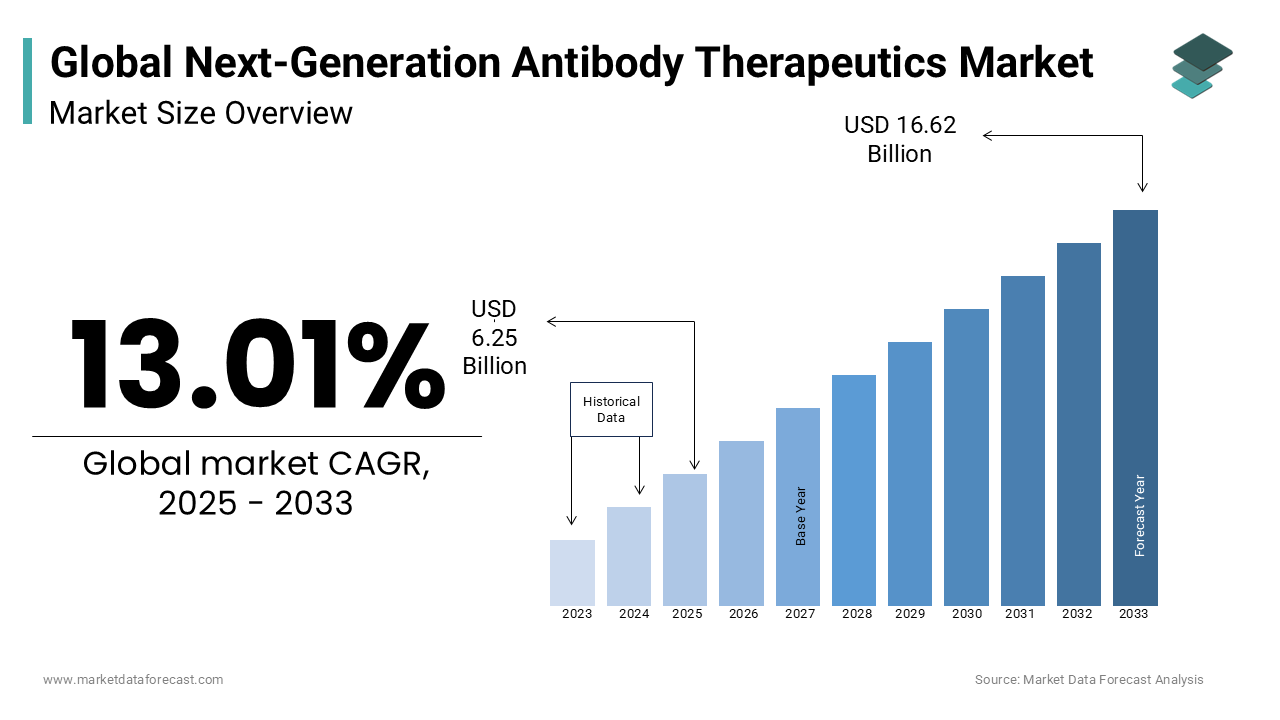
The size of the global next-generation antibody therapeutics market was valued at USD 5.53 billion in 2024. The global market is expected to grow with a CAGR of 13.01% from 2025 to 2033 and be worth USD 16.62 billion by 2033 from USD 6.25 billion in 2025.
MARKET DRIVERS
Y-O-Y growth in the prevalence of cancer, technological advancements, and rising geriatric population across the world are propelling the global next-generation antibody therapeutics market growth. Growing investments from the biopharmaceutical and pharmaceutical companies to develop effective antibodies to treat diseases such as autoimmune, inflammatory, and chronic are expected to fuel the growth rate of the market. The population above 65 years is significantly growing across various parts of the world, which is expected to increase the demand levels for the next generation of antibody therapeutics during the forecast period.
Growing incidences of such as cancer and asthma are further promoting the global next-generation antibody therapeutics market. According to the Asthma and Allergy Foundation of America (AAFA), an estimated 25 million Americans have asthma, which is 1 in 13 Americans. The numbers are increasing year by year. Growing discovery and development activities of monoclonal antibodies are another significant factor boosting the global next-generation antibody therapeutics market. Furthermore, technological advancements, growing R&D activities, and raising funds and investments from the governments dedicated to the antibody therapeutics sector are propelling the market growth.
MARKET RESTRAINTS
High costs associated with the antibody’s treatment are one primary factor hampering the next-generation antibody therapeutics market growth. Complexities associated with product approvals and strict regulatory forms for drug manufacturing are expected to restrain the growth of the global next-generation antibody therapeutics market. Lack of awareness among the patients is further estimated to impede the market growth.
REPORT COVERAGE
| REPORT METRIC | DETAILS |
| Market Size Available | 2024 to 2033 |
| Base Year | 2024 |
| Forecast Period | 2025 to 2033 |
| Segments Covered | By Therapeutics, Technology, and Region |
| Various Analyses Covered | Global, Regional, & Country Level Analysis; Segment-Level Analysis, Drivers, Restraints, Opportunities, Challenges; PESTLE Analysis; Porter’s Five Forces Analysis, Competitive Landscape; Analyst Overview of Investment Opportunities |
| Regions Covered | North America, Europe, Asia Pacific, Latin America, Middle East & Africa |
| Key Market Players | Roche, Seattle Genetics, Takeda, Dyax Corp, Immunogen, Amgen, Inc., Biogen, Kyowa Hakko Kirin Co., Ltd., AstraZeneca, Pfizer, Inc. and Xencor, Inc. |
SEGMENTAL ANALYSIS
By Therapeutics Insights
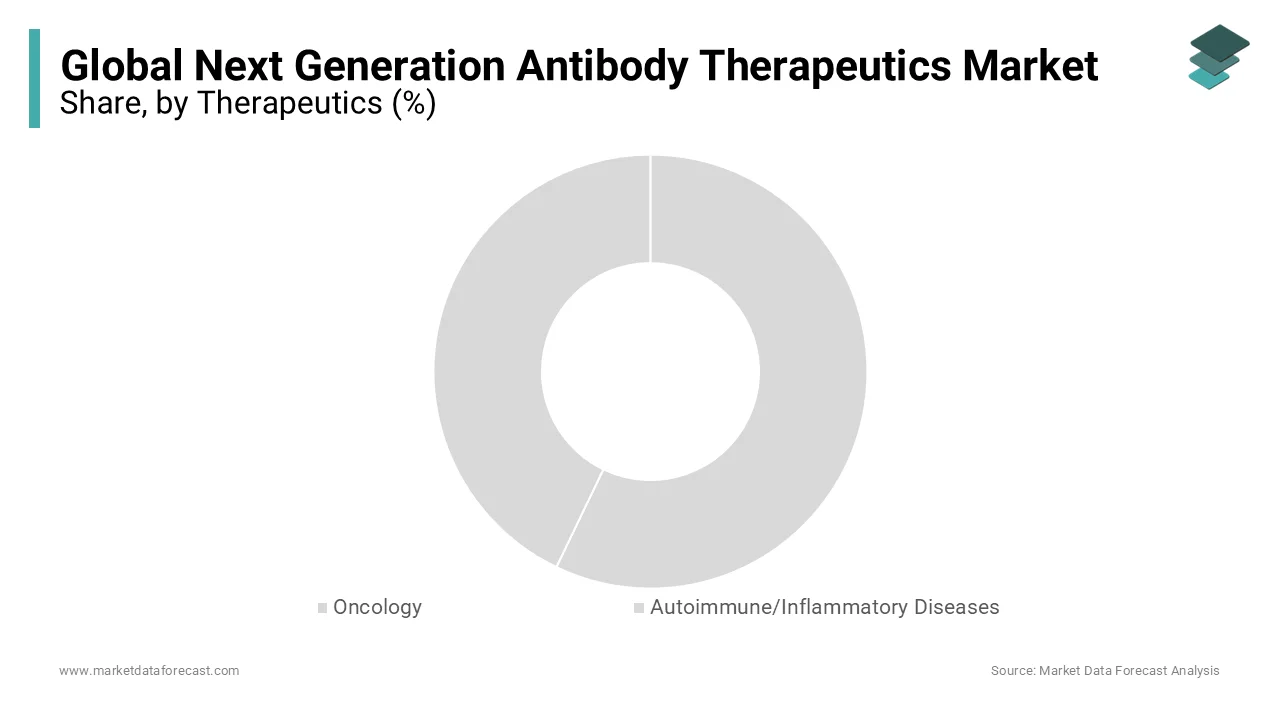
The oncology segment is expected to account for the largest share in the next-generation antibody therapeutics market during the forecast period based on the therapeutics. Cancer accounts for nearly 13% of deaths globally every year, and the mortality rate of cancer is likely to increase at a higher rate in the coming years.
The autoimmune/inflammatory diseases segment is predicted to grow at a healthy rate during the forecast period.
By Technology Insights
The antibody-drug conjugates (ADCs) segment is projected to lead the global next-generation antibody therapeutics market during the forecast period with more than 50% occupancy. The Fc-engineered antibodies segment is anticipated to have a healthy CAGR in the global next-generation antibody therapeutics market during the forecast period.
REGIONAL ANALYSIS
North America was the most dominating regional market globally in 2024 and is forecasted to continue the domination throughout the forecast period due to large funds and investments for research and development. Escalation of the older people population and the growing frequency of chronic diseases is anticipated to boost the market growth in this region. The United States, followed by Canada, is expected to dominate this regional market over the forecast period.
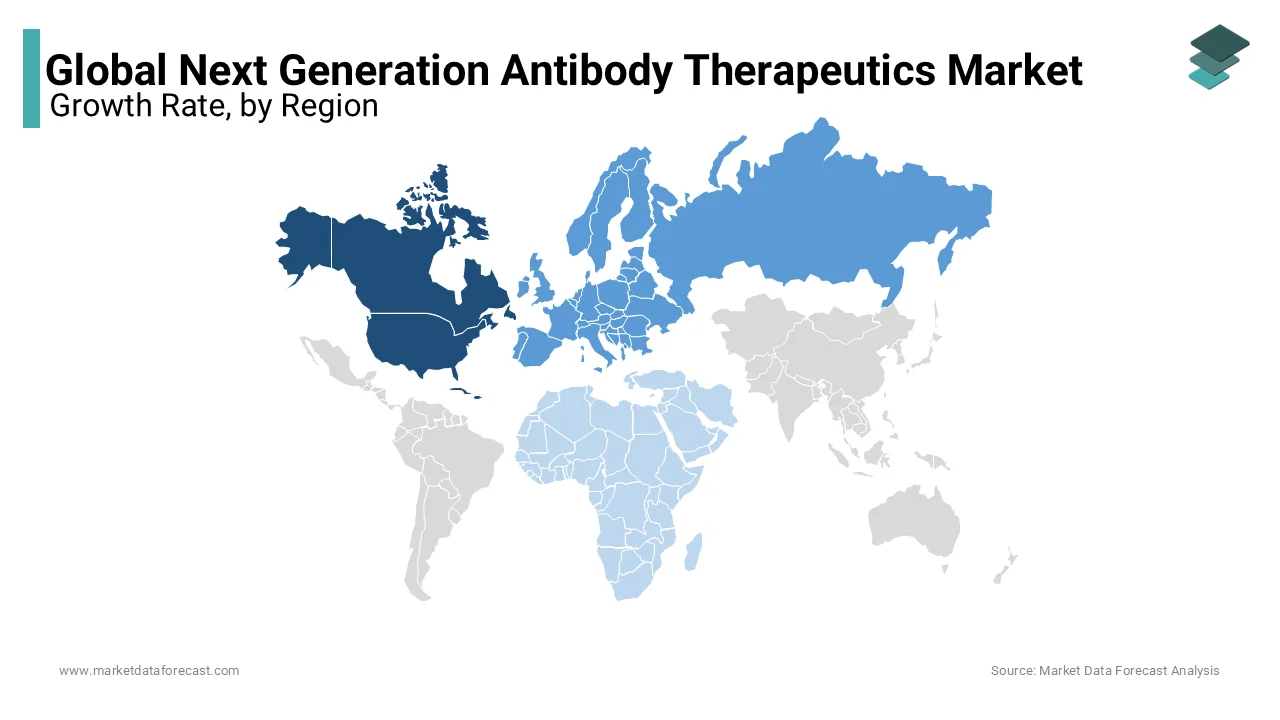
Europe is estimated to be the second-largest regional market worldwide during the forecast period. Factors such as technological advancements, a growing number of collaborations among the key market participants, developments in the life sciences research infrastructure, growing applications for such therapies, and government support are expected to drive this regional market.
The Asia-Pacific is expected to register with the highest CAGR among all the regions during the forecast period. Growing demand from developing countries such as India and China is a significant growth driver in this regional market. Additionally, the growing incidence of various diseases and rising support from the Asian governments to develop effective therapeutic antibodies favor the market.
Latin America is projected to grow at a steady rate during the forecast period due to the growing aging population, urbanization, and lifestyle changes.
The MEA market is anticipated to grow at a sluggish rate during the forecast period due to the growing occurrence rate of cancer and developments in monoclonal antibody technologies.
KEY MARKET PLAYERS
Notable companies dominating the global next-generation antibody therapeutics market profiled in the report are
- Roche
- Seattle Genetics
- Takeda
- Dyax Corp
- ImmunoGen
- Amgen, Inc.
- Biogen
- Kyowa Hakko Kirin Co., Ltd.
- AstraZeneca
- Pfizer, Inc.
- Xencor, Inc.
RECENT HAPPENINGS IN THIS MARKET
- In February 2020, Xencor, Inc. received the license to develop the investigational humanized monoclonal antibody XmAb 7195 to Aimmune therapeutics to treat cancer autoimmune diseases.
- In July 2019, REGENXBIO and Neurimmune AG announced the license, development, and commercialization of an agreement to invent and develop new AAV gene therapies using NAV vectors to deliver human antibodies against chronic neurodegenerative diseases, which include tauopathies.
- In May 2020, Takeda Pharmaceuticals announced the US FDA acceptance of ALUNBRIG for adult patients with anaplastic lymphoma kinase positive (ALK+) metastatic non-small lung cancer.
MARKET SEGMENTATION
This market research report on the global next-generation antibody therapeutics market has been segmented based on the therapeutics, technology, and region.
By Therapeutics
- Oncology
- Autoimmune/Inflammatory Diseases
By Technology
- Antibody-Drug Conjugates (ADCs)
- Bispecific Antibodies (BsAbs)
- Fc Engineered Antibodies
- Antibody Fragments
- Antibody-like Proteins
- Biosimilar Antibody Products
By Region
- North America
- Europe
- Asia Pacific
- Latin America
- The Middle East and Africa