- Product Description Description
- Table of Contents TOC
- List of Table & Figure LOT
- Get Free Sample PDF Sample PDF
Market Size, 2025
$75.99 BnMarket Estimate, 2026
$84.98 BnMarket Forecast, 2034
$207.86 BnCAGR, 2026–2034
11.83%Executive Summary: North America Big Data Market
- Market Scope: Comprehensive regional big data market analysis covering hardware, software, and services types, deployment services, diverse end-user sectors, and country-level leadership frameworks.
- Market Valuation: Valued at USD 75.99 billion (2025), estimated at USD 84.98 billion (2026), and projected to reach USD 207.86 billion by 2034, registering a robust CAGR of 11.83% (2026–2034).
- Primary Growth Drivers: Tremendous growth of enterprise information and consumer data explosion driven by cloud computing adoption, smartphone proliferation, and the Internet of Things (IoT), alongside the high demand for new applications and integration platforms.
Key Market Segment Metrics (2026–2034)
| Category | Leading Segment (2025 Position) | Fastest-Growing Segment (2026–2034) |
|---|---|---|
| By Type | Software (holding the major market share through search, visualization tools, databases, and Hadoop systems) | Software (predicted to expand with the highest CAGR in the forecast period driven by demand for advanced analytics tools) |
| By End-User | BFSI, Healthcare, and Retail (contributing significantly due to high volumes of structured and unstructured data processing needs) | Healthcare and Manufacturing sectors (experiencing rapid data integration for predictive insights and operational efficiency) |
| By Region | The United States (accounting for the dominant regional market share backed by early technological adoption and major tech hubs) | Canada and Rest of North America (projected to grow steadily through increased enterprise cloud and big data investments) |
Major Market Players & Market Structure
Market Structure: Highly competitive landscape characterized by major tech conglomerates, enterprise cloud providers, and specialized data management platform developers. Market differentiation relies heavily on automated data modeling, cloud-native scalability, enterprise-grade security, and AI/machine learning integration.
Key Companies: International Business Machines Corp. (IBM), Accenture, Cisco Systems Inc., Dell, Cloudera Inc., EMC Corporation, Oracle Corp., Amazon Web Services Inc. (AWS), HP, Hitachi Data Systems Corporation, and Microsoft.
North America Big Data Market Size
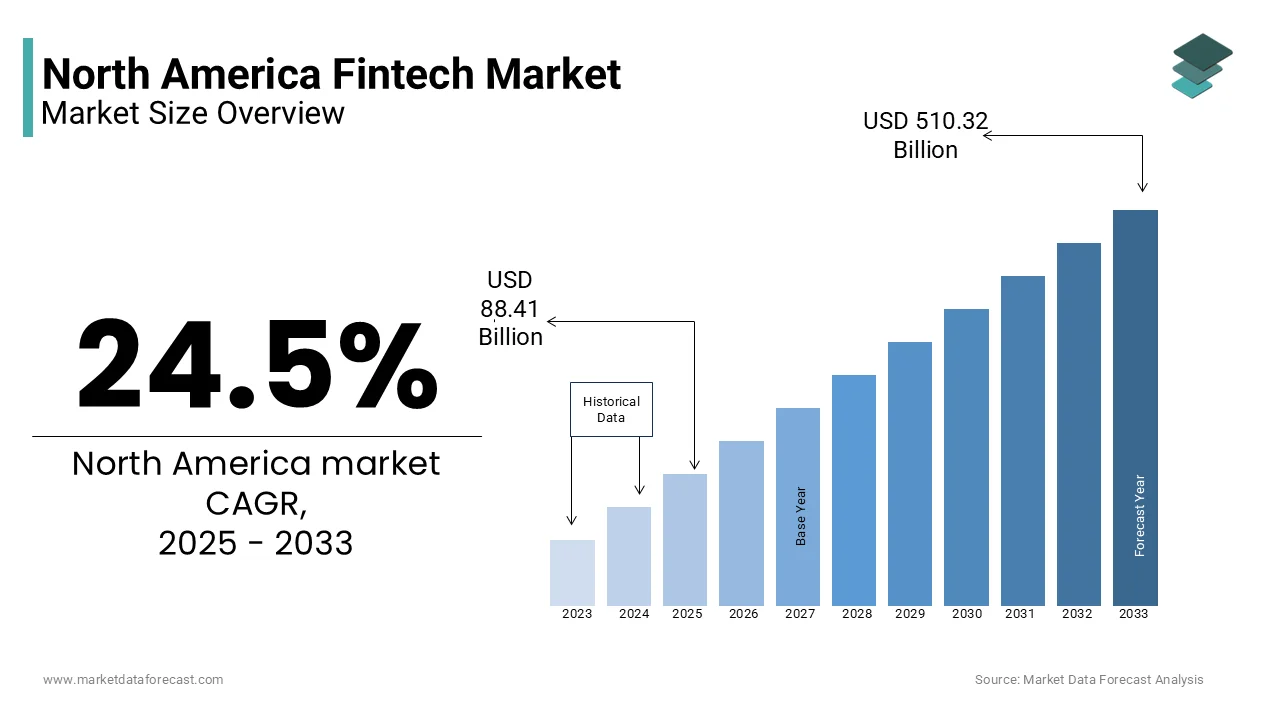
The North America Big Data market was valued at USD 75.99 billion in 2025. The market is estimated at USD 84.98 billion in 2026 and is projected to reach USD 207.86 billion by 2034, growing at a CAGR of 11.83% from 2026 to 2034.
Big data is an ecosystem of software, hardware, and services designed to capture, store, analyze, and visualize massive datasets that exceed traditional processing capabilities. Regulatory frameworks such as the California Consumer Privacy Act influence data governance standards, requiring sophisticated compliance tools within big data architectures. The proliferation of cloud computing and artificial intelligence further accelerates adoption as businesses seek scalable solutions to manage exponential data growth.
MARKET DRIVERS
Accelerated Adoption Of Artificial Intelligence And Machine Learning Drives Infrastructure Demand
The integration of artificial intelligence and machine learning algorithms into business workflows creates unprecedented demand for high-performance big data infrastructure capable of supporting complex model training and real-time inference at scale. The accelerated adoption of artificial intelligence and machine learning is driving the growth of the North American big data market. The National Institute of Standards and Technology states that 78% of federal agencies are actively deploying machine learning systems which require robust data pipelines and storage solutions to process petabytes of training data efficiently. These statistics directly correlate with market expansion as organizations upgrade legacy systems to accommodate GPU-accelerated computing and distributed processing frameworks essential for AI workloads. Financial institutions utilize big data platforms to train fraud detection models on billions of transactions while healthcare providers analyze genomic datasets to personalize treatment plans. The symbiotic relationship between AI advancement and big data capacity ensures sustained investment cycles as each breakthrough in algorithmic complexity necessitates corresponding upgrades in data management infrastructure. Furthermore, the emergence of generative AI has intensified requirements for vector databases and unstructured data processing capabilities by creating new revenue streams for vendors specializing in next-generation analytics platforms tailored for cognitive computing applications.
Proliferation Of Internet Of Things Devices Generates Exponential Data Volumes
The rapid deployment of connected devices across industrial, consumer, and municipal environments generates continuous streams of telemetry data that mandate scalable big data solutions for ingestion, processing, and analytical value extraction. The proliferation of the Internet of Things is also propelling the growth of the North American big data market. This massive influx of streaming data transforms big data platforms from batch processing repositories into real-time nervous systems for modern enterprises. Manufacturing plants leverage edge computing combined with centralized data lakes to monitor equipment health and reduce downtime by analyzing vibration and temperature patterns instantaneously. Retailers process point-of-sale and beacon data to personalize customer experiences dynamically. The sheer velocity and variety of IoT data compel organizations to adopt hybrid architectures that balance latency-sensitive edge processing with deep historical analysis in cloud environments, ensuring comprehensive insights while managing bandwidth costs and storage scalability challenges inherent in hyper-connected ecosystems.
MARKET RESTRAINTS
Stringent Data Privacy Regulations Impose Compliance Burdens And Operational Complexity
Evolving privacy legislation on data collection, storage, and utilization practices, forcing organizations to implement costly governance frameworks that can slow big data initiative deployment and limit analytical scope, is restricting the growth of the North America big data market. According to the Electronic Privacy Information Center, over 15 states have enacted comprehensive privacy laws since 2020, creating a fragmented regulatory landscape that requires bespoke compliance mechanisms for multistate data operations. These regulatory pressures increase total cost of ownership as companies invest heavily in data lineage tracking, anonymization tools, and legal consultation to avoid penalties that can reach millions of dollars per violation. Marketing teams face limitations on customer profiling and behavioral targeting, reducing the ROI of analytics investments. Healthcare and financial sectors encounter additional layers of sector-specific regulations like HIPAA and GLBA that restrict data sharing even for legitimate analytical purposes. The tension between innovation and compliance creates risk aversion among executives, who may postpone transformative big data projects until regulatory clarity improves, thereby restraining market growth despite strong underlying technological demand and availability of advanced analytics capabilities.
Critical Shortage Of Skilled Data Professionals Hinders Implementation Velocity
The acute deficit of qualified data scientists, engineers, and architects severely limits organizational capacity to deploy and extract value from big data investments, resulting in project delays and underutilized infrastructure. This factor is slowing the growth of the North American big data market. According to the Business Higher Education Forum, the gap between demand and supply for data talent in the United States exceeds 250000 positions annually, with particularly severe shortages in specialized areas like data engineering and MLOps. This talent scarcity forces organizations to extend implementation timelines by 6 to 12 months or settle for less optimal off-the-shelf solutions that fail to address unique business needs. Small and medium enterprises are disproportionately affected as they cannot compete with tech giants for top talent, leaving them unable to leverage big data competitively. Even when hired, retention remains problematic, with average tenure for data professionals below 2 years, disrupting continuity and institutional knowledge.
MARKET OPPORTUNITIES
Emergence Of Edge Computing Architectures Creates Distributed Analytics Opportunities
The shift toward decentralized processing at the network edge opens opportunities to develop specialized solutions that complement centralized cloud platforms by addressing latency, bandwidth, and sovereignty requirements in real-time applications. The emergence of edge computing architectures creates distributed analytics is likely to fuel the growth of the North American big data market. According to research, edge computing deployments in North America grew by 35% in 2023, driven by autonomous vehicles, industrial automation, and remote healthcare monitoring use cases that cannot tolerate cloud round-trip delays. The U.S. Department of Energy reports that smart grid modernization initiatives will generate 500 petabytes of operational data annually by 2025, requiring edge analytics for immediate fault detection and load balancing without overwhelming central transmission networks. This architectural evolution expands the addressable market beyond traditional data centers to include ruggedized edge servers, embedded analytics software, and federated learning platforms. Telecommunications operators capitalize on 5G rollouts by offering mobile edge computing services that integrate with big data stacks for low-latency video analytics and augmented reality applications. Manufacturers deploy on-premises data processing to keep proprietary intellectual property within facility boundaries while still benefiting from cloud-based model updates.
Integration Of Generative AI With Enterprise Data Unlocks New Value Propositions
The emergence of large language models with proprietary enterprise datasets creates transformative opportunities for big data platforms to evolve from passive storage systems into active knowledge engines that democratize access to complex information and automate cognitive tasks. The integration of generative AI with enterprise data unlocks new value propositions and is also accelerating the growth of the North American big data market. The Harvard Business Review notes that Fortune 500 companies are piloting retrieval-augmented generation systems that combine big data repositories with foundation models to provide contextually accurate responses while minimizing hallucination risks. This integration revitalizes dormant data assets by making them accessible to non-technical users through conversational interfaces, accelerating insight discovery and decision-making cycles. Legal departments use these systems to review millions of contract pages for compliance issues, while R&D teams synthesize decades of research documentation to identify innovation opportunities. Vendors who successfully embed vector search, semantic indexing, and fine-tuning capabilities into their big data offerings capture premium pricing and deepen customer lock-in. This synergy transforms big data from back-office infrastructure into a strategic differentiator, driving renewed investment cycles and expanding use cases beyond traditional analytics into content creation, code generation, and automated reasoning domains.
MARKET CHALLENGES
Escalating Cybersecurity Threats Targeting Data Repositories Increase Risk Exposure
Big data platforms have become prime targets for sophisticated cyberattacks due to their concentration of high-value, sensitive information, creating security challenges that can undermine trust and trigger catastrophic financial and reputational damage. The escalating cybersecurity threats targeting data repositories increase risk exposure are a major challenge for the growth of the North America big data market. According to the Identity Theft Resource Center, data breaches in the United States reached a record 3205 incidents in 2023, with big data environments frequently cited as attack vectors due to misconfigured access controls and inadequate encryption. These threats force organizations to divert substantial budgets from innovation to defensive measures, including zero trust implementations, anomaly detection systems, and continuous compliance monitoring. Cloud native big data services introduce additional attack surfaces through API vulnerabilities and shared responsibility model confusion. Insider threats pose particular risk as privileged users with broad data access can exfiltrate massive datasets undetected. The evolving threat landscape means security must be architected into every layer of the big data stack rather than bolted on retrospectively, increasing development complexity and time to market. Organizations that fail to adequately protect their data assets face regulatory penalties, customer churn, and litigation that can negate years of analytics investment returns.
Managing Technical Debt In Legacy Systems Complicates Modernization Efforts
Many organizations struggle with entrenched legacy data infrastructure that impedes agile big data adoption, creating technical debt that consumes resources and slows transformation initiatives despite the availability of modern cloud native alternatives. This is additionally degrades the growth of the North American big data market. Companies with high technical debt experience 3 times longer deployment cycles for new analytics features compared to peers with modernized architectures, limiting their responsiveness to changes. Mainframe-based transaction systems, siloed data warehouses, and proprietary ETL tools create friction when attempting to implement real-time streaming analytics or machine learning pipelines. Migration efforts carry significant risk of data loss, business disruption, and unforeseen compatibility issues, causing executive hesitation and phased approaches that extend transition periods over multiple years. Meanwhile, competitors with greenfield architectures move faster, capturing market share through superior data-driven capabilities. The opportunity cost of delayed modernization compounds annually as technical debt accrues interest in maintenance overhead and missed revenue opportunities.
REPORT COVERAGE
| REPORT METRIC | DETAILS |
| Market Size Available | 2025 to 2034 |
| Base Year | 2025 |
| Forecast Period | 2026 to 2034 |
| Segments Covered | By Type, Service, End-User, and Country |
| Various Analyses Covered | Global, Regional, and Country-Level Analysis, Segment-Level Analysis, Drivers, Restraints, Opportunities, Challenges; PESTLE Analysis; Porter’s Five Forces Analysis, Competitive Landscape, Analyst Overview of Investment Opportunities |
| Countries Covered |
|
| Market Leaders Profiled | International Business Machines Corp., Accenture, Cisco Systems Inc, Dell, Cloudera Inc., EMC Corporation, Oracle Corp, Amazon Web Services Inc., HP, Hitachi Data Systems Corporation, Microsoft, and others. |
SEGMENTAL ANALYSIS
By Type Insights
The software segment was the largest by holding 33.2% of the North America Big Data Market share in 2025. The shift toward cloud native big data software solutions allows enterprises to scale computational resources dynamically based on workload demands, eliminating the need for expensive on-premises hardware upgrades and reducing operational overhead significantly. This economic advantage accelerates adoption among small and medium enterprises that previously lacked resources for big data initiatives. Software vendors continuously update their platforms with automated machine learning features and pre-built connectors, enabling faster deployment and integration with existing enterprise resource planning systems. The ability to process petabytes of data across distributed cloud environments ensures that software remains the central enabler of digital transformation strategies across all major industries in the region.
The services segment is expected to witness the fastest CAGR of 16.2% during the forecast period, driven by the critical need for specialized expertise in data strategy implementation, system integration, and ongoing managed support as organizations struggle to navigate the complexity of modern big data ecosystems. The intricate nature of integrating diverse data sources, legacy systems, and advanced analytics platforms creates significant technical challenges that most organizations cannot address internally necessitating reliance on external consulting and implementation services. Service providers offer end-to-end support from initial assessment and roadmap development to full-scale deployment, ensuring that investments align with business objectives and regulatory requirements. This demand for expert guidance drives substantial revenue growth for professional services firms, including system integrators and boutique analytics consultancies.
By Service Insights
The analytics and visualization segment accounted for 32.6% of the North America Big Data Market share in 2025. Businesses increasingly require real-time insights to respond rapidly to market changes, customer behaviors, and operational anomalies, making analytics and visualization as a service essential for maintaining competitive agility in fast-paced industries. Companies utilizing real-time visualization dashboards make decisions 5 times faster than those relying on periodic static reports, enabling quicker responses to supply chain disruptions or sales trends. This urgency drives adoption of cloud-based analytics services that can process streaming data from IoT devices, social media, and transactional systems instantly. Service providers offer pre-built connectors and customizable dashboards that allow non-technical users to monitor key performance indicators without waiting for IT support. The ability to visualize complex relationships and trends intuitively enhances organizational alignment and accountability.
The data as a service segment is likely to grow at the fastest CAGR of 19.5% during the forecast period. The rise of data marketplaces and exchanges allows organizations to purchase high-quality, enriched external data sets seamlessly through data-as-a-service models, enhancing their internal analytics with broader context and third-party insights. Organizations leveraging external data sources through DaaS models achieve 20% higher accuracy in predictive models compared to those relying solely on internal data, driving better outcomes in customer segmentation and risk assessment. This trend is fueled by the availability of specialized data providers offering clean, compliant, and ready-to-use datasets for specific industries such as retail, healthcare, and finance. DaaS eliminates the costly and time-consuming processes of data collection, cleaning, and integration, allowing businesses to focus on analysis and application.
By End User Insights
The Banking, Financial Services and Insurance segment held a dominant share of the North America Big Data Market in 2025 due to the massive volume of transactional data generated daily and the critical need for real-time analytics in fraud detection, risk management, and personalized customer experiences. Financial institutions face escalating threats from sophisticated cybercrime and fraudulent activities, necessitating advanced big data analytics for real-time detection and prevention to protect assets and maintain customer trust. These systems process structured transaction data alongside unstructured sources like email logs and social media to build comprehensive risk profiles. The ability to identify suspicious patterns instantly prevents financial losses and regulatory penalties, making big data a non-negotiable infrastructure component. Insurance companies also leverage these tools for claims fraud detection, analyzing historical data and external factors to flag potentially fraudulent claims before payout.
The healthcare segment is set to witness the fastest CAGR of 17.8% from 2026 to 2034 with the digitization of medical records, advancements in genomic sequencing, and the urgent need for predictive analytics to improve patient outcomes and operational efficiency. The widespread transition to electronic health records and government mandates for data interoperability have created vast repositories of clinical data that healthcare providers are now leveraging through big data analytics to improve care coordination and population health management. According to the Office of the National Coordinator for Health Information Technology, over 96% of hospitals in the United States now use certified EHR technology, generating petabytes of structured and unstructured clinical data annually. Big data platforms aggregate this information to identify trends in disease prevalence, treatment effectiveness, and resource utilization. Hospitals use these insights to optimize staffing, reduce readmission rates, and manage chronic conditions more effectively.
COUNTRY LEVEL ANALYSIS
U.S. Big Data Market Analysis
The United States was the top performer in the North America Big Data Market by accounting for an 85.9% share in 2025, with its advanced technological infrastructure, presence of major tech giants, and high adoption rates across diverse industries. According to the Bureau of Economic Analysis, business investment in intellectual property products, including software and data assets, reached 1.5 trillion dollars in 2023, reflecting strong corporate commitment to digital capabilities. The presence of leading cloud providers and analytics vendors fosters a robust ecosystem for development and deployment. Regulatory frameworks like HIPAA and CCPA shape data governance practices, while federal initiatives promote data sharing for research. High demand for skilled professionals and continuous technological advancements sustain market dominance.
Canada Big Data Market Analysis
Canada big data market was ranked second, accounting for a 14.2% share in 2025, with strong government support for digital innovation, robust privacy laws, and increasing adoption in the public sector and natural resource industries. The federal departments have implemented data strategies to improve service delivery and policymaking. Strong emphasis on ethical AI and data privacy under PIPEDA builds trust and encourages responsible innovation. Partnerships between academia and industry foster research in advanced analytics and machine learning. The energy and mining sectors leverage big data for operational efficiency and environmental monitoring. Government grants and tax incentives support startup growth and technology adoption.
COMPETITIVE LANDSCAPE
The competitive landscape of the North America Big Data Market features intense rivalry among established technology giants, specialized analytics firms and emerging cloud native startups striving to capture growing demand for data-driven insights. Major participants compete primarily on platform scalability ease of integration and advanced artificial intelligence capabilities that simplify complex providers to offer flexible consumption-based pricing models to attract cost sensitive customers data management tasks for enterprises. Price competition is significant in infrastructure services. Differentiation increasingly depends on proprietary algorithms, industry-specific templates, and superior customer support experiences rather than just raw processing power. New entrants leverage open-source technologies to challenge incumbent vendors by offering lower-cost and more flexible alternatives. Strategic acquisitions remain common as companies seek to fill capability gaps in machine learning and data governance quickly. Regulatory compliance and data security serve as critical battlegrounds where trust and certification determine vendor selection. Collaboration with consulting firms helps vendors navigate complex implementation challenges for large clients.
KEY MARKET PLAYERS
The leading companies operating in the North America big data market include:
- International Business Machines Corp.
- Accenture
- Cisco Systems Inc.
- Dell
- Cloudera Inc.
- EMC Corporation
- Oracle Corp.
- Amazon Web Services Inc.
- HP
- Hitachi Data Systems Corporation
- Microsoft
TOP PLAYERS IN THE MARKET
- International Business Machines Corporation remains a pivotal force in the North America Big Data Market through its comprehensive hybrid cloud and artificial intelligence platform known as watsonx. The company recently enhanced its data fabric capabilities to enable seamless data integration across multi-cloud environments, ensuring consistent governance and accessibility. IBM actively collaborates with industry leaders to develop specialized analytics solutions for healthcare, finance, and supply chain management. Their focus on open-source technologies like Apache Spark fosters innovation and interoperability within the ecosystem. By prioritizing ethical AI and responsible data usage, IBM builds trust among enterprise clients navigating complex regulatory landscapes. Continuous investment in quantum computing research positions the company to solve future data processing challenges that exceed classical computing limits.
- Microsoft Corporation drives significant value in the big data sector through its Azure cloud platform, which offers robust services for data storage, processing, and advanced analytics, including Azure Synapse Analytics and Databricks integration. The company recently expanded its AI copilot features within Power BI, allowing users to generate insights and visualizations using natural language queries. Microsoft strengthens its market position by partnering with major software vendors to ensure broad compatibility and ease of deployment for enterprise customers. Their commitment to sustainability includes optimizing data center energy efficiency, appealing to environmentally conscious organizations.
- Oracle Corporation contributes extensively to the market with its autonomous database technology that automates routine management tasks, reducing human error and enhancing security for large-scale data operations. The company recently launched enhanced real-time analytics capabilities within its cloud infrastructure, enabling faster processing of streaming data for critical business applications. Oracle focuses on delivering high performance and reliability for mission-critical workloads in telecommunications and financial services sectors. Strategic acquisitions of specialized analytics firms have expanded their portfolio to include advanced machine learning and visualization tools. Their integrated approach combining hardware and software ensures optimized performance for demanding big data workloads.
TOP STRATEGIES USED BY KEY MARKET PARTICIPANTS
Key players in the North America Big Data Market prioritize strategic partnerships with cloud providers and technology vendors to enhance interoperability and expand solution ecosystems for diverse enterprise needs. Companies invest heavily in artificial intelligence and machine learning integration to automate data processing and deliver predictive insights that drive competitive advantage. Focus on hybrid and multi-cloud architectures allows organizations to maintain flexibility and avoid vendor lock-in while ensuring data security and compliance. Development of industry-specific solutions addresses unique regulatory and operational requirements in sectors like healthcare and finance. Emphasis on user-friendly interfaces and self-service analytics democratizes data access, enabling non-technical staff to derive value from complex datasets. Continuous innovation in real-time processing capabilities supports immediate decision-making for dynamic business environments.
MARKET SEGMENTATION
This research report on the North American Big Data market has been segmented and sub-segmented based on the following categories.
By Type
- Hardware
- Software
- Services
By service
- Hadoop-As-A-Service
- Data-As-A-Service
- Analytics and Visualization-As-A-Service
By End-user
- Healthcare
- Web
- Manufacturing
- Telecommunications
- Oil & Gas
- Transportation
- Logistics and Distribution
- Media & Entertainment
- BFSI
By Region
- The United States
- Canada
- Rest of North America