- Product Description Description
- Table of Contents TOC
- List of Table & Figure LOT
- Get Free Sample PDF Sample PDF
North America Biocides Market Size
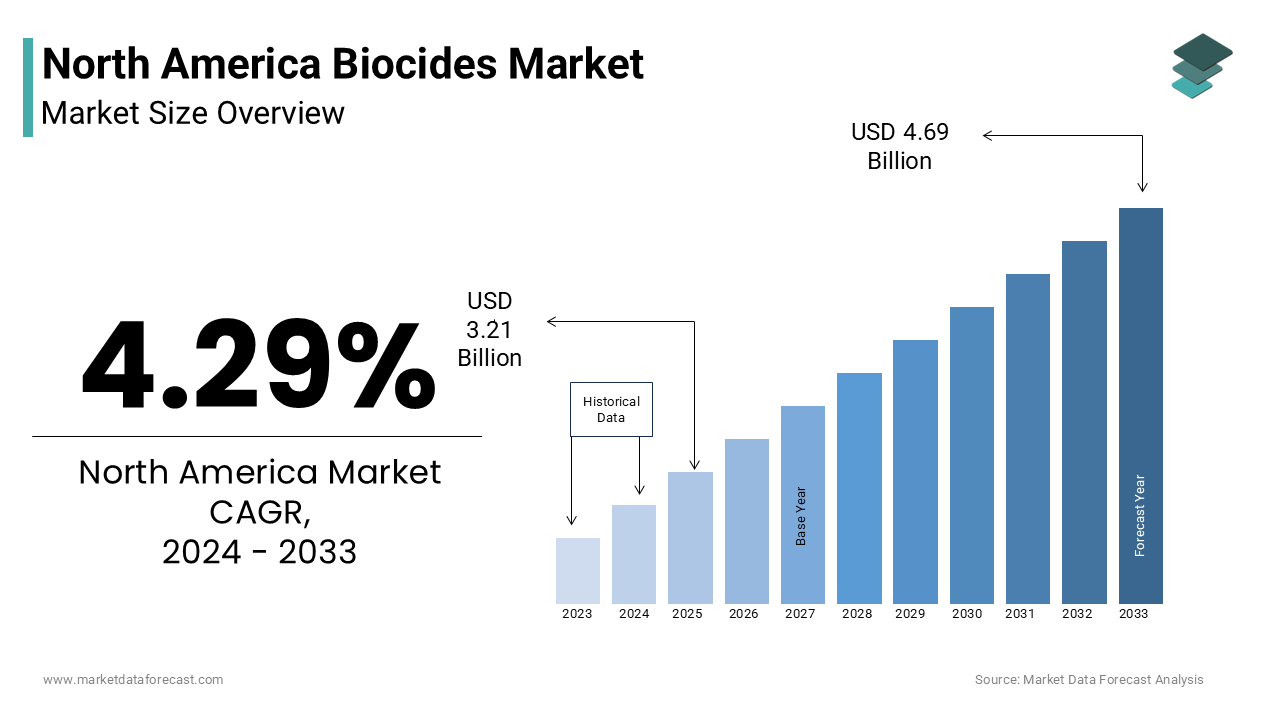
The North America Biocides Market is anticipated to rise from USD 3.21 billion in 2024 to USD 4.68 billion in 2033, growing at a CAGR of 4.29%.
Biocides are chemical formulations designed to control microbial growth, prevent biofouling, and extend the shelf life of industrial and consumer products. These substances are extensively used across sectors such as water treatment, paints and coatings, oil and gas, pulp and paper, agriculture, and healthcare. With increasing concerns over hygiene, product preservation, and regulatory compliance, the demand for effective biocidal solutions has grown significantly.
In the U.S., the Environmental Protection Agency oversees the registration and use of biocides under the Federal Insecticide, Fungicide, and Rodenticide Act (FIFRA), ensuring that all products meet stringent safety and environmental criteria. As per data from the American Chemistry Council, the U.S. accounts for a substantial portion of global biocide consumption, driven by its well-established manufacturing base and rising applications in emerging industries.
Further, advancements in green chemistry have led to the development of more sustainable and eco-friendly biocides, aligning with broader sustainability goals. As per the U.S. Department of Energy, research into bio-based preservatives and enzyme-driven antimicrobial agents is gaining momentum, offering alternatives to traditional synthetic compounds.
MARKET DRIVERS
Increasing Demand for Water Treatment Solutions
The rising demand for water treatment chemicals to ensure safe and clean water supply systems is one of the key drivers of the North America biocides market. With growing urbanization, industrial expansion, and heightened awareness of waterborne diseases, the need for effective microbial control in municipal and industrial water systems has intensified. According to the U.S. Environmental Protection Agency, over 85% of Americans receive their drinking water from public utilities, which rely on biocides to inhibit bacterial and algal growth in pipelines and reservoirs.
In addition to potable water treatment, industrial sectors such as power generation, food and beverage, and pharmaceuticals require continuous disinfection of process water to maintain operational efficiency and regulatory compliance. As per the National Association of Water Companies, U.S. utilities invest over $40 billion annually in infrastructure upgrades, including biocide-based water purification technologies. Moreover, the adoption of closed-loop cooling systems in manufacturing and energy production has increased the need for biocides to prevent biofilm formation and system corrosion.
Furthermore, the rise in recreational water usage—such as swimming pools, spas, and aquatic parks has contributed to sustained demand for chlorine-based and non-oxidizing biocides. Environment and Climate Change Canada notes that pool maintenance alone consumes thousands of tons of biocidal products annually, reinforcing the sector’s significance in driving overall market growth.
Expansion of the Paints and Coatings Industry
The expansion of the paints and coatings industry in North America serves as another major driver for the biocides market, particularly in construction, automotive, and marine applications. Biocides are essential additives in these formulations to prevent microbial degradation, mold formation, and spoilage during storage and application.
Biocides help extend the shelf life and performance of coatings by protecting them against bacteria, fungi, and algae, especially in humid or coastal environments. Moreover, the growing use of water-based coatings—more susceptible to microbial attack than solvent-based counterparts has further amplified the need for effective biocidal agents.
Moreover, the rise in green building certifications, such as LEED, has encouraged manufacturers to adopt low-VOC biocides that comply with environmental regulations while maintaining antimicrobial efficacy. These factors strengthen the strong link between coatings industry growth and biocides market expansion.
MARKET RESTRAINTS
Stringent Regulatory Frameworks and Compliance Challenges
The presence of stringent regulatory frameworks governing the approval, usage, and environmental impact of biocidal products is a significant restraint affecting the North America biocides market. In the United States, the Environmental Protection Agency (EPA) regulates biocides under the Federal Insecticide, Fungicide, and Rodenticide Act (FIFRA), requiring extensive testing and registration before any product can be marketed. As per the EPA, the average time required for full biocide registration exceeds three years, often delaying commercialization and increasing development costs.
Similarly, in Canada, the Pest Control Products Act mandates rigorous evaluations through the Pest Management Regulatory Agency (PMRA), ensuring that all biocides meet health and environmental safety standards.
These regulatory hurdles pose challenges for small and mid-sized manufacturers seeking to introduce novel biocidal compounds. Furthermore, the phase-out of certain legacy biocides, such as formaldehyde donors and organotin compounds, due to their environmental persistence and toxicity has forced formulators to seek alternative ingredients, complicating product development strategies and slowing innovation cycles.
Growing Preference for Natural and Non-Toxic Alternatives
Increasing consumer and regulatory preference for natural, non-toxic, and environmentally friendly alternatives to conventional synthetic biocides is another key restraint in the North America biocides market. This shift is driven by heightened awareness of chemical exposure risks, stricter environmental policies, and the rising popularity of green certification programs.
Also, this trend has prompted several industries, particularly in paints, personal care, and textiles, to explore plant-based antimicrobial agents such as essential oils, enzymes, and organic acids.
As per the Environment and Climate Change Canada, several provinces have introduced guidelines encouraging substitution of hazardous biocides with safer alternatives under the Canadian Environmental Protection Act. Similarly, the EPA’s Safer Choice Program has certified over 100 biocide-free or low-risk antimicrobial formulations since 2020, influencing procurement decisions across multiple sectors.
MARKET OPPORTUNITIES
Rising Adoption of Biocides in Oil and Gas Operations
The growing adoption of biocidal treatments in the oil and gas industry to combat microbial-induced corrosion (MIC) and maintain operational efficiency is a significant opportunity within the North America biocides market. Microbial contamination in drilling fluids, pipelines, and produced water can lead to severe equipment degradation, costly downtime, and environmental hazards. According to the National Association of Corrosion Engineers (NACE), microbial corrosion alone accounts for over 20% of total corrosion-related losses in the oil and gas sector, emphasizing the critical need for effective biocide treatments.
Biocides are widely used in hydraulic fracturing operations to prevent bacterial proliferation in fracturing fluids, which can generate hydrogen sulfide—a toxic and highly corrosive gas. As per the American Petroleum Institute, the U.S. shale boom has led to a surge in fracturing activities, with over 900,000 active wells utilizing biocidal treatments to enhance fluid stability and prolong well life. Besides, offshore drilling platforms in the Gulf of Mexico increasingly rely on both oxidizing and non-oxidizing biocides to control biofouling in seawater injection systems.
Furthermore, the push for enhanced oil recovery (EOR) techniques has spurred interest in microbial control solutions to optimize hydrocarbon extraction. As per the Environment and Climate Change Canada, Canadian oil sands operations have integrated biocidal treatments into their water recycling processes to mitigate bacterial buildup in steam generators and pipelines.
Integration of Biocides in Healthcare and Sanitation Products
The increasing integration of antimicrobial agents in healthcare, sanitation, and surface disinfectants, particularly in response to heightened hygiene awareness post-pandemic is an emerging opportunity for the North America biocides market. Hospitals, long-term care facilities, and public institutions continue to emphasize infection control measures, driving demand for high-performance disinfectants and antimicrobial-treated surfaces.
Biocides such as quaternary ammonium compounds (QACs), hydrogen peroxide blends, and chlorinated derivatives are commonly used in medical-grade disinfectants, hand sanitizers, and surface sprays. Beyond hospitals, the education and hospitality sectors have adopted biocide-infused cleaning products and antimicrobial coatings for high-touch surfaces such as door handles, railings, and restroom fixtures.
MARKET CHALLENGES
Complexity in Biocide Resistance Development
The emergence of microbial resistance to commonly used biocidal agents is one of the primary challenges facing the North America biocides market. Over time, repeated exposure to specific biocides has led to the development of resistant strains of bacteria, fungi, and algae, reducing the efficacy of these compounds and necessitating the development of stronger or alternative formulations. According to the Centers for Disease Control and Prevention, antimicrobial resistance is not limited to antibiotics but extends to disinfectants and biocidal treatments, posing a growing concern in both industrial and healthcare settings.
Like, some microorganisms have developed cross-resistance mechanisms, where exposure to sub-lethal concentrations of biocides triggers genetic adaptations that also confer resistance to antibiotics. This phenomenon raises both operational and regulatory concerns, as ineffective biocide treatments can lead to microbial contamination, product spoilage, and increased maintenance costs.
Supply Chain Disruptions and Raw Material Volatility
The volatility in raw material availability and supply chain disruptions, which can impact production timelines and cost structures, is another persistent challenge in the North America biocides market . Biocides are composed of complex chemical formulations, many of which depend on imported intermediates such as halogenated compounds, nitrogenous bases, and surfactants. In addition, fluctuations in feedstock prices and geopolitical tensions have led to extended lead times and inconsistent supply flows for key biocide ingredients.
For instance, as per the U.S. Geological Survey, the price of bromine—an essential component in several oxidative biocides—increased by over 25% in 2023 due to supply constraints from major producing regions. Similarly, disruptions caused by extreme weather events and logistical bottlenecks have affected the availability of solvents and specialty chemicals used in formulation processes. As per the National Association of Manufacturers, nearly 40% of surveyed chemical producers experienced delays in raw material deliveries in the first half of 2023, impacting production schedules.
Apart from these, the consolidation of raw material suppliers has reduced sourcing flexibility for smaller biocide manufacturers.
SEGMENTAL ANALYSIS
By Application Insights
The water treatment segment held the largest share of the North America biocides market with 34.5% of total industry revenue in 2023. This dominance is primarily driven by The critical role biocides play in ensuring microbial control and maintaining water quality across municipal, industrial, and recreational applications is primarily driving the dominance of water treatment segment. According to the U.S. Environmental Protection Agency, over 85% of Americans receive drinking water from public utilities, which rely heavily on biocidal treatments such as chlorine-based disinfectants, bromine compounds, and non-oxidizing agents to prevent bacterial contamination. In addition to potable water systems, wastewater treatment facilities utilize biocides to manage biofilm formation, reduce odor issues, and improve process efficiency. As per the National Association of Water Companies, U.S. municipalities invest over $40 billion annually in water infrastructure upgrades, including biocide integration in filtration and disinfection units. Moreover, the industrial sector—including power generation, food processing, and oil refining—depends on continuous microbial control in cooling towers and process water loops.
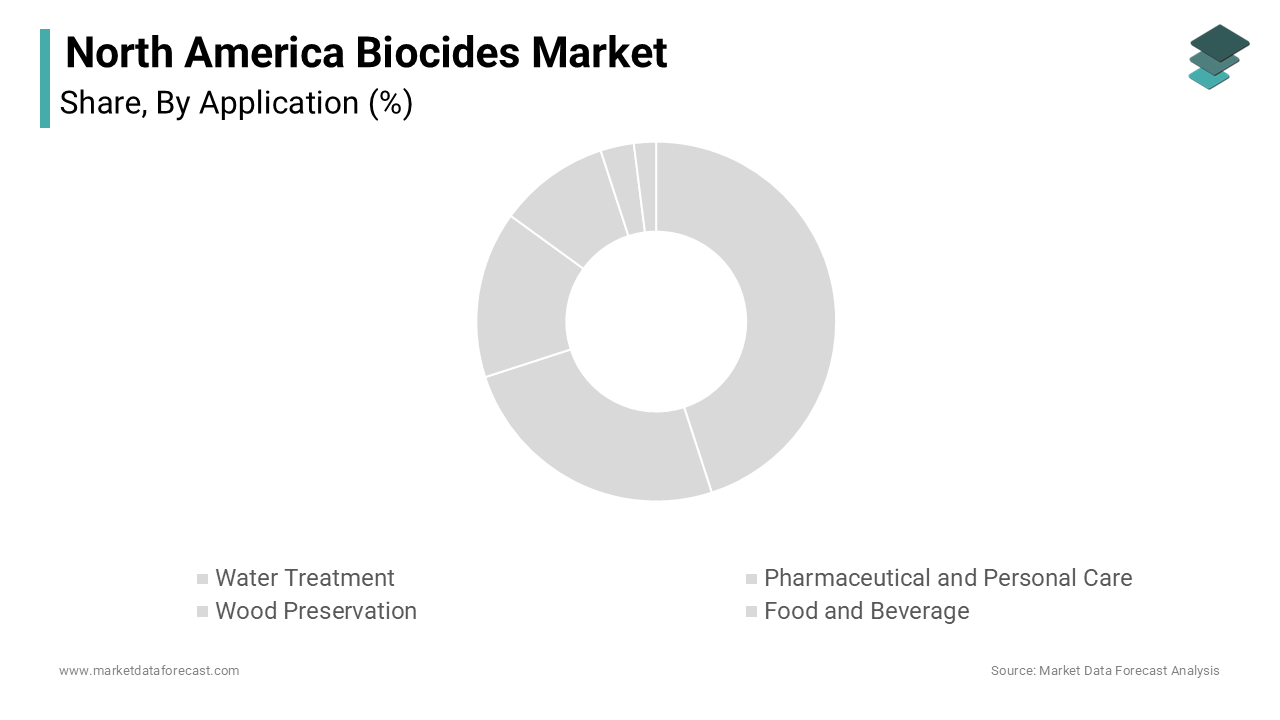
The pharmaceuticals and personal care segment is emerging as the fastest-growing category in the North America biocides market and is projected to expand at a CAGR of 7.9% from 2025 to 2033. Growing incorporation of biocides in skincare, haircare, and oral care products to prevent microbial spoilage and ensure product longevity is one key driver of the pharmaceuticals and personal care segment. Rising hygiene awareness, increased use of preservatives in cosmetic formulations, and stringent sterility requirements in drug manufacturing is also contributing to the growth of this segment. According to the Personal Care Products Council, over 90% of personal care items on U.S. shelves contain preservatives, with isothiazolinones, parabens, and formaldehyde donors being among the most widely used. The U.S. Food and Drug Administration mandates that all multi-use cosmetic products undergo microbial challenge testing to verify preservative efficacy, further reinforcing biocide usage. Further, the healthcare sector has seen heightened demand for antimicrobial additives in medical devices, wound care products, and disinfectants post-pandemic. Like, hospital-acquired infections remain a major concern, prompting manufacturers to enhance antimicrobial protection in consumables and equipment. Pharmaceutical production facilities are increasingly adopting high-performance biocides to meet Good Manufacturing Practice (GMP) standards.
REGIONAL ANALYSIS
United States Biocides Market Insights
The United States commanded the dominant position in the North America biocides market by capturing an estimated share of 81.3% in 2024. This lead position is underpinned by a well-established chemical industry, extensive end-user applications, and a robust regulatory framework managed by the Environmental Protection Agency (EPA) and the Food and Drug Administration (FDA).
Biocides are extensively used across multiple sectors including water treatment, paints and coatings, pharmaceuticals, and agriculture. As per the American Chemistry Council reports that the U.S. accounts for nearly one-third of global biocide consumption, driven by large-scale manufacturing activities and stringent product preservation standards. Moreover, the EPA regulates over 3,000 registered biocidal products under the Federal Insecticide, Fungicide, and Rodenticide Act (FIFRA), ensuring environmental and health compliance while shaping market dynamics.
Moreover, the expansion of green building initiatives and the rise in antimicrobial-infused consumer goods have further reinforced demand.
Canada Biocides Market Insights
Canadian market has demonstrated steady growth, driven by tightening environmental regulations, increasing industrial activity, and growing emphasis on microbial control in both municipal and commercial settings. A primary factor behind this growth is the Pest Management Regulatory Agency’s (PMRA) rigorous oversight of biocidal products under the Pest Control Products Act. Besides, the pulp and paper industry which is one of Canada’s largest manufacturing sectors relies heavily on biocides to prevent slime formation and maintain production efficiency. Furthermore, the expansion of the pharmaceutical and personal care industry in provinces like Ontario and Quebec has boosted demand for preservatives in cosmetics and medicinal products.
Rest of North America Biocides Market Insights
The Rest of North America, encompassing Mexico and select Central American territories, holds a modest but growing a notable share of the regional biocides. While traditionally overshadowed by the U.S. and Canada, these markets are witnessing gradual adoption of biocidal treatments due to urbanization, industrial expansion, and evolving regulatory frameworks.
Mexico has emerged as a focal point for biocides consumption, particularly in its growing manufacturing and construction sectors. The Secretariat of Environment and Natural Resources (SEMARNAT) has introduced updated guidelines for microbial control in industrial effluent, aligning with broader environmental goals.
In addition to industrial applications, the tourism-driven hospitality sector has spurred demand for disinfectants and antimicrobial-treated surfaces in hotels and resorts.
KEY MARKET PLAYERS AND COMPETITIVE LANDSCAPE
Key market players operating in the North America Biocides Market include LANXESS AG, BASF SE, Solvay SA, Ecolab Inc., Lonza Group AG, The Dow Chemical Company, Thor Group Limited, IRO Group Inc., Veolia Group, and Clariant International Ltd.
The competition in the North America biocides market is shaped by a mix of multinational chemical giants and specialized biocide formulators vying for dominance across diverse application sectors. Established players like Lanxess, BASF, and Dow maintain strong footholds due to their extensive product portfolios, advanced R&D capabilities, and deep integration with key end-user industries. However, increasing regulatory scrutiny and shifting consumer preferences toward greener alternatives have prompted both incumbents and emerging firms to innovate rapidly and adapt their strategies.
Market rivalry is particularly intense in high-growth areas such as water treatment and pharmaceuticals, where performance, compliance, and sustainability play critical roles in purchasing decisions. Smaller biocide producers are leveraging niche expertise and agile business models to challenge larger competitors, especially in specialized industrial applications. Apart from these, the consolidation trend among raw material suppliers has led to tighter control over ingredient sourcing, influencing pricing dynamics and supply chain resilience.
As environmental concerns gain prominence, companies are also competing on the basis of eco-friendly formulation development and regulatory preparedness. This evolving landscape fosters continuous innovation but also intensifies pressure on manufacturers to balance effectiveness, safety, and cost-efficiency in an increasingly complex marketplace.
Top Players in the North America Biocides Market
Lanxess AG
Lanxess is a leading global specialty chemicals company with a strong presence in the North America biocides market. The company offers a wide range of antimicrobial solutions used across water treatment, industrial preservation, and disinfection applications. Known for its innovation and sustainable product development, Lanxess plays a crucial role in supplying high-performance biocides that meet stringent regulatory standards while addressing microbial resistance challenges.
BASF SE
BASF is a major player in the biocides industry, offering advanced preservatives and antimicrobial agents tailored for paints and coatings, personal care products, and agricultural applications. With a focus on research-driven formulations, BASF contributes to global biocide advancements by developing eco-friendly and efficient microbial control solutions that align with evolving environmental and health regulations in North America.
Dow Inc.
Dow is a key participant in the North America biocides market, providing biocidal additives for diverse industrial uses including water management, construction materials, and consumer goods. The company’s expertise in formulation chemistry and material science enables it to deliver customized antimicrobial protection that enhances product longevity and safety. Dow’s strategic collaborations and continuous innovation support its leadership position in the regional and global markets.
Top Strategies Used by Key Market Participants
Product Innovation and Sustainable Formulation Development
Leading biocide manufacturers prioritize continuous R&D efforts to develop next-generation antimicrobial solutions that offer improved efficacy, reduced environmental impact, and compliance with evolving regulatory standards. Companies are increasingly focusing on bio-based and low-toxicity alternatives to traditional synthetic biocides to meet growing demand from environmentally conscious industries.
Strategic Collaborations and Regulatory Engagement
To navigate complex approval processes and enhance market access, key players actively engage with regulatory bodies and form partnerships with academic institutions, research organizations, and end-use industries. These collaborations help accelerate product registration, ensure compliance, and foster industry-wide best practices in microbial control.
Expansion of Application-Specific Product Portfolios
Major companies are expanding their offerings to cater to niche applications such as healthcare disinfectants, oilfield preservation, and personal care preservation. By tailoring biocidal formulations to specific industry needs, firms strengthen their competitive positioning and capture targeted market segments with differentiated solutions.
RECENT MARKET DEVELOPMENTS
- In February 2023, Lanxess launched a new line of bromine-based biocides designed for enhanced microbial control in industrial water systems, targeting the power generation and oil and gas sectors with improved efficiency and lower environmental impact.
- In June 2023, BASF announced a partnership with a leading U.S. water treatment firm to co-develop integrated biocide solutions aimed at improving performance and reducing operational costs for municipal and industrial clients.
- In October 2023, Dow introduced a portfolio expansion focused on antimicrobial additives for green building materials, aligning with rising demand for long-lasting, low-emission biocidal treatments in paints, sealants, and insulation products.
- In January 2024, a joint initiative between two major chemical companies resulted in the establishment of a shared testing facility dedicated to evaluating next-generation biocides under real-world conditions, accelerating product validation and market readiness.
- In May 2024, a leading biocide supplier acquired a small biotech startup specializing in enzyme-based antimicrobials, signaling a strategic move toward sustainable alternatives and expanding its pipeline of non-traditional microbial control solution.
MARKET SEGMENTATION
This research report on the North America Biocides Market has been segmented and sub-segmented into the following categories.
By Application
- Water Treatment
- Pharmaceutical and Personal Care
- Wood Preservation
- Food and Beverage
- Paints and Coatings
- Other Applications
By Country
- U.S.
- Canada
- Rest of North America