- Product Description Description
- Table of Contents TOC
- List of Table & Figure LOT
- Get Free Sample PDF Sample PDF
Market Size, 2025
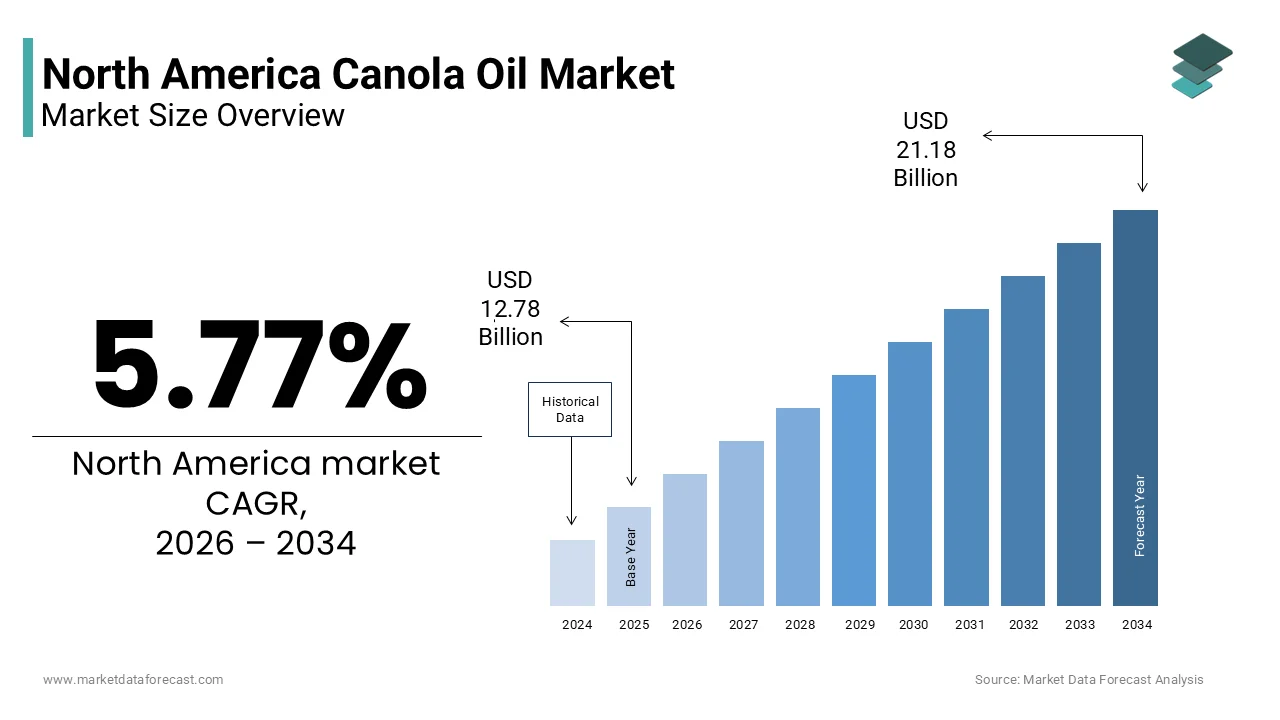
$12.78 BnMarket Estimate, 2026
$13.52 BnMarket Forecast, 2034
$21.18 BnCAGR, 2026–2034
5.77%North America Canola Oil Market Report Summary
The North America canola oil market was valued at USD 12.78 billion in 2025, is estimated to reach USD 13.52 billion in 2026, and is projected to reach USD 21.18 billion by 2034, growing at a CAGR of 5.77% during the forecast period. Market growth is driven by increasing demand for healthier cooking oils, rising awareness of low saturated fat diets, and expanding use of canola oil in food processing. Canola oil is widely preferred due to its neutral taste, high smoke point, and nutritional benefits. The growing adoption of plant based diets and expansion of food manufacturing activities are further supporting steady market growth across North America.
Key Market Trends
- Rising demand for healthier and low saturated fat cooking oils is driving market growth.
- Increasing adoption of plant based and heart friendly diets is boosting demand.
- Growing use of canola oil in food processing and manufacturing is supporting market expansion.
- Expansion of retail and foodservice channels is enhancing product availability.
- Innovation in oil processing and packaging is influencing market development.
Segmental Insights
- Based on application, the cooking purposes segment accounted for 35.9% of the North America canola oil market share in 2025. This dominance is attributed to widespread household consumption and foodservice usage.
- Based on end user, the manufacturing segment held 51.4% of the North America canola oil market share in 2025, driven by extensive use in processed foods, snacks, and packaged products.
Regional Insights
- The North America canola oil market is experiencing steady growth across key countries, supported by dietary trends and industrial demand.
- The United States was the largest contributor, accounting for 77.1% of the North America canola oil market share in 2025, driven by high consumption levels, strong food processing industry, and widespread availability.
Competitive Landscape
The North America canola oil market is highly competitive, with key players focusing on product quality, supply chain efficiency, and expansion of distribution networks to strengthen their market position. Companies are investing in sustainable sourcing, refining technologies, and branding strategies. Prominent players in the North America canola oil market include Archer Daniels Midland Company, Associated British Foods, Cargill, Wilmar International, Conagra Foodservice, Richardson International, Jivo Wellness, and Huiles TITAN OILS.
 Download Free Sample Report
North America Canola Oil Market Size
The North America canola oil market size was valued at USD 12.78 billion in 2025, and the market size is estimated to reach USD 21.18 billion by 2034 from USD 13.52 billion in 2026. The market's promising CAGR for the predicted period is 5.77%.
Canola oil is a versatile, heart-healthy vegetable oil derived from the crushed seeds of the canola plant (a hybrid variety of rapeseed). This commodity serves as a versatile ingredient in culinary applications industrial manufacturing and increasingly in the biofuel sector. The market is defined by its integration into the broader vegetable oil supply chain where it competes with soybean palm and sunflower oils based on price availability and nutritional profile. According to the United States Department of Agriculture Canada remains the dominant producer in the region accounting for approximately 90 percent of North American canola production which underscores the cross border dependency of the United States on Canadian imports. The definition of this market extends beyond simple crude oil trading to include refined bleached and deodorized variants as well as high oleic specialized formulations designed for specific industrial uses. As per Statistics Canada the total area harvested for canola in the prairie provinces consistently exceeds 20 million acres annually demonstrating the crop's agricultural significance. The market dynamics are heavily influenced by trade policies environmental regulations and shifting consumer preferences toward healthier cooking oils. The Food and Drug Administration in the United States has recognized canola oil as generally safe for consumption which further legitimizes its widespread use in packaged foods. This foundational status ensures that canola oil remains a staple commodity despite fluctuating global oilseed prices and geopolitical tensions affecting trade routes.
MARKET DRIVERS
Health Conscious Consumer Preferences Drive Dietary Shifts
The increasing awareness of health and wellness among the regional consumers is a primary accelerator for the demand for canola oil due to its favorable nutritional profile, which contributes to the growth of the North America canola oil market. Canola oil is widely recognized for its low saturated fat content and high levels of monounsaturated fats which are associated with improved heart health and reduced cholesterol levels. According to the American Heart Association replacing saturated fats with unsaturated fats such as those found in canola oil can significantly lower the risk of cardiovascular diseases. This medical endorsement has prompted many households and food service providers to switch from butter lard and palm oil to canola oil for daily cooking and frying. The Centers for Disease Control and Prevention reports that heart disease remains the leading cause of death in the United States which intensifies the public health imperative for healthier dietary choices. Consequently food manufacturers are reformulating their products to highlight clean labels and heart healthy attributes leveraging canola oil as a key ingredient. NielsenIQ data indicates that sales of oils marketed as heart healthy have grown steadily as consumers scrutinize nutrition labels more closely. Furthermore the rising prevalence of lifestyle diseases such as obesity and diabetes has led to government dietary guidelines that recommend limiting saturated fat intake. These guidelines explicitly endorse canola oil as a preferred cooking medium thereby influencing institutional procurement in schools hospitals and corporate cafeterias. The alignment of consumer health goals with regulatory recommendations creates a robust and sustained demand trajectory for canola oil in the North American market.
Expansion of Biodiesel and Renewable Fuel Mandates
The aggressive expansion of the biodiesel and renewable diesel sectors in the region acts as a powerful industrial driver for canola oil consumption and the North America canola oil market. Governments in both the United States and Canada have implemented stringent renewable fuel standards and low carbon fuel programs that mandate the blending of biofuels with traditional fossil fuels. According to the United States Environmental Protection Agency the Renewable Fuel Standard program requires billions of gallons of renewable fuel to be blended into transportation fuel each year creating a guaranteed demand for feedstocks like canola oil. In Canada, the Clean Fuel Regulations aim to reduce the carbon intensity of liquid fuels by 15 percent by 2030, which incentivizes the use of low carbon intensity feedstocks such as canola (Environment and Climate Change Canada, 2024). The National Renewable Energy Laboratory states that canola oil produces biodiesel with a significantly lower lifecycle greenhouse gas emission profile compared to petroleum diesel. This environmental advantage makes it a preferred choice for fuel producers seeking to meet compliance targets. Additionally the growth of renewable diesel facilities which can process vegetable oils directly into drop in fuels has further amplified demand. As per the US Energy Information Administration domestic production of biomass based diesel has reached record highs driven by federal tax credits and state level incentives. The industrial scale of this demand absorbs a significant portion of the canola oil supply reducing the volume available for food use and thereby supporting higher prices. This structural shift transforms canola oil from a purely food commodity into a critical energy resource.
MARKET RESTRAINTS
Volatility in Agricultural Input Costs and Supply Chain Disruptions
Volatility in agricultural input costs and ongoing supply chain disruptions impact the stability of raw material supply and the growth of the North America canola oil market. The production of canola is heavily dependent on fertilizers particularly nitrogen and sulfur whose prices have fluctuated wildly due to geopolitical conflicts and energy market instability. According to the International Fertilizer Association the price of urea a key nitrogen source increased by over 50 percent in recent years raising the cost of cultivation for farmers. These heightened production costs often lead to reduced planting areas or lower yields as farmers opt for less input intensive crops such as wheat or barley. The United States Department of Agriculture notes that any reduction in planted acreage directly translates to lower oilseed availability which constrains the supply of canola oil. Furthermore logistical bottlenecks in rail and port infrastructure in Canada frequently delay the export and domestic distribution of canola seeds and oil. The Canadian Transportation Agency reports that rail service disruptions during peak harvest seasons can result in millions of tons of grain being stranded at elevators. These delays increase storage costs and create uncertainty for crushers and refiners who rely on a steady flow of raw materials. The combination of high input costs and logistical inefficiencies squeezes profit margins for producers and processors alike. This financial pressure limits the ability of the industry to invest in capacity expansion or technology upgrades thereby restraining the overall growth potential of the market in the face of rising demand.
Competition from Substitute Vegetable Oils and Price Sensitivity
Intense competition from substitute vegetable oils, particularly soybean and palm oil, poses a substantial restraint on the growth of the North America canola oil market. Soybean oil is produced in much larger volumes in the United States and often trades at a discount to canola oil making it the preferred choice for cost sensitive food manufacturers and industrial users. According to the United States Department of Agriculture, soybean oil production in the U.S. exceeds 27.5 billion pounds annually, providing an abundant and cheaper alternative for frying and processed food applications. When the price spread between canola and soybean oil widens many buyers switch to soybean oil to reduce costs thereby eroding the market share of canola. Palm oil although subject to sustainability concerns remains a competitive option for certain industrial applications due to its semi solid state at room temperature and lower price point. The World Bank commodity price data indicates that palm oil prices often remain below those of canola oil influencing procurement decisions in the global food industry. Additionally the rise of alternative oils such as sunflower and avocado oil in the premium segment further fragments the market. Consumers and manufacturers are increasingly willing to experiment with these alternatives based on specific functional or nutritional benefits. This diverse competitive landscape forces canola oil producers to constantly justify their premium pricing through quality and sustainability claims. The inability to consistently maintain a price advantage limits the penetration of canola oil in price sensitive segments thereby restraining its overall market expansion.
MARKET OPPORTUNITIES
Development of High Oleic Canola Varieties for Industrial Use
The development and commercialization of high oleic canola varieties provide a pathway for the growth of the North America canola oil market. This expands its application in high value industrial and food service sectors. High oleic canola oil possesses enhanced oxidative stability and a longer shelf life compared to conventional canola oil making it an ideal replacement for partially hydrogenated oils which are being phased out due to trans fat regulations. According to the Canola Council of Canada high oleic canola oil can withstand higher frying temperatures without breaking down which reduces oil turnover rates for commercial fryers and lowers operational costs for restaurants. This functional advantage opens up lucrative opportunities in the quick service restaurant industry where consistency and efficiency are paramount. The Food and Drug Administration’s removal of partially hydrogenated oils from the Generally Recognized as Safe list has created a vacuum that high oleic canola is well positioned to fill. Manufacturers are increasingly adopting this variant for producing snacks fried foods and baked goods that require extended freshness. As per industry analysis the demand for stable frying oils is projected to grow as food service operators seek to improve sustainability by reducing waste. Furthermore the automotive and lubricant industries are exploring high oleic canola oil as a base for biodegradable lubricants due to its superior performance characteristics. This diversification into non food industrial applications reduces reliance on the volatile food market and creates new revenue streams. The ability to command a premium price for these specialized oils enhances profitability for growers and processors alike.
Sustainability Certification and Carbon Credit Programs
The growing emphasis on sustainability and carbon footprint reduction offers a compelling opportunity for the North America canola oil market. This is driven by certification programs and carbon credit incentives. Canola cultivation is increasingly recognized for its potential to sequester carbon and improve soil health when managed using regenerative agricultural practices. According to the Sustainable Agriculture Initiative Platform consumers and corporate buyers are prioritizing suppliers who can demonstrate verifiable sustainability credentials. Programs such as the Canola Sustainable Certification Standard allow producers to verify their environmental stewardship which appeals to environmentally conscious brands and retailers. This certification enables canola oil to be marketed as a premium sustainable product differentiating it from competitors with higher environmental impacts. Furthermore the integration of canola farmers into carbon credit markets provides an additional revenue stream. The Nature Conservancy reports that agricultural carbon credits are gaining traction as companies seek to offset their emissions through nature based solutions. By adopting no till farming and cover cropping canola growers can generate carbon credits that can be sold to corporations aiming to meet net zero targets. This financial incentive encourages the adoption of sustainable practices which in turn enhances the long term viability of the crop. The European Union’s sustainability regulations, including the Renewable Energy Directive (RED III), drive demand for certified sustainable vegetable oils, creating export opportunities for North American producers who meet these rigorous standards. Leveraging sustainability as a value proposition strengthens market position and aligns with global environmental goals.
MARKET CHALLENGES
Regulatory Uncertainty and Trade Policy Fluctuations
Regulatory uncertainty and fluctuating trade policies are serious limitations for the North America canola oil market. This creates an unpredictable business environment for exporters and processors. The industry is heavily reliant on international trade particularly with China and the European Union which are major importers of Canadian canola. The ongoing tensions between major trading partners have led to periodic restrictions on canola imports citing phytosanitary concerns or political disputes. These disruptions force producers to find alternative markets which may not offer the same volume or price premiums. Additionally domestic regulations regarding genetically modified organisms GMOs vary between the United States Canada and Mexico complicating the supply chain management for integrated North American operations. The lack of harmonization in labeling and safety standards increases compliance costs and creates barriers to seamless trade. Furthermore the evolving regulatory framework for biofuels in both countries introduces uncertainty regarding future demand. Changes in blend mandates or tax credits can rapidly shift the balance between food and fuel usage. This regulatory volatility makes long term planning difficult for investors and producers who require stability to justify capital expenditures in crushing and refining infrastructure.
Impact of Climate Change on Crop Yields and Quality
The impact of climate change on crop yields and quality holds back the expansion of the North America canola oil market. This introduces unpredictability into agricultural production. Canola is a cool season crop that is highly sensitive to extreme weather conditions such as drought heat waves and excessive rainfall. Drought conditions particularly in the Canadian provinces of Saskatchewan and Alberta can drastically reduce seed size and oil content leading to lower overall output. Heat stress during the flowering stage can also lead to poor pod set and increased susceptibility to pests and diseases. These agronomic challenges not only reduce volume but also affect the quality of the extracted oil potentially requiring additional refining steps. The economic implications of yield losses are profound as they drive up the cost of raw seeds and squeeze margins for crushers. Furthermore the need to adapt to changing climate conditions requires significant investment in research and development for drought resistant varieties. However the pace of genetic improvement may not keep up with the rate of climate change. This existential threat to production stability undermines the reliability of the supply chain and poses a long term risk to the market's growth trajectory.
REPORT COVERAGE
| REPORT METRIC | DETAILS |
| Market Size Available | 2025 to 2034 |
| Base Year | 2025 |
| Forecast Period | 2026 to 2034 |
| CAGR | 5.77% |
| Segments Covered | By Application, End User, and Region |
| Various Analyses Covered | Global, Regional and Country Level Analysis; Segment-Level Analysis; DROC; PESTLE Analysis; Porter’s Five Forces Analysis; Competitive Landscape; Analyst Overview of Investment Opportunities |
| Regions Covered | United States, Canada, And Rest Of North America |
| Market Leaders Profiled | Archer Daniels Midland Company,Associated British Foods, Burge, Cargill, Wilmar International, Conagra Foodservice, DalmiaShop, Huiles TITAN OILS, Jivo Wellness, Richardson International |
SEGMENTAL ANALYSIS
By Application Insights
The cooking purposes segment was the largest segment in the North America canola oil market and accounted for a 35.9% share in 2025. This dominance of the segment is driven by its widespread acceptance as a primary cooking medium in households and its versatility in various culinary applications. The neutral flavor and high smoke point of canola oil make it ideal for frying baking and sautéing which are common cooking methods across the continent. The American Heart Association’s continued endorsement of canola oil as a heart healthy option reinforces consumer confidence and drives repeat purchases. In Canada where canola is domestically produced the cultural familiarity with the oil further cements its position in daily diets. The availability of canola oil in various formats including spray bottles and bulk containers caters to diverse consumer preferences enhancing its accessibility. Furthermore the integration of canola oil into ready to eat meals and packaged foods by manufacturers indirectly boosts its consumption for home cooking as consumers replicate these tastes. The affordability of canola oil compared to premium alternatives like olive oil ensures its dominance in price sensitive segments. This combination of health perception culinary utility and economic accessibility sustains the leadership of the cooking purposes segment in the regional market. The superior nutritional profile of canola oil specifically its low saturated fat and high omega 3 fatty acid content serves as a critical driver for its dominance in the cooking segment. As North American consumers become increasingly health conscious they actively seek cooking oils that support cardiovascular health and overall wellness. Canola oil contains a portion of saturated fat which is significantly lower than many other common cooking oils making it a preferred choice for health aware individuals. A study indicates that sales of oils with explicit health benefits outperform standard varieties reflecting this consumer trend. Additionally the presence of vitamin E and plant sterols in canola oil adds to its functional appeal attracting consumers looking for nutrient dense food options. Educational campaigns by health organizations and nutritionists further amplify awareness of these benefits influencing purchasing decisions at the retail level. The alignment of canola oil with dietary guidelines such as the Dietary Guidelines for Americans which recommend limiting saturated fat intake ensures its continued relevance. This strong health narrative differentiates canola oil from competitors and drives sustained demand in the cooking segment.
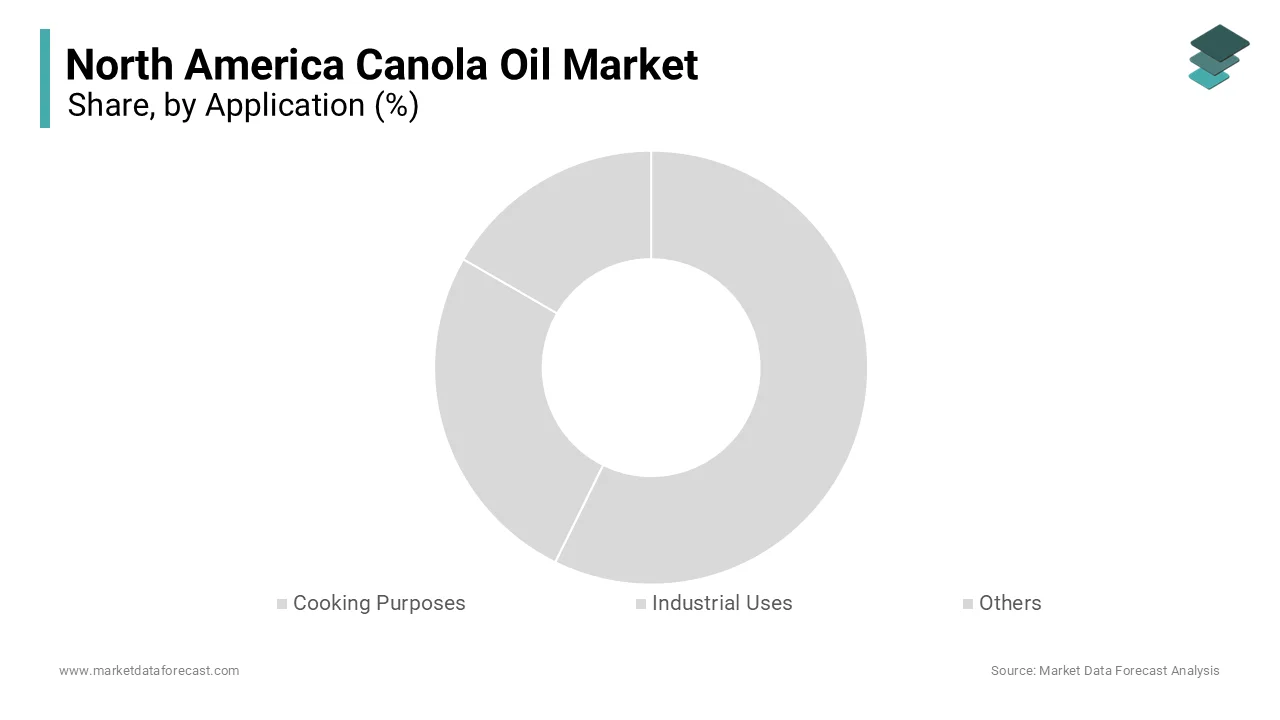
The industrial uses segment is likely to experience the fastest CAGR of 6.8% from 2026 to 2034 due to the increasing demand for biodiesel and renewable diesel as governments implement stricter environmental regulations and renewable fuel standards. Canola oil is particularly valued in this sector due to its low carbon intensity and high yield per acre compared to other oilseeds. In Canada the Clean Fuel Regulations further incentivize the use of low carbon fuels driving investment in processing facilities. The policy driven demand absorbs a significant portion of the canola supply shifting the market dynamics from food to fuel. The establishment of new renewable diesel plants capable of processing vegetable oils directly into drop in fuels further amplifies this trend. As the transportation sector seeks to decarbonize the industrial application of canola oil is poised for sustained exponential growth. The expansion of canola oil into non fuel industrial applications such as biodegradable lubricants and chemical feedstocks contributes significantly to its rapid growth in the industrial segment. Industries are increasingly adopting bio based lubricants to meet environmental safety standards and reduce toxicity in workplace environments. Canola oil’s excellent lubricity and high flash point make it suitable for hydraulic fluids metalworking fluids and chain saw oils. Furthermore the chemical industry utilizes canola oil as a renewable feedstock for producing plastics resins and solvents reducing reliance on fossil fuels. Research suggests that the demand for green chemicals is rising as corporations commit to sustainability goals. The versatility of canola oil in these diverse industrial applications opens new revenue streams beyond the volatile food and fuel markets. This diversification enhances the resilience of the canola industry and supports long term growth. The ability to modify canola oil chemically for specific industrial needs further expands its utility and market potential.
By End User Insights
The manufacturing segment held the majority share of the 51.4% of the North America canola oil market in 2025. This supremacy of the segment is attributed to the massive scale of processed food production that relies on vegetable oils as key ingredients. Food manufacturers utilize canola oil extensively in the production of snacks baked goods margarine salad dressings and ready to eat meals due to its functional properties and cost effectiveness. Canola oil’s neutral flavor allows it to blend seamlessly with other ingredients without altering the taste profile of the final product which is crucial for brand consistency. The trend benefits manufacturers who use canola oil to enhance texture and shelf life. Additionally the ability of canola oil to remain stable at high temperatures makes it ideal for industrial frying processes used in snack production. The consolidation of major food processing companies has led to centralized procurement strategies that favor large volume suppliers of canola oil. This structural demand ensures a steady and predictable market for canola oil producers. The integration of canola oil into private label products by major retailers further boosts manufacturing sector consumption. The sheer volume of processed foods produced in the region cements the manufacturing sector as the dominant end user. Cost efficiency and supply chain stability are critical factors driving the dominance of the manufacturing sector in the canola oil market. Large scale food manufacturers prioritize consistent supply and competitive pricing to maintain profit margins in a highly competitive retail environment. Canola oil offers a favorable price performance ratio compared to specialty oils making it an economical choice for high volume production. The integrated supply chain in North America particularly the close proximity of Canadian production to US processing facilities ensures timely delivery and reduced logistics costs. Also, the reliability minimizes production disruptions and inventory holding costs for manufacturers. Furthermore long term contracts between crushers and food processors provide price stability shielding manufacturers from short term market volatility. The ability of canola oil suppliers to offer customized formulations such as high oleic variants adds value for manufacturers seeking specific functional attributes. This strategic partnership model strengthens the bond between suppliers and manufacturers ensuring sustained demand. The economies of scale achieved by large manufacturers allow them to negotiate better terms further reinforcing their dominant position in the market.
The food service segment is on the rise and is expected to be the fastest growing segment in the market by witnessing a CAGR of 5.2% during the forecast period owing to the robust recovery of the hospitality industry and shifting menu trends. Following the pandemic induced downturn restaurants hotels and catering services have experienced a surge in patronage leading to increased consumption of cooking oils. The resurgence directly translates to higher demand for frying and cooking oils in commercial kitchens. Canola oil is preferred in the food service industry due to its high smoke point and longevity in fryers which reduces operational costs for establishments. The trend toward healthier dining options has also prompted many restaurants to switch from trans fat containing oils to canola oil to appeal to health conscious diners. Chains and independent eateries alike are marketing their use of heart healthy oils as a competitive advantage. Additionally the rise of fast casual dining concepts which emphasize quality ingredients has boosted the adoption of premium canola oil variants. The expansion of food delivery services has further increased the volume of prepared foods requiring stable oils for transport. These factors collectively drive the rapid growth of the food service segment. Standardization and operational efficiency in quick service restaurants QSRs contribute significantly to the rapid growth of the food service segment for canola oil. QSR chains operate on tight margins and require consistent product quality and efficient kitchen operations to maintain profitability. Canola oil’s consistent performance in high volume fryers allows for standardized cooking times and product quality across multiple locations. This consistency is crucial for brand integrity and customer satisfaction. The high oxidative stability of canola oil extends its usable life in fryers reducing the frequency of oil changes and disposal costs. Furthermore the neutral flavor of canola oil ensures that it does not interfere with the taste of diverse menu items ranging from french fries to chicken nuggets. Major QSR chains are increasingly adopting sustainable sourcing practices including the use of certified canola oil to enhance their corporate social responsibility profiles. The scale of operations in the QSR sector means that even small improvements in oil efficiency result in significant cost savings. This focus on operational excellence and sustainability drives the preferential adoption of canola oil in the fast growing food service segment.
REGIONAL ANALYSIS
United States Canola Oil Market Analysis
The United States dominated the North America canola oil market and captured a 77.1% share in 2025. Factors such as high consumption levels and a robust processing industry propel the leading position of the US market. The market status in the US is defined by its reliance on imports from Canada to meet domestic demand as local production is insufficient. According to the United States Department of Agriculture (USDA), the U.S. relies heavily on Canada for its canola oil supply, with Canadian imports accounting for approximately 90 percent of all U.S. canola oil imports and roughly 70 percent of total domestic consumption. The demand is driven by the large food processing sector and the growing biofuel industry. The Renewable Fuel Standard has created a steady demand for canola oil in biodiesel production supporting market growth. Consumer health awareness is also a key driver with many Americans switching to canola oil for its heart healthy benefits. The Food and Drug Administration’s approval of health claims for canola oil reinforces this trend. The presence of major food manufacturers and quick service restaurant chains ensures consistent demand. However the market faces challenges from competition with soybean oil which is produced domestically in large volumes. Price sensitivity among consumers and manufacturers often leads to substitution when soybean oil prices are lower. The development of high oleic canola varieties offers opportunities for differentiation in the premium segment. Regulatory support for biofuels continues to be a major growth driver. The market is mature but continues to evolve with changing dietary preferences and energy policies.
Canada Canola Oil Market Analysis
Canada is the largest producer and exporter of canola oil in the North America region holding a dominant position in the regional market. The market status in Canada is characterized by a strong agricultural base and advanced processing infrastructure. According to Statistics Canada canola is the most valuable crop in the country with millions of acres harvested annually. The domestic market consumes a portion of the production while the majority is exported to the United States and other global markets. The Canadian government supports the industry through research and development initiatives aimed at improving yield and sustainability. The Canola Council of Canada plays a pivotal role in promoting the benefits of canola oil globally. Domestic consumption is driven by health conscious consumers who prefer locally produced oils. The implementation of the Clean Fuel Regulations has boosted domestic demand for canola oil in the biofuel sector. This policy shift is expected to reduce export volumes as more oil is retained for domestic renewable diesel production. The industry is also focusing on sustainability certification to meet international standards. Climate change poses a risk to production with droughts affecting yields in recent years. Despite these challenges the industry remains resilient due to strong global demand. The integration of canola farming with carbon credit programs offers new revenue opportunities for growers. Canada’s leadership in canola production ensures its central role in the North American market.
COMPETITIVE LANDSCAPE
The competition in the North America canola oil market is characterized by the presence of large integrated agribusinesses and specialized processors vying for dominance in both food and industrial sectors. Major players leverage economies of scale and extensive distribution networks to maintain strong market positions while smaller firms compete on niche products and regional specialization. The market is highly consolidated with a few key entities controlling significant processing capacity creating high barriers to entry for new competitors. Price competitiveness remains a crucial factor as buyers often switch between canola soybean and other vegetable oils based on cost advantages. Innovation in product formulations such as high oleic and organic oils provides differentiation opportunities allowing brands to command premium prices. Regulatory frameworks particularly those related to biofuels and sustainability significantly influence competitive dynamics by creating mandated demand streams. Companies increasingly focus on sustainability certifications and carbon footprint reduction to align with corporate buyer requirements and consumer preferences. Supply chain efficiency and logistical capabilities are critical differentiators ensuring reliable delivery and cost effectiveness. The interplay between food and fuel demand adds complexity requiring agile strategic responses. Overall the market demands continuous investment in technology and sustainability to maintain competitive advantage amidst fluctuating raw material costs and evolving regulatory landscapes.
Key Market Players
Some of the key market players of North America canola oil market are
- Archer Daniels Midland Company
- Associated British Foods
- Burge
- Cargill
- Wilmar International
- Conagra Foodservice
- DalmiaShop
- Huiles TITAN OILS
- Jivo Wellness
- Richardson International
Top Players in the Market
- Richardson International Limited stands as a cornerstone of the North America canola oil market leveraging its extensive grain handling and processing infrastructure across Canada and the United States. The company actively invests in expanding its crushing capacity to meet the rising demand for both food grade and industrial canola oil. Recent strategic initiatives include the modernization of its processing facilities to enhance efficiency and produce high quality refined oils. Richardson has also strengthened its supply chain logistics by optimizing rail and port operations ensuring timely delivery to domestic and international customers. The company focuses on sustainability by partnering with farmers to promote regenerative agricultural practices which appeal to environmentally conscious buyers. By integrating vertical operations from farm to fork Richardson ensures consistent quality and traceability. Their commitment to innovation in oil extraction technologies further solidifies their competitive edge. These actions collectively enhance their operational resilience and market presence allowing them to cater to diverse customer segments including food manufacturers and biofuel producers effectively.
- Cargill Incorporated plays a pivotal role in the North America canola oil market through its global trading network and advanced processing capabilities. The company leverages its extensive footprint to source canola seeds efficiently and convert them into high value oil products for various applications. Recent efforts to strengthen its position include significant investments in renewable diesel production facilities which utilize canola oil as a key feedstock. Cargill has also expanded its portfolio of specialty oils including high oleic canola variants to meet the specific needs of food service and manufacturing clients. The company emphasizes sustainability by sourcing certified sustainable canola and reducing carbon emissions in its operations. Collaborations with agricultural stakeholders help improve crop yields and quality ensuring a stable raw material supply. Cargill’s focus on digital solutions enhances supply chain transparency and efficiency. These strategic moves enable Cargill to maintain a robust market presence and respond dynamically to evolving consumer and regulatory demands in the region.
- Bunge Global SA is a major participant in the North America canola oil market known for its integrated agribusiness model and strong distribution network. The company processes canola seeds into crude and refined oils serving both the food and energy sectors. Recent actions to bolster its market position include the expansion of its crushing facilities in Canada to increase production capacity and meet growing domestic demand. Bunge has also focused on developing value added products such as non GMO and organic canola oils to cater to niche market segments. The company actively engages in sustainability initiatives promoting responsible sourcing and environmental stewardship throughout its supply chain. Investments in logistics infrastructure ensure efficient transportation of goods reducing costs and improving service reliability. Bunge’s strategic partnerships with farmers and suppliers enhance raw material security. Bunge strengthens its competitive stance by prioritizing innovation and operational excellence. Consequently, it delivers consistent value to customers across the North American region.
Top Strategies Used by Key Market Participants
Key players in the North America canola oil market predominantly focus on vertical integration to secure raw material supplies and optimize production costs. Companies invest heavily in expanding crushing and refining capacities to meet the dual demand from food and biofuel sectors. Product diversification is another critical strategy with firms developing high oleic and non GMO variants to capture premium market segments. Strategic partnerships with farmers promote sustainable agricultural practices ensuring long term supply stability and meeting environmental standards. Expansion into renewable energy markets allows companies to leverage government incentives and reduce dependency on traditional food applications. Digital transformation initiatives enhance supply chain visibility and operational efficiency enabling better demand forecasting and inventory management. Marketing efforts emphasize health benefits and sustainability credentials to appeal to conscious consumers. Mergers and acquisitions facilitate geographic expansion and technology acquisition strengthening competitive positioning. These multifaceted strategies enable market participants to navigate volatility and sustain growth in the dynamic North American landscape.
MARKET SEGMENTATION
This research report on the North America canola oil market is segmented and sub segmented into following categories
By Application
- Cooking Purposes
- Industrial Uses
- Others
By End User
- Food Service sector
- Manufacturing sector
- Retail sector
By Region
- United States of America
- Canada