- Product Description Description
- Table of Contents TOC
- List of Table & Figure LOT
- Get Free Sample PDF Sample PDF
Market Size, 2025
$695.31 MnMarket Estimate, 2026
$758.73 MnMarket Forecast, 2034
$1,525.17 MnCAGR, 2026–2034
9.12%Executive Summary: North America Cardiac Assist Devices Market
- Market Scope: Comprehensive regional analysis of the North American cardiac assist devices market covering product categories, modalities, end users, flow types, applications, and country-level breakdowns.
- Market Valuation: Valued at USD 695.31 million in 2025, estimated at USD 758.73 million in 2026, and projected to reach USD 1,525.17 million by 2034, registering a robust CAGR of 9.12% from 2026 to 2034.
- Primary Growth Drivers: High and rising incidence of cardiovascular illnesses and heart failures; expanding obese population bases; favorable reimbursement frameworks; and continuous technological upgrades in mechanical circulatory support devices.
Key Market Segment Metrics (2026–2034)
| Category | Leading Segment / Position | Segment Details / Breakdown |
|---|---|---|
| By Product Type | Ventricular Assist Devices (LVADs, RVADs, BiVADs, External VADs), Intra-Aortic Balloon Pumps (IABPs) & Total Artificial Hearts (TAHs) | VADs and IABPs dominate clinical implementations; SynCardia provides the sole FDA-approved TAH. |
| By Modality | Implantable Devices & Transcutaneous Devices | Implantable systems lead long-term therapeutic and mechanical circulatory support regimes. |
| By End User | Hospitals & Ambulatory Surgical Centers (ASCs) | Hospitals serve as the primary deployment environment for surgical implant procedures and patient monitoring. |
| By Flow Type | Pulsatile Flow Devices & Continuous Flow Devices | Continuous flow devices capture majority adoption due to enhanced durability, reliability, and efficiency. |
| By Application | Bridge to Transplant (BTT), Destination Therapy (DT), Bridge to Recovery (BTR) & Bridge to Candidacy (BTC) | Bridge-to-transplant and destination therapy drive robust clinical utility for chronic heart failure. |
| By Country / Region | The United States (Dominant Market) & Canada | The US commands the market owing to advanced healthcare infrastructure, high cardiovascular disease prevalence, and specialized VAD programs. Additional coverage includes Rest of North America. |
Major Market Players & Market Structure
Market Structure: Highly competitive cardiovascular device ecosystem led by established global medical technology corporations and specialized circulatory support pioneers.
Key Companies: Thoratec Corporation, MAQUET GmbH & Co, Teleflex Incorporated, Berlin Heart GmbH, Abiomed, Inc., HeartWare International, SynCardia Systems, Inc., Jarvik Heart, Inc., Terumo Corporation, BiVacor Pty Ltd, Braile Biomedica Ltd., Calon Cardio-Technology Ltd., CardiacAssist, Inc., CardioBridge GmbH, Carmat SAS, Cleveland Heart, Inc., CorAssist Cardiovascular Ltd., Evaheart Medical USA, Inc., and Leviticus Cardio Ltd.
 Download Free Sample Report
North America Cardiac Assist Devices Market Size
The North America Cardiac Assist Devices Market is projected to grow from USD 695.31 million in 2025 to USD 758.73 million in 2026 and reach USD 1,525.17 million by 2034, registering a CAGR of 9.12% from 2026 to 2034.
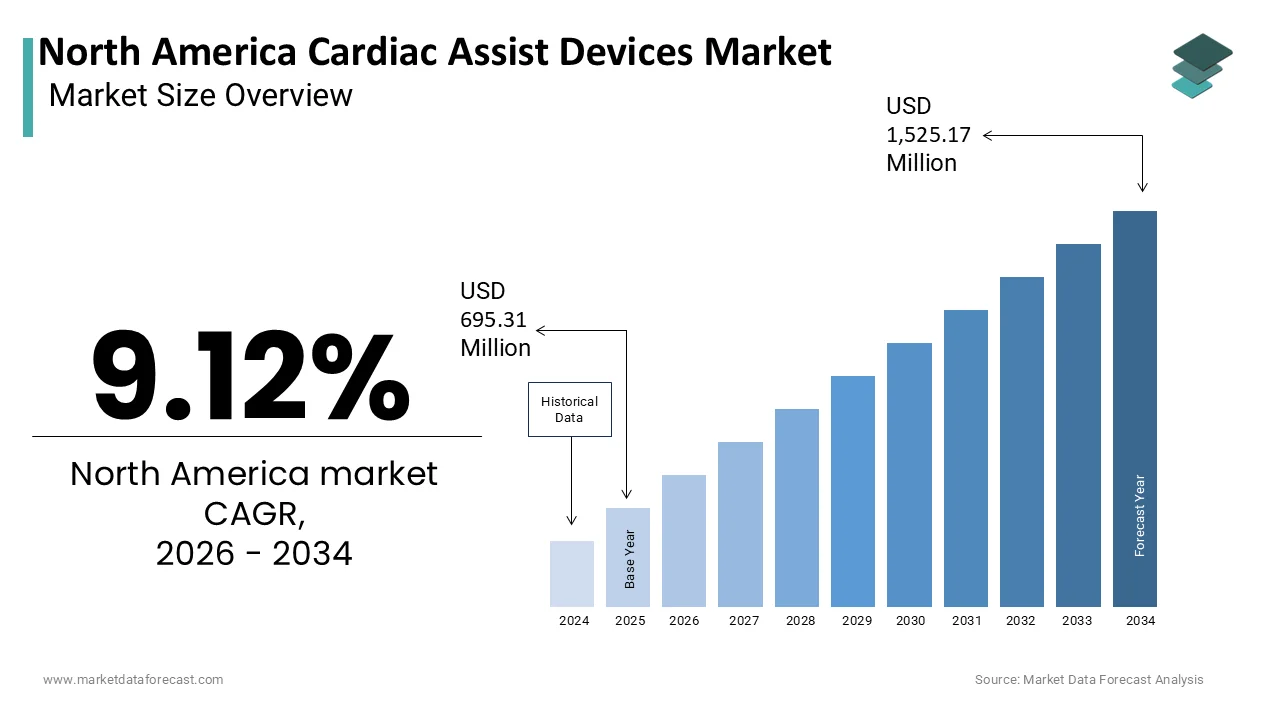
The cardiac assist devices are mechanical circulatory support systems designed to sustain hemodynamic stability in patients suffering from severe heart failure or cardiogenic shock. According to the American Heart Association, cardiovascular disease remains the leading cause of death in the United States, claiming approximately 928000 lives annually, which amplifies the urgent clinical necessity for advanced intervention technologies. As per the Centers for Disease Control and Prevention, nearly 6.7 million adults in the United States currently live with heart failure,e representing a substantial patient population requiring ongoing management and potential mechanical support. Healthcare infrastructure in the region is characterized by high adoption rates of innovative medical technologies supported by robust reimbursement frameworks. Regulatory agencies such as the Food and Drug Administration facilitate the rapid approval of next-generation devices that offer improved biocompatibility and durability. Manufacturers are focusing on miniaturization and wireless power transmission to enhance patient quality of life.
MARKET DRIVERS
Rising Prevalence of End-Stage Heart Failure Drives Clinical Demand
The escalating prevalence of end-stage heart failure due to the increasing number of patients who no longer respond to optimal medical therapy is accelerating the growth of the North America cardiac assist devices market. According to the American Heart Association, the incidence of heart failure has risen by 13% over the past decade, with projections indicating that the number of affected individuals will reach 8.5 million by 2030. This surge creates a substantial pool of candidates requiring mechanical circulatory support to maintain adequate organ perfusion and prevent mortality. Furthermore, ventricular assist device implants are performed annually in the United States, reflecting the growing reliance on these technologies for both bridge-to-transplant and destination therapy indications. The correlation between aging populations and the progression of chronic cardiac conditions ensures a steady demand for reliable assist devices. Healthcare providers are increasingly recognizing the cost-effectiveness of mechanical support in reducing frequent hospital readmissions associated with decompensated heart failure.
Advancements in Minimally Invasive Implantation Techniques Enhance Adoption
The rapid advancement of minimally invasive implantation techniques by reducing procedural risks and accelerating patient recovery times is additionally fuelling the growth of the North America cardiac assist devices market. This improvement in perioperative outcomes encourages surgeons to recommend mechanical support earlier in the disease trajectory rather than as a last resort. Additionally, the use of percutaneous temporary assist devices in catheterization laboratories has increased by 35%, allowing for rapid stabilization of patients in cardiogenic shock without the need for open-heart surgery. These technological innovations expand the eligibility criteria for mechanical support to include older patients and those with significant comorbidities who were previously considered too high risk. The ability to deploy devices through smaller incisions reduces trauma, infection rates, and blood loss, which are factors in complex cardiac cases. Manufacturers are continuously refining device profiles and delivery systems to facilitate these minimally invasive procedures. Consequently, the enhanced safety profile and broader applicability of modern assist devices fuel market growth as healthcare systems prioritize efficient and effective treatment pathways for heart failure patients.
MARKET RESTRAINTS
High Procedural Costs and Reimbursement Complexities Restrict Access
The prohibitive cost of cardiac assist devices and the complexity of reimbursement processes are restraining the growth of the North America cardiac assist devices market. This substantial financial burden places significant pressure on healthcare payers and hospital budgets, particularly in value-based care models. Furthermore, variations in insurance coverage policies across different states and private insurers create inconsistencies in patient access, with some plans imposing strict prior authorization requirements or excluding destination therapy coverage entirely. The lack of standardized reimbursement rates for long term maintenance and monitoring of these devices further discourages some providers from adopting them widely. Hospitals may hesitate to invest in expensive inventory if reimbursement is uncertain or delayed. Patients with high-deductible plans often face significant out-of-pocket expenses, which can lead to financial toxicity and treatment discontinuation.
Shortage of Specialized Training and Clinical Expertise
The shortage of specialized training programs and clinical expertise in managing cardiac assist devices is additionally limiting the growth of the North American cardiac assist devices market. According to the American Association for Thoracic Surgery, there is a gap in the number of trained perfusionists and cardiac surgeons proficient in the implantation and postoperative management of ventricular assist devices. This scarcity of skilled personnel limits the number of centers capable of offering these complex interventions safely and effectively. Additionally, adverse events related to cardiac assist devices are attributed to user error or inadequate monitoring protocols. The steep learning curve associated with new device generations requires extensive hands-on training, which many institutions struggle to provide due to resource constraints. The absence of standardized certification pathways for multidisciplinary heart failure teams exacerbates this issue,e leading to variability in care quality across different regions. Hospitals without dedicated mechanical circulatory support programs may avoid adopting these technologies due to liability concerns.
MARKET OPPORTUNITIES
Integration of Remote Monitoring and Digital Health Solutions
The integration of remote monitoring and digital health solutions enables proactive management of patients living with mechanical circulatory support, which is substantially to fuel new opportunities for the growth of the North American cardiac assist devices market. According to the American Telemedicine Association, the adoption of telehealth platforms for monitoring ventricular assist device parameters has reduced emergency department visits by allowing clinicians to detect early signs of complications, such as thrombosis or infection. This capability enhances patient safety and reduces healthcare costs associated with acute care episodes. Additionally, several manufacturers have received clearance for wireless data transmission systems that allow real-time tracking of pump speed, flow rates, and power consumption. These innovations empower patients to manage their condition more confidently at home,e improving quality of life and adherence to care plans. Healthcare providers can utilize aggregated data to optimize device settings and personalize treatment strategies. The shift toward home-based care aligns with patient preferences and payer incentives for reducing hospital utilization.
Expansion into Pediatric and Congenital Heart Disease Applications
The expansion of cardiac assist devices into pediatric and congenital heart disease applications by addressing unmet needs in younger patient populations is another factor to boost the growth of the North America cardiac assist devices market. Historically, limited options for small body sizes have forced clinicians to adapt adult devices off-label, which carries higher risks of complications. Recently, as per the National Heart, Lung,g and Blood Institute, the development of miniaturized ventricular assist devices specifically designed for infants and children has shown promising results in clinical trials with improved survival rates to transplantation. These specialized devices account forthe unique anatomical and physiological requirements of pediatric patients, offering better hemodynamic performance and reduced thrombotic risk. Regulatory incentives for orphan devices encourage manufacturers to invest in this niche segment. The establishment of dedicated pediatric mechanical support centers further facilitates the adoption of these technologies.
MARKET CHALLENGES
Regulatory Hurdles and Lengthy Approval Processes
The stringent regulatory hurdles and lengthy approval processes act as major barriers to the growth of the North America cardiac assist devices market. According to the Food and Drug Administration, the approval pathway for high-risk class III medical devices such as total artificial hearts can take several years, involving extensive clinical trials and rigorous data review. This prolonged timeline delays patient access to potentially life-saving technologies and increases development costs for manufacturers. Additionally, surveillance requirements demand continuous monitoring and reporting of adverse events, which adds to the operational burden on companies. The complexity of demonstrating non-inferiority or superiority to existing standards often requires large sample sizes and long follow-up periods. Changes in regulatory guidelines or requests for additional data can further stall approvals, creating uncertainty for investors and developers. Small and medium-sized enterprises may lack the resources to navigate these complex regulatory landscapes effectively.
Risk of Device-Related Complications and Adverse Events
The persistent risk of device-related complications and adverse events is also likely to hinder the growth of the North American cardiac assist devices market. These serious complications require immediate medical intervention and can lead to permanent disability or death, undermining the therapeutic benefits of mechanical support. The complexity of managing anticoagulation therapy to prevent thrombosis, while minimizing bleeding risk, requires precise clinical oversight. Patient nonadherence to medication regimens or device maintenance protocols further exacerbates these risks. Manufacturers face ongoing pressure to improve biocompatibility and design features that mitigate these adverse outcomes. High complication rates can deter physicians from recommending devices to marginal candidates and influence payer decisions regarding coverage.
REPORT COVERAGE
| REPORT METRIC | DETAILS |
| Market Size Available | 2025 to 2034 |
| Base Year | 2025 |
| Forecast Period | 2026 to 2034 |
| Segments Covered | By Product Type, Modality, Flow Type, Application, and Region |
| Various Analyses Covered | Global, Regional, and Country-Level Analysis, Segment-Level Analysis, Drivers, Restraints, Opportunities, Challenges; PESTLE Analysis; Porter’s Five Forces Analysis, Competitive Landscape, Analyst Overview of Investment Opportunities |
| Countries Covered | The United States, Canada, Rest of North America |
| Market Leaders Profiled | Thoratec Corporation, MAQUET GmbH & Co. KG |
SEGMENTAL ANALYSIS
By Product Type Insights
The ventricular assist devices segment accounted for 34.2% of the North America Cardiac Assist Devices Market share in 2025 due to their established efficacy in managing advanced heart failure and serving as a reliable bridge to transplant or destination therapy. The significant number of patients on heart transplant waitlists who require mechanical support to survive the waiting period is also driving the growth of the segment. This prolonged duration necessitates the use of VADs to maintain end-organ perfusion and prevent clinical deterioration. The scarcity of donor hearts means that VADs are often the only viable option to keep patients alive until a suitable match is found. Hospitals prioritize these devices to optimize patient condition for surgery, thereby improving post-transplant outcomes. The correlation between waitlist growth and device utilization ensures steady demand.
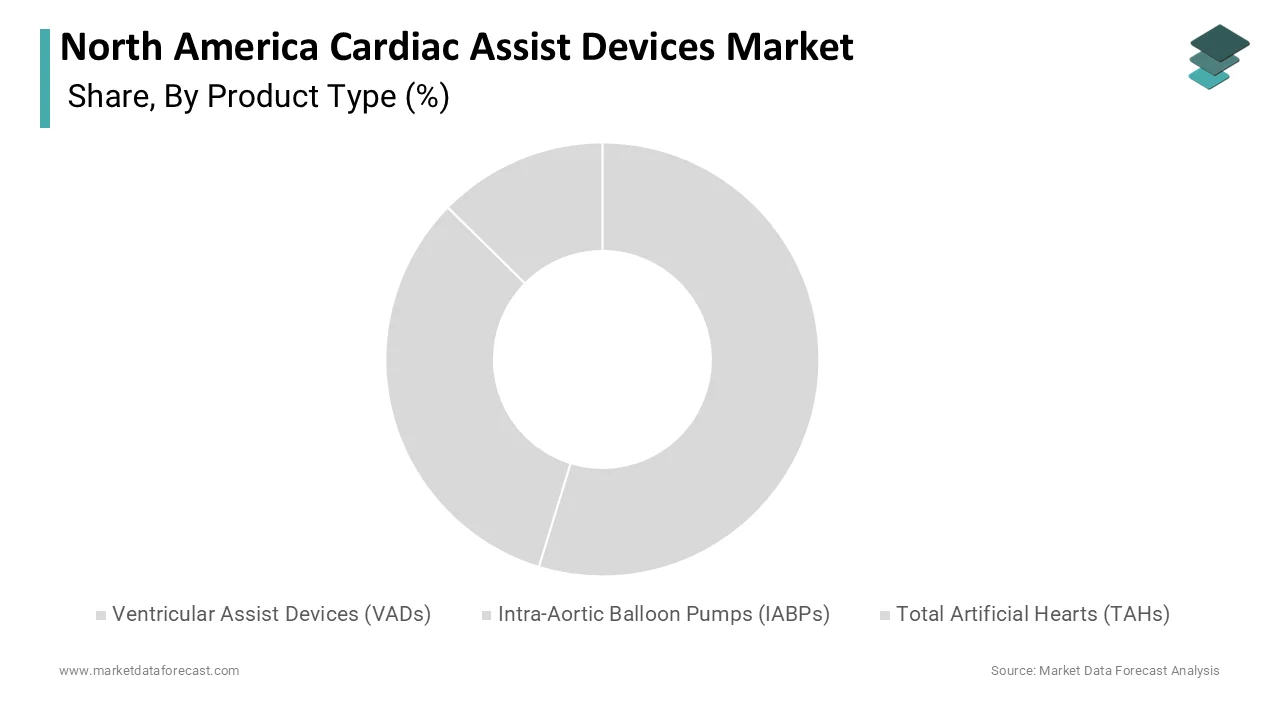
The total artificial hearts segment is projected to witness the fastest CAGR of 9.2% during the forecast period. The rapid growth of the Total Artificial Heart segment is fueled by its suitability for patients with complex biventricular failure where single ventricle support is insufficient. For these individuals, TAHs offer the only mechanical alternative to immediate transplantation or palliative care. Furthermore, as per the Journal of Thoracic and Cardiovascular Surgery recent studies indicate that TAH implantation has improved one year survival rates to 70% in selected high-risk populations, demonstrating its viability as a therapeutic option. The ability to provide complete cardiac replacement eliminates the risk of right heart failure, which is a common complication after LVAD implantation. As diagnostic capabilities improve, more patients are being identified as suitable candidates for total replacement. The expansion of clinical guidelines to include TAHs for specific indications drives adoption.
By Modality Insights
The implantable devices segment held a dominant share of the North America Cardiac Assist Devices Market in 2025 due to their ability to provide long term circulatory support and enable patient discharge to home settings. The strong clinical preference for long term mechanical support that allows patients to resume daily activities and live outside the hospital setting. This benefit is crucial for destination therapy, where patients may live with the device for several years. Furthermore, as per the Centers for Medicare and Medicaid Services, reimbursement policies increasingly favor implantable devices for chronic heart failure management, as they reduce the overall cost of care by minimizing prolonged hospitalizations. The ability to discharge patients home with an implanted device alleviates the burden on crowded acute care facilities. Advances in battery technology and wireless charging have made home management safer and more convenient. Patients and caregivers prefer the discreet nature of implanted systems, which do not require bulky external consoles.
The transcutaneous devices segment is expected to witness the fastest CAGR of 8.5% from 2026 to 2034, with their role in acute care settings and temporary hemodynamic stabilization. The rapid growth of Transcutaneous Devices is fueled by their essential role in managing acute cardiogenic shock and stabilizing patients during high-risk cardiac interventions. Transcutaneous devices such as intra-aortic balloon pumps and temporary VADs can be deployed rapidly in emergency rooms and catheterization labs without the need for open heart surgery. The minimally invasive nature of these devices reduces procedural trauma and recovery time. They are ideal for patients with uncertain prognosis who may not require long-term support.
By Application Insights
The bridge to transplant segment was the largest, holding 32.1% of the North America Cardiac Assist Devices Market share in 2025 due to the critical shortage of donor hearts and the need to keep patients alive while waiting for a suitable match. The severe shortage of donor hearts in North America, which forces patients to rely on mechanical support for extended periods. This prolonged waiting period necessitates the use of VADs to maintain end-organ perfusion and prevent death. Cardiac assist devices serve as a vital lifeline for these patients, allowing them to remain stable and eligible for transplantation. Hospitals prioritize BTT strategies to maximize the utilization of scarce donor organs by ensuring recipients are in optimal condition. The ethical imperative to save lives in the face of organ scarcity reinforces the central role of BTT.
The destination therapy segment is expected to witness the fastest CAGR of 10.5% during the forecast period, with the increasing acceptance of VADs as a permanent solution for patients ineligible for transplantation. The growing population of heart failure patients who are ineligible for transplantation due to age, comorbidities, or other contraindications. Destination Therapy offers these individuals a chance at prolonged survival and improved quality of life using permanent VAD support. Advances in device durability and battery life make home-based management feasible for elderly patients. The shift in clinical mindset from viewing VADs as only a temporary measure to a definitive therapy drives adoption. Insurance coverage for DT is gradually expanding, reflecting its recognized clinical value.
COUNTRY LEVEL ANALYSIS
The United States Cardiac Assist Devices Market Analysis
The United States was the largest contributor in the North America Cardiac Assist Devices Market by occupying an 89.1% share in 2025 due to its advanced healthcare infrastructure and high volume of cardiac procedures. This high procedural volume drives the adoption of advanced cardiac assist technologies in public and private hospitals. Furthermore, as per the Centers for Medicare and Medicaid Services,s national coverage determinations for ventricular assist devices have expanded eligibility criteria, enabling access for a broader patient population. The presence of leading cardiac centers in cities like Houston and Cleveland fosters innovation and expertise. Local manufacturing initiatives by major medical device companies ensure a steady supply of next-generation devices. The large population base with high prevalence of heart failure ensures a steady pipeline of patients. These factors combine to make the United States the primary engine of growth for the regional market.
Canada Cardiac Assist Devices Market Analysis
Canada occupies the second-largest position in the North America Cardiac Assist Devices Market,t characterized by a publicly funded healthcare system and strong commitment to equitable access. According to the Canadian Institute for Health Information,n the number of heart failure hospitalizations has increased by 10% in recent years,s driving demand for advanced therapeutic options. The country has seen a rise in the number of accredited transplant centres, rs which boosts the utilization of bridge-to-transplant devices. Furthermore,e as per the Canadian Cardiovascular Society,y collaborations with international device manufacturers have facilitated the introduction of next-generation VADs. The rising prevalence of diabetes and hypertension contributes to a high burden of heart failure. Provincial health plans are increasingly covering destination therapy, improving accessibility. Private insurance supplements public coverage for certain advanced technologies. These dynamics support steady market growth and technological adoption across the provinces.
Rest of North America Cardiac Assist Devices Market Analysis
The Rest of North America, comprising Mexico and other smaller territories, es represents an emerging market with significant growth potential driven by healthcare modernization and increasing regulatory awareness. According to the Mexican Ministry of Health, the recent updates to occupational safety and medical device guidelines have encouraged the adoption of safety-engineered sharps and advanced cardiac devices in public hospitals,s although implementation varies by region. This regulatory push is gradually increasing the demand for cardiac assist technologies as healthcare institutions strive to meet international standards. Furthermore,e as per the Pan American Health Organization, the prevalence of cardiovascular diseases in Mexico is among the highest in the world,rld with over 15 million adults affected,d creating a substantial need for safe and effective treatment devices. The growing private healthcare sector in urban areas is also adopting advanced cardiac care to attract patients who value high-quality services. International aid and collaborations with global health organizations facilitate the introduction of affordable safety technologies in underserved areas. Economic growth and increasing health awareness among the population further support market expansion. While the market size is smaller compared to the US and Canada, the growth rate is accelerating as infrastructure improves and regulatory frameworks strengthen.
COMPETITIVE LANDSCAPE
The competitive landscape of the North America Cardiac Assist Devices Market is characterized by intense rivalry among established global manufacturers striving for leadership in mechanical circulatory support. Major companies compete vigorously based on device durability,y safety profiles, es and ease of implantation to differentiate their products. The market witnesses frequent launches of next-generation ventricular assist devices with improved hemodynamics and reduced complication rates. Patent protections for specific pump designs create barriers to entry but also drive competitors to develop alternative technologies. Strategic alliances with transplant centers and research institutions are common as companies seek to generate clinical evidence and influence treatment guidelines. The presence of stringent regulatory requirements means that all participants must maintain high quality standards and rigorous post-market surveillance. Companies are increasingly focusing on value-based care models by offering comprehensive support services and remote monitoring solutions. This environment drives constant innovation in device design and clinical management protocols among market participants.
KEY MARKET PLAYERS
Some of the companies that are playing a dominant role in the North American Cardiac Assist Devices Market include:
- Thoratec Corporation
- MAQUET GmbH & Co. KG
- Teleflex Incorporated
- Berlin Heart GmbH
- Abiomed, Inc.
- HeartWare International, Inc.
- SynCardia Systems, Inc.
- Jarvik Heart, Inc.
- Terumo Corporation
- BiVACOR Pty Ltd.
- Braile Biomedica Ltd.
- Calon Cardio-Technology Ltd.
- CardiacAssist, Inc.
- CardioBridge GmbH
- CARMAT SA
- Cleveland Heart, Inc.
- CorAssist Cardiovascular Ltd.
- Evaheart Medical USA, Inc.
- Leviticus Cardio Ltd.
TOP LEADING PLAYERS IN THE MARKET
- Abbott Laboratories maintains a robust presence in the North American Cardiac Assist Devices Market through its innovative HeartMate series of ventricular assist devices. The company actively collaborates with leading transplant centers to enhance clinical outcomes for patients with advanced heart failure. Recently,y Abbott expanded its remote monitoring capabilities by integrating digital health platforms that allow clinicians to track device performance in real time. This strategic initiative improves patient safety and reduces hospital readmissions. The company also invested in extensive training programs for surgeons and care teams to ensure optimal device utilization. By focusing on continuous innovation and comprehensive support services,s Abbott strengthens its reputation as a trusted partner in mechanical circulatory support. These efforts demonstrate thecompany'ss commitment to improving quality of life for patients relying on long term cardiac assistance.
- Medtronic plc plays a significant role in the North America Cardiac Assist Devices Market by offering a diverse portfolio of temporary and durable mechanical circulatory support systems. The company has strengthened its market position by launching next-generation intra-aortic balloon pumps with enhanced automation features. Recentlyl,y Medtronic partnered with academic medical centers to conduct clinical studies evaluating the efficacy of its percutaneous ventricular assist devices in acute cardiogenic shock. These collaborations generate valuable real-world evidence that supports broader clinical adoption. The company also expanded its distribution network to ensure timely availability of critical care products across the region. Medtronic continues to invest in research and development to miniaturize devices and improve biocompatibility. These actions reinforce its leadership in providing life-saving technologies for critically ill cardiac patients.
- Getinge AB contributes significantly to the North America Cardiac Assist Devices Market through its specialized extracorporeal life support and cardiac assist technologies. The companyfocuses onn deliverinhigh-qualityyy perfusion systems that support complex cardiac surgeries and intensive care interventions. Recently,y Getinge opened new technical support hubs in major US cities to provide rapid service and maintenance for its cardiac devices. This expansion enhances operational reliability and minimizes downtime for hospitals. The company also collaborated with professional societies to develop standardized protocols for extracorporeal membrane oxygenation management. By prioritizing customer education and clinical excellence,e Getinge ensures safe and effective use of its products. These strategic moves solidify its position as a key provider of essential cardiac support infrastructure in the region.
TOP STRATEGIES USED BY KEY MARKET PARTICIPANTS
Key players in the North America Cardiac Assist Devices Market primarily employ strategic partnerships and continuous innovation to maintain their competitive edge. Companies frequently collaborate with academic institutions and hospitals to accelerate clinical research and validate new technologies. This approach facilitates access to real-world data and enhances product credibility among healthcare providers. Another major strategy involves expanding digital health integrations such as remote monitoring platforms to improve patient management and reduce healthcare costs. Manufacturers also focus on securing favorable reimbursement policies through robust health economic data demonstrating the cost-effectiveness of their devices. Additionally,y firms are investing in comprehensive training programs for surgeons and care teams to ensure safe device usage. These strategies collectively enhance market penetration and build strong relationships with stakeholders in a highly regulated environment.
NORTH AMERICA CARDIAC ASSIST DEVICES MARKET NEWS
- In March 2023, Abbott Laboratories, a medical device company, integrated digital health platforms for remote monitoring. This integration is anticipated to allow Abbott to improve patient tracking and strengthen the North America Cardiac Assist Devices Market presence.
- In June 2023, Medtronic plc, a healthcare technology firm, launched next-generation intra-aortic balloon pumps with automation. This launch is anticipated to allow Medtronic to enhance procedural efficiency and strengthen the North America Cardiac Assist Devices Market presence.
- In September 2023, Getinge AB, a medical technology company, opened new technical support hubs in major US cities. This opening is anticipated to allow Getinge to provide rapid service and strengthen the North America Cardiac Assist Devicemarketee.
- In January 2024, Abbott Laboratories, a medical device company, invested in extensive surgeon training programs for device utilization. This investment is anticipated to allow Abbott to ensure optimal outcomes and strengthen the North America Cardiac Assist Devices Market presence.e
- In May 2024, Medtronic plc, a healthcare technology firm, partnered with academic centers for clinical studies on percutaneous devices. This partnership is anticipated to allow Medtronicto generate real-worldd evidence and strengthen the North America Cardiac Assist Devices Market presence.
MARKET SEGMENTATION
This research report on the North America Cardiac Assist Devices Market is segmented and sub-segmented into the following categories.
By Product Type
- Ventricular Assist Devices (VADs)
- Left Ventricular Assist Devices (LVADs)
- Right Ventricular Assist Devices (RVADs)
- Biventricular Assist Devices (BiVADs)
- External Ventricular Assist Devices
- Intra-Aortic Balloon Pumps (IABPs)
- Total Artificial Hearts (TAHs)
By Modality
- Implantable Devices
- Transcutaneous Devices
By End User
- Hospitals
- Ambulatory Surgical Centers (ASCs)
By Flow Type
- Pulsatile Flow Devices
- Continuous Flow Devices
By Application
- Bridge to Transplant (BTT)
- Destination Therapy (DT)
- Bridge to Recovery (BTR)
- Bridge to Candidacy (BTC)
By Country
- The United States
- Canada
- Rest of North America