- Product Description Description
- Table of Contents TOC
- List of Table & Figure LOT
- Get Free Sample PDF Sample PDF
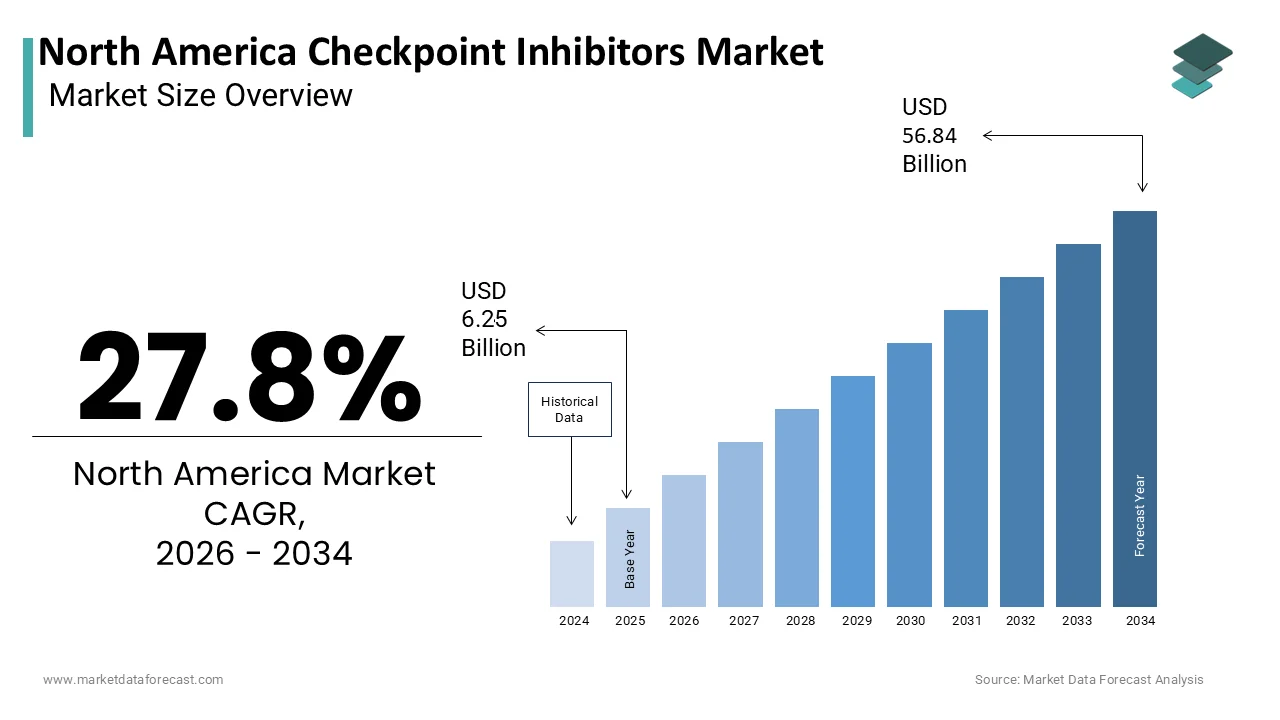
Market Size, 2025
$6.25 BnMarket Estimate, 2026
$7.99 BnMarket Forecast, 2034
$56.84 BnCAGR, 2026–2034
27.8%Executive Summary: North America Checkpoint Inhibitors Market
- Market Scope: Comprehensive regional analysis of the North American checkpoint inhibitors market covering drug classifications, target oncology applications, country-level adoption, and advanced R&D frameworks like bifunctional fusion proteins (Y-traps).
- Market Valuation & Forecast: Valued at USD 6.25 billion in 2025, estimated at USD 7.99 billion in 2026, and projected to reach USD 56.84 billion by 2034, registering a robust compound annual growth rate (CAGR) of 27.80% from 2026 to 2034.
- Primary Growth Drivers: High and rising prevalence of cancer across North America, expanding healthcare expenditures, government/non-government funding for immuno-oncology, and breakthrough technological innovations like bifunctional fusion proteins targeting PD-L1/CTLA-4 and TGF-beta. Counterbalancing restraints include high R&D and treatment costs, as well as localized gaps in treatment awareness.
Key North America Checkpoint Inhibitors Market Segment Metrics (2026–2034)
| Category | Leading Segment Focus | Strategic Growth Vectors |
|---|---|---|
| By Drug Class | PD-1 & PD-L1 Inhibitors (anchor the clinical landscape due to extensive FDA approvals and prominent efficacy across solid tumors) | CTLA-4 and Bifunctional Fusion Proteins / Y-Traps (driving combination pipelines to overcome single-agent resistance) |
| By Application | Lung Cancer & Melanoma (dominate regional demand owing to high clinical incidence rates and established first-line treatment guidelines) | Renal Cancer, Blood Cancer, & Bladder Cancer (expanding rapidly through clinical trials and widened label indications) |
| By Country / Region | The United States (leads the regional market heavily backed by advanced healthcare infrastructure, high research funding, and favorable reimbursement) | Canada (exhibiting steady expansion through collaborative cancer care networks and national research initiatives) |
Major North America Checkpoint Inhibitors Market Players & Competitive Landscape
Market Structure: Highly competitive pharmaceutical landscape characterized by strategic alliances, co-development partnerships for dual-action mechanisms (such as Y-traps targeting TGF-beta alongside PD-L1/CTLA-4), and heavy investment in clinical trial infrastructure.
Key Industry Companies: Merck & Co., Inc., Bristol-Myers Squibb, Roche, AstraZeneca, Ono Pharmaceutical Co., Ltd., Juno Therapeutics, Novartis International AG, and Kite Pharma.
North America Checkpoint Inhibitors Market Size
The North America Checkpoint Inhibitors Market is projected to grow from USD 6.25 billion in 2025 to USD 7.99 billion in 2026 and reach USD 56.84 billion by 2034, registering a CAGR of 27.8% during the forecast period from 2026 to 2034.
The checkpoint inhibitors are oncology therapeutics that use monoclonal antibodies that block immune checkpoint proteins to enhance the body's natural defense against cancer. This mechanism releases the brakes on T cells, allowing them to recognize and destroy tumor cells more effectively across various malignancies,s including melanoma, ma lung cancer,r and renal cell carcinoma. The American Cancer Society states that approximately 1.9 million new cancer cases are diagnosed annually in the United States, creating a substantial patient pool requiring advanced immunotherapeutic interventions. These statistics underscore the critical role of checkpoint inhibitors in modern oncology care, where traditional chemotherapy often fails to provide long-term survival benefits. High healthcare expenditure in the region supports access to these premium therapies despite their high cost. Collaborative initiatives between academic centers and pharmaceutical companies accelerate the development of next-generation agents.
MARKET DRIVERS
Rising Prevalence of Cancer and Aging Population
The increasing incidence of cancer coupled with an aging demographicsignificantly elelevatese growth of the North America checkpoint inhibitors market. As per the Centers for Disease Control and Prevention, cancer remains the second leading cause of death in the United States, accounting for nearly 600000 deaths annually, which necessitates effective treatment options. As the population ages, the risk of developing malignancies increases substantially w, with individuals over 65 years old representing the majority of new diagnoses. According to the United States Census Bureau, the number of adults aged 65 and older is projected to reach 95 million by 2060, doubling the current figures and expanding the addressable patient base for oncology drugs. This demographic shift creates sustained demand for therapies that offer improved survival rates and quality of life compared to conventional treatments. Checkpoint inhibitors have demonstrated durable responses in elderly patients who may not tolerate aggressive chemotherapy regimens, making them a preferred choice for geriatric oncology. Healthcare systems prioritize early detection and intervention programs that identify candidates for immunotherapy at earlier disease stages. Government funding for cancer research supports the development of novel agents targeting specific mutations prevalent in older populations.
Favorable Regulatory Approvals and Expanded Indications
The streamlined regulatory pathways and continuous approval of new indications are another attribute accelerating the growth of the North America checkpoint inhibitors market. The Food and Drug Administration has approved over 15 checkpoint inhibitor therapies for various cancers since 201,1 reflecting a commitment to accelerating access to innovative immunotherapies. Recent approvals include expanded uses for early-stage non-small cell lung cancer and triple-negative breast cancer, which broadens the eligible patient population significantly. The National Comprehensive Cancer Network updates its clinical practice guidelines regularly to include newer checkpoint inhibitors based on robust trial data, encouraging physician adoption. Accelerated approval programs allow drugs to reach patients faster while confirmatory trials are ongoing, reducing time to revenue for manufacturers. Reimbursement policies from Medicare and private insurers generally cover FDA-approved indications, minimizing financial barriers for patients. Pharmaceutical companies invest heavily in clinical trials to secure these approvals, leveraging real-world evidence to support broader labeling claims. These regulatory dynamics create a favorable environment for market expansion as more patients gain access to life-extending treatments through standardized care protocols.
MARKET RESTRAINTS
High Treatment Costs and Reimbursement Challenges
The exorbitant pricing structures unfavorably impact the widespread accessibility of checkpoint inhibitors, which is restraining the growth of the North America checkpoint inhibitors market. High out-of-pocket expenses deter some patients from initiating or continuing therapy, particularly those with high deductible insurance plans or limited coverage. Insurance companies increasingly implement prior authorization requirements and step therapy protocols to manage costs, which can delay treatment initiation and complicate clinical workflows. Hospitals face margin pressures when reimbursed at rates lower than acquisition costs for these premium drugs,s affecting inventory management and availability. Negotiations between pharmacy benefit managers and manufacturers often result in complex rebate structures that obscure true net prices and hinder transparency. Small community practices struggle to afford the upfront capital required to stock these expensive biologics, cs limiting patient access in rural areas.
Severe Immune-Related Adverse Events
The occurrence of significant immune-related adverse events unfavorably affects the safety profile and patient retention rates for checkpoint inhibitor therapies, which is also degrading the growth of the North America checkpoint therapies market. The Journal of Clinical Oncology states that up to 60% of patients treated with combination checkpoint inhibitors experience grade 3 or 4 adverse events requiring medical intervention and potential hospitalization. These toxicities can affect any organ system, including the lungs, liver, heart, and endocrine glands,s leading to treatment discontinuation in approximately 10 to 15% of cases. The American Society of Clinical Oncology highlights that managing these side effects requires specialized expertise and resources, which may not be available in all healthcare settings, increasing the burden on providers. Patients experiencing severe fatigue, rash, or colitis may refuse further doses, thereby compromising therapeutic efficacy and overall survival outcomes. Long-term monitoring is necessary to detect delayed immune reactions, adding to the complexity and cost of care delivery. Lack of standardized management protocols across institutions leads to variability in patient outcomes and provider confidence in prescribing these agents. Fear of toxicity may discourage physicians from recommending checkpoint inhibitors to frail or comorbid patients who could potentially benefit.
MARKET OPPORTUNITIES
Development of Combination Therapies
The strategic integration of checkpoint inhibitors with other modalities for enhancing efficacy and overcoming resistance mechanisms in oncology is solely attributed to leveraging the growth of the North America checkpoint inhibitors market. Combining immunotherapy with chemotherapy, radiation,n oanti-angiogenicic drugs creates synergistic effects that prime the tumor microenvironment for immune attack. As per the Society for Immunotherapy of Cancer, over 1000 clinical trials are currently investigating novel combinations aiming to expand indications to cold tumors with low immunogenicity. These approaches address primary and acquired resistance, which limits the effectiveness of checkpoint inhibitors as standalone treatments in many patients. Pharmaceutical companies collaborate to develop fixed-dose combinations, simplifying administration and improving patient compliance. Biomarker-driven strategies help identify patients most likely to benefit from specific combinations, optimizing resource utilization and clinical outcomes. Regulatory agencies show willingness to approve combination regimens based on surrogate endpoints, ts accelerating time to market for innovative pairs. These developments position combination therapies as the next frontier in immuno-oncology,ogy driving significant growth and differentiation in the market.
Expansion into Early Stage and Adjuvant Settings
Moving checkpoint inhibitors from late-stage metastatic disease to early-stage and adjuvant settings is an additional factor to bolster the growth of the North America checkpoint inhibitors market. As per the American Society of Clinical Oncology, adjuvant immunotherapy has reduced recurrence rates by 30% in high-risk melanoma and lung cancer patients following surgical resection. Treating patients earlier in the disease course when tumor burden is lower enhances the likelihood of complete response and long-term cure. The Food and Drug Administration has approved several checkpoint inhibitors for neoadjuvant and adjuvant use, reflecting a paradigm shift in treatment sequencing. This expansion significantly increases the treatable population, as early-stage diagnoses far outnumber metastatic cases annually. Health economic models suggest that preventing recurrence reduces long term healthcare costs associated with managing advanced disease, making it attractive to payers. Clinical guidelines increasingly recommend perioperative immunotherapy for eligible patients,s driving prescription volume in surgical oncology departments. Real-world evidence supports the durability of responses in early-stage settings, reinforcing confidence among clinicians.
MARKET CHALLENGES
Lack of Predictive Biomarkers for Patient Selection
The absence of reliable predictive biomarkers is a major challenge for the growth of the North America checkpoint inhibitors market. As per the American Association for Cancer Research, only 20 to 40% of patients respond to single-agent checkpoint inhibitors, amplifying the inefficiency of current selection methods based on PD-L1 expression alone. Many patients with high PD-L1 levels do not respond, while some with low levels do,o indicating that existing biomarkers are insufficient for precise stratification. The National Comprehensive Cancer Network notes that heterogeneous testing standards across laboratories lead to inconsistent results, ts complicating clinical decision-making and trial enrollment. This uncertainty results in unnecessary exposure to toxicity and cost for non-responders, undermining the value proposition of immunotherapy. Development of multi-omic signatures and tumor mutational burden assays is ongoing but lacks widespread clinical validation and reimbursement coverage. Physicians hesitate to prescribe expensive therapies without clear predictors of success, leading to conservative treatment patterns. Standardization of testing protocols and integration of artificial intelligence for pattern recognition are needed to improve accuracy.
Complexity of Manufacturing and Supply Chain Constraints
The intricate biological manufacturing processes and supply chain vulnerabilities are likely to impede the growth of the North America checkpoint inhibitors market. Any deviation in process parameters can result in batch failure, re leading to shortages and delayed patient access. The Food and Drug Administration reports that several biologics facilities have faced compliance issues resulting in temporary shutdowns and supply disruptions in recent years. Cold chain logistics are critical for maintaining product stability during distribution, requiring specialized infrastructure that adds cost and complexity. Raw material sourcing for cell culture media and resins is concentrated among a few suppliers, creating bottlenecks during global demand spikes. Scaling up production to meet growing demand for combination therapies and new indications strains existing capacity. Quality control measures are stringent to ensure safety,y increasing lead times and operational costs. These manufacturing hurdles limit agility in responding to market needs and increase the risk of stockouts affecting patient care continuity.
REPORT COVERAGE
| REPORT METRIC | DETAILS |
| Market Size Available | 2025 to 2034 |
| Base Year | 2025 |
| Forecast Period | 2026 to 2034 |
| Segments Covered | By Drug, Application, and Region |
| Various Analyses Covered | Global, Regional, and Country-Level Analysis, Segment-Level Analysis, Drivers, Restraints, Opportunities, Challenges; PESTLE Analysis; Porter’s Five Forces Analysis, Competitive Landscape, Analyst Overview of Investment Opportunities |
| Countries Covered | The United States, Canada, Rest of North America |
| Market Leaders Profiled |
|
SEGMENTAL ANALYSIS
By Drug Insights
The PD-1 inhibitors segment was the largest, holding a dominant share of the North America Checkpoint Inhibitors Market in 2025 due to its broad approval spectrum and established clinical efficacy across multiple tumor types. As per the American Society of Clinical Oncology, PD-1 inhibitors such as pembrolizumab and nivolumab are now standard of care for first-line treatment in non-small cell lung cancer. This widespread indication drives high prescription volumes and consistent revenue generation for manufacturers. The oncologists prefer PD-1 inhibitors over other immunotherapies due to their favorable safety profile and manageable side effect rates compared to combination regimens. These drugs demonstrate durable responses in patients with high tumor mutational burden, making them suitable for diverse patient populations. Regulatory agencies have approved these agents for the adjuvant setting,s further expanding their use beyond metastatic disease. Pharmaceutical companies invest heavily in real-world evidence studies to support broader labeling claims, reinforcing physician confidence. Reimbursement policies generally favor monotherapy withPD-11 inhibitors due to lower toxicity management costs compared to dual checkpoint blockade.
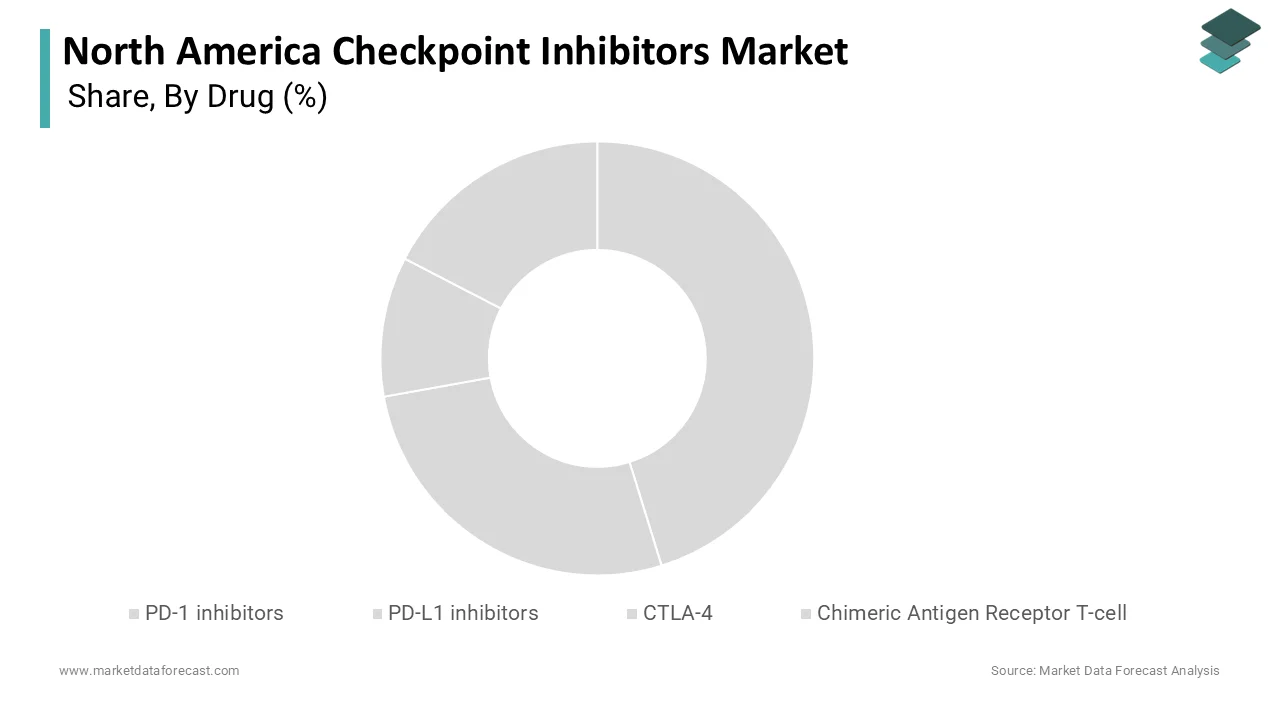
The chimeric antigen receptor T-Cell segment is likely to witness the fastest CAGR of 24.5% during the forecast period, driven by breakthroughs in hematologic malignancies and solid tumor research. The Food and Drug Administration has approved multiple CAR T cell therapies for relapsed or refractory B cell acute lymphoblastic leukemia and large B cell lymphoma, demonstrating complete remission rates exceeding 80% in pediatric patients. This exceptional efficacy in hard-to-treat populations creates strong demand from specialized cancer centers. Advances in gene editing technologies reduce production time and costs, making these personalized treatments more accessible to community hospitals. Clinical trials are expanding into solid tumors such as glioblastoma and pancreatic cancer,r opening vast new addressable markets. Government initiatives provide funding for regenerative medicine research, ch accelerating innovation and regulatory review processes. Insurance coverage for CAR T therapies is improving as health economic models demonstrate long term cost savings through potential cures.
By Application Insights
The lung cancer segment accounted for a significant share of the North America Checkpoint Inhibitors Market in 2025, with the high prevalence of the disease and robust clinical data supporting immunotherapy use. This high mortality rate drives urgent demand for effective therapeutic options beyond traditional chemotherapy. Guidelines recommend testing for PD-L1 expression in all newly diagnosed cases, ensuring that eligible patients receive targeted immunotherapy. Major pharmaceutical companies conduct extensive clinical trials in lung cancer, securing approvals for both first-line and subsequent lines of treatment. The integration of checkpoint inhibitors with chemotherapy and radiation has become standard practice, enhancing overall response rates. Smoking cessation programs and screening initiatives increase early detection rates,s expanding the pool of patients eligible for curative-intent immunotherapy.
The melanoma segment is likely to grow at the fastest CAGR of 18.2% from 2026 to 2034, with the rising incidence rates and superior efficacy of immunotherapies in this indication. As per the American Academy of Dermatology, the incidence of melanoma has increased by 50% over the past two decades, particularly among younger demographics,s due to UV exposure and lifestyle factors. Checkpoint inhibitors have revolutionized melanoma treatment,nt transforming it from a highly fatal disease to a manageable chronic condition for many patients. Adjuvant therapy approvals prevent recurrence in high-risk patients following surgery, expanding the treatment window. Dermatologists and oncologists collaborate closely to identify candidates for immunotherapy early in the disease course. Public awareness campaigns promote skin checks and early detection,n leading to diagnosis at stages where immunotherapy is most effective. Research into biomarkers helps predict response, allowing for personalized treatment plans that maximize outcomes.
COUNTRY LEVEL ANALYSIS
The United States Checkpoint Inhibitors Market Analysis
The United States was the top performer in the North America Checkpoint Inhibitors Market by holding 88.6% of the share in 2025 with its advanced healthcare infrastructure and high healthcare expenditure. According to the Centers for Medicare and Medicaid Services, national health expenditure reached 4.3 trillion dollars annually, providing substantial financial resources for accessing premium oncology therapies. The presence of major pharmaceutical companies and research institutions fosters continuous innovation and rapid regulatory approvals for new indications. The Food and Drug Administration approves the majority of global checkpoint inhibitor launches,s enabling early patient access to cutting-edge treatments. High prevalence of cancer types such as lung and breast cancer creates a large patient base requiring immunotherapy interventions. Private insurance coverage generally includes immunotherapy, although prior authorization processes can delay access. Academic medical centers lead in clinical trials,s generating robust real-world evidence that supports broader guideline recommendations. Patient advocacy groups play a significant role in influencing policy and ensuring reimbursement for novel therapies.
Canada Checkpoint Inhibitors Market Analysis
Canada checkpoint inhibitors market was ranked second, holding 11.2% of the share in 2025, with the publicly funded healthcare system and rigorous health technology assessment processes. The Canadian Agency for Drugs and Technologies in Health evaluates the clinical and cost-effectiveness of checkpoint inhibitors before recommending them for provincial reimbursement lists. This process ensures that only therapies with proven value are covered, reducing financial burden on the public system but potentially delaying access compared to the United States. The Canadian Cancer Society reports that cancer incidence rates are rising due to an aging population,n increasing demand for effective treatments like immunotherapy. Provincial formularies vary in coverage, leading to disparities in access across different regions,s which manufacturers must navigate strategically. Collaborative drug reviews among provinces help harmonize decisions and negotiate better pricing agreements with manufacturers. Research collaborations with international partners facilitate participation in global clinical trials, ls bringing new therapies to Canadian patients. Oncologists adhere to strict clinical guidelines,nes ensuring appropriate use of checkpoint inhibitors based on biomarker status.
COMPETITIVE LANDSCAPE
The competition in the North America Checkpoint Inhibitors Market is characterized by intense rivalry among established pharmaceutical giants and emerging biotechnology innovators seeking differentiation. Leading companies leverage broad indication portfolios and extensive clinical data to maintain formulary preference and physician loyalty across major cancer centers. Differentiation increasingly relies on combination strategies, biomarker integration, and safety profiles rather than monotherapy efficacy alone. Payer scrutiny intensifies as budget impacts grow,w forcing manufacturers to demonstrate superior cost-effectiveness through head-to-head trials and real-world outcomes studies. Patent cliffs loom for first-generation agents, prompting aggressive lifecycle extension tactics, including subcutaneous formulations and fixed-dose combinations. Biosimilar entry threatens pricing power, accelerating innovation pipelines toward next-generation bispecific antibodies and cellular therapies. Diagnostic partnerships create competitive moats by linking therapeutic access to proprietary testing platforms. Clinical trial velocity determines market positioning, with faster enrollment translating to earlier revenue capture. Regulatory harmonization between FDA and Health Canada influences launch sequencing strategies.
KEY MARKET PLAYERS
Some of the companies that are playing a dominating role in the North America Checkpoint Inhibitors Market include:
- Merck & Co., Inc.
- Bristol-Myers Squibb
- Roche
- AstraZeneca
- Ono Pharmaceutical Co., Ltd.
- Juno Therapeutics
- Novartis International AG
- Kite Pharma
TOP LEADING PLAYERS IN THE MARKET
- Merck & Co In. maintains a dominant presence through its flagsPD-1PD 1 inhibitor pembrolizumab, which serves as a cornerstone therapy across numerous oncology indications. The company recently secured regulatory approval for adjuvant treatment in early-stage non-small cell lung cancer, significantly expanding its eligible patient population. Merck invests heavily in biomarker research to identify responders and optimize therapeutic outcomes for diverse tumor types. Strategic collaborations with diagnostic firms enhance companion testing capabilities, ensuring appropriate patient selection. The company actively pursues combination trials with chemotherapy and targeted agents to overcome resistance mechanisms. Educational initiatives for healthcare providers improve understanding of immune-related adverse event management.
- Bristol Myers Squibb Company strengthens its position through a comprehensive immuno-oncology portfolio including nivolumab and ipilimumab targeting multiple checkpoints. The company recently launched fixed-dose combination therapies, simplifying administration protocols and improving patient convenience in clinical settings. Bristol Myers Squibb focuses on first-line approvals in high-volume indications such as renal cell carcinoma and esophageal cancer, driving prescription growth. Real-worldd evidence generation supports label expansions and reinforces value propositions to payers and providers. Manufacturing capacity expansions ensure reliable supply amidst rising demand for dual checkpoint blockade regimens. Patient support programs reduce financial toxicity and improve adherence to complex treatment schedules. Collaborative research with academic centers advances understanding of resistance biology, informing next-generation drug development strategies.
- F Hoffmann-La Roche Ltd contributes significantly through its PD-L1 inhibitor atezolizumab and extensive diagnostic ecosystem supporting personalized medicine. The company recently integrated digital pathology solutions with companion diagnostics, enhancing precision in patient stratification for immunotherapy eligibility. Roche emphasizes biomarker-driven development strategies focusing on tumor mutational burden and gene expression signatures to predict response accurately. Regulatory submissions for new indications in hepatocellular carcinoma and small-cell lung cancer broaden market reach beyond traditional strongholds. Partnerships with biotechnology firms accelerate discovery of novel targets and combination partners. Global clinical trial networks generate robust data supporting regulatory approvals across diverse populations. Sustainability initiatives in manufacturing align with healthcare system environmental goals, appealing to institutional purchasers.
TOP STRATEGIES USED BY KEY MARKET PARTICIPANTS
Key players in the North America Checkpoint Inhibitors Market employ multifaceted strategies to maintain competitive advantage and drive sustainable growth. Product lifecycle management remains central as companies pursue label expansions into earlier disease stages and adjuvant settings to capture larger patient pools. Strategic partnerships with diagnostic developers enable precise patient identification, improving clinical outcomes and payer acceptance. Combination therapy development addresses resistance challenges while creating proprietary treatment regimens that extend exclusivity periods. Real-world evidence generation supports health economic arguments, facilitating favorable reimbursement negotiations with insurance providers. Manufacturingscale-up ensures supply reliability, meeting growing demand without disruption. Patient assistance programs mitigate financial barriers, enhancing access and adherence rates. Digital health integration streamlines monitoring of adverse events, improving safety profiles and physician confidence. Biomarker research investments refine targeting strategies,s reducing wasteful spending on non-responders.
MARKET SEGMENTATION
This research report on the North America Checkpoint Inhibitors Market has been segmented and sub-segmented into the following categories.
By Drug
- PD-1 inhibitors
- PD-L1 inhibitors
- CTLA-4
- Chimeric Antigen Receptor T-cell
- Others
By Application
- Lung cancer
- Renal cancer
- Blood cancer
- Bladder Cancer
- Hodgkin lymphoma
- Melanoma
- Others
By Country
- The United States
- Canada
- Rest of North America