- Product Description Description
- Table of Contents TOC
- List of Table & Figure LOT
- Get Free Sample PDF Sample PDF
Market Size, 2025
$6.89 BnMarket Estimate, 2026
$8.41 BnMarket Forecast, 2034
$41.60 BnCAGR, 2026–2034
22.12%North America Clinical Data Analytics Market Report Summary
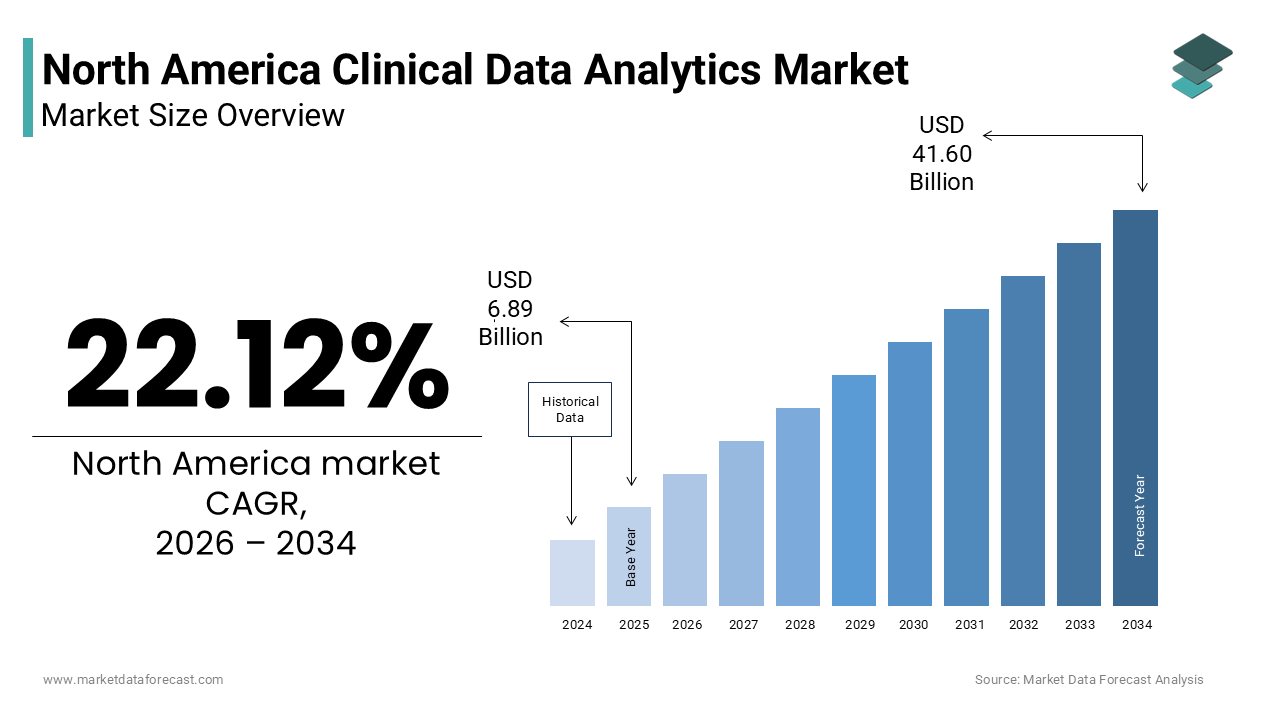
The North America clinical data analytics market was valued at USD 6.89 billion in 2025, is estimated to reach USD 8.41 billion in 2026, and is projected to reach USD 41.60 billion by 2034, growing at a CAGR of 22.12% during the forecast period from 2026 to 2034. The growth of the North America clinical data analytics market is driven by the increasing adoption of value-based healthcare models, widespread implementation of electronic health records (EHRs), and rising demand for data-driven clinical decision-making. Growing integration of artificial intelligence and machine learning into healthcare analytics, increasing prevalence of chronic diseases, and expanding investments in digital healthcare infrastructure are further accelerating market growth. Moreover, the growing utilization of real-world evidence in clinical research, rising emphasis on personalized medicine, and increasing regulatory focus on healthcare interoperability are supporting the expansion of the North America clinical data analytics market.
Key Market Trends
-
Rising adoption of artificial intelligence and machine learning for predictive clinical analytics.
-
Increasing implementation of cloud-based clinical data analytics platforms across healthcare organizations.
-
Growing use of real-world evidence to support drug development and regulatory decision-making.
-
Rising demand for population health management and value-based care analytics solutions.
-
Increasing integration of clinical analytics with electronic health records and interoperable healthcare systems.
Segmental Insights
- Based on deployment model, the on-premise segment dominated the North America clinical data analytics market in 2025. The dominance of the segment is attributed to stringent data security requirements, established legacy healthcare IT infrastructure, increasing concerns regarding patient data privacy, strong regulatory compliance requirements, and the preference of large healthcare organizations for maintaining complete control over sensitive clinical information.
- The cloud segment is projected to witness the fastest CAGR of 14.5% during the forecast period owing to increasing scalability, lower infrastructure costs, growing adoption of software-as-a-service (SaaS) healthcare platforms, expanding use of artificial intelligence-based analytics, and rising demand for real-time collaboration across healthcare networks.
- Based on end user, the healthcare providers segment dominated the North America clinical data analytics market in 2025. The growth of the segment is driven by widespread implementation of value-based care programs, increasing use of predictive analytics for patient management, growing emphasis on reducing hospital readmissions, expanding adoption of electronic health records, and rising investments in population health management solutions.
- The pharmaceuticals segment is anticipated to register the fastest CAGR of 13.8% during the forecast period due to increasing utilization of real-world evidence in drug development, expanding adoption of clinical trial analytics, growing investment in precision medicine, rising use of artificial intelligence for drug discovery, and increasing regulatory acceptance of data-driven clinical research methodologies.
Regional Insights
- The United States dominated the North America clinical data analytics market and accounted for the largest regional share in 2025. The country's leadership is driven by widespread electronic health record adoption, high healthcare expenditure, strong presence of leading healthcare technology companies, increasing implementation of value-based reimbursement models, advanced digital healthcare infrastructure, and supportive government initiatives promoting healthcare interoperability and data-driven clinical decision-making.
- Canada held a significant share of the North America clinical data analytics market in 2025 owing to its publicly funded healthcare system, increasing investments in digital health transformation, expanding implementation of electronic medical records, growing adoption of population health analytics, rising emphasis on chronic disease management, and supportive government initiatives encouraging healthcare data integration.
- The Rest of North America is expected to witness steady growth during the forecast period due to increasing healthcare digitalization, expanding adoption of cloud-based analytics solutions, growing investments in healthcare information technology, rising awareness regarding clinical decision support systems, and improving healthcare infrastructure across the region.
Competitive Landscape
The North America clinical data analytics market is highly competitive and characterized by the presence of established healthcare technology companies, enterprise software providers, and specialized clinical analytics vendors competing through artificial intelligence innovation, cloud computing capabilities, advanced predictive analytics, and strategic partnerships. Leading companies are focusing on enhancing interoperability, integrating machine learning algorithms into healthcare workflows, expanding cloud-native analytics platforms, strengthening cybersecurity capabilities, and collaborating with healthcare providers, pharmaceutical companies, and research institutions. Continuous investments in research and development, digital transformation, and advanced healthcare analytics continue to strengthen competitive positioning across the North America clinical data analytics market. The prominent players operating in the North America clinical data analytics market include IBM, CareEvolution, InterSystems, Explorys, Cerner, Caradigm, Truven Health Analytics, Wellcentive, McKesson, and Athenahealth.
 Download Free Sample Report
North America Clinical Data Analytics Market Size
As per the report, the size of the North America clinical data analytics market is valued at USD 6.89 billion in 2025, estimated at USD 8.41 billion in 2026, and is projected to reach USD 41.60 billion by 2034, growing at a CAGR of 22.12% from 2026 to 2034.
Clinical Data Analytics is the systematic process of gathering, cleaning, and interpreting healthcare data to improve patient care, streamline operations, and drive medical research. This domain leverages advanced technologies such as artificial intelligence, machine learning, and predictive modeling to analyze electronic health records, clinical trial data, and real world evidence. The region is characterized by a high volume of digitized health information, driven by widespread adoption of electronic health record systems. According to the Office of the National Coordinator for Health Information Technology (ONC), adoption of certified electronic health records among U.S. non-federal acute care hospitals reached near-universal levels of 99%. This digital foundation generates vast amounts of structured and unstructured data that require robust analytical tools for interpretation. The Centers for Medicare & Medicaid Services (CMS) indicate that national health expenditures in the United States have reached $5.3 trillion, accounting for 18.0% of the nation's gross domestic product. This substantial expenditure creates immense pressure on providers and payers to optimize costs and enhance care quality through data driven decision making. Furthermore, the increasing prevalence of chronic diseases necessitates continuous monitoring and personalized treatment plans, which are facilitated by clinical analytics. Regulatory frameworks emphasizing value based care and interoperability further accelerate the demand for comprehensive data solutions. As healthcare organizations strive to navigate complex reimbursement models and improve population health, the integration of clinical data analytics becomes indispensable for strategic planning and clinical excellence across the continent.
MARKET DRIVERS
Implementation of Value Based Care Models
The widespread implementation of value-based care models is a key factor behind the growth of the North America clinical data analytics market. Healthcare providers are shifting from fee for service arrangements to payment structures that reward quality outcomes and cost efficiency, necessitating detailed performance tracking. According to the Centers for Medicare & Medicaid Services (CMS), approximately 38% of healthcare payments are formally tied to quality or value through alternative payment models. This transition requires providers to monitor key performance indicators such as readmission rates, patient satisfaction scores, and treatment efficacy in real time. Clinical data analytics platforms enable hospitals to identify high risk patients, predict adverse events, and optimize care pathways to meet these stringent benchmarks. As per the Healthcare Financial Management Association, organizations utilizing advanced analytics report significant reductions in unnecessary testing and hospital stays, directly impacting their financial viability under value based contracts. The ability to aggregate and analyze data from disparate sources allows care teams to coordinate efforts effectively and ensure compliance with regulatory standards. Furthermore, payers utilize these analytics to design benefit packages that encourage preventive care and manage chronic conditions proactively. The financial imperative to avoid penalties and maximize reimbursements under value based arrangements compels healthcare entities to invest heavily in robust analytical infrastructure. This structural shift in healthcare financing ensures sustained demand for solutions that provide transparency and accountability in clinical performance.
Rising Prevalence of Chronic Diseases and Aging Population
The rising prevalence of chronic diseases and an aging demographic greatly contribute to the expansion of the North America clinical data analytics market. Chronic conditions such as diabetes, cardiovascular disease, and cancer account for the majority of healthcare expenditures and require long term management strategies. According to the Centers for Disease Control and Prevention, six in ten adults in the United States have a chronic disease, and four in ten have two or more. This burden places immense strain on healthcare resources, necessitating proactive population health management tools. Clinical analytics enable providers to segment patient populations, identify trends in disease progression, and tailor interventions to individual needs. As per the Administration for Community Living, the number of Americans aged 65 and older is projected to nearly double by 2060, increasing the demand for geriatric care and chronic disease monitoring. Analytics platforms facilitate remote patient monitoring and predictive modeling to prevent complications and reduce emergency department visits. By analyzing historical and real time data, healthcare organizations can allocate resources more efficiently and improve the quality of life for patients with complex health needs. The integration of genomic data with clinical records further enhances personalized medicine approaches, allowing for targeted therapies based on genetic predispositions. This demographic and epidemiological shift drives the adoption of analytics solutions that support continuous care coordination and evidence based treatment protocols for vulnerable populations.
MARKET RESTRAINTS
Data Privacy Concerns and Regulatory Compliance Burdens
Data privacy concerns and stringent regulatory compliance burdens are significant restraints on the North America clinical data analytics market. Healthcare organizations must adhere to strict laws such as the Health Insurance Portability and Accountability Act in the United States and the Personal Information Protection and Electronic Documents Act in Canada, which govern the use and disclosure of protected health information. The complexity of ensuring data anonymization and security while maintaining utility for analytics purposes creates technical and legal challenges for vendors and providers. As per surveys, fear of non compliance often leads to hesitation in adopting cloud based analytics solutions or sharing data across institutions. The cost of implementing robust cybersecurity measures and conducting regular audits adds to the operational expenses of healthcare entities. Furthermore, varying state level regulations in the United States create a fragmented compliance landscape that complicates national deployment of analytics platforms. Patients are increasingly aware of their privacy rights and may withhold consent for data usage, limiting the completeness of datasets available for analysis. These regulatory and ethical constraints slow down innovation and restrict the free flow of information necessary for comprehensive clinical insights.
Interoperability Issues and Data Silos
Interoperability issues and the persistence of data silos are major constraints on the North America clinical data analytics market. Despite the widespread adoption of electronic health records, many systems lack the ability to seamlessly exchange and interpret data across different platforms and healthcare settings. According to the Office of the National Coordinator for Health Information Technology, while most hospitals can send and receive electronic health information, significant barriers remain in integrating data from diverse sources such as laboratories, pharmacies, and specialty clinics. This fragmentation results in incomplete patient profiles, hindering the accuracy of predictive models and clinical decision support tools. As per studies, clinicians spend considerable time manually reconciling data from disparate systems, reducing the efficiency gains promised by analytics solutions. Proprietary formats and lack of standardized data elements further exacerbate the problem, making it difficult to aggregate data for population health analysis. Healthcare mergers and acquisitions often lead to heterogeneous IT environments that are challenging to integrate. The inability to achieve a unified view of patient data limits the potential of advanced analytics to deliver holistic insights. Until universal standards are fully implemented and adopted, organizations will continue to struggle with data quality and accessibility. Consequently, this impedes the full realization of clinical data analytics benefits.
MARKET OPPORTUNITIES
Integration of Artificial Intelligence and Machine Learning
The integration of artificial intelligence and machine learning unlocks the potential for the North America clinical data analytics market. These advanced technologies enable the analysis of vast and complex datasets, including unstructured clinical notes, medical images, and genomic sequences, to uncover patterns invisible to traditional methods. According to the National Institutes of Health, AI algorithms can improve diagnostic accuracy and predict patient deterioration with greater precision than conventional statistical models. Healthcare providers are increasingly leveraging machine learning to automate routine tasks, such as coding and documentation, freeing up clinicians to focus on patient care. As per research, AI driven analytics can optimize hospital operations by predicting patient admission rates and staffing needs, leading to significant cost savings. The ability to process real time data from wearable devices and Internet of Things sensors allows for continuous monitoring and early intervention in chronic disease management. Furthermore, AI facilitates drug discovery and clinical trial optimization by identifying suitable candidates and predicting trial outcomes. The growing availability of computing power and specialized algorithms makes these tools more accessible to healthcare organizations of all sizes. Artificial intelligence enhances clinical decision support and operational efficiency. Consequently, it opens new avenues for value creation and improved patient outcomes in the healthcare sector.
Expansion of Real World Evidence in Drug Development
The expansion of real-world evidence in drug development offers a lucrative opportunity for the North America clinical data analytics market. Pharmaceutical companies and regulatory agencies are increasingly recognizing the value of data generated outside traditional clinical trials, such as electronic health records, claims data, and patient registries, to assess drug safety and effectiveness. According to the Food and Drug Administration, real world evidence can supplement randomized controlled trials and support regulatory decisions regarding new indications and post market surveillance. Clinical data analytics platforms enable the aggregation and analysis of this diverse data to generate robust insights into how treatments perform in broader, more diverse patient populations. As per a study, the use of real world evidence can accelerate drug approval timelines and reduce development costs by providing earlier insights into therapeutic value. Payers also utilize this evidence to make coverage decisions and negotiate pricing based on actual clinical outcomes. The ability to track long term patient outcomes and identify rare adverse events enhances the safety profile of medications. Real-world evidence analytics supports more informed decision-making across the healthcare continuum by bridging the gap between clinical research and everyday practice. Hence, this drives the demand for specialized analytical tools and expertise.
MARKET CHALLENGES
Shortage of Skilled Data Science Professionals
A shortage of skilled data science professionals is a major obstacle to the North America clinical data analytics market. The effective implementation and utilization of advanced analytics solutions require expertise in data engineering, statistical modeling, and clinical informatics, which is currently in short supply. According to the Bureau of Labor Statistics, the demand for data scientists and related roles is projected to grow much faster than the average for all occupations, outpacing the supply of qualified candidates. Healthcare organizations often struggle to recruit and retain talent who possess both technical proficiency and domain knowledge in healthcare processes and regulations. As per surveys, the lack of internal expertise hinders the ability to customize analytics tools, interpret complex results, and drive data driven culture change within institutions. Reliance on external consultants can be costly and may not provide sustainable long term capabilities. The complexity of healthcare data, with its unique privacy and ethical considerations, further narrows the pool of suitable candidates. Educational programs are expanding but have not yet met the immediate needs of the industry. This talent gap limits the scalability of analytics initiatives and prevents organizations from fully leveraging their data assets, slowing down innovation and return on investment in clinical data analytics technologies.
High Implementation Costs and Return on Investment Uncertainty
High implementation costs and uncertainty regarding return on investment are serious hurdles for the North America clinical data analytics market. Deploying comprehensive analytics platforms involves substantial upfront expenditures for software licensing, hardware infrastructure, integration services, and staff training. According to sources, small and medium sized healthcare providers often find these costs prohibitive, limiting adoption to larger health systems with deeper pockets. The complexity of integrating analytics with legacy systems and ensuring data quality further increases implementation timelines and expenses. As per a study, demonstrating a clear and immediate return on investment from analytics initiatives can be difficult, as benefits such as improved patient outcomes and operational efficiency may take time to materialize and quantify. Budget constraints and competing priorities for capital investment often lead to delays or cancellations of analytics projects. Additionally, the rapid pace of technological change requires ongoing investments in upgrades and maintenance, adding to the total cost of ownership. Without tangible and measurable financial benefits, stakeholders may hesitate to commit resources to large scale analytics transformations. This financial barrier restricts market penetration among smaller providers and creates a disparity in access to advanced data capabilities across the healthcare landscape.
REPORT COVERAGE
| REPORT METRIC | DETAILS |
| Market Size Available | 2025 to 2034 |
| Base Year | 2025 |
| Forecast Period | 2026 to 2034 |
| CAGR | 22.12% |
| Segments Covered | By Deployment Model, End User & Region |
| Various Analyses Covered | Global, Regional & Country Level Analysis, Segment-Level Analysis, Drivers, Restraints, Opportunities, Challenges; PESTLE Analysis; Porter's Five Forces Analysis, Competitive Landscape, Analyst Overview of Investment Opportunities |
| Regions Covered | US, Canada, Rest of North America |
| Market leaders profiled | IBM, CareEvolution, InterSystems, Explorys, Cerner, Caradigm, Truven Health Analytics, Wellcentive, McKesson, and Athenahealth. |
SEGMENTAL ANALYSIS
By Deployment Model Insights
The on premise segment dominated the North America clinical data analytics market and accounted for a substantial share in 2025. This dominance of the segment was driven primarily by stringent data security requirements and legacy infrastructure dependencies. Healthcare organizations and pharmaceutical companies handle highly sensitive patient information and intellectual property, making them cautious about storing data on external servers. The IBM Ponemon Institute (Cost of a Data Breach Report) indicates that healthcare data breaches remain the most expensive across all industries, averaging $7.42 million per incident. Large hospital systems and academic medical centers often possess substantial existing investments in server hardware and IT staff, making the transition to cloud based solutions financially and operationally complex. As per the Healthcare Information and Management Systems Society, many legacy electronic health record systems are deeply integrated with on premise analytics tools, creating technical barriers to migration. Regulatory concerns regarding data sovereignty and compliance with laws such as the Health Insurance Portability and Accountability Act further reinforce the preference for local storage where physical access can be strictly monitored. The trend is slowly shifting. However, on-premise deployment remains dominant for organizations that prioritize security and control over scalability and cost efficiency, due to entrenched systems and the critical need for absolute data governance.
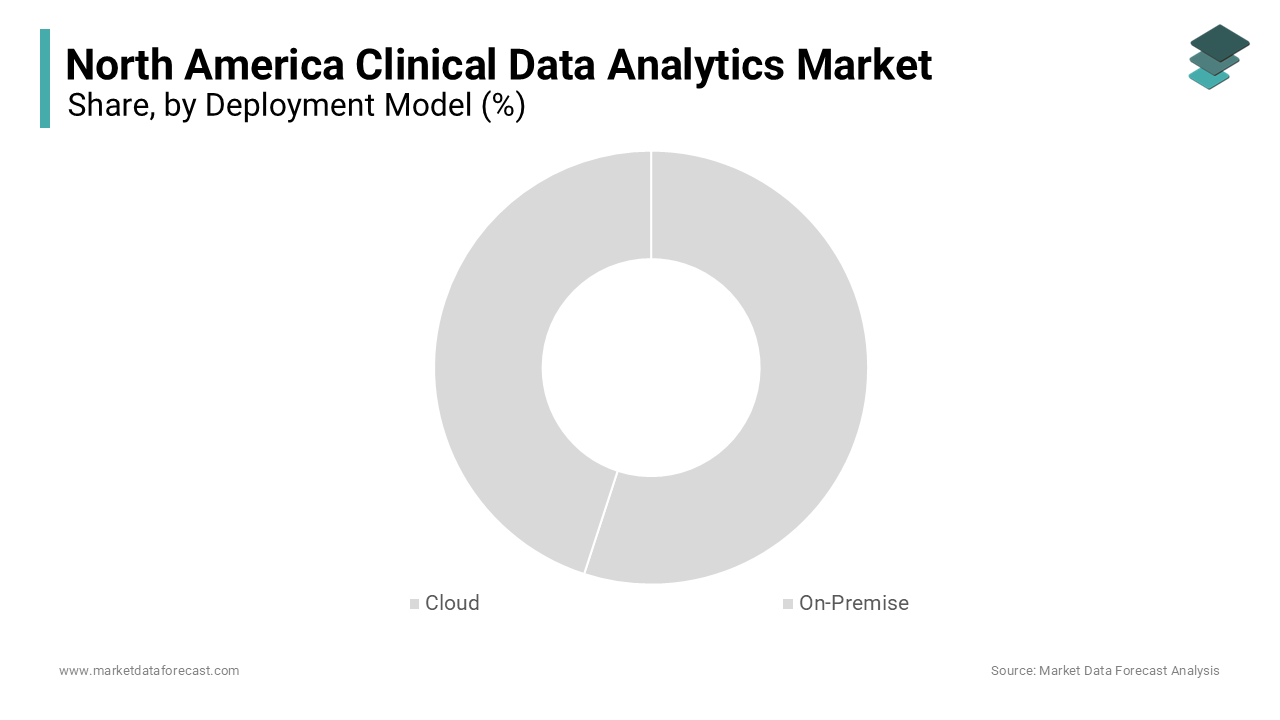
On the other hand, the cloud segment is predicted to witness the highest CAGR of 14.5% during the forecast period. This rapid acceleration of the segment is fueled by the need for scalability, cost effectiveness, and enhanced collaboration capabilities. Cloud based solutions allow healthcare providers and life sciences companies to process vast amounts of data without the capital expenditure associated with maintaining physical servers. According to the National Institute of Standards and Technology, cloud computing enables elastic resource allocation, which is crucial for handling fluctuating workloads such as large scale genomic sequencing or population health studies. The adoption of hybrid cloud models allows organizations to keep sensitive data on premise while leveraging cloud power for heavy computational tasks. As per research, the integration of artificial intelligence and machine learning tools is predominantly cloud native, driving users toward these platforms to access advanced analytical capabilities. Furthermore, cloud providers invest heavily in security certifications and compliance frameworks, alleviating previous concerns about data safety. The ability to facilitate real time data sharing across disparate geographic locations supports collaborative research and telemedicine initiatives. These advantages make cloud deployment the preferred choice for new implementations and digital transformation projects across the region.
By End User Insights
The healthcare providers segment led the North America clinical data analytics market and captured a significant share in 2025. This leading position of the segment was attributed to the imperative to improve patient outcomes and operational efficiency under value based care models. Hospitals, clinics, and accountable care organizations utilize analytics to monitor quality metrics, reduce readmissions, and manage population health. The Health Care Payment Learning & Action Network (LAN) show that approximately 38% of healthcare payments flow through value-based alternative payment models. Clinical data analytics enable providers to identify high risk patients, optimize treatment pathways, and reduce unnecessary expenditures. As per the Centers for Medicare and Medicaid Services, the shift toward alternative payment models requires robust data infrastructure to track patient progress and financial performance. Electronic health records generate massive volumes of data that must be analyzed to extract actionable insights for clinical decision support. Providers also use analytics to streamline administrative processes, such as scheduling and billing, which enhances overall organizational efficiency. The widespread adoption of interoperable health information exchanges further supports data aggregation and analysis. This continuous demand for tools that enhance care delivery and financial sustainability solidifies the dominance of healthcare providers in the market.
However, the pharmaceuticals segment is estimated to register the fastest CAGR of 13.8% from 2026 to 2034 due to the need to accelerate drug development and optimize clinical trials. Pharmaceutical companies leverage analytics to identify suitable patient populations, predict trial outcomes, and monitor safety signals in real time. According to the Pharmaceutical Research and Manufacturers of America, the cost of bringing a new drug to market exceeds 2 billion dollars, creating a strong incentive to use data driven methods to reduce failure rates and timelines. Real world evidence derived from electronic health records and claims data is increasingly used to support regulatory submissions and post market surveillance. As per the Food and Drug Administration, the agency has issued multiple guidance documents encouraging the use of real world data in regulatory decision making, fostering greater adoption of analytics tools. Additionally, precision medicine initiatives require the analysis of complex genomic and clinical datasets to tailor therapies to individual patients. The integration of artificial intelligence in drug discovery further accelerates this growth by identifying potential drug candidates more efficiently. These factors combine to drive substantial investment in clinical data analytics within the pharmaceutical sector.
COUNTRY ANALYSIS
United States Clinical Data Analytics Market Analysis
The United States was the top performer the North America clinical data analytics market and held a commanding share in 2025. This prominence of the country’s market was propelled by its advanced healthcare infrastructure, high healthcare expenditure, and supportive regulatory environment. The country is home to a majority of the world’s leading pharmaceutical companies and healthcare systems, which are early adopters of innovative technologies. According to recent data from the Centers for Medicare & Medicaid Services (CMS), national health expenditures in the United States reached $5.3 trillion, representing roughly 18% of the country's gross domestic product. This substantial spending creates intense pressure to optimize costs and improve quality through data driven insights. The Office of the National Coordinator for Health Information Technology reports that nearly all non federal acute care hospitals have adopted certified electronic health record technology, generating vast amounts of data for analysis. Government initiatives such as the 21st Century Cures Act promote the use of real world evidence and interoperability, further stimulating market growth. The presence of major technology vendors and a robust venture capital ecosystem fosters continuous innovation in analytics solutions. Additionally, the high prevalence of chronic diseases necessitates advanced population health management tools. These factors collectively establish the United States as the primary driver of the clinical data analytics market in North America.
Canada Clinical Data Analytics Market Analysis
Canada occupies a significant position in the North America clinical data analytics market, because of its publicly funded healthcare system and focus on population health management. The country’s single payer model facilitates the aggregation of health data across provinces, enabling comprehensive analytics for policy making and care improvement. According to annual financial metrics monitored by the Canadian Institute for Health Information (CIHI), healthcare spending in Canada accounts for approximately 11.3% of the nation's gross domestic product. Digital health strategies implemented by provincial governments promote the adoption of electronic health records and data sharing platforms. As per Canada Health Infoway, significant investments have been made in digital infrastructure to support virtual care and data analytics. The Canadian Institutes of Health Research support initiatives that leverage big data for medical research and personalized medicine. Privacy laws such as the Personal Information Protection and Electronic Documents Act ensure strict governance of health data, influencing the deployment of secure analytics solutions. The growing burden of chronic diseases and an aging population further drive the need for predictive analytics and remote monitoring tools. These structural and demographic factors support steady growth in the Canadian clinical data analytics market.
COMPETITIVE LANDSCAPE
The competition in the North America clinical data analytics market is characterized by a mix of established technology giants and specialized healthcare software vendors vying for dominance through innovation and service excellence. Large technology companies leverage their extensive cloud infrastructure and artificial intelligence capabilities to offer comprehensive end to end solutions. These players often compete on scalability and integration with existing enterprise systems. Specialized vendors focus on niche areas such as clinical trial management and real world evidence generation providing deep domain expertise. The market sees intense rivalry in developing user friendly interfaces and advanced visualization tools that simplify complex data interpretation. Regulatory compliance and data security serve as significant differentiators favoring incumbents with proven track records. Competitive dynamics are further influenced by the rising demand for interoperability and real time analytics prompting firms to invest in open standards and application programming interfaces. Strategic collaborations with academic institutions and research organizations are common as companies seek to validate their algorithms and enhance credibility in this rapidly evolving sector.
KEY MARKET PLAYERS
Promising Companies leading the North America Clinical Data Analytics Market include
- IBM
- CareEvolution
- InterSystems
- Explorys
- Cerner
- Caradigm
- Truven Health Analytics
- Wellcentive
- McKesson
- Athenahealth
Top Players in the North America Clinical Data Analytics Market
IBM Corporation
IBM Corporation maintains a significant presence in the North America clinical data analytics market through its Watson Health division which focuses on artificial intelligence driven solutions. The company leverages advanced machine learning algorithms to analyze complex medical data and support clinical decision making for healthcare providers and life sciences companies. IBM recently expanded its partnerships with major academic medical centers to enhance real world evidence generation capabilities. They have introduced new cloud based analytics platforms that integrate seamlessly with existing electronic health record systems. By focusing on interoperability and data security, IBM ensures compliance with strict regulatory standards. The company actively invests in research to improve predictive modeling for chronic disease management. These strategic initiatives strengthen their position as a leader in transforming raw healthcare data into actionable insights for improved patient outcomes across the region.
Oracle Corporation
Oracle Corporation contributes significantly to the North America clinical data analytics market by offering comprehensive cloud infrastructure and database solutions tailored for healthcare. The company provides robust platforms that enable secure storage and analysis of large scale clinical datasets for pharmaceutical companies and hospital networks. Oracle recently enhanced its health data intelligence suite with advanced analytics tools designed to accelerate drug discovery and clinical trial optimization. They have strengthened their market position by acquiring specialized health tech firms to expand their portfolio of industry specific applications. The company focuses on ensuring high performance and scalability for mission critical healthcare operations. By integrating artificial intelligence capabilities into their cloud services, Oracle helps organizations derive deeper insights from patient data. These efforts demonstrate their commitment to supporting digital transformation and operational efficiency in the North American healthcare sector.
SAS Institute Inc
SAS Institute Inc plays a pivotal role in the North America clinical data analytics market with its advanced analytics software widely used in clinical trials and healthcare research. The company offers powerful statistical tools that help pharmaceutical manufacturers and regulatory bodies analyze safety and efficacy data with precision. SAS recently launched new visual analytics features that simplify the interpretation of complex clinical datasets for non technical users. They have expanded their collaboration with leading cancer research institutes to develop specialized oncology analytics solutions. The company emphasizes data governance and quality management to ensure reliable results for regulatory submissions. By providing extensive training and support services, SAS empowers healthcare professionals to leverage data effectively. Their focus on innovation and customer success solidifies their reputation as a trusted partner for critical clinical data analysis needs in the region.
Top Strategies Used by Key Market Participants
Key players in the North America clinical data analytics market primarily employ strategic acquisitions and product innovation to maintain competitive advantage. Companies invest heavily in developing artificial intelligence and machine learning capabilities to enhance predictive analytics and automate data processing tasks. Strategic partnerships with healthcare providers and pharmaceutical companies facilitate the integration of analytics solutions into existing workflows. Manufacturers also focus on expanding their cloud based offerings to provide scalable and cost effective services. Emphasis on data security and regulatory compliance ensures trust among healthcare organizations. Additionally, firms pursue vertical specific solutions tailored to oncology cardiology and other specialties to address unique clinical needs. These strategies collectively drive growth and strengthen market positions in the evolving healthcare technology landscape.
MARKET SEGMENTATION
This research report on the North America Clinical Data Analytics Market has been segmented and sub-segmented into the following categories.
By Deployment Model
- Cloud
- On-Premise
By End User
- Pharmaceuticals
- Healthcare Providers
- Biotechnology
- Academia
By Country
- US
- Canada
- Rest of North America