- Product Description Description
- Table of Contents TOC
- List of Table & Figure LOT
- Get Free Sample PDF Sample PDF
Market Size, 2025
$211.50 MnMarket Estimate, 2026
$225.56 MnMarket Forecast, 2034
$377.53 MnCAGR, 2026–2034
6.65%North America Concrete Cellulose Fiber Reinforcement Market Size, Growth, Trends & Forecast (2026–2034)
The North America concrete cellulose fiber reinforcement market size was calculated to be USD 211.50 million in 2025, is anticipated to be worth USD 225.56 million in 2026, and is expected to reach USD 377.53 million by 2034, growing at a compound annual growth rate (CAGR) of 6.65% during the forecast period from 2026 to 2034. Growth is primarily propelled by increasing construction industry focus on sustainable, eco-friendly, and renewable materials.
Key Executive Metrics (At-a-Glance)
- 2025 Base Valuation: USD 211.50 million
- 2026 Current Valuation: USD 225.56 million
- 2034 Forecast Valuation: USD 377.53 million
- Compound Annual Growth Rate (CAGR): 6.65% (2026–2034)
- Dominant Application Segment: Commercial construction segment (accounting for a 42.5% share in 2025)
- Fastest-Growing Application Segment: Industrial construction segment (expanding at a CAGR of 8.7% from 2026 to 2034)
- Dominant Region: United States (occupying a dominant position with a substantial share in 2025)
Core Market Drivers
- Sustainable Construction Materials: Growing priority for green building practices, LEED certification criteria, and reducing the embodied carbon of concrete mixes.
- Technological Advancements: Improved fiber dispersion techniques, surface treatments, and pre-dispersed systems solving historical clumping issues and enhancing mechanical performance.
Primary Market Restraints & Challenges
- Limited Awareness and Knowledge: Hesitancy among contractors and engineers who rely on familiar traditional reinforcement methods due to gaps in technical understanding.
- Synthetic Alternative Competition: Stiff competition from well-established synthetic materials like polypropylene and glass fibers backed by decades of documented case studies.
North America Concrete Cellulose Fiber Reinforcement Market Segmentation Breakdown
| Segment Category | Leading Sub-Segment | Fastest-Growing Sub-Segment |
|---|---|---|
| By Application | Commercial Construction (42.5% share in 2025) | Industrial Construction (CAGR of 8.7%) |
| By Region | United States (Dominant share in 2025) | Canada & Mexico (Steady/progressive growth) |
Major Industry Players Profiled
Key market leaders shaping the North American concrete cellulose fiber reinforcement landscape include J. Rettenmaier USA LP, Fiberzone India, Solomon Colors Inc, CreaFill Fibers Corporation, Hercules Fibers, International Paper, and Canadian Greenfield Technologies Corp.
North America Concrete Cellulose Fiber Reinforcement Market Size
The North America concrete cellulose fiber reinforcement market size was calculated to be USD 211.50 million in 2025 and is anticipated to be worth USD 377.53 million by 2034, growing from USD 225.56 million in 2026 at a CAGR of 6.65% during the forecast period.
Concrete cellulose fiber reinforcement is a composite material where discrete, natural cellulose fibers (often processed wood pulp, rayon, etc.) are uniformly mixed into the concrete matrix during production. Cellulose fibers, derived from natural plant-based sources, are incorporated into concrete to enhance its tensile strength, reduce cracking, and improve overall durability. These fibers act as secondary reinforcement, offering an eco-friendly alternative to synthetic materials like polypropylene or steel microfibers. As per sources, the use of natural fiber reinforcement in concrete is an emerging trend driven by the construction industry's increasing focus on sustainable, eco-friendly, and renewable materials. According to research, the residential and commercial building sectors constitute a significant and robust portion of the overall demand for cement in the United States, supporting ongoing innovation in concrete technologies and additives. Canada, on the other hand, has emphasized green building standards, with a portion of new infrastructure projects incorporating at least one form of sustainable material. The market continues to evolve amid shifting regulatory landscapes and growing environmental consciousness among stakeholders.
MARKET DRIVERS
Increasing Demand for Sustainable Construction Materials
Environmental sustainability has emerged as a key factor propelling the growth of the North American cellulose fiber reinforcement market. With governments and private developers prioritizing green building practices, cellulose fibers offer a renewable, biodegradable option that aligns with LEED certification criteria. As per sources, the overall quantity of commercial space certified under LEED standards continues to expand, demonstrating a growing emphasis on sustainable construction inputs. The cellulose fiber market benefits directly from this trend, as these fibers contribute to reducing the embodied carbon of concrete mixes. Besides, cellulose fibers enhance the workability and pumpability of concrete without compromising structural integrity. Research indicates that the inclusion of various types of fibers, including cellulose fibers, helps to mitigate plastic shrinkage cracking in concrete mixes compared to those without fibers. This performance advantage, coupled with environmental benefits, is driving significant interest from contractors and specifiers.
Technological Advancements in Fiber Dispersion and Concrete Mix Design
Technological innovations in fiber dispersion techniques and concrete formulation have significantly enhanced the viability of cellulose fiber-reinforced concrete. These further fuel the expansion of the North American concrete cellulose fiber reinforcement market. Historically, uniform dispersion of natural fibers posed challenges due to their hydrophilic nature and tendency to clump. However, recent advancements in surface treatments and mixing technologies have addressed these limitations effectively. ASTM International updates testing standards for fiber-reinforced concrete, which enables a more robust evaluation of fiber performance and helps facilitate the wider use of such materials in structural applications. Innovations such as pre-dispersed fiber systems and modified batching procedures have led to improved homogeneity and mechanical performance. As per research by the Portland Cement Association and other bodies, concrete mixes containing optimized fiber content exhibit enhanced flexural strength and improved impact resistance properties. These enhancements make cellulose fiber-reinforced concrete suitable for applications ranging from pavements to architectural panels. Moreover, automation in batching plants has streamlined the incorporation of cellulose fibers into ready-mix concrete, which reduces labour costs animprovesng consistency. The integration of digital tools for mix design optimization further supports tailored applications by enabling contractors to achieve desired performance metrics while maintaining cost efficiency.
MARKET RESTRAINTS
Limited Awareness and Technical Knowledge Among End Users
Limited awareness and insufficient technical understanding among construction professionals remain significant barriers to the North American concrete cellulose fiber reinforcement market. Many contractors and engineers continue to rely on conventional reinforcement methods, such as steel rebar or synthetic fibers, due to familiarity and established practices. The knowledge gap translates into hesitancy in adopting cellulose fibers, especially in structural applications where safety margins are critical. Besides, misconceptions regarding the durability and long-term performance of cellulose fibers persist. For instance, concerns about moisture sensitivity and potential degradation under alkaline conditions of concrete have deterred some stakeholders. The absence of standardized educational programs and certification courses further exacerbates the issue. Without targeted outreach and capacity-building initiatives, the market’s growth potential remains constrained by conservative decision-making within the construction ecosystem.
Competition from Established Synthetic Fiber Alternatives
Stiff competition from well-established synthetic alternatives such as polypropylene and glass fibers, which in turn hinders the expansion of the North America concrete cellulose fiber reinforcement market. These materials have long-standing acceptance in the construction industry due to their proven performance and extensive marketing by global manufacturers. As per research, synthetic microfibers account for a portion of the total fiber-reinforced concrete market in North America. Their widespread adoption is further supported by decades of research and documented case studies, particularly in high-stress environments such as industrial flooring and tunnel linings. In contrast, cellulose fibers are relatively newer entrants and often perceived as experimental or niche solutions. Pricing dynamics also play a role. Cost-wise, cellulose fibers are competitive with raw materials, but synthetic fibers gain an advantage through economies of scale and established supply chains. Furthermore, synthetic fibers offer superior resistance to chemical exposure and extreme temperatures, making them preferable in specialized applications. Market penetration for cellulose fibers is likely to remain limited compared to other materials until they consistently meet or surpass the performance benchmarks set by existing options.
MARKET OPPORTUNITIES
Expansion in Green Building and Infrastructure Modernization Projects
The growing emphasis on green building standards and infrastructure modernization offers a potential opportunity for the North American concrete cellulose fiber reinforcement market. Governments across the region are increasingly investing in sustainable construction initiatives to meet climate targets and reduce carbon emissions. The U.S. government is substantially increasing its investment in sustainable infrastructure and the clean energy transition, leveraging significant multi-year funding from major legislative acts to modernize public facilities, transportation networks, and the electricity grid. These projects prioritize materials with low environmental impact, creating a conducive environment for cellulose fiber adoption. Additionally, the Biden administration’s Infrastructure Investment and Jobs Act includes provisions for sustainable material usage. Cellulose fibers, being renewable and carbon-negative, align well with these objectives. The cellulose fiber industry can leverage this momentum by partnering with green certification bodies and demonstrating lifecycle benefits through third-party assessments. Furthermore, urban development programs in cities like Toronto and Seattle emphasize sustainable concrete solutions, opening new avenues for cellulose fiber suppliers. Strategic alignment with public sector procurement policies could significantly expand market reach and drive long-term demand.
Innovation in Prefabricated and Modular Construction Systems
The rise of prefabricated and modular construction systems in the region provides a major opportunity for the North American cellulose fiber reinforcement. This is because it creates fresh prospects for manufacturers to integrate their products into factory-controlled environments. Prefabrication allows for precise material handling and optimized mixing conditions, which are ideal for incorporating cellulose fibers without field-related variability. These systems demand high-performance, lightweight, and crack-resistant concrete, attributes where cellulose fibers excel. The controlled production environment also enables consistent fiber dispersion and quality assurance, addressing one of the key technical challenges associated with field applications. Furthermore, the modular construction approach aligns with sustainability goals, as it reduces material waste and construction timelines. Leading manufacturers have begun incorporating natural fiber-reinforced concrete in their product lines, which signals growing industry acceptance. Collaborations with modular construction firms and participation in industry forums can help cellulose fiber producers tap into this emerging market segment effectively.
MARKET CHALLENGES
Regulatory and Standardization Gaps Across Regions
The lack of standardized regulations and testing protocols across jurisdictions is one of the primary challenges for the North American concrete cellulose fiber reinforcement market. Unlike synthetic fibers, which have well-established ASTM and ACI guidelines, cellulose fibers often lack region-specific performance criteria, leading to inconsistent adoption. As per research, there is a growing trend among U.S. state transportation departments, often guided by the American Association of State Highway and Transportation Officials (AASHTO) research, to explore and incorporate cellulose fibers in concrete specifications. This fragmented regulatory landscape creates uncertainty for manufacturers and end users alike. In Canada, the situation is similar, with provinces like Ontario and British Columbia having disparate requirements for fiber-reinforced concrete applications. The absence of harmonized standards complicates product approval processes and limits scalability. Moreover, testing methodologies for evaluating the long-term durability of cellulose fibers in alkaline concrete environments remain underdeveloped. Research and development efforts, including those by the National Research Council Canada (NRC), contribute to an expanding set of recognized test methods and standards for evaluating fiber performance in concrete. This gap necessitates costly and time-consuming custom testing for each project, discouraging widespread adoption. The market's ability to gain traction in large-scale infrastructure and commercial projects will remain limited without clear guidelines and performance benchmarks from regulatory bodies.
Supply Chain Vulnerabilities and Raw Material Sourcing Issues
Supply chain disruptions and sourcing challenges related to raw material availability slow down the expansion of the North American concrete cellulose fiber reinforcement market. Cellulose fibers are primarily sourced from wood pulp, agricultural residues, and recycled paper products, all of which are subject to seasonal fluctuations and geopolitical factors. As per the Food and Agriculture Organization (FAO), North American paper and paperboard production declined in 2023. This decline directly impacts the availability of high-quality cellulose feedstock for fiber production. Additionally, the increasing demand for cellulose in other sectors, such as packaging and textiles, intensifies competition for raw materials. Transportation bottlenecks and rising logistics costs further compound the issue, particularly in remote construction sites. These supply-side constraints necessitate strategic sourcing partnerships and investment in alternative feedstock solutions to ensure market stability and growth.
REPORT COVERAGE
| REPORT METRIC | DETAILS |
| Market Size Available | 2025 to 2034 |
| Base Year | 2025 |
| Forecast Period | 2026 to 2034 |
| CAGR | 6.65% |
| Segments Covered | By Application, And Region |
| Various Analyses Covered | Global, Regional & Country Level Analysis; Segment-Level Analysis; DROC, PESTLE Analysis; Porter’s Five Forces Analysis; Competitive Landscape; Analyst Overview of Investment Opportunities |
| Regions Covered | US, Canada, Mexico, and the rest of North America |
| Market Leaders Profiled | J. Rettenmaier USA LP, Fiberzone India, Solomon Colors Inc, CreaFill Fibers Corporation, Hercules Fibers, International Paper, And Canadian Greenfield Technologies Corp. |
SEGMENTAL ANALYSIS
By Application Insights
The commercial construction segment was the largest in the North America concrete cellulose fiber reinforcement market by accounting for a 42.5% share in 2025. The dominance of the commercial construction segment is mainly attributed to the extensive use of cellulose fiber-reinforced concrete in office buildings, retail complexes, and mixed-use developments that require enhanced crack resistance and sustainable material solutions. The commercial sector's preference for cellulose fibers stems from their ability to improve concrete workability while meeting green building certification requirements. The segment's growth is further supported by the rising number of LEED-certified commercial projects. Additionally, the commercial sector benefits from cellulose fibers' superior pumpability characteristics, which are essential for high-rise construction projects where concrete placement efficiency is critical. Green building certification requirements serve as the primary driver for cellulose fiber adoption in commercial construction across North America. Commercial developers increasingly seek LEED, BREEAM, and other sustainability certifications to enhance property values and meet corporate environmental commitments. Cellulose fibers contribute significantly to earning credits under the materials and resources categories due to their renewable origin and reduced carbon footprint. The economic benefits are also substantial. These financial incentives, combined with regulatory pressures, create a robust demand environment for cellulose fiber reinforcement in commercial applications. The proliferation of high-rise commercial buildings and complex architectural designs across North America has significantly boosted demand for cellulose fiber reinforcement due to its superior workability and crack control properties. Modern commercial structures often feature intricate designs, expansive floor spans, and thin-section concrete elements that require exceptional placement characteristics and reduced shrinkage cracking. Cellulose fibers excel in these applications by improving concrete pumpability while maintaining structural integrity throughout the curing process. Moreover, the projects typically utilize fiber-reinforced concrete for slab-on-grade applications, elevator pits, and architectural facades where surface finish quality is paramount. The Empire State Building's recent renovation project utilized cellulose fiber concrete for its terrazzo flooring restoration, highlighting the material's suitability for both new construction and heritage preservation applications in the commercial sector.
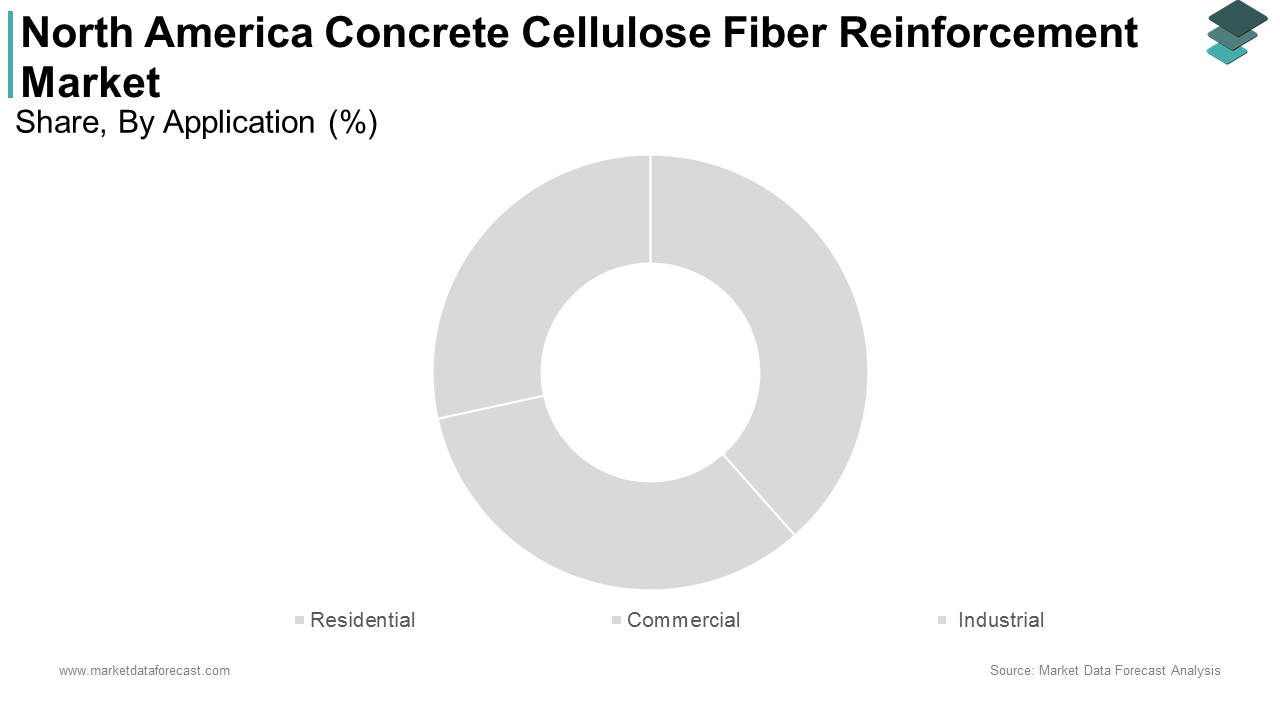
The industrial construction segment is likely to experience the fastest CAGR of 8.7% from 2026 to 2034 due to increasing investments in manufacturing facilities, logistics centers, and energy infrastructure that require durable, crack-resistant concrete solutions. Industrial applications particularly benefit from cellulose fibers' ability to control plastic shrinkage cracking in large slab placements and harsh environmental conditions. The segment's acceleration is closely linked to the reshoring of manufacturing activities and the expansion of renewable energy infrastructure across the region. The growing emphasis on sustainable industrial development further supports cellulose fiber adoption, as these materials align with corporate sustainability goals and regulatory requirements for environmentally responsible construction practices. The resurgence of domestic manufacturing and unprecedented warehouse expansion across North America represent a fundamental driver behind the rapid growth of cellulose fiber reinforcement in industrial applications. Government initiatives such as the CHIPS and Science Act, coupled with supply chain resilience strategies, have catalyzed significant investments in manufacturing infrastructure. These facilities require specialized concrete flooring systems that can withstand heavy machinery loads while maintaining crack-free surfaces essential for precision manufacturing processes. Cellulose fiber reinforcement addresses these requirements effectively. Simultaneously, the explosive growth of e-commerce has driven warehouse construction to unprecedented levels. These facilities demand rapid construction schedules and high-quality concrete finishes, making cellulose fiber-reinforced concrete an ideal solution for achieving both objectives efficiently. The accelerating development of renewable energy infrastructure across North America has emerged as a critical growth catalyst for cellulose fiber reinforcement in industrial applications. Wind farms, solar installations, and energy storage facilities require specialized concrete foundations and structural elements that must maintain integrity under varying thermal and mechanical stresses. Cellulose fibers provide enhanced crack resistance and durability characteristics essential for these demanding applications while supporting sustainability objectives. Wind turbine foundations, in particular, benefit from cellulose fiber reinforcement due to the material's ability to control thermal cracking during the hydration process. The substantial investments create sustained demand for high-performance concrete solutions, positioning cellulose fiber reinforcement as a preferred choice for industrial contractors seeking reliable and sustainable construction materials.
REGIONAL ANALYSIS
United States Concrete Cellulose Fiber Reinforcement Market Analysis
The United States occupied the dominant position in the North AAmericanconcrete cellulose fiber reinforcement market by accounting for a substantial share in 2025. The supremacy of the United States is attributed to the country's vast construction industry, advanced infrastructure development programs, and progressive adoption of sustainable building materials. The U.S. market benefits from well-established supply chains, extensive research and development activities, and supportive regulatory frameworks that encourage green construction practices. American construction companies have increasingly embraced cellulose fiber reinforcement due to its compatibility with modern concrete technologies and alignment with sustainability initiatives. The market's maturity is reflected in the presence of multiple domestic manufacturers and distributors, which creates a competitive landscape that drives innovation and cost optimization. Federal and state-level policies promoting sustainable infrastructure development further strengthen the market foundation, ensuring sustained growth prospects for cellulose fiber reinforcement applications across residential, commercial, and industrial sectors. The United States concrete cellulose fiber reinforcement market demonstrates robust growth momentum, supported by substantial construction activity and evolving sustainability requirements. Federal initiatives such as the Infrastructure Investment and Jobs Act have allocated unprecedented funding for transportation, water, and broadband infrastructure, with sustainable material requirements embedded throughout project specifications. Besides, the Environmental Protection Agency's sustainable construction guidelines recommend cellulose-based materials for federal projects, directly influencing procurement decisions across multiple agencies. State-level building codes in progressive markets mandate specific sustainability criteria for public construction projects, with cellulose fiber reinforcement meeting multiple compliance requirements. The regulatory and market-driven factors create a favorable environment for the continued expansion of cellulose fiber reinforcement adoption throughout the United States construction industry.
Canada Concrete Cellulose Fiber Reinforcement Market Analysis
Canada is another key player in North America's concrete cellulose fiber reinforcement. The Canadian market exhibits distinctive characteristics shaped by stringent environmental regulations, cold climate construction requirements, and strong emphasis on sustainable development practices. Canadian construction professionals have demonstrated early adoption of cellulose fiber technology, particularly in provinces with progressive green building policies and infrastructure modernization programs. The market benefits from Canada's extensive forest resources, providing readily available raw materials for cellulose fiber production while supporting domestic manufacturing capabilities. Provincial building codes and municipal sustainability initiatives create consistent demand for environmentally responsible construction materials, positioning cellulose fiber reinforcement as a preferred choice for both public and private sector projects. The country's commitment to carbon neutrality by 2050, as outlined in the Canadian Net-Zero Emissions Accountability Act, further reinforces the market's growth trajectory by promoting materials with reduced environmental footprints. Canadian construction companies increasingly recognize the technical advantages of cellulose fibers in addressing freeze-thaw durability challenges and reducing maintenance requirements in harsh climatic conditions. The Canadian concrete cellulose fiber reinforcement market demonstrates steady growth supported by progressive environmental policies and substantial infrastructure investment programs. Provincial governments have implemented comprehensive green building requirements. These regulations directly benefit cellulose fiber reinforcement manufacturers, as the material's renewable origin and carbon-negative characteristics align with policy objectives. Cold climate construction challenges further drive demand, as cellulose fiber-reinforced concrete demonstrates superior performance in freeze-thaw cycles compared to conventional mixes.
COMPETITION OVERVIEW
The North American concrete cellulose fiber reinforcement market exhibits moderate competition characterized by the presence of specialized manufacturers and established construction material suppliers. The competitive landscape is shaped by companies focusing on product differentiation through technical innovation and sustainable manufacturing practices. Market participants compete primarily on product performance characteristics, technical support capabilities, and pricing strategies rather than engaging in aggressive promotional activities. The relatively specialized nature of cellulose fiber applications creates niche market segments where manufacturers can establish strong customer relationships and brand loyalty. Competition intensity varies across application sectors, with commercial construction representing the most competitive segment due to high demand volumes and established customer relationships. Industrial applications present emerging opportunities for competitive positioning through specialized product development and technical expertise. Regional market dynamics influence competitive strategies, with manufacturers adapting their approaches to address specific geographic requirements and regulatory environments.
KEY MARKET PLAYERS
A few major players of the North American Concrete Cellulose Fiber Reinforcement Market include
- J. Rettenmaier USA LP
- Fiberzone India
- Solomon Colors Inc
- CreaFill Fibers Corporation
- Hercules Fibers
- International Paper
- Canadian Greenfield Technologies Corp
Top Strategies Used by Key Market Participants
Strategic Partnerships and Collaborations Leading manufacturers in the North American concrete cellulose fiber reinforcement market have increasingly focused on forming strategic partnerships with concrete producers, engineering firms, and construction companies. These collaborations enable fiber manufacturers to integrate their products directly into concrete batching processes and ensure optimal performance in real-world applications. Partnership arrangements often include joint research initiatives aimed at developing customized fiber solutions for specific project requirements. Companies also collaborate with green building certification organizations to establish product compliance with sustainability standards and gain preferential listing in approved material databases. These strategic relationships provide manufacturers with enhanced market visibility and direct access to end-user feedback, enabling continuous product improvement and market expansion opportunities.
Product Innovation and Technical Development Key players in the market have prioritized continuous product innovation and technical development to differentiate their offerings and address evolving construction industry needs. Manufacturers invest significantly in research and development activities focused on improving fiber dispersion characteristics, enhancing compatibility with various concrete admixtures, and optimizing performance in different environmental conditions. Innovation efforts include developing proprietary surface treatments that improve fiber-concrete bonding and creating specialized fiber blends for specific application requirements. Companies also focus on developing processing technologies that ensure consistent product quality and performance reliability. Technical development initiatives often involve collaboration with universities and research institutions to advance fundamental understanding of fiber-reinforced concrete behavior and establish new application possibilities.
Market Education and Technical Support Programs Leading manufacturers recognize the importance of market education in overcoming adoption barriers and expanding cellulose fiber reinforcement applications. Companies have implemented comprehensive technical support programs that provide contractors, engineers, and specifiers with detailed information about fiber performance characteristics and proper application techniques. Educational initiatives include hosting technical seminars, publishing application guidelines, and offering on-site consultation services for complex projects. Manufacturers also develop digital resources and training materials that help construction professionals understand the benefits of cellulose fiber reinforcement compared to traditional alternatives. These programs often feature case study documentation and performance data from successful project implementations, building confidence among potential users and facilitating broader market acceptance.
Leading Players in the North America Concrete Cellulose Fiber Reinforcement Market.
- Fiber Technologies Inc. stands as a prominent manufacturer specializing in cellulose fiber reinforcement solutions for the North American construction industry. The company has established itself through innovative product development and strategic partnerships with major concrete producers across the United States and Canada. Their cellulose fiber products are engineered to provide optimal dispersion characteristics and consistent performance in various concrete applications. The company's commitment to sustainable manufacturing processes and quality assurance has earned recognition from green building certification bodies. Fiber Technologies maintains strong distribution networks and technical support services that cater to both large-scale commercial projects and specialized industrial applications. Their research and development initiatives focus on enhancing fiber compatibility with modern concrete admixtures and improving overall construction efficiency.
- Concrete Protection Technologies LLC Concrete Protection Technologies LLC has emerged as a key player in the cellulose fiber reinforcement market through its comprehensive portfolio of natural fiber solutions. The company distinguishes itself by offering customized fiber products designed to meet specific project requirements and performance criteria. Their manufacturing facilities utilize advanced processing techniques that ensure consistent fiber quality and optimal concrete performance characteristics. The organization has built strong relationships with engineering firms and construction contractors through technical expertise and reliable product delivery. Concrete Protection Technologies actively participates in industry research initiatives and collaborates with academic institutions to advance cellulose fiber technology applications. Their commitment to customer education and technical support has enabled successful project implementations across diverse construction sectors throughout North America.
- EcoFiber Solutions Inc. represents a specialized manufacturer focused exclusively on cellulose-based reinforcement materials for concrete applications. The company has positioned itself as an environmentally conscious supplier by utilizing sustainably sourced raw materials and implementing carbon-neutral production processes. Their product development strategy emphasizes creating fiber solutions that address specific construction challenges while maintaining competitive performance characteristics. EcoFiber Solutions has developed proprietary treatment processes that enhance fiber dispersion and compatibility with various concrete mix designs. The company's market approach centers on building long-term partnerships with environmentally focused construction firms and government agencies. Their technical team provides comprehensive support services, including mix design optimization and performance testing to ensure successful project outcomes.
MARKET SEGMENTATION
This research report on the North America concrete cellulose fiber reinforcement market has been segmented and sub-segmented based on application and region.
By Application
- Residential
- Commercial
- Industrial
By Region
- US
- Canada
- Mexico
- Rest of North America