- Product Description Description
- Table of Contents TOC
- List of Table & Figure LOT
- Get Free Sample PDF Sample PDF
Market Size, 2025
$87.22 BnMarket Estimate, 2026
$93.30 BnMarket Forecast, 2034
$159.95 BnCAGR, 2026–2034
6.97%Executive Summary: North America Consumer Healthcare Market
- Market Scope: Comprehensive regional market evaluation of the North American consumer healthcare sector covering product types, distribution networks, and country-level distribution frameworks.
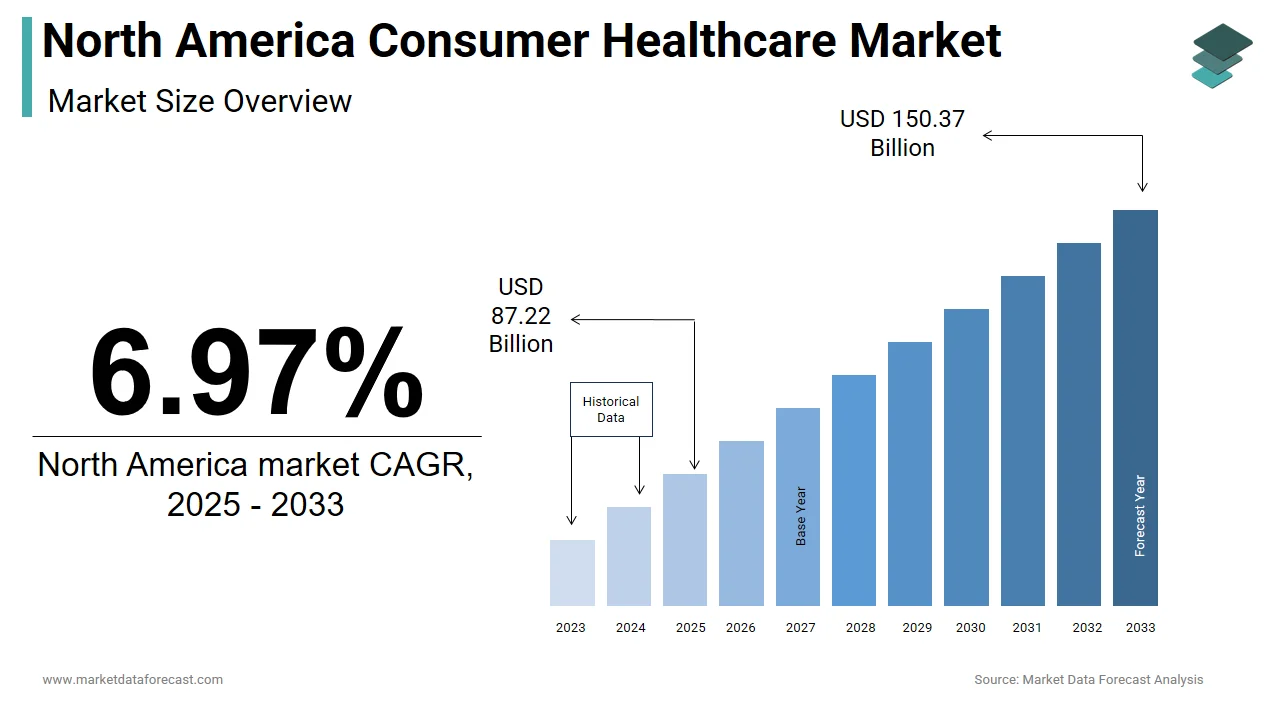
- Market Valuation: Valued at USD 87.22 billion in 2025, estimated at USD 93.30 billion in 2026, and projected to reach USD 159.95 billion by 2034, registering a robust CAGR of 6.97% from 2026 to 2034.
- Primary Growth Drivers: Shift toward self-medication and over-the-counter (OTC) products, rising healthcare costs encouraging cheaper treatment alternatives, and a rapidly growing geriatric population more susceptible to common chronic ailments.
Key Market Segment Metrics (2026–2034)
| Category | Leading Segment (2025 Position) | Fastest-Growing / Preferred Segment |
|---|---|---|
| By Product | OTC Pharmaceuticals (dominated market consumption driven by high household spending on pain relievers and routine self-care) | Dietary Supplements (expanding rapidly backed by preventive health trends and natural ingredient preferences) |
| By Distribution Network | Pharmacies or Drugstores (held the primary market share backed by broad accessibility and consumer trust) | Supermarkets, Hypermarkets & Online Platforms (growing rapidly due to digital retail convenience and e-commerce shopping shifts) |
| By Country | United States (commanded the dominant regional share supported by massive product pipelines and loose trade barriers) | Canada (steady growth as the second-largest market with high household OTC utilization for minor health issues) |
Major Market Players & Market Structure
Market Structure: Highly competitive landscape led by multinational pharmaceutical giants and health supplement leaders optimizing efficient distribution channels and shifting portfolios away from lengthy prescription-approval bottlenecks.
Key Companies: Johnson & Johnson, Boehringer Ingelheim GmbH, GlaxoSmithKline plc, Amway, Bayer AG, Pfizer Inc., Abbott Laboratories, Sanofi, BASF SE, DSM, American Health, Herbalife, The Himalaya Drug Company, Kellogg, Takeda Pharmaceuticals, and Teva Pharmaceuticals.
North America Consumer Healthcare Market Size
The size of the North America consumer healthcare market was worth USD 87.22 billion in 2025. The North America market is anticipated to grow at a CAGR of 6.97% from 2026 to 2034 and be worth USD 159.95 billion by 2034, up from USD 93.30 billion in 2026.
Consumer healthcare refers to non-prescription products and services by enabling individuals to manage wellness, prevention, and minor ailments independently outside clinical settings. According to the Centers for Disease Control and Prevention, approximately 60% of adults in the United States have at least 1 chronic disease, creating sustained demand for self-care solutions that complement professional medical treatment. Regulatory frameworks from Health Canada and the United States Food and Drug Administration ensure product safety while facilitating innovation in accessible health technologies. Demographic shifts toward an aging population combined with rising health consciousness among younger generations drive continuous evolution in product formulations and delivery mechanisms. Digital health integration further transforms this landscape as mobile applications and wearable devices increasingly connect with consumer healthcare products to provide personalized wellness insights and adherence tracking capabilities.
MARKET DRIVERS
Rising Prevalence Of Chronic Conditions Fuels Self Care Product Demand
The chronic disease burden for consumer healthcare products that support daily symptom management and preventive wellness routines without requiring frequent clinical intervention is a major factor bolstering the growth of the North America consumer healthcare market. According to the Centers for Disease Control and Prevention, 6 in 10 adults in the United States currently live with a chronic disease, and 4 in 10 have 2 or more conditions necessitating ongoing self-management strategies that rely heavily on accessible non-prescription solutions. This epidemiological reality shifts healthcare responsibility toward individuals who seek affordable and convenient options to maintain quality of life between medical appointments. Pharmaceutical companies respond by reformulating prescription-strength ingredients into safe over-the-counter versions, expanding the therapeutic scope available for self-treatment. According to the Consumer Healthcare Products Association, 81% of consumers use over-the-counter medicines as a first-line response to common symptoms, reducing strain on primary care infrastructure. The direct correlation between chronic condition prevalence and consumer healthcare utilization establishes a stable demand foundation that grows proportionally with aging demographics and lifestyle-related health challenges across the region.
Digital Health Integration Enhances Personalized Wellness Management
The technological emergence of consumer healthcare products and digital platforms enables data-driven personalization that improves product efficacy, adherence, and consumer engagement across diverse wellness categories. The digital health integration that enhances personalized wellness management is also fuelling the growth of the North American consumer healthcare market. According to the research, 31% of adults in the United States own a smartwatch or fitness tracker, creating a massive installed base for integrated health monitoring that informs consumer healthcare purchasing decisions. Physicians now recommend digital health tools to patients for chronic disease management, bridging clinical guidance with consumer product selection. Wearable devices track biometric data such as sleep patterns, heart rate variability, and glucose levels, which algorithms analyze to recommend specific supplements or over-the-counter interventions tailored to individual physiological needs. Retailers leverage purchase history combined with wearable data to curate personalized product recommendations, increasing conversion rates and customer lifetime value. This symbiotic relationship between hardware, software, and consumable products transforms generic consumer healthcare into precision wellness ecosystems where products adapt dynamically to user feedback loops, creating competitive advantages for brands investing in interoperable digital infrastructure.
MARKET RESTRAINTS
Regulatory Approval Delays Limit Product Innovation Speed
The stringent regulatory requirements for new consumer healthcare products create extended development timelines that delay entry and reduce competitive responsiveness to emerging consumer health trends. This factor is slowing the growth of the North American consumer healthcare market. According to the United States Food and Drug Administration, the average review time for new over-the-counter drug monographs exceeds 18 months compared to 6 months for dietary supplement notifications, creating significant asymmetry in innovation velocity across product categories. The novel consumer healthcare product applications require additional safety data requests, extending approval timelines by an average of 9 months beyond initial projections. These delays increase research and development costs substantially, forcing companies to prioritize incremental line extensions over breakthrough innovations that carry higher regulatory risk. Small and medium-sized enterprises face disproportionate barriers as they lack resources to navigate complex compliance pathways simultaneously across multiple jurisdictions, limiting diversity. The precautionary approach prioritizes safety but inadvertently creates market concentration favoring established players with dedicated regulatory affairs teams capable of managing prolonged approval processes while newer entrants struggle to bring differentiated solutions to market in timely fashion.
Inflationary Pressures Reduce Discretionary Health Spending
The rising cost of living constrains household budgets, forcing consumers to prioritize essential expenses over premium consumer healthcare products that is also limiting the growth of the North American consumer healthcare market. Canadian households reduced discretionary spending on vitamins and supplements in 2023, citing inflation as the primary driver of cutbacks. This trading down behavior compresses profit margins for manufacturers who face simultaneous input cost increases for raw materials, packaging, and logistics. Companies must balance pricing strategies carefully as excessive price hikes accelerate private label adoption while insufficient adjustments erode profitability needed for future innovation. The cyclical nature of economic pressure means recovery depends on broader macroeconomic stabilization rather than industry-specific factors, creating prolonged headwinds for premium segment growth.
MARKET OPPORTUNITIES
Expansion Of Telehealth Platforms Creates Direct-to-Consumer Channels
The telehealth adoption establishes new distribution pathways by enabling consumer healthcare brands to reach patients directly through virtual care consultations that is attributed to fostering the growth of the North American consumer healthcare market. Integrated prescribing platforms allow clinicians to send digital recommendations directly to patients' smartphones with one-click purchasing links, reducing friction between advice and acquisition. Traditional retailers partner with telehealth providers to embed product catalogs within consultation workflows, capturing sales at the moment of clinical relevance. This emergence of clinical credibility and commercial convenience unlocks underserved segments including rural populations and younger demographics, who prefer digital-first healthcare interactions over traditional pharmacy shopping experiences.
Personalized Nutrition Based On Biomarker Testing Gains Traction
Advances in at-home biomarker testing enable hyper-personalized nutrition and supplement regimens that command premium pricing and foster deep brand loyalty through scientific validation. Personalized nutrition based on biomarker testing gains traction that is elevating the growth of the North American consumer healthcare market. As per the National Institutes of Health, direct-to-consumer genetic testing kits have been purchased by over 30 million Americans, creating foundational datasets for nutrigenomic product customization. Companies like Thorne and Function Health offer comprehensive blood panels measuring 50-plus biomarkers, then formulate custom supplement stacks addressing identified deficiencies with precision unattainable through generic multivitamins. As testing costs decline and consumer health literacy increases, this segment transitions from niche luxury to mainstream expectation, reshaping competitive dynamics around scientific credibility rather than marketing spend.
MARKET CHALLENGES
Supply Chain Fragility For Active Ingredients Threatens Availability
The geographic concentration of active pharmaceutical ingredient manufacturing creates vulnerability to geopolitical disruptions and natural disasters that cause widespread stockouts and erode consumer trust in brand reliability. The supply chain fragility for active ingredients threatens availability and also acts as a barrier to the growth of the North American consumer healthcare market. According to the United States Pharmacopeial Convention, 80% of active pharmaceutical ingredients for over-the-counter medicines are sourced from facilities located in China and India, exposing North American supply chains to export restrictions and production shutdowns. Reshoring initiatives face 3 to 5 year implementation timelines due to capital intensity and regulatory revalidation requirements, preventing rapid mitigation of current vulnerabilities. Just-in-time inventory models optimized for efficiency lack buffer capacity to absorb supply shocks, amplifying disruption severity. Manufacturers must balance cost competitiveness against resilience investments as consumers increasingly prioritize availability over price during shortage events, rewarding companies with diversified sourcing strategies and transparent communication protocols.
Misinformation Proliferation Undermines Scientific Credibility
Social media platforms amplify unverified health claims that compete with evidence-based consumer healthcare products, confusing consumers and diverting spending toward ineffective or unsafe alternatives. As per the Federal Trade Commission, 24000 complaints about deceptive health claims in 2023, representing a 45% increase from previous years, indicating escalating consumer harm from misinformation campaigns. Influencer marketing budgets for unregulated wellness products exceeded 2 billion dollars in 2023, according to Insider Intelligence, dwarfing educational spending by legitimate consumer healthcare brands struggling to capture attention in algorithmically biased feeds. Survey data from the Kaiser Family Foundation reveals that 42% of adults trust social media health advice equally or more than physician recommendations, creating dangerous equivalence between expertise and entertainment. Corrective messaging achieves only 15% reach compared to original false claims, according to Nature Human Behaviour research demonstrating asymmetric correction dynamics. Brands must invest substantially in third-party verification, clinical trials, and influencer partnerships with credentialed professionals to rebuild trust while advocating for platform accountability measures that prioritize accuracy over virality in health content distribution.
REPORT COVERAGE
| REPORT METRIC | DETAILS |
| Market Size Available | 2025 to 2034 |
| Base Year | 2025 |
| Forecast Period | 2026 to 2034 |
| Segments Covered | By Product, Distribution Network, and Region. |
| Various Analyses Covered | Global, Regional, and Country-Level Analysis, Segment-Level Analysis, Drivers, Restraints, Opportunities, Challenges; PESTLE Analysis; Porter’s Five Forces Analysis, Competitive Landscape, Analyst Overview of Investment Opportunities |
| Countries Covered |
|
| Market Leaders Profiled | Johnson & Johnson, Boehringer Ingelheim GmbH, GlaxoSmithKline plc, Amway, Bayer AG, Pfizer Inc., Abbott Laboratories, Haleon, Sanofi, BASF SE, DSM, American Health, Herbalife, The Himalaya Drug Company, Kellogg, Takeda Pharmaceuticals, and Teva Pharmaceuticals. |
SEGMENTAL ANALYSIS
By Product Insights
The over-the-counter pharmaceuticals segment was the largest, holding 34.2% of the North American consumer healthcare market share in 2025 due to its essential role in providing immediate relief for common ailments such as pain, fever, allergies, and digestive issues without requiring physician prescriptions. The widespread occurrence of minor acute health conditions across the North American population creates a steady and predictable demand base for over-the-counter medications that offer quick and accessible symptom relief. According to the Centers for Disease Control and Prevention, adults in the United States experience an average of 2 to 3 colds per year, while seasonal allergies affect approximately 19% of the population annually, generating recurring need for antihistamines, decongestants, and pain relievers. The immediacy of symptom onset combined with the convenience of self-medication ensures that this segment remains resilient to economic fluctuations as health needs are non-discretionary. Furthermore, the aging population contributes to a higher incidence of chronic minor pains and discomforts, sustaining long term demand for topical analgesics and anti-inflammatory drugs that manage daily quality-of-life issues effectively.
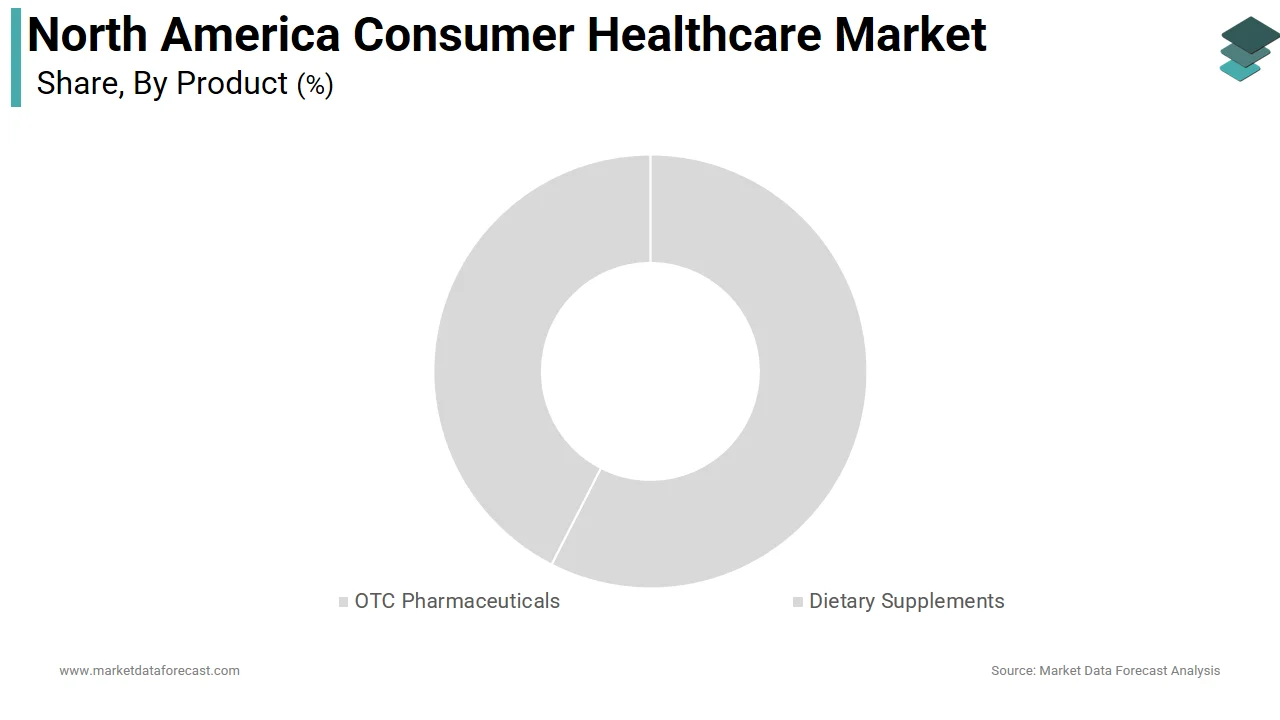
The dietary supplements segment is projected to register the fastest CAGR of 7.8% during the forecast period, driven by increasing consumer focus on preventive health, personalized nutrition, and holistic wellness approaches that extend beyond traditional disease treatment. Consumers in North America are increasingly prioritizing preventive health measures and holistic wellness, leading to surged adoption of vitamins, minerals, and herbal supplements aimed at boosting immunity, improving energy, and supporting long-term vitality. According to the Council for Responsible Nutrition, many adults in the United States report using dietary supplements regularly, with multivitamins, omega-3 fatty acids, and probiotics being the most popular categories, reflecting broad-based interest in general health maintenance. The sales of immune support supplements grew by 15% year over year, indicating sustained consumer commitment to proactive health strategies rather than reactive treatment. The integration of supplements into daily wellness routines is further supported by digital health platforms that track nutritional intake and recommend personalized regimens, enhancing adherence and perceived value. As consumers seek natural alternatives to synthetic medications and prioritize mental and physical resilience, the dietary supplements segment benefits from shifting cultural norms that view supplementation as essential to modern healthy living rather than optional enhancement.
By Distribution Network Insights
The pharmacies and drugstores segment accounted for 34.2% of the North America consumer healthcare market share in 2025 due to their specialized expertise, trusted advisory role, and comprehensive product assortment that caters specifically to health and wellness needs. Consumers associate these outlets with professional guidance and authenticity, making them the preferred channel for purchasing both over-the-counter medications and premium supplements. [The presence of licensed pharmacists and trained staff in pharmacies provides consumers with reliable health advice and product recommendations that build trust and drive purchase decisions for complex or high-value consumer healthcare items. According to the National Association of Chain Drug Stores, 65% of consumers consult pharmacy staff before purchasing new over-the-counter medications or supplements, seeking clarification on dosage, interactions, and suitability for specific health conditions. The American Pharmacists Association reports that pharmacist interventions prevent an estimated 1.2 million adverse drug events annually, reinforcing the critical role of pharmacies in safe self-medication practices. Data from McKinsey Company indicates that consumers are willing to pay a 10 to 15% premium for products purchased in pharmacies due to perceived assurance of quality and authenticity compared to general retail outlets. This trust factor is particularly significant for elderly populations and individuals managing chronic conditions who rely on consistent professional support. Pharmacies leverage this advantage by offering private label brands and exclusive partnerships with reputable manufacturers, creating differentiated assortments that cannot be easily replicated by mass merchants. The advisory component transforms transactions into consultations, fostering long term customer loyalty and higher basket sizes as consumers consolidate their health purchases in one trusted location.
The specialist retailers segment is likely to exhibit the fastest CAGR of 9.2% during the forecast period, with consumer demand for natural organic and premium wellness products that align with specific lifestyle values and dietary preferences. Consumers increasingly seek natural organic and non-genetically modified organism certified consumer healthcare products that specialist retailers are uniquely positioned to provide through curated assortments and strict sourcing standards. As per the data, natural product sales in independent health food stores increased by 8% year over year, reflecting strong loyalty among core customers who value transparency and ethical sourcing. Specialist retailers differentiate themselves by excluding controversial ingredients such as artificial colors, preservatives, and high fructose corn syrup, appealing to consumers with specific dietary restrictions or allergies. The educational environment in these stores, where staff are often knowledgeable about holistic health trends, further enhances the shopping experience.
COUNTRY LEVEL ANALYSIS
U.S. Consumer Healthcare Market Analysis
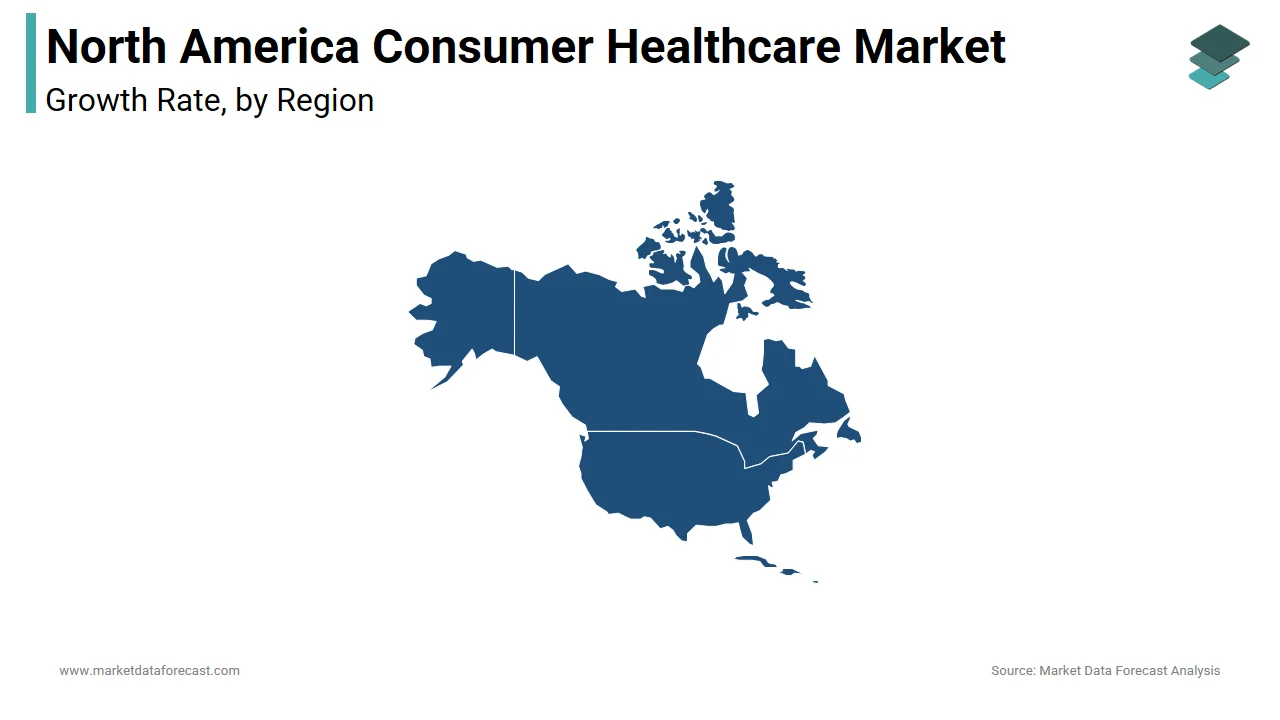
The United States was the top performer in the North America consumer healthcare market by holding an 85.3% share in 2025, with its large population, advanced healthcare infrastructure, and high consumer spending on wellness products. The appropriate use of non-prescription medicines is amplifying the economic importance of this sector. High prevalence of lifestyle-related conditions such as obesity and diabetes drives consistent sales of weight management supplements and glucose monitoring devices. The presence of leading global manufacturers and retailers ensures wide product availability and competitive pricing. Regulatory support from the Food and Drug Administration facilitates rapid introduction of new ingredients and formats, encouraging continuous market expansion. Additionally, the strong trend toward preventive care and digital health integration further accelerates growth as consumers leverage technology to optimize their wellness routines.
Canada Consumer Healthcare Market Analysis
Canada consumer healthcare market was ranked second, holding a 12.1% share in 2025, with a highly regulated environment strong public healthcare system complementing private self-care purchases and growing interest in natural health products. According to the study, the population aged 65 or older is driving demand for pain relief, joint health, and cardiovascular support products. According to Health Canada, sales of natural health products, including vitamins and herbal supplements, reached 3.5 billion dollars in 2023, reflecting strong consumer preference for holistic wellness approaches. The universal healthcare system reduces pressure on primary care for minor ailments, encouraging self-medication with over-the-counter products. Canadian consumers exhibit high trust in pharmacy recommendations, leading to strong performance of drugstore channels. Government initiatives promoting healthy aging and chronic disease prevention further promote market growth. Additionally, the rising influence of indigenous traditional medicine and organic certifications drives innovation in niche supplement categories appealing to diverse demographic segments.
COMPETITIVE LANDSCAPE
The competitive landscape of the North America Consumer Healthcare Market features intense rivalry among established pharmaceutical giants specialized consumer health companies and emerging direct to consumer brands. Major participants compete primarily on brand trust product efficacy and distribution reach leveraging extensive marketing budgets to maintain visibility. Price competition is significant in generic categories prompting companies to differentiate through premium formulations and unique delivery mechanisms. Digital disruption has lowered entry barriers, allowing agile startups to capture niche segments with personalized and transparent offerings. Incumbents respond by accelerating innovation cycles and acquiring innovative challengers to protect market relevance. Retail consolidation increases the bargaining power of distributors, forcing manufacturers to offer favorable terms and exclusive products. Consumer loyalty is increasingly driven by values such as sustainability and social responsibility, requiring brands to align with broader societal trends. Collaboration with technology firms enhances digital capabilities by enabling seamless omnichannel experiences that integrate physical and virtual touchpoints for comprehensive wellness support.
KEY MARKET PLAYERS
The leading companies operating in the North America consumer healthcare market include:
- Johnson & Johnson
- Boehringer Ingelheim GmbH
- GlaxoSmithKline plc
- Amway
- Bayer AG
- Pfizer Inc.
- Abbott Laboratories
- Haleon
- Sanofi
- BASF SE
- DSM
- American Health
- Herbalife
- The Himalaya Drug Company
- Kellogg
- Takeda Pharmaceuticals
- Teva Pharmaceuticals
TOP PLAYERS IN THE MARKET
- Johnson and Johnson maintains a dominant position in the North America Consumer Healthcare Market through its extensive portfolio of trusted brands, including Tylenol, Band-Aid, and Neutrogena. The company focuses on innovation in pain management, skin health, and wound care, leveraging strong consumer loyalty and widespread retail distribution. Recently, Johnson and Johnson has invested heavily in digital health platforms to enhance customer engagement and provide personalized wellness solutions. Their commitment to sustainability involves reducing plastic packaging and sourcing ingredients responsibly, which resonates with environmentally conscious consumers. Strategic partnerships with telehealth providers enable direct product recommendations during virtual consultations, expanding access to their offerings.
- Pfizer Consumer Healthcare leverages its pharmaceutical expertise to deliver high-quality over-the-counter medications and wellness products such as Advil, Centrum, and ChapStick. The company emphasizes scientific rigor and clinical validation to differentiate its products in a crowded marketplace. Recent actions include expanding its e-commerce capabilities and optimizing supply chain resilience to ensure consistent product availability. Pfizer actively engages in educational campaigns to promote proper medication use and preventive health practices, strengthening consumer confidence. The company also focuses on portfolio optimization by divesting non-core assets and acquiring innovative brands in emerging wellness categories. Collaboration with healthcare professionals ensures that products meet evolving medical standards and consumer needs effectively.
- Haleon operates as a pure-play consumer health company spun off from GlaxoSmithKline, managing iconic brands like Sensodyne, Panadol, and Theraflu. The company concentrates exclusively on daily health needs, driving focused innovation and agile decision-making. Haleon has strengthened its market position by investing in advanced manufacturing technologies and expanding its presence in digital retail channels. Recent initiatives include launching personalized oral care solutions and enhancing sustainability efforts through recyclable packaging. The company prioritizes data analytics to understand consumer behavior and tailor marketing strategies for maximum impact.
TOP STRATEGIES USED BY KEY MARKET PARTICIPANTS
Key players in the North America Consumer Healthcare Market prioritize strategic acquisitions of niche brands to expand product portfolios and access new consumer segments rapidly. Companies invest heavily in digital transformation initiatives, including e-commerce optimization and telehealth integration, to enhance customer reach and engagement. Sustainability remains a central focus, with firms adopting eco-friendly packaging and responsible sourcing practices to meet regulatory requirements and consumer expectations. Innovation in product formulations driven by scientific research ensures efficacy and safety, differentiating brands in competitive landscapes. Partnerships with healthcare providers and insurers facilitate integrated wellness solutions that combine products with professional guidance.
MARKET SEGMENTATION
This research report on the North America consumer healthcare market is segmented and sub-segmented into the following categories.
By Product
- OTC Pharmaceuticals
- Dietary Supplements
By Distribution Network
- Departmental Stores
- Independent Retailers
- Pharmacies or Drugstores
- Specialist Retailers
- Supermarkets or Hypermarkets
By Country
- United States
- Canada
- Mexico
- Rest of North America