- Product Description Description
- Table of Contents TOC
- List of Table & Figure LOT
- Get Free Sample PDF Sample PDF
Market Size, 2025
$9.24 BnMarket Estimate, 2026
$9.57 BnMarket Forecast, 2034
$12.71 BnCAGR, 2026–2034
3.61%North America Corn Glucose Market Size
The corn glucose market size in North America was valued at USD 9.24 billion in 2025 and is predicted to be worth USD 12.71 billion by 2034 from USD 9.57 billion in 2026 and grow at a CAGR of 3.61% from 2026 to 2034.

The industrial conversion of corn starch into glucose-based sweeteners, including liquid glucose, dextrose, and glucose syrups, primarily used in food and beverage manufacturing, pharmaceuticals, and fermentation processes. This sector is anchored in the region’s extensive corn cultivation and advanced wet-milling infrastructure, concentrated predominantly in the U.S. Corn Belt.
MARKET DRIVERS
Expanding Demand for Fermentable Sugars in Biofuel Production
The growing reliance on corn glucose as a primary feedstock for ethanol production is propelling the growth of the North America corn glucose market. The U.S. Energy Information Administration reports that in 2023, approximately 5.3 billion bushels of corn equivalent to 35% of total U.S. corn production were processed into ethanol, with glucose syrups forming the biochemical foundation of this transformation. This dependency is reinforced by federal policies such as the Renewable Fuel Standard (RFS), which mandates escalating volumes of renewable fuels, ensuring sustained demand for corn-derived glucose. Moreover, the rise of low-carbon fuel standards in states like California and British Columbia has elevated the value of corn-based ethanol due to its relatively lower carbon intensity when produced with modern efficiency practices. The Department of Energy confirms that advancements in enzymatic hydrolysis have increased glucose yield per bushel by 18% since 2015, improving the economic feasibility of ethanol plants. Additionally, the integration of distillers' grains as high-protein animal feed creates a valuable co-product stream by enhancing the overall profitability of glucose-based biorefining.
Increasing Utilization in Processed Food and Beverage Formulation
The rising priority for the corn glucose due to its functional versatility, cost efficiency, and compatibility with industrial processing is enhancing the growth of the North America corn glucose market. It is widely used in baked goods, dairy products, canned fruits, and soft drinks as a bulking agent, texture modifier, and browning enhancer. According to the Institute of Food Technologists, over 70% of shelf-stable processed foods in the U.S. contain glucose-based sweeteners to control crystallization, extend shelf life, and improve mouthfeel. In the beverage sector, corn glucose serves as a fermentable base in kombucha, craft beer, and functional drinks, where its neutral flavor and high solubility offer advantages over sucrose. Additionally, the rise of clean-label trends has not diminished glucose demand, as manufacturers increasingly position it as a "natural" alternative to high-fructose corn syrup (HFCS) in reformulated products.
MARKET RESTRAINTS
Environmental and Sustainability Scrutiny of Corn-Based Industrial Feedstocks
The environmental advocacy groups and regulatory bodies concerned about the ecological footprint of large-scale corn cultivation and processing is limiting the growth of the North American corn glucose market. Industrial corn farming, particularly in the Midwest, is associated with significant nitrogen runoff, soil degradation, and high water consumption, raising sustainability concerns. The U.S. Geological Survey reports that corn production accounts for 37% of all nitrogen fertilizer use in U.S. agriculture, contributing to hypoxic zones in the Gulf of Mexico. Processing facilities themselves are energy-intensive; the Department of Energy states that wet-milling plants consume an average of 350,000 BTUs per hundredweight of starch processed, primarily from natural gas. Water usage is also substantial, with older facilities requiring up to 4 gallons of water per gallon of syrup produced, although modern plants have reduced this through recycling. Consumer sentiment is shifting: a 2023 Pew Research Center survey found that 59% of Americans believe industrial agriculture harms the environment, with corn-based products frequently cited.
Volatility in Corn Supply Due to Climate-Induced Agricultural Disruptions
The climate variability and extreme weather events, which directly impact crop yields and input costs is also hampering the growth of the North American corn glucose market. The U.S., the world’s largest corn producer, experienced significant yield reductions in 2022 and 2023 due to prolonged droughts in the Great Plains and excessive rainfall in the Midwest, as documented by the National Oceanic and Atmospheric Administration. The U.S. Department of Agriculture estimates that the 2022 drought reduced national corn yields by 12% compared to the five-year average, triggering price spikes that cascaded through the glucose supply chain. Additionally, shifting precipitation patterns and rising temperatures are altering planting zones; the Union of Concerned Scientists projects that by 2050, up to 75% of current corn-growing regions may face climate conditions unsuitable for optimal yields.
MARKET OPPORTUNITIES
Advancement in Enzymatic Hydrolysis and Biorefinery Integration
Innovations in enzymatic hydrolysis and integrated biorefinery models present a transformative opportunity for the North American corn glucose market to enhance efficiency, reduce waste, and diversify output. According to the American Chemical Society, next-generation enzymes have increased glucose yield by up to 22% while operating at lower temperatures, reducing thermal degradation and operational costs. Additionally, biorefineries are increasingly adopting circular production models, where glucose is not only used for sweeteners or ethanol but also as a feedstock for producing high-value biochemicals such as lactic acid, succinic acid, and bioplastics. Companies like ADM and Cargill are piloting facilities that co-produce glucose, animal feed, corn oil, and bio-based chemicals within a single processing train, maximizing feedstock utilization.
Rising Demand for Pharmaceutical-Grade Dextrose
The increasing use of high-purity dextrose in medical and pharmaceutical applications is setting up new opportunities for the growth of the North American corn glucose market. Dextrose, a monosaccharide derived from corn starch, is essential in intravenous (IV) solutions, oral rehydration therapies, and as a stabilizing agent in vaccine production. The U.S. Pharmacopeia sets strict purity standards for pharmaceutical-grade dextrose, requiring a minimum of 99.5% dextrose content and rigorous microbial control, creating a specialized market segment with limited competition. The demand surged during the pandemic, with dextrose used in vaccine stabilizers and care nutrition, prompting manufacturers to expand dedicated pharmaceutical processing lines. The Food and Drug Administration’s accelerated approval pathways for medical ingredients have also encouraged investment in GMP-compliant facilities.
MARKET CHALLENGES
Regulatory and Public Health Scrutiny of Refined Carbohydrates
The intensifying scrutiny from public health authorities and consumer advocacy groups concerned about the role of refined carbohydrates in chronic diseases such as obesity, type 2 diabetes, and metabolic syndrome is challenging the growth of the North American corn glucose market. While corn glucose is not as heavily criticized as high-fructose corn syrup (HFCS), it is often grouped under the broader category of added sugars, drawing regulatory attention. The Dietary Guidelines for Americans, issued jointly by the U.S. Department of Health and Human Services and the USDA, recommend limiting added sugars to less than 10% of daily caloric intake, influencing product reformulation across the food industry. The Centers for Disease Control and Prevention states that 63% of U.S. adults exceed this threshold, prompting food manufacturers to reduce glucose content in processed items.
Competition from Alternative Sweeteners and Non-Corn Feedstocks
The growing competition from both natural and synthetic alternative sweeteners, as well as non-corn-based fermentable carbohydrates is also to restrict the growth of the North American corn glucose market. High-intensity sweeteners such as stevia, monk fruit, and allulose are increasingly used in combination with reduced glucose levels to maintain sweetness while cutting calories. The International Food Information Council reports that 61% of consumers are trying to limit or avoid sugars, accelerating the adoption of these alternatives in beverages, dairy, and snacks. Additionally, non-corn feedstocks such as cassava, sugarcane, and cellulosic biomass are gaining traction in fermentation and sweetener production, particularly in response to sustainability demands. The Department of Energy confirms that cellulosic ethanol production, though still nascent, grew by 34% between 2020 and 2023, supported by federal incentives. Sugarcane-based glucose, primarily imported from Brazil, is also being used in premium beverage lines marketed as “non-GMO” or “tropical-sourced.” Furthermore, startups are developing fermentation-derived glucose from algae and agricultural waste, challenging the dominance of corn-based systems. These alternatives, while currently limited in scale, are attracting venture capital and corporate partnerships, signaling long-term disruption potential.
REPORT COVERAGE
| REPORT METRIC | DETAILS |
| Market Size Available | 2025 to 2034 |
| Base Year | 2025 |
| Forecast Period | 2026 to 2034 |
| CAGR | 3.61% |
| Segments Covered | By Type, End-Use Industry, and Region |
| Various Analyses Covered | Regional & Country Level Analysis, Segment-Level Analysis, DROC, PESTLE Analysis, Porter’s Five Forces Analysis, Competitive Landscape, Analyst Overview on Investment Opportunities |
| Regions Covered | The United States, Canada, Mexico, and Rest of North America |
| Market Leaders Profiled | Cargill, Archer Daniels Midland (ADM), Tate & Lyle PLC, Ingredion Incorporated, Roquette Frères, Grain Processing Corporation, Tereos Group, and others |
SEGMENTAL ANALYSIS
By Type Insights
The food and beverages segment dominated the North America corn glucose market share in 2025 with the indispensable role of corn glucose as a functional and economic ingredient in large-scale food manufacturing. Glucose syrups and dextrose are extensively used in baked goods, dairy products, canned fruits, and processed snacks for their ability to control texture, prevent crystallization, enhance browning, and extend shelf life. According to the Institute of Food Technologists, over 80% of commercial confectionery products in North America rely on glucose syrups to achieve desired consistency and chewiness in gummies, marshmallows, and frostings. Additionally, its role as a bulking agent in low-calorie and reduced-fat products aligns with ongoing product reformulations aimed at meeting consumer demand for healthier options without sacrificing sensory quality.
The pharmaceuticals segment is expected to grow with a CAGR of 10.4% from 2026 to 2034 with the role of high-purity dextrose in medical formulations, particularly intravenous (IV) solutions, oral rehydration therapies, and vaccine stabilization. Dextrose, derived from corn starch, is a primary energy source in parenteral nutrition and is essential in treating hypoglycemia and dehydration. The American Hospital Association reports that over 140 million dextrose-containing IV bags are used annually in U.S. hospitals alone, with demand increasing due to an aging population and rising hospitalization rates.
By End-Use Industry Insights
The HFCS 55 segment was accounted in holding 58.3% of the North America corn glucose market share in 2025 with its near-identical sweetness profile to sucrose, making it the preferred sweetener for carbonated soft drinks and other ready-to-drink beverages. HFCS 55 contains 55% fructose and 41% glucose, closely matching the sweetness of table sugar while offering superior solubility, lower production cost, and enhanced shelf stability. The American Beverage Association confirms that over 70% of non-diet sodas in the United States use HFCS 55 as the primary sweetener, including major brands like Coca-Cola and Pepsi in their standard formulations. Additionally, the established infrastructure of corn wet-milling plants, concentrated in the Midwest, ensures a consistent and cost-efficient supply chain. The U.S. Department of Agriculture notes that HFCS 55 production is optimized in facilities with integrated isomerization units, allowing real-time adjustment of fructose levels to meet beverage specifications.
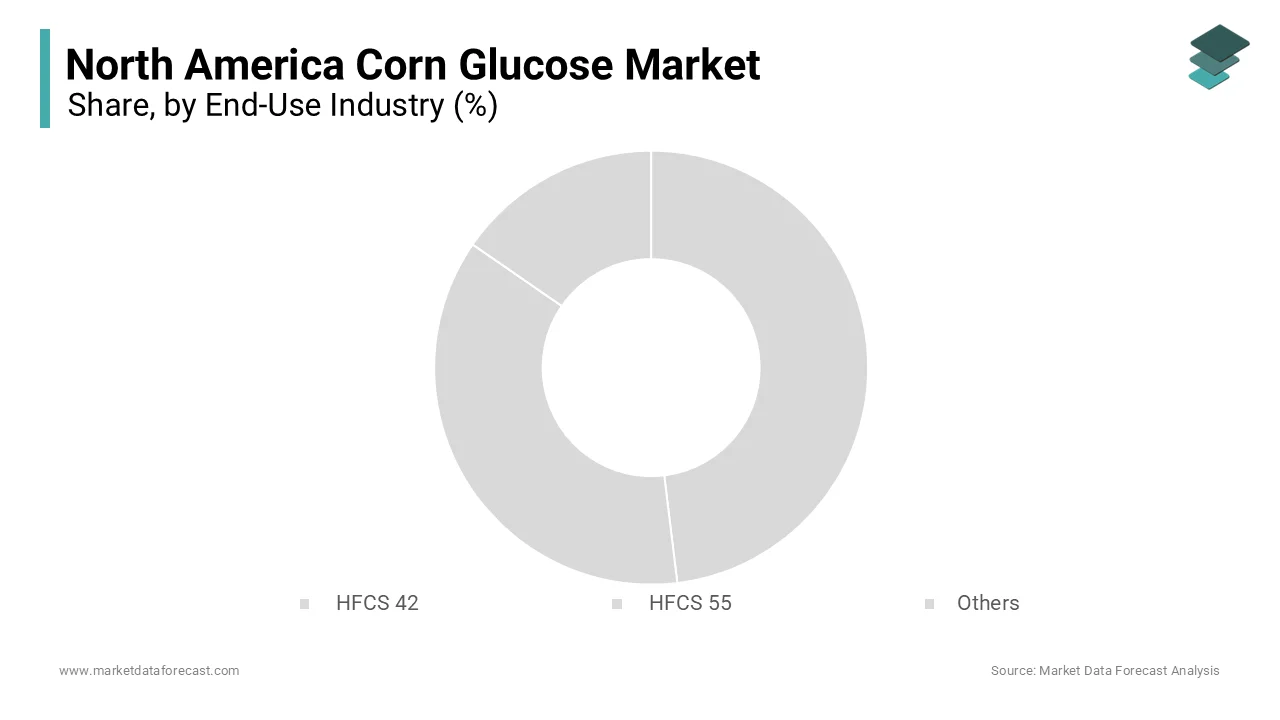
The HFCS 42 segment is likely to pose a CAGR of 8.9% during the forecast period with its expanding use in non-beverage applications, particularly in baked goods, processed foods, and animal feed, where its lower fructose content and functional properties offer distinct advantages. Additionally, its role as a fermentable substrate in yeast production has increased demand in the growing craft baking and bioethanol sectors. The Renewable Fuels Association notes that HFCS 42 is preferred in ethanol plants due to its high glucose content, which supports more efficient fermentation yields. Furthermore, the rise of plant-based meat alternatives and textured vegetable proteins has created new demand for HFCS 42 as a browning agent and flavor enhancer.
REGIONAL ANALYSIS
United States Market Analysis
The United States was the top performer in the North America corn glucose market with 89.3% of the share in 2025. As the world’s largest producer of corn and a global leader in wet-milling technology, the U.S. possesses the agricultural, industrial, and logistical infrastructure necessary to sustain large-scale glucose production. Major processors such as ADM, Cargill, and Ingredion operate integrated biorefineries that convert corn into glucose, high-fructose syrups, and co-products like corn oil and distillers’ grains. The U.S. ethanol industry, which consumes over 5 billion bushels of corn per year, further drives demand for fermentable glucose, as documented by the Renewable Fuels Association. Additionally, the country’s extensive food and beverage manufacturing sector creates consistent downstream demand. Regulatory frameworks such as the Renewable Fuel Standard and FDA food additive approvals provide policy stability by encouraging long-term investment.
Canada Market Analysis
Canada corn glucose market held 8.2% of the share in 2025. While smaller in scale, the Canadian market benefits from strong integration with U.S. supply chains and a growing domestic demand for processed foods and biofuels. Ontario and Quebec host the majority of Canada’s corn processing facilities, which primarily serve the food, beverage, and pharmaceutical sectors. Health Canada regulates sweeteners under the Food and Drug Regulations, ensuring alignment with U.S. safety standards and facilitating cross-border trade. The Canadian Food Inspection Agency notes that HFCS usage in processed foods has remained stable, supported by its role in maintaining product quality and cost efficiency. Additionally, Canada’s Clean Fuel Standard, implemented in 2023, mandates increasing renewable content in transportation fuels, boosting demand for corn-based ethanol and, by extension, glucose feedstocks. The federal government’s investment in sustainable agriculture and bioproduct innovation through Agriculture and Agri-Food Canada is fostering advancements in co-product utilization and energy efficiency.
COMPETITIVE LANDSCAPE
The competitive landscape of the North America corn glucose market is characterized by a concentrated oligopoly, where a few large, integrated players dominate through scale, technological sophistication, and supply chain control. These firms compete not on price alone but on reliability, consistency, and value-added services such as technical support, formulation assistance, and sustainability certification. The market is defined by high barriers to entry due to the capital intensity of wet-milling infrastructure and the complexity of regulatory compliance, particularly for food and pharmaceutical applications. Innovation is increasingly directed toward product differentiation, with companies developing specialized glucose streams for clean-label, low-sugar, and functional food applications. Strategic differentiation also occurs through sustainability credentials, as major food and beverage brands demand transparent, low-impact ingredients. Smaller processors face challenges in matching the efficiency and reach of industry leaders but may compete in niche segments such as organic or non-GMO glucose. Additionally, competition is influenced by policy dynamics, including biofuel mandates and agricultural subsidies, which shape demand and profitability.
KEY MARKET PLAYERS
Some of the major companies dominating the North America corn glucose market are
- Cargill
- Archer Daniels Midland (ADM)
- Tate & Lyle PLC
- Ingredion Incorporated
- Roquette Frères
- Grain Processing Corporation
- Tereos Group
TOP PLAYERS IN THE MARKET
- ADM stands as a cornerstone of the North American corn glucose industry by leveraging its vast agricultural network and integrated bioprocessing infrastructure to dominate the supply of glucose-based ingredients. The company operates some of the largest wet-milling facilities in the U.S. Corn Belt, where it converts corn into glucose syrups, dextrose, and high-fructose corn syrups for food, beverage, and industrial applications. Beyond volume, ADM influences global markets through its investment in sustainable processing, enzyme optimization, and co-product innovation, such as distillers’ grains and corn oil. Its global distribution network ensures consistent delivery to multinational food and beverage manufacturers, making it a strategic partner in large-scale production. ADM also plays a pivotal role in advancing the bioeconomy by developing glucose-derived biochemicals for renewable plastics and biofuels.
- Cargill has established itself as a enabler of the corn glucose value chain through its mastery of agricultural logistics, industrial processing, and customer-centric innovation. The company’s deep integration with corn farmers, transportation networks, and biorefineries allows for seamless transition from field to finished glucose products. Cargill’s facilities are engineered for flexibility, producing a wide range of glucose derivatives tailored to specific applications in beverages, baked goods, and pharmaceuticals. The company distinguishes itself through a focus on sustainability, investing in water recycling, energy efficiency, and regenerative agriculture partnerships that reduce the environmental footprint of glucose production. Its global reach enables technology transfer and best practice sharing across regions, influencing industry standards beyond North America. Cargill also collaborates closely with food manufacturers to reformulate products using functional carbohydrates, balancing taste, cost, and nutritional profiles.
- Ingredion has redefined the role of corn glucose by positioning it not merely as a sweetener but as a functional ingredient that enhances texture, stability, and performance in processed foods. The company’s research-driven approach focuses on modifying glucose-based products to meet evolving demands for clean labels, reduced sugar, and improved nutrition. Ingredion’s portfolio includes specialized glucose syrups, resistant starches, and texturizing agents that enable manufacturers to reduce fat, enhance fiber, or improve mouthfeel without compromising quality. Its global innovation centers work closely with clients to develop customized solutions, particularly in plant-based foods, sports nutrition, and clinical nutrition. The company’s emphasis on sustainability and traceability has led to the development of non-GMO, organic, and identity-preserved glucose streams that cater to premium and health-focused markets.
TOP STRATEGIES USED BY KEY PLAYERS
One major strategy employed by leading corn glucose producers is vertical integration across the agricultural and industrial value chain. Companies are strengthening control over corn sourcing, wet-milling, and downstream distribution to ensure supply stability, cost efficiency, and quality consistency. This integration reduces dependency on external suppliers and enhances responsiveness to market fluctuations.
Another key approach is the diversification of product portfolios into specialty and functional glucose derivatives. Firms are developing modified syrups, low-dextrose formulations, and pharmaceutical-grade dextrose to serve niche markets in health, nutrition, and biomanufacturing. This shift allows companies to command higher margins and reduce reliance on commoditized sweetener sales.
RECENT HAPPENINGS IN THE MARKET
- In February 2023, ADM launched a new enzymatic hydrolysis platform at its Cedar Rapids facility, designed to increase glucose yield and reduce energy consumption during starch conversion. This advancement is expected to enhance production efficiency and support sustainability goals.
- In May 2023, Cargill expanded its partnership with a network of Midwest farmers to implement regenerative agriculture practices across 200,000 acres of corn fields. This initiative is aimed at improving soil health and reducing the carbon footprint of glucose feedstocks.
- In September 2023, Ingredion introduced a new line of clean-label glucose syrups free from chemical additives and suitable for organic-certified products. This launch is designed to meet growing demand from natural food manufacturers.
- In January 2025, ADM commissioned a pharmaceutical-grade dextrose production line at its Blair, Nebraska facility to supply hospitals and IV manufacturers. This move is anticipated to strengthen its presence in the medical ingredients sector.
- In June 2025, Cargill announced a collaboration with a biotech firm to develop glucose-derived bioplastics at its Eddyville biorefinery. This project is expected to diversify its product portfolio into high-growth bio-based materials.
MARKET SEGMENTATION
This research report on the North America corn glucose market has been segmented and sub-segmented based on the following categories.
By Type
- Food and Beverages
- Pharmaceuticals
- Personal Care Products
- Paper Products
- Others
By End-Use Industry
- HFCS 42
- HFCS 55
- Others
By Country
- The United States
- Canada
- Rest of North America