- Product Description Description
- Table of Contents TOC
- List of Table & Figure LOT
- Get Free Sample PDF Sample PDF
Market Size, 2025
$0.73 BnMarket Estimate, 2026
$0.78 BnMarket Forecast, 2034
$1.39 BnCAGR, 2026–2034
7.46%Executive Summary: North America Customized Premix Market
- Market Scope: Comprehensive regional market analysis of the North American customized premix sector covering nutrient types, applications, functionalities, country-level insights (the U.S. and Canada), and competitive dynamics.
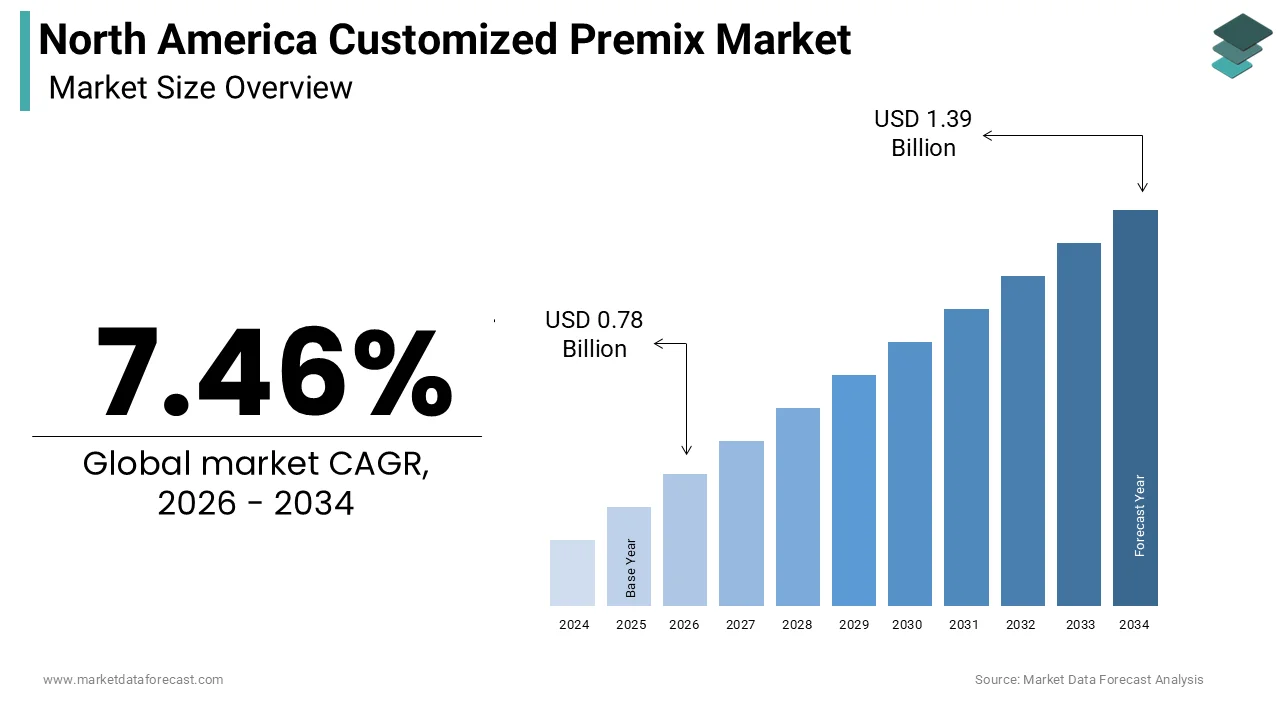
- Market Valuation: Valued at USD 0.73 billion in 2025, estimated at USD 0.78 billion in 2026, and projected to reach USD 1.39 billion by 2034, registering a strong CAGR of 7.46% from 2026 to 2034.
- Primary Growth Drivers: Rising prevalence of chronic and lifestyle diseases (e.g., obesity and diabetes), consumer shift toward personalized nutrition and preventive healthcare, and surging demand for functional foods, beverages, and dietary supplements.
Key Market Segment Metrics (2026–2034)
| Category | Leading Segment Position | Fastest-Growing / Key Highlight Segment |
|---|---|---|
| By Nutrient Insights | Vitamins Segment (accounted for 58.2% market share in 2025 due to essential physiological roles and mandatory food fortification) | Nutraceuticals (projected to record the fastest CAGR of 12.4% driven by functional foods and chronic disease management) |
| By Application Insights | Dietary Supplements (held 32.4% market share in 2025 backed by high consumer penetration and personalized wellness routines) | Beverages (expected to grow at an anticipated CAGR of 8.5% driven by functional drink innovation and on-the-go convenience) |
| By Functionality Insights | Immunity Segment (held a dominant share in 2025 due to heightened post-pandemic health awareness and preventive care focus) | Gut Health (expected to expand at the fastest CAGR of 11.2% driven by microbiome research and digestive wellness trends) |
| By Region / Country | United States (largest regional contributor occupying 85.6% market share in 2025 driven by a massive health-conscious consumer base) | Canada (ranked second with robust regulatory alignment, health initiatives, and strong demand for natural ingredients) |
Major Market Players & Market Structure
Market Structure: Intense and competitive landscape featuring multinational corporations and specialized regional ingredient providers competing through advanced delivery technologies, clean-label formulations, and strategic co-creation partnerships.
Key Companies: Prinova Group LLC, SternVitamin GmbH & Co. KG, Koninklijke DSM N.V, Jubilant Life Sciences, Archer Daniels Midland Company, Fenchem, Glanbia plc, B&H Biotechnology Co. Ltd, Barentz, Farbest Brands, Lycored, Hexagon Nutrition Pvt. Ltd, and WATSON-INC.
North America Customized Premix Market Size
The customized premix market size in North America was valued at USD 0.73 billion in 2025. The regional market size is expected to be worth USD 0.78 billion in 2026 and is estimated to be growing at a CAGR of 7.46% to reach USD 1.39 billion by 2034.
The customized premix focuses on the formulation of precise blends of vitamins, minerals, amino acids, and other bioactive ingredients. These premixes are designed to be integrated into final consumer products, such as dietary supplements, fortified foods, functional beverages, and infant nutrition formulas. In North America, the demand for these customized solutions is driven by a sophisticated consumer base that prioritizes health, wellness, and personalized nutrition. As per the Centers for Disease Control and Prevention, nearly 60% of adults in the United States have at least one chronic disease, which has intensified the focus on preventive healthcare through diet. This epidemiological reality escalates the importance of nutrient-dense products in public health strategies. The regulatory environment managed by the Food and Drug Administration and Health Canada imposes strict standards on labeling and safety, necessitating rigorous quality control in premix production. Manufacturers increasingly rely on specialized premix providers to navigate complex formulation requirements and ensure stability of sensitive nutrients. The shift towards clean label products further complicates formulation, driving innovation in natural and organic premix options.
MARKET DRIVERS
Rising Prevalence of Lifestyle Diseases Drives Demand for Fortified Solutions
The rising prevalence of lifestyle diseases, by creating an urgent need for nutrient-dense and functional food products, is fuelling the growth of the North America customised premix market. Chronic conditions, such as obesity, type 2 diabetes, and cardiovascular diseases, are widespread in the region, prompting consumers to seek dietary interventions for management and prevention. As per the Centers for Disease Control and Prevention, more than 40% of adults in the United States are obese, and approximately 34 million have diabetes. Customized premixes enable manufacturers to fortify everyday foods with specific nutrients, such as fiber, chromium, and omega-3 fatty acids that support metabolic health. The increased intake of certain vitamins and minerals to maintain heart health, which influences product development strategies. Food companies are responding by launching fortified snacks, cereals, and beverages that offer tangible health benefits without requiring significant changes in consumer behavior. The convenience of obtaining essential nutrients through regular meals appeals to busy individuals, who may not adhere to strict supplement regimens. Healthcare providers also encourage the consumption of fortified foods as part of comprehensive treatment plans. This alignment between medical recommendations and consumer preferences drives sustained demand for high-quality customized premixes.
Consumer Preference for Personalized Nutrition Accelerates Product Innovation
The consumer preference for personalized nutrition accelerates product innovation by demanding tailored solutions that address individual health goals and genetic profiles, which is another factor promoting the growth of the North America customised premix market. Modern consumers are increasingly aware that one-size-fits-all approaches to nutrition are ineffective, leading to a surge in demand for customized products. This trend is supported by advancements in digital health technologies, such as DNA testing and microbiome analysis, which provide insights into individual nutrient requirements. Premix manufacturers are leveraging this data to create specialized blends that cater to specific people, such as athletes, seniors, or pregnant women. The rise of direct-to-consumer brands has further fueled this movement by offering subscription-based vitamin packs customized to user profiles. These brands rely on flexible premix suppliers to produce small batches with precise ingredient combinations. Formulations often include targeted nutrients, such as collagen for skin health or probiotics for gut health, reflecting diverse consumer interests. The ability to quickly adapt formulations allows manufacturers to stay ahead of emerging trends and maintain a competitive advantage.
MARKET RESTRAINTS
Stringent Regulatory Compliance Increases Operational Complexity and Costs
The stringent regulatory compliance, increasing operational complexity and costs for manufacturers, is the primary factor limiting the growth of the North America customised premix market. The Food and Drug Administration in the United States and Health Canada in Canada enforce rigorous standards for ingredient safety, labeling, and claims, which require extensive documentation and testing. Any new dietary ingredient must undergo a premarket notification process to ensure safety, which can be time-consuming and expensive. Manufacturers must also comply with Good Manufacturing Practice, which mandates strict quality control measures throughout the production process. These requirements necessitate significant investment in laboratory equipment, skilled personnel, and quality assurance systems. Small and medium-sized enterprises often struggle to meet these regulatory burdens, limiting their ability to compete with larger players. Changes in regulatory guidelines can occur frequently, requiring companies to constantly update their processes and labels. Non-compliance can result in severe penalties, product recalls, and reputational damage, which discourages innovation. The complexity of navigating different regulations for various product categories, such as supplements versus conventional foods, adds another layer of difficulty. Additionally, the verification of ingredient sourcing and purity requires robust supply chain management, which increases operational costs.
Volatility in Raw Material Prices Impacts Profitability and Supply Stability
The volatility in raw material prices impacts the profitability and supply stability by creating uncertainty in production costs, and planning is also impeding the growth of the North American customised premix market. Key ingredients, such as vitamins, minerals, and amino acids, are subject to fluctuating prices due to factors such as weather conditions, geopolitical tensions, and supply chain disruptions. The global food prices have experienced significant volatility in recent years, affecting the cost of agricultural-based ingredients used in premixes. For instance, prices for vitamin C and E can swing dramatically due to changes in production capacity in major exporting countries. This unpredictability makes it difficult for manufacturers to maintain consistent pricing for their customers and manage profit margins. Long-term contracts with suppliers can mitigate some risk but often lock companies into higher prices during market downturns. Small batch producers are particularly vulnerable to these swings, as they lack the purchasing power to negotiate favorable terms. Supply shortages can also occur when producers prioritize other markets or face production issues, leading to delays in premix delivery. These disruptions can force manufacturers to reformulate products or seek alternative ingredients, which may affect quality and consumer acceptance.
MARKET OPPORTUNITIES
Expansion into Plant-Based and Clean Label Products Offers New Growth Avenues
The expansion into plant-based and clean-label products by aligning with evolving consumer preferences for natural and sustainable ingredients is creating new opportunities for the growth of the North America customised premix market. Consumers are increasingly avoiding synthetic additives and seeking products with simple, recognizable ingredient lists. The sales of plant-based foods have grown significantly, indicating a shift away from animal-derived and artificial components. Premix manufacturers can capitalize on this trend by developing blends using natural sources of vitamins and minerals, such as algae for omega-3s or fruits for antioxidants. These natural premixes appeal to health-conscious consumers who prioritize transparency and environmental sustainability. The organic food sales continue to rise, demonstrating robust demand for certified products. Manufacturers who invest in sourcing and certifying natural ingredients can differentiate themselves in a crowded marketplace. Additionally, the development of allergen-free premixes caters to the growing number of consumers with food sensitivities. Innovation in extraction and stabilization technologies allows for the creation of potent natural premixes that match the efficacy of synthetic alternatives.
Integration of Advanced Delivery Technologies Enhances Bioavailability and Efficacy
The integration of advanced delivery technologies enhances bioavailability and efficacy, which also bolsters the growth of the North America customized premix market. Traditional nutrient forms often suffer from poor absorption rates, limiting their health benefits. New technologies improve the stability and absorption of sensitive ingredients like vitamins and probiotics. As per the Journal of Controlled Release, liposomal delivery systems can increase the bioavailability of certain nutrients by up to 90% compared to standard forms. This scientific advancement allows manufacturers to create more effective products with lower dosages, reducing costs and potential side effects. Consumers are becoming more educated about bioavailability and are willing to pay for products that deliver superior results. These technologies also protect ingredients from degradation during processing and storage, ensuring potency until consumption. Premix providers who adopt these advanced techniques can offer premium solutions to brands seeking a competitive advantage. The ability to claim enhanced absorption supports stronger marketing messages and consumer trust. Furthermore, these technologies enable the incorporation of unstable ingredients into diverse product formats such as beverages and gummies.
MARKET CHALLENGES
Supply Chain Disruptions Threaten Ingredient Availability and Production Continuity
The supply chain disruptions threaten ingredient availability and production continuity by exposing vulnerabilities in global sourcing networks, which act as a major barrier for the growth of the North American customised premix market. Many key raw materials are sourced from a limited number of international suppliers, making the market susceptible to geopolitical events, trade disputes, and logistical hurdles. Supply chain interruptions have become more frequent and severe in recent years, affecting various industries, including food and pharmaceuticals. Delays in shipping, port congestion, and labor shortages can prevent the timely delivery of essential vitamins and minerals. This unpredictability forces manufacturers to hold larger inventories, which increases storage costs and risk of spoilage. Dependence on single-source suppliers exacerbates the risk, as any disruption at one facility can halt production entirely. Diversifying supply chains is challenging due to the specialized nature of many ingredients and stringent quality requirements. Additionally, natural disasters and climate change events can impact the agricultural yields of botanical ingredients, further straining supply. These disruptions can lead to product shortage,s lost sales, and damaged customer relationships. Manufacturers must invest in robust risk management strategies, such as multi-sourcing and nearshoring, to mitigate these threats. However, these measures require significant capital and operational adjustments.
Balancing Cost Efficiency with High Quality Standards Remains a Persistent Challenge
Balancing cost efficiency with high quality standards, as manufacturers face pressure to reduce prices while maintaining efficacy, is also restricting the growth of the North American customised premix market. Consumers and retailers demand high-quality products but are often price sensitive, especially in competitive categories like mainstream foods and beverages. Achieving this balance requires continuous improvement in production processes and sourcing strategies without compromising ingredient purity or potency. High-quality standards involve rigorous testing and certification, which add to operational expenses. Cutting corners to save costs can lead to quality issues such as inconsistent nutrient levels or contamination, resulting in recalls and legal liabilities. Manufacturers must also invest in research and development to innovate and stay ahead of competitors, which further strains budgets. The tension between affordability and excellence creates a difficult operating environment where margin erosion is a constant risk. Additionally, fluctuating energy and labor costs add to the financial pressure on manufacturing facilities. Companies must find innovative ways to streamline operations and reduce waste, while upholding strict quality protocols.
REPORT COVERAGE
| REPORT METRIC | DETAILS |
| Market Size Available | 2025 to 2034 |
| Base Year | 2025 |
| Forecast Period | 2026 to 2034 |
| CAGR | 7.46% |
| Segments Covered | By Nutrient, Form, Application, Functionality, And Region |
|
Various Analyses Covered | Global, Regional & Country Level Analysis; Segment-Level Analysis; DROC, PESTLE Analysis; Porter’s Five Forces Analysis; Competitive Landscape; Analyst Overview of Investment Opportunities |
| Regions Covered | The U.S., Canada, and the rest of North America |
| Market Leaders Profiled | Prinova Group LLC, SternVitamin GmbH & Co. KG, Koninklijke DSM N.V, Jubilant Life Sciences, Archer Daniels Midland Company, Fenchem, Glanbia plc, B&H Biotechnology Co. Ltd, Barentz, Farbest Brands, LycoredHexagon Nutrition Pvt. Ltd, Archer Daniels Midland Company, and WATSON-INC. |
SEGMENTAL ANALYSIS
By Nutrient Insights
The Vitamins segment was the largest by accounting for 58.2% of the North America customized premix market share in 2025 due to their role in human physiology and widespread regulatory mandates for food fortification. These organic compounds are essential for metabolic processes, immune function, and overall health, making them indispensable ingredients in fortified foods and supplements. As per the Centers for Disease Control and Prevention, vitamin deficiencies remain a public health concern in North America, with significant portions of the population lacking adequate levels of vitamin D and B12. This nutritional gap drives manufacturers to incorporate vitamin premixes into staple foods, such as cereals, dairy products, and beverages, to ensure population-wide adequacy. The stability and bioavailability of modern vitamin formulations allow for seamless integration into diverse product matrices without compromising taste or texture. Consumer awareness regarding preventive healthcare has surged post-pandemic, leading to increased demand for multivitamin-enriched products. Manufacturers prioritize vitamin premixes because they offer a cost-effective solution to enhance the nutritional profile of mass market goods.
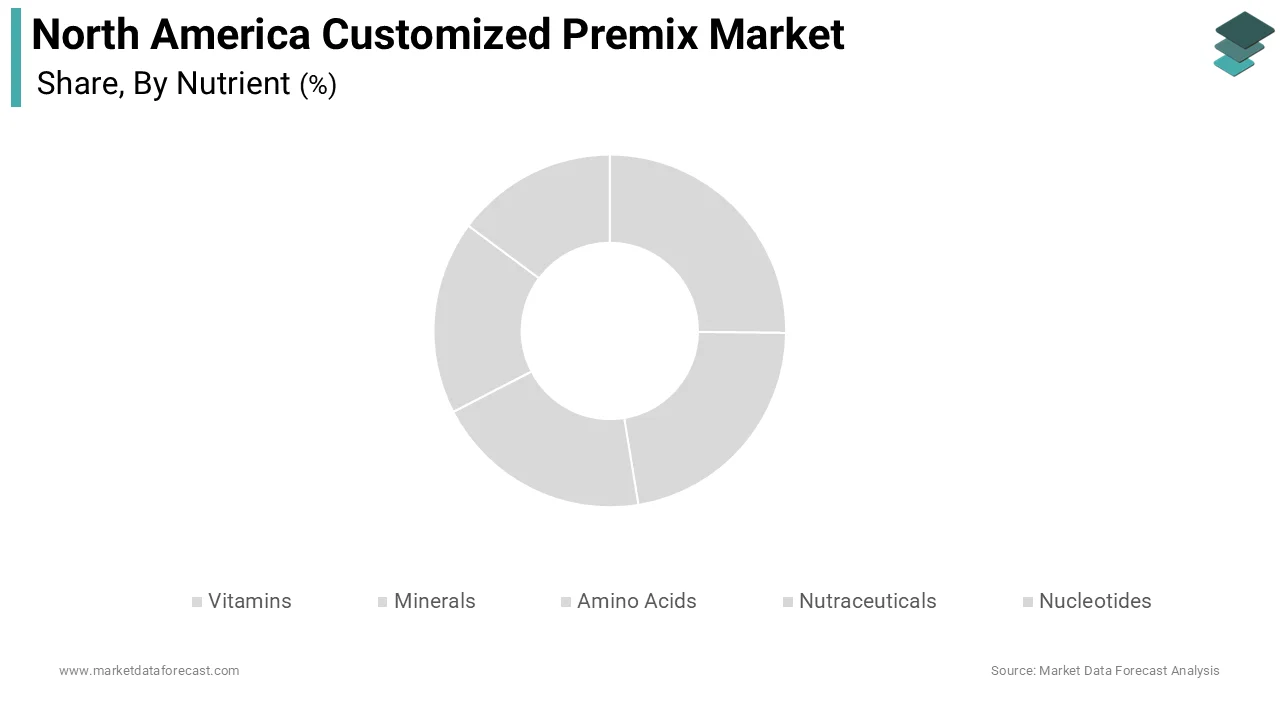
The nutraceuticals segment is likely to register the fastest CAGR of 12.4% from 2026 to 2034, owing to the rising popularity of functional foods and the need for chronic disease management. This category includes bioactive compounds, such as antioxidants, polyphenols, and herbal extracts that provide health benefits beyond basic nutrition. The aging population in North America is increasingly seeking non-pharmaceutical interventions for conditions such as hypertension, diabetes, and inflammation, driving demand for nutraceutical-enriched products. The lifestyle modifications, including dietary changes, are first-line treatments for cardiovascular health, boosting the incorporation of ingredients likeomega-33 fatty acids and plant sterols. The clean label movement encourages manufacturers to replace synthetic additives with natural nutraceuticals, which appeal to health-conscious consumers willing to pay premium prices. Innovation in extraction technologies has improved the potency and stability of these compounds, making them viable for large-scale industrial applications. Regulatory frameworks, such as the Generally Recognized as Safe status, facilitate easier entry for novel nutraceutical ingredients.
By Application Insights
The dietary supplements segment was the largest by holding 32.4% of the North America customized premix market share in 2025 due to high consumer penetration and the growing trend towards personalized nutrition. Consumers in the United States and Canada increasingly view supplements as essential components of their daily wellness routines rather than optional additions. The shift towards preventive healthcare has led individuals to seek targeted solutions for specific health concerns such as stress management, joint health, and cognitive function. Customized premixes allow manufacturers to create precise formulations that meet these diverse needs while ensuring consistent dosage and efficacy. The rise of direct-to-consumer brands has further accelerated growth by offering personalized vitamin packs based on individual health data. These brands rely heavily on flexible premix suppliers to produce small batch customized blends efficiently. Regulatory clarity under the Dietary Supplement Health and Education Act provides a structured environment for innovation and marketing.
The beverages segment is expected to grow at an anticipated CAGR of 8.5% from 2026 to 2034, with the innovation in functional drinks and the consumer desire for on-the-go convenience. Ready-to-drink formats, such as energy drinks, sports beverages, and fortified waters, are gaining popularity among busy professionals and active individuals, who seek hydration alongside health benefits. Manufacturers are incorporating premixes containing electrolytes, vitamins, and adaptogens into these products to differentiate them in a crowded market. The trend towards sugar reduction has led to the development of low-calorie functional drinks that rely on nutrient-dense premixes for value addition. Major beverage companies are launching new lines of sparkling waters and teas infused with customized nutrient blends to capture this demand. The ease of dissolving premixes in liquid formats ensures uniform distribution and stability during shelf life.
By Functionality Insights
The immunity segment held a dominant share of the North America customized premix market in 2025 by functionality due to heightened health consciousness following the global pandemic and a strong focus on preventive care. Consumers are actively seeking products that strengthen their immune systems to protect against infections and maintain overall well-being. The wellness economy in North America has seen a significant shift towards preventive health measures, with immunity-boosting products becoming household staples. Ingredients, such as vitamin C, vitamin D, zinc, and elderberry, are commonly included in premixes to support immune function and are widely recognized by consumers for their efficacy. The importance of proper nutrition in maintaining immune resilience, which reinforces consumer behavior. Manufacturers are responding by developing comprehensive immunity premixes that combine multiple synergistic ingredients for enhanced effect. The trend extends beyond supplements to include fortified snacks, beverages, and dairy products, making immunity a pervasive theme across categories.
The gut health segment is likely to grow at the fastest CAGR of 11.2% during the forecast period, with advances in microbiome research and increasing awareness of digestive wellness. Scientific studies have established a strong link between gut health and overall immunity, mental health, and metabolic function, prompting consumers to prioritize digestive care. The interest in probiotics and postbiotics has surged, with many consumers actively seeking products that support a balanced microbiome. Premixes containing specialized strains of beneficial bacteria and fiber sources are being incorporated into yogurts, cereals, and supplements to address issues, such as bloating and irregularity. The concept of the gut-brain axis has further expanded the appeal of gut health products to include mental well-being benefits. Food manufacturers are innovating with synbiotic premixes that combine probiotics and prebiotics for superior efficacy. Regulatory approvals for new probiotic strains have facilitated product launches with credible health claims.
REGIONAL ANALYSIS
United States Customized Premix Market Analysis
The United States was the largest contributor in the North American customized premix market by occupying 85.6% of the share in 2025, with its vast consumer base, sophisticated manufacturing infrastructure, and innovative product landscape. The majority of regional demand is driven by a culture that heavily emphasizes personal health and wellness. As per the U.S. Department of Agriculture, the food and beverage industry in the United States is the largest in the world, providing extensive opportunities for premix integration across diverse categories. The presence of major multinational ingredient suppliers and contract manufacturers enables rapid development and scaling of customized formulations. Consumer trends, such as clean label organic and non-GMO preferences, drive demand for high-quality, transparently sourced premixes. The regulatory framework for food additives and dietary supplements is well established, providing clarity for manufacturers and investors. The rise of e-commerce and direct-to-consumer brands has democratized access to personalized nutrition products, further fuelling the market growth. High disposable incomes allow consumers to purchase premium fortified products regularly. Research institutions and universities collaborate with industry players to develop novel ingredients and delivery systems.
Canada Customized Premix Market Analysis
Canada's customized premix market was ranked second by holding 46.3% of the share in 2025, with the regulatory harmony with international standards and a health-focused population. The Canadian Food Inspection Agency and Health Canada enforce rigorous safety and quality standards that build consumer trust in fortified products and supplements. The prevalence of chronic diseases, such as obesity and diabetes, has led to government initiatives promoting healthy eating and physical activity. These public health campaigns increase the demand for nutrient-dense foods and beverages enriched with customized premixes. The strong preference for natural and organic ingredients influences formulation strategies. According to the Survey, a significant portion of the population does not meet daily recommended intakes for certain vitamins and minerals, creating a clear market opportunity. The proximity to the United States facilitates cross-border trade and knowledge exchange, allowing Canadian manufacturers to adopt best practices quickly. The growing immigrant population brings diverse dietary preferences that require specialized nutritional solutions. Government support for agricultural innovation also contributes to the development of local ingredient sources.
COMPETITION OVERVIEW
The competition in the North American customized premix market is intense, characterized by the presence of large multinational corporations and specialized regional players vying for dominance. Innovation serves as the primary differentiator, with companies investing in advanced delivery technologies and clean label formulations to attract health-conscious consumers. Strategic partnerships with food and beverage manufacturers enable the co-creation of unique products that meet specific dietary needs. Supply chain reliability is a competitive factor as customers prioritize consistent quality and timely delivery. Price competition is moderate, but cost efficiency remains essential for maintaining profit margins amidst fluctuating raw material costs. Regulatory compliance and certification act as barriers to entry, ensuring only qualified players can operate effectively. Mergers and acquisitions are common strategies used to expand product portfolios and geographic reach. Customer service and technical support distinguish leading brands from competitors by offering tailored solutions.
KEY MARKET PLAYERS
Companies playing a major role in the North American customized premix market include
- Prinova Group LLC
- SternVitamin GmbH & Co. KG
- Koninklijke DSM N.V
- Jubilant Life Sciences
- Archer Daniels Midland Company
- Fenchem
- Glanbia plc
- B&H Biotechnology Co. Ltd
- Barentz
- Farbest Brands
- LycoredHexagon Nutrition Pvt. Ltd
- Archer Daniels Midland Company
- WATSON-INC.
Top Strategies Used by Key Market Participants
Key players in the North American customized premix market primarily focus on product innovation to meet evolving consumer demands for personalized nutrition. Companies invest heavily in research and development to create clean-label and plant-based premixes that appeal to health-conscious buyers. Strategic partnerships with technology firms enable the use of data analytics for precise formulation and trend prediction. Expansion of manufacturing facilities enhances supply chain resilience and reduces lead times for customers. Vertical integration allows firms to control raw material sourcing, ensuring quality and cost efficiency. Digital platforms are utilized to offer customized online ordering and technical support services. Sustainability initiatives, such as eco-friendly packaging and responsible sourcing, build brand loyalty. Regulatory compliance teams work proactively to navigate complex food safety laws.
Leading Players in the North America Customized Premix Market
- DSM Firmenich stands as a global leader in the North American customized premix market by leveraging its extensive portfolio of vitamins, minerals, and carotenoids. The company provides tailored nutritional solutions for food, beverage, and supplement manufacturers, ensuring high quality and regulatory compliance. DSM Firmenich recently expanded its production capabilities in North America to enhance supply chain resilience and reduce lead times for customers. The firm focuses on innovation through its Bright Science platform, developing novel delivery systems that improve nutrient bioavailability. Strategic partnerships with local distributors strengthen its market reach while specialized technical support services help clients optimize formulations. By integrating sustainability into its sourcing practices, the company appeals to eco-conscious brands. These initiatives reinforce its position as a trusted partner for comprehensive nutritional ingredients and customized premix solutions across the region.
- Kerry Group is a prominent player in the North American customized premix market, known for its expertise in taste and nutrition systems. The company offers integrated premix solutions that combine functional ingredients with superior sensory profiles, addressing the clean label trend. Kerry recently invested in advanced manufacturing facilities in the United States to increase capacity for vitamin and mineral blends. The firm emphasizes digital innovation by using data analytics to predict consumer trends and develop targeted premix formulations. Collaborations with major food and beverage brands enable the co-creation of unique products that meet specific health goals. Kerry’s focus on transparency and traceability builds trust with consumers and regulators alike. Its robust research and development pipeline ensures the continuous introduction of innovative ingredients. This customer-centric approach and technological advancement solidify Kerry Group as a key contributor to the growth of the customized premix sector.
- Ingredion Incorporated plays a vital role in the North American customized premix market by providing specialized ingredient systems for health and wellness applications. The company combines its expertise in sweeteners and texturants with nutritional premixes to create holistic solutions for manufacturers. Ingredion recently launched new plant-based premix options catering to the growing demand for vegan and organic products. The firm utilizes its Life Sense platform to formulate products that deliver health benefits without compromising taste or texture. Strategic acquisitions of niche ingredient companies have expanded its portfolio of functional compounds. Ingredion also offers comprehensive regulatory support, helping clients navigate complex labeling requirements. Its strong distribution networkensures thee timely delivery of premixes to customers across the continent.
MARKET SEGMENTATION
This research report on the North American customized premix market is segmented and sub-segmented into the following categories.
By Nutrient
- Vitamins
- Minerals
- Amino Acids
- Nutraceuticals
- Nucleotides
By Form
- Powder
- Liquid
By Application
- Beverages
- Dairy Products
- Cereals
- Bakery & Confectionery
- Nutritional Products
- Dietary Supplements
By Functionality
- Bone Health
- Skin Health
- Energy
- Immunity
- Digestion
By Country
- The U.S.
- Canada
- Rest of North America