- Product Description Description
- Table of Contents TOC
- List of Table & Figure LOT
- Get Free Sample PDF Sample PDF
Market Size, 2025
$1.22 BnMarket Estimate, 2026
$1.31 BnMarket Forecast, 2034
$2.36 BnCAGR, 2026–2034
7.65%Executive Summary: North America Dairy Blends Market
- Market Scope: Comprehensive industry assessment of the North American dairy blends sector, covering application fields, product forms, blend types, and regional country dynamics.
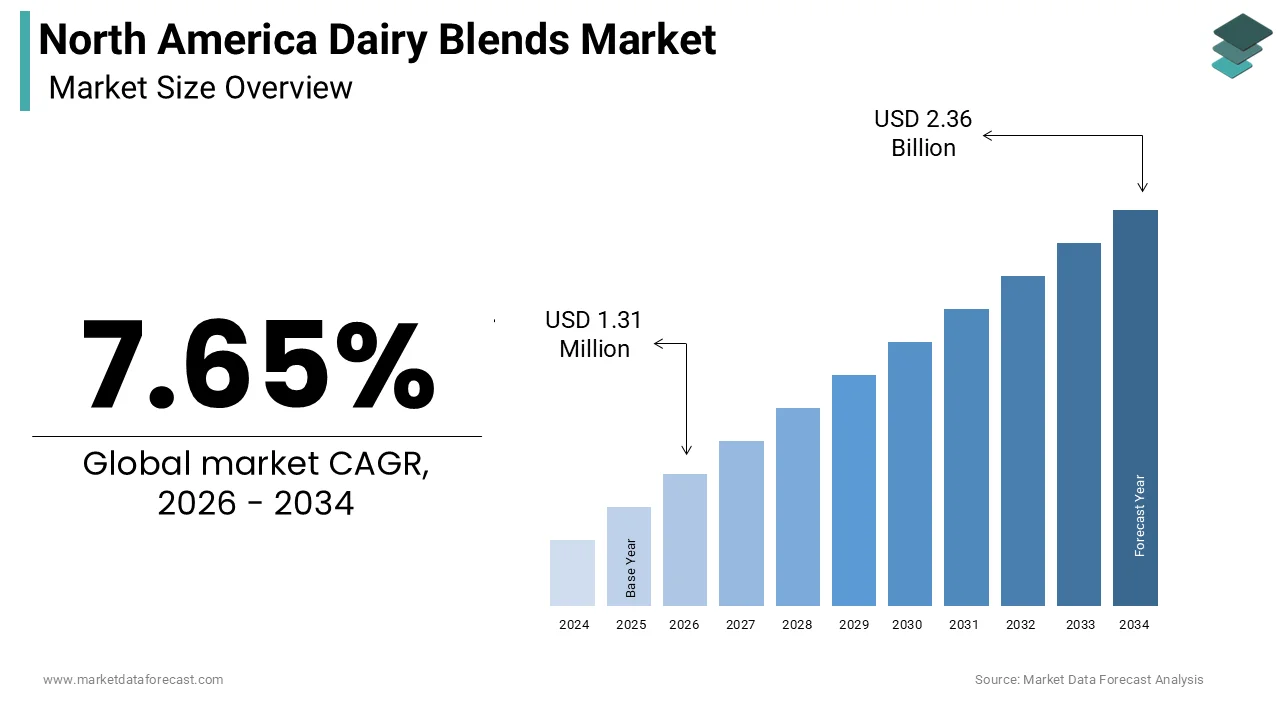
- Market Valuation: Valued at USD 1.22 billion in 2025, reaching USD 1.31 billion in 2026, and projected to scale up to USD 2.36 billion by 2034, expanding at a strong CAGR of 7.65% from 2026 to 2034.
- Primary Growth Drivers: Rising prevalence of lactose intolerance, shifts toward flexitarian diets, and increasing consumer preferences for sustainable, ethical food alternatives.
Key Market Segment Metrics
| Category | Leading Segment (Base Year Position) | Fastest-Growing / High-Impact Segment |
|---|---|---|
| By Application | Beverage Applications (largest market share in 2025 driven by ready-to-drink products, flavored milks, and coffee creamers) | Infant Formula (fastest-growing at a 7.5% CAGR powered by working parents and specialized breast-milk mimic solutions) |
| By Form | Powder Form (held majority share in 2025 due to extended shelf life, cost-effective shipping, and multi-industry versatility) | Liquid Form (fastest-growing segment at a 6.8% CAGR driven by ready-to-consume convenience and aseptic packaging technologies) |
| By Type | Dairy Mixtures (led market share in 2025 through extensive use in hybrid cheese, yogurt, and process spread innovations) | Dairy as a Functional Ingredient (fastest-growing at an 8.2% CAGR propelled by bio-active peptides and muscle retention benefits) |
| By Region / Country | United States (market leader holding an 80.4% share in 2025 supported by advanced processing and high consumer spending) | Canada (steady progression emphasizing stringent quality, sustainable sourcing, and rigorous labeling regulations) |
Major Market Players & Market Structure
Market Structure: Intense and competitive landscape featuring multinational corporations and agile regional specialists driving differentiation via clean-label profiles and hybrid formulation R&D.
Key Companies: Danone SA, Anchor, SPX Flow, Abbott Nutrition, Cape Food Ingredients, Agropur Ingredients, Hormel Specialty Products, FrieslandCampina, and Cargill Inc.
North America Dairy Blends Market Size
The size of the North America Dairy Blends Market was calculated to be USD 1.22 billion in 2025 and is anticipated to be worth USD 2.36 billion by 2034, from USD 1.31 billion in 2026, growing at a CAGR of 7.65% during the forecast period.
Dairy blends are food products or ingredients created by mixing real dairy (like milk powder, butter, or cream) with other dairy components, plant-based ingredients (such as oat or almond extracts), or cost-effective fillers (like whey and maltodextrin). These blends are designed to offer consumers the sensory appeal and protein content of dairy while addressing dietary restrictions, lactose intolerance, or sustainability concerns. The market is driven by a significant shift in consumer behavior towards flexitarian diets, where individuals seek to reduce animal product consumption without eliminating it. According to the United States Department of Agriculture, per capita consumption of fluid milk has declined by over 40 percent since the 1970s, an ongoing structural shift that commercial analysts cite as a primary driver for industry innovation into dairy blend products. The region faces unique demographic changes, with an aging population requiring enhanced nutrient density in their diets. Furthermore, the rise in food allergies and sensitivities has led to increased scrutiny of ingredient labels. As per Food Allergy Research and Education, an estimated 33 million Americans live with food allergies, a widespread health reality that forces dairy blend processors to prioritize transparent ingredient labeling and strict cross-contact prevention. This evolving landscape necessitates advanced processing technologies to ensure stability and palatability, establishing a robust framework for the growth of specialized dairy blend applications across beverage, bakery, and confectionery sectors in North America.
MARKET DRIVERS
Rising Prevalence Of Lactose Intolerance Drives Demand For Hybrid Solutions
The increasing prevalence of lactose intolerance and milk protein allergies is a key factor boosting the growth of the North America dairy blends market. This compels manufacturers to develop hybrid products that are easier to digest. A significant portion of the adult population lacks the enzyme lactase, which is necessary for breaking down lactose, leading to digestive discomfort when consuming traditional dairy. According to the National Institutes of Health, approximately 68 percent of the global population has some degree of lactose malabsorption. This biological reality creates a substantial market for dairy blends that incorporate lactose-free milk or plant-based milks such as almond, oat, or soy to reduce the overall lactose content while maintaining the creamy texture and flavor profile associated with dairy. Consumers who are sensitive to dairy but do not wish to completely abandon its taste benefits find these blends to be an ideal compromise. The American Gastroenterological Association notes that self-reported lactose intolerance affects up to 30 million American adults. Manufacturers are responding by formulating products that use enzymatic treatment to break down lactose or by blending dairy with naturally lactose-free plant bases. This approach allows brands to cater to a wider audience, including those with mild sensitivities who can tolerate small amounts of dairy when mixed with other ingredients. The growing awareness of gut health and digestive wellness further amplifies this trend, as consumers actively seek products that support their physiological needs without causing adverse reactions. Consequently, the demand for lactose reduced and hybrid dairy blends continues to rise, driven by the need for inclusive and comfortable nutritional options.
Growing Consumer Preference For Sustainable And Ethical Food Choices
The growing consumer preference for sustainable and ethical food choices further drives the expansion of the North America dairy blends market. This trend thrives as individuals seek to reduce their environmental footprint without sacrificing nutritional quality. Traditional dairy farming is resource-intensive, requiring large amounts of water, land, and feed, which contributes to greenhouse gas emissions. The Food and Agriculture Organization of the United Nations reveals that the livestock sector accounts for roughly 12% of all human-induced greenhouse gas emissions globally, a major environmental reality accelerating consumer interest in sustainable hybrid and plant-based foods. In response, environmentally conscious consumers are turning to dairy blends that incorporate plant-based ingredients, which generally have a lower environmental impact. By mixing dairy with plant proteins, manufacturers can reduce the reliance on pure animal milk, thereby lowering the overall carbon and water footprint of the product. Data from the Good Food Institute indicates that sales of plant-based foods have grown significantly. Many consumers view dairy blends as a transitional step towards a more plant-centric diet, allowing them to make incremental changes rather than abrupt shifts. This perspective is particularly prevalent among younger demographics, such as Millennials and Generation Z, who prioritize corporate responsibility and environmental stewardship in their purchasing decisions. Brands that emphasize sustainable sourcing, renewable energy usage in production, and eco-friendly packaging further enhance their appeal to this segment. The alignment of dairy blends with sustainability goals provides a compelling value proposition, driving market growth as consumers increasingly vote with their wallets for products that support planetary health.
MARKET RESTRAINTS
Regulatory Complexity And Labeling Standards Restrict Product Innovation
Regulatory complexity and stringent labeling standards constrain the growth of the North American dairy blends market. This creates hurdles for manufacturers attempting to introduce innovative hybrid products. The definition of what constitutes milk or dairy varies across jurisdictions, and recent legal challenges have scrutinized the use of dairy terms for plant-based or blended products. Also, the regulatory ambiguity creates uncertainty for companies developing dairy blends, as they must navigate a patchwork of state and federal guidelines that may restrict how these products can be marketed and labeled. For instance, some states have enacted laws prohibiting the use of dairy terminology on plant-based products, which can inadvertently affect blended items that contain both dairy and plant components. Compliance with these varying regulations increases operational costs and delays time to market, as companies must invest in legal counsel and reformulation to meet specific requirements. Additionally, the lack of harmonized standards between the United States, Canada, and Mexico complicates cross-border trade, limiting the ability of manufacturers to scale their operations efficiently. These regulatory barriers stifle innovation by discouraging investment in new product development, as companies fear potential litigation or recall issues arising from non-compliant labeling practices.
High Production Costs and Supply Chain Volatility Impact Profitability
High production costs and supply chain volatility are also significant limitations to the North American dairy blends market. This affects the profitability and pricing strategies of manufacturers. Producing high-quality dairy blends requires sourcing premium ingredients from multiple supply chains, including dairy farms and plant crop producers, which are subject to different market dynamics. According to the United States Department of Agriculture, feed costs for dairy cattle have fluctuated significantly due to weather events and global commodity prices. Similarly, the price of plant-based ingredients such as almonds, oats, and peas is influenced by climate conditions, water availability, and harvest yields. This dual exposure to volatility makes it difficult for manufacturers to maintain stable input costs, leading to unpredictable profit margins. Additionally, the processing of dairy blends often involves specialized equipment and technologies to ensure proper emulsification and stability, which requires substantial capital investment. Energy costs for heating, cooling, and processing further add to the operational burden, especially during periods of inflation. Small and medium-sized enterprises struggle to absorb these costs, limiting their ability to compete with larger corporations that have economies of scale. The complexity of managing two distinct supply chains also increases logistical challenges, such as storage requirements and transportation coordination. Any disruption in either the dairy or plant supply chain can halt production, leading to stockouts and lost revenue. These financial pressures constrain market growth by forcing companies to raise prices, which may deter price-sensitive consumers.
MARKET OPPORTUNITIES
Expansion Into Functional And Fortified Product Categories Creates Opportunities
The expansion into functional and fortified product categories offers a significant opportunity for the North American dairy blends market. This is driven by consumers increasingly seeking foods and beverages that provide health benefits beyond basic nutrition. Dairy blends provide an ideal matrix for incorporating functional ingredients such as probiotics, prebiotics, vitamins, minerals, and plant-based proteins, creating value-added products that address specific health concerns. Dairy blends enriched with collagen for skin health, adaptogens for stress relief, or fiber for gut health appeal to health-conscious individuals looking for convenient solutions. The aging population in North America, with individuals aged 65 and older comprising 17 percent of the US population, as per the Census Bureau. Manufacturers can leverage the natural protein and calcium content of dairy to enhance the efficacy of these functional additions. Furthermore, the rise of personalized nutrition allows brands to develop targeted blends for specific lifestyle needs, such as post-workout recovery or sleep support. By positioning dairy blends as holistic wellness tools, companies can differentiate themselves in a crowded market and command premium pricing. This strategic shift towards functionality aligns with broader health trends, driving innovation and attracting a loyal customer base willing to invest in their long-term well-being.
Development Of Clean Label and Organic Dairy Blends Offers Potential
The development of clean-label and organic dairy blends provides a major prospect for the North American dairy blends market. This is propelled by consumer demand for transparency and minimal processing. Modern shoppers are increasingly scrutinizing ingredient lists, preferring products with recognizable and natural components free from artificial additives, preservatives, and genetically modified organisms. Dairy blends that utilize organic milk and organic plant-based ingredients can capitalize on this trend by appealing to health-conscious and environmentally aware consumers. The clean label movement encourages manufacturers to simplify formulations, using natural stabilizers and sweeteners instead of synthetic alternatives. This approach not only meets consumer expectations but also aligns with regulatory trends that favor transparency. Brands that obtain third-party certifications such as Non-GMO Project Verified or USDA Organic can build trust and credibility with their target audience. Additionally, the premium nature of organic and clean label products allows for higher profit margins, offsetting the higher costs of sourcing certified ingredients. The growing availability of organic plant-based ingredients, such as oat and almond milk, facilitates the creation of high-quality blends that meet these stringent standards. Companies can attract discerning customers who prioritize health and sustainability by focusing on purity and simplicity. As a result, they can expand their market share in the premium segment of the Dairy Blends Market.
MARKET CHALLENGES
Intense Competition From Pure Plant-Based Alternatives Poses A Challenge
Intense competition from pure plant-based alternatives slows down the growth of the North American dairy blends market. Consumers are increasingly choosing completely dairy-free options for ethical, environmental, or health reasons. The plant-based milk and yogurt sectors have experienced rapid growth, with numerous brands offering diverse flavors and textures that closely mimic traditional dairy. Moreover, the Plant Based Foods Association confirms that plant-based retail sales reach billions of dollars annually, led heavily by milk alternatives, presenting formidable category competition for traditional and hybrid dairy blend manufacturers. This robust competition diverts consumer spending away from dairy blends, as many individuals prefer the simplicity and perceived purity of 100 percent plant-based products. Pure plant-based alternatives are often marketed as superior choices for vegans and those with severe dairy allergies, segments that dairy blends cannot fully serve due to the presence of animal-derived ingredients. Additionally, established plant-based brands have invested heavily in marketing and distribution, securing prominent shelf space and brand loyalty. The perception that plant-based products are inherently healthier or more sustainable than dairy blends, even if scientifically debatable, influences purchasing decisions. Manufacturers of dairy blends must work harder to justify the inclusion of dairy, often facing skepticism from consumers who view any animal product as undesirable. This competitive pressure forces dairy blend producers to continuously innovate and prove their value proposition, which can be costly and resource-intensive. The dominance of pure plant-based players in the alternative dairy space limits the growth potential of hybrid products, requiring strategic differentiation to survive.
Consumer Confusion Regarding Nutritional Benefits And Ingredient Transparency
Consumer confusion regarding the nutritional benefits and ingredient transparency of dairy blends remains a major challenge to the North American dairy blends market. This hinders widespread adoption and trust in the category. Unlike pure dairy or pure plant-based products, dairy blends occupy a middle ground that can be difficult for consumers to understand in terms of nutritional value and dietary suitability. According to a survey by the International Food Information Council, many consumers struggle to interpret complex nutrition labels and ingredient lists. Questions arise regarding the ratio of dairy to plant ingredients, the source of proteins, and the presence of allergens, which can deter potential buyers. The lack of standardized definitions for terms like blend, hybrid, or mix further exacerbates this confusion, as different manufacturers may use these terms inconsistently. Additionally, misconceptions about the nutritional equivalence of dairy blends compared to pure milk or plant milks can lead to dissatisfaction if expectations are not met. For instance, consumers may assume a dairy blend has the same calcium content as whole milk, only to find it diluted by plant ingredients. This disconnect between perception and reality can damage brand reputation and reduce repeat purchases. Educating consumers about the specific benefits and composition of dairy blends requires significant marketing effort and clear communication, which many companies struggle to execute effectively. Until clarity is achieved, consumer hesitation will remain a barrier to market expansion.
REPORT COVERAGE
| REPORT METRIC | DETAILS |
| Market Size Available | 2025 to 2034 |
| Base Year | 2025 |
| Forecast Period | 2026 to 2034 |
| CAGR | 7.65% |
| Segments Covered | By Application, Form, Type, And Region |
| Various Analyses Covered | Global, Regional, and Country-Level Analysis; Segment-Level Analysis; DROC; PESTLE Analysis; Porter’s Five Forces Analysis; Competitive Landscape; Analyst Overview of Investment Opportunities |
| Regions Covered | US, Canada, and the rest of North America |
| Market Leaders Profiled | Anchor, SPX Flow, Abbott Nutrition, Cape Food Ingredients, Agropur Ingredients, Hormel Specialty Products, Friesland Campina, and Cargill Inc |
SEGMENTAL ANALYSIS
By Application Insights
The beverage applications segment was the largest in the North America dairy blends market and occupied a commanding share in 2025. Factors such as the widespread consumption of ready-to-drink products and the versatility of dairy blends in liquid formulations have contributed to the prominence of this segment. This segment includes flavored milk, protein shakes, smoothies, and hybrid coffee beverages that combine dairy with plant-based ingredients or functional additives. According to the International Dairy Foods Association, structural shifts in fluid milk sales have pushed the industry toward value-added beverages to capture premium retail margins despite long-term declines in traditional plain milk volume. Consumers are increasingly seeking convenient hydration options that offer nutritional benefits, leading to a surge in demand for fortified dairy beverages. Data from the National Coffee Association indicates that roughly two-thirds of Americans drink coffee daily, establishing a massive base of consumers that commercial brands target with dairy-blended creamers and ready-to-drink latte products. The portability and ease of consumption make beverage blends ideal for busy lifestyles, appealing to students, professionals, and athletes. Manufacturers leverage advanced processing technologies to ensure stability and prevent separation in liquid blends, enhancing shelf life and consumer appeal. The rise of functional beverages infused with vitamins, minerals, and probiotics further boosts this segment, as consumers prioritize health and wellness in their daily drinks. Additionally, the popularity of meal replacement shakes and post-workout recovery drinks contributes to the dominance of beverage applications. The ability to customize flavor profiles and nutritional content allows brands to target specific demographic segments, ensuring sustained growth and market leadership in the North American dairy blends sector.
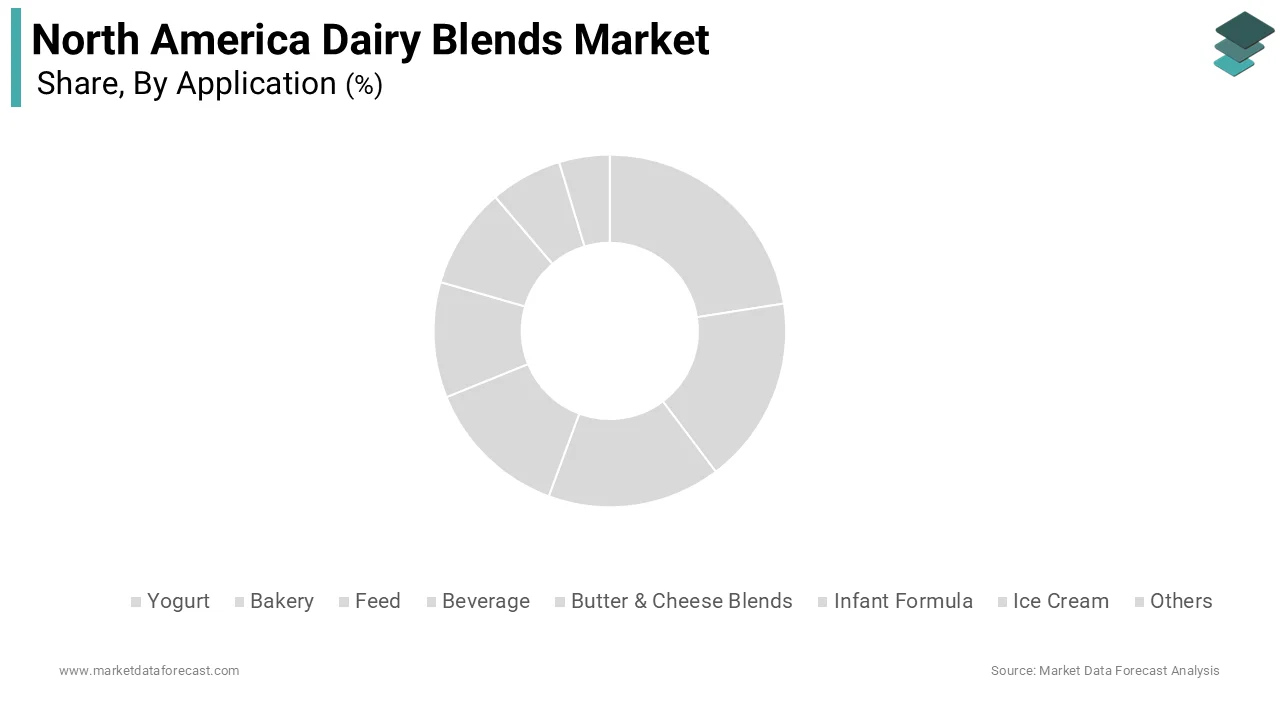
However, the infant formula segment is likely to experience the fastest CAGR of 7.5% between 2026 and 203,4 owing to the increasing number of working parents who rely on formula feeding and the growing preference for specialized nutritional solutions that mimic breast milk. According to the Centers for Disease Control and Prevention, over 40% of infants in the United States are fed formula by six months of age, highlighting the stable and critical role of this targeted nutritional product category. Dairy blends in infant formula often incorporate human milk oligosaccharides, probiotics, and plant-based oils to enhance digestibility and immune support. The rising awareness of gut health and its impact on early development drives demand for advanced formulations that support cognitive and physical growth. As per the American Academy of Pediatrics, there is a growing emphasis on reducing allergies and intolerances in infants. Parents are willing to pay a premium for high-quality, scientifically backed formulas that offer comprehensive nutrition. Regulatory standards for infant formula are stringent, ensuring safety and efficacy, which builds trust among consumers. The introduction of organic and non-GMO dairy blends further appeals to health-conscious parents. With birth rates remaining stable and parental spending on child nutrition increasing, the infant formula segment continues to experience robust growth, driven by innovation and heightened health awareness.
By Form Insights
In 2025, the powder form segment held the majority share of the North American dairy blends market because of its extended shelf life, cost-effective transportation, and versatility in various applications. Powdered dairy blends are widely used in bakery, confectionery, and instant beverage preparations, where stability and ease of storage are paramount. Also, the United States Department of Agriculture confirms steady domestic production of dry milk and dairy powders, providing a stable raw material foundation for food processors requiring highly stable, long-preservation ingredients. The lightweight nature of powder reduces shipping costs and carbon footprint, aligning with sustainability goals pursued by many manufacturers. Consumers also appreciate the convenience of powdered blends for home use, such as in baking mixes or protein supplements, where they can control the concentration and freshness. The technology for spray drying and freeze drying has advanced significantly, allowing for better retention of nutrients and flavor in powdered dairy blends. This form is particularly popular in the sports nutrition sector, where protein powders are a staple for fitness enthusiasts. The ability to fortify powders with vitamins and minerals without affecting stability further enhances their appeal. The trend of home cooking and baking is growing. As a result, powdered dairy blends continue to dominate the market by offering a practical and efficient solution for both commercial and residential users.
On the other hand, the liquid form segment is on the rise and is expected to be the fastest-growing segment in the market by witnessing a CAGR of 6.8% over the forecast period due to the increasing demand for ready-to-consume products and the convenience offered by liquid formats in the food service and retail sectors. Liquid blends eliminate the need for reconstitution, saving time and labor costs for businesses. Consumers are also shifting towards liquid formats for their perceived freshness and superior mouthfeel compared to powdered alternatives. The development of aseptic packaging technologies has extended the shelf life of liquid dairy blends without refrigeration, expanding their distribution reach. This innovation allows retailers to stock these products in ambient aisles, increasing visibility and accessibility. The rise of on-the-go consumption patterns further supports the growth of liquid forms, as they are easy to carry and consume. Manufacturers are investing in sustainable packaging solutions for liquid blends to address environmental concerns. The combination of convenience, quality, and technological advancements positions liquid form as the most dynamic segment in the market.
By Type Insights
The dairy mixtures segment led the North America dairy blends market and captured a significant share in 2025. This leading position of the segment was attributed to its extensive use in creating hybrid products that combine the best attributes of dairy and non-dairy ingredients. These mixtures typically involve blending milk proteins with plant-based fats or carbohydrates to achieve specific texture, flavor, and nutritional profiles. This segment is particularly dominant in the cheese and yogurt categories, where blends are used to improve meltability and creaminess. As per the United States Department of Agriculture, the production of process cheese and cheese spreads, which often utilize dairy mixtures, remains robust due to their versatility in cooking and snacking. Consumers appreciate the balanced taste and improved functionality of dairy mixtures, which can be tailored to meet dietary preferences such as reduced fat or enhanced protein content. The ability to customize these mixtures for specific applications, such as baking or freezing, makes them indispensable for food manufacturers. Additionally, dairy mixtures help in stabilizing products during processing, reducing waste, and improving yield. The widespread acceptance of hybrid products in mainstream diets ensures that dairy mixtures remain the primary choice for manufacturers seeking to innovate while controlling costs. This segment's dominance is further reinforced by the continuous development of new blending techniques that enhance performance and consumer appeal.
Apart from this, the dairy as a functional ingredient segment is expected to exhibit a noteworthy CAGR of 8.2% during the forecast period. This swift expansion of the segment is propelled by the increasing incorporation of dairy proteins, peptides, and bioactive compounds into various food and beverage products to enhance their health benefits. Scientific consensus promoted by the Global Dairy Platform reinforces that dairy-derived proteins carry high biological value, positioning these ingredients as key building blocks in functional foods designed for muscle retention and physical wellness. Manufacturers are leveraging these functional properties to create value-added products such as protein-enriched snacks, fortified beverages, and medical nutrition foods. Dairy peptides, in particular, are gaining attention for their potential to lower blood pressure and improve cardiovascular health. The aging population in North America is a key driver for this segment, as older adults require nutrient-dense foods to maintain vitality. Advances in extraction and purification technologies have made it easier to isolate specific functional components from dairy, enabling precise formulation. The regulatory approval of health claims related to dairy proteins further boosts consumer confidence. By positioning dairy as a source of functional benefits rather than just a macronutrient, manufacturers are unlocking new growth opportunities in the health and wellness sector.
REGIONAL ANALYSIS
United States Dairy Blends Market Analysis
The United States maintained dominance in the North American dairy blends market and accounted for an 80.4% share in 2025. This supremacy was driven by its large population, advanced food processing industry, and high consumer spending power. The country is a hub for food innovation, with numerous companies investing in research and development to create novel dairy blend products. Also, the United States Department of Agriculture confirms that the U.S. is one of the world's premier producers of milk and dairy products, a high-volume base that independent market analysts cite as a robust raw material supply chain for dairy blend formulations. The diverse demographic landscape, including a significant population of lactose-intolerant individuals and health-conscious consumers, fuels demand for hybrid and functional dairy solutions. Studies published by The Food Industry Association indicate that American shoppers are heavily prioritizing health and wellness in-store, a behavioral pattern that independent retail trackers note is boosting sales of fortified and clean-label dairy alternatives. The presence of major global food corporations and agile startups ensures a competitive and dynamic market environment. Additionally, the strong influence of digital marketing and e-commerce platforms facilitates the launch and distribution of niche products. The regulatory framework, while strict, provides clarity for ingredient labeling and health claims, fostering consumer trust. With a mature retail infrastructure and high adoption of new food trends, the United States remains the primary engine of growth and innovation in the North American dairy blends sector.
Canada Dairy Blends Market Analysis
Canada is moving ahead steadfastly in the North American dairy blends market. At the same time, the market maintains a strong emphasis on quality, sustainability, and natural ingredients. Canadian consumers are known for their preference for transparent labeling and ethically sourced products, which drives demand for organic and non-GMO dairy blends. Statistics Canada emphasizes that the agriculture and agri-food sector is an essential economic driver, operating alongside strict national regulatory standards that mandate exceptionally high-quality and sustainable production across Canada's dairy farms. The supply management system in Canada ensures stable milk prices and consistent quality, supporting the production of high-grade dairy blends. In addition, the cold climate in many regions encourages the consumption of warm beverages and comfort foods, where dairy blends play a key role. Additionally, the multicultural population introduces diverse culinary traditions that incorporate dairy in unique ways, expanding the variety of blend applications. Government initiatives promoting healthy eating and reducing sodium and sugar intake also influence product development, leading to healthier blend formulations. The robust export market for Canadian dairy products further supports industry growth. With a focus on sustainability and quality, Canada continues to strengthen its position in the regional dairy blends market.
COMPETITION OVERVIEW
The competition in the North American dairy blends market is intense and characterized by the presence of large multinational corporations alongside agile regional specialists. Major players leverage their extensive resources and established distribution networks to dominate shelf space in retail outlets. These companies benefit from strong brand recognition and significant marketing budgets that allow them to launch widespread advertising campaigns. Smaller niche brands compete by focusing on specific dietary needs such as organic, non-GMO, or allergen-free blends. The low barrier to entry for certain blend categories leads to frequent new product launches, creating a saturated marketplace. Price competition is fierce, with private label options offering cheaper alternatives that challenge branded products. Innovation in formulation and packaging serves as a key differentiator for companies seeking to capture consumer attention. Regulatory compliance and adherence to labeling standards also influence competitive dynamics. The rise of direct-to-consumer models allows startups to bypass traditional retail channels and build loyal communities online. This multifaceted landscape requires constant adaptation and strategic agility from all market participants to maintain relevance and growth.
KEY MARKET PLAYERS
Major Key Players in the North America Dairy Blends Market include
- Anchor
- SPX Flow
- Abbott Nutrition
- Cape Food Ingredients
- Agropur Ingredients
- Hormel Specialty Products
- Friesland Campina
- Cargill Inc
Top Strategies Used By Key Market Participants
Key players in the North America dairy blends market primarily focus on product innovation and strategic partnerships to enhance their competitive position. Companies are increasingly investing in research and development to create hybrid formulations that combine dairy with plant-based ingredients for improved nutrition and sustainability. Expansion into clean label and organic segments helps brands appeal to health-conscious consumers who prioritize transparency. Collaborations with retailers and food service providers facilitate wider distribution and brand visibility. Additionally, manufacturers are adopting sustainable sourcing practices and eco-friendly packaging to align with environmental goals. Digital marketing and consumer education campaigns are used to highlight the benefits of dairy blends and build brand loyalty in a crowded marketplace.
Leading Players In The North America Market
- Danone SA maintains a strong presence in the North American dairy blends market through its diverse portfolio of yogurt and plant-based hybrid products. The company focuses on combining traditional dairy with plant ingredients to create nutritious and sustainable options for health-conscious consumers. Danone has recently expanded its Silk and So Delicious brands to include blended formulations that appeal to flexitarian diets. The company invests heavily in research and development to improve the texture and flavor profile of these hybrid products. By emphasizing transparency and clean label ingredients, Danone strengthens its reputation as a leader in responsible nutrition. Its strategic partnerships with local farmers and suppliers ensure high-quality raw materials while supporting community sustainability initiatives across the region.
- Nestle SA contributes significantly to the North American dairy blends market by leveraging its extensive expertise in food science and nutrition. The company offers a wide range of blended dairy products, including coffee creamers, infant formula, and culinary solutions that combine dairy with functional ingredients. Nestle has recently launched new organic and non-GMO dairy blend lines to meet the growing demand for clean-label products. The company utilizes its global supply chain to source premium ingredients efficiently and maintain consistent quality. Nestle actively engages with consumers through digital platforms to educate them about the benefits of blended nutrition. Its commitment to reducing environmental impact drives innovation in sustainable packaging and production methods for dairy blends.
- Arla Foods amba plays a vital role in the North America dairy blends market by providing high-quality dairy ingredients and consumer packaged goods. The company specializes in creating innovative cheese and butter blends that incorporate plant-based oils to enhance spreadability and reduce saturated fat content. Arla has recently introduced new product lines focused on protein enrichment and functional benefits for active lifestyles. The company collaborates with food manufacturers to develop customized dairy blend solutions for various applications. Arla emphasizes sustainable farming practices and animal welfare, which resonates with ethically minded consumers in North America. Its robust distribution network ensures the wide availability of its blended dairy products in retail and food service channels.
MARKET SEGMENTATION
This research report on the North America dairy blends market has been segmented and sub-segmented based on application, form, type, and region.
By Application
- Yogurt
- Bakery
- Feed
- Beverage
- Butter & Cheese Blends
- Infant Formula
- Ice Cream
- Others
By Form
- Powder
- Liquid
- Spreadable
By Type
- Dairy/Non-Dairy Ingredients
- Dairy As Carrier
- Dairy as a Functional Ingredient
- Dairy Mixtures
- Others
By Region
- US
- Canada
- Rest of North America