- Product Description Description
- Table of Contents TOC
- List of Table & Figure LOT
- Get Free Sample PDF Sample PDF
Market Size, 2025
$116.76 BnMarket Estimate, 2026
$121.63 BnMarket Forecast, 2034
$168.65 BnCAGR, 2026–2034
4.17%Executive Summary: North America Deli Food Market
- Market Scope: Regional deli food market analysis covering product types, country-level dynamics within North America, convenience meal trends, and ready-to-eat adoption metrics.
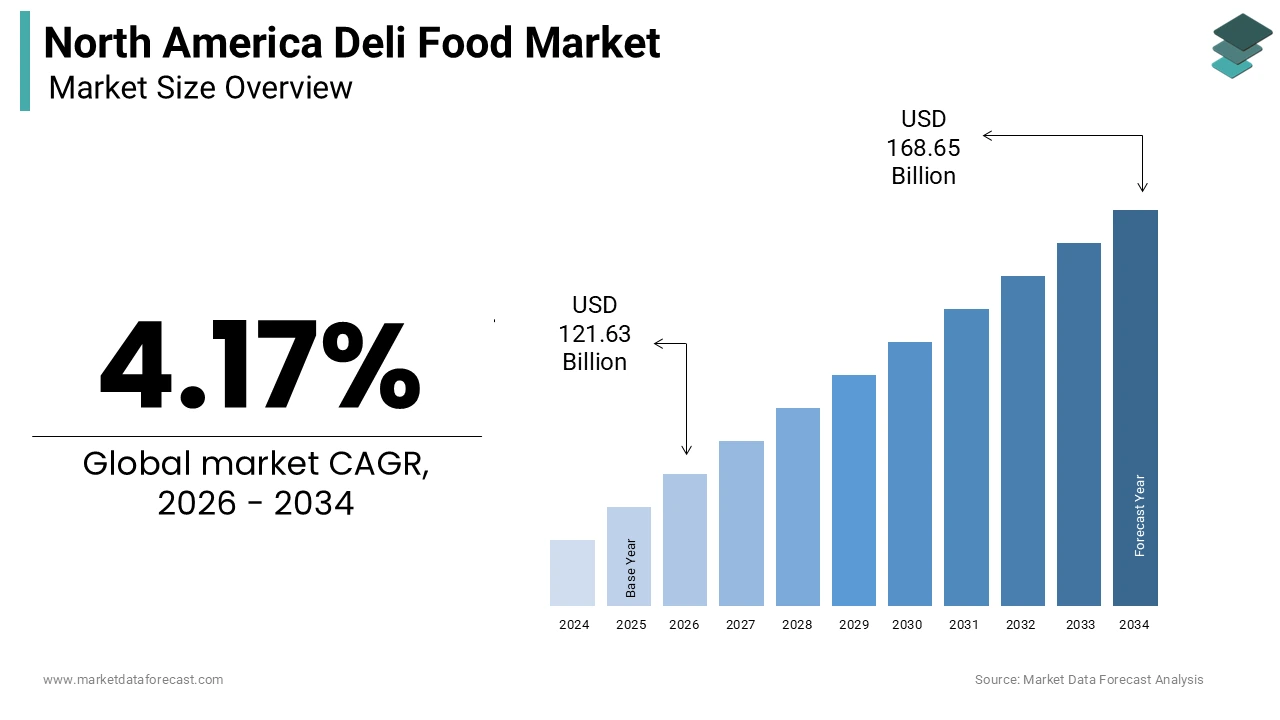
- Market Valuation: Valued at USD 116.76 billion in 2025, estimated at USD 121.63 billion in 2026, and projected to reach USD 168.65 billion by 2034, registering a CAGR of 4.17% from 2026 to 2034.
- Primary Growth Drivers: Rising consumer demand for convenience and ready-to-eat meal solutions among urban professionals, alongside a growing preference for premium and artisanal food experiences.
Key Market Segment Metrics (2026–2034)
| Category | Leading Segment (Position) | Fastest-Growing / Key Growth Segment |
|---|---|---|
| By Product Type | Meats (dominated with a 32.5% share in 2025) | Prepacked sandwiches (fastest-growing segment at 5.7% CAGR) |
| By Technology & Innovation | Traditional deli counters and standard service models | Digital ordering infrastructure, chef-inspired prepared meals, and private label charcuterie lines |
| By Country / Regional Dynamics | United States (led the market with an 83.5% share in 2025) | Canada (exhibiting notable growth driven by expanded retail formats and consumer convenience) |
Major Market Players & Market Structure
Market Structure: Highly competitive North American prepared foods and deli sector characterized by digital infrastructure investments, private label expansions, gourmet sub shop rollouts, and chef-inspired meal offerings.
Key Companies: Kraft Foods Group Inc., Samworth Brothers Ltd, Tyson Foods Inc., Waitrose Ltd, JBS S.A., BRF S.A., Astral Foods Ltd, 2 Sisters Food Group, Wm Morrison Supermarkets Plc, and Hormel Foods Corporation.
North America Deli Food Market Size
The deli food market size in North America was calculated to be USD 116.76 billion in 2025 and is anticipated to be worth USD 168.65 billion by 2034 from USD 121.63 billion in 2026, growing at a CAGR of 4.17% during the forecast period.
Deli food refers to ready-to-eat, pre-prepared meals and specialty gourmet items sold at a delicatessen (or "deli"). It primarily consists of sliced cured meats, cheeses, made-to-order sandwiches, and prepared salads, but it can also include hot meals, soups, and baked goods. This market serves as a critical component of the regional food retail landscape by offering convenient high quality meal solutions for busy consumers. The market is deeply rooted in cultural traditions particularly in urban centers with strong European immigrant histories such as New York and Chicago. As per the United States Department of Agriculture, the average American household spends more than half of its total food budget on away-from-home meals, while total food spending (both at home and away) accounts for roughly 11% of disposable personal income. Furthermore, the Bureau of Labor Statistics states that the average workweek for production and nonsupervisory employees remains around 34 hours, limiting time available for home cooking. This temporal constraint drives demand for ready to eat deli items that offer both nutritional value and speed. The aging population also contributes to this dynamic. Additionally, the Census Bureau projects that by 2030 all baby boomers will be older than 65. This demographic often prefers smaller portion sizes and fresh prepared foods over bulk raw ingredients. Additionally, the rise of dual income households has shifted consumption patterns toward premium and artisanal deli offerings that provide a restaurant quality experience at home. These socio economic factors collectively underpin the sustained relevance of the deli food sector in North America.
MARKET DRIVERS
Increasing Demand For Convenience And Ready To Eat Meal Solutions Among Urban Professionals
The escalating demand for convenience and ready-to-eat meal solutions among urban professionals is the main reason behind the growth of the North America Deli Food Market. Modern lifestyles characterized by long working hours and commuting times have reduced the availability of time for meal preparation. As per the Bureau of Labor Statistics, the average employed American spends around 7.9 hours working per day on days worked, with commuting adding significant extra time and restricting open windows for cooking. This time scarcity necessitates quick yet satisfying dining options, making deli counters an attractive choice for lunch and dinner. The National Restaurant Association indicates that 60 percent of consumers view convenience as a major factor in their food purchasing decisions. Deli foods offer a compromise between fast food and home cooked meals, providing perceived higher quality and freshness. Urban centers such as New York City and Toronto have seen a surge in foot traffic at gourmet delis during peak lunch hours, reflecting this trend. Moreover, the rise of remote work has not diminished this demand but rather shifted it toward high quality home meal replacements. Consumers are willing to pay a premium for curated sandwich boards and charcuterie boxes that require minimal effort. The integration of online ordering and curbside pickup by major grocery chains further enhances accessibility, allowing customers to secure fresh deli items without waiting in line. This seamless integration of convenience and quality sustains robust demand across the region.
Growing Consumer Preference For Premium And Artisanal Food Experiences
The growing consumer preference for premium and artisanal food experiences within the deli segment further boosts the expansion of the North America deli food market. Shoppers are increasingly seeking authentic high quality ingredients and unique flavor profiles that reflect culinary craftsmanship. As per the Specialty Food Association, sales of specialty foods in the United States reached 175 billion dollars in recent years, demonstrating a strong appetite for gourmet products. This trend extends to deli counters where consumers favor house cured meats aged cheeses and locally sourced produce over mass produced alternatives. The influence of social media platforms like Instagram has amplified this desire for visually appealing and Instagram worthy food presentations, driving traffic to artisanal delis. Consumers are more educated about food origins and production methods, leading them to choose brands that emphasize transparency and sustainability. Deli operators respond by highlighting partnerships with local farms and artisanal producers, creating a narrative of quality and community support. This shift toward premiumization allows delis to differentiate themselves from standard grocery offerings and command higher price points. The experience of customizing sandwiches with exotic ingredients or selecting from a wide variety of imported cheeses adds value beyond mere sustenance, fostering customer loyalty and repeat visits in a competitive market.
MARKET RESTRAINTS
Stringent Food Safety Regulations And Compliance Costs Impact Operational Efficiency
Stringent food safety regulations and the associated compliance costs are major constraints to the North America Deli Food Market. Deli operations involve handling perishable items that are highly susceptible to bacterial contamination such as Listeria and Salmonella, requiring rigorous hygiene protocols. As per the Centers for Disease Control and Prevention, foodborne illnesses affect millions of Americans annually, with deli meats being a common vector for outbreaks. This risk necessitates strict adherence to guidelines set by the Food and Drug Administration and local health departments, including regular temperature monitoring and staff training. Compliance with these regulations imposes significant financial burdens on operators, particularly small independent delis with limited resources. The cost of implementing advanced tracking systems and conducting frequent audits can strain profit margins. According to the National Restaurant Association, labor costs which include training and safety compliance account for approximately 30 percent of total operating expenses for food service establishments. Any lapse in safety standards can lead to severe legal consequences recalls and reputational damage, deterring potential investors. Furthermore, the complexity of varying state and provincial regulations creates operational challenges for chains expanding across borders. The need for constant vigilance and investment in safety infrastructure limits the ability of some players to innovate or expand aggressively. This regulatory environment while necessary for public health creates a barrier to entry and growth for many market participants.
Rising Labor Costs And Shortage Of Skilled Workforce Constrain Service Quality
Rising labor costs and a shortage of a skilled workforce significantly hamper the service quality and operational capacity of the North America deli food market. Deli counters require skilled personnel who can slice meats precisely prepare custom orders and maintain high standards of presentation. However, the food service industry faces persistent labor shortages exacerbated by demographic shifts and changing worker preferences. As per the Bureau of Labor Statistics, the leisure and hospitality sector experienced a turnover rate of over 70 percent in recent years, highlighting the instability of the workforce. This high turnover necessitates continuous recruitment and training efforts which increase operational costs. The inability to retain experienced staff leads to inconsistencies in product quality and customer service, potentially driving away loyal customers. Wage pressures are also intensifying with many states and cities implementing higher minimum wage laws. These increased expenses often cannot be fully passed on to consumers due to price sensitivity, squeezing profit margins. Additionally, the physical demands of deli work contribute to burnout and absenteeism further complicating staffing issues. The lack of automation in many deli processes means that human labor remains a critical bottleneck. Delis often struggle to meet demand during peak hours without a stable and skilled workforce. Consequently, this lack of staff limits their growth and operational efficiency.
MARKET OPPORTUNITIES
Expansion Of Plant Based And Alternative Protein Offerings In Deli Counters
The expansion of plant based and alternative protein offerings opens the door for the growth of the North America Deli Food Market. As consumer dietary preferences shift toward vegetarian and vegan options delis have the chance to diversify their product lines beyond traditional meats. As per the Plant Based Foods Association, retail sales of plant based foods grew by 27 percent in recent years outpacing total food sales. This trend indicates a robust demand for meat alternatives that can be incorporated into sandwiches salads and charcuterie boards. Deli operators can capitalize on this by introducing house made veggie patties smoked tofu and plant based cheeses that mimic the texture and flavor of traditional dairy. Partnering with innovative food tech companies allows delis to offer cutting edge products that appeal to health conscious and environmentally aware consumers. By catering to this group delis can broaden their customer base and increase foot traffic. Furthermore, plant based options often have lower spoilage rates and longer shelf lives compared to raw meats, potentially reducing waste and improving inventory management. Marketing these items as healthy and sustainable aligns with broader consumer values enhancing brand image. The ability to customize plant based sandwiches with fresh vegetables and artisanal breads offers a unique value proposition that differentiates delis from fast food competitors.
Integration Of Digital Technologies For Personalized Customer Engagement And Delivery
The integration of digital technologies for personalized customer engagement and delivery offers a transformative opportunity for the North America deli food market. Leveraging mobile apps and online platforms allows delis to reach customers beyond their physical location and enhance convenience. Delis can partner with third party delivery services or develop proprietary apps to offer pre ordered sandwiches and platters for pickup or delivery. Data analytics derived from these platforms enable operators to understand customer preferences and tailor promotions accordingly. For instance, personalized discounts on favorite items can drive repeat purchases and loyalty. Implementing loyalty programs through digital channels further strengthens customer relationships and provides valuable insights into buying behavior. Additionally, digital kiosks in stores can reduce wait times and allow for greater customization of orders improving the overall customer experience. Social media integration enables real time marketing and engagement with local communities fostering brand awareness. By embracing digital transformation delis can optimize operations reduce waste through better demand forecasting and create new revenue streams. This technological adoption positions delis to compete effectively in the modern convenience driven economy.
MARKET CHALLENGES
Volatility In Raw Material Prices And Supply Chain Disruptions Affect Margins
Volatility in raw material prices and supply chain disruptions are significant obstacles to the profitability and stability of the North America Deli Food Market. Delis rely heavily on consistent supplies of meat cheese and fresh produce which are subject to fluctuating costs due to weather conditions disease outbreaks and geopolitical tensions. As per the United States Department of Agriculture, beef and pork prices have experienced significant swings in recent years due to feed cost increases and labor shortages in processing plants. These fluctuations make it difficult for deli operators to maintain stable pricing strategies without eroding margins. Supply chain bottlenecks further exacerbate the issue leading to occasional shortages of key ingredients. According to the National Oceanic and Atmospheric Administration, extreme weather events linked to climate change have disrupted agricultural production affecting the availability of fresh vegetables and fruits. Delis often operate on thin margins meaning that even small increases in input costs can have a disproportionate impact on profitability. Passing these costs on to consumers risks reducing demand in a price sensitive market. Additionally, the reliance on imported specialty cheeses and meats exposes operators to currency exchange risks and tariff uncertainties. Managing inventory effectively becomes challenging amidst such unpredictability leading to either stockouts or excessive waste. The inability to secure consistent and affordable supplies hampers the ability of delis to plan long term menus and promotions creating operational instability.
Intense Competition From Quick Service Restaurants And Grocery Store Prepared Sections
Intense competition from quick service restaurants and grocery store prepared sections is a formidable challenge to the traditional segment within the North America deli food market. Quick service restaurants QSRs have expanded their menus to include higher quality sandwiches and salads that directly compete with deli offerings. As per QSR Magazine, major fast food chains have reported double digit growth in their premium sandwich categories attracting customers seeking convenience and speed. These chains benefit from economies of scale and extensive marketing budgets allowing them to offer competitive prices. Simultaneously, grocery stores have enhanced their prepared food sections offering ready to eat meals that are often cheaper than deli counter items. According to the Food Marketing Institute, prepared foods are one of the fastest growing categories in supermarkets, drawing shoppers who prefer one stop shopping. The convenience of grabbing a pre packaged salad or sandwich from a grocery aisle appeals to time constrained consumers who may bypass the deli counter entirely. Private label brands from large retailers further intensify price competition offering comparable quality at lower costs. Traditional delis struggle to match the pricing power and convenience of these larger entities. Differentiating through quality and service requires significant investment which may not always yield proportional returns. The blurring lines between dining categories mean that delis must constantly innovate to justify their premium positioning against aggressive competitors who offer similar products with greater convenience and lower prices.
REPORT COVERAGE
| REPORT METRIC | DETAILS |
| Market Size Available | 2025 to 2034 |
| Base Year | 2025 |
| Forecast Period | 2026 to 2034 |
| CAGR | 4.17% |
| Segments Covered | By Type, And Region |
| Various Analyses Covered | Global, Regional & Country Level Analysis; Segment-Level Analysis; DROC, PESTLE Analysis; Porter’s Five Forces Analysis; Competitive Landscape; Analyst Overview of Investment Opportunities |
| Regions Covered | U.S., Canada, And Rest of North America |
| Market Leaders Profiled | Kraft Foods Group Inc., Samworth Brothers Ltd, Tyson Foods Inc., Waitrose Ltd, JBS S.A., BRF S.A., Astral Foods Ltd, 2 Sisters Food Group, Wm Morrison Supermarkets Plc, and Hormel Foods Corporation |
SEGMENTAL ANALYSIS
By Type Insights
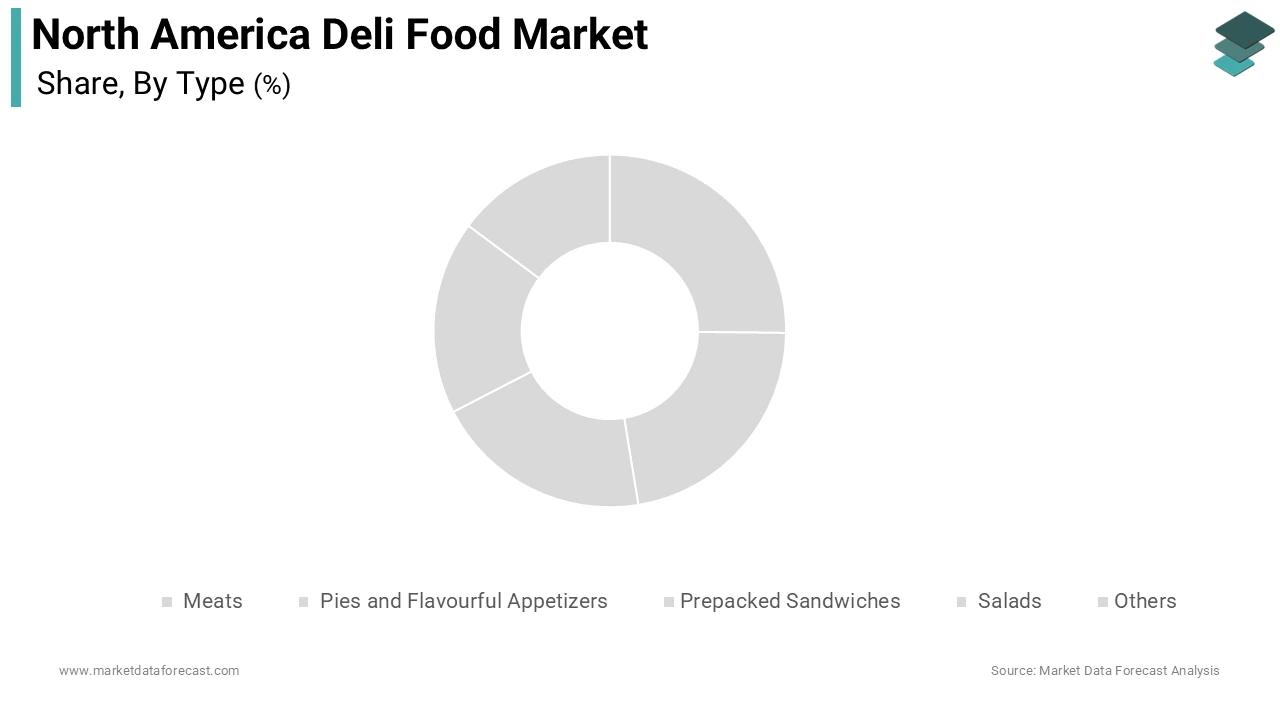
The meats segment led the North America Deli Food Market and captured a 32.5% share in 2025. This leading position of the segment was attributed to the deep cultural entrenchment of cured and sliced meats in regional diets. Sandwiches featuring ham turkey roast beef and salami are staple lunch items for millions of workers and students across the continent. The high baseline consumption ensures a steady and predictable demand for deli meats which are perceived as convenient sources of protein. Also, the tradition of the deli sandwich is particularly strong in urban centers with historical European influences where artisanal curing techniques are valued. Furthermore, the versatility of deli meats allows them to be used in various meal occasions from quick snacks to formal catering platters. The ability to customize slice thickness and portion size adds to the appeal, allowing consumers to tailor purchases to their specific dietary needs. This combination of cultural habit high protein demand and customization capability solidifies the dominance of the meats segment in the market landscape.
The continued domination of the meats segment is significantly supported by innovation in clean label and nitrate free products that address health concerns. Modern consumers are increasingly scrutinizing ingredient lists and seeking alternatives to traditional processed meats that contain synthetic preservatives. Major suppliers have responded by introducing lines of uncured meats that use natural sources of nitrates such as celery juice powder. This shift aligns with the broader wellness trend while maintaining the flavor and texture profiles that customers expect. Deli counters that highlight these cleaner formulations attract health conscious shoppers who might otherwise avoid processed meats. The transparency in sourcing and production methods further builds trust and loyalty among discerning customers. By adapting to these evolving preferences the meats segment maintains its relevance and leadership position. The ability to offer both traditional and modern healthy variants ensures that the segment appeals to a broad demographic spectrum sustaining its market share despite changing dietary trends.
The prepacked sandwiches segment is estimated to register the fastest CAGR of 5.7% over the forecast period due to the intense demand for convenience among on the go consumers. The fast paced nature of modern life particularly in urban areas has reduced the time available for waiting in line at service counters. Prepacked sandwiches offer immediate accessibility and consistent quality without the wait time associated with custom orders. The standardization of packaging ensures hygiene and portion control which appeals to corporate cafeterias and vending operations. Furthermore, the rise of remote work has led to a hybrid model where individuals seek quick lunch options that can be easily stored and consumed at home or in co working spaces. The efficiency of prepacked items allows retailers to manage inventory more effectively and reduce labor costs associated with made to order services. This alignment with consumer lifestyle trends and operational efficiencies drives the rapid expansion of the prepacked sandwich segment.
The rapid growth of prepacked sandwiches is further accelerated by the expansion of retail partnerships and strategic placement in vending machines and non traditional outlets. Manufacturers are increasingly collaborating with grocery chains convenience stores and office supply vendors to place their products in high traffic areas. These machines are now equipped with refrigeration technology that maintains product freshness, making them a viable channel for perishable goods. This expanded availability ensures that consumers can access deli quality sandwiches in locations where traditional deli counters are absent such as hospitals universities and transportation hubs. The branding and packaging of prepacked sandwiches are designed to stand out in these competitive environments often highlighting fresh ingredients and nutritional benefits. The ability to reach consumers in captive environments where choice is limited enhances sales volume. Additionally, the integration of cashless payment systems in vending machines facilitates impulse purchases. This widespread distribution strategy significantly boosts the visibility and accessibility of prepacked sandwiches, fueling their status as the fastest growing segment in the market.
REGIONAL ANALYSIS
United States Deli Food Market Analysis
The United States dominated the North America Deli Food Market and accounted for a 83.5% share in 2025. This dominance of the US market was driven by its massive population and diverse culinary landscape. The market status is characterized by a high degree of fragmentation with a mix of large supermarket chains independent delicatessens and specialty food stores. As per the United States Census Bureau, the population exceeds 330 million, providing a substantial consumer base for prepared foods. The strong culture of eating out and purchasing ready to eat meals supports robust demand for deli products. According to the National Restaurant Association, the restaurant industry is projected to reach $1.55 trillion in annual sales for 2026, reflecting the entrenched habit of dining out and consuming prepared foods. Urban centers like New York Chicago and Los Angeles are hubs for artisanal delis that cater to discerning customers seeking high quality ingredients. The rise of health consciousness has led to increased demand for organic and low sodium options, prompting retailers to diversify their offerings. E commerce and delivery platforms have further expanded market reach allowing consumers to order deli platters and sandwiches from home. The presence of major food processing companies ensures a steady supply of standardized products while local producers contribute to the premium segment. This dynamic interplay between mass market convenience and artisanal quality defines the mature and competitive nature of the deli food market in the United States.
Canada Deli Food Market Analysis
Canada is steadily growing in the North American market due to a multicultural population and increasing interest in gourmet food experiences. The market status is influenced by a strong emphasis on local sourcing and sustainability, particularly in provinces like British Columbia and Quebec. As per Statistics Canada, the population has surpassed 38 million, with urbanization rates exceeding 80 percent, concentrating demand in major cities such as Toronto Vancouver and Montreal. The Canadian deli market is notable for its diversity, reflecting the country's immigrant heritage with offerings ranging from traditional European styles to Asian inspired fusion items. According to the Canadian Federation of Independent Business, small food retailers and specialty shops play a crucial role in the local economy, fostering a vibrant scene for independent delis. Consumers are increasingly willing to pay premium prices for high quality ethically sourced products, driving growth in the artisanal segment. The harsh winter climate also contributes to the popularity of comfort foods and hearty sandwiches, sustaining year round demand. Government regulations regarding food labeling and safety are strict, ensuring high standards across the industry. The integration of digital ordering systems has helped delis adapt to changing consumer behaviors, particularly during periods of restricted mobility. The combination of cultural diversity, urban concentration, and a focus on quality positions Canada as a key growth market in the region.
COMPETITION OVERVIEW
The competition in the North America Deli Food Market is intense and characterized by a mix of large supermarket chains independent delicatessens and specialty food retailers. Major grocery corporations leverage their scale and distribution networks to offer a wide variety of deli products at competitive prices. These entities invest heavily in private label development to create exclusive offerings that attract budget conscious shoppers. Independent delis compete by focusing on niche markets such as artisanal cheeses house cured meats and authentic ethnic cuisines. They emphasize personalized service and community connections to build loyal customer bases. Quick service restaurants also pose a threat by expanding their sandwich and salad menus with higher quality ingredients. The rise of meal kit services and online grocery platforms further fragments the market by providing alternative convenience options. Price sensitivity remains a key factor influencing consumer choices prompting retailers to balance quality with affordability. Innovation in packaging and preservation technologies allows companies to extend shelf life and reduce waste. Overall the market requires continuous adaptation to changing consumer preferences and operational efficiencies to sustain profitability and growth in this highly competitive environment.
KEY MARKET PLAYERS
A few major players of the north america deli food market include
- Kraft Foods Group Inc
- Samworth Brothers Ltd
- Tyson Foods Inc
- Waitrose Ltd
- JBS S.A.
- BRF S.A
- Astral Foods Ltd
- 2 Sisters Food Group
- Wm Morrison Supermarkets Plc
- Hormel Foods Corporation
Top Strategies Used by Key Market Participants
Key players in the North America Deli Food Market primarily focus on product innovation and digital integration to enhance their competitive edge. Companies are increasingly introducing clean label and organic options to appeal to health conscious consumers seeking transparency in ingredients. Expansion of ready to eat and grab and go sections caters to the growing demand for convenience among busy professionals. Strategic partnerships with local suppliers enable retailers to offer unique artisanal products that differentiate their offerings from competitors. Investment in advanced refrigeration and packaging technologies helps maintain product freshness and reduce waste throughout the supply chain. Loyalty programs and personalized marketing campaigns drive customer retention by offering tailored discounts and recommendations. Enhancing the in store experience through improved counter designs and knowledgeable staff further strengthens brand loyalty. These multifaceted strategies collectively support growth and adaptability in the dynamic deli food sector.
Leading Players in the North America Deli Food Market
- The Kroger Co maintains a dominant presence in the North America Deli Food Market through its extensive network of supermarkets and dedicated service counters. The company leverages its vertical integration to source high quality meats and cheeses directly from suppliers ensuring freshness and competitive pricing. Recent initiatives include the expansion of its prepared foods section with chef inspired meals and artisanal sandwich options to attract discerning customers. Kroger actively invests in digital infrastructure allowing shoppers to order custom deli items online for pickup or delivery. The corporation also focuses on sustainability by reducing packaging waste and sourcing responsibly raised proteins. By integrating data analytics into inventory management Kroger minimizes spoilage and ensures product availability. These strategic efforts reinforce its position as a preferred destination for convenient and high quality deli solutions across the United States.
- Albertsons Companies Inc plays a significant role in the North America Deli Food Market by offering diverse prepared food options across its numerous banners. The company emphasizes community engagement by tailoring deli offerings to local tastes and preferences in different regions. Recent actions include the introduction of premium private label charcuterie boards and healthy salad varieties to meet evolving consumer demands. Albertsons enhances customer experience through improved store layouts that highlight fresh deli counters and ready to eat sections. The organization also partners with local artisans to feature unique regional products fostering a sense of community and authenticity. Investment in employee training ensures consistent service quality and product knowledge among staff members. These measures help Albertsons maintain strong customer loyalty and differentiate its deli services in a competitive retail landscape.
- Publix Super Markets Inc is renowned for its exceptional service quality and fresh prepared foods in the North America Deli Food Market. The company distinguishes itself through its commitment to customer satisfaction and high standards of hygiene and presentation. Recent strategies include expanding its sub shop locations within stores and introducing new gourmet sandwich combinations regularly. Publix focuses on sourcing fresh ingredients daily to ensure superior taste and texture in its deli products. The retailer also leverages its strong brand reputation to promote catering services for events and corporate gatherings. Digital enhancements such as easy online ordering for party platters have streamlined the purchasing process for busy consumers. By prioritizing quality and service excellence Publix continues to set industry benchmarks and attract a loyal customer base in the southeastern United States.
RECENT HAPPENINGS IN THE MARKET
- In March 2023, The Kroger Co expanded its prepared foods section with chef inspired meals to attract discerning customers and strengthen the North America Deli Food Market presence
- In June 2023, Albertsons Companies Inc introduced premium private label charcuterie boards to meet evolving consumer demands and strengthen the North America Deli Food Market presence
- In September 2023, Publix Super Markets Inc expanded its sub shop locations within stores to offer more gourmet options and strengthen the North America Deli Food Market presence
- In January 2024, The Kroger Co invested in digital infrastructure for online deli orders to enhance convenience and strengthen the North America Deli Food Market presence
- In May 2024, Albertsons Companies Inc partnered with local artisans to feature unique regional products and strengthen the North America Deli Food Market presence
MARKET SEGMENTATION
This research report on the north america deli food market has been segmented and sub-segmented based on type and region.
By Type
- Meats
- Pies and Flavourful Appetizers
- Prepacked Sandwiches
- Salads
- Others
- Chilled Pizzas
- Chilled Pasta
- Soups
By Region
- U.S
- Canada
- Rest of North America