- Product Description Description
- Table of Contents TOC
- List of Table & Figure LOT
- Get Free Sample PDF Sample PDF
Market Size, 2025
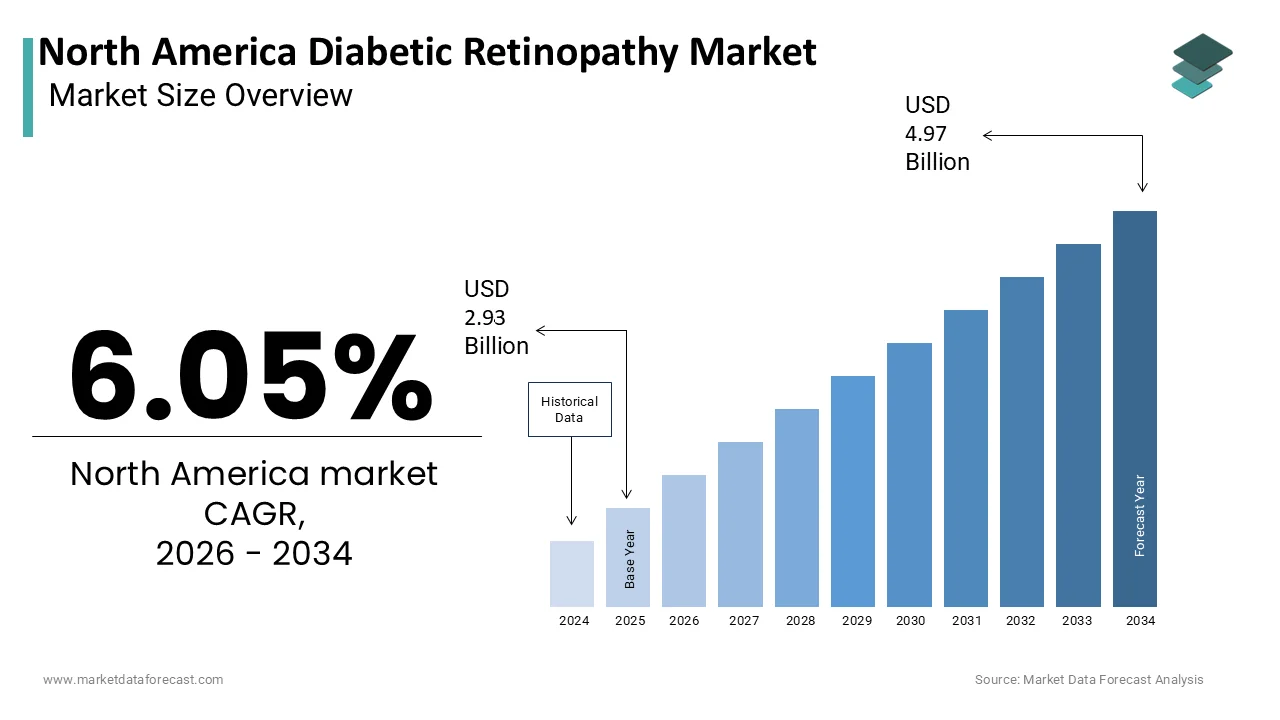
$2.93 BnMarket Estimate, 2026
$3.10 BnMarket Forecast, 2034
$4.97 BnCAGR, 2026–2034
6.05%Executive Summary: North America Diabetic Retinopathy Market
- Market Scope: Regional market assessment for North American diabetic retinopathy diagnostics, therapeutics, and surgical interventions, covering treatment modalities, disease indications, clinical end-users, and country dynamics.
- Market Valuation: Valued at USD 2.93 billion in 2025, estimated at USD 3.10 billion in 2026, and projected to reach USD 4.97 billion by 2034, growing at a steady CAGR of 6.05% from 2026 to 2034.
- Primary Growth Drivers: Escalating incidence of diabetes, growing elderly populations, increasing public and private healthcare infrastructure investments, rising obesity rates linked to sedentary lifestyles, and expanding adoption of specialty care hospitals with state-of-the-art ophthalmology equipment. Key restraints include shortages of skilled monitoring personnel, high device installation and maintenance costs, and potential long-term adverse effects of pharmacological treatments.
Key Market Segment Metrics (2026–2034)
| Category | Segments Covered / Breakdown | Strategic Overview |
|---|---|---|
| By Treatment Type | Anti-VEGF Drug, Intraocular Steroid Injection, Laser Surgery, Vitrectomy | Anti-VEGF therapies serve as frontline pharmacological solutions, while laser surgery and vitrectomies address advanced interventional needs. |
| By Indication | Non-Proliferative Diabetic Retinopathy (NPDR), Proliferative Diabetic Retinopathy (PDR) | NPDR accounts for the largest share of early-stage diagnoses, whereas PDR represents advanced disease progression requiring aggressive management. |
| By End-User | Hospitals, Ophthalmic Clinics, Ambulatory Surgical Centers | Hospitals and specialized eye clinics capture major patient volumes for routine screening and complex surgical treatments. |
| Regional / Country Analysis | The United States, Canada, Mexico, Rest of North America | The U.S. commands the dominant regional market share driven by high disposable incomes and advanced urban healthcare access, while Canada exhibits strong growth supported by favorable government reimbursement schemes. |
Major Market Players & Market Structure
Market Structure: Highly consolidated healthcare and biopharmaceutical marketplace characterized by leading pharmaceutical corporations and medical device manufacturers focusing on targeted biologic therapies, advanced laser technologies, and enhanced clinical trial pipelines.
Key Companies: Bayer AG, Pfizer Inc., Hoffmann-La Roche Ltd., Regeneron Pharmaceuticals Inc., Novartis AG, Valeant Pharmaceuticals International Inc., Abbott Laboratories Inc., Alimera Sciences Inc., and Ampio Pharmaceuticals Inc.
North America Diabetic Retinopathy Market Size
The North America Diabetic Retinopathy Market is projected to grow from USD 2.93 billion in 2025 to USD 3.10 billion in 2026 and reach USD 4.97 billion by 2034, registering a CAGR of 6.05% during the forecast period from 2026 to 2034.
The diabetic retinopathy is an ophthalmic care focuDiabeticosing and treating vision threatening complications arising from diabevision-threateningnters for Disease Control and Prevention, approximately 37.3 million Americans have diabetes which creates a substantial pool of patients at risk for developing retinal damage. This high disease prevalence necessitates continuous screening and therapeutic intervention to prevent irreversible blindness. According to the American Diabetes Association, diabetic retinopathy remains the leading cause of new cases of blindness among working-age adults in the United States, affecting millions of individuals. Such epidemiological data underscores the critical demand for advanced imaging technologies and pharmacological treatments within the region. Healthcare systems prioritize early detection protocols utilizing optical coherence tomography and fundus photography to identify pathological changes before significant vision loss occurs. Regulatory frameworks established by Health Canada and the US Food and Drug Administration ensure rigorous evaluation of novel therapeutics, fostering innovation while maintaining safety standards. The integration of artificial intelligence in diagnostic workflows further enhances screening efficiency across diverse clinical settings.
MARKET DRIVERS
Escalating Diabetes Prevalence Fuels Therapeutic Demand
The rising incidence of type 1 and type 2 diabetes isa a major factor bolstering the growth of the diabetic retinopathy market. According to the International Diabetes Federation, over 53 million adults in North America were living with diabetes in 2021, representing a significant increase from previous decades. This expanding patient base directly correlates with higher volumes of retinal screenings and subsequent treatment requirements, as duration of diabetes is a primary risk factor for retinopathy development. As per the National Institute of Diabetes and Digestive and Kidney Diseases, about 1 in 3 adults with diabetes has some form of diabetic eye disease requiring ongoing monitoring or active therapy. This statistical reality compels healthcare providers to adopt comprehensive eye care protocols integrated into routine diabetes management. Pharmaceutical companies respond by developing anti-VEGF agents and corticosteroids tailored to the severity of disease. Diagnostic device manufacturers innovate portable and high-resolution imaging systems to facilitate widespread screening in primary care and endocrinology clinics. Insurance payers increasingly cover preventive eye exams, recognizing the long-term cost savings associated with avoiding blindness related disability. Public health initiatives funded by federal agencies emphasize regular dilated eye examinations for all diabetic patients,s further stimulating service utilization.
Technological Advancements Enhance Diagnostic Precision
The rapid evolution in ophthalmic imaging and treatment technologies is significantly propelling the growth of the North America diabetic retinopathy market. Optical coherence tomography angiography now enables noninvasive visualization of retinal microvasculature, allowing earlier detection of ischemia than traditional methods. This technological leap facilitates timely intervention before neovascularization causes permanent structural damage. The Association for Research in Vision and Ophthalmology reports that AI algorithms approved by regulatory bodies can detect referable diabetic retinopathy with sensitivity exceeding 90% in autonomous screening settings. Such innovation addresses workforce shortages and expands access to underserved rural and urban communities lacking specialist coverage. Manufacturers integrate these advanced diagnostics into electronic health records, streamlining referral pathways and longitudinal tracking. Treatment modalities have also evolved, with newer anti-VEGF formulations offering exten,ded dosing anti-VEGF reducing patient burden and clinic visits. Teleophthalmology platforms leverage cloud-based image analysis to triage patients efficiently, optimizing resource allocation. Academic institutions collaborate with industry to validate next-generation biomarkers predicting treatment response; these advancements collectively enhance the standard of care, making precise diagnosis and personalized therapy more accessible. The emergence of digital health and ophthalmic science thus creates a favorable environment for market expansion driven by superior clinical value propositions.
MARKET RESTRAINTS
High Treatment Costs Restrict Patient Access
The substantial financial barriers associated with advanced therapies and frequent monitoring are restricting the growth of the North America diabetic retinopathy market. The average out-of-pocket costs for specialty drugs including anti VEGF injections can grow eventually, by spendinanti-VEGFicare benef,iciaries creating significant affordability challenges for beneficiaries. Thisand and economic burden leads many patients to delay or discontinue necessary treatments, resulting in preventable vision deterioration. Such bureaucratic hurdles disproportionately affect low-income and minority populations who already experience higher rates of diabetes complications. Clinics face reimbursement pressures as payment rates often fail to keep pace with rising drug acquisition costs, forcing some practices to limit services or close. Patients without adequate insurance coverage may forgo recommended imaging tests, missing critical windows for early intervention. Pharmaceutical assistance programs exist,t but eligibility criteria are restrictive,e leaving gaps in support. Value-based care models attempt to align payments with outcomes, yet implementation remains inconsistent across payers. Until systemic reforms address pricing transparency and streamline coverage policies,s financial constraints will continue to impede optimal disease management and suppress market potential despite available effective therapies.
Shortage of Retina Specialists Limits Care Capacity
A crucial deficit of trained retina specialists is another factor degrading the growth of the North America diabetic retinopathy market. The workforce gap results in prolonged wait times for appointments, ts delaying diagnosis and initiation of sight-saving treatments. Geographic maldistribution concentrates expertise in urban academic centers, while community hospitals struggle to maintain adequate staffing levels. Training pipelines cannot expand quickly enough due to limited residency slots and lengthy fellowship requirements. Burnout among existing practitioners further threatens capacity as administrative burdens and patient volumes increase. Telemedicine and AI screening help mitigate shortages but cannot replace complex surgical interventions required for advanced disease. Rural health clinics often lack equipment and trained personnel to perform basic evaluations, creating referral bottlenecks. Policy efforts to expand scope of practice for optometrists face regulatory resistance in many jurisdictions.
MARKET OPPORTUNITIES
Integration of Artificial Intelligence Screening Tools
The deployment of autonomous artificial intelligence systems for diabetic retinopathy screening is expected to bolster new opportunities for the growth of the North America diabetic retinopathy market. The US Food and Drug Administration has cleared multiple AI devices for point-of-care use, enabling primary care providers to deliver immediate diagnostic assessments without specialist interpretation. This capability dramatically increases screening throughput in high-volume settings such as endocrinology clinics and community health centers. The Journal of Diabetes Science and Technology publishes studies showing AI implementation increased screening compliance rates by 25% in safety net populations compared to traditional referral models. Enhanced detection at earlier disease stages allows for proactive management, reducing progression to vision-threatening forms. Payers recognize the valuvision-threatening several Medicare Advantage plans now covering autonomous screening as a preventive benefit. Technology companies partner with health systems to embed AI workflows into existing electronic records, ensuring seamless data capture and follow-up. Continuous algorithm refinement using diverse real-world datasets improves accuracy across different ethnic groups, addressing historical bias concerns. Scalable software-as-a-service models lower upfront costs, facilitating adoption by smaller practices.
Expansion of Biosimilar Anti-VEGF Therapies
The introduction of biosimilar anti-VEGF medications to reduce treatment costs and broaden patient access is also to enhance the expansion of the North American diabetic retinopathy market. The US Food and Drug Administration has approved several biosimilars referencing originator biologics demonstrating equivalent safety and efficacy in clinical trials. This competitive entry exerts downward pressure on drug prices, es potentially saving healthcare systems billions annually,lly according to analyses published in JAMA Ophthalmology. Lower acquisition costs enable clinics to treat more patients within fixed budgets, improving overall population health outcomes. Insurers are increasingly placing biosimilars on preferred formulary tiers, rs reducing patient copays and enhancing adherence. Manufacturers invest in physician education and real-world evidence generation to build confidence in switching protocols. Pharmacy benefit managers negotiate favorable contracts, accelerating formulary inclusion and utilization. Biosimilars also stimulate innovation as originator companies develop next-generation molecules with improved durability or delivery mechanisms. Regulatory pathways continue to evolve, supporting faster approvals while maintaining rigorous standards. Patient advocacy groups endorse biosimilars as vital tools for achieving health equity.
MARKET CHALLENGES
Persistent Health Disparities Among Minority Populations
The deep-rooted socioeconomic and racial inequities in achieving uniform penetration and optimal outcomes are a major factor hindering the growth of the North American diabetic market. The Centers for Disease Control and Prevention reports that Black and Hispanic adults are twice as likely as White adults to develop severe diabetic retinopathy, yet less likely to receive annual eye exams. This disparity stems from systemic barriers, including inadequate insurance coverage,e transportation difficulties, es language obstacles, and mistrust of healthcare systems. Cultural beliefs about illness and treatment also influence care-seeking behaviors, delaying presentation until advanced disease stages. Clinical trial participation remains skewed toward White populations,s limiting generalizability of efficacy data and perpetuating knowledge gaps. Healthcare deserts in minority neighborhoods lack specialized equipment and culturally competent providers, rs further restricting access. Public health campaigns often fail to resonate with target audiences due to insufficient community engagement and tailored messaging. Policy interventions aimed at reducing disparities require sustained funding and cross-sector collaboration beyond typical market dynamics. Addressing these entrenched inequities demands intentional investment in workforce diversity, community outreach, and social determinants of health.
Complex Reimbursement Landscape Creates Uncertainty
The fragmented and evolving reimbursement environment for predictable revenue streams and investment planning for stakeholders also poses a challenge for the growth of the Norposedica diabetic retinopathy market. The frequent updates to coding guidelines and payment methodologies create uncertainty for providers and manufacturers alike. Private payers employ varied medical necessity criteria and prior authorization processes, leading to inconsistent coverage decisions across plans and states. Value-based payment models introduce performance metrics that may not adequately account for patient complexity or social risk factors, penalizing providers serving vulnerable populations. Drug pricing reforms and Inflation Reduction Act provisions add another layer of regulatory unpredictability affecting pharmaceutical R&D incentives. Small independent practices lack resources to navigate complex billing rules, risking financial viability. Appeals processes aretime-consuming,g and success rates vary widely, discouraging pursuit of legitimate claims. Harmonization efforts between federal and state programs progress slowly,y leaving gaps in coverage continuity. Stakeholders must continuously adapt strategies to manage financial risk while advocating for stable, transparent policies.
REPORT COVERAGE
| REPORT METRIC | DETAILS |
| Market Size Available | 2025 to 2034 |
| Base Year | 2025 |
| Forecast Period | 2026 to 2034 |
| Segments Covered | By Treatment Type, Indication, End-User, and Region |
| Various Analyses Covered | Global, Regional, and Country-Level Analysis, Segment-Level Analysis, Drivers, Restraints, Opportunities, Challenges; PESTLE Analysis; Porter’s Five Forces Analysis, Competitive Landscape, Analyst Overview of Investment Opportunities |
| Countries Covered | The United States, Canada |
| Market Leaders Profiled | Bayer AG |
SEGMENTAL ANALYSIS
By Treatment Type Insights
The anti-VEGF drugs segment held a prominent share of the North America diabetic retinopathy market in 2025 due to their established efficacy in reducing macular edema and inhibiting abnormal blood vessel growth, which are primary causes of vision loss. The anti-VEGF injections are the first-line treatment for diabetic macular edema in some patients with diabetic retinopathy. This clinical preference drives consistent demand for agents such as aflibercept, ranibizumab,b and bevacizumab across ophthalmic practices. Early intervention with anti-VEGF therapy can reduce the risk of moderate vision loss by 50% compared to observation alone, according to the study. Such compelling evidence supports widespread adoption among retina specialists and general ophthalmologists. Pharmaceutical manufacturers invest heavily in developing longer-acting formulations to reduce injection frequency, improving patient compliance and quality of life. Insurance coverage for these biologics is robust under Medicare Part B and private plans, ensuring financial accessibility for the majority of patients. Clinical guidelines from major professional societies reinforce the central role of anti-VEGF agents in management protocols. The availability of biosimilars further expands access by lowering costs while maintaining therapeutic equivalence. Patient advocacy groups promote awareness of treatment benefits, encouraging timely consultation and adherence.
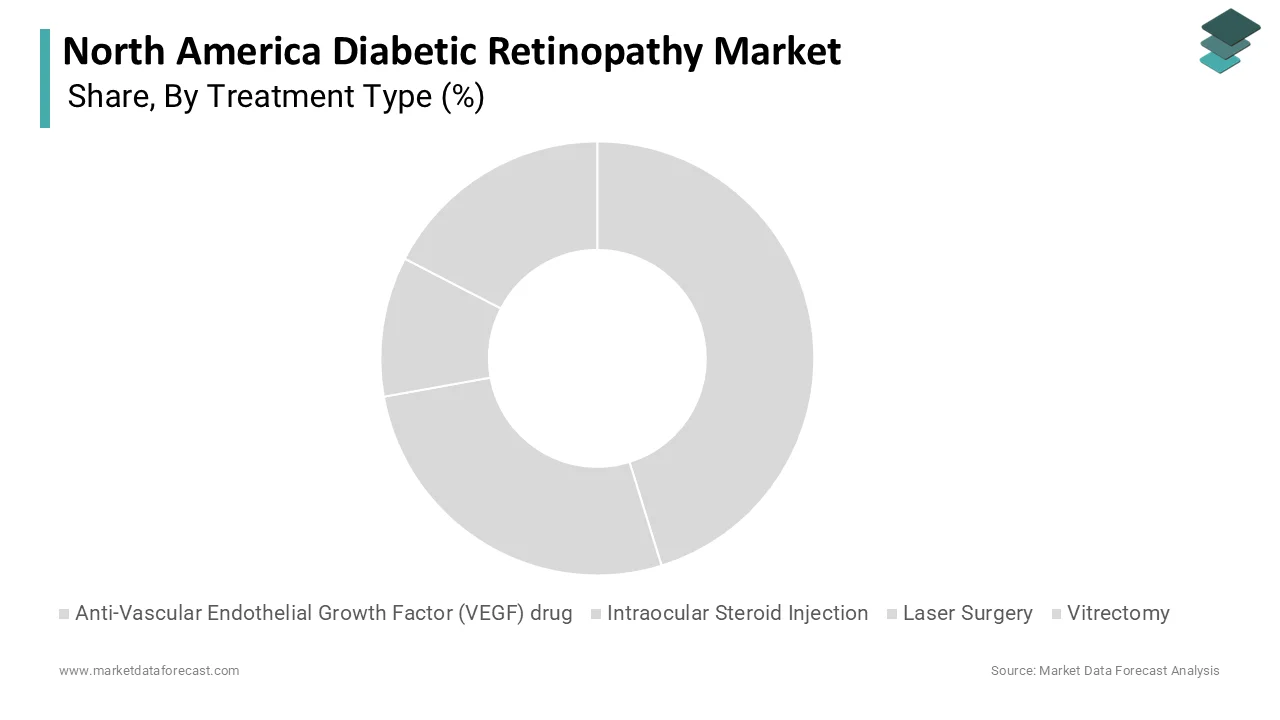
The intraocular steroid injections segment is likely to grow at the fastest CAGR of 7.8% from 2026 to 2034 with the increasing recognition of their therapeutic value. The steroid implants are particularly effective in patients with chronic diabetic macular edema, who do not respond adequately to anti-VEGF monotherapy. This niche but critical application drives adoption among specialists managing complex cases. The sustained-release steroid devices offer dosing intervals of up to 36 months, significantly reducing treatment burden compared to monthly injections. This convenience appeals to patients struggling with frequent clinic visits and improves long-term adherence. Recent approvals of new steroid formulations with improved safety profiles regarding intraocular pressure elevation have alleviated previous concerns limiting use. Payers are increasingly recognizing the cost-effectiveness of steroids in reducing overall treatment frequency and associated healthcare utilization. Clinical trials continue to validate combination therapies using both anti-VEGF and steroids for synergistic effects. This shift in clinical practice, fueled by technological innovation and evolving guidelines, propels the rapid growth of the intraocular steroid segment.
By Indication Insights
The non-proliferative diabetic retinopathy segment was the largest,y holding 22.1% of the North America diabetic retinopathy market share in 2025 due to its high prevalence as the earliest and most common stage of the disease. This large patient base drives significant demand for diagnostic imaging and preventive therapies to halt progression. Tight glycemic control and regular screening are important in managing NPDR to prevent advancement to sight-threatening stages. Healthcare systems prioritize sight-threatening stages of NPDR through widespread screening programs in primary care and endocrinology settings. Optical coherence tomography and fundus photography are routinely used to detect microaneurysms and hemorrhages characteristic of this stage. Early detection allows for timely lifestyle modifications and medical management, reducing the need for invasive procedures later. Insurance providers cover annual dilated eye exams for all diabetic patients,s facilitating early diagnosis. Public health campaigns educate patients on the importance of monitoring even in asymptomatic stages. Pharmaceutical companies develop neuroprotective agents targeting early pathological changes in NPDR.
The proliferative segment is likely to exhibit the fastest CAGR of 6.5% during the forecast period, as the burden of long-standing diabetes rises. This alarming prognosis necessitates aggressive therapeutic interventions, including panretinal photocoagulation and vitrectomy. The American Academy of Ophthalmology reports a rise in PDR cases among younger adults with type 2 diabetes attributed to obesity epidemics and lifestyle factors. This demographic shift increases the urgency for effective treatments to preserve vision in working-age populations. Advancements in surgical techniques and anti-VEGF adjuncts improve outcomes for PDR, making intervention more viable. Hospitals and ambulatory surgical centers expand capacity to handle complex PDR cases. Insurance coverage for advanced surgical procedures ensures access, despite high costs. Awareness campaigns target high-risk groups to encourage earlier engagement before progression occurs.
By End-User Insights
The hospitals segment was the largest, capturing 32.1% of the North America diabetic retinopathy market share in 2025 due to their comprehensive infrastructure capability to handle complex cases and emergency interventions. The hospitals perform the majority of vitrectomies and advanced laser surgeries required for severe proliferative diabetic retinopathy and complications such as vitreous hemorrhage. This procedural volume drives significant revenue from surgical fees, equipment usage, and pharmaceutical sales. Hospitals serve as referral centers for complicated cases that cannot be managed in outpatient settings, ensuring continuity of care for high-acuity patients. The presence of multidisciplinary teams, including endocrinologists, nephrologist,s and ophthalmologists, facilitateholistic managementnt of diabetes rela t,e d complications. Academic medical centers within hospital systems conduct clinical trials introducing novel therapies and technologies to the market. Medicare and private insurers reimburse hospital-based procedures at higher rates reflecting resource intensity. Emergency departments often identify undiagnosed diabetic retinopathy during acute visits, thus initiating referral pathways. Teaching programs train future specialists, sts ensuring a steady workforce pipeline. Hospitals also participate in public health initiatives offering screening camps and community outreach.
The ambulatory surgical centers segment is likely to witness the fastest CAGR of 8.2% from 2026 to 2034, as payers and patients prefer lower-cost settings for injections and minor surgerlower-cost60% of intravitreal injections are now performed in ASCs due to streamlined workflows and reduced overhead costs compared to hospitals. This efficiency attracts both providers and patients seeking quicker turnaround and lower out-of-pocket expenses. Medicare policies increasingly favor ASCs by providing adequate reimbursement for covered procedures, encouraging provider migration. Technological advancements allow complex laser treatments to be safely performed in outpatient settings, expanding service offerings. Patients benefit from shorter wait times and personalized care experiences, enhancing satisfaction. ASCs invest in state-of-the-art imaging and surgical equipment to compete with hospital capabilities. Partnerships with ophthalmology groups facilitate dedicated retina clinics within ASCs, optimizing resource utilization. Regulatory approvals for newer minimally invasive techniques support expansion of ASC service lines.
COUNTRY LEVEL ANALYSIS
United States Diabetic Retinopathy Market Analysis
The United States was the top performer in the North America diabetic retinopathy market by holding an 84.2% share in 2025, with advanced healthcare infrastructure, disease prevalence,iseasevalence and robust reimbursement mechanisms. According to the Centers for Disease Control and Prevention, over 37 million Americans have diabetes, creating a massive patient pool requiring regular eye care and potential intervention. This high burden drives substantial demandfor anti-VEGFF drug,s diagnostic imaging, and surgical services across the country. Millions of dilated eye exams are performed annually, ensuring early detection and management of retinal changes. Medicare coverage for diabetic eye care provides financial security for the aging population who are most at risk. Private insurance plans often offer comprehensive benefits,e ncouraging proactive treatment adoption. The presence of leading pharmaceutical and medical device companies fosters continuous innovation and rapid technology adoption. Academic centers drive research into novel therapies and biomarkers, enhancing clinical standards. Telemedicine initiatives expand access to rural areas, addressing geographic disparities. High healthcare spending per capita enables access to premium treatments and advanced surgical options. Regulatory frameworks ensure safety and efficacy of new products entering the market. Patient advocacy groups raise awareness, promoting regular screening and adherence to treatment plans.
Canada Diabetic Retinopathy Market Analysis
Canada diabetic retinopathy market was ranked second, holding 11.2% of the share in 202,5 with its universal healthcare system and growing diabetic population . As per Diabetes Canada, approximately 11 million Canadians live with diabetes or prediabetes, creating a steady demand for screening and therapeutic services. The publicly funded healthcare system ensures equitable access to essential eye care services, although wait times for specialists can vary by province. Provincial health plans cover diagnostic tests and basic treatments, reducing financial barriers for patients. The Canadian Ophthalmological Society promotes guidelines for regular screening, emphasizing early detection to prevent vision loss. Adoption of digital health solutions,s including teleophthalmology,gy is increasing to address shortages in rural and remote areas. Pharmaceutical agencies evaluate new drugs for inclusion in provincial formularies,ies influencing treatment patterns. Biosimilar adoption is accelerating to manage healthcare costs while maintaining quality of care. Indigenous communities face higher rates of diabetes,betes prompting targeted public health initiatives and culturally appropriate care models. Research institutions collaborate on clinical trials contributing to global knowledge on diabetic eye disease. Government investments in primary care integration aim to improve coordination between endocrinologists and ophthalmologists.
COMPETITIVE LANDSCAPE
The competition in the American market for diabetic retinopathy is intense, characterized by the presence of established pharmaceutical giants and emerging biotechnology firms. Major players differentiate themselves through drug efficacy, dosing convenience,e and robust patient support programs, ms while newer entrants often compete on price and innovative mechanisms of action. The market sees continuous entry of biosimilars and next-generation anti-VEGF agents, creating dynamic pricing pressures and shifting formulary preferences. Companies invest heavily in clinical trials to generate superior data supporting extended dosing intervals,s which is a key differentiator for physicians and patients. Strategic alliances with payer organizations are common as firms seek to secure favorable coverage policies and reduce prior authorization hurdles. Regulatory compliance with FDA standards serves as a significant barrier to entry, ensuring only high-quality and safe products reach consumers. Price competition intensifies as patent expirations open the door for lower-cost alternatives, impacting revenue streams for originator brands. Brand loyalty is influenced by clinical outcomes, ease of administration,n and insurance coverage,ge making comprehensive value propositions crucial.
KEY MARKET PLAYERS
Some of the companies that are playing a dominating role in the North America Diabetic Retinopathy Market include:
- Bayer AG
- Pfizer Inc.
- F. Hoffmann-La Roche Ltd.
- Regeneron Pharmaceuticals, Inc.
- Novartis AG
- Valeant Pharmaceuticals International, Inc.
- Abbott Laboratories, Inc.
- Alimera Sciences, Inc.
- Ampio Pharmaceuticals, Inc.
TOP LEADING PLAYERS IN THE MARKET
- Regeneron Pharmaceuticals maintains a dominant presence in the North American diabetic retinopathy market through its flagship anti-VEGF therapy, Eylea. The company consistently invests in clinical research to demonstrate superior efficacy and durability of its formulations compared to competitors. Recent initiatives include the launch of high-dose Eylea, which allows for extended dosing, reducin, reducing patient burden. Regeneron actively collaborates with retina specialists to provide educational resources on optimal injection techniques and disease management. The company also strengthens its manufacturing capabilities to ensure consistent supply across the region. Strategic partnerships with payers facilitate favorable reimbursement terms, enhancing patient access. Its commitment to innovation and patient-centric solutions solidifies its reputation in retinal therapeutics throughout North America.
- Roche Holding AG contributes significantly to the North American diabetic retinopathy market with its widely used anti-VEGF agent Lucentis and emerging pipeline assets. The company focuses on expanding indications and improving delivery mechanisms to enhance therapeutic outcomes. Recent actions include advancing port delivery systems that allow continuous drug release, minimizing the need for frequent injections. Ro,che engages in extensive real-world evidence generation to support clinical decision-making and guideline updates. The company collaborates with diagnostic firms to integrate screening and treatment pathways seamlessly. Regulatory approvals for new formulations have broadened its portfolio appeal among healthcare providers. Roche prioritizes accessibility programs to assist uninsured or underinsured patients, ensuring broader treatment adoption. Its robust sc,ientific foundation and strategic lifecycle management strengthen its competitive position in the evolving retinal care landscape.
- AbbVie Inc. c plays a vital role in the NNorth Americandiabetic retinopathy market following its acquisition of Allergan and ownership of key ophthalmic assets. The company leverages its extensive commercial infrastructure to promote retinal therapies and support clinical education. Recent efforts focus on optimizing the supply chain and enhancing patient support services for chronic treatments. AbbVie invests in digital health tools that help patients track injection schedules and monitor visual acuity changes. The company participates in value-based care initiatives demonstrating the economic benefits of early intervention. Collaborations with ambulatory surgical centers streamline administration processes, improving operational efficiency. AbbVie continues to explore novel targets beyond VEGF to address unmet needs in refractory cases. Its integrated approach combining pharmaceutical expertise with patient support services ensures sustained relevance and growth in the specialized retinal market.
TOP STRATEGIES USED BY KEY MARKET PARTICIPANTS
Key players in the North America diabetic retinopathy market employ several strategic approaches to maintain competitive advantage and drive growth. Product innovation remains central as companies develop longer-acting anti-VEGF formulations and novel delivery methods, reducing injection frequency. Strategic partnerships with diagnostic providers enable integrated screening and treatment workflows, improving patient identification and adherence. Companies also focus on expanding reimbursement support programs to mitigate financial barriers for patients facing high out-of-pocket costs. Regulatory engagement is prioritized for out-of-pocket cure approvals for new indications and biosimilars, ensuring broad market access. Marketing efforts emphasize real-world evidence and comparative effectiveness data to influence physician prescribing behaviors. Mergers and acquisitions allow firms to acquire complementary technologies and expand their ophthalmic portfolios efficiently. Patient education initiatives promote disease awareness and treatment benefits, fostering long-termloyaltyy. These strategies collectively strengthen long-term market positions and address evolving clinical and economic needs across the region effectively.
MARKET SEGMENTATION
This research report on the North American diabetic retinopathy market has been segmented and sub-segmented into the following categories.
By Treatment Type
- Anti-Vascular Endothelial Growth Factor (VEGF) drug
- Intraocular Steroid Injection
- Laser Surgery
- Vitrectomy
By Indication
- Non-Proliferative Diabetic Retinopathy (NPDR
- Proliferative Diabetic Retinopathy (PDR)
By End-User
- Hospitals
- Ophthalmic Clinics
- Ambulatory Surgical Centers
By Country
- The United States
- Canada
- Mexico
- Rest of North America