North America Digital Pen Market Size, Share, Trends & Growth Forecast Report By Product (Scanning Pen, Handwriting Pen), Type (Active, Passive), Compatibility (iOS Devices, Android Devices, Windows Devices), Usage (PC, Tablet, Smartphone), End-User (BFSI, Healthcare, Government, Media & Entertainment, Education, Retail), and Country (United States, Canada, Mexico, Rest of North America) – Industry Analysis, 2026 to 2034
Market Size, 2025
$1,129.76 MnMarket Estimate, 2026
$1,279 MnMarket Forecast, 2034
$3,443 MnCAGR, 2026–2034
13.18%North America Digital Pen Market Summary
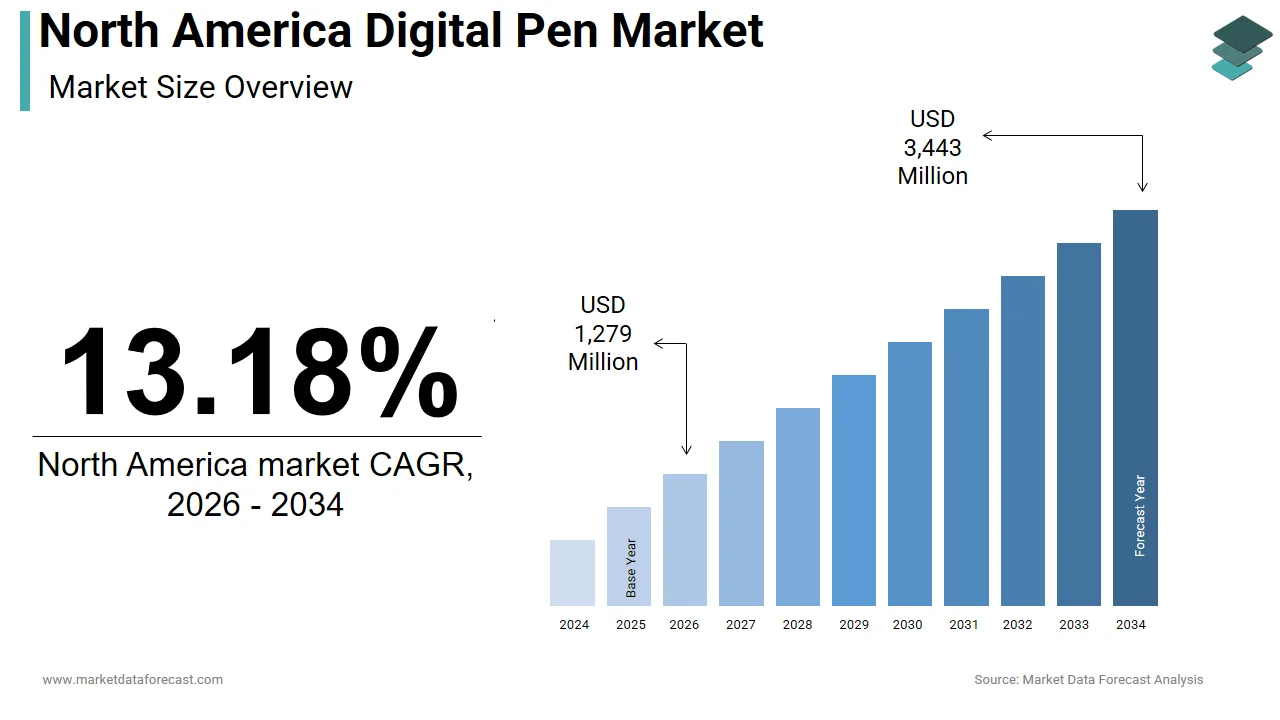
The size of the North America digital pen market was worth USD USD 1,129.76 million in 2025. The regional market is anticipated to grow at a CAGR of 13.18% from 2026 to 2034 and be worth USD 3,443 million by 2034 from USD 1,279 million in 2026. Increasing adoption of digital collaboration tools, hybrid learning models, and demand for paperless documentation are key growth factors.
Key Market Trends & Insights
- United States led the North America digital pen market in 2025.
- Canada is expected to showcase steady growth throughout the forecast period.
- Based on product, the handwriting digital pen was the leading segment in 2025.
- Based on type, the active digital pen segment held the dominant market share in 2025.
- Based on compatibility, iOS devices remained the top segment in 2025.
Market Size & Forecast
- 2025 Market Size: USD 1,129.76 Million
- 2026 Market Size: USD 1,279 Million
- 2034 Projected Market Size: USD 3,443 Million
- CAGR (2026 to 2034): 13.18%
- United States: Largest market in 2025
- Canada: Steady growth region
North America Digital Pen Market Size
The size of the North America digital pen market was worth USD 1,129.76 million in 2025. The regional market is anticipated to grow at a CAGR of 13.18% from 2026 to 2034 and be worth USD 3,443 million by 2034 from USD 1,279 million in 2026.
A digital pen is an electronic device that facilitates seamless interaction between analog writing and digital processing. These devices, often integrated with tablets, smartphones, or dedicated hardware, enable precise data capture, annotation, and real-time digitization of handwritten content.
As per insights from the U.S. Patent and Trademark Office, over 3,200 patents related to stylus and touch-input technologies were filed between 2018 and 2023, highlighting continuous innovation in this domain.
Furthermore, the proliferation of hybrid work models has driven demand for devices that enhance productivity and collaboration across remote teams. Like, a notable share of employed adults in North America have adopted at least one form of digital workspace tool, including stylus-enabled devices. This technological shift underscores the growing relevance of digital pens in both professional and academic environments.
MARKET DRIVERS
Surge in Remote Work and Digital Collaboration Tools
The expansion of remote and hybrid work environments has significantly amplified the demand for digital pens in North America. As organizations increasingly adopt digital workflows, tools that enable natural input methods such as digital pens are becoming essential for tasks like annotating documents, sketching designs, and signing contracts electronically.
According to a 2023 study by McKinsey & Company, nearly 58% of the U.S. workforce has the option to work remotely at least one day a week, which has led to a heightened reliance on digital collaboration platforms such as Microsoft Teams and Zoom. These platforms often integrate with stylus-compatible devices to improve user engagement and productivity.
Besides, Gartner’s 2022 Workplace Trends Report pointed out that enterprises investing in digital workplace solutions increased compared to 2020. This shift has directly influenced the uptake of peripheral input devices like digital pens, particularly among professionals in creative industries, engineering, and legal sectors. The integration of pressure-sensitive styluses with tablets and 2-in-1 laptops has further enhanced their utility, making them indispensable in modern professional settings.
Growth in E-Learning and Digital Note-Taking Adoption
The educational landscape in North America has undergone a transformative shift toward digital learning, significantly boosting the adoption of digital pens. Educational institutions across the U.S. and Canada have embraced hybrid and fully online learning models, creating a sustained demand for interactive learning tools.
As per data from the Integrated Postsecondary Education Data System (IPEDS), over 9.7 million students enrolled in distance education courses in the U.S. during the 2021–2022 academic year. In response, many universities have adopted stylus-enabled tablets and digital whiteboards to replicate traditional classroom experiences. Furthermore, the rise of note-taking applications such as Notability and GoodNotes has encouraged students to transition from paper-based to digital formats. These apps support real-time handwriting recognition and cloud synchronization, enhancing accessibility and organization. This financial commitment underscores the growing importance of digital pens in modern pedagogical frameworks.
MARKET RESTRAINTS
High Cost of Premium Digital Pen Devices
Despite the growing demand, the high cost of premium digital pens remains a significant barrier to widespread adoption in North America. Advanced models, such as those compatible with Apple Pencil or Surface Pen technologies, often retail for over $100, excluding the cost of compatible devices. This pricing structure limits accessibility for budget-conscious consumers, particularly students and small businesses. Furthermore, the lack of standardized compatibility across brands often necessitates purchasing proprietary accessories, further increasing the total cost of ownership. Also, the absence of universal interoperability standards contributes to consumer hesitation, particularly among first-time buyers. These economic constraints hinder the broader adoption of digital pens, despite their functional advantages.
Limited Awareness and Understanding of Use Cases
A lack of consumer awareness regarding the full spectrum of digital pen applications presents a notable restraint in the North American market. Many potential users remain unaware of the advanced functionalities these devices offer beyond basic note-taking, such as pressure sensitivity, palm rejection, and multi-layered digital sketching. This knowledge gap is particularly pronounced among older demographics, with individuals aged 45 and above showing significantly lower adoption rates. Educational outreach and product demonstration efforts remain limited, with retailers often failing to provide adequate in-store or online guidance. Without targeted awareness initiatives, the market risks stagnation, particularly in non-urban regions where digital literacy levels are comparatively lower.
MARKET OPPORTUNITIES
Expansion in Healthcare Documentation Solutions
The healthcare sector in North America presents a substantial opportunity for digital pen manufacturers, particularly in documentation and patient data management. With the increasing digitization of health records and the push toward interoperable systems, digital pens offer a seamless bridge between handwritten notes and electronic health records (EHRs). As per the Office of the National Coordinator for Health Information Technology, the majority of U.S. hospitals have adopted certified EHR systems as of 2023, yet many clinicians still rely on handwritten annotations during patient visits. Digital pens enable real-time conversion of these notes into structured data, reducing transcription time and improving accuracy. As per a report by the American Medical Association, many physicians spend more than 15 hours per week on documentation tasks, highlighting the need for efficient input solutions. This trend creates a fertile ground for digital pen adoption in clinical and administrative workflows.
Integration with Augmented Reality (AR) and Design Tools
The convergence of digital pens with augmented reality (AR) and design platforms is opening new avenues for growth in North America. As AR applications gain traction in sectors such as architecture, engineering, and entertainment, stylus devices are increasingly being used for spatial sketching, 3D modeling, and immersive design experiences. Furthermore, companies like Autodesk and SketchUp have introduced stylus-compatible interfaces that allow users to draw directly in 3D space, enhancing creative precision. The integration of haptic feedback and gesture controls with digital pens is also expanding their utility in AR environments. This technological evolution positions digital pens as critical enablers of next-generation design and visualization workflows.
MARKET CHALLENGES
Interoperability Issues Across Platforms
The lack of cross-platform compatibility, which limits device usability and consumer flexibility, is one of the persistent challenges facing the North America digital pen market. Many digital pens are designed to function exclusively with specific operating systems or hardware brands, fragmenting the user experience and reducing market accessibility. The exclusivity discourages multi-brand adoption and complicates procurement decisions for enterprises and educational institutions. The absence of universal standards for pressure sensitivity, latency, and connectivity further exacerbates the issue. This challenge not only hampers user satisfaction but also constrains innovation, as developers are forced to optimize for platform-specific requirements rather than focusing on universal enhancements.
Durability and Longevity Concerns
Durability and longevity issues associated with digital pens pose a significant challenge in maintaining long-term user confidence in North America. Unlike traditional writing instruments, digital pens are equipped with sensitive internal components such as accelerometers, gyroscopes, and rechargeable batteries, which are prone to wear and failure. Among these, battery degradation and tip wear were the most common complaints. Furthermore, the frequent replacement cycle not only increases the total cost of ownership but also raises sustainability concerns. Environmental advocacy groups, about the electronic waste generated by short-lived peripheral devices. Addressing these durability concerns is crucial for enhancing consumer trust and promoting sustainable market growth.
REPORT COVERAGE
| REPORT METRIC | DETAILS |
| Market Size Available | 2025 to 2034 |
| Base Year | 2025 |
| Forecast Period | 2026 to 2034 |
| Segments Covered | By Product, Type, Compatibility, Usage, End User, and Country. |
| Various Analyses Covered | Global, Regional and Country-Level Analysis, Segment-Level Analysis, Drivers, Restraints, Opportunities, Challenges; PESTLE Analysis; Porter’s Five Forces Analysis, Competitive Landscape, Analyst Overview of Investment Opportunities |
| Countries Covered | United States, Canada, Mexico, Rest of North America |
| Market Leaders Profiled | IRIS S.A., Lucidia Inc., Kent Displays, Wacom Co., Ltd., ACECAD Digital Corp., NeoLAB Convergence Lab, Livescribe Inc., Moleskine S.p.A., Apple Inc., and Microsoft Inc. |
SEGMENTAL ANALYSIS
By Product Insights
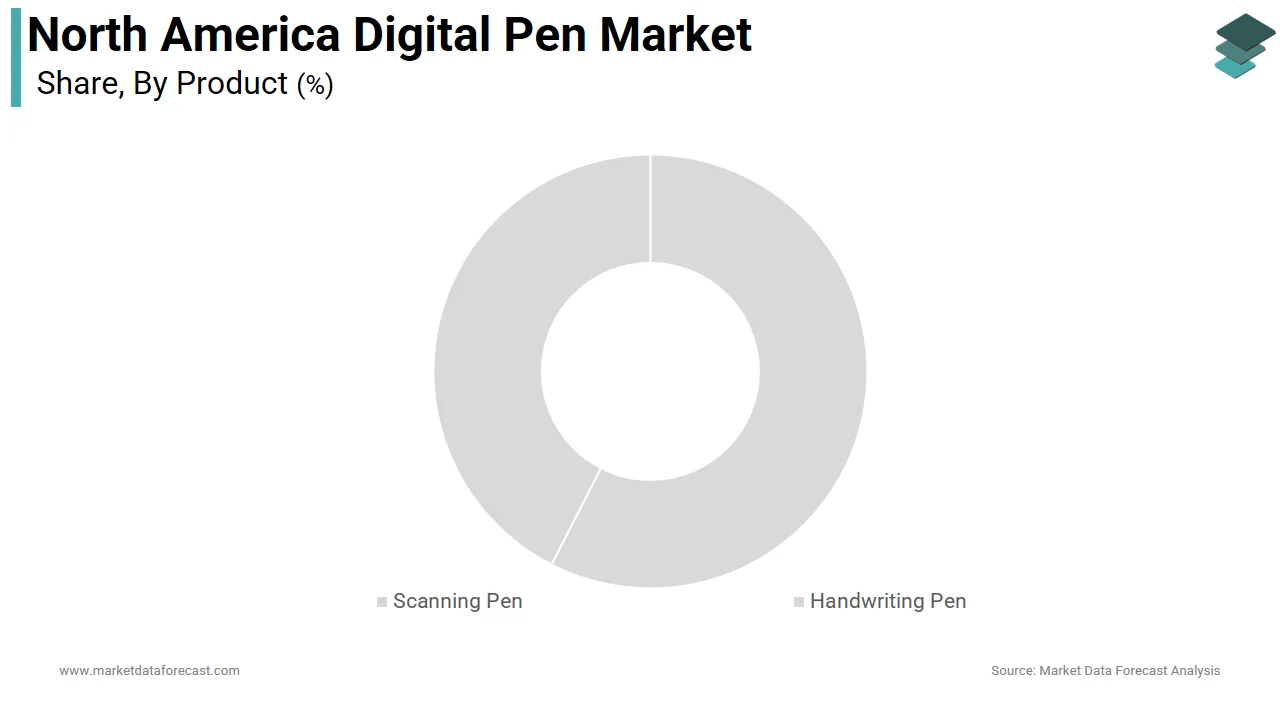
The handwriting segment dominated the North America digital pen market by accounting for 66.3% of the total share as of 2024. This segment's supremacy is credited to its natural user interface and widespread adoption across educational and professional environments. The handwriting digital pen segment is primarily driven by two fundamental factors that continue to reinforce its market leadership.
The extensive integration of handwriting digital pens in educational institutions across North America represents a primary catalyst for market dominance. Universities and colleges have increasingly adopted stylus-enabled devices to facilitate interactive learning experiences and digital note-taking capabilities. The K-12 education sector has also contributed significantly. This institutional momentum has created a substantial user base that continues to drive demand for handwriting-focused digital pens, establishing a foundation for sustained market leadership.
The professional creative and design industry's reliance on precise handwriting input has emerged as another critical driver of the handwriting digital pen segment's dominance. Architects, graphic designers, engineers, and artists require sophisticated pressure-sensitive input devices that can accurately translate hand movements into digital formats. The architecture and engineering sector has shown particularly strong adoption. Additionally, the medical illustration and technical documentation fields have embraced these tools. This professional demand has created a premium market segment that commands higher price points and drives technological innovation within the handwriting digital pen category.
The scanning digital pen segment is experiencing the most rapid growth in the North America digital pen market, with a CAGR of 15.8% projected from 2026 to 2034. This accelerated growth trajectory reflects the segment's unique value proposition in digitizing existing paper-based workflows and enabling seamless conversion of physical documents into searchable digital formats. The scanning digital pen market's expansion is primarily fueled by two distinct factors that are creating unprecedented demand momentum.
Corporate enterprises across North America are increasingly prioritizing document digitization as part of broader digital transformation strategies, creating substantial demand for scanning digital pens. Organizations are seeking efficient methods to convert legacy paper documents into searchable digital archives while maintaining workflow continuity. The legal sector has been particularly aggressive in adoption. Healthcare organizations have also accelerated adoption. The financial services industry has similarly embraced these tools, with a year-over-year increase in scanning pen deployments among member institutions. These enterprise-wide implementations are generating significant volume orders and driving economies of scale that make scanning pens more accessible to mid-market organizations.
Stringent regulatory compliance requirements across multiple industries are propelling the rapid adoption of scanning digital pens throughout North America. Organizations must maintain comprehensive digital records while ensuring audit trails and compliance with industry-specific regulations, making scanning pens essential tools for documentation workflows. Environmental compliance regulations have also driven adoption. These regulatory mandates create non-discretionary demand that ensures consistent growth regardless of economic fluctuations, establishing scanning digital pens as critical infrastructure components for compliant business operations.
By Type Insights
The active digital pen segment commanded the North America digital pen market by representing a substantial share of the total value in 2025. This segment's lead position is sustained by two primary driving forces that continue to differentiate active pens in the competitive landscape. Active pens, which incorporate internal power sources and sophisticated sensor arrays, have established market dominance through their superior functionality and precision compared to passive alternatives.
The exceptional pressure sensitivity and precision capabilities of active digital pens constitute the primary factor driving their market dominance across North America. These devices can detect thousands of pressure levels and respond to subtle variations in writing pressure, making them indispensable for professional applications requiring high accuracy. Professional artists and designers have overwhelmingly embraced this technology. Engineering professionals have similarly gravitated toward active pens. The publishing industry has experienced significant workflow improvements. This performance superiority has created a premium market segment that commands higher margins and reinforces the active pen market position.
The integration of advanced features and diverse connectivity options has further solidified active digital pens' dominance in the North America market. These devices incorporate Bluetooth connectivity, rechargeable batteries, customizable buttons, and real-time data synchronization capabilities that passive alternatives cannot match. Enterprise adoption has been particularly robust, with a portion of large organizations having standardized on active pens for mobile workforce applications. The education sector has also embraced these advanced features, with many university technology coordinators prioritizing Bluetooth-enabled active pens for student device programs. Healthcare applications have leveraged these capabilities extensively. The creative industry has found particular value in customizable button configurations.
The passive digital pen segment is experiencing the most rapid growth in the North America digital pen market, with a projected CAGR of 12.4% from 2026 to 2034. The passive digital pen market's expansion is driven by two distinct factors that are creating new user segments and driving volume growth. This accelerated growth depicts the segment's appeal as a cost-effective entry point into digital pen technology and its expanding compatibility with various device ecosystems.
The affordability and accessibility of passive digital pens have emerged as the primary catalyst for their rapid market growth across North America. These devices offer basic digital pen functionality at significantly lower price points than active alternatives, making them attractive to budget-conscious consumers and educational institutions. Elementary and secondary education systems have particularly embraced this affordability factor. The consumer electronics retail sector has responded to this demand. Public library systems have also contributed to growth momentum, with many public libraries now offering passive pen devices for patron use in digital literacy programs. This cost advantage has enabled market penetration into demographics previously excluded by premium pricing, creating new growth vectors for the overall digital pen market.
The universal compatibility and simplified user experience offered by passive digital pens represent another critical factor driving their rapid market expansion throughout North America. Unlike active pens that require specific hardware and software integration, passive pens function with standard capacitive touchscreens and do not require pairing or charging procedures. The hospitality and retail sectors have capitalized on this simplicity, with the quick-service restaurant chains implementing passive pens for digital menu systems and customer feedback collection. Healthcare facilities have also adopted these devices for basic documentation tasks, with a portion of community hospitals utilizing passive pens for patient intake forms and satisfaction surveys. The senior care market has found particular value in the intuitive operation of passive pens. This broad compatibility and user-friendly operation have enabled passive pens to penetrate diverse application environments where complex active pen features would be unnecessary or cost-prohibitive.
By Compatibility Insights
The iOS devices segment led the North America digital pen market by commanding a 52.5% of the total share in 2024. This dominance of this segment is due to Apple's strong ecosystem integration, premium device positioning, and extensive user base within professional and educational markets. The iOS compatibility segment's market leadership is sustained by two fundamental factors that continue to drive consumer preference and enterprise adoption.
The extensive penetration of premium Apple devices within North America's professional and affluent consumer segments serves as the primary driver of iOS digital pen market dominance. Apple's consistent market position in tablet and smartphone categories, particularly among high-income demographics, creates a substantial installed base for compatible digital pens. The education sector has significantly contributed to this ecosystem expansion. Professional creative industries have shown particularly strong adoption. The legal profession has also embraced this platform. This concentrated user base within high-value market segments ensures consistent demand for premium digital pen accessories and reinforces iOS compatibility as the market leader.
Apple's sophisticated ecosystem integration and emphasis on seamless user experience have established iOS devices as the preferred platform for digital pen applications in North America. The tight integration between hardware, software, and accessory components creates a cohesive user experience that competitors struggle to replicate. The publishing and media industries have capitalized on these capabilities. Academic research institutions have also embraced this integration. The healthcare sector has found particular value in the security and reliability of iOS ecosystems. This comprehensive ecosystem approach has created switching costs that reinforce user retention and drive continued market dominance.
The Android devices segment is experiencing the most rapid growth in the North America digital pen market, with a projected CAGR of 14.2% from 2026 to 2034. This accelerated expansion reflects the increasing diversity of Android-powered devices, improved stylus support across various manufacturers, and growing enterprise adoption of Android-based solutions. The Android compatibility segment's growth momentum is driven by two distinct factors expanding market reach and creating new adoption opportunities.
The remarkable diversity of Android-powered devices and manufacturers' competitive pricing strategies have emerged as primary catalysts for the segment's rapid growth in North America. Unlike the iOS ecosystem's limited hardware options, Android offers consumers a wide range of device categories, price points, and feature sets that accommodate various budget constraints and usage requirements. Samsung's Galaxy Tab series alone accounted for a notable share of all Android tablet shipments with stylus support. The enterprise sector has responded positively to this device diversity. Educational institutions have also embraced the cost advantages. This broad device availability and competitive pricing have enabled market penetration into previously underserved segments, driving accelerated growth rates.
Enterprise mobility requirements and Android's extensive customization capabilities represent another critical factor driving the rapid growth of Android-compatible digital pens throughout North America. Organizations seeking tailored solutions for specific workflows and integration requirements have increasingly turned to Android platforms for their flexibility and open architecture. The logistics and field service sectors have particularly embraced these capabilities, with many warehouse management systems now utilizing Android tablets with stylus input for inventory tracking and signature capture. Healthcare organizations have also adopted Android solutions for their customization potential. The manufacturing sector has found value in Android's industrial device compatibility. This enterprise-focused growth has created sustainable demand drivers that ensure continued market expansion.
COUNTRY-LEVEL ANALYSIS
United States Digital Pen Market Insights
The United States represented the dominant force in the North America digital pen market by commanding 89.5% of the total regional market share in 2024. This overwhelming market position reflects the country's advanced technological infrastructure, high disposable income levels, and extensive adoption of digital transformation initiatives across multiple sectors. The United States market status demonstrates robust growth momentum driven by sophisticated consumer demand and enterprise investment in digital productivity tools.
The educational sector's comprehensive digital transformation initiatives have significantly contributed to the United States' market leadership position. The K-12 education market has also shown remarkable growth. Professional services firms have embraced digital pens for enhanced client interaction and documentation processes. The creative industries have driven premium segment growth. Healthcare organizations have also accelerated adoption. This multi-sector demand has established the United States as the primary growth engine for the North America digital pen market.
Canada Digital Pen Market Insights
Canada occupies a strong position in the North America digital pen market. This market status reflects Canada's strong technology adoption rates, government-supported digital initiatives, and growing emphasis on educational technology investments across provinces. The Canadian market demonstrates steady growth patterns driven by public sector procurement and increasing consumer awareness of digital productivity tools.
Government initiatives and public sector investments have been primary drivers of digital pen adoption throughout Canada's diverse provincial markets. Provincial education ministries have also contributed significantly to market growth. The healthcare sector has embraced these technologies for patient documentation and telemedicine applications. Financial services institutions have adopted digital pens for secure document processing and customer authentication. The creative and design industries have also shown strong adoption rates. These multi-sector investments have positioned Canada as a significant regional market with consistent growth potential.
COMPETITIVE LANDSCAPE
The North America digital pen market exhibits intense competition characterized by technological innovation, brand differentiation, and strategic positioning among established players and emerging competitors. Market dynamics are shaped by continuous product development cycles, with companies striving to introduce advanced features such as enhanced pressure sensitivity, improved palm rejection, and seamless connectivity options. The competitive landscape is dominated by technology giants like Apple and Microsoft, who leverage their existing ecosystem advantages to maintain market leadership, while Samsung and other manufacturers compete through hardware innovation and competitive pricing strategies. Smaller specialized companies focus on niche applications and specific industry requirements to carve out market segments. Competition is further intensified by the increasing convergence of digital pens with other input technologies, including touchscreens, voice recognition, and gesture control systems. Companies are also expanding their competitive strategies beyond hardware to include software integration, cloud-based services, and artificial intelligence-powered features. The market's evolution is influenced by changing consumer preferences, enterprise digital transformation initiatives, and educational technology adoption trends. Strategic partnerships, mergers, and acquisitions have become common competitive tactics as companies seek to expand their technological capabilities and market reach. Regional competition varies across North American markets, with different companies holding stronger positions in specific geographic areas or industry verticals.
KEY MARKET PLAYERS
Noteworthy Companies dominating the North America Digital pen market profiled in the report are
- IRIS S.A.
- Lucidia Inc.
- Kent Displays
- Wacom Co., Ltd.
- ACECAD Digital Corp.
- NeoLAB Convergence Lab
- Livescribe Inc.
- Moleskine S.p.A.
- Apple Inc.
- Microsoft Inc.
TOP LEADING PLAYERS IN THE MARKET
- Apple Inc. Apple maintains its leadership position in the North America digital pen market through its sophisticated Apple Pencil ecosystem and seamless integration with iPad and iPhone devices. The company's focus on premium design, pressure sensitivity, and low latency has established it as the preferred choice for creative professionals and educational institutions. Apple's continuous innovation in sensor technology and palm rejection algorithms has set industry standards for digital pen performance. The company's closed ecosystem approach ensures optimal compatibility and user experience, while regular software updates enhance functionality. Apple's strong brand loyalty and extensive retail presence across North America contribute significantly to its market dominance. The company's strategic partnerships with educational institutions and enterprise clients have further solidified its position in key market segments.
- Microsoft Corporation has established itself as a major player in the North America digital pen market through its Surface Pen technology and integration with Windows operating systems. The company's focus on enterprise solutions and productivity applications has differentiated its offerings in the business sector. Microsoft's digital ink platform and integration with Office applications have made its pens particularly attractive to corporate users and educational institutions. The company's commitment to universal compatibility and cross-device functionality has expanded its market reach. Microsoft's research and development investments in handwriting recognition and natural input methods have positioned it as an innovation leader. The company's ecosystem approach, combining hardware, software, and cloud services, provides comprehensive solutions for diverse user needs across North America.
- Samsung Electronics Co., Ltd. has emerged as a significant competitor in the North America digital pen market through its S Pen technology integrated with Galaxy devices and Note series tablets. The company's focus on active stylus technology and pressure-sensitive input has attracted creative professionals and business users. Samsung's competitive pricing strategy and diverse product portfolio have enabled market penetration across different consumer segments. The company's emphasis on hardware innovation, including ultra-low latency and tilt recognition, has enhanced the user experience. Samsung's partnerships with educational technology providers and enterprise software companies have expanded its market presence. The company's commitment to Android ecosystem development and cross-platform compatibility has strengthened its position in the competitive North America market landscape.
TOP STRATEGIES USED BY KEY MARKET PARTICIPANTS
Ecosystem Integration and Cross-Platform Compatibility Leading players in the North America digital pen market focus heavily on creating comprehensive ecosystems that integrate hardware, software, and services seamlessly. This strategy involves developing proprietary technologies while ensuring compatibility with popular operating systems and applications. Companies invest significantly in research and development to create unique user experiences that encourage customer loyalty and repeat purchases. By establishing strong partnerships with software developers and application providers, these players ensure their digital pens work optimally across various platforms, enhancing user convenience and reducing switching costs.
Strategic Partnerships and Channel Expansion Key market participants actively pursue strategic partnerships with educational institutions, enterprise solution providers, and technology integrators to expand their market reach. These collaborations enable companies to access new customer segments and distribution channels while leveraging partner expertise and market knowledge. Players also focus on strengthening their retail presence through direct sales channels, online platforms, and authorized dealer networks. Strategic acquisitions of complementary technology companies and startups allow established players to enhance their product portfolios and accelerate innovation cycles.
Innovation-Driven Product Development Market leaders consistently invest in advanced research and development initiatives to introduce cutting-edge features and technologies that differentiate their products from competitors. This includes developing enhanced pressure sensitivity, improved palm rejection algorithms, extended battery life, and sophisticated gesture recognition capabilities. Companies also focus on ergonomic design improvements and material innovations to enhance user comfort and device durability. Regular software updates and firmware improvements ensure optimal performance and compatibility with evolving device ecosystems.
RECENT MARKET DEVELOPMENTS
- In March 2024, Apple Inc. announced significant updates to its Apple Pencil Pro line, introducing enhanced pressure sensitivity and improved palm rejection algorithms specifically designed for creative professionals working in North America's design and media industries.
- In July 2024, Microsoft Corporation launched a comprehensive partnership program with major North American educational institutions, providing discounted Surface Pen devices and integrated software solutions to universities and colleges across the United States and Canada.
- In September 2024, Samsung Electronics Co., Ltd. introduced a new S Pen model featuring extended battery life and enhanced compatibility with third-party applications, specifically targeting the North American enterprise market and remote work environments.
- In January 2024, Logitech International SA unveiled a strategic collaboration with leading North American healthcare technology providers to develop specialized digital pen solutions for electronic health record documentation and patient data capture systems.
- In May 2024, Wacom Co., Ltd. established a new research and development center in California focused exclusively on advancing digital pen technologies for North American market requirements, including enhanced integration with augmented reality applications and 3D design software platforms.
MARKET SEGMENTATION
This North America Digital pen market research report is segmented and sub-segmented into the following categories.
By Product
- Scanning Pen
- Handwriting Pen
By Type
- Active
- Passive
By Compatibility
- iOS Devices
- Android Devices
- Windows Devices
By Usage
- PC
- Tablet
- Smartphone
By End-User
- BFSI
- Healthcare
- Government
- Media & Entertainment
- Education
- Retail
- Others
By Country
- United States
- Canada
- Mexico
- Rest of North America
Frequently Asked Questions
1. What is driving growth in the North America Digital Pen Market?
Growth is driven by digital transformation across sectors, increased adoption in education and healthcare, the shift to paperless workflows, technological advancements, and the surge in remote work and e-learning
2. Who are the leading players in the North America Digital Pen Market?
Key companies include Apple Inc., Microsoft Corp, Wacom Co. Ltd, Samsung Electronics, Dell, Lenovo, NeoLAB Convergence, HP, Logitech, Livescribe, Acecad, Kent Displays, and Anoto Group
3. Which product segments are growing fastest in the North America Digital Pen Market?
Handwriting digital pens are the largest and fastest-growing product segment, followed by scanning digital pens and advanced stylus devices
4. What are the main applications of digital pens in North America?
Digital pens are used for education and e-learning, clinical documentation in healthcare, corporate note-taking, graphic design, digital art, and document management
5. What are the top trends shaping the North America Digital Pen Market?
Top trends include artificial intelligence and machine learning for better handwriting recognition, sustainable and eco-friendly product design, device compatibility, longer battery life, and advanced connectivity features
6. How is digital pen technology helping the education sector in North America?
Digital pens enhance interactive learning, support remote and hybrid education, enable real-time collaboration, and make it easier to digitize notes and drawings for students and teachers
7. How are digital pens used in healthcare in North America?
Digital pens are widely used for electronic medical record entry, patient charting, clinical documentation, and digitizing prescriptions, improving accuracy and workflow efficiency
8. What are the biggest challenges for the North America Digital Pen Market?
Key challenges include high product cost, device compatibility issues with legacy systems, user adaptation, and integration with diverse digital environments
9. How is remote work affecting demand for digital pens in North America?
Remote and hybrid work have boosted demand for digital pens as essential tools for virtual collaboration, document annotation, and integrated digital workflows, making them valuable for home offices
10. Are digital pens compatible with all devices in North America?
Most new digital pens are designed for broad compatibility across tablets, smartphones, laptops, and specialized digital paper, emphasizing cross-platform functionality for user convenience
Related Reports
Access the study in MULTIPLE FORMATS
Purchase options starting from
$ 2000
Didn’t find what you’re looking for?
TALK TO OUR ANALYST TEAM
Need something within your budget?
NO WORRIES! WE GOT YOU COVERED!
Call us on: +1 888 702 9696 (U.S Toll Free)
Write to us: sales@marketdataforecast.com