- Product Description Description
- Table of Contents TOC
- List of Table & Figure LOT
- Get Free Sample PDF Sample PDF
Market Size, 2025
$4.12 BnMarket Estimate, 2026
$4.52 BnMarket Forecast, 2034
$9.45 BnCAGR, 2026–2034
9.66%North America Electrophysiology Market Size, Growth, Trends & Forecast (2026–2034)
The North America electrophysiology market size was valued at USD 4.12 billion in 2025, is estimated to reach USD 4.52 billion in 2026, and is projected to scale up to USD 9.45 billion by 2034, registering a compound annual growth rate (CAGR) of 9.66% during the forecast period from 2026 to 2034. Driven by the rising prevalence of cardiac arrhythmias such as atrial fibrillation, technological innovations including AI-driven 3D mapping, and a shift toward outpatient electrophysiology procedures, the market continues to expand steadily across the region.
Key Executive Metrics (At-a-Glance)
- 2025 Base Valuation: USD 4.12 Billion
- 2026 Current Valuation: USD 4.52 Billion
- 2034 Forecast Valuation: USD 9.45 Billion
- Compound Annual Growth Rate (CAGR): 9.66% (2026–2034)
- Dominant Product Segment: Electrophysiology Ablation Catheters (accounting for 41.7% of market revenue in 2025)
- Dominant Indication Segment: Atrial Fibrillation (AFib) (capturing 58.5% of total procedure volume in 2025)
- Dominant End User / Setting: Hospitals & Specialized Cardiac Centers (expanding into outpatient ambulatory surgical centers)
- Dominant Region: United States (accounting for 76.6% of regional market revenue in 2025 due to advanced infrastructure and high patient volume)
Core Market Drivers
- Rising Cardiac Arrhythmias: Escalating incidence of atrial fibrillation, tachycardia, and rhythm disorders driven by aging populations and lifestyle risk factors like obesity and hypertension.
- Device Innovations: Continuous advancements in high-resolution 3D mapping, contact force sensing catheters, robotic-assisted ablation, and AI integration.
- Favorable Outpatient Shifts: Growing preference for ambulatory surgical centers and office-based labs to optimize hospital resources and improve patient turnaround.
Primary Market Restraints & Challenges
- High Procedural Costs: Substantial expenses tied to advanced EP hardware, disposable catheters, and restrictive out-of-pocket or stagnant reimbursement frameworks.
- Personnel Shortages: Limited availability of board-certified electrophysiologists and specialized clinical staff leading to regional care bottlenecks.
- Regulatory Hurdles: Prolonged approval timelines and stringent compliance criteria for software integration, cybersecurity, and device surveillance.
North America Electrophysiology Market Segmentation Breakdown
| Segment Category | Leading Sub-Segment (2025 Base) | Fastest-Growing Sub-Segment (2026–2034) |
|---|---|---|
| By Product | Electrophysiology Ablation Catheters (41.7% share) | Electrophysiology Laboratory Devices (CAGR 9.7%) |
| By Indication | Atrial Fibrillation / AFib (58.5% volume) | Wolff-Parkinson-White Syndrome (CAGR 10.2%) |
| By Country | The United States (76.6% market share) | Canada & Rest of North America (expanding clinical adoption) |
Major Industry Players Profiled
Key enterprises shaping the competitive North America electrophysiology market include Boston Scientific Corporation, GE Healthcare, Abbott Laboratories, Biosense Webster, Inc., MicroPort Scientific Corporation, St. Jude Medical, Inc., BIOTRONIK SE & Co. KG, Koninklijke Philips N.V., Medtronic, Inc., and Siemens AG.
North America Electrophysiology Market Size
The North America electrophysiology market size was valued at USD 4.12 billion in 2025 and is anticipated to reach USD 4.52 billion in 2026 from USD 9.45 billion by 2034, growing at a CAGR of 9.66% during the forecast period from 2026 to 2034.
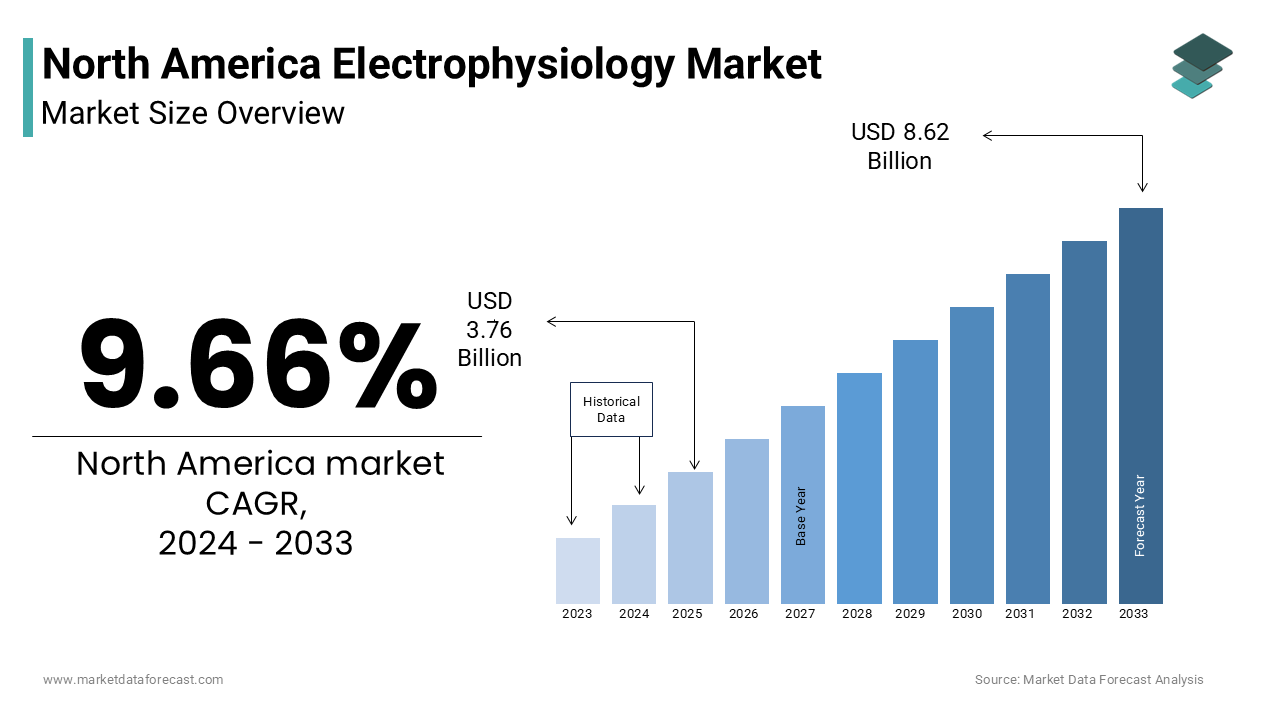
Electrophysiology (EP) includes EP catheters, mapping systems, ablation devices, and monitoring equipment that help physicians assess electrical activity within the heart and intervene where necessary. The growing prevalence of cardiovascular diseases, particularly atrial fibrillation (AFib), has significantly increased the demand for advanced electrophysiology solutions.
The United States leads this market due to its robust healthcare infrastructure, high patient awareness, and strong presence of leading medical device manufacturers. Also, more than 12 million Americans are projected to have AFib by 2030, reinforcing the need for advanced EP procedures and technologies. Canada also contributes meaningfully, with increasing investments in cardiac care and adoption of innovative EP systems.
As per data from the American Heart Association, hospitalizations related to arrhythmias exceeded 500,000 annually in recent years, underlining the clinical burden driving EP interventions. Apart from these, the U.S. Food and Drug Administration has been actively approving new-generation EP devices that offer improved precision and reduced procedural risks, encouraging broader adoption across hospitals and specialized cardiac centers.
MARKET DRIVERS
Rising Prevalence of Cardiac Arrhythmias
The escalating incidence of cardiac arrhythmias, particularly atrial fibrillation (AFib) is one of the primary drivers of the North America electrophysiology market. As the population ages and lifestyle-related risk factors such as obesity, hypertension, and diabetes become more prevalent, the burden of rhythm disorders has surged dramatically.
According to the Centers for Disease Control and Prevention, atrial fibrillation affects over 6 million Americans today, with projections indicating this number will surpass 12 million by 2030. This growing patient pool necessitates increased utilization of electrophysiology studies and interventional therapies, including catheter ablation and implantable cardiac rhythm monitors. Besides, physicians are increasingly relying on sophisticated EP mapping and ablation technologies to manage complex cases with greater precision and fewer complications. In Canada, Health Canada reported a similar trend, noting a significant rise in diagnosed cases of tachycardia and other rhythm disturbances, especially among seniors.
Technological Advancements in Electrophysiology Devices
The continuous advancement in EP device technology, which enhances procedural efficiency, safety, and patient outcomes, is another significant driver of the North America electrophysiology market. Innovations such as high-resolution 3D mapping systems, contact force sensing catheters, and robotic-assisted ablation platforms are transforming how arrhythmias are diagnosed and treated. These improvements allow for shorter procedure times, reduced radiation exposure, and better long-term success rates. Leading manufacturers such as Abbott, Boston Scientific, and Medtronic have played a pivotal role in integrating these technologies into mainstream practice.
MARKET RESTRAINTS
High Cost of Electrophysiology Procedures and Equipment
The high cost associated with EP procedures and equipment, which limits accessibility and reimbursement coverage, a major restraint affecting the North America electrophysiology market. Electrophysiology studies and ablation therapies require expensive disposable catheters, advanced imaging systems, and trained personnel, making them financially burdensome for both patients and healthcare institutions.
While commercial insurance often covers these treatments, out-of-pocket expenses and co-pays can deter patients from opting for timely intervention, especially in non-urgent cases.
Moreover, as per the American Heart Association, Medicare reimbursement policies for EP procedures have remained relatively stagnant despite inflationary pressures, creating financial strain for hospitals and ambulatory surgical centers. Some facilities have delayed equipment upgrades or limited access to newer technologies due to budget constraints.
In Canada, as per the Canadian Institute for Health Information, wait times for non-emergency EP procedures increased in several provinces, partly due to funding limitations and resource allocation challenges within public healthcare systems.
Regulatory Hurdles and Lengthy Approval Processes
Regulatory scrutiny and prolonged approval timelines pose another significant challenge to the North America electrophysiology market. Given the critical nature of EP devices and their direct impact on patient safety, regulatory agencies impose stringent evaluation protocols before granting market authorization.
This extended timeline delays product launches and hampers innovation cycles, especially for smaller companies with limited resources.
As per the data from AdvaMed, over 40% of device manufacturers reported delays in bringing new EP technologies to market due to evolving FDA guidelines, particularly around cybersecurity, software integration, and post-market surveillance requirements.
In Canada, Health Canada’s Medical Devices Bureau also enforces rigorous compliance standards, requiring extensive documentation and conformity assessments before market entry. As per the Canadian Agency for Drugs and Technologies in Health, some advanced EP systems face additional provincial-level evaluations before adoption, further complicating distribution strategies.
These regulatory complexities, while essential for ensuring patient safety, create operational inefficiencies and increase development costs, discouraging rapid innovation and limiting the speed at which new technologies reach end users.
MARKET OPPORTUNITIES
Expansion of Outpatient Electrophysiology Services
The growing shift toward outpatient EP services, driven by advances in minimally invasive technologies and favorable reimbursement policies, is a significant opportunity for the North America electrophysiology market. Ambulatory surgical centers (ASCs) and office-based labs are increasingly performing low-to-moderate complexity EP procedures, reducing hospital dependency and lowering overall healthcare costs.
Outpatient settings offer faster patient throughput, reduced infection risks, and improved patient satisfaction compared to traditional in-hospital procedures.
As per the data from the American College of Cardiology, catheter ablations performed in outpatient facilities rose by 18% in 2023, particularly for atrial flutter and supraventricular tachycardia. This trend aligns with broader healthcare system goals of decongesting hospitals and optimizing resource allocation.
In Canada, as per the Canadian Institute for Health Information reported that provincial health plans are exploring expanded coverage for outpatient EP interventions, signaling growing acceptance of alternative care delivery models.
Integration of Artificial Intelligence and Machine Learning in EP Systems
The integration of artificial intelligence (AI) and machine learning (ML) into EP mapping and ablation platforms is another emerging opportunity for the North America electrophysiology market. These technologies enable real-time data analysis, predictive modeling, and enhanced procedural guidance, improving accuracy and reducing complication rates. Also, these intelligent systems can process vast amounts of electrophysiological data rapidly, allowing for quicker decision-making and personalized treatment planning. With continued investment in digital health infrastructure and regulatory support for AI-enabled medical devices, this segment is poised for substantial growth.
MARKET CHALLENGES
Shortage of Skilled Electrophysiologists and Trained Personnel
The shortage of skilled electrophysiologists and adequately trained clinical staff is one of the foremost challenges facing the North America electrophysiology market. The complexity of EP procedures requires specialized knowledge in cardiac rhythm management, which is in limited supply across many regions.
According to the American College of Cardiology, there were fewer than 6,000 board-certified electrophysiologists in the U.S. in 2023, despite the growing demand for arrhythmia care. This disparity results in longer wait times, uneven geographic access, and bottlenecks in procedural capacity, particularly in rural and underserved areas.
More, fellowship training programs in clinical cardiac electrophysiology remain highly competitive and limited in number, constraining the pipeline of qualified professionals entering the field.
Increasing Competition from Alternative Therapies and Drug-Based Treatments
Intensifying competition from alternative therapies and pharmacological interventions poses a growing challenge for the North America electrophysiology market. While EP procedures offer definitive treatment for many arrhythmias, drug-based therapies continue to serve as first-line options, delaying or even replacing the need for invasive interventions.
Advances in anticoagulation therapy and rhythm control medications have improved symptom management without immediate reliance on EP procedures.
Data from the Journal of the American College of Cardiology suggests that a growing number of patients opt for rate-control strategies over rhythm-control interventions, influenced by physician preferences, patient comorbidities, and concerns about procedural risks.
The Canadian Cardiovascular Society also emphasized the importance of individualized treatment plans, which may reduce referrals for EP studies. To maintain momentum, the EP industry must demonstrate superior long-term outcomes and cost-effectiveness relative to pharmaceutical alternatives.
REPORT COVERAGE
| REPORT METRIC | DETAILS |
| Market Size Available | 2025 to 2034 |
| Base Year | 2025 |
| Forecast Period | 2026 to 2034 |
| CAGR | 9.66% |
| Segments Covered | By Product, Indication and Region. |
| Various Analyses Covered | Global, Regional & Country Level Analysis, Segment-Level Analysis, DROC, PESTLE Analysis, Porter’s Five Forces Analysis, Competitive Landscape, Analyst Overview of Investment Opportunities |
| Regions Covered | The United States, Canada, Rest of North America |
| Market Leaders Profiled | Boston Scientific Corporation, GE Healthcare, Abbott Laboratories, Biosense Webster, Inc., MicroPort Scientific Corporation, St. Jude Medical, Inc., BIOTRONIK SE & Co. KG, Koninklijke Philips N.V., Medtronic, Inc., and Siemens AG. |
SEGMENTAL ANALYSIS
By Product Insights
The electrophysiology ablation catheters segment led the North America electrophysiology market by accounting for 41.7% of total revenue in 2025. Rising incidence of atrial fibrillation and other rhythm disorders that require curative interventions through catheter ablation is primarily attributed to the dominance of electrophysiology ablation catheters segment.
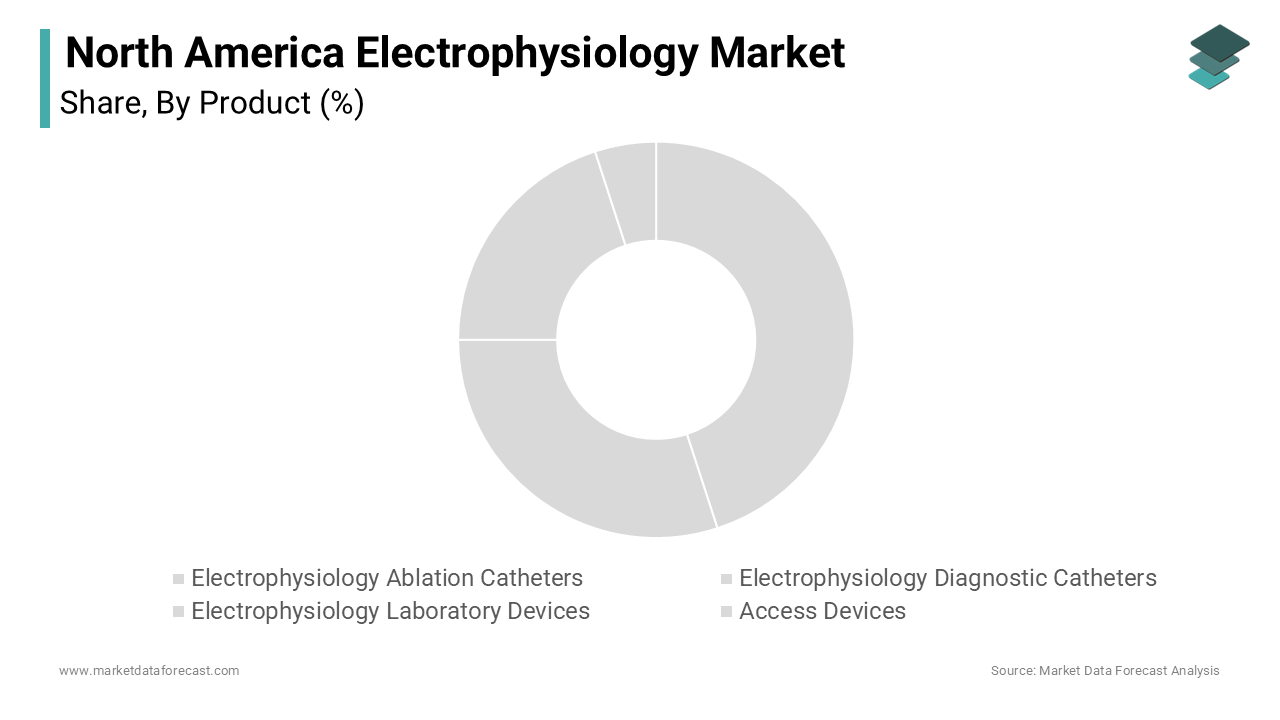
The increasing adoption of advanced catheter technologies such as contact force sensing, irrigated tip, and cryoablation systems has significantly enhanced procedural success rates, further boosting demand.
Leading manufacturers such as Abbott, Boston Scientific, and Medtronic are investing heavily in next-generation devices that offer greater precision, reduced complications, and shorter recovery times.
In Canada, as per the Canadian Cardiovascular Society, there is a notable increase in ablation catheter utilization across major cardiac centers, driven by growing awareness of minimally invasive treatments and favorable reimbursement policies.
The electrophysiology laboratory devices segment is emerging as the fastest-growing within the North America market, projected to expand at a CAGR of 9.7% between 2026 and 2034. Increasing investments in EP lab infrastructure, the integration of AI-driven mapping systems, and the expansion of outpatient cardiac care facilities are fuelling the rapid growth of the electrophysiology laboratory devices segment. According to the American College of Cardiology, over 30% of U.S. hospitals expanded or upgraded their EP labs in 2023, incorporating high-resolution 3D electroanatomical mapping systems, intracardiac echocardiography equipment, and remote navigation platforms. These advancements enable more precise arrhythmia localization and real-time monitoring during complex procedures. Hospitals and ambulatory surgical centers are increasingly adopting these tools to improve patient outcomes and streamline workflow. As healthcare providers prioritize digital transformation and data-driven diagnostics, this segment is poised for sustained high-growth performance.
By Indication Insights
The atrial fibrillation (AFib) segment remained the biggest indication in the North America electrophysiology market by capturing an estimated 58.5% of total procedure volume in 2025. Surging prevalence of AFib, its association with stroke and heart failure, and the increasing adoption of catheter ablation as a definitive treatment are driving the overwhelming dominance of atrial fibrillation (AFib).
According to the Centers for Disease Control and Prevention, atrial fibrillation affects over 6 million Americans today, with projections indicating this number will surpass 12 million by 2030. The aging population, rising obesity rates, and increased hypertension prevalence all contribute to the growing burden of AFib, necessitating advanced EP interventions.
Further, as per the Journal of the American College of Cardiology, catheter ablation has emerged as a first-line therapy for drug-refractory AFib, with success rates exceeding 80% in select patient populations. The availability of newer ablation techniques, including pulsed field and cryoballoon ablation, has further improved clinical outcomes and patient acceptance.
Provincial health plans have also introduced targeted screening programs and early intervention initiatives, reinforcing the clinical and economic importance of AFib management in shaping the regional EP market landscape.
The Wolff-Parkinson-White syndrome (WPW) segment is experiencing the most rapid expansion in the North America electrophysiology market and is projected to grow at a CAGR of 10.2% from 2025 to 2033. Increased awareness of congenital arrhythmias, earlier diagnosis in pediatric and young adult populations, and the effectiveness of catheter ablation in curing WPW is propelling the accelerated growth of Wolff-Parkinson-White syndrome (WPW) segment.
As schools and sports organizations implement mandatory cardiac evaluations, more patients are being identified before experiencing life-threatening arrhythmic events.
As per the data from the Pediatric and Congenital Electrophysiology Society, over 90% of WPW patients who undergo catheter ablation achieve long-term cure, making it the preferred treatment modality over lifelong medication. The minimally invasive nature of the procedure and favorable safety profile have contributed to its widespread adoption.
REGIONAL ANALYSIS
United States Electrophysiology Market Analysis
The United States held the dominant position in the North America electrophysiology market by accounting for 76.6% of regional market revenue in 2025. This lead position is underpinned by its advanced healthcare infrastructure, high patient awareness, and strong presence of leading medical device manufacturers specializing in cardiac rhythm management. According to the Centers for Disease Control and Prevention, atrial fibrillation affects over 6 million Americans today, with projections indicating this number will surpass 12 million by 2030. This growing patient pool necessitates increased utilization of electrophysiology studies and interventional therapies, including catheter ablation and implantable cardiac rhythm monitors.
Apart from these, as per the Personal Care Products Council, U.S. consumers spent more than $95 billion on fragranced personal care items in 2023, reinforcing the importance of scent in branding and consumer engagement.
Canada Electrophysiology Market Analysis
Canada is another key player in the North America electrophysiology market. The country’s market growth is being driven by increasing health consciousness, regulatory support for natural ingredients, and a surge in premium fragrance and gourmet flavor development.
According to Statistics Canada, organic food sales in the country grew by 18% year-over-year in 2025, with natural flavorings gaining traction in clean-label formulations.
Moreover, as per Dalhousie University’s 2023 Food Trends Report, nearly 22% of Canadians now identify as flexitarian, further boosting demand for innovative and ethically sourced flavor ingredients.
Mexico Electrophysiology Market Analysis
Mexico holds a smaller but rapidly growing share of the North America electrophysiology market. Though traditionally less developed in high-value fragrance and flavor consumption, recent shifts in urbanization patterns, disposable income levels, and exposure to global food trends are fueling market expansion.
According to the Mexican Ministry of Economy, the country’s packaged food and beverage sector grew by 11% in 2023, with increasing incorporation of specialty flavors in soft drinks, confectionery, and snack items. Domestic manufacturers are adopting international flavor profiles to cater to younger, urban consumers who seek novelty and global culinary influences.
Further, as per the Secretariat of Economy, there has been a rise in the use of natural flavour extracts in food processing, signaling growing awareness of ingredient transparency and health-conscious formulation.
These developments indicate strong future potential for flavors and fragrances adoption in Mexico, particularly as local food and beauty brands seek to enhance product quality and meet evolving consumer expectations.
COMPETITIVE LANDSCAPE
The competition in the North America electrophysiology market is intense and highly dynamic, driven by rapid technological innovation, increasing prevalence of cardiac arrhythmias, and growing demand for minimally invasive treatment options. A few dominant multinational corporations namely Abbott, Boston Scientific, and Medtronic control the majority of the market through extensive product portfolios, robust distribution networks, and deep-rooted relationships with hospitals and cardiology clinics. These industry leaders continuously introduce advanced EP systems incorporating AI-driven diagnostics, robotic assistance, and high-resolution mapping capabilities to maintain their technological edge.
However, the market is also witnessing growing influence from emerging players and niche device manufacturers that focus on specific segments such as cryoablation, pulsed field ablation, and remote navigation systems. These companies often leverage agile R&D cycles and strategic collaborations to challenge established firms, particularly in outpatient and ambulatory settings where cost-effectiveness and procedural efficiency are critical.
Regulatory scrutiny, reimbursement dynamics, and physician preference play crucial roles in shaping competitive positioning. As healthcare providers prioritize value-based care, companies must demonstrate superior clinical outcomes, ease of use, and long-term cost benefits to secure sustained market growth and adoption.
KEY MARKET PLAYERS
Companies playing a dominant role in the North America Electrophysiology Market include
- Boston Scientific Corporation
- GE Healthcare
- Abbott Laboratories
- Biosense Webster, Inc.
- MicroPort Scientific Corporation
- St. Jude Medical, Inc.
- BIOTRONIK SE & Co. KG
- Koninklijke Philips N.V.
- Medtronic, Inc.
- Siemens AG
Top Players in the North America Electrophysiology Market
Abbott Laboratories
Abbott is a global leader in cardiovascular medical devices, with a strong presence in the North America electrophysiology market. The company offers a comprehensive portfolio of EP catheters, mapping systems, and ablation technologies designed to improve the diagnosis and treatment of cardiac arrhythmias. Abbott focuses on innovation through continuous R&D, integrating advanced imaging, AI-driven analytics, and robotic-assisted solutions into its product offerings. Its acquisition of St. Jude Medical significantly bolstered its position in the EP space, allowing it to deliver cutting-edge technologies that support minimally invasive procedures and enhance clinical outcomes across leading cardiac care centers in the U.S. and Canada.
Boston Scientific Corporation
Boston Scientific plays a pivotal role in shaping the North America electrophysiology market through its broad range of diagnostic and therapeutic EP devices. The company specializes in developing next-generation ablation catheters, high-resolution mapping systems, and remote navigation tools that enable precise and efficient treatment of complex arrhythmias. Boston Scientific emphasizes strategic partnerships, clinical education, and physician training programs to ensure widespread adoption of its technologies. With a focus on patient-centric innovation and digital integration, the company continues to drive advancements in EP lab efficiency, procedural safety, and long-term rhythm management, reinforcing its leadership position in the regional and global markets.
Medtronic plc
Medtronic is a dominant player in the North America electrophysiology market, offering a wide array of EP devices including advanced ablation systems, intracardiac echocardiography tools, and AI-enhanced mapping platforms. The company has a long-standing reputation for pioneering innovations in cardiac rhythm management and remains at the forefront of technology development in the EP field. Medtronic invests heavily in clinical research, real-world data analysis, and collaborative partnerships with academic institutions to refine treatment protocols and expand indications for EP interventions. Its commitment to improving patient outcomes through precision medicine and digital health integration makes it a key contributor to both regional and international electrophysiology advancements.
Top Strategies Used by Key Market Participants
One of the primary strategies employed by leading players in the North America electrophysiology market is continuous innovation and technological advancement in EP device design. Companies are investing heavily in R&D to develop more precise, less invasive, and AI-integrated mapping and ablation technologies that enhance procedural success rates and reduce complications.
Another key approach involves strategic acquisitions and partnerships to expand product portfolios and geographic reach. Major firms are acquiring smaller, innovative startups specializing in cardiac monitoring, signal processing, and robotic navigation to accelerate time-to-market for next-generation solutions and strengthen their competitive edge.
Lastly, companies are focusing on comprehensive physician education and clinical collaboration to drive the adoption of advanced EP technologies. By supporting hands-on training programs, sponsoring clinical trials, and engaging directly with electrophysiologists, industry leaders ensure broader acceptance and integration of new tools within hospital networks and specialized cardiac centers.
RECENT MARKET DEVELOPMENTS
- In January 2024, Abbott launched a next-generation contact force-sensing ablation catheter featuring integrated AI analytics to improve lesion creation accuracy and procedural consistency, enhancing its competitiveness in complex AFib treatments.
- In March 2024, Boston Scientific announced a strategic partnership with a U.S.-based digital health startup to integrate real-time arrhythmia detection algorithms into its existing EP mapping systems, enabling faster and more accurate diagnoses during electrophysiology studies.
- In June 2024, Medtronic expanded its EP solutions portfolio by introducing a compact, cloud-connected cardiac mapping system tailored for use in ambulatory surgical centers, aiming to facilitate the shift toward outpatient EP procedures.
- In August 2024, Biosense Webster, a subsidiary of Johnson & Johnson, initiated a nationwide physician training initiative focused on advanced ablation techniques, strengthening clinical adoption and expanding its footprint in community-based EP labs across the U.S.
- In November 2024, Edwards Lifesciences entered the EP market with an acquisition of a privately held innovator in intracardiac pressure monitoring, signaling its intent to diversify beyond structural heart disease and compete in the rapidly evolving EP diagnostics space.
MARKET DEVELOPMENTS
This research report on the North American electrophysiology market has been segmented and sub-segmented into the following categories.
By Product
- Electrophysiology Ablation Catheters
- Electrophysiology Diagnostic Catheters
- Electrophysiology Laboratory Devices
- Access Devices
By Indication
- Atrial Flutter
- Atrial Fibrillation
- Wolff-Parkinson-White Syndrome
- Atrioventricular Nodal Re-entry Tachycardia
- Other Indications
By Country
- The United States
- Canada
- Rest of North America