- Product Description Description
- Table of Contents TOC
- List of Table & Figure LOT
- Get Free Sample PDF Sample PDF
Market Size, 2025
$554.41 MnMarket Estimate, 2026
$592.72 MnMarket Forecast, 2034
$1,012 MnCAGR, 2026–2034
6.91%Executive Summary: North America Endodontics Market
- Market Scope: Regional analysis of the North American endodontics market covering instrument categories, consumable items, end-user settings, country-level insights, and oral healthcare initiatives.
- Market Valuation: Valued at USD 554.41 million in 2025, estimated at USD 592.72 million in 2026, and projected to reach USD 1,012 million by 2034, registering a solid CAGR of 6.91% from 2026 to 2034.
- Primary Growth Drivers: High prevalence of dental disorders and tooth loss; rising awareness of oral hygiene supported by governmental/association programs; growing geriatric population prone to dental caries.
Key Market Segment Metrics (2026–2034)
| Category | Leading Segment / Position | Segment Details / Breakdown |
|---|---|---|
| By Instruments | Core Endodontic Instruments | Encompasses Scalers, Apex Locators, Motors, Handpieces, and Lasers utilized in root canal therapy. |
| By Consumables | Consumables & Materials | Includes Access Cavity Preparation, Endodontic Files, Burs, Drills, Lubricants, and Obturation materials. |
| By End-User | Dental Clinics & Hospitals | Driven by widespread private practice clinic adoption and institutional healthcare infrastructure. |
| By Country | United States (Dominant Share) & Canada (High Visit Rate) | U.S. anchored by high disposable income and dental awareness; Canada supported by strong clinical visit frequencies (~75.23% annual clinic visits). |
Major Market Players & Market Structure
Market Structure: Highly competitive market featuring established global dental device manufacturers focusing on advanced endodontic systems, precision files, and clinical training partnerships.
Key Companies: DENTSPLY SIRONA, Danaher Corporation, Ivoclar Vivadent, Ultradent Products, Brasseler USA, MICRO-MEGA, VOCO, DiaDent Group International, MANI, COLTENE Holding, Septodont Holding, and FKG Dentaire.
 Download Free Sample Report
North America Endodontics Market Size
The North America endodontics market was valued at USD 554.41 million in 2025. The market is estimated at USD 592.72 million in 2026 and is projected to reach USD 1,012 million by 2034, growing at a CAGR of 6.91% from 2026 to 2034.

Endodontics are specialized dental procedures and devices focused on the diagnosis, prevention, and treatment of diseases affecting the dental pulp and periradicular tissues. According to the American Association of Endodontists, over 15 million root canal procedures are performed annually in the United States alone, reflecting the high prevalence of pulpal pathology requiring intervention. According to the Centers for Disease Control and Prevention, nearly 92% of adults aged 20 to 64 have had dental caries in their permanent teeth, which is the primary precursor to endodontic issues. The aging population further amplifies this need as older adults retain more natural teeth but face increased risks of cracks and decay. Technological advancements such as cone beam computed tomography and rotary instrumentation have improved success rates and patient comfort. Reimbursement policies from private insurers and Medicaid significantly influence patient access to specialist care.
MARKET DRIVERS
High Prevalence of Dental Caries and Trauma
The high prevalence of dental caries and dental trauma creates a consistent and large volume of patients requiring pulp preservation therapies is elevating the growth of the North America endodontics market. Untreated decay remains the most common chronic disease among children and adults, leading to pulpitis and necrosis that necessitate root canal treatment. According to the National Institute of Dental and Craniofacial Research, approximately 26% of adults aged 20 to 64 have untreated dental caries, which often progresses to require endodontic intervention if not addressed early. Additionally, sports injuries and accidents contribute significantly to dental trauma, with the American Dental Association reporting that over 5 million teeth are knocked out annually in the United States, many of which require immediate endodontic care to save the tooth. This dual burden of disease and injury ensures a steady stream of cases for general dentists and endodontists. The shift toward saving natural teeth rather than extraction drives demand for high-quality files, sealers, and imaging technologies. Patients increasingly prefer conservative treatments that maintain aesthetics and function.
Aging Population Retaining Natural Dentition
The aging population retaining natural dentition, as older adults seek to preserve their teeth for as long as possible through specialized care that is accelerating the growth of the North America endodontics market. Advances in preventive care and restorative dentistry have enabled seniors to keep their natural teeth well into their later years, increasing the likelihood of age-related pulpal issues. According to the National Institute on Aging, the number of Americans aged 65 and older is projected to double by 2050, creating a massive demographic cohort prone to cracked teeth and recurrent decay. Older adults are more susceptible to root surface caries due to gum recession and dry mouth conditions often caused by medications. These conditions frequently lead to pulp involvement requiring complex endodontic procedures such as retreatment or microsurgery. Seniors generally have higher disposable income and better insurance coverage compared to younger demographics, enabling them to afford specialist care. The desire to maintain chewing efficiency and nutritional intake drives the preference for tooth preservation over extraction and implant placement. Endodontists are seeing an increase in referrals for geriatric patients with complex medical histories requiring careful management.
MARKET RESTRAINTS
High Cost of Specialist Care and Limited Insurance Coverage
The high cost of specialist care and limited insurance coverage, by restricting access for uninsured or underinsured patients, is hindering the growth of the North America endodontics market. Root canal therapy performed by an endodontist can cost significantly more than treatment by a general dentist and may not be fully covered by dental insurance plans. Many public insurance programs such as Medicaid have limited adult dental benefits, excluding endodontic services or imposing strict annual caps that are quickly exhausted. This financial barrier leads many patients to opt for tooth extraction, which is cheaper but results in long-term oral health complications. The lack of transparent pricing also discourages patients from seeking timely care, leading to more complex and expensive emergencies later. Private insurers often classify endodontics as a major service subject to waiting periods and co-payments. The economic burden disproportionately affects low-income populations, exacerbating health disparities. Dentists face challenges in collecting payments and managing administrative burdens associated with insurance claims.
Patient Anxiety and Preference for Extraction
Patient anxiety and preference for extraction cause some individuals to choose tooth removal over preservation due to fear of pain or procedure complexity, which is degrading the growth of the North America endodontics market. According to the American Dental Association survey, dental anxiety affects approximately 36% of the population, with many citing endodontic procedures as a primary source of fear. This psychological barrier leads to delayed care until the tooth becomes non-restorable, necessitating extraction. Some patients mistakenly believe that implants are a superior and less painful alternative, ignoring the benefits of preserving natural tooth structure. The misconception that root canals cause systemic illness, although debunked by scientific evidence, persists in certain communities, influencing decision-making. General dentists may also refer fewer cases to specialists if they perceive patient reluctance or if they lack confidence in managing anxious patients. Marketing efforts to educate the public about modern painless techniques have had mixed success. The emotional aspect of dental care creates a hurdle for market expansion. Overcoming this stigma requires continuous education and improved patient experience strategies.
MARKET OPPORTUNITIES
Adoption of Digital Imaging and Microscopic Technologies
The adoption of digital imaging and microscopic technologies by enhancing diagnostic accuracy and treatment outcomes, is set to create new opportunities for the growth of the North America endodontics market. Cone beam computed tomography CBCT and dental operating microscopes allow endodontists to visualize complex anatomy, detect hidden canals, and identify fractures with unprecedented precision. These technologies enable minimally invasive approaches that preserve more tooth structure and reduce postoperative discomfort. Patients are increasingly willing to pay premium prices for treatments utilizing advanced technology due to perceived higher quality and safety. Insurance providers are beginning to recognize the clinical value of CBCT in complex cases, leading to broader coverage. Training programs for residents and continuing education courses emphasize digital proficiency, creating a new generation of tech-savvy practitioners. Manufacturers of imaging software and hardware are developing integrated solutions that streamline workflow and data sharing. The shift toward digital dentistry aligns with broader healthcare trends toward precision medicine.
Expansion of Teleendodontics and Remote Consultations
The expansion of teleendodontics and remote consultations is improving access to specialist expertise in underserved areas, which is another factor to bolster the growth of the North America endodontics market. Virtual platforms enable general dentists to consult with endodontists regarding diagnosis, treatment planning, and case selection without requiring patient travel. According to the American Teledentistry Association, the use of telehealth in dentistry grew by 40% during the pandemic and has remained elevated due to its efficiency and convenience. This model allows specialists to triage cases effectively, ensuring that only appropriate patients are referred for in-person care. It also facilitates second opinions and collaborative care between providers, enhancing overall treatment quality. Rural and remote communities benefit significantly from access to specialist knowledge that was previously unavailable. Insurance companies are increasingly covering telehealth visits, reducing financial barriers for patients. Software developers are creating secure HIPAA-compliant platforms tailored for dental imaging sharing and communication. Endodontists can expand their reach beyond geographic limitations, building larger referral networks. This digital transformation improves practice efficiency and patient satisfaction. It creates new revenue streams for specialist practices.
MARKET CHALLENGES
Shortage of Specialized Endodontists
The shortage of specialized endodontists is a major attributes to act as a major barrier to the growth of the North America endodontics market. While general dentists perform many root canals, complex cases require specialist intervention, which is limited by the number of trained professionals. According to the American Dental Education Association, only about 300 new endodontists graduate from accredited programs annually in the United States, which is insufficient to meet the growing demand from an aging population. This supply constraint leads to longer referral delays, potentially compromising tooth prognosis and patient satisfaction. Geographic maldistribution exacerbates the issue, with most specialists concentrated in urban areas, leaving rural regions underserved. General dentists may attempt complex cases beyond their skill level due to lack of available specialists, increasing the risk of failure and litigation. The rigorous training requirements and high cost of residency programs deter some dentists from specializing. Recruitment and retention of endodontists in group practices remain difficult due to high compensation expectations. The imbalance between demand and supply creates operational pressures for healthcare systems. Addressing this workforce gap requires policy interventions and educational incentives. It limits the market's ability to fully capitalize on clinical demand.
Regulatory Complexity and Compliance Burdens
The regulatory complexity and compliance burdens, by increasing operational costs and administrative workload for practitioners and manufacturers, are ascribed to inhibiting the growth of the North America endodontics market. Strict regulations from the Food and Drug Administration govern the approval and marketing of endodontic devices and materials, requiring extensive clinical data and quality control measures. Practitioners must adhere to stringent infection control protocols and radiation safety standards, which require ongoing training and equipment maintenance. The Health Insurance Portability and Accountability Act imposes strict data privacy requirements for digital records and telehealth communications, adding IT security costs. State licensing boards have varying requirements for scope of practice and continuing education, creating fragmentation for multi-state practices. Non-compliance can result in hefty fines, license suspension, or legal action. Small practices struggle to keep up with changing regulations, diverting resources from patient care. Manufacturers face high costs for regulatory submissions and post-market surveillance. This regulatory environment slows innovation and increases barriers to entry.
REPORT COVERAGE
| REPORT METRIC | DETAILS |
| Market Size Available | 2025 to 2034 |
| Base Year | 2025 |
| Forecast Period | 2026 to 2034 |
| Segments Covered | By Instruments, Consumables, End User, and Region. |
| Various Analyses CoveredProduct, Test Type, Technique, End User | Global, Regional and Country-Level Analysis, Segment-Level Analysis, Drivers, Restraints, Opportunities, Challenges; PESTLE Analysis; Porter’s Five Forces Analysis, Competitive Landscape, Analyst Overview of Investment Opportunities |
| Countries Covered | United States, Canada, Mexico, Rest of North America |
| Market Leaders Profiled | Dentsply Sirona Inc, Danaher Corporation, Ivoclar Vivadent, Ultradent Products (US), Brasseler USA, MICRO-MEGA, VOCO, Ultradent Products Inc, Kerr Corporation, DiaDent Group International, MANI, COLTENE Holding, Septodont Holding, FKG Dentaire. |
SEGMENTAL ANALYSIS
By Instruments Insights
The apex locators segment was the largest, holding 59.2% of the North America endodontics market share in 2025, as it is indispensable for determining the exact working length of root canals, which is fundamental to successful endodontic therapy. Accurate length determination prevents overinstrumentation and underinstrumentation, both of which can lead to treatment failure or postoperative complications. According to the Journal of Endodontics, electronic apex locators demonstrate an accuracy rate of over 90% in identifying the apical constriction compared to traditional radiographic methods, which are subject to interpretation errors and radiation exposure. This high level of precision has made them the standard of care in modern endodontic practices across the United States and Canada. The widespread adoption of these devices is driven by their ability to reduce procedure time and enhance patient safety. Most modern endodontic units come equipped with integrated apex locators, further cementing their dominance.
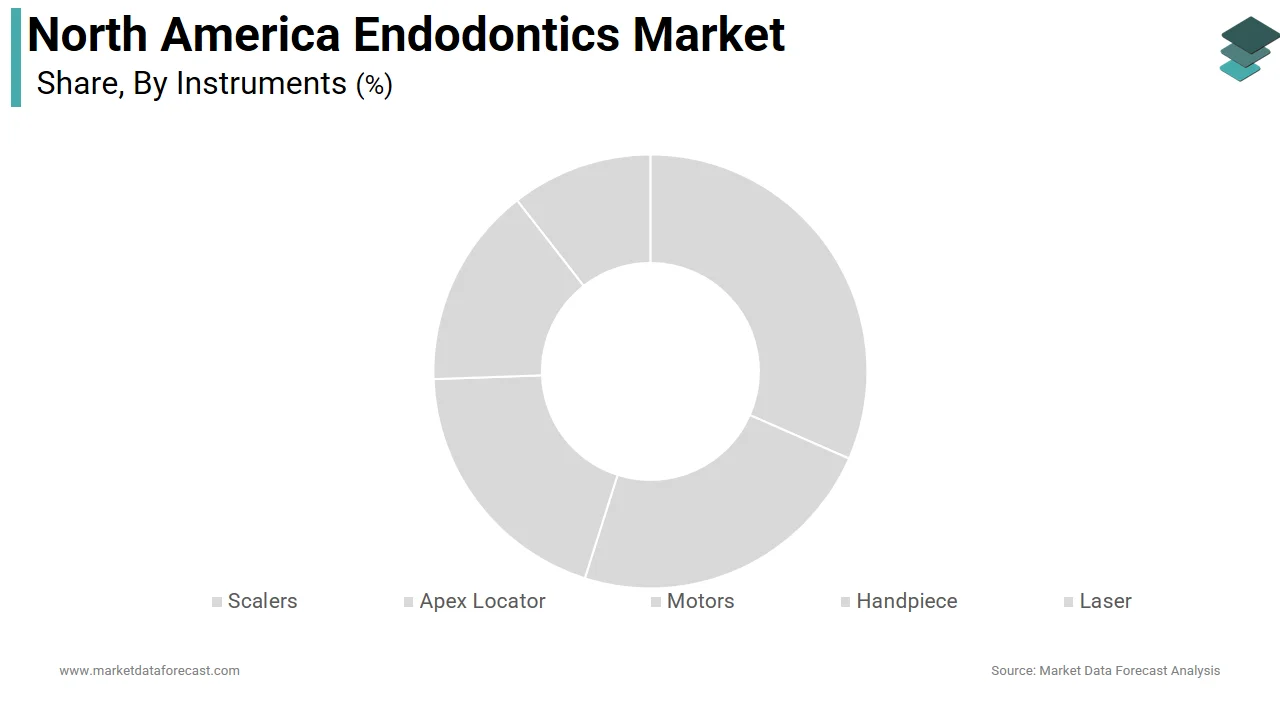
The laser instruments segment is swiftly growing at an anticipated CAGR of 11.2% from 2026 to 2034, with advancements in minimally invasive disinfection techniques that enhance root canal cleanliness. Traditional irrigation methods often fail to reach complex anatomical structures such as lateral canals and isthmuses where bacteria persist. This superior cleaning capability reduces the risk of persistent infection and treatment failure, making lasers an attractive adjunct for endodontists. The American Board of Endodontics recognizes the growing body of evidence supporting laser use in biofilm removal and smear layer elimination. Patients benefit from reduced postoperative pain and faster healing times associated with laser therapy. The aesthetic appeal of high-tech equipment also serves as a marketing tool for private practices. As laser costs decrease and portability increases, adoption rates among small clinics are rising. Training programs accredited by the Academy of Laser Dentistry are expanding the pool of qualified users.
By Consumables Insights
Endodontic files dominate the North America endodontics market consumables segment because they are essential for cleaning and shaping the root canal system in every single root canal procedure. Whether using manual stainless steel files or rotary nickel-titanium instruments, these tools are consumed in large quantities due to their single-use nature mandated by infection control protocols. According to the Centers for Disease Control and Prevention, strict guidelines prohibit the reuse of endodontic files to prevent cross-contamination, ensuring a constant and non-negotiable demand for new sets. This massive procedural volume creates a recurring revenue stream for manufacturers that is resilient to economic fluctuations. The shift toward rotary and reciprocating file systems has increased the cost per case but also improved efficiency and consistency. Clinicians prefer branded files with proven fatigue resistance to avoid instrument separation during treatment. The variety of file tapers and alloys allows for customization based on case complexity. Distributors maintain robust inventory levels to meet immediate clinical needs.
The obturation materials segment is likely to register the fastest CAGR of 9.5% from 2026 to 2034 with the shift toward bioceramic sealers and warm vertical compaction techniques that provide superior sealing ability. Traditional gutta-percha points combined with epoxy resin sealers are being replaced by hydraulic calcium silicate-based sealers that bond chemically to dentin and expand slightly upon setting. The bioceramic sealers demonstrate significantly lower microleakage rates and better biocompatibility compared to conventional materials, leading to higher long-term success rates. This clinical superiority is driving widespread adoption among specialists who prioritize hermetic seals to prevent bacterial reinfection. The warm vertical compaction technique requires specialized carriers and heated gutta-percha, which increases the volume of consumables used per case. Patients benefit from reduced sensitivity and faster periapical healing associated with bioactive materials. Manufacturers are launching comprehensive obturation kits that simplify the delivery of these advanced materials. Insurance reimbursement codes are adapting to cover these premium materials as standard of care evolves.
By End User Insights
The clinics segment was the largest, capturing 38.8% of the North America endodontics market share in 2025, with the majority of root canal treatments performed in private dental offices rather than hospital settings. General dentists and endodontic specialists operate primarily in outpatient clinic environments, which offer greater convenience and lower overhead costs for routine procedures. These clinics are equipped with specialized endodontic chairs, microscopes, and imaging systems that facilitate efficient treatment. The preference for clinic-based care is driven by patient comfort and shorter wait times compared to hospital outpatient departments. Insurance reimbursement rates are generally more favorable for office-based procedures, encouraging providers to maintain high volumes. The rise of corporate dental groups has further consolidated clinic-based care, providing economies of scale for equipment and supply procurement. Clinics offer a personalized patient experience that is highly valued in dental care.
The hospitals segment is expected to exhibit the fastest CAGR of 6.8% from 2026 to 2034, with the rising complexity of medical cases and trauma that require multidisciplinary management in a hospital setting. Patients with severe facial trauma, systemic infections, or compromised immune systems often need endodontic care coordinated with other medical specialties. According to the American Hospital Association, emergency department visits for dental-related issues have increased by 15% in recent years, many of which require immediate endodontic intervention to prevent spread of infection. Hospitals are equipped to handle medically complex patients who cannot be safely treated in a private clinic due to anesthesia risks or monitoring needs. The integration of dental services into hospital systems facilitates comprehensive care for hospitalized patients. Academic medical centers serve as training grounds for residents, increasing the volume of procedures performed in hospital clinics. Government funding for public health initiatives often channels resources through hospital networks.
REGIONAL ANALYSIS
U.S. Endodontics Market Analysis
The United States was the top performer in the North America endodontics market by occupying 91.3% of the share in 2025, with high healthcare expenditure, advanced technological adoption, and a large number of specialist practitioners. The country benefits from a well-established insurance framework and high patient awareness of the importance of oral health. According to the Centers for Medicare and Medicaid Services, dental spending in the United States reached 138 billion dollars in 2022, with a significant portion allocated to restorative and endodontic services. The American Association of Endodontists reports that there are over 7000 board certified endodontists in the country, ensuring wide geographic coverage and access to specialized care. High prevalence of dental caries and an aging population drive consistent demand for root canal therapies. The presence of major medical device manufacturers fosters innovation and rapid product launches. Strict regulatory standards ensure high quality and safety of endodontic materials. Private practice consolidation is increasing efficiency and purchasing power.
Canada Endodontics Market Analysis
Canada endodontics market was next, holding an 8.6% share in 2025, with the universal healthcare system that covers basic dental needs for children and seniors, while private insurance covers adults. The country has a high density of dental professionals and a strong emphasis on preventive care. The prevalence of dental caries remains a concern, particularly in indigenous and rural communities, driving public health initiatives. Provincial health plans are gradually expanding coverage for essential dental services, reducing financial barriers. The adoption of digital technologies such as CBCT is growing rapidly in urban centers like Toronto and Vancouver. Canadian regulations align closely with US standards, simplifying market entry for manufacturers. The aging population is increasing the demand for tooth preservation services.
COMPETITIVE LANDSCAPE
The competitive landscape of the North America endodontics market is characterized by intense rivalry between established multinational corporations and specialized niche manufacturers vying for dominance through technological innovation and clinical evidence. Large players leverage extensive distribution networks and broad product portfolios to offer comprehensive solutions for general dentists and specialists. These companies benefit from strong brand recognition and significant resources for research and development, which drive continuous product improvement. Smaller specialized firms focus on specific segments such as bioceramic sealers or laser-assisted therapies where they can differentiate through superior performance and targeted marketing. The market exhibits moderate consolidation as larger entities acquire innovative startups to gain access to proprietary technologies and expand their offerings. Price competition is balanced by the critical nature of endodontic success, where quality often outweighs cost considerations. Regulatory compliance and clinical validation serve as key barriers to entry, ensuring that only proven products reach the market. Collaboration with key opinion leaders and academic centers helps build credibility and influence purchasing decisions.
KEY MARKET PLAYERS
The leading companies operating in the North America endodontics market include:
- Dentsply Sirona Inc.
- Danaher Corporation
- Ivoclar Vivadent
- Ultradent Products (US)
- Brasseler USA
- MICRO-MEGA
- VOCO
- Ultradent Products Inc.
- Kerr Corporation
- DiaDent Group International
- MANI
- COLTENE Holding
- Septodont Holding
- FKG Dentaire
TOP PLAYERS IN THE MARKET
- Dentsply Sirona Inc. serves as a global leader in dental technology with a comprehensive portfolio of endodontic instruments and consumables. The company provides advanced rotary file systems, apex locators, and obturation devices that are widely used by specialists and general dentists across North America. Recent initiatives focus on integrating digital workflows into endodontic practice through connected devices and software solutions that enhance diagnostic accuracy. Dentsply Sirona actively collaborates with academic institutions to provide continuing education and training on modern endodontic techniques. The company strengthens its market position by expanding distribution networks and offering bundled solutions for complete root canal therapy.
- Kerr Corporation contributes significantly to the market through its specialized endodontic consumables, including sealers, gutta-percha points, and irrigation solutions. The company emphasizes quality and consistency in its manufacturing processes, ensuring that practitioners can rely on their products for predictable clinical outcomes. Kerr has recently strengthened its position by introducing bioceramic-based sealers that offer enhanced bonding and antimicrobial properties. Their development of single cone obturation systems simplifies the filling process, appealing to both specialists and general practitioners. The company invests in educational programs that highlight best practices in disinfection and sealing techniques. Kerr maintains strong relationships with distributors to ensure widespread availability of their products in clinics and hospitals.
- Ultradent Products Inc. plays a crucial role in the market by providing high-quality endodontic chemicals, irrigants, and restorative materials known for their efficacy and safety. The company excels in developing unique formulations such as sodium hypochlorite alternatives and EDTA chelators that improve cleaning efficiency during root canal procedures. Ultradent has recently intensified its focus on sustainability by introducing eco-friendly packaging and biodegradable product options. Their acquisition of complementary brands has expanded their portfolio to include advanced delivery systems for irrigants and medicaments. The company works closely with clinicians to gather feedback and refine product performance, addressing specific clinical challenges. Ultradent invests in direct marketing and professional support teams to educate users on proper application techniques.
TOP STRATEGIES USED BY KEY MARKET PARTICIPANTS
Key players in the North America Endodontics Market employ several strategic approaches to maintain competitive advantage and drive growth. Product innovation remains central as companies develop advanced materials such as bioceramic sealers and flexible nickel-titanium files to improve clinical outcomes. Strategic partnerships with academic institutions enable continuous education and training for dental professionals, fostering brand loyalty and proper technique adoption. Expansion of digital health integration allows for better diagnostic precision and workflow efficiency through connected devices and software platforms. Investment in sustainable manufacturing practices addresses growing environmental concerns and appeals to eco-conscious practitioners. Companies also pursue regulatory approvals for new indications and technologies to expand their product portfolios and market reach. Direct-to-consumer education campaigns help reduce patient anxiety and increase demand for tooth preservation treatments.
MARKET SEGMENTATION
This research report on the North America endodontics market has been segmented and sub-segmented into the following categories.
By Instruments
- Scalers
- Apex Locator
- Motors
- Handpiece
- Laser
By Consumables
- Access Cavity Preparation
- Endodontic Files
- Burs
- Drill
- Lubricant
- Obturation
By End User
- Clinic
- Hospital
By Country
- U.S
- Canada
- Rest of North America