- Product Description Description
- Table of Contents TOC
- List of Table & Figure LOT
- Get Free Sample PDF Sample PDF
Market Size, 2025
$73.47 BnMarket Estimate, 2026
$76.09 BnMarket Forecast, 2034
$100.74 BnCAGR, 2026–2034
3.57%Executive Summary: North America Fish Processing Market
- Market Scope: Comprehensive regional analysis of the North American fish processing sector, covering preservation categories, application industries, harvesting sources, equipment technology, and country-level developments.
- Market Valuation: Valued at USD 73.47 billion in 2025, reaching USD 76.09 billion in 2026, and projected to expand to USD 100.74 billion by 2034, growing at a steady CAGR of 3.57% from 2026 to 2034.
- Primary Growth Drivers: Technological advancements in fishing and processing equipment, rising consumer preference for seafood due to high nutritional value (lean protein and omega-3 fatty acids), and surging demand for diverse seafood products.
Key Market Segment Metrics
| Category | Leading Segment (Base Position) | Fastest-Growing / High-Growth Segment |
|---|---|---|
| By Processing Category | Frozen (dominant method for long-term preservation, preventing decay, and global distribution) | Preserved & Value-Added (surging due to demand for shelf-stable and ready-to-eat meals) |
| By Application | Food (leads the market due to the increasing inclusion of fish and seafood in everyday diets) | Non-Food (expanding via marine extracts, fish meal, and nutraceutical applications) |
| By Source | Marine (dominant source driven by advanced deep-sea industrial harvesting techniques) | Inland / Aquaculture (growing steadily to supplement wild-catch limitations) |
| By Region / Country | The US (largest regional contributor backed by high seafood consumption and processing infrastructure) | Canada (strong growth rate driven by export-oriented fisheries and advanced processing tech) |
Major Market Players & Industry Landscape
Market Structure: Established regional marketplace featuring key northern commercial harvesters and seafood processing corporations navigating shifting dietary habits and automated plant operations.
Key Companies: High Liner Foods Incorporated, Clearwater Seafoods, Marine Harvest (Mowi), and Cooke Aquaculture.
 Download Free Sample Report
North America Fish Processing Market Size
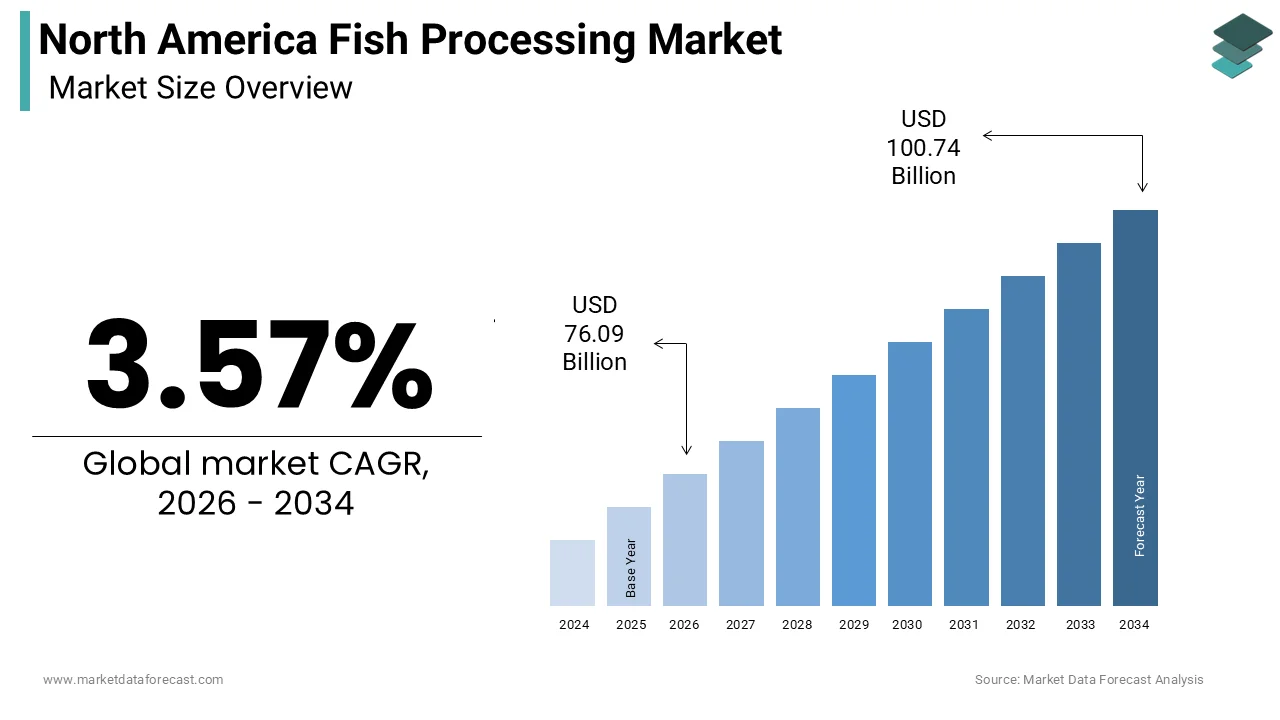
The North America Fish Processing Market size was expected to be worth USD 73.47 billion in 2025 and is anticipated to be worth USD 100.74 billion by 2034, up from USD 76.09 billion in 2026, growing at a CAGR of 3.57% during the forecast period.
Fish processing is the industrial transformation of raw aquatic catch into value-added consumer products. The proper handling and thermal processing of seafood are vital to prevent foodborne illnesses such as Vibrio infections, which affect thousands of individuals annually in the United States. The primary processing activities include gutting and scaling, as well as secondary processes such as smoking, canning, and ready-to-eat meal preparation. Regulatory frameworks ensure adherence to strict hygiene and environmental standards.
MARKET DRIVERS
Rising Consumer Preference for Healthy Protein Sources
The increasing consumer preference for healthy protein sources for nutritious and low-fat dietary options is driving the growth of the North America fish processing market. The regular consumption of fish is associated with a lower risk of heart disease and stroke, which encourages healthcare providers to promote seafood as a staple component of a balanced diet. This medical endorsement influences purchasing behavior and increases the volume of processed fish products in retail channels. Processors respond by offering convenient formats such as skinless fillets and pre-marinated portions that align with busy lifestyles. The trend toward clean label products drives innovation in natural preservation methods. Consumers seek transparency in sourcing, which processors address through certified sustainable labels.
Expansion of Ready-to-Eat and Convenience Seafood Products
The expansion of ready-to-eat and convenience seafood products is catering to time-constrained consumers seeking quick meal solutions, which is additionally promoting growth of the North American fish processing market. A significant majority of consumers prioritize convenience when making food choices, leading to increased sales of pre-cooked and frozen seafood items that require minimal preparation. The rise of home meal replacement trends has accelerated the demand for high-quality processed seafood that replicates restaurant experiences in domestic settings. This shift requires advanced processing technologies such as flash freezing and vacuum sealing to maintain texture and flavor integrity. Processors develop innovative product lines, including breaded shrimp, smoked salmon kits, and sushi-grade tuna to meet diverse culinary preferences. The growth of e-commerce grocery platforms facilitates direct delivery of these perishable items to households. Retailers allocate more shelf space to premium convenience seafood sections.
MARKET RESTRAINTS
Stringent Environmental Regulations and Sustainability Concerns
The stringent environmental regulations and sustainability concerns are imposing compliance costs and limiting access to certain fish stocks, which is restricting the growth of the North America fish processing market. Fisheries management plans enforce strict catch limits and seasonal closures to prevent overfishing and protect endangered species, which directly impacts the volume of raw material available for processing. The wastewater discharge standards for processing facilities require advanced treatment systems to remove organic matter and chemicals, increasing operational expenses for manufacturers. These regulatory burdens force companies to invest heavily in eco-friendly technologies and certification programs such as Marine Stewardship Council accreditation. Non-compliance can result in severe fines and loss of operating licenses. Consumers are increasingly aware of ecological impacts and prefer brands with transparent sustainability practices. The complexity of tracking supply chains from boat to plate adds administrative overhead. Limited availability of certified sustainable fish creates supply bottlenecks. Processors must balance profitability with environmental stewardship, which can reduce margins.
High Operational Costs and Energy Intensity
The high operational costs and energy intensity are affecting profit margins and competitiveness against imported products that is also declining the growth of the North America fish processing market. The refrigeration and freezing processes account for a substantial portion of energy consumption in food manufacturing facilities, leading to vulnerability to fluctuating utility prices. These financial pressures limit the ability of smaller processors to invest in modernization and automation. The need for continuous cold chain maintenance increases logistical expenses. Rising fuel costs for transportation further exacerbate the economic burden on distributed supply networks. Processors face difficult trade-offs between maintaining quality and reducing prices. Competition from lower-cost imports undermines domestic market share. The capital-intensive nature of building compliant facilities deters new entrants. Fluctuating exchange rates impact the affordability of imported equipment and packaging materials.
MARKET OPPORTUNITIES
Adoption of Automation and Artificial Intelligence
The adoption of automation and artificial intelligence are enhancing efficiency precision and yield optimization that is substantially to create new opportunities for the growth of the North America fish processing market. The integration of robotic vision systems and machine learning algorithms enables precise filleting and portioning, which reduces waste and improves consistency in product quality. Smart sensors can monitor freshness indicators in real time, allowing processors to dynamically adjust sorting and packaging parameters to maximize shelf life. This technological advancement transforms traditional labor-intensive processes into high-throughput automated operations. Companies can achieve higher output rates with fewer errors and reduced reliance on manual labor. Predictive maintenance tools minimize downtime for critical processing equipment. Data analytics help optimize inventory management and demand forecasting. The ability to customize cuts and portions appeals to retail and food service clients.
Development of Value-Added and Functional Seafood Products
The development of value-added and functional seafood products is also intended to leverage the growth of the North American fish processing market. Consumers are increasingly seeking foods with specific health benefits, which drives innovation in fortified seafood items. The advancements in extraction technologies allow processors to isolate beneficial compounds like omega-3 oils and collagen for use in supplements and functional foods. This diversification enables companies to create higher-margin products beyond standard fillets. Examples include probiotic-infused fish snacks and protein-enriched seafood bars. Partnerships with nutritionists and healthcare providers validate health claims and build consumer trust. The trend toward personalized nutrition supports customized product formulations. Processors can leverage byproducts such as skins and bones to create sustainable ingredient streams. This approach reduces waste and generates additional revenue sources. The premium positioning of functional products appeals to affluent and health-conscious demographics. It differentiates brands in a crowded marketplace.
MARKET CHALLENGES
Supply Chain Volatility and Raw Material Availability
Supply chain volatility and raw material availability are creating uncertainty in production planning, and pricing stability is a major barrier to the growth of the North American fish processing market. Fluctuations in fish populations due to climate change and environmental shifts lead to unpredictable catch volumes, which disrupt processing schedules. The geopolitical tensions and trade disputes can result in sudden tariffs or import restrictions, affecting the flow of both raw materials and finished products across borders. These disruptions force processors to maintain higher inventory levels, increasing storage costs and the risk of spoilage. Dependence on seasonal catches creates peaks and troughs in operational capacity. Processors struggle to secure long-term contracts with fishermen due to variable yields. The lack of alternative raw materials for specific species limits flexibility. Price volatility impacts profitability and consumer demand. Companies must develop resilient sourcing strategies, including diversification of species and suppliers.
Labor Shortages and Workforce Skill Gaps
The labor shortages and workforce skill gaps are impacting operational efficiency and product quality, which also impedes the growth of the North American fish processing market. The industry faces persistent difficulties in recruiting and retaining skilled workers for specialized processing tasks such as filleting and quality inspection. The aging workforce and lack of vocational training programs create a talent deficit that hinders the adoption of advanced processing technologies requiring technical expertise. This mismatch leads to increased overtime costs and higher error rates in production. The physically demanding and cold working conditions contribute to high turnover rates. Training new employees takes time and resources, delaying productivity gains. Operational disruptions due to staffing issues can result in delayed orders and compromised freshness. The shortage affects both rural processing plants and urban distribution centers.
REPORT COVERAGE
| REPORT METRIC | DETAILS |
| Market Size Available | 2025 to 2034 |
| Base Year | 2025 |
| Forecast Period | 2026 to 2034 |
| CAGR | 3.57% |
| Segments Covered | By Fish Processing Category, Application, Source, Species, Equipment, and Region |
| Various Analyses Covered | Global, Regional, & Country-Level Analysis; Segment-Level Analysis; DROC; PESTLE Analysis; Porter’s Five Forces Analysis; Competitive Landscape; Analyst Overview of Investment Opportunities |
| Regions Covered | US, Canada, and Rest of North America |
| Market Leaders Profiled | High Liner Foods Incorporated, Clearwater Seafoods, Marine Harvest, And Cooke Aquaculture |
SEGMENTAL ANALYSIS
By Fish Processing Category Insights
The frozen fish products segment was the largest, accounting for 22.3% of the North America Fish Processing Market share in 2025 due to its ability to extend shelf life and maintain nutritional value while enabling global distribution. This segment drives domination by offering consumers year-round access to seasonal catches and diverse species without spoilage risks. Frozen seafood accounts for a significant portion of household purchases because it reduces food waste and provides convenient meal solutions for busy families. The advancements in flash freezing technology preserve the texture and flavor of fish effectively by making frozen products comparable in quality to fresh alternatives for many culinary applications. The logistical advantage of frozen goods allows retailers to manage inventory more efficiently and respond to demand fluctuations. Retailers benefit from lower shrinkage rates and extended display times. The rise of e-commerce grocery shopping further boosts this segment, as frozen items are easier to ship with insulated packaging. Consumers appreciate the cost-effectiveness of frozen fillets compared to fresh counterparts. Regulatory standards for freezing ensure safety and quality consistency.
The preserved fish products segment is anticipated to witness the fastest CAGR of 10.2% from 2026 to 2034, with the rising popularity of artisanal flavors and ready-to-eat convenience. According to the Specialty Food Association, sales of premium preserved seafood, including smoked salmon and tinned sardines, have surged as shoppers explore gourmet ingredients for home cooking. The demand for protein-rich snacks that require no refrigeration has increased among health-conscious individuals seeking portable nutrition options. Processors innovate with sustainable packaging and exotic spice blends to attract younger demographics. The long shelf life of preserved products reduces supply chain complexity and storage costs. Social media trends highlighting the versatility of canned fish, seafood, and pastas drive consumer interest. Brands emphasize ethical sourcing and traditional curing methods to build trust. The growth of outdoor activities and emergency preparedness kits also boosts demand.
By Application Insights
The food application segment held a prominent share of the North America Fish Processing Market in 2025 due to the fundamental role of seafood as a primary protein source in human diets. This segment dominates because the vast majority of processed fish is directed toward human consumption through retail supermarkets, restaurants, and institutional catering services. Seafood is recommended as a key component of a healthy eating pattern, driving consistent demand from households and food service providers. The seafood menu items remain popular among diners seeking lighter and healthier dining options, which sustain high-volume orders for processed fillets and value-added products. The diversity of culinary traditions in North America supports a wide range of processed forms from breaded sticks to sushi-grade tuna. Processors focus on meeting strict food safety standards to prevent contamination. The trend toward home cooking during economic uncertainties boosts retail sales. Food service operators rely on consistent quality and portion control from processors.
The non-food application segment is expected to grow at the fastest CAGR of 12.2% during the forecast period, with the innovative use of fish byproducts in pharmaceuticals, cosmetics, and animal feed. The demand for marine collagen derived from fish skins and scales has increased significantly in the beauty and supplement sectors due to its anti-aging and joint health benefits. The inclusion of fish oil and fish meal in premium pet food formulations continues to grow as owners prioritize high-quality nutrition for their companions. Processors invest in extraction technologies to isolateomega-33 fatty acids and proteins for these specialized markets. The circular economy model appeals to environmentally conscious stakeholders. Regulatory approvals for marine-based ingredients in cosmetics facilitate market entry. The pharmaceutical industry utilizes fish-derived compounds for drug development. This segment benefits from wild-caught fish more than traditional food products. Partnomega-3 with biotech firms drives innovation in application methods.
By Species Insights
The heart-healthy segment was the largest by account health-conscious of the North America Fish Processing Market share in 2025 due to their widespread consumption and versatility in various culinary preparations. The popular varieties such as salmon, cod, tilapia, and tuna form the backbone of commercial fisheries and aquaculture production. Salmon remains the most consumed seafood item in the United States by volume, driving extensive processing activities for both wild-caught and farmed supplies. The high content of omega-3 fatty acids in fatty fish like salmon and mackerel promotes their inclusion in heart-healthy diets, sustaining steady demand from health-conscious consumers. Processors have developed efficient lines for filleting, skinning, and portioning these species. The availability of aquaculture facilities ensures consistent supply regardless of seasonal variations. Retailers prioritize these species due to high turnover rates. The familiarity of these fish among consumers reduces marketing barriers. Value-added products such as smoked salmon and breaded cod rely heavily on these species. Regulatory management plans support sustainable harvesting practices.
The crustaceans segment is expected to grow at the fastest CAGR of 12.1% during the forecast period, with the increasing popularity of shrimp, crab, and lobster in both casual and fine dining contexts. The imports and domestic production of shrimp have reached record levels to meet the insatiable demand for this versatile protein in American households. The export and domestic sales of lobster have grown due to effective branding and the expansion of live shipping capabilities to inland markets. Processors invest in specialized equipment for peeling, deveining, and cooking crustaceans to enhance convenience. The rise of seafood boils and fusion cuisines features crustaceans prominently. Aquaculture advancements for shrimp reduce reliance on wild stocks. Premium pricing strategies yield higher margins for processors. The gift market for live lobster drives seasonal spikes. Retailers expand frozen and fresh crustacean sections to capture interest. Sustainability certifications address concerns about overfishing.
REGIONAL ANALYSIS
United States Fish Processing Market Analysis
The United States was the top performer by holding 89.1% of the North America Fish Processing Market share in 2025 due to its large population, high disposable income, and diverse culinary preferences. The extensive coastal fisheries and a robust aquaculture sector provide ample raw materials for processing. The United States is one of the largest importers of seafood globally, necessitating a sophisticated processing and distribution network to handle incoming volumes. The food manufacturing sector, including seafood processing, contributes significantly to the national economy with continuous investment in automation and safety technologies. Consumer trends toward healthy eating boost demand for fresh and frozen fish. The presence of major retail chains facilitates wide distribution. Value-added products drive growth.
Canada Fish Processing Market Analysis
Canada fish processing market was ranked second, holding 9.2% of the share in 2025, with its vast coastline and abundant natural resources, particularly in Atlantic and Pacific waters. The seafood sector is a vital contributor to the national economy, with billions of dollars in annual exports, primarily to the United States and Asia. The strict quality control measures and sustainability certifications enhance the global reputation of Canadian processed fish products. The industry relies heavily on seasonal catches, requiring flexible processing capacity. Government support for indigenous fishing communities promotes inclusive growth. The cold climate naturally aids in preservation and logistics. Investment in remote processing facilities supports rural economies. Trade agreements facilitate seamless cross-border commerce.
COMPETITIVE OVERVIEW
Competition in the North America Fish Processing Market is characterized by a mix of large integrated corporations and specialized regional processors vying for dominance in the seafood supply chain. Major players leverage their extensive fishing fleets and processing infrastructure to secure consistent raw material supplies and achieve economies of scale. These companies compete on product quality, sustainability credentials, and supply chain reliability rather than price alone. Smaller niche firms focus on premium artisanal products or specific species to capture loyal customer segments. The market exhibits moderate consolidation as larger entities acquire smaller brands to expand their geographic reach and product portfolios. Regulatory compliance regarding food safety and environmental standards serves as a significant barrier to entry, ensuring only qualified participants operate in the space. Competition increasingly centers on transparency and traceability, with companies investing in blockchain and digital tracking systems. Strategic alliances with retailers and food service providers help secure long-term contracts.z
KEY MARKET PLAYERS
Major Key Players in the North America Fish Processing Market include
- High Liner Foods Incorporated
- Clearwater Seafoods
- Marine Harvest
- Cooke Aquaculture
Top Strategies Used by Key Market Participants
Key players in the North America Fish Processing Market prioritize sustainability and vertical integration to align with evolving consumer values and regulatory requirements. Companies invest heavily in securing rights to sustainable fisheries and aquaculture operations to ensure long-term raw material availability. Strategic collaborations with technology providers enhance supply chain visibility and improve operational efficiency through automation and data analytics. Manufacturers focus on product innovation by developing convenient ready-to-eat and value-added seafood items that appeal to busy consumers. Sustainability initiatives, including eco-friendly packaging and waste reduction programs, appeal to environmentally conscious buyers and comply with stricter regulations. Direct relationships with retailers and food service operators are strengthened through customized product offerings and reliable delivery schedules. Marketing strategies emphasize health benefits, nutritional value, and ethical sourcing to build brand trust.
Leading Players in the Market
- High Liner Foods Incorporated maintains a robust presence in the North America Fish Processing Market through its extensive portfolio of branded and private label seafood products. The company focuses on delivering high-quality frozen and value-added fish items that cater to both retail and food service sectors. High Liner recently expanded its product lines to include sustainably sourced options and convenient ready-to-cook meals, appealing to health-conscious consumers. Its investment in advanced freezing technologies ensures superior texture and flavor retention for species like cod and haddock. The company actively collaborates with fisheries to secure reliable raw material supplies while adhering to strict environmental standards. High Liner also emphasizes operational efficiency by upgrading processing facilities with automated equipment.
- Trident Seafoods Corporation strengthens its position in the North America Fish Processing Market by leveraging its vertical integration model from catch to consumer. The company operates a vast network of processing plants along the Pacific Coast specializing in salmon, pollock, and crab. Trident recently invested in sustainable aquaculture projects and wild capture fisheries to ensure long-term resource availability. Its focus on innovation includes developing new packaging solutions that extend shelf life and reduce environmental impact. The company partners with major retailers and restaurant chains to provide consistent high-volume supply. Trident emphasizes traceability and transparency, allowing customers to verify the origin of their seafood. Its commitment to community development supports local fishing economies in Alaska and the Pacific Northwest. The brand invests in employee training and safety programs to maintain high operational standards.
- American Seafoods Group contributes significantly to the North America Fish Processing Market through its large-scale operations in harvesting and processing whitefish and groundfish. The company focuses on maximizing efficiency and sustainability in its supply chain to meet growing global demand. American Seafoods recently upgraded its processing facilities with state-of-the-art automation technology to improve precision and reduce labor dependency. Its strategic partnerships with international distributors expand market reach beyond domestic borders. The group prioritizes environmental stewardship by adhering to rigorous certification standards for sustainable fishing practices. It offers a wide range of products, including frozen fillets, surimi, and fish meal, catering to diverse industrial needs. American Seafoods invests in research and development to create innovative seafood-based ingredients for the food industry. The company also supports workforce development initiatives to address labor shortages in remote processing locations. These efforts ensure consistent quality and reliability for its global customer base.
MARKET SEGMENTATION
This research report on the North America fish processing market has been segmented and sub-segmented based on fish processing category, application, source, species, equipment, and region.
By Fish Processing Category
- Frozen
- Preserved
- others
By Application
- Food
- Non-Food
By Source
- Marine
- Inland
By Species
- Fish
- Crustaceans
- Mollusks
- Others
By Equipment
- Slaughtering
- Gutting
- Scaling
- Filleting
- Deboning
- Skinning
- Smoking
- Others
By Region
- US
- Canada
- Rest of North America