- Product Description Description
- Table of Contents TOC
- List of Table & Figure LOT
- Get Free Sample PDF Sample PDF
Market Size, 2025
$8.02 BnMarket Estimate, 2026
$8.92 BnMarket Forecast, 2034
$20.94 BnCAGR, 2026–2034
11.26%Executive Summary: North America Flavored Water Market
- Market Scope: Comprehensive analysis of the North American flavored and functional water sector, covering product types, country-level regional frameworks across the US and Canada, and the competitive industry landscape.
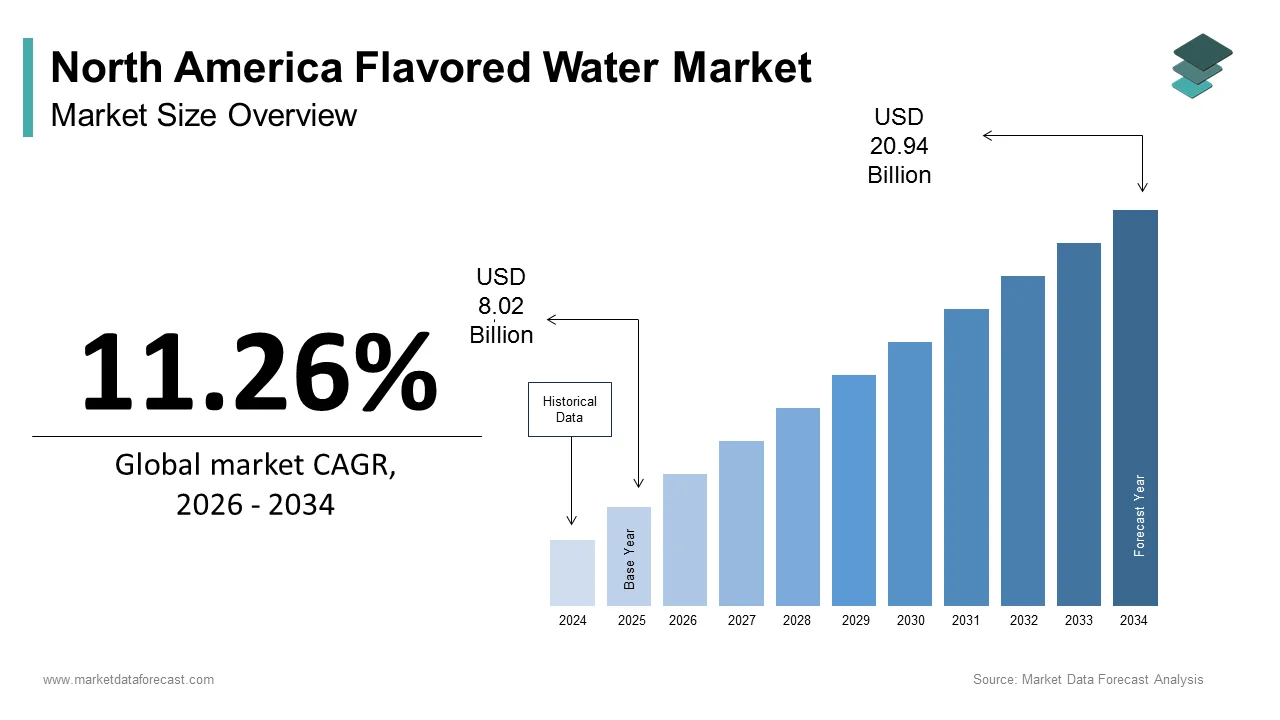
- Market Valuation: Valued at USD 8.02 billion in 2025, estimated to reach USD 8.92 billion in 2026, and projected to expand to USD 20.94 billion by 2034, growing at a robust CAGR of 11.26% from 2026 to 2034.
- Primary Growth Drivers: Rising consumer awareness regarding obesity, a strong shift toward healthy lifestyles, demand for beverages with added vitamins/minerals/antioxidants, and expanding disposable incomes.
Key Market Segment Metrics
| Category | Leading Segment (Base Position) | Fastest-Growing / High-Growth Segment |
|---|---|---|
| By Product Type | Flavored Water (held a substantial share anchored by fruit infusions, natural sweeteners, and everyday refreshment choices) | Functional Water (fastest-growing segment driven by consumer inclination toward health-boosting vitamins, minerals, and herbal infusions) |
| By Region / Country | United States (largest regional consumer base driven by high health consciousness, diverse flavor availability, and major beverage brands) | Canada & Rest of North America (expanding urban wellness markets adopting health-oriented beverages and premium hydration products) |
Major Market Players & Industry Landscape
Market Structure: Highly competitive landscape featuring global beverage giants, specialized flavored water innovators, and established natural refreshment brands.
Key Companies: Hint Water, Kraft Foods, Balance Water Company, Nestle Water, Herbal Water, PepsiCo, The Coca-Cola Company, Groupe Danone, New York Spring Water, and Sunny Delight Beverage Company.
 Download Free Sample Report
North America Flavored Water Market Size
The flavored water market size in North America was calculated to be USD 8.02 billion in 2025 and is anticipated to be worth USD 20.94 billion by 2034, from USD 8.92 billion in 2026, growing at a CAGR of 11.26% during the forecast period.
The flavored water is a hydration solution enhanced with natural or artificial flavors, while maintaining low or zero calorie profiles. According to the Centers for Disease Control and Prevention, approximately 44% of adults in the United States do not drink enough water daily, creating a critical need for palatable alternatives that encourage consistent fluid intake. This public health gap directly fuels consumer interest in flavored variants that make hydration more enjoyable without the sugar content of traditional soft drinks. The excessive consumption of added sugars contributes to obesity and cardiovascular diseases by prompting individuals to seek healthier beverage options that align with dietary guidelines. The wide range of products including sparkling waters, infused still waters, and vitamin enhanced formulations. Manufacturers leverage advanced filtration and flavoring technologies to ensure taste quality while preserving nutritional integrity. Regulatory frameworks in North America support transparency in labeling, allowing consumers to make informed choices about their hydration habits.
MARKET DRIVERS
Rising Health Consciousness and Sugar Reduction Trends
The growing emphasis on health and wellness are driving consumers away from high sugar beverages, which is elevating the growth of the North America flavored water market. This regulatory guidance encourages the adoption of flavored waters, as a safer alternative for satisfying sweet cravings. The reducing added sugars is a key priority for improving public health outcomes, leading many individuals to choose zero calorie flavored options. The strong alignment between public health advice and consumer purchasing behavior. Manufacturers respond by formulating products with natural essences and non-nutritive sweeteners to maintain taste without caloric load. The perception of flavored water as a hydrating, yet guilt-free option enhances its appeal among fitness enthusiasts and health conscious families. Retailers expand their healthy beverage sections to accommodate this shifting demand. Educational campaigns by health organizations reinforce the benefits of proper hydration using low sugar drinks. This cultural shift toward preventive health sustains long term growth for the category. Brand loyalty develops as consumers identify products that support their personal wellness goals.
Increasing Prevalence of Lifestyle Related Chronic Diseases
The rising incidence of lifestyle related chronic conditions, as patients seek dietary modifications to manage their health that is also prompting the growth of the North America flavored water market. According to the Centers for Disease Control and Prevention, more than 130 million adults in the United States have diabetes or prediabetes, necessitating strict control over sugar and carbohydrate intake. This medical reality creates a substantial consumer base that relies on flavored water for safe hydration. These statistics demonstrate the direct link between disease management and beverage choice. Healthcare providers often recommend flavored water to help patients stay hydrated without exacerbating their conditions. Consumers view these beverages as part of a holistic approach to disease prevention and management. The convenience of ready to drink formats fits seamlessly into busy lifestyles. Marketing efforts emphasize the role of hydration in overall well-being and weight management. Clinical evidence supporting the benefits of reduced sugar intake strengthens consumer confidence. This medical endorsement validates the product category beyond mere trendiness. Manufacturers continue to innovate with functional ingredients that address specific health concerns.
MARKET RESTRAINTS
High Cost of Premium Ingredients and Production
The elevated cost of high-quality natural ingredients are declining the growth of the North America flavored water market. The prices for fresh fruits and natural flavorings have experienced significant volatility due to climate change and supply chain disruptions, increasing production costs for manufacturers. This economic pressure forces companies to either raise retail prices or compromise on ingredient quality. The inflation rates have impacted household spending power, causing some consumers to revert to cheaper tap water or basic bottled water options. The financial barriers that hinder widespread adoption of premium flavored products. Small and medium enterprises struggle to compete with larger corporations that can absorb higher input costs. The perception of flavored water as a luxury item limits its accessibility in lower income communities. Retailers may reduce shelf space for higher-priced items during economic downturns. Manufacturers face difficult decisions regarding formulation adjustments to maintain margins. The use of artificial flavors offers a cost-effective alternative but conflicts with clean label trends. This dilemma creates tension between affordability and consumer expectations for natural ingredients. Supply chain inefficiencies further exacerbate cost challenges. Companies must invest in sustainable sourcing practices to mitigate long-term risks.
Consumer Awareness Regarding Artificial Additives
The presence of artificial additives and preservatives among health conscious consumers, who prioritize clean labels is additionally declining the growth of the North America flavored water market. A significant portion of shoppers actively avoid products containing artificial colors, flavors, and sweeteners due to perceived health risks. This awareness limits the appeal of conventional flavored waters that rely on synthetic ingredients for taste and stability. As per the study, concerns about potential contaminants and chemical residues in processed beverages drive consumers toward simpler and more transparent options. These statistics underscore the trust deficit that affects brands using artificial components. Manufacturers face pressure to reformulate products using natural alternatives, which can be technically challenging and expensive. The lack of clear understanding about safety standards leads to misinformation and fear among buyers. Social media amplifies negative narratives about artificial ingredients, influencing purchasing decisions. Brands that fail to adapt quickly lose market share to competitors with cleaner formulations. Regulatory scrutiny on artificial sweeteners adds another layer of complexity for producers. The need for extensive testing to prove safety increases time to market. Consumers often perceive natural flavors as superior regardless of scientific equivalence. This bias favors niche brands that emphasize purity and simplicity. Mainstream players struggle to shed their industrial image.
MARKET OPPORTUNITIES
Integration of Functional Ingredients and Wellness Benefits
The incorporation of functional ingredients such as vitamins, electrolytes, and adaptogens are enhancing product value propositions, which is likely to create new opportunities for the growth of the North America flavored water market. Many consumers are interested in beverages that provide additional health benefits beyond basic hydration, indicating a strong demand for functional drinks. This trend allows manufacturers to position flavored water as a tool for immune support, stress relief, and energy enhancement. The wellness economy is expanding rapidly, with consumers willing to pay a premium for products that contribute to their overall well being. The lucrative potential of functional flavored waters. Brands can differentiate themselves by targeting specific health needs such as sleep improvement or mental clarity. The use of botanical extracts like ashwagandha or CBD appeals to modern consumers seeking holistic solutions. Retailers create dedicated sections for functional beverages, increasing visibility and discovery. Marketing campaigns educate consumers about the synergistic benefits of hydration and functional ingredients. Clinical studies validating these claims strengthen brand credibility and consumer trust. The versatility of water as a delivery vehicle allows for easy integration of various nutrients. Innovation in flavor profiles complements the functional attributes to ensure enjoyable taste.
Expansion into Sustainable and Eco-Friendly Packaging
The shift toward sustainable packaging is aligning with environmental values and regulatory trends that is also o promote the growth of the North America flavored water market. The global push for a circular economy encourages brands to adopt recyclable, biodegradable, or reusable packaging solutions to reduce plastic waste. Global consumers say they would definitely or probably change their consumption habits to reduce their impact on the environment, highlighting the commercial value of sustainability. Manufacturers invest in aluminum cans, glass bottles, and plant based plastics to meet these expectations. Retailers favor suppliers with strong sustainability credentials to enhance their own corporate social responsibility profiles. Marketing efforts highlight the reduced carbon footprint of innovative packaging formats. Consumers appreciate the tangible contribution to environmental conservation through their purchases. Regulatory bodies in North America are implementing stricter rules on single-use plastics, accelerating the transition. Collaboration with recycling organizations improves infrastructure and consumer participation. The use of lightweight materials reduces transportation emissions and costs. Brand storytelling around sustainability builds emotional connections with environmentally conscious buyers.
MARKET CHALLENGES
Intense Competition from Substitute Beverages
The abundance of alternative beverage options, which is likely to pose as a major challenge for the growth of the North America flavored water market. The ready to drink tea and coffee sectors continue to grow steadily, offering consumers flavorful and caffeinated alternatives to plain or flavored water. This competition diverts potential customers who seek both taste and stimulation from their drinks. The energy drinks and sports beverages also compete for the same health conscious demographic, providing functional benefits that flavored water may lack. These statistics highlight the diverse landscape of choices available to consumers. Flavored water brands must constantly innovate to remain relevant against established categories. The similarity in taste profiles between some flavored waters and diet sodas creates confusion and substitution. Retail shelf space is limited, forcing brands to fight for visibility against powerful competitors. Marketing budgets must be substantial to cut through the noise of competing advertisements. Consumer loyalty is low in the beverage sector, making retention difficult. Price wars with private label brands erode profit margins. The need for continuous product launches increases operational complexity. The rise of home carbonation systems allows consumers to create their own flavored waters, reducing reliance on commercial products.
Regulatory Uncertainty and Labeling Requirements
The evolving regulatory landscape regarding health claims and labelling is additional factor to limit the growth of the North America flavored water market. According to the U.S. Food and Drug Administration, strict guidelines govern the use of terms like natural, healthy, and fortified, requiring manufacturers to provide substantial scientific evidence for such claims. This regulatory scrutiny limits marketing flexibility and increases legal risks. The new labeling regulations require clearer disclosure of sugar content and added sweeteners, which may negatively impact consumer perception of certain flavored products. These statistics underscore the complexity of navigating different regulatory frameworks across North America. Companies must invest in legal expertise and reformulation to meet changing standards. Inconsistent regulations between the United States, Canada, and Mexico complicate cross border trade. The definition of what constitutes a healthy beverage remains subjective and subject to political influence. Consumer advocacy groups often push for stricter regulations, adding pressure on industry players. Missteps in labeling can lead to costly recalls and reputational damage. The need for transparency requires detailed supply chain tracking and documentation. Small brands may lack the resources to comply with complex requirements. This barrier to entry favors large corporations with established compliance departments.
REPORT COVERAGE
| REPORT METRIC | DETAILS |
| Market Size Available | 2025 to 2034 |
| Base Year | 2025 |
| Forecast Period | 2026 to 2034 |
| CAGR | 11.26% |
| Segments Covered | By Product Type. and Region |
|
Various Analyses Covered | Global, Regional & Country-Level Analysis; Segment-Level Analysis; DROC, PESTLE Analysis; Porter’s Five Forces Analysis; Competitive Landscape; Analyst Overview of Investment Opportunities |
| Regions Covered | The U.S., Canada, Rest of North America |
|
Market Leaders Profiled | Hint Water, Kraft Foods, Balance Water Company, Nestle Water, Herbal Water, PepsiCo, The Coca-Cola Company, Groupe Danone, New York Spring Water, and Sunny Delight Beverage Company. |
SEGMENTAL ANALYSIS
By Product Type Insights
The flavored water segment held a dominant share of the North America Flavored Water Market in 2025 due to its broad appeal and established consumer familiarity with fruit infused hydration. According to the Beverage Marketing Corporation, plain and flavored bottled water continues to capture the largest volume share of the non-alcoholic beverage sector as consumers actively replace sugary sodas with lighter alternatives. This widespread substitution drives consistent demand for accessible and affordable flavored options. The flavored varieties account for a significant portion of total bottled water sales because they offer a palatable entry point for individuals seeking to reduce sugar intake without sacrificing taste. These statistics underscore the segment's leadership by addressing fundamental dietary shifts toward healthier hydration. Manufacturers leverage extensive distribution networks to ensure product availability in every retail channel. The variety of fruit essences such as lemon, berry, and citrus caters to diverse palates. Brand loyalty develops through consistent quality and recognizable flavor profiles. Marketing campaigns emphasize refreshment and natural ingredients to attract health conscious buyers. The affordability of standard flavored water ensures accessibility across all income levels. Retailers dedicate prominent shelf space to these high turnover items. The segment benefits from economies of scale that keep production costs low. Innovation in natural sweeteners enhances taste without adding calories. Such advancements maintain relevance in a competitive landscape.
The functional water segment is anticipated to grow at a fastest CAGR of 11.4% from 2026 to 2034 with the rising demand for beverages that offer specific health benefits beyond basic hydration. The wellness economy is expanding rapidly with consumers increasingly willing to pay a premium for products that support immune function, mental clarity, and physical recovery. This trend accelerates the adoption of waters enhanced with vitamins, electrolytes, and adaptogens. These statistics highlight the lucrative potential of value-added hydration solutions. Manufacturers respond by launching innovative blends targeting specific wellness goals such as stress relief or energy enhancement. The use of botanical extracts like ashwagandha or CBD appeals to modern consumers seeking holistic health support. Retailers create dedicated sections for functional beverages to improve visibility and discovery. Marketing efforts educate consumers about the synergistic benefits of hydration and functional ingredients. Clinical studies validating these claims strengthen brand credibility and consumer trust. The versatility of water as a delivery vehicle allows for easy integration of various nutrients. Subscription models offer convenient access to personalized functional blends.
REGIONAL ANALYSIS
United States Flavored Water Market Analysis
The United States was the top performer in the North America Flavored Water Market, accounting for 87.6% of the share in 2025, due to high consumer awareness and advanced retail infrastructure. According to the Centers for Disease Control and Prevention, approximately 60% of adults in the United States do not drink enough water daily, creating a critical need for palatable alternatives that encourage consistent fluid intake. This public health gap directly fuels robust demand for flavored variants across the country. The reducing added sugars is a key priority for improving public health outcomes by leading many individuals to choose zero calorie flavored options over traditional soft drinks. The presence of major beverage manufacturers and extensive distribution networks facilitates easy product access. Regulatory clarity under the Food and Drug Administration supports market stability and innovation. Consumers benefit from a wide variety of branded and private label options. Healthcare providers frequently recommend flavored water as part of healthy lifestyle interventions. The trend toward functional nutrition further stimulates innovation in vitamin enriched waters. Digital marketing platforms enable brands to engage directly with health conscious demographics. Educational campaigns by industry associations enhance public understanding of hydration benefits. The strong e-commerce sector allows for direct to consumer sales models that bypass traditional retail constraints. Investment in sustainable packaging by US-based companies contributes to brand loyalty.
Canada Flavored Water Market Analysis
Canada flavored water market was ranked second by holding 9.8% of the share in 2025 with rigorous approach to health quality and environmental sustainability. The aging population is growing rapidly, with seniors accounting for an increasing proportion of healthcare spending, which correlates with higher demand for healthy hydration options. These standards encourage brand loyalty and preference for certified clean label products. Canadian consumers prefer scientifically validated products with clear ingredient sourcing and minimal processing. The pharmaceutical heritage of the country influences the development of functional water brands. Retail pharmacies and health food stores play a crucial role in distributing premium hydration products. Healthcare providers emphasize evidence-based recommendations for patients managing chronic conditions. The prevalence of lactose intolerance and other dietary restrictions further drives specific flavored water sales. This demographic diversity creates a stable customer base for specialized supplements. Manufacturers focus on innovation in eco friendly packaging to align with national sustainability goals. Sustainability practices in production resonate with consumer values and regulatory expectations.
COMPETITIVE OVERVIEW
The competitive landscape of the North America Flavored Water Market is characterized by intense rivalry among established beverage giants and emerging niche brands striving for differentiation through innovation and sustainability. Key participants focus on enhancing product appeal by utilizing natural flavors and functional ingredients that align with health trends. Companies invest in branding and marketing to build emotional connections with consumers who prioritize wellness and environmental responsibility. Strategic partnerships with retailers and health organizations help expand market reach and credibility. Brands differentiate themselves by offering unique packaging solutions that reduce environmental impact and enhance convenience. Transparency in sourcing and manufacturing processes becomes a critical factor in building consumer trust. Digital marketing plays a vital role in educating consumers about the benefits of flavored water and proper hydration habits. E commerce platforms enable direct engagement with customers and facilitate personalized shopping experiences. Private label products from major retailers increase competition by offering affordable alternatives to branded items. Manufacturers respond by emphasizing premium quality and specialized benefits to justify higher price points. Regulatory compliance remains a key challenge that shapes competitive dynamics across different regions.
KEY MARKET PARTICIPANTS
Companies playing a leading role in the North American flavored water market include
- Hint Water
- Kraft Foods
- Balance Water Company
- Nestle Water
- Herbal Water
- PepsiCo
- The Coca-Cola Company
- Groupe Danone
- New York Spring Water
- Sunny Delight Beverage Company
Leading Players in the Market
- PepsiCo Inc. maintains a robust presence in the North America Flavored Water Market through its diverse portfolio, including Bubly and Lifewtr. The company leverages its extensive distribution network to ensure widespread availability across retail channels. Recent initiatives focus on expanding flavor varieties and introducing sustainable packaging options to meet consumer demand for eco friendly products. PepsiCo invests heavily in campaigns that emphasize hydration and wellness without added sugars. Their strategic partnerships with health influencers enhance brand visibility among younger demographics. The corporation prioritizes innovation by launching limited edition flavors that create buzz and drive trial. This approach fosters brand loyalty and encourages repeat purchases. The company also emphasizes transparency in ingredient sourcing to build trust. Such efforts reinforce their reputation as a leader in healthy beverage solutions. PepsiCo continues to adapt to changing regulatory landscapes by reformulating products to meet stricter health standards.
- The Coca Cola Company contributes significantly to the North America Flavored Water Market with brands like Smartwater and Dasani Flavors. The company utilizes its global supply chain expertise to maintain high quality standards and consistent product availability. Recent actions include the expansion of functional water lines that offer added vitamins and electrolytes.Coca-Colaa focuses on reducing plastic waste by increasing the use of recycled materials in bottles. The company engages consumers through interactive digital platforms that promote healthy lifestyle choices. Innovation in flavor profiles caters to diverse consumer preferences, while maintaining low calorie counts. The brand emphasizes clarity in labeling to address consumer concerns about additives. This transparency builds credibility and trust among health-conscious buyers. Coca Cola also invests in water stewardship programs to support local communities.
- Keurig Dr Pepper Inc strengthens its position in the North America Flavored Water Market through brands such as Bai and Core Hydration. The company focuses on premium positioning by offering unique botanical infusions and enhanced hydration formulas. Recent developments include the introduction of new flavors that appeal to adventurous consumers seeking novel taste experiences. Keurig Dr Pepper adheres to strict quality assurance protocols to ensure product consistency and safety. Their research team collaborates with nutritionists to validate the health benefits of their formulations. Marketing strategies target health enthusiasts through sponsorships of wellness events and sports activities. The company emphasizes the natural ingredients used in their flavored waters to differentiate from competitors. They provide educational resources to help consumers understand the benefits of proper hydration. The brand's commitment to clean labels excludes artificial sweeteners and preservatives. This dedication appeals to consumers with specific dietary restrictions and high health standards. Keurig Dr Pepper continues to innovate by integrating feedback from clinical practice into product improvements.
MARKET SEGMENTATION
This research report on the North America flavored water market is segmented and sub-segmented as follows.
By Product Type
- Flavored Water
- Functional Water
By Country
- The U.S.
- Canada
- Rest of North America