- Product Description Description
- Table of Contents TOC
- List of Table & Figure LOT
- Get Free Sample PDF Sample PDF
Market Size, 2025
$7.88 BnMarket Estimate, 2026
$8.49 BnMarket Forecast, 2034
$15.44 BnCAGR, 2026–2034
7.76%Executive Summary: North America Frozen Dough Market
- Market Scope: Comprehensive regional market analysis covering product types, distribution channels, country-level leadership frameworks, and labor-saving baking metrics for the North American frozen dough sector.
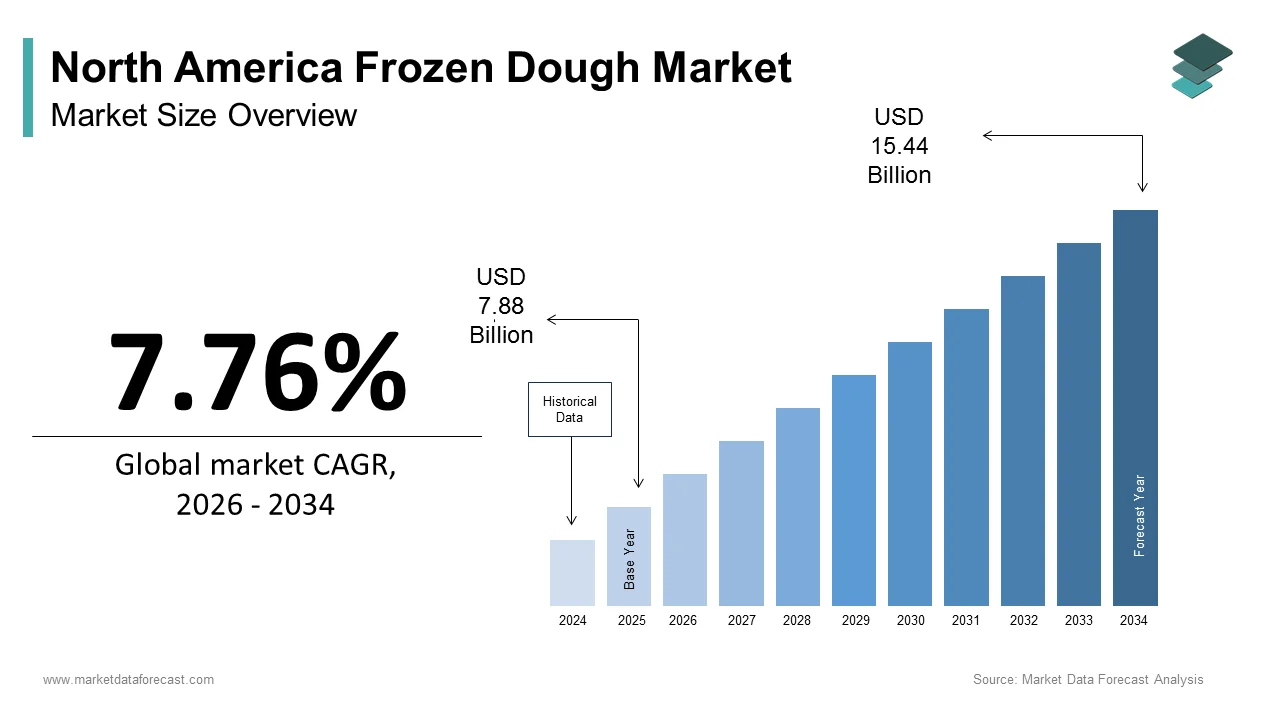
- Market Valuation: Valued at USD 7.88 billion (2025), estimated at USD 8.49 billion (2026), and projected to reach USD 15.44 billion by 2034, registering a robust CAGR of 7.76% (2026–2034).
- Primary Growth Drivers: Persistent commercial baking labor shortages, consumer preferences for fresh-baked quality with convenience, busy lifestyles, and rising disposable incomes. Market challenges include cold chain costs and raw material volatility, while opportunities lie in plant-based/gluten-free innovations, sweet roll premiumization, and expanding e-commerce channels.
Key Market Segment Metrics (2026–2034)
| Category | Leading Segment (2025 Position) | Fastest-Growing Segment |
|---|---|---|
| By Product Type | Refrigerated biscuits (largest in 2025 with a 28.7% share due to entrenched breakfast culture) | Sweet rolls segment (predicted to witness the highest CAGR of 9.5% driven by indulgent treat demand) |
| By Distribution Channel | Supermarkets and hypermarkets (led the market with a 42.9% share in 2025) | Online retail segment (estimated to register the fastest CAGR of 11.2% due to rapid e-commerce adoption) |
| By Region / Country | United States (dominated the market with an 85.2% share in 2025, supported by vast wheat production) | Canada (key player driven by multicultural dietary habits and health-conscious consumer preferences) |
Major Market Players & Market Structure
Market Structure: Highly competitive commercial bakery landscape centering on clean-label product innovations, plant-based and gluten-free portfolio expansions, localized supply chain optimization, and extensive retail distribution networks.
Key Companies: Readi-Bake Inc., Kontos Foods, Inc., Gonnella, Schar USA, Inc., Europastry SA., Frozen Goosebumps Convenience, Earthgrains Refrigerated Dough Products, Foods Inc., Swiss Gastro Bakery Beijing Co., Ltd., Wenner Bakery, Boulder Brands, General Mills Inc. (Pillsbury), Conagra Brands Inc., and Lantmannen Unibake International.
North America Frozen Dough Market Size
The frozen dough market in North America was calculated to be USD 7.88 billion in 2025 and is anticipated to be worth USD 15.44 billion by 2034 from USD 8.49 billion in 2026, growing at a CAGR of 7.76% during the forecast period.
Frozen dough refers to unbaked flour mixtures, such as bread, pizza, or pastry dough, that are mixed, kneaded, shaped, and then snap-frozen to halt the fermentation process. It is designed to be stored in the freezer and later thawed, proofed, and baked. This market includes a diverse array of items such as bread rolls pizza bases croissants cookies and artisanal pastries which serve both commercial food service operators and retail consumers. The fundamental value proposition lies in the ability to deliver freshly baked quality with the convenience of minimal preparation time thereby bridging the gap between industrial efficiency and consumer desire for authentic baked goods. In the United States and Canada the adoption of frozen dough has become integral to modern baking operations allowing establishments to maintain consistent product quality while reducing labor costs and waste. According to the USDA's final estimates, total U.S. wheat production in 2023 was 1.81 billion bushels (up from 1.65 billion in 2022), providing a larger-than-expected supply of raw material for dough manufacturing. The culinary landscape is increasingly influenced by busy lifestyles and the demand for quick meal solutions which drives the integration of frozen dough into household routines. As per recent data from Statistics Canada and the OECD, the average weekly hours worked by Canadians have remained relatively steady at approximately 32.0 to 32.3 hours, reflecting continued time constraints for home cooking. Furthermore, the proliferation of cold chain logistics infrastructure ensures that these temperature sensitive products reach distant markets without compromising integrity. The market is also shaped by evolving dietary preferences where consumers seek clean label and organic options prompting manufacturers to innovate their formulations. This dynamic interplay of operational efficiency consumer convenience and agricultural abundance defines the current state of the frozen dough sector in North America.
MARKET DRIVERS
Labor Shortages In The Commercial Bakery And Food Service Sectors Drive Adoption
The persistent shortage of skilled labor in the commercial bakery and food service sectors is the main reason behind the growth of the North America frozen dough market. This drives the increased adoption of frozen dough across the region. Bakeries and restaurants face significant challenges in recruiting and retaining qualified bakers who possess the technical expertise required for traditional from scratch dough preparation. According to the National Association of Manufacturers the manufacturing sector in the United States had approximately 600000 unfilled jobs in 2023 reflecting a broader trend of labor scarcity that impacts food production facilities. This workforce deficit forces businesses to seek operational efficiencies that reduce dependency on specialized manual labor. Frozen dough products allow establishments to streamline their operations by eliminating the need for extensive mixing proofing and shaping processes which are labor intensive and time consuming. By utilizing pre prepared frozen dough companies can rely on less skilled staff to handle final baking and finishing tasks thereby lowering training costs and minimizing human error. The consistency provided by industrial frozen dough ensures that product quality remains uniform regardless of staff turnover which is crucial for maintaining brand reputation. In the food service industry particularly in quick service restaurants and hotels the ability to offer fresh baked items without dedicated baking teams is a significant competitive advantage. The American Hotel & Lodging Association (AHLA) noted that nearly 80% of hotels reported staffing shortages in 2023, with approximately 100,000 unfilled jobs nationwide, accelerating the need for labor-saving supply chain solutions. Consequently the demand for frozen dough continues to rise as it offers a viable solution to mitigate labor constraints while maintaining high standards of product freshness and variety.
Consumer Preference For Freshly Baked Quality With Convenience Fuels Retail Demand
The growing consumer preference for freshly baked quality combined with the need for convenience is a significant driver propelling the retail segment of the North America frozen dough market. Modern shoppers increasingly seek the sensory experience and perceived health benefits of home baked goods but often lack the time or inclination to prepare dough from scratch. Frozen dough bridges this gap by offering an easy to use alternative that delivers the aroma texture and taste of freshly baked products with minimal effort. According to the International Food Information Council’s 2023 Food and Health Survey, 52% of consumers stated they are trying to eat more whole grains, while 51% are explicitly trying to consume more fiber, supporting the demand for whole wheat and multigrain dough products. This trend is particularly evident among millennials and Gen Z consumers who prioritize authenticity and transparency in their food choices. The ability to bake small batches on demand reduces food waste and allows for customization which appeals to smaller households and individuals. Retailers have responded by expanding their frozen bakery aisles to include a wider variety of artisanal and specialty doughs such as sourdough brioche and gluten free options. The perception of frozen dough as a premium product rather than a compromise has been reinforced by improved formulation techniques that preserve yeast activity and dough structure. As per the American Frozen Food Institute (AFFI), the frozen food category has seen a sustained growth trajectory post-pandemic, with data showing that consumers have retained the habit of purchasing and stocking convenient frozen meal solutions. This shift in consumer behavior underscores the enduring appeal of frozen dough as a means to achieve culinary satisfaction without the associated time commitment.
MARKET RESTRAINTS
Strict Cold Chain Requirements Increase Operational Costs And Complexity
The stringent requirement for maintaining an uninterrupted cold chain throughout the distribution process is a major restraint to the North America frozen dough market. This increases operational costs and logistical complexity. Frozen dough is highly sensitive to temperature fluctuations which can cause ice crystal formation yeast degradation and structural damage leading to poor baking performance and reduced shelf life. According to the American Transportation Research Institute (ATRI), the average marginal cost of operating a truck in the United States reached a record high of $2.27 per mile in 2023, keeping cost pressures high for temperature-controlled logistics despite a broader drop in market freight rates. Maintaining consistent freezing temperatures from the manufacturing plant to the retail freezer requires specialized refrigerated vehicles and storage facilities which are more expensive to operate than standard dry freight infrastructure. Any breach in the cold chain can result in significant product spoilage and financial losses for manufacturers and retailers alike. The energy costs associated with running freezers and refrigeration units have also risen contributing to higher overheads. As per the U.S. Energy Information Administration, commercial electricity prices in the United States averaged 12.59 cents per kilowatt-hour in 2023, continuing an upward trend that directly affects the operating budgets of cold storage facilities. These elevated costs are often passed on to consumers in the form of higher retail prices which can dampen demand particularly among price sensitive segments. Additionally the limited availability of reliable cold chain infrastructure in certain remote or rural areas restricts market penetration and limits the geographic reach of frozen dough products. This logistical burden poses a continuous challenge for manufacturers seeking to expand their distribution networks efficiently.
Health Concerns Related To Additives And Preservatives Limit Consumer Acceptance
Growing health consciousness and concern regarding the use of additives and preservatives in processed foods are significant constraints for the North American frozen dough market. Consumers are increasingly scrutinizing ingredient labels and seeking products with clean labels free from artificial preservatives dough conditioners and high fructose corn syrup. Frozen dough typically requires the inclusion of specific additives to maintain stability during freezing and thawing cycles which can deter health aware shoppers. According to research, 60 percent of U.S. consumers reported that they actively avoid artificial ingredients in their food purchases indicating a strong preference for natural and minimally processed options. This trend challenges manufacturers who must balance the technical necessity of stabilizers with the consumer demand for simplicity and transparency. The perception of frozen dough as a highly processed item can negatively impact its appeal compared to fresh dough or homemade alternatives. Regulatory pressures are also intensifying with agencies like the Food and Drug Administration reviewing the safety and labeling of various food additives. As per the Centers for Disease Control and Prevention more than 40 percent of adults in the United States are obese which drives many individuals to adopt stricter dietary guidelines and avoid processed carbohydrates. This health driven scrutiny forces manufacturers to invest heavily in research and development to create cleaner formulations without compromising product quality or shelf life. The difficulty in achieving this balance often results in higher production costs and limited product availability thereby restraining market growth among the most health conscious demographic segments.
MARKET OPPORTUNITIES
Expansion Of E Commerce And Direct To Consumer Channels Presents Opportunities
The rapid expansion of e-commerce and direct-to-consumer channels is a key growth area for the North America frozen dough market. This paves the way to reach broader audiences and enhance customer engagement. Online grocery shopping has become a permanent fixture in consumer behavior allowing manufacturers to bypass traditional retail barriers and offer specialized products directly to households. According to the U.S. Census Bureau e commerce sales in the United States reached 1.1 trillion dollars in 2023 representing a significant portion of total retail trade and demonstrating the robustness of digital platforms. This digital shift enables brands to introduce niche and premium frozen dough varieties such as organic vegan or gluten free options that may not have sufficient shelf space in physical stores. Direct to consumer models allow for better data collection and personalized marketing which helps companies tailor their offerings to specific consumer preferences. Subscription services for regular delivery of frozen dough products can foster brand loyalty and ensure recurring revenue streams. The improvement in last mile delivery logistics including insulated packaging and faster shipping times has mitigated previous concerns about product integrity during transit. As per a study, online grocery penetration in North America is expected to continue growing with consumers valuing the convenience and variety offered by digital platforms. Manufacturers can leverage these channels to educate consumers about the benefits and usage of frozen dough through interactive content and recipes. This direct connection also facilitates quicker feedback loops for product innovation allowing companies to respond rapidly to emerging trends and consumer demands in a dynamic market environment.
Innovation In Plant Based And Gluten Free Dough Varieties Drives Market Growth
The increasing demand for plant based and gluten free dietary options offers a significant opportunity for innovation and expansion within the North America frozen dough market. As awareness of celiac disease gluten intolerance and ethical eating practices rises consumers are seeking alternatives to traditional wheat based dough products. According to the Celiac Disease Foundation approximately 1 in 100 people worldwide suffer from celiac disease with many more experiencing non celiac gluten sensitivity which creates a substantial addressable market for gluten free baked goods. Manufacturers are responding by developing specialized frozen dough formulations using alternative flours such as almond rice cassava and chickpea flour which cater to these dietary needs. The plant based movement is also gaining momentum with consumers avoiding animal derived ingredients such as eggs and dairy in their baked goods. Frozen dough provides an ideal platform for these innovations as it allows for precise control over ingredient ratios and texture consistency which is often challenging in gluten free baking. By offering convenient ready to bake options for these specialized diets companies can capture loyal customer segments that are often underserved by traditional bakeries. The premium pricing associated with specialty flours and ingredients also offers higher profit margins. This focus on inclusivity and health aligns with broader societal trends and positions frozen dough manufacturers as forward thinking and responsive to diverse consumer needs.
MARKET CHALLENGES
Volatility In Raw Material Prices Impacts Profit Margins And Pricing Stability
The volatility in raw material prices, particularly for wheat, energy, and packaging materials, is a serious obstacle to the North America frozen dough market. This impacts profit margins and pricing stability. Wheat prices are subject to fluctuation due to weather conditions geopolitical tensions and global supply chain disruptions which directly affect the cost of goods sold for dough manufacturers. According to the World Bank, global food commodity prices, including wheat, steadily declined by roughly 9% over the course of 2023, though domestic food price inflation remained high in many developing nations due to local currency weakness and trade barriers. Energy costs are another critical factor as the production and storage of frozen dough are energy intensive processes requiring significant electricity and natural gas for freezing and cold storage. Fluctuations in energy prices can lead to unpredictable operational expenses making it difficult for manufacturers to maintain consistent pricing strategies. Packaging materials such as plastic and cardboard have also seen price increases due to supply chain bottlenecks and increased demand for sustainable materials. These cumulative cost pressures force manufacturers to either absorb the expenses thereby reducing profitability or pass them on to consumers which may reduce demand. The inability to predict long term input costs complicates financial planning and investment decisions creating an unstable business environment for market participants.
Regulatory Compliance And Labeling Standards Impose Administrative Burdens
Navigating the complex landscape of regulatory compliance and labeling standards imposes a significant administrative burden on manufacturers in the North America frozen dough market. Food safety regulations labeling requirements and nutritional disclosure mandates vary between the United States and Canada and even among different states and provinces requiring meticulous attention to detail. According to the Food and Drug Administration, major compliance costs for food manufacturers shifted toward allergen labeling updates, such as incorporating sesame as a major allergen, and preparing for proposed front-of-package nutritional layout rules. Manufacturers must ensure that their products meet strict standards for allergen declaration ingredient sourcing and health claims which necessitates rigorous testing and documentation. The rise in class action lawsuits related to misleading labeling practices further heightens the risk for companies that fail to maintain absolute accuracy in their product descriptions. In Canada, the Canadian Food Inspection Agency enforces strict date-marking laws requiring any prepackaged food with a shelf life of 90 days or less to explicitly state a "best before" date and storage instructions if the item needs to be kept frozen or refrigerated. As per the Canadian Centre for Food Integrity, public trust data indicates that while a majority of Canadians review product labels, their primary focus remains on checking expiry dates and product pricing rather than a comprehensive review of chemical or ingredient composition. This heightened scrutiny means that any error in labeling can lead to costly recalls and reputational damage. The need to constantly update labels to reflect regulatory changes and ingredient modifications requires dedicated legal and regulatory affairs teams which increases operational overhead. For smaller manufacturers these compliance costs can be prohibitive limiting their ability to compete with larger established players who have greater resources to manage regulatory complexities.
REPORT COVERAGE
| REPORT METRIC | DETAILS |
| Market Size Available | 2025 to 2034 |
| Base Year | 2025 |
| Forecast Period | 2026 to 2034 |
| CAGR | 7.76% |
| Segments Covered | By Product Type, Distribution Channel, And Region |
| Various Analyses Covered | Global, Regional & Country Level Analysis; Segment-Level Analysis; DROC, PESTLE Analysis; Porter’s Five Forces Analysis; Competitive Landscape; Analyst Overview of Investment Opportunities |
| Regions Covered | U.S., Canada, And Rest of North America |
| Market Leaders Profiled | Readi-Bake Inc., Kontos Foods, Inc., Gonnella, Schar USA, Inc., Europastry SA., Frozen Goosebumps Convenience, Earthgrains Refrigerated Dough Products, Foods Inc., Swiss Gastro Bakery Beijing Co., Ltd., Wenner Bakery and Boulder Brands |
SEGMENTAL ANALYSIS
By Product Type Insights
In 2025, the refrigerated biscuits segment was the largest in the North America frozen dough market and occupied a 28.7% share because of its entrenched position in American breakfast culture and the high demand for quick meal solutions. The convenience of ready to bake biscuits aligns perfectly with the fast paced lifestyles of modern households where time for meal preparation is limited. The versatility of biscuits allows them to be served as a side dish for dinner a quick breakfast item or a base for sandwiches which broadens their usage occasions beyond traditional baking. Major brands have invested heavily in marketing campaigns that emphasize the ease of use and the fresh baked quality of their refrigerated biscuit products reinforcing consumer loyalty. The widespread availability of these products in nearly every grocery store ensures that they remain a top choice for consumers seeking reliable and consistent bakery items. Additionally the ability of manufacturers to innovate with flavors such as cheese herb and whole grain has kept the category fresh and appealing to diverse taste preferences. The strong distribution networks established by key players ensure that refrigerated biscuits are always in stock reducing the likelihood of consumers switching to alternative products. This combination of cultural relevance convenience and consistent availability solidifies the dominance of refrigerated biscuits in the regional market.
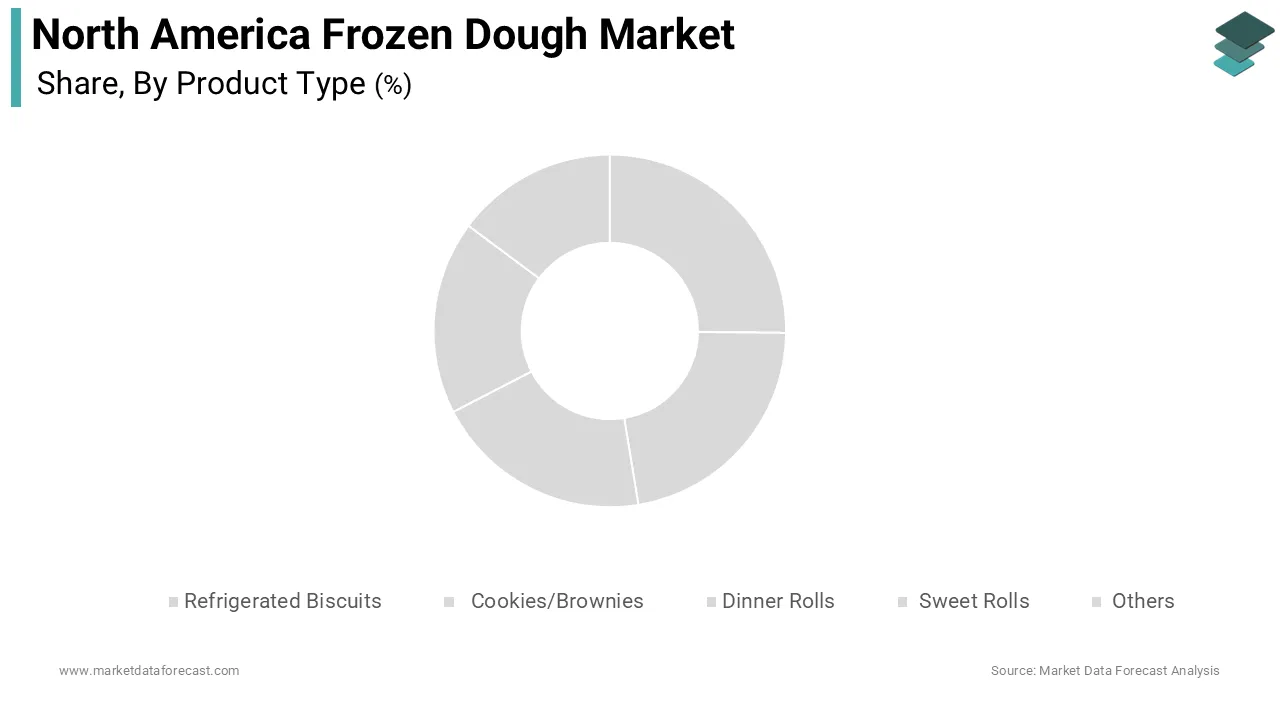
On the other hand, the sweet rolls segment is predicted to witness the highest CAGR of 9.5% over the forecast period owing to increasing consumer desire for indulgent treats and the trend toward premiumization in bakery products. Consumers are increasingly willing to spend more on high quality artisanal style baked goods that offer a luxurious experience at home. According to research, global demand for bakery products is exhibiting steady growth, with changing consumer lifestyles driving a rising preference for artisanal and specialty bakery choices. The influence of social media and food blogging has popularized visually appealing and decadent pastries encouraging consumers to recreate café style experiences in their own kitchens. Manufacturers have responded by introducing gourmet varieties featuring unique fillings such as salted caramel pumpkin spice and fruit compotes which appeal to adventurous palates. The rise of remote work has also contributed to this trend as individuals seek comfort foods and baking activities to enhance their daily routines. Retailers are expanding their frozen bakery sections to include a wider array of sweet roll options catering to both individual and family sized portions. The perception of sweet rolls as an affordable luxury makes them attractive during times of economic uncertainty when consumers cut back on dining out but still seek occasional treats. This shift toward home based indulgence ensures that the sweet rolls segment continues to outpace other categories in terms of growth momentum.
By Distribution Channel Insights
The supermarkets and hypermarkets segment led the North America frozen dough market and captured a 42.9% share in 2025. Its ability to offer a comprehensive shopping experience that combines variety convenience and competitive pricing contributes to the segment’s leading position. These retail formats provide consumers with access to a wide range of frozen dough products from multiple brands allowing for easy comparison and selection under one roof. According to FMI - The Food Industry Association, supermarkets account for the vast majority of U.S. grocery sales, with the frozen food aisle serving as a critical category that has seen significant revenue growth, though actual unit volume has faced headwinds due to inflation. The extensive shelf space dedicated to frozen bakery items enables retailers to showcase new products and promotions effectively driving impulse purchases. Consumers prefer supermarkets for their reliable stock levels and consistent quality assurance which is particularly important for temperature sensitive products like frozen dough. The integration of loyalty programs and digital coupons in supermarket chains further incentivizes repeat purchases and brand switching. Additionally the presence of in store bakeries in many hypermarkets creates a synergistic effect where consumers can compare fresh baked goods with frozen alternatives often leading to increased traffic in the frozen section. The strategic placement of frozen dough near complementary items such as butter jams and coffee enhances cross selling opportunities. The trust associated with established supermarket chains reassures consumers about product safety and freshness which is crucial for maintaining market leadership. Urbanization is continually driving foot traffic to large retail centers. Thus, supermarkets and hypermarkets remain unchallenged in the frozen dough distribution landscape.
However, the online retail segment is estimated to register the fastest CAGR of 11.2% from 2026 to 2034 due to the rapid adoption of e commerce platforms and the introduction of innovative subscription models. The convenience of home delivery appeals to busy consumers who prefer to avoid physical store visits especially for bulky or heavy items like frozen goods. According to the U.S. Census Bureau, total U.S. retail e-commerce sales have shown consistent year-over-year growth, reaching nearly 10% in recent quarterly metrics, reflecting a broader structural shift in consumer purchasing behavior across multiple retail sectors. Specialty online retailers and direct to consumer brands are leveraging advanced packaging technologies such as insulated boxes and dry ice to ensure that frozen dough arrives in perfect condition. Subscription services allow customers to receive regular deliveries of their favorite dough products ensuring convenience and reducing the risk of running out of staples. The ability to access niche and artisanal brands that are not available in local supermarkets further drives online growth. Social media marketing and influencer partnerships play a crucial role in directing traffic to online stores where consumers can discover new and exciting products. The data collected through online transactions enables companies to personalize recommendations and offers enhancing customer engagement and loyalty. As logistics networks improve and delivery times shorten the barriers to online frozen food shopping continue to diminish. This digital transformation provides a dynamic growth trajectory for the online segment as it captures an increasing share of the overall market.
REGIONAL ANALYSIS
United States Frozen Dough Market Analysis
The United States dominated the North America frozen dough market and accounted for a 85.2% share in 2025. The country’s vast population and diverse culinary landscape create a robust demand for convenient bakery products across various demographic segments. According to the United States Department of Agriculture the United States is one of the largest producers of wheat in the world ensuring a stable and cost effective supply of raw materials for dough manufacturing . The prevalence of dual income households and the fast pace nature of urban life drive the adoption of frozen dough as a time saving solution for meal preparation. The retail sector is highly developed with extensive networks of supermarkets hypermarkets and online platforms facilitating widespread product availability. Consumer preferences in the United States are increasingly influenced by health and wellness trends prompting manufacturers to introduce whole grain gluten free and organic frozen dough options. The food service industry also contributes significantly to market growth with restaurants and quick service outlets relying on frozen dough for consistency and efficiency. Government initiatives supporting food security and agricultural innovation further strengthen the market foundation. The high level of disposable income in many regions allows consumers to purchase premium and specialty frozen dough products. The combination of agricultural strength retail maturity and evolving consumer habits ensures that the United States remains the central driver of market dynamics in North America.
Canada Frozen Dough Market Analysis
Canada is another key player within the North America frozen dough market due to strong consumer preference for high quality and diverse bakery products. The country’s multicultural population influences dietary habits leading to a demand for a wide variety of dough types including European style pastries and ethnic breads. According to Statistics Canada the food and beverage manufacturing industry is a key contributor to the national economy with steady growth in processed food sectors . Canadian consumers are increasingly health conscious driving demand for clean label and nutritious frozen dough options such as whole wheat and seed enriched varieties. The retail landscape is dominated by major supermarket chains that prioritize product quality and sustainability appealing to environmentally aware shoppers. The cold climate in many parts of Canada encourages home baking and the consumption of comfort foods which supports the sales of frozen dough products during colder months. E commerce adoption is rising with online grocery platforms expanding their frozen food offerings to reach remote and rural communities. Regulatory standards for food safety and labeling are strict ensuring high quality products in the market. The government support for local agriculture and food processing industries helps maintain a resilient supply chain. Canada s focus on innovation and quality positions it as a key market for premium frozen dough products and sustainable practices in the region.
COMPETITION OVERVIEW
The competitive landscape of the North America frozen dough market is characterized by a mix of established multinational corporations and specialized regional manufacturers. Multinational players leverage their global brand recognition advanced technological capabilities and extensive distribution networks to maintain a strong foothold in urban centers and mass market segments. These companies often lead in product innovation introducing health conscious variants such as whole grain gluten free and organic doughs that align with wellness trends. Regional and artisanal manufacturers compete effectively by offering unique flavors and high quality ingredients that appeal to niche markets and gourmet consumers. They benefit from agility and local connections which allow quick responses to changing tastes. The market sees intense competition in pricing particularly in value driven segments where private label brands from major retailers also exert pressure. Differentiation through packaging sustainability and ethical sourcing becomes crucial for brands seeking to stand out. Regulatory compliance and food safety standards act as barriers to entry for smaller players requiring significant investment in quality assurance. The rise of e commerce has intensified competition by enabling direct to consumer sales and greater price transparency. Companies are increasingly focusing on building brand loyalty through engaging marketing campaigns and community involvement. Overall the market remains dynamic with continuous entry of new products and brands vying for consumer attention amidst evolving dietary habits and economic conditions.
KEY MARKET PLAYERS
A few major players of the north america frozen dough market include
- Readi-Bake Inc
- Kontos Foods, Inc
- Gonnella
- Schar USA, Inc
- Europastry SA
- Frozen Goosebumps Convenience
- Earthgrains Refrigerated Dough Products
- Foods Inc
- Swiss Gastro Bakery Beijing Co., Ltd
- Wenner Bakery
- Boulder Brands
Top Strategies Used By Key Market Participants
Key players in the North America frozen dough market employ several strategic initiatives to maintain competitiveness and drive growth. Product innovation remains a central strategy with companies launching clean label organic and health focused variants to meet rising consumer demands for transparency and wellness. Brands are increasingly focusing on sustainable packaging solutions to address environmental concerns and align with corporate social responsibility goals. Expansion of distribution networks through partnerships with e commerce platforms and convenience stores enhances market accessibility and reaches diverse consumer segments. Companies are investing in digital marketing and social media engagement to build brand awareness and connect with younger audiences through interactive content. Local sourcing of raw materials is another critical strategy that reduces costs and supports regional agriculture while ensuring fresh inputs. Strategic acquisitions and collaborations allow firms to enter new geographic markets or expand product portfolios efficiently. Premiumization strategies target affluent segments with gourmet and artisanal offerings that command higher margins. These combined approaches enable manufacturers to navigate economic challenges and capitalize on evolving consumer preferences in the dynamic North American landscape.
Leading Players in the North America Frozen Dough Market
- General Mills Inc is a dominant force in the North America frozen dough market with its widely recognized Pillsbury brand leading the refrigerated dough category. The company offers an extensive portfolio including biscuits cinnamon rolls and cookie dough that are staples in American households. General Mills leverages its robust distribution network to ensure product availability across supermarkets and convenience stores nationwide. Recently the company has focused on innovation by launching cleaner label products with simpler ingredients to meet health conscious consumer demands. They have also invested in sustainable packaging initiatives to reduce environmental impact and appeal to eco friendly shoppers. Strategic marketing campaigns emphasizing convenience and family bonding have strengthened brand loyalty. General Mills continues to optimize its supply chain to maintain efficiency and product quality. Their commitment to digital engagement through recipes and social media interactions keeps the brand relevant to younger demographics. By balancing tradition with modern health trends General Mills maintains its competitive edge and drives consistent growth in the frozen dough sector.
- Conagra Brands Inc plays a significant role in the North America frozen dough market through its diverse portfolio of frozen food brands including Birdseye and Eggo which complement dough based offerings. The company focuses on providing convenient and affordable meal solutions that resonate with busy consumers. Conagra has recently emphasized product innovation by introducing plant based and gluten free options to cater to evolving dietary preferences. They have enhanced their manufacturing capabilities to improve production efficiency and reduce waste. Strategic acquisitions have allowed Conagra to expand its product range and enter new market segments. The company actively engages in sustainability efforts aiming to reduce greenhouse gas emissions and water usage in its operations. Conagra utilizes data analytics to understand consumer trends and tailor marketing strategies effectively. Their strong presence in retail channels ensures high visibility and accessibility for their products. By prioritizing innovation and sustainability Conagra Brands strengthens its position and meets the dynamic needs of North American consumers.
- Lantmannen Unibake International is a key player in the North America frozen dough market specializing in high quality artisanal and industrial bakery solutions. The company serves both retail and food service sectors with a wide range of frozen dough products including breads pastries and pizza bases. Lantmannen Unibake focuses on premiumization and authenticity offering unique flavors and traditional recipes that appeal to discerning customers. Recent actions include expanding production facilities in North America to enhance local supply chains and reduce lead times. The company invests heavily in research and development to create innovative textures and formulations that differentiate their offerings. Partnerships with local bakeries and restaurants help promote their products and build brand credibility. Lantmannen Unibake prioritizes sustainability by sourcing responsible ingredients and implementing energy efficient processes. Their commitment to quality and craftsmanship positions them as a preferred supplier for gourmet and specialty segments. By focusing on niche markets and premium products Lantmannen Unibake captures value and drives growth in the competitive landscape.
MARKET SEGMENTATION
This research report on the north america frozen dough market has been segmented and sub-segmented based on product type, distribution channel, and region.
By Product Type
- Refrigerated Biscuits
- Cookies/Brownies
- Dinner Rolls
- Sweet Rolls
- Others
By Distribution Channel
- Supermarkets/Hypermarkets
- Groceries
- Convenient Stores
- Online
- Others
By Region
- U.S.
- Canada
- Rest of North America