- Product Description Description
- Table of Contents TOC
- List of Table & Figure LOT
- Get Free Sample PDF Sample PDF
Market Size, 2025
$0.75 BnMarket Estimate, 2026
$0.78 BnMarket Forecast, 2034
$1.12 BnCAGR, 2026–2034
4.57%North America Hydroxypropyl Methylcellulose (HPMC) Market Size, Growth, Trends & Forecast (2026–2034)
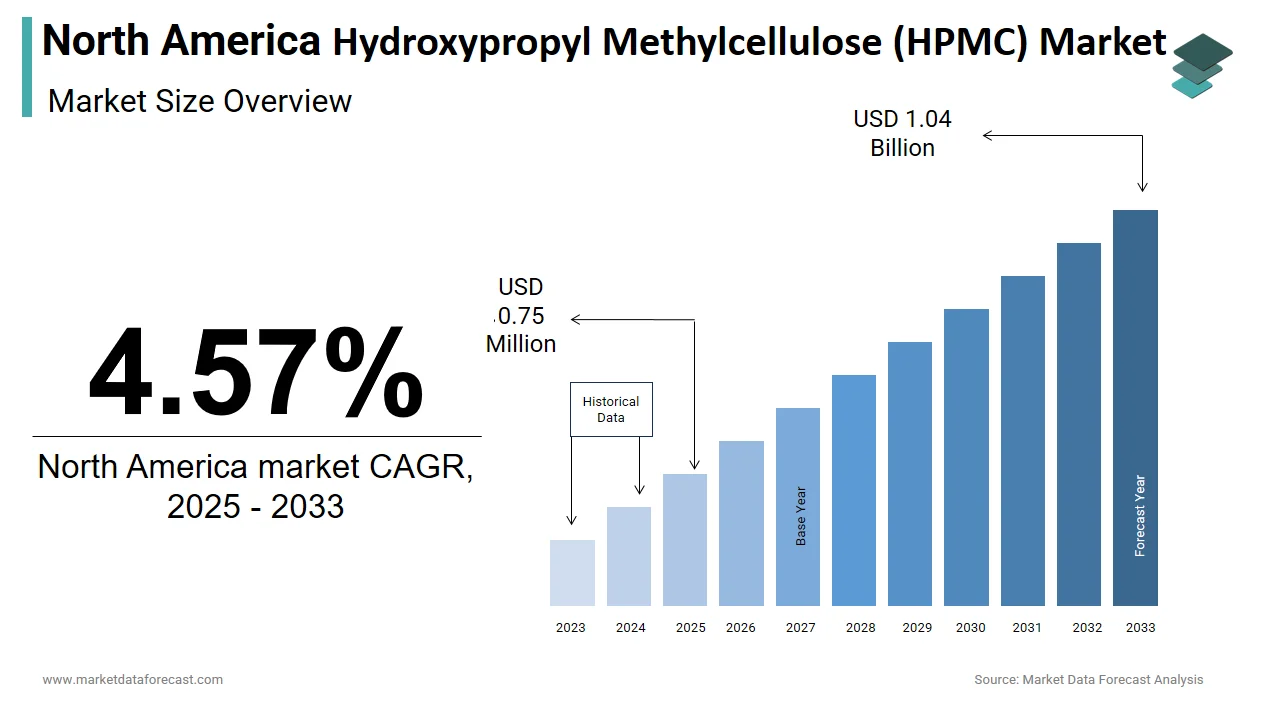
The size of the North America hydroxypropyl methylcellulose (HPMC) market was valued at USD 0.75 billion in 2025, is anticipated to reach USD 0.78 billion in 2026, and is projected to grow at a CAGR of 4.57% from 2026 to 2034, reaching USD 1.12 billion by 2034. Driven by the expansion of controlled-release pharmaceutical formulations, surging demand for sustainable dry-mix construction mortars, and increased adoption in eco-friendly personal care items, the industry continues to advance steadily across the region.
Key Executive Metrics (At-a-Glance)
- 2025 Base Valuation: USD 0.75 Billion
- 2026 Current Valuation: USD 0.78 Billion
- 2034 Forecast Valuation: USD 1.12 Billion
- Compound Annual Growth Rate (CAGR): 4.57% (2026–2034)
- Dominant Application Segment: Construction Sector (holding 58.4% of the market share in 2025 due to widespread integration into dry-mix mortars, plasters, and tile adhesives)
- Fastest-Growing Application Segment: Pharmaceutical Sector (projected at a robust CAGR of 7.8% during the forecast period driven by chronic disease management and extended-release matrices)
- Dominant Region/Country: United States (accounting for 68.3% of the market share in 2025 backed by mature industrial infrastructure and extensive drug manufacturing)
- Fastest-Growing Region: Canada (capturing 19.2% market share in 2025, driven by rapid urban redevelopment and strict energy-efficiency building codes)
Core Market Drivers
- Expansion of the Pharmaceutical Sector: Rising prevalence of chronic diseases requiring oral controlled-release dosage forms where HPMC serves as a hydrophilic matrix polymer.
- Growth in Sustainable Construction: Heightened demand for energy-efficient building solutions, green construction standards (LEED), and water-retentive dry-mix mortar applications.
Primary Market Restraints & Challenges
- Volatility in Raw Material Supply: Fluctuations in refined wood pulp pricing and constrained northern bleached softwood kraft (NBSK) fiber availability from Canada and the Pacific Northwest.
- Stringent Regulatory Scrutiny & Environmental Concerns: Heavy compliance burdens under FDA/USP standards, Health Canada regulations, and wastewater discharge/effluent control limits.
North America Hydroxypropyl Methylcellulose Market Segmentation Breakdown
| Segment Category | Leading Sub-Segment (2025 Base) | Fastest-Growing Sub-Segment (2026–2034) |
|---|---|---|
| By Application | Construction (holding 58.4% share in 2025 for dry-mix mortar, adhesives, and plasters) | Pharmaceuticals (projected at a 7.8% CAGR driven by extended-release tablet formulations) |
| By Country | United States (holding 68.3% share supported by massive pharma and construction bases) | Canada (capturing 19.2% share backed by green building codes and urban redevelopment) |
Major Industry Players Profiled
Key enterprises shaping the competitive North American HPMC market include Dow Chemical Company, Ashland Global Holdings Inc., Shin-Etsu Chemical Co., Ltd., Chemcolloid Limited, Zhejiang Haishen New Materials Limited, DuPont de Nemours, Inc., CP Kelco U.S., Inc., Celotech Chemicals Co., Ltd., and Hebei Yibang Building Materials Co., Ltd.
North America Hydroxypropyl Methylcellulose (HPMC) Market Size
The North America hydroxypropyl methylcellulose (HPMC) market was valued at USD 0.75 billion in 2025 and is anticipated to reach USD 0.78 billion in 2026 from USD 1.12 billion by 2034, growing at a CAGR of 4.57% during the forecast period from 2026 to 2034.
The Hydroxypropyl methylcellulose (HPMC) is a semi-synthetic, inert, viscoelastic polymer derived from cellulose, widely utilized for its emulsifying, thickening, suspending, and film-forming properties across pharmaceuticals, construction, and personal care industries. In North America, HPMC functions as an excipient in controlled-release oral formulations, with growing integration into green building materials due to its water retention and workability enhancement in cementitious systems. The region’s stringent regulatory framework, particularly enforced by the U.S. Food and Drug Administration (FDA), ensures high purity standards for pharmaceutical-grade HPMC, reinforcing its reliability in drug delivery systems. As per the U.S. Geological Survey, domestic cellulose ether production in the United States has seen a steady annual increase of 2.3% over the past five years, supported by consistent wood pulp supply from sustainably managed forests in Canada and the northern U.S.
MARKET DRIVERS
Expansion of the Pharmaceutical Sector and Demand for Controlled-Release Formulations
The proliferation of chronic diseases has significantly amplified the demand for advanced pharmaceutical formulations is enhancing the growth of the North America Hydroxypropyl Methylcellulose Market. According to the Centers for Disease Control and Prevention, approximately 60% of adults in the United States live with at least one chronic condition, such as diabetes or cardiovascular disease, necessitating long-term medication regimens. This has catalyzed the development of oral controlled-release dosage forms, where HPMC serves as a hydrophilic matrix polymer that modulates drug release kinetics. The U.S. accounts for nearly 45% of the global pharmaceutical market by value, as reported by the IQVIA Institute for Human Data Science, creating substantial demand for reliable, FDA-compliant excipients like HPMC. Moreover, the number of generic drug approvals by the FDA has exceeded 1,000 annually since 2017, with many relying on HPMC-based formulations due to their proven safety and scalability.
Growth in Sustainable Construction and Dry-Mix Mortar Applications
The construction industry has undergone a paradigm shift toward energy-efficient and sustainable building practices are amplifying the growth of the North America Hydroxypropyl Methylcellulose Market. HPMC enhances water retention, adhesion, and workability in tile adhesives, exterior insulation finishing systems (EIFS), and self-leveling compounds, which is making it indispensable in modern construction chemistry. As per the U.S. Energy Information Administration, building-related energy consumption accounts for nearly 40% of total U.S. energy use, prompting widespread adoption of green construction standards such as LEED certification. Over 35,000 commercial projects in the U.S. have achieved LEED certification as of 2023, according to the U.S. Green Building Council, many of which utilize cellulose ether-modified mortars to improve durability and reduce material waste. Additionally, the National Institute of Standards and Technology emphasizes that HPMC-modified mortars exhibit up to 30% better bond strength compared to conventional mixes, reducing maintenance costs and enhancing structural longevity.
MARKET RESTRAINTS
Volatility in Raw Material Supply and Cellulose Pulp Pricing
The production of hydroxypropyl methylcellulose is dependent on high-purity refined wood pulp, primarily sourced from northern bleached softwood kraft (NBSK) forests in Canada and the Pacific Northwest, which is hampering the growth of the North America Hydroxypropyl Methylcellulose Market. According to Natural Resources Canada, softwood fiber production declined by 8.3% between 2020 and 2022 due to wildfire-related disruptions in British Columbia and Alberta, where over 2.5 million hectares of commercial forest were affected. This constrained supply led to a 22% year-on-year increase in NBSK pulp prices in 2022, as reported by the Forest Products Laboratory, directly impacting HPMC manufacturing costs. Additionally, the U.S. Lumber Cartel investigation by the Department of Commerce in 2023 highlighted ongoing trade tensions with Canada, resulting in tariffs that further inflated raw material expenses.
Stringent Regulatory Scrutiny and Compliance Burden
The regulatory oversight by creating operational complexities for manufacturers is also hindering the growth of the North America Hydroxypropyl Methylcellulose Market. According to the U.S. Food and Drug Administration, all HPMC used in drug formulations must comply with United States Pharmacopeia (USP) and National Formulary (NF) standards, which require extensive documentation, batch testing, and facility audits. As per the FDA’s 2023 inspection report, over 18% of domestic excipient manufacturers received warning letters related to data integrity and process validation failures, reflecting the high compliance threshold. Additionally, Health Canada’s Food and Drug Regulations require full toxicological dossiers for any new HPMC grade intended for oral consumption, a process that can take up to 18 months and cost over $500,000 per submission, according to the Canadian Regulatory Affairs Society. The Environmental Protection Agency also regulates industrial HPMC waste streams under the Clean Water Act, imposing limits on chemical oxygen demand (COD) levels in effluents, with non-compliance penalties exceeding $50,000 per violation. Furthermore, the Occupational Safety and Health Administration has classified fine cellulose ether powders as respiratory irritants, mandating costly engineering controls and personal protective equipment in production facilities.
MARKET OPPORTUNITIES
Advancement in Ophthalmic and Biopharmaceutical Delivery Systems
The next-generation ophthalmic and biopharmaceutical formulations, which are gearing up the growth of the North America Hydroxypropyl Methylcellulose Market. HPMC’s mucoadhesive and viscoelastic properties make it ideal for artificial tear solutions, intraocular lenses, and sustained-release ocular inserts. According to the American Academy of Ophthalmology, dry eye disease affects over 16 million adults in the U.S., with prevalence increasing at 3.5% annually due to aging populations and digital screen overuse. Over 40% of FDA-approved lubricant eye drops contain HPMC as the primary active ingredient, as documented in the National Library of Medicine’s pharmacopeial database. The National Institutes of Health reports that over 300 clinical trials are currently underway involving HPMC-based delivery matrices for peptide and monoclonal antibody transport. Additionally, the expansion of ophthalmic drug-eluting implants, such as those used in glaucoma treatment, relies on HPMC’s controlled gelation properties.
Integration into Eco-Friendly Personal Care and Cosmetics
The increasing personal care with bio-based, non-toxic thickeners and stabilizers is ascribed to bolster the growth of the North America Hydroxypropyl Methylcellulose Market. Consumers are increasingly favoring clean-label products, as evidenced by a 2023 NielsenIQ report indicating that 68% of U.S. shoppers prioritize environmentally friendly ingredients when purchasing skincare and haircare items. HPMC, being derived from renewable cellulose and fully biodegradable, aligns with this shift. The Personal Care Products Council notes that over 1,200 new cosmetic formulations launched in the U.S. in 2023 listed HPMC as a key ingredient, particularly in vegan, fragrance-free, and hypoallergenic products. Furthermore, the California Safe Cosmetics Program reports that cellulose ethers have replaced polyacrylamides in 34% of leave-on facial products since 2021 due to concerns over acrylamide contamination. HPMC’s ability to form clear gels, stabilize emulsions, and enhance sensory texture makes it ideal for serums, sunscreens, and plant-based makeup. The U.S. Environmental Protection Agency’s Safer Choice program has certified over 200 HPMC-containing personal care items as environmentally preferable, reinforcing brand credibility.
MARKET CHALLENGES
Technological Substitution from Alternative Polymers
The intensifying competitive pressure from emerging synthetic and bio-based polymers that offer comparable or superior performance at lower costs is likely to impede the growth of the North American hydroxypropyl methylcellulose market. Polymers such as polyvinyl alcohol (PVA), xanthan gum, and poloxamers are increasingly displacing HPMC in specific applications due to enhanced thermal stability, lower viscosity drift, or improved biodegradability. According to the American Chemical Society, xanthan gum usage in pharmaceutical suspensions grew by 14% between 2020 and 2023, with its superior shear-thinning behavior and compatibility with ionic drugs. Similarly, the Society of Plastics Engineers reports that PVA-based films are now used in 28% of unit-dose packaging applications, which is surpassing HPMC due to better moisture barrier properties.
Environmental and Waste Management Concerns in Industrial Applications
The industrial-scale use of hydroxypropyl methylcellulose raises environmental concerns related to wastewater contamination and sludge management in construction and pharmaceutical manufacturing, is also hampers the growth of the North American hydroxypropyl methylcellulose market. As per the Environmental Protection Agency’s 2023 Municipal Wastewater Report, cellulose ethers were identified in 22% of industrial discharge violations in the Midwest, primarily from dry-mix mortar production facilities. The agency also notes that HPMC increases sludge volume by up to 18% in activated sludge systems, complicating dewatering and increasing disposal costs. In pharmaceutical manufacturing, residual HPMC in cleaning wastewater poses challenges for membrane filtration systems, with fouling rates increasing by 30% in facilities using high-concentration HPMC formulations, according to a study published by the Water Environment Federation. Additionally, the Canadian Council of Ministers of the Environment has flagged cellulose ethers as emerging contaminants due to their persistence in cold-climate aquatic systems, where biodegradation slows significantly below 10°C. With 47% of HPMC production facilities located within 10 miles of major waterways, as mapped by the U.S. Geological Survey, the risk of environmental exposure remains high.
REPORT COVERAGE
| REPORT METRIC | DETAILS |
| Market Size Available | 2025 to 2034 |
| Base Year | 2025 |
| Forecast Period | 2026 to 2034 |
| Segments Covered | By Application, and Region. |
| Various Analyses Covered | Global, Regional and Country-Level Analysis, Segment-Level Analysis, Drivers, Restraints, Opportunities, Challenges; PESTLE Analysis; Porter’s Five Forces Analysis, Competitive Landscape, Analyst Overview of Investment Opportunities |
| Countries Covered | United States, Canada, Mexico, and the Rest of North America. |
| Market Leaders Profiled | Ashland, Shin-Etsu Chemical Co., Ltd., Chemcolloid Limited, Zhejiang Haishen New Materials Limited, DuPont de Nemours, Inc., CP Kelco U.S., Inc., Celotech Chemicals Co., Ltd., Hebei Yibang Building Materials Co., Ltd., Changzhou Guoyu Environmental S&T Co., Ltd., and others. |
SEGMENTAL ANALYSIS
By Application Insights
The construction sector held 58.4% of the North American hydroxypropyl methylcellulose market share in 2025, with the widespread integration of HPMC into dry-mix mortar formulations, where it enhances water retention, workability, and adhesion in modern building systems. Building codes and sustainability mandates across North America are increasingly favoring materials that enhance energy efficiency and reduce environmental impact, which is positioning HPMC-laden construction products at the forefront of compliance. As per the U.S. Green Building Council, over 37,000 commercial projects in the U.S. have achieved LEED certification, with 62% utilizing cellulose ether-modified exterior finishes to meet durability and thermal performance criteria. Furthermore, the Energy Star program reports that homes built to its 2023 standards use at least 15% less energy than those constructed to earlier codes, a target achieved in part through advanced mortar and plaster systems that minimize thermal bridging.
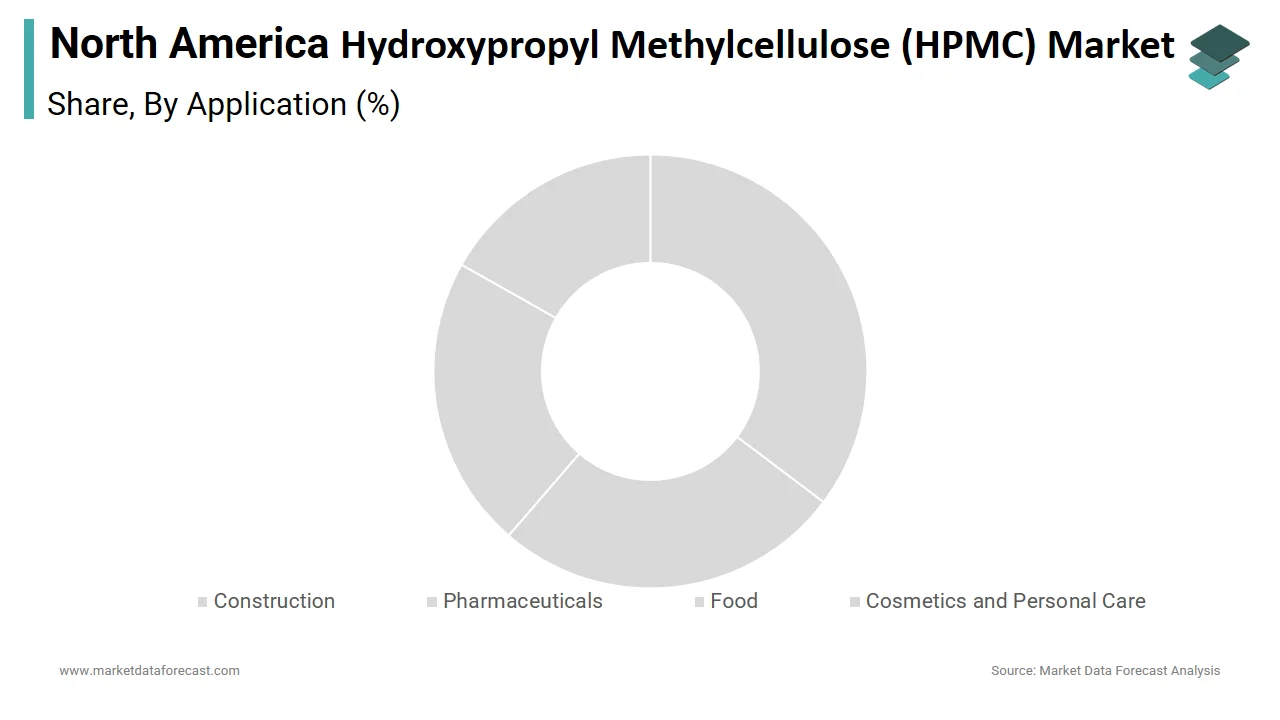
The pharmaceutical segment is likely to grow with an expected CAGR of 7.8% during the forecast period, owing to the increasing prevalence of chronic diseases has spurred demand for patient-compliant, long-acting medications, where HPMC functions as a primary matrix-forming polymer in extended-release tablets. According to the Centers for Disease Control and Prevention, nearly 60% of American adults suffer from at least one chronic condition, including hypertension, diabetes, and hyperlipidemia, necessitating daily medication regimens. HPMC is integral to these systems due to its ability to form a gel layer that controls drug diffusion, with dissolution profiles tailored to pharmacokinetic needs. The IQVIA Institute reports that extended-release generics now account for 32% of total prescription volume in the U.S., driven by cost-effectiveness and compliance benefits.
COUNTRY LEVEL ANALYSIS
United States Hydroxypropyl Methylcellulose (HPMC) Market Insights
The United States was the top performer in the North American hydroxypropyl methylcellulose market with 68.3% of the share in 2025, with a confluence of industrial maturity, regulatory rigor, and technological innovation. The U.S. hosts the largest pharmaceutical manufacturing base in the Western Hemisphere, with over 5,000 registered drug production facilities, according to the FDA’s 2023 facility registry. This sector alone consumes over 12,000 metric tons of pharmaceutical-grade HPMC annually for controlled-release tablets and ophthalmic solutions. Additionally, the construction industry’s shift toward prefabricated and energy-efficient systems has amplified demand for dry-mix mortars, where HPMC ensures performance consistency. The U.S. Energy Information Administration notes that building-related energy use accounts for 74% of national electricity demand, which is driving the adoption of high-performance EIFS and plaster systems containing HPMC. Furthermore, the U.S. Environmental Protection Agency’s Safer Choice program has certified over 150 HPMC-based personal care and cleaning products, reinforcing its role in green chemistry.
Canada Hydroxypropyl Methylcellulose (HPMC) Market Insights
Canada hydroxypropyl methylcellulose market was positioned second by capturing 19.2% of the share in 2025. The Canadian Construction Association indicates that dry-mix mortar usage has grown at 7.1% annually since 2020, driven by urban redevelopment in cities like Vancouver, Toronto, and Montreal, where building codes mandate high-performance exterior finishes. Health Canada’s strict pharmaceutical regulations ensure that all HPMC used in drug formulations meets USP-NF standards, fostering a high-trust environment for excipient suppliers. The Public Health Agency of Canada notes that chronic disease prevalence has risen to 54% among adults, increasing demand for extended-release medications reliant on HPMC. Moreover, the federal government’s 2030 Emissions Reduction Plan includes a 40% reduction target for building-related greenhouse gases, accelerating the adoption of energy-efficient construction materials. The National Research Council of Canada confirms that HPMC-modified plasters improve thermal resistance by up to 22% in cold-climate applications.
KEY MARKET PLAYERS
A few of the notable companies operating in the North America hydroxypropyl methylcellulose (HPMC) market profiled in this report are Ashland, Shin-Etsu Chemical Co., Ltd., Chemcolloid Limited, Zhejiang Haishen New Materials Limited, DuPont de Nemours, Inc., CP Kelco U.S., Inc., Celotech Chemicals Co., Ltd., Hebei Yibang Building Materials Co., Ltd., Changzhou Guoyu Environmental S&T Co., Ltd., and others.
TOP LEADING PLAYERS IN THE MARKET
Dow Chemical Company
Dow Chemical stands as an innovator in the hydroxypropyl methylcellulose landscape, leveraging its deep expertise in polymer science and large-scale chemical manufacturing. The company offers a comprehensive portfolio of cellulose ethers under the METHOCEL™ brand, which is widely recognized for consistency and performance across pharmaceutical, construction, and personal care applications. With integrated research facilities and a strong focus on sustainable chemistry, Dow drives formulation advancements that align with evolving regulatory and environmental standards. Its presence in North America is marked by strategic collaborations with pharmaceutical developers and construction material formulators, enabling tailored solutions for complex industrial challenges. The company’s global supply chain and technical support infrastructure reinforce its reputation as a reliable partner in high-purity excipient and specialty additive markets.
Ashland Global Holdings Inc.
Ashland has established itself as a leader in specialty ingredients, particularly through its pharmaceutical-grade cellulose ethers used in advanced drug delivery systems. The company’s expertise lies in precision-engineered HPMC variants that support controlled release, bioadhesion, and stability in solid and liquid formulations. With a strong legacy in excipient development, Ashland maintains close partnerships with generic and innovator drug manufacturers, offering regulatory-compliant solutions that streamline approval processes. Its North American operations emphasize innovation in green chemistry and sustainable sourcing, aligning with industry shifts toward environmentally responsible manufacturing. Ashland’s technical service teams work closely with customers to optimize formulations, enhancing product performance and scalability.
Shin-Etsu Chemical Co., Ltd.
Shin-Etsu, though headquartered in Japan, exerts significant influence in the North American hydroxypropyl methylcellulose market through its high-purity, specialty-grade products and strategic distribution network. The company is renowned for its stringent quality control and consistency in polymer specifications, making its HPMC variants preferred in sensitive pharmaceutical and ophthalmic applications. Shin-Etsu’s technological dominance is evident in its ability to fine-tune substitution patterns and viscosity profiles to meet exacting formulation requirements. Its North American presence is supported by dedicated technical service teams and compliance with FDA and USP standards, ensuring seamless integration into regulated industries.
TOP STRATEGIES USED BY KEY MARKET PARTICIPANTS
One major strategy employed by leading players is vertical integration, particularly in securing reliable sources of high-purity wood pulp and enhancing in-house derivatization capabilities. This allows companies to maintain consistent product quality, reduce dependency on external suppliers, and respond swiftly to market fluctuations.
Another key approach is investment in application-specific innovation, where companies develop customized HPMC grades tailored to pharmaceutical delivery systems, high-performance construction materials, or clean-label personal care products. This differentiation strategy enables them to address niche demands, support customer R&D, and establish long-term partnerships across regulated industries.
A third prevalent strategy is strengthening technical service and regulatory support infrastructure. By offering formulation assistance, regulatory documentation, and compatibility testing, companies position themselves as solution providers rather than mere suppliers. This enhances customer loyalty, accelerates product adoption, and reinforces brand credibility in highly technical and compliance-driven markets.
COMPETITION OVERVIEW
The competitive landscape of the North America hydroxypropyl methylcellulose market is characterized by a blend of technological sophistication, regulatory acumen, and strategic differentiation. Dominant players distinguish themselves not merely through scale but through the precision of their product offerings and depth of technical support. The market favors companies with robust R&D capabilities, particularly those able to engineer HPMC variants with tailored viscosity, gelation temperature, and substitution profiles for specialized applications. Competition is further shaped by the need for compliance with FDA, USP, and environmental standards, which raises entry barriers for smaller or less-established manufacturers. Firms increasingly compete on reliability, consistency, and sustainability, with growing emphasis on green sourcing and low-impact production processes. Customer intimacy plays a crucial role, as formulators in pharmaceuticals and construction require close collaboration to optimize performance. While price remains a consideration, it is often secondary to performance assurance and regulatory readiness. Regional producers face pressure from global suppliers who offer standardized grades, but local champions counter with responsive service and application expertise. The absence of commoditization in high-end segments ensures that innovation and technical excellence remain central to competitive advantage, fostering a dynamic environment where reputation and reliability are paramount.
RECENT MARKET DEVELOPMENTS
- In March 2023, Dow Chemical expanded its cellulose ether production capacity at its Midland, Michigan facility, incorporating advanced process control systems to enhance batch consistency and support growing demand from pharmaceutical and construction clients.
- In August 2023, Ashland launched a new technical service center in Philadelphia dedicated to excipient formulation support by enabling real-time collaboration with drug developers on HPMC-based controlled-release systems.
- In January 2024, Shin-Etsu Chemical strengthened its North American distribution network by partnering with a specialized logistics provider to ensure temperature-controlled delivery of high-purity HPMC grades to pharmaceutical manufacturers.
- In June 2024, Ashland announced a collaboration with a leading generic drug developer to co-formulate an extended-release tablet using a novel HPMC grade designed for improved gastric stability.
- In September 2024, Dow Chemical introduced a bio-based certification program for its METHOCEL™ product line with its commitment to sustainable sourcing and appealing to environmentally conscious formulators in construction and personal care.
MARKET SEGMENTATION
This research report on the North America hydroxypropyl methylcellulose (HPMC) market is segmented and sub-segmented into the following categories.
By Application
- Construction
- Cement Mortar
- Plasters
- Refractory Materials
- Paints
- Gypsum Concrete Slurry
- Fiber Wall
- Others
- Pharmaceuticals
- Food
- Cosmetics and Personal Care
- Others
By Country
- United States
- Canada
- Mexico
- Rest of North America