- Product Description Description
- Table of Contents TOC
- List of Table & Figure LOT
- Get Free Sample PDF Sample PDF
Market Size, 2025
$1,051 MnMarket Estimate, 2026
$1,118.3 MnMarket Forecast, 2034
$1,837 MnCAGR, 2026–2034
6.4%North America Laboratory Filtration Market Report: Size, Share, Trends & Forecast (2026–2034)
- Market Scope: Comprehensive regional industry analysis covering separation technologies, specialized filter products, key end-user segments, country-level breakdowns across North America, and strict regulatory compliance requirements (such as FDA and USP standards).
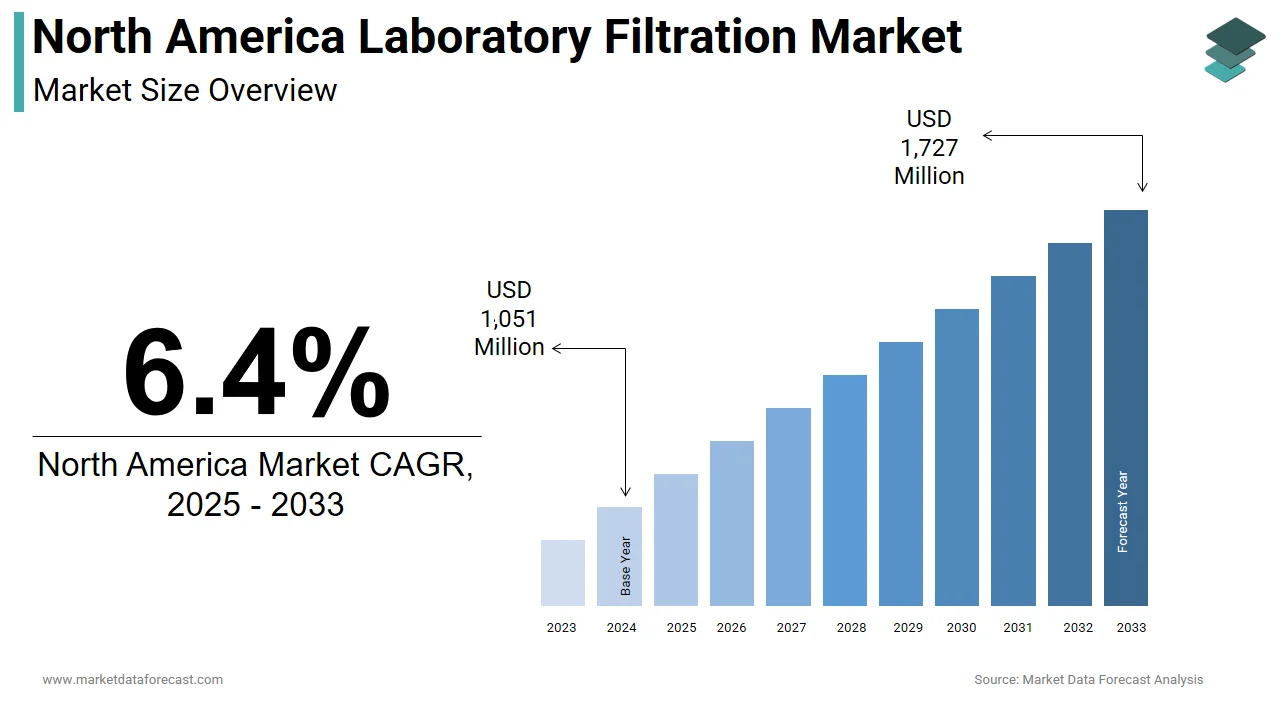
- Market Valuation: Valued at USD 1,051 million in 2025, estimated at USD 1,118.3 million in 2026, and projected to reach USD 1,837 million by 2034, registering a steady CAGR of 6.4% from 2026 to 2034.
- Primary Growth Drivers: Massive expansion of biopharmaceutical R&D activities (bolstered by extensive NIH biomedical funding), stringent regulatory compliance and quality assurance standards, and rising demand for environmental testing and water quality analysis.
North America Laboratory Filtration Market Segment Metrics (2026–2034)
| Category | Leading Segment / Position | Fastest-Growing Segment |
|---|---|---|
| By Technology | Microfiltration (accounted for 35.2% market share in 2025 for sterilizing and clarifying biological samples) | Nanofiltration (projected to exhibit the fastest CAGR of 7.8% due to selective ion/organic molecule separation) |
| By Product | Membranes (held 30.1% market share in 2025 as the primary functional component determining filtration performance) | Syringe Filters (fastest-growing at an 8.5% CAGR driven by small-volume convenience and high-throughput screening) |
| By End User | Pharmaceutical & Biopharmaceutical Companies (held a prominent share in 2025 due to strict GMP and sterilization rules) | Academic & Research Institutes (anticipated to grow at the fastest CAGR of 7.2% with increased government funding) |
| By Country | United States (largest contributor with an 88.3% share in 2025, driven by extensive pharma and research networks) | Canada (holding second position with a 21.2% share, supported by R&D investments and provincial diagnostic quality measures). |
Major North American Laboratory Filtration Market Players & Industry Structure
Market Structure: A highly competitive landscape featuring established life sciences giants and specialized filtration manufacturers competing on product reliability, digital integration (such as smart IoT sensors), sustainability, and technical support.
Key Companies: Merck KGaA (MilliporeSigma), Pall Corporation (Danaher Corporation), Thermo Fisher Scientific Inc., Sartorius Group, 3M Purification Inc., GE Healthcare, Cantel Medical Corporation, Cuno, Dow Water & Process Solutions, FilmTec Corporation, and Sigma-Aldrich Corporation.
North America Laboratory Filtration Market Size
The size of the North America laboratory filtration market was worth USD 1,051 million in 2025. The North America market is anticipated to grow at a CAGR of 6.4% from 2026 to 2034 and be worth USD 1,837 million by 2034 from USD 1,118.3 million in 2026.
Laboratory filtration is designed to separate particulates, microorganisms, and dissolved substances from liquids and gases in research and industrial settings. This sector includes membrane filters, depth filters, syringe filters, and vacuum filtration systems utilized extensively in pharmaceutical, biotechnology, academic, and environmental testing laboratories. The region maintains a robust scientific infrastructure driven by substantial investment in life sciences and healthcare innovation. The National Institutes of Health allocates over 47 billion dollars annually for biomedical research funding, which necessitates high-precision filtration solutions for cell culture media preparation and sterilization processes. Additionally, the United States Food and Drug Administration enforces stringent quality standards for pharmaceutical manufacturing, requiring validated filtration steps to ensure product safety and purity. Academic institutions across the United States and Canada conduct thousands of clinical trials each year, relying on reliable filtration methods to maintain sample integrity. The growing emphasis on personalized medicine and genomics further amplifies the need for specialized filtration devices capable of handling small volumes with high recovery rates. Environmental protection agencies mandate rigorous water quality testing protocols that depend on advanced filtration techniques to detect contaminants at trace levels. Laboratories increasingly adopt automated filtration systems to enhance throughput and reduce human error in high-volume testing environments. Regulatory compliance drives the adoption of single-use disposable filters to prevent cross-contamination between samples.
MARKET DRIVERS
Expansion Of Biopharmaceutical Research And Development Activities
The biopharmaceutical sector due to the important role of sterile filtration in drug development and production, which is fuelling the growth of the North America laboratory filtration market. The Pharmaceutical Research and Manufacturers of America states that the industry invested approximately 102 billion dollars in research and development in recent years, driving demand for high-performance filtration solutions. Biologics and monoclonal antibodies require meticulous purification processes where tangential flow filtration and virus removal filters are essential to ensure patient safety. The complexity of these molecules necessitates specialized membranes that minimize protein binding and maximize yield during downstream processing. Clinical trial expansions across North America increase the volume of biological samples requiring sterile filtration before analysis or storage. The Food and Drug Administration mandates strict adherence to current good manufacturing practices, which include validated sterilizing-grade filtration steps for all injectable therapies. Academic research centers collaborate with biotech firms to develop novel therapeutics, creating a steady demand for laboratory-scale filtration devices for pilot studies. The rise of cell and gene therapies introduces new challenges requiring ultra-low binding filters to preserve delicate cellular structures during processing. Contract research organizations handle increasing workloads, outsourcing filtration tasks to specialized facilities equipped with advanced technology.
Stringent Regulatory Compliance And Quality Assurance Standards
The regulatory frameworks imposed by government agencies enforce rigorous quality control measures that drive the adoption of certified laboratory filtration products. The stringent regulatory compliance and quality assurance standards are also fuelling the growth of the North America laboratory filtration market. The United States Pharmacopeia establishes detailed standards for sterilizing grade filters, requiring manufacturers to demonstrate consistent performance through bacterial challenge tests. Laboratories must validate their filtration processes to comply with Good Laboratory Practice guidelines, ensuring data integrity and reproducibility in scientific studies. The Environmental Protection Agency mandates specific filtration protocols for water quality analysis to detect pathogens and chemical contaminants accurately. Non-compliance with these regulations can result in severe penalties, including facility shutdowns and loss of accreditation, prompting institutions to prioritize high-quality filtration supplies. The International Organization for Standardization provides guidelines for filter testing methods influencing procurement decisions across research and industrial sectors. Healthcare facilities undergo regular audits to verify that sterilization procedures meet established benchmarks, relying on validated filtration systems for medical device reprocessing. The increasing focus on data integrity in clinical laboratories requires traceable documentation for all filtration steps used in sample preparation. Accreditation bodies such as the College of American Pathologists inspect laboratory practices, ensuring that filtration equipment meets performance specifications. Manufacturers respond by providing comprehensive validation packages and certificates of analysis with their products to facilitate regulatory compliance.
MARKET RESTRAINTS
High Operational Costs Associated With Advanced Filtration Systems
The significant financial burden associated with acquiring and maintaining advanced laboratory filtration systems restricts growth, particularly among smaller research entities in the North America laboratory filtration market. High-throughput automated filtration platforms can cost upwards of 50000 dollars, representing a substantial capital expenditure for academic labs and startup biotech firms. Consumable costs for specialized membranes and single-use cartridges accumulate rapidly, especially in high-volume screening operations, where thousands of samples are processed daily. The National Science Foundation indicates that many university laboratories operate under tight budget constraints limiting their ability to upgrade to state-of-the-art filtration technology. Maintenance and calibration requirements for complex filtration equipment add to the total cost of ownership, requiring skilled technical staff for operation. Small contract research organizations struggle to compete with larger entities that benefit from economies of scale in purchasing filtration supplies. The shift toward single-use systems reduces cleaning costs but increases waste disposal expenses, which are subject to varying regional regulations and fees. Budget cuts in public funding for scientific research further exacerbate financial pressures, forcing laboratories to extend the lifespan of existing equipment beyond optimal performance periods. Price sensitivity leads some users to opt for lower-cost alternatives that may compromise experimental results or require more frequent replacement.
Complexity Of Validating New Filtration Technologies
The intricate process of validating new filtration technologies for specific applications creates significant hurdles for both manufacturers and end users, which is also degrading the growth of the North America laboratory filtration market. Regulatory agencies require extensive data demonstrating that new filter materials do not interact with samples or leach harmful substances into solutions. The validation process often involves months of testing, including bubble point tests, flow rate measurements, and extractables studies, which delay time to market. Laboratories hesitate to switch from established suppliers due to the resource-intensive nature of revalidating processes with new filtration products. The lack of standardized validation protocols across different industries complicates the acceptance of novel filtration solutions. Academic researchers may lack the expertise or equipment to perform rigorous validation studies, leading to reliance on traditional methods despite potential benefits of newer technologies. The Food and Drug Administration expects thorough documentation of any changes in filtration processes, which can trigger additional regulatory reviews for approved drugs. This regulatory burden discourages innovation as companies prefer to stick with legacy products that have already been validated. Collaborative efforts between manufacturers and key opinion leaders help establish best practices, but widespread adoption remains slow. The complexity is further compounded by the diverse range of applications from sterile filtration to virus removal, each requiring unique validation criteria. Ensuring compatibility with various solvents and biological matrices adds another layer of difficulty to the validation process.
MARKET OPPORTUNITIES
Integration Of Automation And Digital Monitoring Capabilities
The integration of automation and digital monitoring into laboratory filtration systems for enhancing efficiency and data accuracy is solely to create new opportunities for the growth of the North America laboratory filtration market. Smart filtration devices equipped with sensors can track pressure, flow rates, and volume processed in real time, providing valuable data for process optimization. The trend toward Industry 4.0 in laboratory settings encourages the adoption of connected devices that integrate with laboratory information management systems. Automated liquid handling robots incorporating filtration steps reduce manual labor and minimize the risk of human error in high-throughput screening environments. The National Institute of Standards and Technology promotes standards for digital twins in manufacturing, which can be applied to filtration processes for predictive maintenance and quality control. Pharmaceutical companies seek to implement continuous manufacturing models where inline filtration monitors ensure consistent product quality without batch interruptions. Remote monitoring capabilities allow technicians to oversee multiple filtration units simultaneously, improving operational efficiency in large-scale facilities. Data analytics derived from filtration processes help identify bottlenecks and optimize resource utilization, reducing overall operational costs. The ability to generate electronic records automatically supports compliance with data integrity regulations, reducing administrative burdens on laboratory staff. Manufacturers are developing modular automation solutions that can be scaled according to laboratory needs, offering flexibility for growing research programs.
Growth In Environmental Testing And Water Quality Analysis
Expanding environmental regulations and public concern over water safety in environmental testing applications are driving new opportunities for the expansion of the North America laboratory filtration market. The Environmental Protection Agency updates drinking water standards regularly, requiring laboratories to detect emerging contaminants, such as per- and polyfluoroalkyl substances, at extremely low concentrations. Advanced filtration methods are essential for sample preparation and preconcentration steps to achieve the necessary sensitivity for these analyses. Municipal water utilities invest heavily in upgrading testing capabilities to comply with new regulatory limits, driving demand for high-capacity filtration systems. The infrastructure bill allocated billions of dollars for water system improvements, including monitoring and testing infrastructure across the United States. Climate change impacts, such as increased flooding and droughts, intensify the need for rigorous water quality assessment to protect public health. Agricultural runoff testing requires efficient filtration to separate particulates from water samples before chemical analysis for pesticides and nutrients. Industrial facilities face stricter discharge permits necessitating regular monitoring of effluent quality using standardized filtration protocols. Contract environmental laboratories expand their capacities to handle increased sampling frequencies mandated by local and federal authorities. The development of portable filtration kits enables field testing, allowing for rapid preliminary assessment of water sources. These factors drive sustained demand for durable and high-efficiency filtration products tailored to environmental applications.
MARKET CHALLENGES
Supply Chain Volatility For Raw Materials
Global supply chain disruptions are likely to slow the growth of the North America laboratory filtration market. Many specialized membrane materials such as polyethersulfone and polyvinylidene fluoride are sourced from a limited number of international suppliers, making the industry vulnerable to geopolitical tensions and trade restrictions. The pandemic exposed weaknesses in just-in-time inventory models, leading to prolonged lead times for important filtration components. The supply chain issues affect various high-tech sectors, including laboratory equipment manufacturing. Fluctuations in raw material prices impact profit margins for manufacturers, who struggle to pass costs on to price-sensitive customers. Logistics hurdles at ports and transportation delays further exacerbate availability issues, causing stockouts of popular filtration products. Laboratories face difficulties in planning experiments when essential supplies are unavailable, leading to project delays and increased operational stress. Smaller distributors lack the bargaining power to secure priority allocation during shortages, widening the gap between large institutional buyers and independent researchers. Manufacturers are attempting to diversify sourcing strategies, but qualifying new suppliers requires time and rigorous quality assurance testing. The complexity of producing sterile single-use filters adds another layer of vulnerability as any disruption in sterilization services can halt production entirely. Ensuring business continuity requires significant investment in inventory buffers and alternative supply networks, which strain financial resources.
Technical Limitations In Filtering Complex Biological Samples
Filtering complex biological matrices that limit the effectiveness of standard filtration products is also limiting the growth of the North America laboratory filtration market. Protein fouling and membrane clogging reduce flow rates and recovery yields, necessitating frequent filter changes or pretreatment steps that increase time and cost. The heterogeneity of biological samples makes it difficult to predict filtration performance accurately, leading to inconsistent results across different batches. Researchers often struggle to find filters that balance high throughput with minimal sample loss, particularly when working with rare or precious specimens. The presence of lipids and cellular debris can block pore structures rapidly, requiring specialized pre-filters that add complexity to the workflow. Lack of universal standards for evaluating filter performance with biological samples makes it challenging for users to compare products objectively. Manufacturers continue to develop surface-modified membranes to reduce fouling, but these innovations often come at a premium price point. The need for optimization for each specific application slows down the adoption of new filtration technologies in routine laboratory practices. Training laboratory personnel on proper filtration techniques is essential but often overlooked, leading to suboptimal performance and wasted resources. The variability in sample viscosity and composition requires adaptable filtration solutions that can handle a wide range of conditions without compromising integrity.
REPORT COVERAGE
| REPORT METRIC | DETAILS |
| Market Size Available | 2025 to 2034 |
| Base Year | 2025 |
| Forecast Period | 2026 to 2034 |
| Segments Covered | By Technology, Product, End-user, and Region. |
| Various Analyses Covered | Global, Regional and Country-Level Analysis, Segment-Level Analysis, Drivers, Restraints, Opportunities, Challenges; PESTLE Analysis; Porter’s Five Forces Analysis, Competitive Landscape, Analyst Overview of Investment Opportunities |
| Countries Covered | United States, Canada, Mexico, Rest of North America |
| Market Leaders Profiled | Merck Millipore and Pall Corporation, GE Healthcare, Sartorius Group, 3M Purification Inc., Thermo Fisher Scientific Inc., Cantel Medical Corporation, Cuno, Dow Water & Process Solutions, FilmTec Corporation, GE Healthcare, and Sigma-Aldrich Corporation.
|
SEGMENTAL ANALYSIS
By Technology Insights
The microfiltration segment was the largest by accounting for 35.2% of the North America Laboratory Filtration Market share in 2025 due to its extensive use in sterilizing heat-sensitive solutions and clarifying biological samples. This technology utilizes membranes with pore sizes ranging from 0.1 to 10 micrometers, effectively removing bacteria and suspended particles without altering the chemical composition of the filtrate. The pharmaceutical industry relies heavily on microfiltration for final sterilization of injectable drugs as mandated by the United States Pharmacopeia, which requires sterility assurance levels of 10 to the power of negative 6. Academic research laboratories utilize microfiltration extensively for cell culture media preparation, ensuring that nutrients remain intact while eliminating microbial contaminants. The Centers for Disease Control and Prevention emphasizes the importance of sterile filtration in clinical microbiology laboratories to prevent cross-contamination during sample processing. Water quality testing facilities employ microfiltration to concentrate microorganisms from large water volumes, enabling accurate detection of pathogens such as E coli and Legionella. The versatility of microfiltration membranes made from materials like polyethersulfone and nylon allows compatibility with a wide range of solvents and aqueous solutions. High-throughput screening in drug discovery depends on rapid microfiltration steps to prepare samples for analytical instruments, such as high-performance liquid chromatography. The established regulatory framework for microfiltration validation provides confidence to end users regarding compliance and data integrity. Manufacturers offer a diverse array of microfiltration formats, including bottle top filters and syringe drivers catering to varying volume requirements.
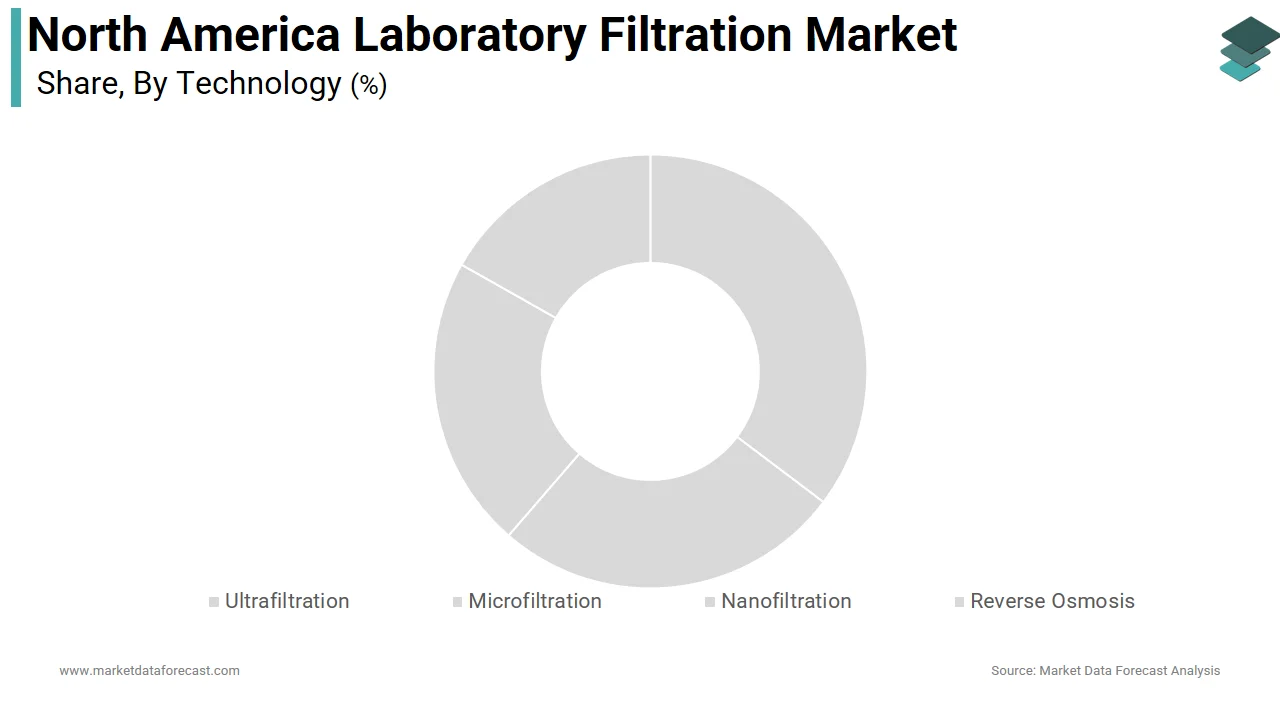
The nanofiltration segment is projected to exhibit the fastest CAGR of 7.8% driven by its unique ability to separate multivalent ions and small organic molecules. This technology fills the gap between reverse osmosis and ultrafiltration, offering selective permeation based on charge and size exclusion mechanisms. The Environmental Protection Agency supports research into nanofiltration for removing emerging contaminants such as pharmaceutical residues and perfluorinated compounds from drinking water sources. Pharmaceutical manufacturers utilize nanofiltration for desalting and concentration of peptide solutions where maintaining specific ion balances is important for product stability. The National Institutes of Health funds projects exploring nanofiltration for purifying complex biological mixtures in proteomics and metabolomics studies. Industrial laboratories apply nanofiltration for solvent recovery and purification, reducing waste disposal costs and environmental impact. Advances in membrane material science have improved flux rates and fouling resistance, making nanofiltration more economically viable for routine laboratory applications. The growing focus on green chemistry principles encourages the adoption of membrane-based separation techniques over energy-intensive distillation processes. Research institutions are developing customized nanofiltration modules for specific analytical workflows, enhancing precision and reproducibility. The ability to operate at lower pressures compared to reverse osmosis reduces equipment wear and energy consumption, appealing to cost-conscious laboratories.
By Product Insights
The membranes segment was accounted for holding 30.1% of the North America Laboratory Filtration Market share in 2025, as the core functional component determining filtration performance and selectivity. These membranes provide the physical barrier necessary for separating particles and molecules. The demand for high-purity membranes is driven by stringent quality requirements in biopharmaceutical manufacturing, where even minor impurities can compromise product safety. The Food and Drug Administration mandates rigorous testing of membrane integrity and extractables, ensuring that no harmful substances leach into the final product. Academic researchers prefer specialized membranes with low protein binding properties to maximize recovery yields in sensitive assays such as enzyme-linked immunosorbent assays. The semiconductor industry uses ultra-pure membranes for filtering chemicals used in chip fabrication, preventing particle contamination that could cause device failure. Manufacturers invest heavily in surface modification technologies to enhance membrane hydrophilicity and chemical resistance, expanding their application range. The shift toward single-use systems increases the volume of disposable membranes consumed annually, as laboratories prioritize convenience and contamination control. Standardization of membrane formats facilitates interoperability with various filtration devices, promoting widespread adoption across different laboratory settings. Quality control protocols require regular replacement of membranes to maintain consistent flow rates and retention efficiency, driving recurring revenue streams.
The syringe filters segment is likely to register the fastest CAGR of 8.5% during the forecast period with their ease of use and suitability for small-volume applications. These pre-assembled devices combine a membrane and housing into a single unit, allowing researchers to filter samples directly from a syringe without additional setup time. The prevalence of high-throughput screening in drug discovery laboratories drives demand for syringe filters capable of processing hundreds of samples quickly and efficiently. Clinical laboratories utilize syringe filters for preparing serum and plasma samples for mass spectrometry analysis, ensuring removal of particulates that could damage sensitive instrumentation. The importance of consistent filtration performance in analytical chemistry to ensure accurate quantification of analytes. Pharmaceutical quality control labs rely on syringe filters for sterilizing small batches of formulations during development phases, where scalability is not yet required. The availability of various pore sizes and membrane materials allows users to customize filtration parameters according to specific experimental needs. Ergonomic designs reduce hand fatigue during manual filtration of large sample sets, improving operator comfort and productivity. Cost effectiveness compared to larger filtration systems makes syringe filters attractive for academic labs with limited budgets.
By End User Insights
The pharmaceutical and biopharmaceutical companies segment held a prominent share of the North America Laboratory Filtration Market in 2025 due to strict regulatory requirements for sterile filtration in drug manufacturing and quality control. The production of biologics, vaccines, and injectable therapies necessitates validated filtration processes to ensure patient safety and product efficacy. The industry spends billions annually on research and development, requiring extensive use of laboratory filtration for process optimization and scale-up studies. Good Manufacturing Practice guidelines mandate the use of sterilizing-grade filters for all parenteral products, driving consistent demand for high-performance filtration solutions. Contract manufacturing organizations expand their capabilities to meet outsourcing demands from smaller biotech firms, increasing the overall consumption of filtration products. The complexity of monoclonal antibody production requires specialized tangential flow filtration systems for purification and concentration steps. Regulatory inspections by the Food and Drug Administration focus heavily on filtration validation records, prompting companies to invest in premium filtration technologies with comprehensive documentation support. The rise of personalized medicine and cell therapies introduces new filtration challenges requiring ultra-low binding membranes to preserve cell viability. Quality control laboratories perform routine sterility testing using membrane filtration methods to detect microbial contamination in raw materials and finished products.
The academic and research institutes segment is anticipated to grow at the fastest CAGR of 7.2% from 2026 to 2034 with increased government funding and expanding research activities. The National Institutes of Health allocates substantial grants for biomedical research supporting projects that require advanced filtration techniques for sample preparation and analysis. University laboratories conduct diverse studies ranging from genomics to environmental science, each relying on specific filtration methods to isolate target analytes. The expansion of graduate programs and research facilities increases the number of active laboratories consuming filtration consumables on a daily basis. Collaborative research initiatives between academia and industry drive the adoption of standardized filtration protocols, ensuring data comparability across institutions. The availability of core facilities equipped with state-of-the-art filtration instrumentation enables researchers to access advanced technologies without significant capital investment. Student training programs emphasize proper filtration techniques, fostering early adoption of best practices among future scientists. The growing interest in interdisciplinary research creates demand for versatile filtration solutions capable of handling various sample types.
COUNTRY LEVEL ANALYSIS
U.S. Laboratory Filtration Market Analysis
The United States was the largest contributor of the North America Laboratory Filtration Market, accounting for 88.3% of the share in 2025 with its extensive network of research institutions and pharmaceutical companies. The country hosts the majority of global pharmaceutical headquarters and contract research organizations, creating substantial demand for high-quality filtration products. The National Institutes of Health provides unprecedented funding levels for biomedical research, enabling laboratories to purchase advanced filtration systems and consumables. Strict regulatory oversight by the Food and Drug Administration ensures that only validated filtration methods are used in drug manufacturing, reinforcing demand for certified products. Academic excellence attracts international talent and investment, fostering a vibrant ecosystem of innovation in life sciences and materials science. The presence of major filtration manufacturers within the country facilitates rapid product development and distribution. Environmental protection agencies enforce rigorous water quality standards, driving demand for filtration solutions in testing laboratories. The healthcare sector's emphasis on precision medicine requires sophisticated filtration tools for genomic and proteomic analyses. Venture capital investment in biotechnology startups fuels experimentation and pilot-scale production, requiring flexible filtration solutions.
Canada Laboratory Filtration Market Analysis
Canada laboratory filtration market held second position with a 21.2% share in 2025, with the government support for scientific research and healthcare innovation. The increased spending on research and development in the health and pharmaceutical sectors is creating opportunities for filtration product suppliers. Provincial health authorities implement stringent quality control measures for diagnostic laboratories requiring reliable filtration methods for sample processing. Canadian universities collaborate with international partners on large-scale research projects utilizing advanced filtration technologies for data generation. The natural resources sector drives demand for environmental testing laboratories that rely on filtration for water and soil analysis. Regulatory alignment with United States standards facilitates the adoption of similar filtration practices and products across the border. Government initiatives to boost domestic pharmaceutical manufacturing capacity increase local demand for industrial-scale filtration solutions. Public health agencies prioritize surveillance of infectious diseases requiring efficient filtration methods for pathogen detection.
COMPETITIVE LANDSCAPE
The North America Laboratory Filtration Market features intense competition among established life sciences giants and specialized filtration manufacturers. Major players compete primarily on product performance reliability and technical support services. Innovation drives differentiation as companies introduce smart filters with integrated sensors and eco-friendly materials. Pricing pressure from large institutional buyers forces manufacturers to demonstrate value through cost-effectiveness studies and reduced waste generation. Regulatory barriers create high entry thresholds protecting incumbent positions, while limiting new competitor participation. Collaboration with academic centers enables validation of novel filtration methods and establishment of best practices. Customer loyalty stems from consistent product quality, comprehensive validation documentation, and responsive customer service. The shift toward single-use systems introduces additional competitive dynamics as manufacturers optimize designs for convenience and safety. Intellectual property protection safeguards proprietary membrane formulations, preventing direct replication by competitors.
KEY MARKET PLAYERS
The leading companies operating in the North America laboratory filtration market include:
- Merck Millipore
- Pall Corporation
- GE Healthcare
- Sartorius Group
- 3M Purification Inc.
- Thermo Fisher Scientific Inc.
- Cantel Medical Corporation
- Cuno
- Dow Water & Process Solutions
- FilmTec Corporation
- Danaher Corporation
- Sigma-Aldrich Corporation
TOP PLAYERS IN THE MARKET
- Merck KGaA maintains a strong presence through its Millipore brand, which offers a comprehensive portfolio of laboratory filtration products, including membranes and sterile filters. The company focuses on innovation by developing low-binding membranes that enhance sample recovery for sensitive biological applications. Recent initiatives involve expanding manufacturing capabilities to ensure consistent supply chains across North American research facilities. Merck collaborates with academic institutions to validate new filtration technologies, ensuring they meet rigorous scientific standards. Their commitment to sustainability drives the development of eco-friendly packaging and waste reduction programs for laboratory consumables. The company leverages its global distribution network to provide timely access to essential filtration supplies for pharmaceutical and biotechnology clients.
- Thermo Fisher Scientific contributes significantly by offering integrated filtration solutions that complement its broader life sciences portfolio. The company emphasizes digital integration by connecting filtration devices to laboratory information management systems for enhanced data tracking. Recent actions include launching next-generation syringe filters with improved flow rates and reduced extractables for high-performance liquid chromatography applications. Thermo Fisher partners with contract research organizations to streamline supply chains and reduce operational costs for clients. Their strategic focus on automation supports high-throughput screening environments requiring rapid and reliable sample preparation. The company invests heavily in research and development to create specialized filters for emerging fields, such as gene therapy and proteomics.
- Danaher Corporation plays a vital role through its Pall brand, which is renowned for advanced filtration technologies in both laboratory and industrial settings. The company prioritizes customer-centric solutions by offering customized filtration systems tailored to specific research needs. Recent efforts involve introducing smart filtration devices equipped with sensors for real-time monitoring of pressure and flow parameters. Danaher engages in strategic acquisitions to expand its product offerings in tangential flow filtration and virus removal technologies. Their global expertise informs local strategies to address specific regulatory requirements in North American countries. The company focuses on reducing environmental impact through sustainable manufacturing processes and recyclable materials. Clinical education programs empower scientists with knowledge about optimal filtration methods for complex biological samples.
TOP STRATEGIES USED BY KEY MARKET PARTICIPANTS
Key players in the North America Laboratory Filtration Market employ several strategic approaches to maintain competitive advantage and drive growth. Product innovation remains central as companies develop specialized membranes with lower protein binding and higher chemical resistance. Strategic partnerships with research institutions facilitate validation of new technologies and establish clinical utility for emerging applications. Mergers and acquisitions enable expansion of product portfolios and access to proprietary filtration technologies. Geographic expansion into underserved regions increases market penetration while addressing local regulatory requirements. Regulatory compliance and quality assurance initiatives build trust among scientists and quality control managers, ensuring long-term sustainability. Investment in digital health solutions supports remote monitoring and automated data collection, enhancing laboratory efficiency.
MARKET SEGMENTATION
This research report on the North America laboratory filtration market is segmented and sub-segmented into the following categories.
By Technology
- Ultrafiltration
- Microfiltration
- Nanofiltration
- Reverse Osmosis
By Product
- Assembly
- Filter Paper
- Membrane
- Syringe Filters
- Filtration Microplate
- Accessories
By End User
- Pharmaceutical & Biopharmaceutical Companies
- Academic & Research Institutes
- Food & Beverage Companies
- Hospital & Diagnostic Laboratories
By Country
- United States
- Canada
- Mexico
- Rest of North America