- Product Description Description
- Table of Contents TOC
- List of Table & Figure LOT
- Get Free Sample PDF Sample PDF
Market Size, 2025
$345.06 MnMarket Estimate, 2026
$365.49 MnMarket Forecast, 2034
$579.02 MnCAGR, 2026–2034
5.92%Executive Summary: North America Lyme Disease Diagnostic Market
- Market Scope: Comprehensive North American market analysis covering test types, diagnostic technologies, end-user settings, country-level breakdowns, and vector-borne surveillance frameworks.
- Market Valuation: Valued at USD 345.06 million (2025), estimated at USD 365.49 million (2026), and projected to reach USD 579.02 million by 2034, registering a CAGR of 5.92% (2026–2034).
- Primary Growth Drivers: Rising incidence of Lyme disease due to expanding tick habitats driven by climate change (with the CDC reporting roughly 476,000 cases diagnosed annually in the U.S.), increasing public awareness, and rapid technological advancements in molecular diagnostics and multi-pathogen detection panels.
Key Market Segment Metrics (2026–2034)
| Category | Leading Segment (2025 Position) | Fastest-Growing Segment |
|---|---|---|
| By Test Type | Serological tests (dominated with 42.1% of total diagnostic test usage in 2025) | Polymerase Chain Reaction (PCR) tests (projected to expand at a 14.6% CAGR) |
| By Diagnostic Technology | Molecular diagnostics (captured 37.4% of total technology applications in 2025) | Monoclonal antibodies (anticipated to grow at a 13.9% CAGR) |
| By End User | Pathology laboratories (prevailed with 41.3% of total end-user activity in 2025) | Research institutes (expected to expand at a 15.2% CAGR) |
| By Country / Region | United States (accounted for 78.2% of regional market value in 2025) | Canada (experiencing rapid growth due to northward expansion of tick populations) |
Major Market Players & Market Structure
Market Structure: Highly competitive landscape featuring established diagnostics giants, reference labs, and emerging biotech innovators competing on multiplex assay precision, early-stage detection sensitivity, reduced false-negative rates, and academic-industry research collaborations.
Key Companies: GlaxoSmithKline Pharmaceuticals Ltd, Alere Inc, Roche Diagnostics International Ltd, Affymetrix Inc, Siemens AG, Baxter International Inc, Fresenius Medical Care AG & Co, Bio-Rad Laboratories, Graphene Frontiers, Covance Inc, Boulder Diagnostics, Immunetics Inc., Quest Diagnostics, and Abbott Laboratories.
North America Lyme Disease Diagnostic Market Size
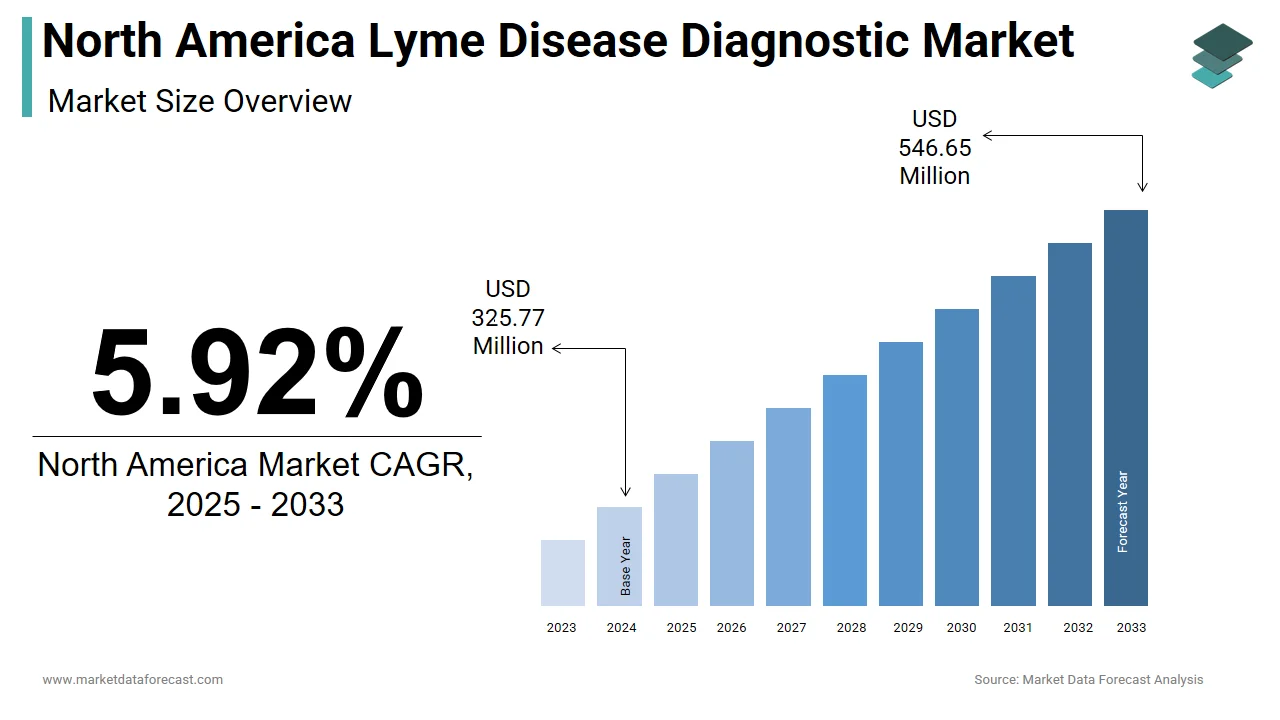
The North America Lyme disease diagnostic market was valued at USD 345.06 million in 2025. The market is estimated at USD 365.49 million in 2026 and is projected to reach USD 579.02 million by 2034, growing at a CAGR of 5.92% from 2026 to 2034.
Lyme disease is a tick-borne illness caused by the bacterium Borrelia burgdorferi, primarily transmitted through the bite of infected blacklegged ticks. It is one of the most commonly reported vector-borne diseases in North America, particularly in the United States and parts of Canada. Early diagnosis and treatment are crucial to preventing chronic complications such as arthritis, neurological disorders, and cardiac issues.
The North America Lyme disease diagnostic market encompasses a range of testing methods, including serological assays like enzyme-linked immunosorbent assay (ELISA), Western blot, and newer molecular diagnostics such as polymerase chain reaction (PCR). These tests aid in detecting infection markers at different stages of the disease. According to the Centers for Disease Control and Prevention (CDC), approximately 476,000 cases of Lyme disease are diagnosed annually in the U.S., highlighting the growing demand for accurate and timely diagnostic tools.
In addition to traditional lab-based diagnostics, there has been an increase in point-of-care and multiplex testing platforms aimed at improving detection accuracy and reducing turnaround times. As per the Infectious Diseases Society of America, the rate of misdiagnosis remains significant, with about 10–20% of patients experiencing persistent symptoms post-treatment, underscoring the need for enhanced diagnostic precision.
Furthermore, climate change and expanding tick habitats have contributed to the rising incidence of Lyme disease across previously low-risk regions. This epidemiological shift has spurred investment from both public health agencies and private diagnostic firms, reinforcing the importance of robust diagnostic infrastructure in North America’s evolving healthcare landscape.
MARKET DRIVERS
Rising Incidence of Lyme Disease Due to Expanding Tick Habitats
One of the primary drivers of the North America Lyme disease diagnostic market is the increasing prevalence of the disease, largely attributed to the expansion of tick habitats due to climate change and ecological shifts. The geographic range of Ixodes scapularis, the primary tick vector responsible for transmitting Borrelia burgdorferi, has expanded significantly over the past two decades, particularly in the northeastern, mid-Atlantic, upper north-central, and Pacific coastal regions of the United States.
The surge in case numbers has directly fueled demand for reliable diagnostic solutions. Hospitals, clinics, and reference laboratories are increasingly adopting advanced diagnostic methodologies such as two-tiered serological testing and PCR to improve detection accuracy and reduce misdiagnosis.
Also, as tick populations continue to migrate into urban and suburban areas, public awareness campaigns have encouraged more individuals to seek medical evaluation after potential exposure, further boosting test volumes and driving market growth.
Technological Advancements in Diagnostic Testing Methods
Another key driver of the North America Lyme disease diagnostic market is the rapid advancement in diagnostic technologies aimed at improving sensitivity, specificity, and speed of detection. Traditional diagnostic approaches, such as ELISA followed by Western blot, have long been criticized for their limitations in early-stage detection and high false-negative rates. However, recent developments in molecular diagnostics, immunoassays, and multi-pathogen panels have significantly enhanced diagnostic capabilities.
For instance, companies like BioMérieux, DiaSorin, and Immunetics have introduced automated immunoassay systems that offer faster turnaround times and reduced manual intervention. Moreover, the adoption of next-generation sequencing (NGS) and metagenomic approaches has enabled clinicians to detect not only Borrelia burgdorferi but also co-infections such as babesiosis and anaplasmosis, which often complicate Lyme disease diagnosis.
Like, according to a report by the National Institute of Allergy and Infectious Diseases (NIAID), the integration of multiplex assays capable of identifying multiple tick-borne pathogens simultaneously has improved diagnostic efficiency in clinical settings.
Also, research conducted by the Johns Hopkins Lyme Disease Research Center demonstrated that newer serologic tests based on C6 peptide technology offer higher accuracy, especially in the early weeks following infection.
These technological innovations are being actively supported by federal funding initiatives such as those from the National Institutes of Health (NIH) and the Biomedical Advanced Research and Development Authority (BARDA), all of which contribute to the sustained growth and evolution of the Lyme disease diagnostic landscape in North America.
MARKET RESTRAINTS
High Rate of Misdiagnosis and Lack of Standardized Testing Protocols
A significant restraint affecting the North America Lyme disease diagnostic market is the persistently high rate of misdiagnosis and the lack of universally standardized testing protocols. Lyme disease presents with a wide array of non-specific symptoms, including fatigue, joint pain, and cognitive difficulties, which overlap with other conditions such as fibromyalgia, multiple sclerosis, and chronic fatigue syndrome. This clinical ambiguity contributes to frequent misinterpretations of test results and delays in appropriate treatment.
Also, according to the Infectious Diseases Society of America (IDSA), approximately 10–20% of patients treated for Lyme disease experience prolonged symptoms, often referred to as post-treatment Lyme disease syndrome (PTLDS). Some researchers suggest that initial underdiagnosis or failure to detect active infection may play a role in these lingering effects. The current standard two-tiered testing method comprising ELISA followed by Western blot has been criticized for its limited sensitivity during the early phase of infection, when antibody levels are still developing.
Moreover, variability in laboratory practices across states and institutions creates inconsistencies in diagnosis. As per a study published by the American Society for Microbiology, different labs using similar methodologies could yield conflicting results for the same patient sample. This inconsistency undermines confidence in diagnostic outcomes and complicates clinical decision-making, ultimately hindering market growth by reducing physician reliance on available testing options.
Limited Reimbursement Coverage and High Cost of Advanced Diagnostic Tests
Another major challenge restraining the North America Lyme disease diagnostic market is the inconsistent reimbursement policies and the relatively high cost associated with advanced diagnostic tests. While conventional serological tests are generally covered by insurance plans, newer molecular and multiplex assays often face coverage limitations or require prior authorization, making them less accessible to a broader patient population.
Public and private payers frequently classify many advanced Lyme disease tests as investigational or experimental, thereby limiting reimbursement eligibility. This financial burden discourages patients from pursuing comprehensive diagnostics, particularly in rural and underserved areas where tick exposure is prevalent.
Besides, some state Medicaid programs do not fully cover alternative diagnostic approaches beyond the CDC-recommended two-tiered testing protocol, further restricting access. The lack of uniform coverage policies deters smaller laboratories from investing in innovative diagnostic technologies, limiting market expansion despite growing clinical demand. As a result, while advancements in diagnostic science continue to evolve, economic and policy-related barriers remain critical obstacles to widespread adoption, impeding the full realization of the market's potential.
MARKET OPPORTUNITIES
Expansion of Point-of-Care and Rapid Diagnostic Testing Solutions
An emerging opportunity in the North America Lyme disease diagnostic market lies in the development and deployment of point-of-care (POC) and rapid diagnostic testing solutions. These technologies aim to overcome the limitations of traditional centralized laboratory testing by offering faster results, greater accessibility, and ease of use in clinical and field settings.
Several biotech firms and research institutions are focusing on lateral flow assays, microfluidic platforms, and biosensors designed to detect Lyme-specific biomarkers within minutes.
For example, the University of Pennsylvania’s Perelman School of Medicine has been working on a portable microchip-based test that can identify Borrelia burgdorferi antibodies in blood samples in under 15 minutes. Such innovations align with the growing emphasis on decentralized healthcare delivery models, especially in remote and high-risk regions where access to diagnostic labs is limited.
Moreover, government initiatives and grant funding from organizations like the National Institutes of Health (NIH) and the Lyme Disease Biobank are accelerating the commercialization of POC diagnostics. The ability of these tests to provide immediate results without requiring complex instrumentation makes them highly suitable for emergency departments, urgent care centers, and outdoor clinics in endemic areas.
With increasing patient demand for quicker diagnoses and the rising burden of Lyme disease, the adoption of rapid and portable diagnostic solutions represents a promising avenue for market expansion in North America.
Integration of Artificial Intelligence and Machine Learning in Diagnostic Interpretation
Another significant opportunity shaping the future of the North America Lyme disease diagnostic market is the integration of artificial intelligence (AI) and machine learning (ML) in diagnostic interpretation. These technologies hold promise in improving diagnostic accuracy by analyzing complex datasets, identifying patterns in patient symptoms, and enhancing the interpretation of serological and molecular test results.
AI-driven platforms can assist clinicians in distinguishing Lyme disease from similar conditions by cross-referencing patient histories, geographical exposure risks, and symptom profiles.
Besides, ML algorithms are being developed to refine the interpretation of Western blot and ELISA results, reducing the likelihood of false negatives and positives. Researchers at Stanford University Medical School have demonstrated how deep learning models can enhance pattern recognition in immune response data, potentially leading to earlier and more reliable detection of Lyme infections.
The adoption of AI and ML in diagnostics is being supported by increasing investments from both public health agencies and private equity firms. As these technologies mature, they are expected to play a pivotal role in transforming Lyme disease diagnostics, enabling more personalized and precise clinical decision-making across North America.
MARKET CHALLENGES
Regulatory Hurdles and Lengthy Approval Processes for New Diagnostic Tools
A foremost challenge facing the North America Lyme disease diagnostic market is the stringent regulatory environment and the lengthy approval processes required for introducing new diagnostic tools. Unlike pharmaceutical products, diagnostic tests must undergo rigorous validation to ensure reliability, reproducibility, and clinical utility before gaining approval from regulatory bodies such as the U.S. Food and Drug Administration (FDA) and Health Canada.
The FDA regulates certain high-complexity diagnostic tests under the Premarket Approval (PMA) pathway, which requires extensive clinical trials and documentation.
Moreover, the classification of certain Lyme disease tests as Laboratory Developed Tests (LDTs) subjects them to oversight by the Centers for Medicare & Medicaid Services (CMS) under the Clinical Laboratory Improvement Amendments (CLIA), rather than direct FDA regulation. This dual regulatory framework creates ambiguity, discouraging some manufacturers from pursuing new product development due to compliance complexities.
Despite efforts to streamline regulatory pathways through initiatives like the FDA’s Safer Technologies Program (STeP), the existing approval landscape remains a formidable barrier, slowing the translation of scientific advances into commercially viable diagnostic solutions.
Patient and Physician Awareness Gaps Regarding Available Diagnostic Options
Another pressing challenge in the North America Lyme disease diagnostic market is the persistent gap in awareness among both patients and physicians regarding the full spectrum of available diagnostic options. Despite the rising incidence of Lyme disease, many healthcare providers continue to rely on outdated testing methodologies, missing opportunities for early and accurate diagnosis.
Physician knowledge gaps are particularly evident in non-endemic regions where Lyme disease is less common but increasingly encountered due to travel or shifting tick populations.
Similarly, patient awareness remains suboptimal, with many individuals unaware of the importance of prompt testing following a tick bite. As per the National Institutes of Health (NIH), misconceptions about Lyme disease symptoms and testing procedures contribute to underutilization of diagnostic services, even in high-risk areas.
Educational initiatives led by the CDC and advocacy groups such as Lyme Disease Association have made progress, but broader dissemination through medical education curricula and continuing professional development programs is needed. Bridging this awareness gap is essential to ensuring timely diagnosis and effective disease management across North America.
REPORT COVERAGE
| REPORT METRIC | DETAILS |
| Market Size Available | 2025 to 2034 |
| Base Year | 2025 |
| Forecast Period | 2026 to 2034 |
| Segments Covered | By Test Type, Diagnostic Technologies, End User, and Country. |
| Various Analyses Covered | Global, Regional, and Country-Level Analysis, Segment-Level Analysis, Drivers, Restraints, Opportunities, Challenges; PESTLE Analysis; Porter’s Five Forces Analysis, Competitive Landscape, Analyst Overview of Investment Opportunities |
| Countries Covered | U.S.; Canada; Germany; UK; France; Italy; Spain; Denmark; Sweden; Norway; China; Japan; India; South Korea; Australia; Thailand; Brazil; Mexico; Argentina; South Africa; Saudi Arabia; UAE; Kuwait |
| Market Leaders Profiled | GlaxoSmithKline Pharmaceuticals Ltd, Alere Inc (ALR), Roche Diagnostics International Ltd, Affymetrix Inc, Siemens AG, Baxter International Inc, Fresenius Medical Care AG & Co, Bio-Rad Laboratories, Graphene Frontiers, Covance Inc, Boulder Diagnostics, Immunetics Inc., and others. |
SEGMENTAL ANALYSIS
By Test Type Insights
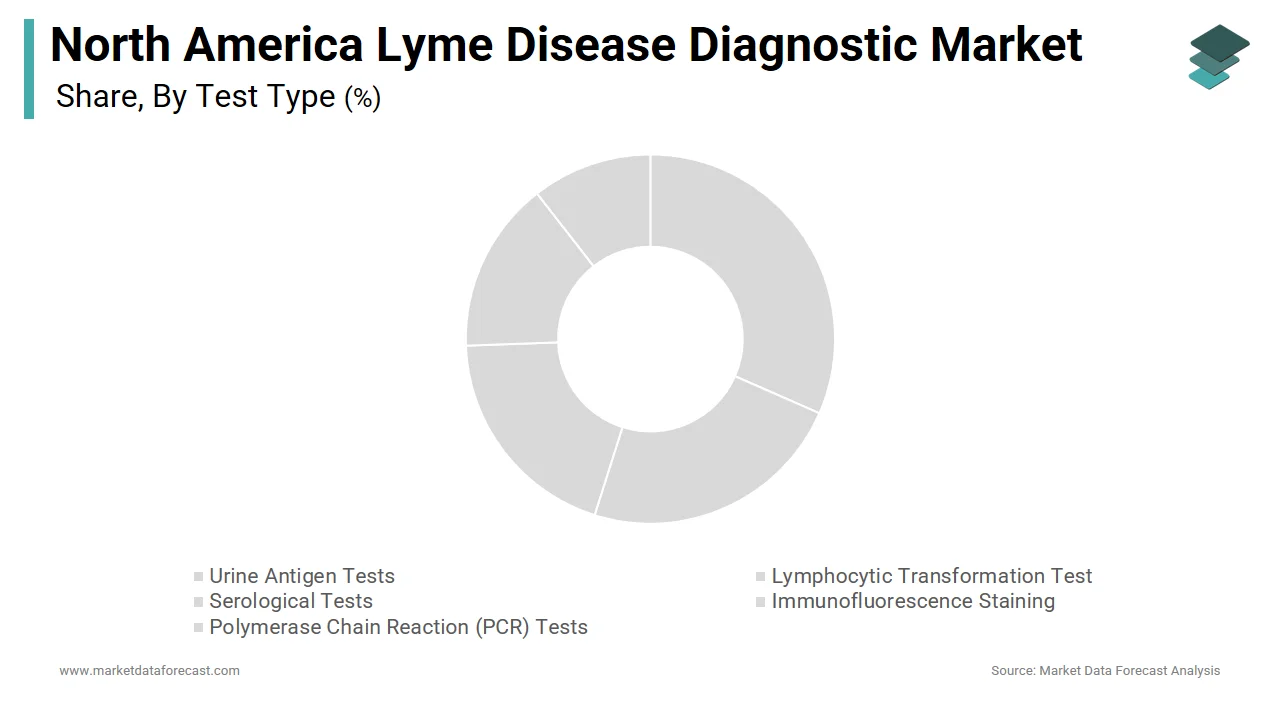
The serological tests segment dominated the North America Lyme disease diagnostic market, accounting for 42.1% of total diagnostic test usage in 2025. These tests primarily include enzyme-linked immunosorbent assay (ELISA), chemiluminescence assays, and Western blot analysis, which detect antibodies produced by the immune system in response to Borrelia burgdorferi infection.
The dominance of serological testing is largely driven by its widespread adoption as the first-line diagnostic method recommended by the Centers for Disease Control and Prevention (CDC).
According to CDC guidelines, a two-tiered approach starting with ELISA followed by a confirmatory Western blot is the standard protocol for diagnosing Lyme disease in clinical settings across the United States. This standardized recommendation has cemented the position of serological tests within mainstream diagnostics.
Besides, the availability of these tests through major diagnostic laboratories such as Quest Diagnostics and LabCorp ensures broad accessibility. Despite limitations in early detection sensitivity, particularly during the first few weeks post-infection, serological tests remain the most utilized category due to regulatory endorsement, clinician familiarity, and reimbursement support under both public and private insurance plans.
Polymerase Chain Reaction (PCR) tests are emerging as the fastest-growing segment in the North America Lyme disease diagnostic market, projected to expand at a CAGR of 14.6%. This rapid growth is attributed to increasing demand for direct pathogen detection methods that offer higher specificity and earlier diagnosis compared to traditional serological approaches.
According to the National Institute of Allergy and Infectious Diseases (NIAID), PCR-based diagnostics can detect Borrelia burgdorferi DNA directly in blood, urine, or cerebrospinal fluid, making them especially valuable in cases where antibody levels are insufficient for reliable serological confirmation. This capability is critical in early-stage Lyme disease and in diagnosing neuroborreliosis, where timely intervention significantly improves patient outcomes.
Moreover, advancements in molecular diagnostics have led to the development of multiplex PCR assays capable of identifying multiple tick-borne pathogens simultaneously, including babesiosis, anaplasmosis, and Powassan virus.
Supporting this trend, academic research institutions like Johns Hopkins University and Mayo Clinic have expanded their use of real-time PCR in Lyme disease diagnostics, while commercial labs are increasingly offering PCR panels tailored for high-risk populations. With rising awareness and technological enhancements, PCR-based diagnostics are poised for significant expansion across North America.
By Diagnostic Technologies Insights
Molecular diagnostics represented the largest segment in the North America Lyme disease diagnostic market, capturing 37.4% of total technology-based applications in 2025. This includes techniques such as polymerase chain reaction (PCR), real-time PCR, and next-generation sequencing (NGS) that allow for direct detection of Borrelia burgdorferi genetic material.
A key driver behind the dominance of molecular diagnostics is their superior ability to identify active infections early, even before the immune system produces detectable antibodies. Unlike serological tests, which can yield false negatives in the initial stages of Lyme disease, molecular methods provide more definitive results by detecting bacterial DNA in biological samples such as blood, urine, and cerebrospinal fluid.
According to the Infectious Diseases Society of America (IDSA), molecular diagnostics are particularly valuable in diagnosing disseminated or neurological Lyme disease, where conventional antibody-based tests often fall short.
Furthermore, the expansion of multiplex molecular platforms capable of detecting not only Borrelia species but also co-infecting pathogens like Anaplasma phagocytophilum and Babesia microti has enhanced diagnostic efficiency. Companies such as BioFire Health and Luminex have introduced FDA-cleared panels that integrate Lyme disease testing into broader tick-borne illness profiles, contributing to the sustained leadership of molecular diagnostics in the market.
Monoclonal antibodies are witnessing the fastest growth in the North America Lyme disease diagnostic market, anticipated to grow at a CAGR of 13.9%, driven by their increasing role in enhancing test specificity and enabling targeted antigen detection.
These laboratory-produced molecules mimic the immune system’s ability to recognize and bind to specific proteins on the surface of Borrelia burgdorferi, improving the precision of immunoassays used in Lyme disease diagnostics.
One of the major factors fueling this growth is the development of rapid diagnostic kits incorporating monoclonal antibodies for point-of-care (POC) use. With ongoing innovations in immunoassay design and increasing collaboration between biotech firms and diagnostic developers, monoclonal antibody technologies are rapidly gaining traction as a preferred tool in modern Lyme disease diagnostics.
By End User Insights
Pathology laboratories prevailed in the North America Lyme disease diagnostic market, representing 41.3% of total end-user activity in 2025. These facilities serve as central hubs for conducting advanced diagnostic tests, including serological assays, PCR-based molecular diagnostics, and specialized immunoassays required for accurate Lyme disease identification.
The dominance of pathology labs is primarily attributed to their established infrastructure and integration into national healthcare systems. Major reference labs such as LabCorp, Quest Diagnostics, and ARUP Laboratories process millions of Lyme disease tests annually, leveraging economies of scale and automation to maintain efficiency and turnaround times. According to the Association of Public Health Laboratories (APHL), over 70% of all confirmed Lyme disease diagnoses in the U.S. originate from centralized pathology labs, highlighting their critical role in disease surveillance and reporting.
Another driving factor is the reliance of primary care physicians and hospital networks on external labs for complex testing that cannot be performed in-clinic. Also, pathology labs benefit from favorable reimbursement policies under Medicare and Medicaid, ensuring consistent patient access to diagnostic services. As new testing modalities emerge, these labs continue to invest in advanced instrumentation and staff training, maintaining their leadership in the Lyme disease diagnostic ecosystem across North America.
Research institutes represent the fastest-growing segment in the North America Lyme disease diagnostic market, expected to expand at a CAGR of 15.2%, fueled by intensified efforts in understanding disease mechanisms and developing next-generation diagnostic tools.
Academic and medical research centers are playing an increasingly pivotal role in advancing Lyme disease diagnostics through studies focused on biomarker discovery, immune profiling, and novel assay development. Institutions such as Johns Hopkins University, Tufts University, and the Bay Area Lyme Foundation have been actively engaged in multi-center trials aimed at improving early detection and reducing misdiagnosis rates.
Moreover, the establishment of dedicated Lyme disease biobanks and longitudinal cohort studies has facilitated data-driven insights into disease progression and immune responses, supporting the validation of new diagnostic markers. The growing emphasis on translational research and the translation of laboratory findings into clinical applications are propelling research institutes to the forefront of the diagnostic landscape, making them a rapidly expanding sector in the North America Lyme disease market.
COUNTRY-LEVEL ANALYSIS
United States Lyme Disease Diagnostic Market Insights
The United States held the dominant position in the North America Lyme disease diagnostic market, accounting for 78.2% of regional market value in 2025. As the country with the highest incidence of Lyme disease globally, the U.S. drives demand for advanced diagnostic solutions through both public health initiatives and private healthcare investments.
According to the Centers for Disease Control and Prevention (CDC), the number of confirmed and probable Lyme disease cases in the U.S. exceeded 476,000 in 2022 , marking a substantial increase over previous years. This surge is attributed to expanding tick habitats, climate change, and increased human outdoor activity in endemic zones, particularly in the Northeast, Upper Midwest, and Pacific Northwest.
A key factor sustaining market growth is the robust presence of leading diagnostic companies such as Abbott, Bio-Rad, and DiaSorin, which offer a wide range of FDA-approved tests. Apart from these, the implementation of the Federal Action Plan on Lyme and Other Tick-Borne Diseases has spurred investment in research, surveillance, and diagnostic development. Despite challenges related to misdiagnosis and inconsistent reimbursement, the U.S. remains at the forefront of Lyme disease diagnostics, with continuous advancements in molecular testing, point-of-care diagnostics, and multiplex assays shaping the future of the market.
Canada Lyme Disease Diagnostic Market Insights
Canada is reflecting a rapidly growing burden of tick-borne diseases in recent years. Historically considered a low-incidence region, Canada has experienced a dramatic rise in Lyme disease cases due to the northward expansion of blacklegged tick populations driven by climate change.
According to the Public Health Agency of Canada (PHAC), the number of reported Lyme disease cases increased from just 144 in 2009 to over 3,400 in 2022, indicating a staggering upward trajectory. Provinces such as Ontario, Quebec, Nova Scotia, and British Columbia have emerged as new endemic zones, prompting heightened demand for reliable diagnostic tools.
One of the key drivers of market growth is the expansion of provincial laboratory networks and the integration of advanced diagnostic methodologies. Apart from these, federal and provincial health agencies have launched awareness campaigns and tick surveillance programs to improve early diagnosis and prevention. While reimbursement for Lyme disease diagnostics varies across provinces, increasing recognition of the disease's impact has led to policy reforms aimed at improving patient access to testing, further strengthening Canada’s position in the regional market.
Mexico Lyme Disease Diagnostic Market Insights
Mexico contributes notably to the North America Lyme disease diagnostic market, with a relatively lower case load compared to the U.S. and Canada. However, recent epidemiological trends indicate a gradual increase in tick-borne illnesses, particularly in southern and coastal states where environmental conditions favor vector proliferation.
One of the primary factors influencing market dynamics in Mexico is the growing presence of international diagnostic firms expanding their footprint in Latin America. Companies like Roche Diagnostics and Thermo Fisher Scientific have partnered with local laboratories to introduce ELISA and PCR-based Lyme disease testing kits, enhancing diagnostic capacity in urban centers.
Moreover, collaborations between Mexican universities and U.S.-based research institutions have led to improved surveillance and diagnostic protocols. Despite challenges related to limited awareness and inconsistent healthcare access in rural areas, Mexico’s Lyme disease diagnostic market is gradually evolving, supported by increasing government focus on vector-borne diseases and cross-border health cooperation initiatives.
Rest of North America
The “Rest of North America” segment, encompassing territories such as Puerto Rico, Bermuda, and certain Caribbean islands, accounts for a descent share of the regional Lyme disease diagnostic market. While not traditionally recognized as high-incidence regions, these areas have seen sporadic reports of Lyme disease and other tick-borne illnesses, necessitating localized diagnostic capabilities.
According to the Pan American Health Organization (PAHO), several Caribbean nations have documented cases of Borrelia infection, though distinguishing between Lyme disease and similar tick-associated syndromes remains challenging. The lack of standardized diagnostic infrastructure in many of these regions limits comprehensive data collection and reporting.
Efforts to strengthen diagnostic preparedness have been led by regional health ministries in collaboration with U.S.-based organizations such as the CDC and the Lyme Disease Association. Mobile testing units and telemedicine platforms have been deployed to improve access in remote locations, particularly following natural disasters that disrupt healthcare services.
Also, research initiatives supported by institutions like the University of the West Indies have explored the prevalence of tick-borne pathogens in tropical environments, contributing to the broader understanding of Lyme disease beyond temperate zones. Though small in market share, the Rest of North America presents emerging opportunities for diagnostic expansion, particularly as climate shifts influence vector distribution patterns.
KEY MARKET PLAYERS
Promising Companies leading the North America Lyme Disease Diagnostics Market Profiled in the Report are GlaxoSmithKline Pharmaceuticals Ltd, Alere Inc (ALR), Roche Diagnostics International Ltd, Affymetrix Inc, Siemens AG, Baxter International Inc, Fresenius Medical Care AG & Co, Bio-Rad Laboratories, Graphene Frontiers, Covance Inc, Boulder Diagnostics, Immunetics Inc., and others.
TOP LEADING PLAYERS IN THE MARKET
One of the leading players in the North America Lyme disease diagnostic market is Bio-Rad Laboratories. The company has a strong presence in clinical diagnostics and life science research, offering a wide range of serological tests used in Lyme disease detection. Bio-Rad’s contribution to the global market includes the development of advanced immunoassay platforms that enhance sensitivity and accuracy in diagnosing tick-borne diseases.
Another key player is Quest Diagnostics, one of the largest diagnostic laboratory service providers in the U.S. Quest plays a crucial role in Lyme disease diagnostics by offering comprehensive testing panels through its extensive network of reference labs. The company supports both traditional and advanced diagnostic methodologies, making it a preferred choice for physicians and healthcare institutions across endemic regions.
The third major participant is Abbott Laboratories, a global leader in medical diagnostics with a significant footprint in infectious disease testing. Abbott contributes to the Lyme disease diagnostic landscape by integrating innovative assay technologies into widely used diagnostic systems. Its focus on improving early detection methods aligns with broader efforts to reduce misdiagnosis and improve patient outcomes in tick-borne illness management.
TOP STRATEGIES USED BY KEY MARKET PARTICIPANTS
A primary strategy employed by key players in the North America Lyme disease diagnostic market is expanding product portfolios through innovation and R&D investments. Companies are focusing on developing more accurate, faster, and multiplexed diagnostic assays that can detect not only Borrelia burgdorferi but also co-infecting pathogens, enhancing clinical utility.
Another critical approach is strengthening partnerships with academic and research institutions. By collaborating with universities and medical centers, diagnostic firms gain access to real-world data and clinical insights that support the validation and improvement of existing testing methodologies, particularly for complex or persistent cases.
Lastly, companies are investing heavily in educational outreach and clinician engagement programs. These initiatives aim to raise awareness among healthcare providers about the latest diagnostic tools, interpretation techniques, and best practices in Lyme disease testing, ensuring better adoption and integration into routine clinical workflows.
COMPETITION OVERVIEW
The competitive landscape of the North America Lyme disease diagnostic market is characterized by a mix of established diagnostic giants and emerging biotech firms striving to address the challenges associated with Lyme disease detection. While large multinational corporations dominate due to their well-established distribution networks and regulatory expertise, smaller firms are gaining traction by introducing novel diagnostic approaches aimed at improving accuracy and reducing misdiagnosis rates. The market is witnessing increasing collaboration between industry players and academic research centers to accelerate the development of next-generation diagnostics tailored for early-stage detection. Additionally, competition is intensifying as companies seek to integrate artificial intelligence and machine learning into test interpretation processes, aiming to enhance decision-making for clinicians. The push toward point-of-care diagnostics is another area where innovation is reshaping market dynamics, allowing for faster results without reliance on centralized laboratories. However, regulatory hurdles, reimbursement complexities, and variability in physician adoption continue to pose barriers, requiring strategic agility from market participants to maintain and expand their positions in this evolving sector.
RECENT MARKET DEVELOPMENTS
- In March 2023, Bio-Rad Laboratories launched an updated version of its Lyme disease immunoassay panel, incorporating enhanced specificity markers to improve differentiation between active and past infections, addressing a long-standing challenge in Lyme diagnostics.
- In July 2023, Quest Diagnostics expanded its national testing network by integrating a new multiplex PCR platform designed to detect multiple tick-borne pathogens simultaneously, enhancing diagnostic efficiency for clinicians managing complex cases.
- In November 2023, Abbott Laboratories partnered with a leading Lyme disease research foundation to co-develop next-generation biomarker-based assays aimed at improving early diagnosis and monitoring treatment response in patients.
- In February 2024, LymeTech Innovations, a rising biotech firm, introduced a portable point-of-care Lyme disease test kit intended for use in rural and high-risk areas where access to centralized labs is limited.
- In May 2024, LabCorp announced the launch of a digital health initiative that connects physicians with AI-assisted diagnostic tools, enabling more accurate interpretation of Lyme disease test results and streamlining patient care pathways.
MARKET SEGMENTATION
This research report on the North America lyme disease diagnostic market is segmented and sub-segmented into the following categories.
By Test Type
- Urine Antigen Tests
- Lymphocytic Transformation Test
- Serological Tests
- Immunofluorescence Staining
- Polymerase Chain Reaction (PCR) Tests
By Diagnostic Technologies
- Molecular diagnostics
- Monoclonal antibodies
- Flow cytometry
- Brain MRI
- Spinal tap
- Echocardiogram
- Electrocardiogram
- Microdroplets
By End User
- Hospitals/clinics
- Pharmaceutical Industries
- Pathology labs
- Research Institutes
By Country
- United States
- Canada
- Mexico
- Rest of North America