- Product Description Description
- Table of Contents TOC
- List of Table & Figure LOT
- Get Free Sample PDF Sample PDF
Market Size, 2025
$1.74 BnMarket Estimate, 2026
$1.92 BnMarket Forecast, 2034
$4.14 BnCAGR, 2026–2034
10.10%North America Micro Combined Heat and Power (CHP) Market Size
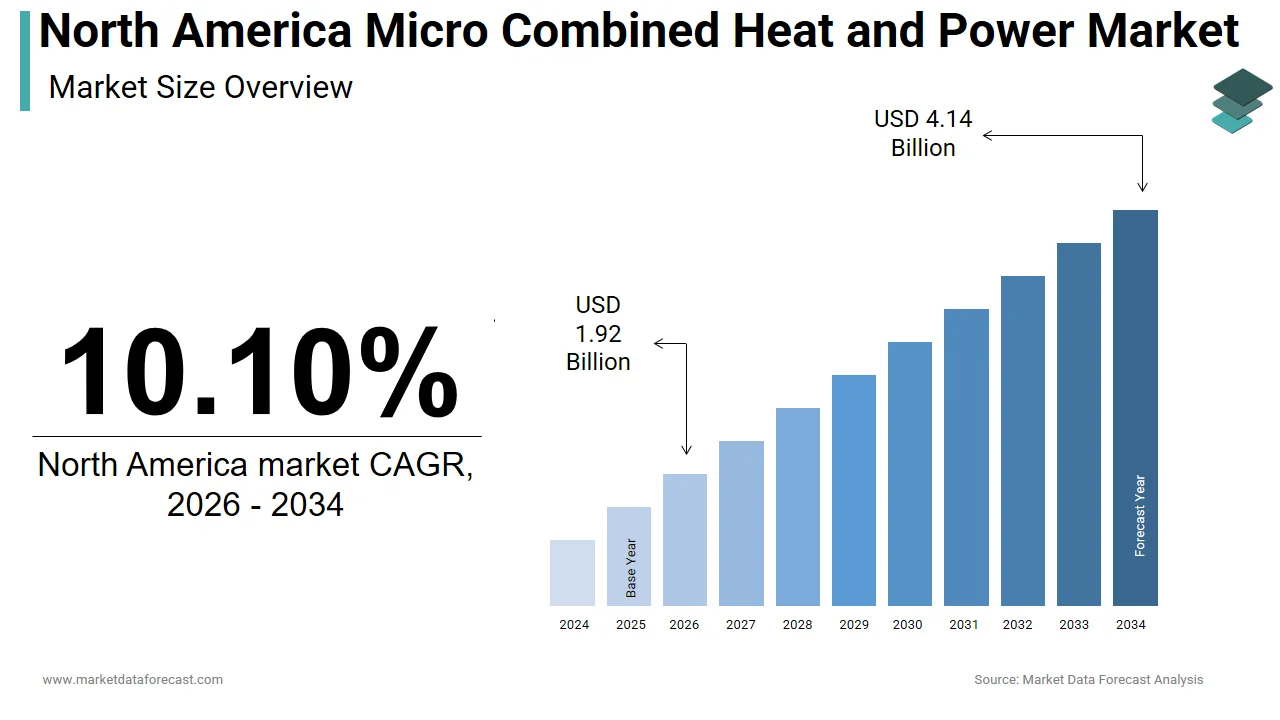
The size of the North America micro combined heat and power (CHP) market was worth USD 1.74 billion in 2025. The market is anticipated to grow at a CAGR of 10.10% from 2026 to 2034 and be worth USD 4.14 billion by 2034 from USD 1.92 billion in 2026.
The micro combined heat and power is to small-scale energy systems that simultaneously generate electricity and usable heat at or near the point of consumption. Typically installed in residential, commercial, and small industrial settings, these systems offer high efficiency by capturing and utilizing waste heat that would otherwise be lost in conventional power generation. Micro combined heat and power technologies include internal combustion engines, Stirling engines, fuel cells, and organic Rankine cycles, each suited for different applications and fuel sources such as natural gas, biogas, and hydrogen. According to the U.S. Department of Energy, buildings account for nearly 75% of all electricity consumption in the United States by making them a prime target for decentralized, efficient energy solutions like micro combined heat and power.
MARKET DRIVERS
Rising Demand for Decentralized and Efficient Energy Systems
The increasing demand for decentralized and highly efficient energy systems in urban and semi-urban environments where grid congestion and aging infrastructure are pressing concerns is boosting the growth of the North America micro combined heat and power market. Micro combined heat and power systems mitigate this issue by generating power on-site, thereby minimizing transmission losses and enhancing overall system efficiency. Additionally, organizations such as the American Society of Heating, Refrigerating, and Air-Conditioning Engineers (ASHRAE) have recognized micro combined heat and power as one of the most effective ways to achieve high-efficiency building operations. Moreover, the U.S. Department of Housing and Urban Development has encouraged the integration of micro combined heat and power into new residential developments as part of its sustainability guidelines.
Supportive Government Policies and Financial Incentives
The availability of supportive government policies and financial incentives aimed at promoting clean and efficient energy generation is another factor propelling the growth of the North America micro combined heat and power market. At the federal level, the U.S. Department of Energy offers grants and tax credits under the Inflation Reduction Act (IRA), encouraging the deployment of high-efficiency cogeneration systems in both residential and commercial sectors. The Database of State Incentives for Renewables & Efficiency (DSIRE) reports that over 30 U.S. states provide rebates, low-interest loans, or production-based incentives for micro combined heat and power installations. Furthermore, regulatory frameworks such as California’s Self-Generation Incentive Program (SGIP) have significantly boosted micro combined heat and power installations by offering direct financial support for qualifying systems. These policy mechanisms reduce the upfront capital costs associated with micro combined heat and power systems, which is making them more accessible to a broader range of users.
MARKET RESTRAINTS
High Initial Investment and Long Payback Periods
The high initial investment required for system installation often results in long payback periods that deter widespread adoption. For commercial entities, the investment can be significantly higher. A typical 100-kW micro combined heat and power system designed for use in a hospital or hotel may cost upwards of $150,000, with payback periods extending beyond five to seven years without substantial incentives.
Limited Public Awareness and Technical Expertise
The limited public awareness and lack of technical expertise surrounding the technology is restraining the growth of the North America micro combined heat and power market. According to a survey conducted by the American Council for an Energy-Efficient Economy, less than 15% of respondents were familiar with micro combined heat and power technology and its benefits compared to more widely known renewable energy systems like solar PV and heat pumps. Moreover, consumer perception of reliability and maintenance requirements can discourage adoption. Many potential buyers perceive micro combined heat and power as complex and maintenance-intensive, despite modern systems being highly automated and durable.
MARKET OPPORTUNITIES
Integration with Smart Grid and Distributed Energy Resource Management Systems
The integration with smart grid and distributed energy resource management systems (DERMS) is solely to create new opportunities for the North America micro combined heat and power market to grow in the coming years. As the energy landscape shifts toward decentralization, digitalization, and decarbonization, micro combined heat and power is well-positioned to play a pivotal role in flexible and responsive energy networks. According to the Electric Power Research Institute, smart grid technologies enable real-time coordination between distributed energy resources by allowing micro combined heat and power units to participate in demand response programs and grid balancing services. Additionally, advancements in IoT-enabled monitoring and remote diagnostics are enabling micro combined heat and power operators to remotely manage performance, schedule maintenance, and optimize energy output based on real-time conditions.
Expansion of Hydrogen-Ready Micro combined heat and power Systems
The development and deployment of hydrogen-ready micro combined heat and power systems, which align with broader efforts to decarbonize the energy sector is expected to drive the growth of the North America micro combined heat and power market. The hydrogen is gaining attention as a clean-burning alternative capable of supporting high-efficiency power and heat generation as governments and industries push for a transition away from fossil fuels. Manufacturers such as Bosch and Viessmann have already introduced hydrogen-compatible micro combined heat and power models in Europe, with plans to expand into North America as hydrogen infrastructure develops. Furthermore, regional gas utilities are investing in hydrogen blending trials, creating a pathway for gradual adoption of hydrogen-based micro combined heat and power. The Northeast Gas Association reports that several U.S. cities are exploring hydrogen injection into existing gas pipelines, enabling retrofitted micro combined heat and power systems to operate on cleaner fuel blends.
MARKET CHALLENGES
Regulatory and Permitting Complexity Across Jurisdictions
The regulatory and permitting complexity that varies widely across states and provinces is likely to restrict the growth of the North America micro combined heat and power market. Unlike standardized appliances or renewable energy systems, micro combined heat and power installations often require multiple approvals from electrical, mechanical, and environmental authorities, leading to extended project timelines and increased costs. According to the Interstate Renewable Energy Council, differences in interconnection standards, emissions regulations, and building codes create barriers to uniform deployment, particularly for companies operating across multiple jurisdictions.
Competition from Alternative Distributed Energy Technologies
The growing competition from alternative distributed energy technologies like solar photovoltaics (PV), battery storage, and heat pumps is likely to degrade the growth of the North America micro combined heat and power market. These technologies have seen rapid cost reductions and policy support, making them increasingly attractive to consumers seeking energy independence and carbon reduction. Unlike micro combined heat and power, which relies on continuous fuel input and engine operation, solar plus storage systems offer zero-emission power generation with minimal maintenance once installed. Moreover, corporate sustainability commitments and investor pressure are steering businesses away from combustion-based technologies, regardless of their efficiency. Major corporations such as Google and Apple have pledged to eliminate on-site fossil fuel use, favoring all-electric solutions powered by renewables.
REPORT COVERAGE
| REPORT METRIC | DETAILS |
| Market Size Available | 2025 to 2034 |
| Base Year | 2025 |
| Forecast Period | 2026 to 2034 |
| Segments Covered | By Product, Application, and Region. |
| Various Analyses Covered | Global, Regional and Country-Level Analysis, Segment-Level Analysis, Drivers, Restraints, Opportunities, Challenges; PESTLE Analysis; Porter’s Five Forces Analysis, Competitive Landscape, Analyst Overview of Investment Opportunities |
| Countries Covered | United States, Canada, Mexico, Rest of North America |
| Market Leaders Profiled | Viessmann Group, Axiom Energy Group LLC, EC Power A/S, Yanmar Holdings Co., Ltd., Bosch Thermotechnology, Vaillant Group, Doosan Fuel Cell America, SOLIDpower Group, Remeha, 2G Energy Inc., ATCO Ltd, and Enginuity Power Systems. |
SEGMENTAL ANALYSIS
By Product Insights
The engine-based micro combined heat and power segment dominated the North America market share in 2025 with the widespread adoption of internal combustion engines powered by natural gas, which are known for their reliability, scalability, and cost-effectiveness across both residential and commercial applications. The availability of mature technology and extensive fuel infrastructure is also expected to fuel the growth of the North America micro combined heat and power market. According to the U.S. Energy Information Administration, over 70% of American households have access to natural gas pipelines, making it a readily available and affordable fuel source for engine-based micro combined heat and power systems. The New York State Energy Research and Development Authority (NYSERDA) has actively promoted engine-based micro combined heat and power through rebates and technical assistance under its Clean Energy Fund. Similarly, Natural Resources Canada supports pilot projects integrating these systems into district heating networks.
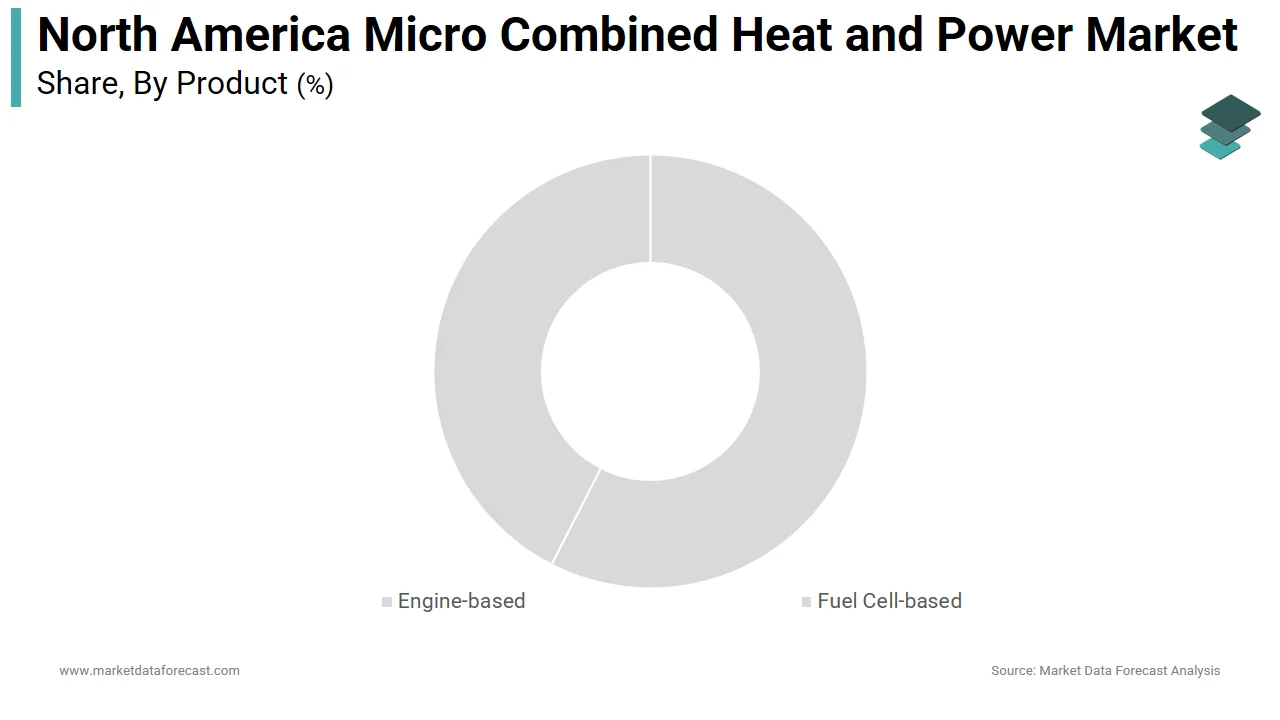
The fuel cell-based micro combined heat and power segment is emerging with a CAGR of 14.3% from 2026 to 2034, with the expansion of hydrogen infrastructure and policy support for clean energy transitions. Several states, including California and Massachusetts, are piloting hydrogen-ready fuel cell micro combined heat and power units in residential buildings as part of regional climate action strategies. Additionally, increased investment from leading manufacturers in next-generation fuel cell technologies is accelerating adoption. Companies such as Bosch and Doosan Fuel Cell America are expanding production capacity and enhancing system efficiency, making fuel cell-based micro combined heat and power more competitive with traditional engine models.
By Application Insights
The commercial application segment accounted in holding 58.2% of the North America micro combined heat and power market share in 2024, with the need for a reliable and resilient energy supply in critical operations. According to the American Society of Heating, Refrigerating and Air-Conditioning Engineers (ASHRAE), commercial buildings account for nearly 40% of all energy consumption in the United States. Micro combined heat and power systems offer a compelling solution by delivering energy security by reducing peak load demand, and lowering operational costs through efficient on-site generation. Additionally, growing emphasis on sustainability and carbon reduction targets is reinforcing adoption. The U.S. Green Building Council recognizes micro combined heat and power as a valuable tool for achieving LEED certification, encouraging developers to integrate these systems into new construction projects.
The residential application segment is likely to grow with a projected CAGR of 12.9% throughout the forecast period with the increase in extreme weather events causing prolonged power outages, prompting homeowners to invest in self-sufficient energy solutions. According to the U.S. Energy Information Administration, there were over 600 major power disruptions in the U.S. in 2023, a 23% increase compared to the previous year. Micro combined heat and power systems provide not only backup power but also cost savings by generating heat and electricity simultaneously, particularly in cold-climate regions. Moreover, rising participation in utility incentive programs is facilitating adoption. Programs like California’s Self-Generation Incentive Program (SGIP) offer substantial rebates for qualifying residential micro combined heat and power installations, improving affordability. The Canadian Mortgage and Housing Corporation has also encouraged micro combined heat and power integration in new home developments as part of its net-zero housing initiative.
COUNTRY-LEVEL ANALYSIS
United States Micro Combined Heat and Power Market Insights
The United States accounted in holding 74.3% of the North America micro combined heat and power market share in 2024, with the presence of robust policy frameworks supporting micro combined heat and power adoption. The Database of State Incentives for Renewables & Efficiency (DSIRE) notes that over 30 U.S. states offer financial incentives such as rebates, tax credits, and performance-based payments for micro combined heat and power installations. California’s Self-Generation Incentive Program (SGIP) has been particularly instrumental in driving adoption in both residential and commercial sectors. Additionally, the expansion of smart grid and virtual power plant initiatives is creating new opportunities for micro combined heat and power integration.
Canada Micro Combined Heat and Power Market Insights
Canada's micro combined heat and power market is growing steadily with energy policies and a strong push toward building electrification and decarbonization. Also, the provincial support for clean and efficient energy technologies is prompting the growth of the North America micro combined heat and power market. Natural Resources Canada has launched several research and demonstration programs aimed at promoting micro combined heat and power in institutional and commercial settings. Provinces like Ontario and British Columbia offer funding through the Independent Electricity System Operator (IESO) and BC Hydro to encourage micro combined heat and power deployment in multi-residential buildings and district heating systems. Additionally, cold climate conditions make micro combined heat and power particularly effective in residential applications, where space and water heating demands are high throughout much of the year.
COMPETITIVE LANDSCAPE
The competition in the North America micro combined heat and power market is characterized by a dynamic mix of established global players and emerging regional innovators striving to capture market share through technological advancement and strategic positioning. As energy consumers increasingly seek resilient, efficient, and sustainable power solutions, micro combined heat and power providers are under pressure to differentiate themselves through superior performance, environmental benefits, and integration capabilities. Product innovation remains a central battleground, with companies developing next-generation fuel cell systems, hybrid configurations, and smart-enabled platforms tailored for both residential and commercial applications.
Customer engagement strategies have also evolved, with firms emphasizing end-to-end support from design consultation to maintenance and optimization by ensuring seamless adoption and long-term system reliability. Additionally, participation in incentive programs and collaboration with utility providers has become essential for expanding market access and improving affordability for end users. While multinational corporations dominate due to their R&D capabilities and brand recognition, smaller firms are gaining traction by focusing on niche segments, localized distribution, and cost-effective solutions.
KEY MARKET PLAYERS
Noteworthy Companies dominating the North America micro combined heat and power (CHP) market profiled in the report are
- Viessmann Group
- Axiom Energy Group LLC
- EC Power A/S
- Yanmar Holdings Co., Ltd.
- Bosch Thermotechnology
- Vaillant Group
- Doosan Fuel Cell America
- SOLIDpower Group
- Remeha
- 2G Energy Inc.
- ATCO Ltd
- Enginuity Power Systems
TOP LEADING PLAYERS IN THE MARKET
- Bosch is a global leader in micro combined heat and power systems, particularly known for its innovative fuel cell-based solutions. The company has been instrumental in advancing hydrogen-compatible technologies that align with clean energy goals. Bosch’s micro combined heat and power units are widely deployed across residential and small commercial applications, offering high efficiency and low emissions. Its commitment to integrating smart energy management systems enhances user control and system performance, which is contributing significantly to the evolution of decentralized energy generation globally.
- Doosan Fuel Cell America specializes in large-scale fuel cell-based micro combined heat and power systems tailored for commercial and institutional buildings. The company plays a crucial role in promoting ultra-low emission cogeneration through its carbonate fuel cell technology. Doosan’s systems are recognized for their reliability, scalability, and ability to provide continuous power and heat without combustion-related pollutants. Its contributions have helped set benchmarks for clean distributed energy deployment in North America and beyond.
- Yanmar is a leading manufacturer of engine-based micro combined heat and power systems, offering compact and efficient solutions for residential and light industrial applications. Known for their durability and adaptability, Yanmar’s micro combined heat and power units are widely used in multi-family housing and small-scale district heating systems. The company continues to refine its product line to enhance fuel efficiency and reduce environmental impact by making it a key player in the transition toward decentralized, high-efficiency energy systems across North America and international markets.
TOP STRATEGIES USED BY KEY MARKET PARTICIPANTS
One major strategy employed by leading micro combined heat and power manufacturers is technology innovation and diversification, where companies invest heavily in research and development to introduce advanced fuel cell-based systems, hybrid configurations, and smart integration capabilities. These efforts aim to improve efficiency, reduce emissions, and expand applicability across different building types and energy demands.
Another key approach is strategic partnerships and collaborations with utilities, government agencies, and energy service providers. Companies can align product development with regulatory incentives, grid modernization initiatives, and virtual power plant programs, thereby enhancing market adoption and integration into broader energy networks.
Firms are focusing on market localization and after-sales service enhancement, ensuring that installation, maintenance, and technical support are readily available across diverse regions. This not only improves customer confidence but also ensures long-term system performance and compliance with local codes and standards, reinforcing brand loyalty and sustained growth.
RECENT MARKET DEVELOPMENTS
- In January 2024, Bosch Thermotechnology launched a new line of hydrogen-ready fuel cell micro combined heat and power units designed for residential use, which aims to align with future clean energy policies and support the transition to decarbonized home energy systems.
- In March 2024, Doosan Fuel Cell America expanded its manufacturing facility in South Windsor, Connecticut, to increase production capacity and meet growing demand from commercial and institutional clients seeking ultra-low emission power solutions.
- In June 2024, Yanmar Co., Ltd. entered a strategic partnership with a leading U.S. energy services provider to integrate its micro combined heat and power systems into managed energy programs by enabling customers to optimize energy costs and participate in demand response initiatives.
- In September 2024, Viessmann Group introduced an IoT-enabled micro combined heat and power monitoring platform in North America by allowing real-time performance tracking, predictive maintenance, and remote diagnostics to enhance system reliability and customer satisfaction.
- In November 2024, Capstone Green Energy announced a collaboration with a natural gas utility to pilot micro combined heat and power installations in multi-family housing developments, which is targeting improved energy efficiency and reduced peak load demand in urban settings.
MARKET SEGMENTATION
This North America micro combined heat and power (CHP) market research report is segmented and sub-segmented into the following categories.
By Product
- Engine-based
- Fuel Cell-based
By Application
- Commercial
- Residential
By Country
- United States
- Canada
- Mexico
- Rest of North America