- Product Description Description
- Table of Contents TOC
- List of Table & Figure LOT
- Get Free Sample PDF Sample PDF
Market Size, 2025
$9.77 BnMarket Estimate, 2026
$10.38 BnMarket Forecast, 2034
$16.79 BnCAGR, 2026–2034
6.2%Executive Summary: North America MV Switchgear Market
- Market Scope: Comprehensive regional analysis of the North America medium voltage (MV) switchgear market covering voltage tiers, component categories, insulation types, end-user verticals, and country-level leadership frameworks.
- Market Valuation: Valued at USD 9.77 billion (2025), estimated at USD 10.38 billion (2026), and projected to reach USD 16.79 billion by 2034, registering a steady CAGR of 6.2% (2026–2034).
- Primary Growth Drivers: Extensive industrial infrastructure modernization, smart grid development initiatives, and the urgent replacement of aging electrical systems across the United States and Canada. Key opportunities persist in digital monitoring, IoT-enabled predictive maintenance, and eco-friendly SF6-free insulation alternatives.
Key Market Segment Metrics (2026–2034)
| Category | Leading Segment (2025 Position) | Fastest-Growing Segment |
|---|---|---|
| By Voltage Segment | 12kV to 24kV Segment (dominated with a 48.7% share in 2025) | 24kV to 36kV Segment (predicted to witness the highest CAGR of 7.3% from 2025 to 2033) |
| By Component | Circuit Breakers (led the component segment with a 52.7% share in 2025) | Switches and Disconnectors (estimated to register the fastest CAGR of 8.1%) |
| By Insulation Type | Air Insulation Switchgear (captured a prominent 55.4% share in 2025) | Gas Insulation Switchgear (anticipated to witness the fastest CAGR of 9.2% from 2025 to 2033) |
| By End User | Industrial End-User Segment (held a majority share of 58.9% in 2025) | Power Utilities (likely to experience the fastest CAGR of 8.7%) |
| By Region / Country | United States (maintained the dominant regional position with a 92.1% share in 2025) | Canada & US Smart Grid Modernization Corridors |
Major Market Players & Market Structure
Market Structure: Highly competitive North American electrical equipment landscape featuring leading multinational corporations competing intensely on smart switchgear technologies, IoT predictive maintenance, ethical supply chains, and localized manufacturing expansion.
Key Companies: Schneider Electric SE, Siemens AG, ABB Ltd., Eaton Corporation plc, General Electric Company, Hitachi Energy Ltd., Mitsubishi Electric Corporation, Toshiba Infrastructure Systems & Solutions Corporation, CG Power and Industrial Solutions Ltd., TBEA Co., Ltd., Powin Energy, Hyosung Heavy Industries Corporation, Rockwell Automation, Inc., Emerson Electric Co., LS Electric Co., Ltd., WEG S.A., SEC Electric, ZIV Group, and NKT A/S.
North America MV Switchgear Market Size
The North America MV Switchgear Market is projected to grow from USD 9.77 billion in 2025 to USD 10.38 billion in 2026 and reach USD 16.79 billion by 2034, registering a CAGR of 6.20% from 2026 to 2034.
Medium voltage (MV) switchgear is a centralized collection of electrical devices (circuit breakers, fuses, disconnectors, etc.) housed in metal enclosures. It operates in the 1 kV to 36 kV (or up to 52 kV) range, which bridges high-voltage transmission and low-voltage end-users. This sophisticated electrical apparatus serves as the backbone for industrial facilities, commercial complexes, utility networks, and institutional buildings that require reliable power management solutions. According to multiple sources, medium voltage switchgear installations represent a significant portion of the total electrical distribution equipment found within North American industrial and utility systems. The market's evolution has been significantly influenced by the integration of digital technologies, smart grid initiatives, and enhanced safety standards that demand more sophisticated switching and protection capabilities. As per research, the United States has a very large installed base of medium voltage switchgear, and the aging nature of this infrastructure is a primary driver of the substantial ongoing demand for replacement and modernization. The complexity of modern switchgear systems has increased considerably, incorporating advanced protection relays, digital monitoring systems, and automated switching capabilities that enhance operational efficiency and system reliability. Manufacturing standards established by IEEE and NEMA ensure compatibility and safety across diverse applications, while environmental regulations drive demand for eco-friendly alternatives to traditional SF6-based systems. The market's technological sophistication is reflected in the increasing integration of Internet of Things connectivity, predictive maintenance capabilities, and cybersecurity features that align with contemporary industrial requirements.
MARKET DRIVERS
Industrial Infrastructure Modernization and Expansion
Extensive industrial infrastructure modernization initiatives and capacity expansion projects across manufacturing sectors primarily drive the growth of the North America MV switchgear market. Industrial investment in the United States continues across many sectors, encompassing spending on buildings, machinery, and other long-lasting assets. Manufacturing renaissance trends, particularly in automotive, chemical, and food processing industries, necessitate advanced switchgear installations to support increased power demands and operational reliability requirements. There is a clear and increasing focus on upgrading electrical infrastructure within industrial facilities to meet modern power demands and enhance grid resilience. Regional manufacturing hubs, including the Great Lakes region and the Gulf Coast industrial corridor, generate disproportionate market activity due to concentrated industrial presence and continuous expansion projects. Besides, the pace of manufacturing operations returning to North America has accelerated significantly in recent years, a trend that drives substantial demand for new industrial and electrical infrastructure. The integration of renewable energy sources and energy storage systems within industrial facilities further amplifies switchgear demand, as these technologies require sophisticated switching and protection equipment. Industrial automation trends, encompassing a notable share of large manufacturing facilities, necessitate enhanced switchgear capabilities to manage complex power distribution networks. These industry-driven factors create sustained demand momentum that supports market growth across diverse application segments.
Smart Grid Development and Utility Modernization
The evolution toward smart grid technologies and comprehensive utility infrastructure modernization initiatives is another significant driver propelling the North American MV switchgear market expansion. The Department of Energy's historical Smart Grid Investment Grant program successfully enabled significant modernization investments, with necessary infrastructure upgrades like advanced switchgear being integral components of ongoing grid enhancement projects. Utilities across North America are systematically replacing aging infrastructure to accommodate bidirectional power flows, distributed generation integration, and enhanced grid reliability requirements. A substantial majority of municipal utilities, according to the American Public Power Association, are actively pursuing smart grid initiatives that necessitate modern, digitally-enabled switchgear for enhanced communication and automation capabilities. The integration of renewable energy sources, including solar and wind installations, necessitates sophisticated switching equipment that can manage variable power inputs and maintain grid stability. Grid modernization efforts also encompass the deployment of automated switching systems that enable rapid fault isolation and service restoration, improving overall system reliability. Projections from the Electric Power Research Institute indicate a robust, ongoing commitment to utility infrastructure investment that is expected to continue significantly in the coming years, with switchgear modernization representing a notable portion of these substantial expenditures. Besides, regulatory mandates requiring improved grid resilience and cybersecurity compliance drive demand for next-generation switchgear solutions. These utility-driven modernization initiatives create substantial long-term demand prospects that support sustained market expansion.
MARKET RESTRAINTS
High Capital Investment Requirements and Economic Sensitivity
Significant capital investment requirements and inherent economic sensitivity are major restraints limiting the growth of the North American MV switchgear market. Medium voltage switchgear installations typically require substantial upfront capital investment, with total project costs varying widely based on system complexity, specifications, and current market conditions. These substantial investment requirements create budget constraints for smaller industrial facilities and municipal utilities that may defer replacement or upgrade projects during economic uncertainty periods. The Federal Reserve's interest rate policies directly impact capital expenditure decisions, with higher borrowing costs reducing investment appetite for large electrical infrastructure projects. Significant economic volatility, persistent supply chain disruptions, and fluctuations in raw material prices have led to a notable and ongoing escalation in switchgear costs in recent years. Besides, the lengthy procurement and installation cycles associated with switchgear projects create exposure to changing economic conditions that may affect project viability. Small and medium enterprises, which make up the vast majority of businesses in the U.S., frequently face challenges in securing the necessary capital resources to fund extensive electrical infrastructure modernization and upgrades. Budget constraints are particularly pronounced in public sector applications, where municipal utilities face competing infrastructure priorities and limited funding sources. These economic sensitivities create project deferral patterns that constrain market growth despite underlying demand fundamentals.
Technical Complexity and Skilled Workforce Limitations
The technical complexity inherent in modern medium voltage switchgear systems, coupled with significant skilled workforce limitations, creates serious implementation problems that obstruct North America's MV switchgear market expansion. The increasing sophistication of switchgear technology requires specialized knowledge for proper installation, commissioning, and maintenance activities that exceed the capabilities of general electrical contractors. The electrical industry faces significant challenges in recruiting and retaining a sufficient number of certified electrical technicians to meet the growing demand, leading to potential workforce shortages and project execution limitations. Advanced switchgear systems incorporate digital communication protocols, protective relay programming, and cybersecurity features that demand specialized training and certification. The complexity of modern installations often requires manufacturer technical support personnel, extending project timelines and increasing costs. Additionally, the integration of smart grid technologies necessitates an understanding of communication networks, data management systems, and cybersecurity protocols that exceed traditional electrical skill sets. Training programs for specialized roles such as switchgear technicians struggle to produce an adequate supply of qualified personnel to keep pace with industry growth and the need for skilled labor, contributing to the general workforce gap. The geographic distribution of skilled technicians creates regional disparities in service availability and project execution capabilities. These workforce constraints limit market penetration and create bottlenecks that constrain overall industry growth potential.
MARKET OPPORTUNITIES
Renewable Energy Integration and Distributed Generation
The rapid expansion of renewable energy integration and distributed generation systems offers significant growth opportunities for the North American MV switchgear market. Solar installations are growing rapidly, with increasing contributions from distributed energy projects, which necessitate advanced switchgear solutions for safe and reliable grid interconnection. Wind energy development, particularly in the Great Plains and offshore installations, creates demand for medium voltage switchgear that can manage variable power inputs and maintain grid stability under fluctuating conditions. The Department of Energy's (DOE) "Wind Vision" report outlines a long-term strategy for substantial wind energy capacity within the U.S. electricity mix by 2050, requiring extensive switchgear deployments for collection systems and grid integration points. Energy storage system deployments are expanding significantly, requiring sophisticated switching equipment to manage charging and discharging cycles while ensuring system safety and stability. Microgrid development initiatives, encompassing military installations, universities, and industrial complexes, create demand for intelligent switchgear systems that can operate in islanded and grid-connected modes. The integration of electric vehicle charging infrastructure is increasing with more public charging stations being installed, which requires medium voltage switchgear to manage heightened electrical loads and bidirectional power flows. These renewable energy opportunities create substantial long-term demand prospects that support sustained market expansion.
Digital Transformation and Smart Grid Technologies
Digital transformation initiatives and smart grid technology adoption create potential expansion possibilities for the North American MV switchgear market. This is achieved through enhanced functionality and value proposition expansion. The integration of Internet of Things sensors, advanced monitoring systems, and predictive maintenance capabilities transforms traditional switchgear into intelligent assets that provide operational insights and performance optimization. The adoption of digital switchgear by utilities is increasing substantially, primarily because it helps improve system reliability, enhances operational efficiency, and facilitates predictive maintenance, which ultimately reduces overall costs. Cybersecurity requirements for critical infrastructure create demand for switchgear systems with enhanced security features and secure communication protocols that protect against cyber threats. The development of digital twin technologies enables virtual monitoring and predictive maintenance, creating new service revenue opportunities for switchgear manufacturers and service providers. A growing number of municipalities across North America are engaging in smart city initiatives, which increasingly depend on modern, intelligent electrical infrastructure to ensure optimal and efficient power management. The convergence of operational technology and information technology creates opportunities for switchgear manufacturers to develop integrated solutions that bridge traditional electrical systems with modern data management platforms. These digital transformation opportunities enable premium pricing and expanded service offerings that enhance market profitability.
MARKET CHALLENGES
Regulatory Compliance and Environmental Standards
Navigating complex regulatory compliance requirements and evolving environmental standards are significant challenges for the North American MV switchgear market. These factors impact both product development and market access strategies. The Environmental Protection Agency's regulations regarding sulfur hexafluoride (SF6) usage in electrical equipment create pressure for manufacturers to develop alternative insulation technologies that maintain performance while reducing environmental impact. European Union F-Gas regulations are driving a complete phase-out of sulfur hexafluoride (SF6) in new electrical switchgear applications, with bans on specific voltage ranges coming into effect progressively over the next several years, influencing international manufacturers exporting to the EU market. National Fire Protection Association standards, particularly NFPA 70E for electrical safety in the workplace, impose stringent installation and maintenance requirements that increase project complexity and costs. Occupational Safety and Health Administration regulations governing electrical work safety create additional compliance burdens that impact project execution and liability considerations. Cybersecurity regulations for critical infrastructure, including NERC CIP standards for bulk electric system security, require switchgear systems to incorporate advanced security features that protect against cyber threats. International standards harmonization efforts create additional complexity for manufacturers seeking global market access while maintaining regional compliance. These regulatory challenges require continuous adaptation and investment that can constrain market flexibility and increase operational costs.
Supply Chain Disruptions and Material Availability
Supply chain disruptions and material availability constraints create operational challenges for the North American MV switchgear market. This impacts project execution and cost management. Global sourcing dependencies for critical components, including copper conductors, insulating materials, and electronic components, create exposure to international supply chain disruptions and geopolitical tensions. Raw material price volatility, particularly for copper and aluminum, creates cost uncertainty that impacts project budgeting and pricing strategies. The concentration of manufacturing capacity in specific geographic regions creates single points of failure that amplify supply chain risks during disruption events. Transportation bottlenecks, including port congestion and trucking capacity constraints, extend delivery times and increase logistics costs. Component substitution challenges arise when preferred materials become unavailable, requiring design modifications and re-certification processes that delay project execution. These supply chain challenges create project execution risks that impact customer satisfaction and market competitiveness.
REPORT COVERAGE
| REPORT METRIC | DETAILS |
| Market Size Available | 2025 to 2034 |
| Base Year | 2025 |
| Forecast Period | 2026 to 2034 |
| Segments Covered | By Voltage, Component, Insulation End Use, and Region. |
| Various Analyses Covered | Global, Regional, and Country-Level Analysis, Segment-Level Analysis, Drivers, Restraints, Opportunities, Challenges; PESTLE Analysis; Porter’s Five Forces Analysis, Competitive Landscape, Analyst Overview of Investment Opportunities |
| Countries Covered | United States |
| Market Leaders Profiled | Schneider Electric SE, Siemens AG, ABB Ltd., Eaton Corporation plc, General Electric Company, Hitachi Energy Ltd., Mitsubishi Electric Corporation, Toshiba Infrastructure Systems & Solutions Corporation, CG Power and Industrial Solutions Ltd., TBEA Co., Ltd., Powin Energy (MV integrated systems), Hyosung Heavy Industries Corporation, Rockwell Automation, Inc., Emerson Electric Co., LS Electric Co., Ltd., WEG S.A., SEC Electric (SEC Group), ZIV Group, NKT A/S |
SEGMENTAL ANALYSIS
By Voltage Insights
The 12kV to 24kV voltage segment dominated the North American MV switchgear market by accounting for a 48.7% share in 2025. The dominance of the 12kV to 24kV voltage segment is driven by its optimal balance of power transmission efficiency, safety considerations, and widespread application compatibility across diverse industrial and commercial sectors. This segment is mainly driven by extensive industrial manufacturing requirements that demand optimal power distribution solutions for complex operational processes. Industrial facilities in North America widely utilize medium voltage power distribution systems, typically in the range of 12kV to 24kV, to efficiently manage their primary power needs. Manufacturing sectors, including automotive, chemical processing, and food production, require reliable medium voltage solutions that can efficiently distribute power to multiple production lines while maintaining operational continuity. The adoption of medium voltage systems (such as those in the 12kV to 24kV range) for industrial power distribution generally leads to improved energy efficiency and reduced operational costs compared to low voltage alternatives, due to inherent electrical principles that minimize power losses. Large manufacturing complexes often feature multiple distribution points that benefit from the voltage level's optimal balance between current-carrying capacity and safety considerations. The integration of variable frequency drives and automated production systems within modern manufacturing environments necessitates stable medium voltage supplies that the 12kV to 24kV range provides effectively. Additionally, the voltage level's compatibility with standard industrial motor ratings and equipment specifications creates widespread adoption across manufacturing applications. Regional manufacturing hubs, particularly in the Great Lakes and Gulf Coast regions, generate substantial demand for switchgear systems within this voltage range due to concentrated industrial presence and continuous expansion activities. Commercial building infrastructure requirements and ongoing urban development initiatives significantly contribute to the 12kV to 24kV segment's market dominance through extensive deployment in large-scale commercial facilities and mixed-use developments. High-rise office complexes, shopping centers, and healthcare facilities require robust medium voltage distribution systems that can accommodate varying load demands while ensuring reliable power delivery to critical systems. The increasing prevalence of data centers and technology facilities creates substantial demand for switchgear systems within this voltage range to support high-density power requirements. Mixed-use developments that combine residential, commercial, and retail components benefit from the voltage level's ability to efficiently distribute power across diverse load profiles while maintaining safety standards. Municipal infrastructure projects, including courthouse complexes and government facilities, consistently specify 12kV to 24kV systems for their optimal balance of performance and regulatory compliance. The voltage range's compatibility with standard commercial electrical codes and safety requirements simplifies installation and maintenance processes, reducing overall project costs and complexity. These commercial-driven factors create sustained demand momentum that reinforces the segment's market leadership position.
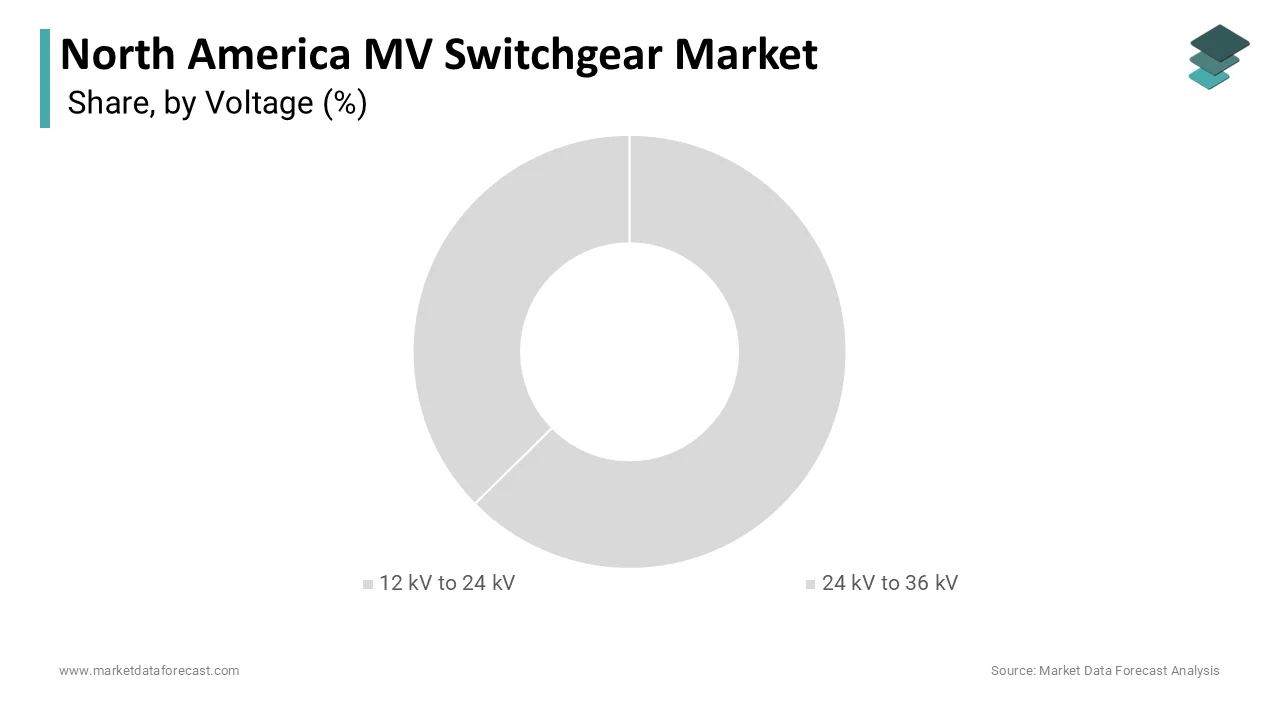
The 24kV to 36kV voltage segment is predicted to witness the highest CAGR of 7.3% from 2025 to 2033 due to evolving power distribution requirements and technological advancements that favor higher voltage solutions for specific applications. Moreover, the exceptional growth trajectory of this segment is largely fueled by extensive renewable energy integration initiatives and comprehensive grid modernization projects that require higher voltage switching capabilities for optimal performance. Wind energy development, particularly offshore installations and large onshore wind farms, creates substantial demand for switchgear systems within this voltage range to efficiently collect and transmit variable power outputs. Grid modernization efforts, encompassing smart grid technologies and distributed energy resource integration, necessitate advanced switching equipment that can manage bidirectional power flows and maintain system stability. Additionally, the development of microgrids and islanded power systems creates demand for higher voltage switchgear that can operate independently while maintaining grid compatibility. These renewable energy-driven factors create substantial long-term growth prospects that differentiate the 24kV to 36kV segment from lower voltage alternatives. Industrial process optimization requirements and energy efficiency initiatives drive the rapid expansion of the 24kV to 36kV switchgear segment through demand for higher voltage solutions that reduce transmission losses and improve operational economics. Industrial facilities adopting higher voltage distribution systems, such as those in the medium voltage range, generally experience substantial improvements in energy efficiency and a notable reduction in overall energy consumption compared to facilities using lower voltage alternatives. Heavy industrial sectors i, including steel manufacturing, mining operations, and petrochemical processing, require robust higher voltage distribution systems to efficiently supply power to energy-intensive processes and large electric motors. Industry research, including general findings from the Electric Power Research Institute (EPRI), indicates that utilizing higher voltage systems for industrial power distribution significantly enhances efficiency and offers compelling economic and operational advantages over lower voltage options, such as those in the 12kV to 24kV range. The integration of combined heat and power systems, which represent a portion of total industrial electricity generation according to research, necessitates higher voltage switchgear for optimal system integration and grid interconnection. Large-scale manufacturing facilities that operate continuous processes benefit from the voltage level's ability to maintain stable power delivery while reducing current requirements and associated infrastructure costs. Additionally, the implementation of industrial automation and process control systems creates demand for reliable higher voltage supplies that support complex operational requirements. These efficiency-driven factors create sustained demand momentum that supports the segment's exceptional growth rate.
By Component Insights
The circuit breakers segment led the North American MV switchgear market and held a 52.7% share in 2025. The leading position of the circuit breakers segment is attributed to its fundamental role as primary protection devices within electrical distribution systems and its essential function in ensuring system safety and reliability. It is fundamentally propelled by stringent safety requirements and comprehensive regulatory compliance mandates that necessitate reliable protective switching devices across all electrical installations. The National Fire Protection Association's NFPA 70 National Electrical Code mandates circuit breaker installation in all medium voltage distribution systems to provide automatic overcurrent protection and fault isolation capabilities. Occupational Safety and Health Administration regulations governing electrical work safety require protective devices that can rapidly interrupt fault currents and protect personnel from electrical hazards. The Institute of Electrical and Electronics Engineers establishes performance standards that circuit breakers must meet, including interrupting capacity requirements, operating speed specifications, and reliability benchmarks that ensure consistent protection performance. Industrial facilities, which comprise a portion of medium voltage switchgear installations, require circuit breakers to protect expensive equipment and ensure worker safety during electrical faults. Healthcare facilities, where electrical system reliability is critical for patient care, mandate redundant circuit breaker protection systems that comply with NFPA 99 Health Care Facilities Code. The increasing complexity of electrical distribution systems, particularly in commercial buildings and industrial facilities, creates demand for advanced circuit breaker technologies that can coordinate protection schemes and minimize service interruptions. These safety-driven requirements create universal demand for circuit breakers that transcends specific application categories and supports sustained market leadership. Technological advancement and smart grid integration initiatives significantly contribute to circuit breaker segment dominance through the development of intelligent protective devices that enhance system performance and enable advanced monitoring capabilities. Modern circuit breakers incorporate digital communication protocols, advanced protection algorithms, and real-time monitoring systems that align with smart grid requirements and utility modernization initiatives. The integration of renewable energy sources and distributed generation systems necessitates advanced circuit breaker technologies that can manage bidirectional power flows and provide rapid fault isolation to maintain grid stability. Predictive maintenance capabilities incorporated into modern circuit breakers enable utilities and industrial facilities to optimize maintenance schedules and reduce unplanned outages. The development of arc fault detection technologies and advanced protection schemes creates additional value propositions that justify premium pricing and drive market adoption. Additionally, cybersecurity requirements for critical infrastructure create demand for circuit breakers with secure communication protocols and tamper-resistant features. These technology-driven factors create sustained demand for advanced circuit breaker solutions that support market leadership.
The switches and disconnectors segment is estimated to register the fastest CAGR of 8.1% during the forecast period, owing to evolving operational requirements and technological integration that favour advanced switching solutions for enhanced system control and maintenance optimization. The rapid growth of this segment is also because of increasing emphasis on maintenance optimization and operational efficiency that requires sophisticated switching solutions for safe equipment isolation and system maintenance activities. Predictive maintenance programs necessitate frequent equipment isolation and testing that drives demand for reliable switching devices. The integration of condition monitoring systems and automated maintenance scheduling creates opportunities for advanced switch and disconnector technologies that can interface with digital maintenance management platforms. Utilities increasingly adopt switches and disconnectors with motorized operation capabilities that enable remote switching operations and reduce manual intervention requirements. The development of smart grid technologies requires switches and disconnectors that can participate in automated switching sequences and system reconfiguration activities. Additionally, the increasing complexity of electrical distribution systems creates demand for sophisticated switching arrangements that can isolate specific equipment or system sections without affecting overall operations. These maintenance-driven requirements create sustained demand growth that supports the segment's exceptional expansion rate. System flexibility requirements and configuration optimization initiatives drive the rapid expansion of switches and disconnectors through demand for adaptable switching solutions that enable efficient system reconfiguration and operational flexibility. Modern electrical distribution systems require flexible switching arrangements that can accommodate changing load requirements, equipment additions, and system modifications without extensive infrastructure changes. The integration of renewable energy sources and energy storage systems creates demand for switches and disconnectors that can manage multiple power sources and enable system isolation for maintenance activities. Healthcare facilities, where electrical system reliability is critical, require redundant switching arrangements that can maintain power continuity during equipment maintenance and system modifications. Besides, the development of microgrids and islanded power systems necessitates advanced switching solutions that can transition between grid-connected and islanded operation modes. These flexibility-driven factors create substantial demand growth prospects that support the segment's accelerated expansion trajectory.
By Insulation Insights
The air insulation switchgear segment was the prominent segment in the North American MV switchgear sector by capturing a share of 55.4% in 2025. The prominence of the air insulation switchgear segment is credited to air insulation's established reliability, cost-effectiveness, and widespread acceptance across diverse application environments that have sustained its prevalence for decades. A further reason for the widespread use ofair-insulatedd switchgear is its superior economic viability and affordability, ensuring that medium voltage switching options are available to meet various budgetary and application demands. Air insulation technology costs less than gas-insulated alternatives, enabling broader market penetration and adoption across various facility types and budget categories. The absence of specialized gases and associated containment systems reduces initial capital investment requirements while eliminating ongoing gas monitoring and maintenance costs that characterize alternative insulation technologies. Small and medium enterprises often prioritize cost-effective solutions that deliver reliable performance without premium pricing. The established supply chain for air insulation components ensures consistent availability and competitive pricing. Additionally, the simplicity of air insulation technology reduces training requirements for installation and maintenance personnel, lowering overall lifecycle costs and operational complexity. The absence of environmental regulations governing air as an insulating medium eliminates compliance costs and regulatory risks that affect alternative technologies. These economic advantages create universal appeal that transcends specific application categories and supports sustained market leadership across diverse market segments. Maintenance simplicity and operational reliability characteristics significantly contribute to air insulation switchgear's continued market dominance through reduced operational complexity and enhanced system availability that appeal to facility managers and maintenance personnel. Air insulation systems require minimal specialized maintenance procedures. The transparency of air insulation enables visual inspection of internal components during maintenance activities, facilitating early detection of potential issues and preventive maintenance implementation. Industrial facilities, where maintenance resources are often constrained, benefit from air insulation switchgear's straightforward maintenance requirements that reduce downtime and maintenance costs. The absence of pressurized gas systems eliminates leak detection requirements and gas refilling procedures that complicate maintenance activities in alternative technologies. The simplicity of troubleshooting and repair procedures for air insulation systems reduces mean time to repair and enhances overall system availability. These maintenance-driven advantages create operational efficiency benefits that support sustained market preference and leadership position.
The gas insulation switchgear segment is anticipated to witness the fastest CAGR of 9.2% from 2025 to 2033. The rapid expansion of the gas insulation switchgear segment is primarily driven by increasing space constraints in urban infrastructure development and facility modernization projects that require compact switching solutions with superior performance characteristics. Urban commercial developments, particularly in metropolitan areas with limited available space, increasingly specify gas-insulated switchgear systems that reduce footprint requirements % compared to air-insulated alternatives. High-rise building projects require compact electrical distribution systems that can fit within constrained mechanical spaces while maintaining high performance standards. The integration of underground electrical distribution systems in urban environments necessitates gas-insulated solutions that can operate reliably in confined spaces with limited ventilation. Data center development, particularly in urban locations where space commands premium pricing, creates demand for compact switchgear solutions that maximize computing density while maintaining electrical reliability. Healthcare facility modernization projects often require electrical infrastructure upgrades within existing building footprints, favouring compact gas-insulated solutions that minimize construction disruption. Apart from these, the development of distributed energy resources in urban environments creates demand for compact switching equipment that can integrate renewable sources within space-constrained installations. These space-driven requirements create substantial demand growth that supports the segment's accelerated expansion. Environmental regulations and sustainability initiatives drive the rapid expansion of gas-insulated switchgear through demand for eco-friendly alternatives to traditional SF6-based systems and enhanced environmental performance characteristics. The Environmental Protection Agency's regulations regarding sulfur hexafluoride usage in electrical equipment create pressure for manufacturers to develop alternative gas insulation technologies with reduced global warming potential. The development of clean air and nitrogen-based insulation technologies provides environmentally responsible alternatives that maintain superior performance while eliminating greenhouse gas emissions. The integration of renewable energy systems and green building certifications necessitates electrical equipment that aligns with environmental performance standards and regulatory compliance requirements. In addition, the development of circular economy principles in electrical equipment manufacturing creates opportunities for gas-insulated switchgear with recyclable components and reduced environmental footprint. These environmentally driven factors create sustained demand growth that supports the segment's exceptional expansion rate.
By End-User Insights
The industrial segment held the majority share of 58.9% of the North American MV switchgear market in 2025. The supremacy of the industrial segment is because of its extensive electrical infrastructure requirements and continuous modernization initiatives that create sustained demand for sophisticated switching and protection solutions. Moreover, the segment is also supported by the ongoing manufacturing renaissance and extensive industrial expansion activities that create unprecedented demand for reliable electrical infrastructure solutions. Manufacturing operations are increasingly relocating to North America, leading to a rising demand for expanded electrical infrastructure and facility development. Industrial investments are increasingly focused on fixed assets, with a significant portion of capital spending directed toward modernizing electrical systems. The automotive sector accounts for a substantial share of regional industrial output and necessitates advanced electrical distribution equipment to power automated production environments. Technological advancements in assembly lines require more sophisticated power management solutions to support complex robotic systems. Chemical processing facilities, where electrical reliability is critical for process safety and product quality, invest extensively in redundant switchgear systems that ensure continuous operation and regulatory compliance. Food processing industries require reliable electrical systems that can accommodate varying load requirements and maintain hygiene standards. The integration of Industry 4.0 technologies and industrial automation systems creates demand for advanced switchgear solutions that can support complex power distribution networks and digital communication requirements. These expansion-driven factors create sustained demand momentum that reinforces the industrial sector's market leadership position. Process optimization initiatives and energy efficiency requirements significantly contribute to the industrial sector's switchgear dominance through demand for advanced switching solutions that enhance operational economics and reduce energy consumption. Facilities incorporating modern electrical distribution technology are experiencing notable improvements in the effectiveness of power delivery compared to those using previous generations of equipment. A growing number of large-scale production sites are adopting a specific motor control technology, which, in turn, requires sophisticated power management systems capable of addressing challenges related to power quality. The increasing use of systems that produce both heat and electricity simultaneously necessitates advanced power control solutions for smooth operational integration and connectivity. Energy management systems and real-time monitoring capabilities create demand for intelligent switchgear that can participate in automated optimization activities and provide operational insights. The integration of renewable energy sources and energy storage systems in industrial facilities requires sophisticated switching arrangements that can manage bidirectional power flows and maintain system stability. Additionally, regulatory mandates for energy efficiency and carbon reduction create pressure for industrial facilities to upgrade electrical infrastructure and adopt advanced switchgear technologies. These efficiency-driven requirements create sustained demand that supports continued market leadership.
The power utilities segment is likely to experience the fastest CAGR of 8.7% over the forecast period. The swift expansion of the power utilities segment is largely fuelled by extensive smart grid development initiatives and comprehensive grid modernization projects that require advanced medium voltage switchgear solutions for enhanced system performance and reliability. Utilities across North America systematically replace aging infrastructure to accommodate bidirectional power flows, distributed generation integration, and enhanced grid reliability requirements. The integration of renewable energy sources, including solar and wind installations, necessitates sophisticated switching equipment that can manage variable power inputs and maintain grid stability. Grid modernization efforts also encompass the deployment of automated switching systems that enable rapid fault isolation and service restoration, improving overall system reliability. In addition, regulatory mandates requiring improved grid resilience and cybersecurity compliance drive demand for next-generation switchgear solutions. These modernization-driven factors create substantial long-term demand prospects that support sustained growth momentum. Renewable energy integration and distributed generation initiatives drive the rapid expansion of power utilities' switchgear demand through extensive deployment requirements for collector systems, grid interconnection points, and distribution network enhancements. Wind energy development, particularly offshore installations and large onshore wind farms, creates substantial demand for switchgear systems to efficiently collect and transmit variable power outputs. Long-term projections for wind energy expansion suggest a sustained need for switchgear installations within collection systems and grid connection infrastructures. The growth of energy storage capacity is driving the integration of sophisticated switching equipment to regulate power flow during various operational cycles. The increasing complexity of renewable energy networks places greater emphasis on hardware that can facilitate stable grid integration. Advanced switching technologies are becoming essential components for maintaining the reliability and safety of energy storage operations. Microgrid development initiatives, encompassing military installations, universities, and industrial complexes, create demand for intelligent switchgear systems that can operate in islanded and grid-connected modes. The integration of electric vehicle charging infrastructure requires medium voltage switchgear to manage increased electrical loads and bidirectional power flows. These renewable energy opportunities create substantial long-term demand prospects that support sustained market expansion.
COUNTRY LEVEL ANALYSIS
United States MV Switchgear Market Analysis
The United States maintained the dominant position in the North American MV switchgear market by accounting for a 92.1% share in 2025 due to the country's vast industrial base, extensive utility infrastructure, and sophisticated commercial building sector that creates perpetual demand for advanced electrical switching solutions. Moreover, the main strength of the U.S. market stems from its massive industrial sector and continuous infrastructure modernization that drives sustained demand for sophisticated switching and protection equipment. Regional market dynamics vary significantly, with states like Texas, California, and Ohio generating disproportionate market activity due to large industrial concentrations and active utility modernization programs. Economic factors, including historically favorable business conditions and industrial renaissance trends, support continued investment in premium switchgear solutions. The presence of sophisticated distribution networks, including major manufacturers like Eaton, Schneider Electric, and Siemens, ensures comprehensive market coverage and product availability. Furthermore, the United States hosts the majority of North American switchgear manufacturing facilities, creating integrated supply chains that support both domestic and export markets. This combination of market scale, industrial sophistication, and infrastructure investment establishes the United States as the uncontested leader in North American medium voltage switchgear activities.
Canada MV Switchgear Market Analysis
Canada was the second-largest player in the North American medium voltage switchgear market because of its developed industrial sector, progressive utility infrastructure, and growing commercial building landscape thatdrivese demand for reliable electrical switching solutions. In addition, the Canadian market is also supported by the country's resource-based economy and extensive utility infrastructure thatcreatese consistent demand for medium voltage switchgear across diverse applications. The industrial sector's significant share of overall electricity use drives the requirement for robust power distribution and safety systems. Substantial financial input into the commercial construction sector highlights the continued investment in foundational electrical infrastructure within new projects. Market opportunities are shaped by regional economic disparities, with a few key provinces exhibiting a disproportionately high demand driven by existing industrial activity and ongoing utility improvements. The large-scale utility infrastructure serving many customers necessitates ongoing upgrades to support the integration of newer energy sources and intelligent network technologies. Economic factors, including government infrastructure investment programs and industrial expansion in resource sectors, support continued market growth. The presence of major North American manufacturers and specialized Canadian distributors ensures product availability and competitive pricing. Additionally, Canada's climate considerations necessitate specific switchgear solutions that addresscold-weatherr operation and environmental resilience, creating niche market opportunities for specialized products. These factors combine to establish Canada as a significant but distinct component of the broader North American medium voltage switchgear landscape.
COMPETITIVE LANDSCAPE
The North America medium voltage switchgear market exhibits intense competitive dynamics characterized by the presence of established multinational corporations, regional specialists, and emerging technology-focused companies. Market leaders leverage brand recognition, extensive distribution networks, and comprehensive product portfolios to maintain dominant positions, while smaller players differentiate through niche specialization and localized service excellence. The competitive landscape is increasingly influenced by technological innovation, with smart switchgear solutions and sustainable technologies becoming key differentiators. Price competition remains significant across value segments, though premium brands successfully command higher margins through design excellence and advanced functionality. Distribution channel evolution, including digital platforms and direct sales models, has altered traditional competitive dynamics and created new market access opportunities. Regional variations in competitive intensity reflect local market conditions, regulatory requirements, and customer preferences. Utility relationships and specification influence play crucial roles in determining market share, particularly in large-scale infrastructure projects. The market's fragmented nature allows specialized players to compete effectively against larger corporations through superior customer service and localized expertise. Innovation cycles accelerate competitive pressure, requiring continuous investment in research and development to maintain relevance. Brand loyalty remains strong among established customers, though evolving technologies and changing customer expectations create opportunities for market disruption and new entrant success.
KEY MARKET PLAYERS
Some of the companies that are playing a dominating role in the North America Electric Zero Turn Mower Market include
- Schneider Electric SE
- Siemens AG
- ABB Ltd.
- Eaton Corporation plc
- General Electric Company
- Hitachi Energy Ltd.
- Mitsubishi Electric Corporation
- Toshiba Infrastructure Systems & Solutions Corporation
- CG Power and Industrial Solutions Ltd.
- TBEA Co., Ltd.
- Powin Energy (MV integrated systems)
- Hyosung Heavy Industries Corporation
- Rockwell Automation, Inc.
- Emerson Electric Co.
- LS Electric Co., Ltd.
- WEG S.A.
- SEC Electric (SEC Group)
- ZIV Group
- NKT A/S
TOP LEADING PLAYERS IN THE MARKET
- Eaton Corporation stands as a preeminent force in the North American medium voltage switchgear market, leveraging decades of engineering excellence and comprehensive product innovation. The company's extensive portfolio encompasses air-insulated, gas-insulated, and hybrid switchgear solutions that serve diverse industrial, commercial, and utility applications. Eaton's commitment to technological advancement is evident through its development of intelligent switchgear systems that integrate digital monitoring, predictive maintenance capabilities, and advanced protection algorithms. Their global manufacturing footprint ensures consistent product availability and quality standards across North American markets. Eaton's customer-centric approach includes comprehensive technical support, training programs, and lifecycle services that enhance customer satisfaction and retention. The company's strategic acquisitions and partnerships have expanded its technological capabilities and market reach within the medium voltage segment. Eaton's emphasis on sustainability and environmental responsibility aligns with evolving regulatory requirements and customer expectations, positioning them favorably in the transitioning energy landscape.
- Schneider Electric maintains a formidable presence in the North American medium voltage switchgear market through its comprehensive EcoStruxure architecture and innovative product portfolio. The company's medium voltage offerings include advanced circuit breakers, switchgear assemblies, and integrated automation solutions that cater to industrial, commercial, and utility sectors. Schneider's focus on digital transformation has yielded intelligent switchgear systems that provide real-time monitoring, predictive analytics, and remote management capabilities. Their commitment to cybersecurity ensures that switchgear solutions meet stringent critical infrastructure protection requirements. The company's extensive distribution network and authorized partner ecosystem facilitate widespread market penetration and customer support. Schneider Electric's research and development investments drive continuous innovation in switchgear technology, including eco-efficient gas alternatives and smart grid integration capabilities. Their holistic approach to electrical distribution encompasses design consultation, installation support, and comprehensive maintenance services that create customer loyalty and market differentiation.
- Siemens AG commands significant influence in the North American medium voltage switchgear market through its diversified product portfolio and technological leadership in electrical infrastructure solutions. The company's medium voltage switchgear offerings include innovative air-insulated and gas-insulated systems that incorporate advanced digital technologies and smart grid capabilities. Siemens' commitment to Industry 4.0 principles is reflected in their development of intelligent switchgear solutions that enable predictive maintenance, energy optimization, and enhanced operational efficiency. Their global research and development capabilities facilitate rapid adaptation of international innovations to North American market requirements and standards. Siemens' comprehensive service ecosystem includes technical consulting, installation support, and lifecycle management programs that ensure customer satisfaction and long-term relationships. The company's strategic focus on sustainability drives the development of environmentally responsible switchgear technologies and energy-efficient solutions. Their integration capabilities with broader automation and control systems create value-added solutions that differentiate them from competitors and reinforce market positioning.
TOP STRATEGIES USED BY KEY MARKET PARTICIPANTS
- Leading players in the North American medium voltage switchgear market actively pursue strategic partnerships with technology companies, system integrators, and research institutions to enhance their innovation capabilities and expand market reach. These collaborations enable manufacturers to integrate cutting-edge technologies such as artificial intelligence, Internet of Things connectivity, and advanced materials science into their switchgear solutions. Partnerships with utility companies and industrial end-users facilitate early adoption of new technologies and provide valuable feedback for product development. Technology collaborations with semiconductor manufacturers and electronic component suppliers ensure access to advanced components and materials that enhance switchgear performance. These strategic alliances also encompass joint marketing initiatives and co-development projects that accelerate time-to-market for innovative solutions. Additionally, partnerships with educational institutions and training organizations help develop skilled workforce capabilities that support industry growth and technical advancement.
- Market leaders consistently invest in research and development to introduce innovative switchgear solutions that address evolving customer requirements and regulatory standards. This strategy encompasses the development of smart switchgear technologies, eco-friendly insulation alternatives, and advanced protection systems that enhance operational efficiency and environmental sustainability. Companies focus on integrating digital monitoring capabilities, predictive maintenance features, and cybersecurity protections that align with smart grid requirements and utility modernization initiatives. Innovation efforts also target miniaturization technologies, modular designs, and flexible configuration options that address space constraints and installation challenges. The development of standardized interfaces and communication protocols enables seamless integration with broader electrical distribution systems and automation platforms. Advanced materials research facilitates the development of more efficient, reliable, and environmentally responsible switchgear solutions. These innovation strategies not only command premium pricing but also establish technological leadership positions that create competitive advantages.
- Key players actively pursue market expansion strategies that include geographic penetration, channel diversification, and segment targeting to maximize revenue opportunities and market share. Companies establish regional manufacturing facilities and localized service centers to improve customer accessibility and response times. Geographic expansion efforts focus on emerging markets with growing industrial development and infrastructure modernization requirements. Channel diversification includes e-commerce platform development, direct sales models, and strategic distributor partnerships that complement traditional sales networks. Market leaders also pursue segment expansion by developing specialized switchgear solutions that address previously underserved application categories, including renewable energy integration and microgrid applications. International expansion strategies leverage existing brand recognition and manufacturing capabilities to enter adjacent markets and global opportunities. Strategic acquisitions of regional players provide immediate market presence and established customer relationships. These expansion initiatives enable companies to achieve economies of scale while reducing market concentration risks.
MARKET SEGMENTATION
This research report on the North America MV switchgear market is segmented and sub-segmented into the following categories.
By Voltage
- 12 kV to 24 kV
- 24 kV to 36 kV
By Component
- Circuit Breakers
- Switches & Disconnectors
By Insulation
- Air Insulated Switchgear
- Gas Insulated Switchgear
By End User
- Industrial
- Power Utilities
By Country
- United States
- Canada