- Product Description Description
- Table of Contents TOC
- List of Table & Figure LOT
- Get Free Sample PDF Sample PDF
Market Size, 2025
$20.28 BnMarket Estimate, 2026
$21.35 BnMarket Forecast, 2034
$31.73 BnCAGR, 2026–2034
5.1%North America Ophthalmology Devices Market Size, Trends, and Growth Forecast (2026–2034)
The North America ophthalmology devices market size was valued at USD 20.28 billion in 2025, is estimated at USD 21.31 billion in 2026, and is projected to reach USD 31.73 billion by 2034. Regional market expansion is progressing at a compound annual growth rate (CAGR) of 5.1% throughout the forecast period from 2026 to 2034. Key market drivers include rapid demographic aging leading to high cataract surgical volumes, an escalating prevalence of diabetic retinopathy driving diagnostic imaging demand, and continuous technological innovations such as artificial intelligence and minimally invasive glaucoma surgeries (MIGS).
Key Executive Metrics (At-a-Glance)
- 2025 Base Market Valuation: USD 20.28 Billion
- 2026 Current Market Size: USD 21.31 Billion
- 2034 Forecast Valuation: USD 31.73 Billion
- Compound Annual Growth Rate (CAGR): 5.1% (2026–2034)
- Largest Market Segment: Surgery Devices, Cataract Disorders, Computerized Field Analysers, and the U.S. Market
- Fastest-Growing Market Segment: Diagnostics & Monitoring (10.5% CAGR), Vitreo-Retinal Disorders (11.4% CAGR), and Canaloplasty Devices (13.3% CAGR)
- Key Geographic Footprint: United States and Canada
Core Growth Drivers Shaping the North American Market
The regional adoption and commercial expansion of advanced ophthalmic technologies are propelled by several clinical and structural catalysts:
- Demographic Aging and Cataract Volume: A rapidly expanding senior population base driving continuous procedural demand for phacoemulsification and intraocular lenses.
- Diabetic Retinopathy Surveillance: Widespread integration of digital fundus imaging and AI-enabled diagnostics for chronic disease management in primary care settings.
- Market Restraints: Reimbursement compression, administrative burdens, supply chain vulnerabilities, and critical shortages of qualified ophthalmic technicians.
North America Ophthalmology Devices Market Segmentation Breakdown
| Segment Category | Largest Segment | Fastest-Growing Segment |
|---|---|---|
| By Application | Surgery Devices | Diagnostics and Monitoring (10.5% CAGR) |
| By Disorders | Cataract Disorders | Vitreo-Retinal Disorders (11.4% CAGR) |
| By Devices | Computerized Field Analysers | Canaloplasty Devices (13.3% CAGR) |
| By Region | United States | Canada (Regulated public sector growth) |
Major Market Players Profiled
Prominent corporations driving surgical innovation and diagnostic excellence across the North American market include Alcon Inc., Johnson & Johnson, Carl Zeiss Meditec, Bausch + Lomb Inc., Abbott Medical Optics Inc., Hoya Corporation, Essilor International, Topcon Corporation, HAAG-Streit Group, Ziemer Ophthalmic System, and Nidek Co. Ltd.
 Download Free Sample Report
North America Ophthalmology Devices Market Size
The ophthalmology devices market size in North America has been projected at USD 20.28 billion in 2025. It is estimated to reach USD 31.73 billion by 2034 from USD 21.31 billion in 2026, growing at a compound annual growth rate (CAGR) of 5.1% between 2026 to 2034.
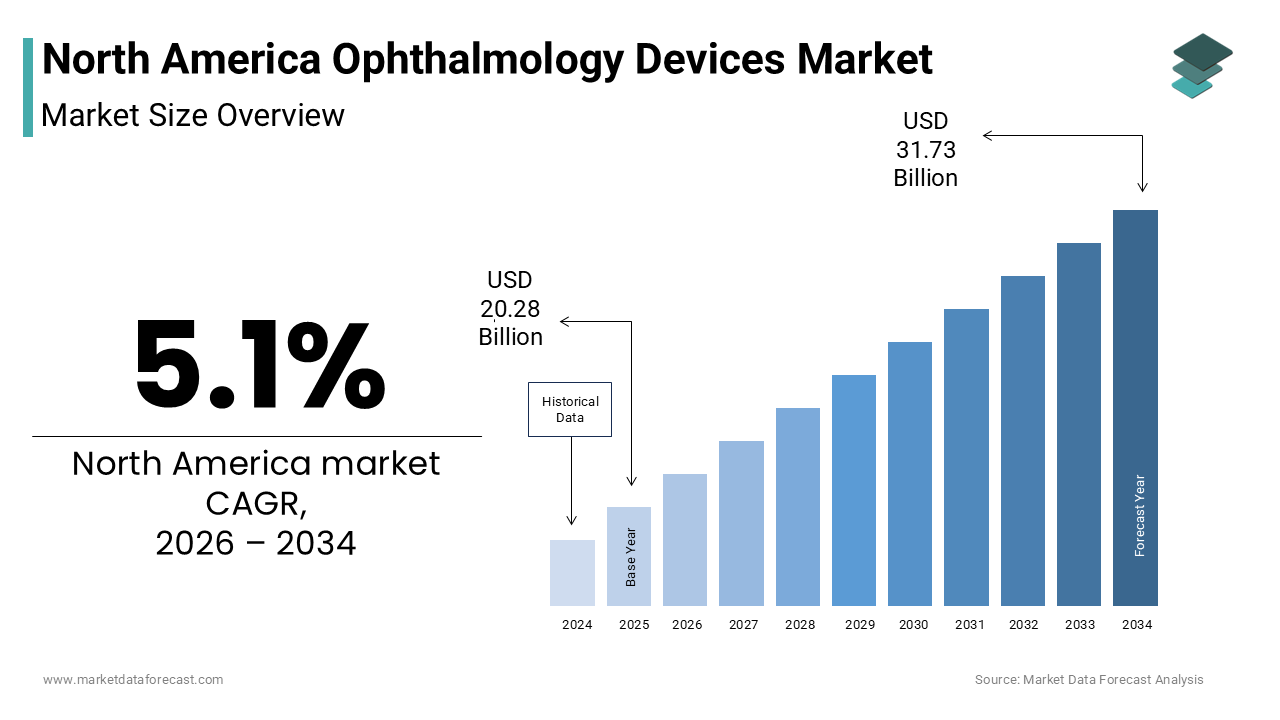
According to the National Eye Institute, approximately 61 million adults in the United States are at high risk for serious vision loss due to chronic conditions like diabetic retinopathy and glaucoma, creating sustained clinical demand for precision instrumentation. The Centers for Disease Control and Prevention states that cataracts affect nearly 20 million Americans aged 40 and older, necessitating a continuous volume of phacoemulsification systems and intraocular lens implantation devices. Furthermore, Statistics Canada reports that over 85% of Canadians aged 65 and above have at least one chronic eye condition, driving public and private procurement of diagnostic imaging platforms. The American Academy of Ophthalmology notes that annual ophthalmic procedure volumes exceed 4 million in the United States alone, reflecting deeply integrated surgical infrastructure. Consequently, this market functions as a critical component of specialized medical care where technological adoption is dictated by demographic epidemiology, reimbursement policy, and clinical evidence standards, ensuring stability distinct from elective aesthetic or consumer electronics sectors.
MARKET DRIVERS
Demographic Aging and Cataract Surgical Volume Expansion
The accelerating aging population across North America is a major factor propelling the growth of the North American ophthalmology devices market. According to the US Census Bureau, the number of Americans aged 65 and older reached 58 million in 2023 and is projected to surpass 80 million by 2040, directly correlating with exponential growth in age related cataract incidence which currently affects 1 in 5 individuals over age 65. According to the Canadian Institute for Health Information, cataract surgery remains the most frequently performed surgical procedure in Canada with over 350,000 cases annually, and wait time reduction initiatives further stimulate equipment upgrades in public hospitals. According to the Centers for Medicare and Medicaid Services, cataract extraction with intraocular lens insertion accounts for approximately 15% of all Part B physician services, demonstrating massive procedural throughput that sustains device replacement cycles. According to the Ambulatory Surgery Center Association, ambulatory surgery centers now perform over 70% of these procedures, creating decentralized demand for compact efficient phacoemulsification systems optimized for high turnover environments. This demographic inevitability transforms ophthalmic devices from discretionary capital purchases into essential infrastructure, ensuring consistent market expansion independent of economic volatility as vision restoration remains a non-deferrable medical necessity for aging populations.
Diabetic Retinopathy Epidemic Fueling Diagnostic Imaging Demand
Rising diabetes prevalence across North America drives unprecedented demand for retinal imaging and monitoring devices essential for early detection and management of diabetic retinopathy, which is further boosting the North American ophthalmology devices market expansion. According to the Centers for Disease Control and Prevention, over 37 million Americans have diabetes representing 11% of the population, with diabetic retinopathy affecting approximately 7.7 million adults and serving as a leading cause of blindness among working age adults. According to the American Diabetes Association, annual costs of diabetes related vision impairment exceed 5 billion USD, incentivizing payers to cover preventive screening technologies that reduce long term disability expenditures. According to Medicare utilization data, optical coherence tomography utilization has increased by 25% annually since 2020, reflecting guideline mandated surveillance protocols for all diabetic patients. Primary care integration programs supported by the Indian Health Service and Veterans Health Administration have deployed autonomous AI enabled retinal cameras in over 500 facilities, expanding access beyond specialist offices and creating new device installation bases. This epidemiological burden transforms retinal diagnostics from an episodic specialty tool into chronic disease management infrastructure. Payer coverage expansions for screening in primary care settings create sustainable demand streams decoupled from traditional referral patterns, ensuring device market growth aligned with public health priorities rather than elective procedure volumes.
MARKET RESTRAINTS
Reimbursement Compression and Administrative Burden Limiting ROI
Declining reimbursement rates for ophthalmic procedures is hindering the expansion of the North American ophthalmology devices market. According to the American Medical Association, Medicare physician payments adjusted for inflation have declined by 29% between 2001 and 2024, eroding margins for cataract and retinal procedures that form the device utilization foundation. According to the Centers for Medicare and Medicaid Services, professional component reimbursement for optical coherence tomography was reduced by 15% in 2023, forcing practices to increase volume just to maintain revenue neutrality, often exceeding operational capacity. Administrative complexity compounds financial pressure, with ophthalmologists spending an average of 15 hours weekly on prior authorization and documentation tasks according to survey data from the American Academy of Ophthalmology, reducing billable patient contact time. Private insurers frequently adopt Medicare cuts with additional proprietary restrictions, creating unpredictable revenue streams that delay equipment purchase decisions. Rural and independent practices face disproportionate impact, lacking economies of scale to absorb compression, leading to consolidation or closure. This systemic devaluation of ophthalmic services creates misalignment between clinical need and financial viability. Manufacturers must demonstrate clear return on investment through efficiency gains or premium reimbursement pathways to justify acquisitions in an environment where procedural revenue no longer automatically supports technology refresh cycles.
Supply Chain Vulnerability and Component Shortages Disrupting Availability
Persistent supply chain disruptions severely impact timely delivery and servicing of ophthalmic devices across North America despite domestic manufacturing presence, which is another major impediment for the regional market. According to the Food and Drug Administration, over 40% of ophthalmic device shortage notifications between 2021 and 2024 involved critical components like microchips, optical sensors, and sterile disposables sourced from single suppliers in Asia, creating vulnerability to geopolitical and logistical shocks. According to the American Hospital Association, 85% of hospitals experienced significant delays in receiving ophthalmic equipment during 2023, with average lead times extending from 8 weeks to 22 weeks, disrupting surgical schedules and patient access. According to manufacturer disclosures, semiconductor shortages specifically affected next generation femtosecond laser and diagnostic platform production, delaying installations by 6 to 12 months. Just in time inventory models prevalent in healthcare amplify disruption impacts, leaving minimal buffer stock for emergency repairs. Regulatory requirements for component revalidation when switching suppliers add 12 to 18 months to qualification timelines, preventing rapid sourcing alternatives. These vulnerabilities create operational uncertainty, forcing clinics to extend legacy equipment lifecycles beyond optimal performance windows. Until supply chains diversify and reshore critical components, device availability will remain subject to external shocks independent of market demand or technological readiness, limiting predictable growth trajectories.
MARKET OPPORTUNITIES
Artificial Intelligence Integration Transforming Screening Efficiency
Integration of artificial intelligence into ophthalmic diagnostic workflows represents a prominent opportunity for the North American ophthalmology devices market. According to the Food and Drug Administration, over 15 autonomous AI diagnostic systems have received clearance for diabetic retinopathy and glaucoma detection, enabling primary care providers to perform specialist level screening without onsite ophthalmologist interpretation. According to the Department of Veterans Affairs, AI retinal screening deployed in over 300 facilities increased annual screenings by 40% while reducing specialist referral backlog by 25%, demonstrating scalable efficiency gains applicable to broader health systems. According to clinical validation studies published in JAMA Ophthalmology, AI algorithms achieve sensitivity exceeding 90% matching expert graders while processing images in seconds versus hours for human review. Payer recognition is accelerating, with UnitedHealthcare and Blue Cross Blue Shield plans now covering autonomous AI screening codes, creating a direct reimbursement pathway independent of physician interpretation. This technological convergence enables task shifting from scarce specialists to automated systems, expanding the addressable patient population tenfold beyond traditional specialty clinic capacity. Manufacturers embedding FDA cleared AI into existing platforms create upgrade revenue streams, while new entrants focus exclusively on software as a medical device models, capturing value through algorithm licensing rather than hardware sales alone.
Minimally Invasive Glaucoma Surgery Device Expansion
Minimally invasive glaucoma surgery represents the fastest growing therapeutic category, creating substantial device opportunity driven by safety profile advantages over traditional filtration surgery. According to the American Glaucoma Society, minimally invasive glaucoma surgery procedures grew by 35% annually between 2019 and 2023, now accounting for over 50% of all glaucoma surgeries in the United States, reflecting a paradigm shift toward earlier intervention with lower complication risks. According to Medicare claims analysis, combined cataract and minimally invasive glaucoma surgery procedures increased 45% year over year as surgeons adopt concurrent treatment approaches, reducing patient burden and improving medication adherence. Over 20 distinct minimally invasive glaucoma surgery devices have received Food and Drug Administration clearance since 2018, creating diverse portfolio options tailored to specific anatomical mechanisms and disease severities. According to clinical evidence published in Ophthalmology journal, these devices reduce intraocular pressure by 20% to 30% with 80% fewer adverse events compared to trabeculectomy, justifying premium reimbursement and rapid adoption. Ambulatory surgery center migration accelerates uptake as the safety profile of minimally invasive glaucoma surgery aligns perfectly with outpatient setting capabilities, unlike traditional glaucoma surgery requiring hospital resources. This therapeutic evolution creates sustained device demand independent of cataract volume fluctuations, establishing glaucoma as a standalone growth engine for the foreseeable future.
MARKET CHALLENGES
Workforce Shortages and Training Bottlenecks Restricting Utilization
Critical shortages of ophthalmic technicians and nurses severely limit the effective deployment of advanced devices despite adequate equipment availability across North America, which is a significant challenge for the North American ophthalmology devices market. According to the American Academy of Ophthalmology, 68% of ophthalmology practices report difficulty hiring qualified technicians, with average vacancy duration exceeding 6 months, directly constraining patient throughput and device utilization rates. According to the Joint Commission on Allied Health Personnel in Ophthalmology, the regional technician deficit exceeds 15,000 positions nationwide, with rural areas facing acute shortages that force clinics to operate below installed capacity. According to manufacturer surveys, complex next generation devices require specialized training that extends onboarding timelines by 3 to 6 months, exacerbating productivity losses during staff turnover. According to the Ambulatory Surgery Center Association, nursing shortages similarly affect ambulatory surgery centers, where 40% report cancelled surgical blocks due to insufficient perioperative staffing. The educational pipeline remains constrained, with only 12 accredited ophthalmic technician programs graduating fewer than 500 students annually against replacement demand exceeding 2,000 positions. This human capital crisis creates a paradox where technological capability exists but operational capacity cannot be realized. Until workforce development scales through expanded training programs, immigration reforms, or task automation, device market growth will be artificially capped by labor constraints rather than clinical demand or financial factors.
Regulatory Approval Timelines and Post Market Surveillance Burdens
Evolving regulatory requirements under Food and Drug Administration oversight create significant commercialization delays and ongoing compliance costs for ophthalmic device manufacturers, which is further challenging the regional market expansion. For instance, the average premarket approval timeline for Class III ophthalmic devices extended to 38 months in 2023 compared to 24 months in 2018, reflecting increased evidentiary demands and reviewer workload. According to manufacturer financial disclosures, real world evidence requirements for post market surveillance now mandate prospective registries enrolling thousands of patients, adding 2 to 5 million USD in annual compliance costs per product line. According to cybersecurity requirements updated in 2023, comprehensive software architecture reviews are necessitated, delaying connected device clearances by 6 to 12 months as companies retrofit legacy platforms. According to Food and Drug Administration data, predicate device challenges have increased with the agency rejecting 30% more 510(k) submissions in 2023 citing insufficient equivalence justification, forcing costly de novo pathways. Small innovators face a disproportionate burden as fixed compliance costs consume a larger revenue share, limiting competitive diversity. While regulatory rigor ensures safety, it creates innovation friction, particularly for iterative improvements that do not fit traditional classification frameworks. Navigating this complex landscape requires specialized expertise and capital reserves that favor established players, potentially slowing the introduction of disruptive technologies that could address unmet clinical needs in evolving ophthalmic care paradigms.
REPORT COVERAGE
| REPORT METRIC | DETAILS |
| Market Size Available | 2025 to 2034 |
| Base Year | 2025 |
| Forecast Period | 2026 to 2034 |
| CAGR | 5.1% |
| Segments Covered | By Application, Disorders, Devices and Region. |
| Various Analyses Covered | Global, Regional & Country Level Analysis, Segment-Level Analysis, DROC, PESTLE Analysis, Porter’s Five Forces Analysis, Competitive Landscape, Analyst Overview of Investment Opportunities |
| Regions Covered | The United States, Canada, Rest of North America |
| Market Leaders Profiled | Johnson & Johnson, Abbott Medical Optics Inc., Carl Zeiss Meditec, Hoya Corporation, Essilor International, Alcon Inc., Topcon Corporation, HAAG-Streit Group, Ziemer Ophthalmic System, Bausch and Lomb Inc., and Nidek Co. Ltd. |
SEGMENTAL ANALYSIS
By Application Insights
The surgery devices segment led the market by holding the dominant share of the North American market in 2025. The dominance of surgery devices segment in the North American market can be credited to the immense and non-deferrable volume of cataract extractions, which serve as the foundational revenue stream for ambulatory surgery centers and hospital ophthalmology departments. According to the Centers for Medicare and Medicaid Services, cataract surgery with intraocular lens insertion remains the single most frequently performed Medicare Part B procedure, with over 3 million claims processed annually in the United States alone, creating a massive installed base for phacoemulsification consoles and femtosecond laser platforms. According to the Ambulatory Surgery Center Association, over 70% of these procedures occur in freestanding centers where equipment utilization rates exceed 85%, necessitating redundant systems and regular replacement cycles every 5 to 7 years to maintain throughput. According to Canadian Institute for Health Information data, Canada performs approximately 350,000 cataract surgeries yearly, with provincial wait time reduction initiatives driving capital investment in additional surgical suites to meet backlog demand. Unlike diagnostic or vision care segments tied to elective or preventive visits, surgical devices are linked to mandatory restorative interventions reimbursed at higher rates, ensuring stable cash flows that justify premium capital expenditures. This procedural ubiquity creates ecosystem lock in through proprietary consumables and service contracts, making surgery devices the financial bedrock of the entire ophthalmic device sector regardless of technological shifts in adjacent categories.
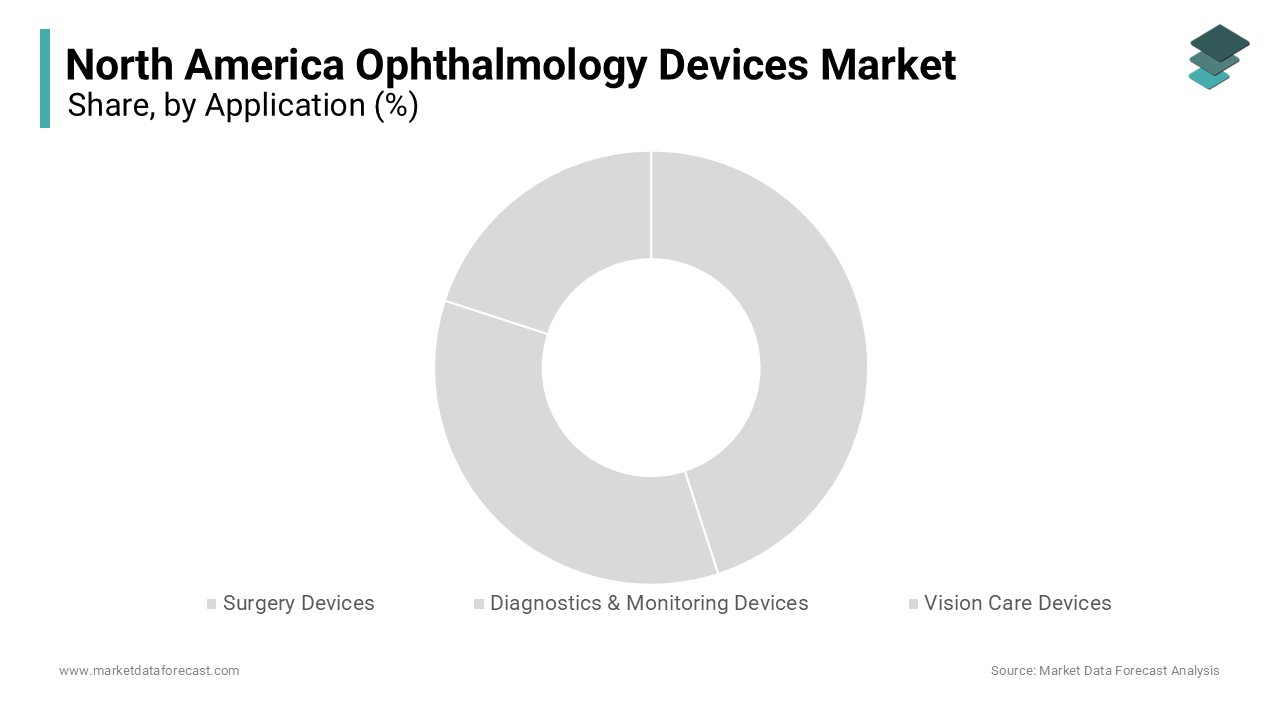
On the other side, the diagnostics and monitoring devices segment is predicted to register a CAGR of 10.5% over the forecast period in the North American market owing to the evidence based guidelines mandating regular imaging surveillance for chronic ocular diseases affecting millions of North Americans. According to the American Academy of Ophthalmology Preferred Practice Patterns, all patients with diabetes, glaucoma, or macular degeneration require optical coherence tomography or fundus photography at intervals ranging from 3 to 12 months, creating recurring diagnostic demand that compounds with disease prevalence. According to the Centers for Disease Control and Prevention, 37 million Americans have diabetes with diabetic retinopathy screening compliance below 60%, prompting payer initiatives to expand coverage for primary care based imaging devices that increase access points tenfold beyond specialty clinics. According to Medicare utilization data, optical coherence tomography claims grew 25% annually between 2020 and 2023, reflecting guideline adherence improvements and expanded indications for geographic atrophy monitoring following new therapeutic approvals. Unlike surgical devices tied to discrete episodes, diagnostics generate continuous revenue streams through high margin testing codes less susceptible to reimbursement compression. Value based care models increasingly tie provider compensation to quality metrics including diabetic eye exam completion rates, creating financial incentives for in house diagnostic capability acquisition. This structural shift toward preventive surveillance transforms diagnostics from an ancillary service to core chronic disease management infrastructure, propelling growth above mature surgical segment averages.
By Disorders Insights
The cataract disorders segment led the market with the major share of the regional market in 2025 because age related lens opacity represents a universal and inevitable condition affecting nearly all individuals who live beyond 80 years, creating predictable lifelong demand unmatched by other ocular pathologies. According to the National Eye Institute, cataracts affect approximately 20 million Americans aged 40 and older with prevalence doubling each decade thereafter, ensuring continuous cohort entry into the treatment pipeline regardless of lifestyle or genetic factors. According to Statistics Canada, 85% of Canadians over 65 have clinically significant cataracts, making it the most common age related ocular condition and primary driver of public healthcare ophthalmic expenditure. Unlike glaucoma or retinal diseases where treatment eligibility depends on disease stage or biomarker presence, cataract surgery indication is purely functional based on patient reported visual disability, creating a broad treatable population. According to Medicare claims data analyzed by the Centers for Medicare and Medicaid Services, cataract extraction accounts for 15% of all Part B physician services, demonstrating procedural centrality to geriatric healthcare. This demographic certainty transforms cataract devices from discretionary technology to essential public health infrastructure, with demand correlated directly to aging curves rather than diagnostic breakthroughs or therapeutic innovations. The universal nature ensures market stability during economic downturns as vision restoration remains a non-deferrable necessity, distinguishing the cataract segment from elective or conditional disorder categories.
On the other hand, the vitreo retinal disorders segment is estimated to record a prominent CAGR if 11.4% during the forecast period in the North American market owing to the recent therapeutic approvals that created urgent diagnostic and monitoring imperatives for conditions previously lacking effective treatment options. According to the Food and Drug Administration, approval of complement inhibitors for geographic atrophy in 2023 instantly created a need for regular optical coherence tomography monitoring to identify eligible patients and track progression in an estimated 1 million affected Americans, transforming dry age related macular degeneration from a watchful waiting to an active management paradigm. Clinical trial protocols for emerging gene therapies and stem cell treatments require baseline and longitudinal retinal imaging, establishing diagnostic infrastructure before commercial launch and creating anticipatory device demand. According to Centers for Medicare and Medicaid Services data, Medicare coverage expansions for anti-vascular endothelial growth factor agents in diabetic macular edema increased the treatment eligible population by 30% between 2021 and 2023, driving corresponding diagnostic volume growth. Unlike cataract where diagnosis precedes universally indicated surgery, retinal disorder management requires iterative imaging to guide therapy timing and assess response, creating recurring device utilization per patient. This therapeutic renaissance transforms retinal diagnostics from episodic assessment to a continuous treatment companion, generating sustained demand streams that compound with each new drug approval, propelling segment growth above mature cataract and glaucoma categories tied to static treatment paradigms.
By Devices Insights
The computerized field analysers segment occupied the major share of the North American market in 2025 because visual field testing remains the irreplaceable gold standard for glaucoma diagnosis and progression monitoring mandated by all major clinical guidelines. According to the American Glaucoma Society, over 4 million Americans have glaucoma with standard automated perimetry required at baseline and every 6 to 12 months thereafter, creating recurring testing demand that accumulates with disease chronicity and the aging population. According to Medicare utilization data, Humphrey visual field tests account for over 2 million claims annually, representing the highest volume functional diagnostic test in ophthalmology and surpassing newer imaging modalities in procedural frequency. Unlike structural tests that detect anatomical changes, computerized field analysers measure functional vision loss which determines treatment escalation decisions and disability certification, making them legally and clinically indispensable. Regulatory requirements for glaucoma medication approval mandate visual field endpoints, ensuring continued relevance despite emerging biomarkers. Practices face malpractice liability risks if perimetry documentation is incomplete, reinforcing universal adoption across all care settings from academic centers to community clinics. This regulatory and clinical entrenchment creates a stable installed base unaffected by technological disruption, as no alternative currently replicates functional assessment comprehensiveness. Even as imaging advances, computerized field analysers maintain dominance through complementary rather than competitive positioning, ensuring sustained utilization as a foundational glaucoma management tool.
However, the canaloplasty devices segment is the fastest growing segment and is predicted to expand at a CAGR of 13.3% over the forecast period owing to a paradigm shift toward minimally invasive glaucoma surgery that prioritizes safety profiles and physiological aqueous outflow restoration over traditional filtration surgery risks. According to the American Glaucoma Society, minimally invasive glaucoma surgery procedures grew 35% annually between 2019 and 2023, now accounting for over 50% of all glaucoma surgeries in the United States, reflecting surgeon preference for bleb free approaches with faster recovery and fewer complications. Canaloplasty specifically addresses early to moderate open angle glaucoma by dilating Schlemm canal, preserving natural anatomy and avoiding conjunctival scarring that compromises future surgical options, creating strategic value for younger patients requiring decades of pressure control. According to clinical evidence published in Ophthalmology journal, canaloplasty reduces intraocular pressure by 25% with 80% fewer adverse events compared to trabeculectomy, justifying premium reimbursement and rapid adoption in ambulatory surgery centers where the safety profile aligns with outpatient capabilities. According to Medicare claims data, combined cataract and canaloplasty procedures increased 45% year over year as surgeons adopt concurrent treatment approaches, reducing medication burden. This therapeutic evolution creates a new device category distinct from traditional glaucoma surgery tools, capturing share through indication expansion rather than replacement of existing modalities.
COUNTRY ANALYSIS
U.S. Ophthalmology Devices Market Analysis
The U.S. captured the dominating share of the North American market in 2025 and is poised to maintain its overwhelming dominance in the North America ophthalmology devices market over the next few years due to its unparalleled healthcare expenditure, technological innovation ecosystem, and procedural volume serving over 330 million inhabitants. According to the Centers for Medicare and Medicaid Services, national health spending reached 4.7 billion USD in 2023 with ophthalmology representing a significant portion through 3 million annual cataract surgeries and 20 million diagnostic imaging claims, creating a massive device utilization foundation. The Food and Drug Administration serves as a global regulatory benchmark with 90% of novel ophthalmic devices receiving US clearance before international launch, attracting manufacturer headquarters and R&D investment concentration in Massachusetts, California, and Minnesota. According to Ambulatory Surgery Center Association data, over 6,000 freestanding centers perform ophthalmic procedures, creating decentralized demand for compact efficient platforms distinct from hospital centric markets. Private equity investment in ophthalmology exceeded 5 billion USD in 2023, consolidating practices and standardizing equipment portfolios while accelerating technology adoption through centralized procurement. Medicare Advantage enrollment surpassing 30 million creates managed care influence on device selection favoring cost effective innovative solutions. This confluence of scale, innovation, capital, and infrastructure makes the United States not just the largest, but also the primary trendsetter where device development priorities reflect American clinical and economic realities that subsequently diffuse to Canadian and international markets.
Canada Ophthalmology Devices Market Analysis
Canada is expected to experience steady, regulated growth in its ophthalmology devices market over the next few years, characterized by a publicly funded single payer system that prioritizes equitable access and evidence based technology assessment over market driven adoption patterns seen in the United States. According to the Canadian Institute for Health Information, provincial health systems collectively fund over 350,000 cataract surgeries annually with wait time reduction initiatives driving targeted capital investment in surgical equipment to address backlogs exacerbated by pandemic disruptions. Provincial health technology assessment agencies like Health Quality Ontario conduct rigorous cost effectiveness evaluations before recommending device funding, creating slower but more sustainable adoption curves focused on demonstrated value rather than marketing influence. According to Statistics Canada, 85% of seniors have chronic eye conditions, ensuring consistent demand aligned with aging demographics similar to the United States but with different procurement dynamics. Federal Medical Devices Regulations harmonize with Food and Drug Administration standards, facilitating cross border product availability while maintaining sovereign oversight. Rural and remote access challenges drive teleophthalmology and portable diagnostic device adoption supported by federal digital health infrastructure investments. Indigenous Services Canada funds specialized programs addressing disproportionate vision loss in First Nations communities, creating niche demand for culturally appropriate technologies. This publicly oriented model creates stable predictable demand insulated from economic volatility, but constrains premium technology penetration, making Canada an important but distinct market segment where value demonstration trumps novelty.
COMPETITIVE LANDSCAPE
Competition in the North America ophthalmology devices market is characterized by intense rivalry among established multinational corporations specialized innovators and emerging entrants vying for position across consolidated healthcare landscape. Established leaders leverage comprehensive portfolios clinical evidence heritage and installed base scale while adapting to value based reimbursement demanding outcome demonstration over feature specifications. Specialized companies compete through technological differentiation in niche segments like minimally invasive glaucoma surgery or retinal imaging where focused expertise outweighs breadth advantages. Emerging entrants challenge through disruptive business models including subscription pricing artificial intelligence enabled diagnostics and direct to ambulatory surgery center distribution bypassing traditional hospital procurement cycles. Competition increasingly centers on integrated solution provision combining devices consumables data analytics and service rather than standalone hardware specifications. Consolidation among provider groups creates powerful buyers negotiating volume discounts and standardizing technology platforms favoring suppliers with enterprise scale capabilities. Regulatory barriers protect incumbents but also constrain innovation pace creating opportunities for agile players navigating clearance pathways efficiently. Geographic concentration in Sun Belt retirement corridors influences regional competitive dynamics with aging demographics driving premium technology adoption intensity. This multifaceted landscape rewards companies balancing clinical credibility operational reliability and economic value demonstration across diverse payer and provider stakeholders defining North American success factors distinct from global markets with different healthcare financing structures.
KEY MARKET PLAYERS
Companies playing a dominant role in the North America Ophthalmology Device Market include
- Johnson & Johnson
- Abbott Medical Optics Inc.
- Carl Zeiss Meditec
- Hoya Corporation
- Essilor International
- Alcon Inc.
- Topcon Corporation
- HAAG-Streit Group
- Ziemer Ophthalmic System
- Bausch and Lomb Inc.
- Nidek Co Ltd.
Top Players in the North America Ophthalmology Devices Market
Alcon Inc.
Alcon Inc. maintains comprehensive operations across North America through extensive surgical equipment installed bases and intraocular lens portfolios serving ambulatory surgery centers and hospitals. The company recently launched Clareon Vivity extended depth of focus intraocular lens addressing presbyopia correction demand while expanding Hydrus Microstent availability for combined cataract glaucoma procedures. Alcon partnered with American Society of Cataract and Refractive Surgery to develop surgeon training programs enhancing premium technology adoption safety. Manufacturing facilities in Texas ensure domestic supply chain resilience reducing import vulnerability. Digital platform integration connects surgical planning biometry and postoperative outcomes creating ecosystem lock in beyond standalone devices. Continuous investment in femtosecond laser platforms improves refractive predictability supporting premium case mix optimization. These initiatives demonstrate commitment to integrated surgical ecosystems rather than discrete product sales strengthening position through workflow embedding and clinical evidence generation aligned with North American value based care priorities and ambulatory surgery center efficiency requirements.
Johnson & Johnson Vision
Johnson & Johnson Vision operates as leading provider of intraocular lenses and refractive technologies across North America with strong presence in cataract and corneal surgery segments. The company recently expanded Tecnis Synergy intraocular lens portfolio addressing multifocal and extended range vision needs while advancing iDesign refractive platform capabilities for customized treatments. Johnson & Johnson partnered with academic institutions to generate real world evidence validating premium lens outcomes in diverse populations strengthening reimbursement justification. Supply chain investments in Florida manufacturing reduce lead times and improve service reliability for high volume surgical centers. Digital health integration enables remote patient monitoring and surgeon decision support enhancing perioperative care continuity. Strategic collaborations with ambulatory surgery center chains facilitate bulk procurement agreements ensuring consistent technology access. Educational initiatives emphasize combination therapy protocols increasing per case device utilization. These actions strengthen position through clinical differentiation and operational reliability addressing North American market demands for predictable outcomes supply stability and integrated care pathways that extend beyond operating room into longitudinal patient management.
Bausch + Lomb Corporation
Bausch + Lomb Corporation distinguishes itself through diversified portfolio spanning surgical devices contact lenses and pharmaceuticals creating cross segment synergies valued in North American ophthalmology practice. The company recently launched Stellaris Elite vitreoretinal platform addressing complex posterior segment surgery needs while expanding EnVista intraocular lens family for premium cataract outcomes. Bausch + Lomb partnered with retinal specialists to develop minimally invasive surgical techniques optimizing device utilization for emerging therapeutic indications. Manufacturing modernization in Rochester New York enhances production capacity and quality control for surgical consumables reducing shortage risks. Clinical research collaborations generate evidence supporting regulatory approvals and payer coverage expansions for novel technologies. Integrated commercial model leverages pharmaceutical relationships to drive device awareness among prescribing physicians creating referral synergies. Post market surveillance programs exceed regulatory requirements building trust in safety profile. These strategies position company at intersection of surgical innovation and chronic disease management capturing value through comprehensive eye health solutions rather than isolated device categories aligning with North American trend toward holistic ophthalmic care delivery models.
Major Strategies Used by Key Market Participants
Key players prioritize integrated ecosystem development combining surgical platforms intraocular lenses diagnostics and digital tools creating switching costs and recurring revenue streams beyond capital equipment sales. Companies invest heavily in clinical evidence generation through prospective registries and real world studies demonstrating premium technology value to payers and providers essential for reimbursement justification in value based care environment. Strategic partnerships with ambulatory surgery center chains and integrated delivery networks facilitate volume commitments and standardized technology adoption accelerating market penetration. Domestic manufacturing expansion mitigates supply chain vulnerabilities and qualifies for Buy American provisions in federal procurement programs. Artificial intelligence integration into diagnostic and surgical platforms enhances workflow efficiency and outcomes consistency addressing workforce shortages limiting utilization. Premium product portfolio diversification captures out of pocket spending growth while maintaining base volume through monofocal offerings. Post market surveillance exceeding regulatory minimums builds physician trust and differentiates from lower cost alternatives. Training and certification programs create practitioner loyalty and procedural competency ensuring safe effective technology utilization. These interconnected strategies address structural North American market characteristics including reimbursement pressure consolidation trends and outcome transparency expectations positioning companies for sustainable growth aligned with healthcare system evolution rather than cyclical capital expenditure patterns disconnected from clinical value demonstration.
MARKET SEGMENTATION
This research report on the North America Ophthalmology Devices Market has been segmented and sub-segmented into the following categories:
By Application
- Surgery Devices
- Diagnostics & Monitoring Devices
- Vision Care Devices
By Disorders
- Cataract
- Glaucoma
- Refractor Disorders
- Vitreo Retinal Disorder
By Devices
- Canaloplasty Devices
- Computerized Field Analyser
By Country
- The United States
- Canada
- Rest of North America