- Product Description Description
- Table of Contents TOC
- List of Table & Figure LOT
- Get Free Sample PDF Sample PDF
Market Size, 2025
$7,189.87 MnMarket Estimate, 2026
$7,731.98 MnMarket Forecast, 2034
$13,830.92 MnCAGR, 2026–2034
7.54%North America Pancreatic Cancer Market Summary
Market Size & Growth
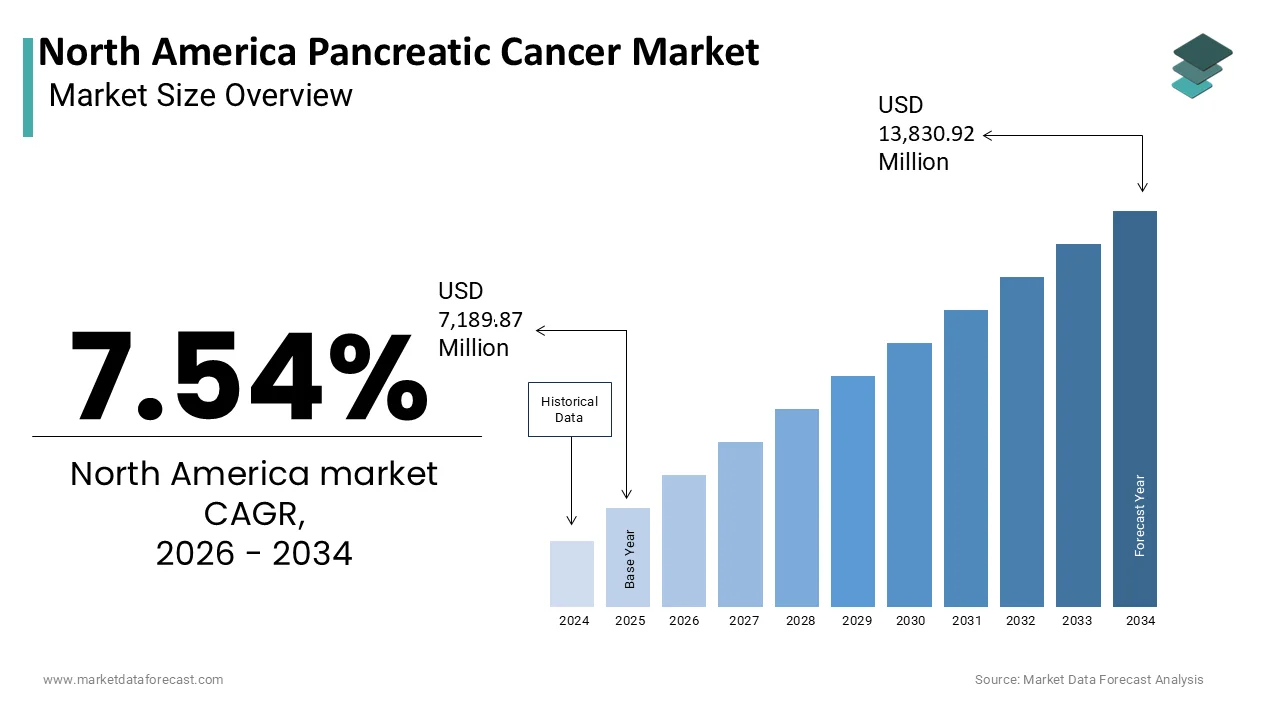
- The North America Pancreatic Cancer Market was valued at USD 7,189.87 million in 2025.
- Expected to reach USD 13,830.92 million by 2034, growing at a CAGR of 7.54% from 2026 to 2034.
- The market is projected to reach USD 7,731.98 million in 2026.
- The United States is the dominant country market and is valued approximately twice its 2019 level as of 2033.
Key Market Segments
- By Treatment Type: Surgery, Chemotherapy, Radiation Therapy, Other
- By Cancer Type: Exocrine Pancreas Cancer (led by pancreatic adenocarcinoma, accounting for 80% of diagnoses), Endocrine Pancreas Cancer
- By End User: Hospitals, Clinics, Research Institutes, Others
- By Country: United States leads; Canada contributes a promising regional share.
Key Drivers
- Rising incidence of pancreatic cancer, ranked the 12th most frequent cancer in males and 11th in females globally.
- Technological advancements in drug development, including kinase inhibitors and novel mechanism-of-action therapies targeting unmet needs.
- Market consumption shift from chemotherapy to targeted therapies and personalized medicine approaches.
Key Players
Eli Lilly, Amgen Inc., Celgene Corp., F. Hoffmann-La Roche, Clovis Oncology Inc., Pfizer, Novartis AG, Threshold Pharmaceuticals Inc., Aduro BioTech Inc., Infinity Pharmaceuticals Inc., and NewLink Genetics Corp.
 Download Free Sample Report
North America Pancreatic Cancer Market Size
The North America Pancreatic Cancer Market is projected to grow from USD 7,189.87 million in 2025 to USD 7,731.98 million in 2026 and reach USD 13,830.92 million by 2034, registering a CAGR of 7.54% during the forecast period from 2026 to 2034.
Pancreatic cancer is an advanced diagnostic tool, surgical intervention, and immunotherapeutic drug dedicated to detecting and treating malignant neoplasms of the pancreas across the United States and Canada. According to the American Cancer Society, an estimated 67,530 Americans will be diagnosed with pancreatic cancer, and more than 52,740 will die from the disease, highlighting the intense clinical demand for innovative therapeutic solutions. As per the Pancreatic Cancer Action Network, the disease remains the third leading cause of cancer-related death in the United States, necessitating an urgent reliance on sophisticated molecular profiling and specialized pharmaceutical pipelines. Industry stakeholders increasingly prioritize precision oncology platforms, early screening biomarkers, and combination drug regimens to address the aggressive nature of pancreatic ductal adenocarcinomas. Healthcare modernization and robust clinical trial infrastructures across North American institutions further reinforce the commercial expansion of this sector.
MARKET DRIVERS
Rising Incidence of Risk Factors and Aging Population Demographics
The escalating prevalence of metabolic disorders, tobacco consumption, and an expanding geriatric demographic base are significantly accelerating the growth of the North American pancreatic cancer market. According to the Centers for Disease Control and Prevention, over 40% of American adults suffer from obesity, which serves as a major physiological precursor linked to the onset of pancreatic malignancies. This growing high-risk patient population directly correlates with market expansion by ensuring a continuous stream of newly diagnosed individuals requiring complex diagnostic screening and long-term systemic therapies. Furthermore, the U.S. Census Bureau reports that the population aged 65 and older has grown by over 15% within the past decade, heavily compounding the baseline incidence of age-related pancreatic cancers. As a direct result, specialized oncology centers and pharmaceutical manufacturers continuously scale up their resource allocation toward advanced antineoplastic drugs designed to manage elderly patient cohorts effectively.
Advancements in Precision Medicine and Molecular Diagnostics
The rapid integration of next-generation sequencing, genetic biomarker profiling, and targeted drug delivery mechanisms fundamentally transforms clinical management pathways across regional healthcare networks. These advancements in precision medicine and molecular diagnostics are escalating the growth of the North America pancreatic cancer market. The technological evolution directly links to improved therapeutic efficacy, as molecular profiling allows oncologists to match specific genetic mutations with targeted therapies like poly ADP ribose polymerase inhibitors.
MARKET RESTRAINTS
Prohibitive Costs and Severe Economic Toxicity of Novel Therapies
The extreme financial burden associated with cutting-edge targeted drugs, immunotherapies, and advanced surgical management is hindering the growth of the North America pancreatic cancer market. The average out-of-pocket costs for specialized oncological treatments frequently exceed thousands of dollars monthly, creating severe affordability hurdles for uninsured or underinsured patients. This financial barrier directly curtails volume by forcing healthcare providers in resource-constrained community settings to rely on older, less effective generic chemotherapy regimens instead of modern biological agents. Consequently, these extreme pricing constraints compel pharmaceutical developers to navigate complex reimbursement hurdles and limit market growth.
Stringent Regulatory Frameworks and Lengthy Clinical Approval Timelines
The rigorous evaluation protocols mandated by health authorities to ensure patient safety introduce substantial delays in bringing novel diagnostic assays and experimental therapeutics, which also limits the growth of the North America pancreatic cancer market. According to the U.S. Food and Drug Administration, the average duration required to transition an oncology drug from initial phase clinical trials through final market authorization exceeds 7 years, involving exhaustive safety verifications. This regulatory friction directly restrains rapid commercial revenue generation by inflating pre-market development expenditures for emerging biotechnology companies attempting to introduce breakthrough diagnostic tools. Moreover, industry compliance reports published by the Biotechnology Innovation Organization highlight that fewer than 10% of oncology compounds entering early clinical phases successfully achieve commercial clearance due to strict efficacy mandates. Therefore, prolonged authorization timelines force market participants to divert critical operational resources toward compliance documentation rather than immediate commercial expansion.
MARKET OPPORTUNITIES
Expansion of Artificial Intelligence in Early Detection Screening
The rapid emergence of machine learning algorithms, digital imaging software, and vast clinical datasets opens transformative commercial avenues for early-stage diagnostic detection. This expansion of artificial intelligence in early detection screening is solely to create new opportunities for the growth of the North American pancreatic cancer market. This technological integration directly enhances market potential by enabling radiologists to identify subtle pancreatic lesions on computed tomography scans long before symptoms manifest, drastically improving surgical resectability rates. Furthermore, health informatics data published by the Radiological Society of North America demonstrates that AI-assisted diagnostic screening tools improve early tumor detection accuracy. The software developers and medical device manufacturers are heavily investing in proprietary diagnostic algorithms to capture high-value contracts with major hospital networks.
Rise of Specialized Clinical Trial Accelerators and Strategic Partnerships
The collaborative alliances between academic research centers, patient advocacy groups, and commercial pharmaceutical corporations create robust commercial pathways for rapid drug evaluation. The rise of specialized clinical trial accelerators and strategic partnerships is also to significantly boost the growth of the North American pancreatic cancer market. This collaborative trend directly drives market expansion by pooling financial resources and clinical expertise to test novel therapeutic combinations in adaptive trial designs like Precision Promise. Additionally, data from the Pharmaceutical Research and Manufacturers of America reveals that cooperative oncology ventures achieve a higher rate of clinical trial enrollment efficiency compared to isolated institutional efforts. As a result, commercial entities enjoy sustained revenue growth as these cooperative frameworks streamline the translation of experimental molecules into approved market treatments.
MARKET CHALLENGES
High Attrition Rates and Resistance to Systemic Pharmacological Agents
The aggressive biological nature of pancreatic tumors frequently leads to high failure rates during late-stage clinical trials and widespread resistance to standard treatments, which is likely to pose a major challenge for the growth of the North America pancreatic cancer market. According to the Tufts Center for the Study of Drug Development, oncology drug candidates targeting pancreatic cancer experience a clinical failure rate exceeding 90% during human testing phases due to lack of efficacy or unforeseen toxicity. This high attrition rate directly threatens market stability by causing sudden financial losses for mid-sized biotechnology firms that allocate immense capital budgets toward single-asset pipelines. Furthermore, translational oncology studies published in Nature Medicine demonstrate that the dense desmoplastic stroma surrounding pancreatic tumors prevents systemic drugs from penetrating the microenvironment effectively in many cases.
Complex Tumor Heterogeneity and Late-Stage Diagnostic Presentation Barriers
The multi-faceted genetic mutations within individual pancreatic tumors often complicate long-term disease management and render the vast majority of patients ineligible for curative surgical interventions. The complex tumor heterogeneity and late-stage diagnostic presentation barriers also degrade the growth of the North American pancreatic cancer market. This late-stage diagnostic bottleneck directly restricts market potential by limiting the addressable patient population eligible for curative-intent treatments and confining interventions to palliative systemic care. Moreover, clinical pathology data published in the Journal of the American Medical Association reveals that intra-tumoral heterogeneity causes acquired drug resistance within months of initiating first-line chemotherapy.
REPORT COVERAGE
| REPORT METRIC | DETAILS |
| Market Size Available | 2025 to 2034 |
| Base Year | 2025 |
| Forecast Period | 2026 to 2034 |
| Segments Covered | By Treatment Type, Cancer Type,End User, and Region |
| Various Analyses Covered | Global, Regional, and Country-Level Analysis, Segment-Level Analysis, Drivers, Restraints, Opportunities, Challenges; PESTLE Analysis; Porter’s Five Forces Analysis, Competitive Landscape, Analyst Overview of Investment Opportunities |
| Countries Covered | The U.S., Canada, Rest of North America |
| Market Leaders Profiled | Eli Lilly and Company, Amgen, Inc. |
SEGMENTAL ANALYSIS
By Treatment Type Insights
The chemotherapy segment was accounted in holding 23.1% of the North America pancreatic cancer market share in 2025 with the treatment category, serving as the foundational systemic approach for managing advanced gastrointestinal malignancies across North America. The widespread accessibility and lower comparative cost of traditional chemotherapeutic agents relative to novel biologic therapies. Consequently, medical oncologists heavily rely on these systemic regimens to control tumor proliferation, extending survival durations for patients ineligible for localized surgical interventions.
The targeted therapy segment is likely to grow at the fastest CAGR of 9.8% during the forecast period. According to the U.S. Food and Drug Administration, the accelerated authorization of molecularly guided drugs, including poly ADP ribose polymerase inhibitors for germline BRCA-mutated tumors, has surged over the recent evaluation cycle. This rapid expansion directly links to the paradigm shift toward precision oncology, where customized therapeutic molecules selectively disrupt cancer cell signaling pathways while minimizing systemic toxicity. Therefore, pharmaceutical developers continue to allocate substantial capital toward novel targeted compounds, driving dynamic revenue acceleration across specialty oncology clinics.
By Cancer Type Insights
The exocrine pancreas cancer segment was the largest, holding a dominant share of the North America pancreatic cancer market in 2025. Pancreatic ductal adenocarcinoma accounts for the vast majority of exocrine malignancies, characterized by aggressive local invasion and dense stroma formation. Furthermore, epidemiological data published in the Morbidity and Mortality Weekly Report demonstrate an annual increase in newly confirmed exocrine tumor diagnoses across North America. The healthcare institutions prioritize specialized diagnostic and therapeutic pathways tailored specifically to manage this prevalent and aggressive form of the disease.
The endocrine pancreas cancer segment is expected to grow at a fastest CAGR of 8.9% from 2026 to 2034. This rapid growth trajectory directly links to the expanding availability of specialized peptide receptor radionuclide therapies designed to target somatostatin receptors on neuroendocrine tumor cells. Moreover, clinical endocrinology trials data published in the Journal of Clinical Oncology reveals a 25% expansion in targeted biologic trials dedicated exclusively to pancreatic neuroendocrine malignancies.
By End User Insights
The hospitals segment held 28.1% of the North America pancreatic cancer market share in 2025 with the diagnostic procedures, major surgical resections, and complex inpatient chemotherapy administrations. The growth of the segment is also driven by the heavy concentration of advanced surgical infrastructure, robotic Whipple procedure capabilities, and multi-disciplinary tumor boards found exclusively within major medical centers. Furthermore, healthcare utilization reports published by the Centers for Medicare and Medicaid Services indicate a steady 8% annual increase in hospital-based complex cancer treatments. Consequently, tertiary care hospitals remain the primary revenue-generating hub for high-cost antineoplastic drug distribution and specialized inpatient management.
The research institutes segment is likely to grow with a fastest CAGR of 9.2% from 2026 to 2034. This accelerated growth rate directly links to the intensive institutional focus on mapping tumor microenvironments, sequencing genetic mutations, and managing early-phase adaptive clinical trials. Additionally, scientific consortium data published in Nature Reviews Clinical Oncology highlights a annual increase in collaborative biospecimen research agreements between academic institutions and pharmaceutical developers. Therefore, specialized research facilities continuously scale up their laboratory capabilities, driving rapid procurement of innovative genomic sequencing platforms and experimental reagents.
COUNTRY LEVEL ANALYSIS
United States Pancreatic Cancer Market Analysis
The United States was the top performer in the North America pancreatic cancer market by accounting for 85.2% of share in 2025 with the advanced healthcare infrastructure and high per capita spending. According to the Centers for Medicare and Medicaid Services, national health expenditures dedicated to specialized cancer care exceed annually by facilitating rapid adoption of expensive precision therapies. This prominent national position directly correlates with the heavy concentration of elite biopharmaceutical corporations, venture-backed oncology startups, and National Cancer Institute designated comprehensive cancer centers within the country. Furthermore, regulatory frameworks established by the U.S. Food and Drug Administration foster a streamlined pathway for breakthrough oncology drug approvals, encouraging aggressive commercial investments.
Canada Pancreatic Cancer Market Analysis
Canada pancreatic cancer market was ranked second by holding 11.2% of the share in 2025 with the universal healthcare coverage and integrated provincial cancer registries. This established status directly correlates with centralized clinical trial networks that facilitate rapid multi-site patient recruitment for novel therapeutic evaluations. Additionally, the annual rise in domestic biotechnology investments focused on targeted oncology drug development. Therefore, Canadian medical institutions provide a highly reliable, regulated ecosystem that attracts international pharmaceutical partnerships and collaborative research initiatives.
COMPETITIVE LANDSCAPE
The competitive landscape of the North American pancreatic cancer market is characterized by intense rivalry among established multinational pharmaceutical conglomerates and agile biotechnology innovators striving for clinical differentiation and therapeutic superiority. Strategic positioning heavily relies on clinical trial success rates, the speed of regulatory authorization, and the ability to demonstrate superior overall survival benefits in heavily pre-treated patient cohorts. High research and development expenditures, complex tumor heterogeneity, and stringent reimbursement hurdles compel companies to continuously optimize their pipeline investments and prioritize high-value genetic subpopulations.
KEY MARKET PLAYERS
Some of the companies that are playing a dominating role in the North America Pancreatic Cancer Market include:
- Eli Lilly and Company
- Amgen, Inc.
- Celgene Corporation
- F. Hoffmann-La Roche Ltd.
- Clovis Oncology, Inc.
- Pfizer Inc.
- Novartis AG
- Threshold Pharmaceuticals, Inc.
- Aduro BioTech, Inc.
- Infinity Pharmaceuticals, Inc.
- NewLink Genetics Corporation
TOP LEADING PLAYERS IN THE MARKET
- Pfizer contributes significantly to the North American pancreatic cancer market by developing and distributing targeted oncology therapeutics and advanced small molecule inhibitors designed to disrupt cancer cell proliferation. The pharmaceutical enterprise leverages its extensive clinical research network to evaluate novel combination therapies that address the aggressive biological mechanisms of pancreatic ductal adenocarcinoma. Furthermore, the organization invests heavily in expanding its late-stage clinical pipelines to secure accelerated regulatory approvals for hard-to-treat gastrointestinal malignancies. Through these dedicated efforts, the firm maintains a crucial role in advancing therapeutic standards across regional healthcare systems.
- Novartis shapes the regional therapeutic landscape through the creation of specialized radioligand therapies, targeted molecular treatments, and innovative oncology portfolios tailored for complex tumor environments. The corporation contributes extensively to the market by advancing precision medicine initiatives that match specific genetic profiles with highly selective antineoplastic agents. Additionally, the firm allocates substantial capital toward enhancing its biomanufacturing infrastructure to ensure uninterrupted commercial supply chains for critical oncology medicines across North America. These strategic operational investments enable the business to deliver effective therapeutic solutions that address high unmet medical needs.
- AstraZeneca drives substantial advancements in the North American pancreatic cancer market by pioneering cutting-edge targeted oncology drugs, including poly ADP ribose polymerase inhibitors and immune-mediated combination therapies. The enterprise contributes deeply to the sector by advancing biomarker-driven clinical trials that improve patient stratification and therapeutic efficacy for advanced tumors. Moreover, the company focuses intensely on expanding its global clinical trial footprint across North American hospital networks to accelerate regulatory clearance for breakthrough oncology designations. Through continuous scientific innovation and targeted portfolio expansion, the firm secures enduring partnerships with leading healthcare providers.
TOP STRATEGIES USED BY KEY MARKET PARTICIPANTS
Key market participants operating within the North American pancreatic cancer industry deploy sophisticated commercial and clinical strategies designed to maintain a competitive advantage amid rigorous regulatory demands and high attrition rates. Major pharmaceutical corporations heavily prioritize strategic mergers, corporate buyouts, and licensing agreements to acquire promising early-stage oncology pipelines and proprietary targeted drug delivery technologies. Organizations routinely establish robust clinical research partnerships with academic medical centers and patient advocacy networks to co-develop adaptive trial designs and biomarker-driven screening programs. Furthermore, leading entities execute aggressive portfolio diversification strategies, integrating precision companion diagnostics, next-generation sequencing assays, and immunotherapeutic combination regimens directly into their commercial offerings. Companies also focus intensely on regulatory acceleration tactics, pursuing fast-track designations and breakthrough therapy authorizations from health authorities to shorten pre-market development timelines.
MARKET SEGMENTATION
This research report on the North American Pancreatic Cancer Market has been segmented & sub-segmented into the following categories
By Treatment Type
- Surgery
- Chemotherapy
- Radiation Therapy
- Other
By Cancer Type
- Exocrine Pancreas Cancer
- Endocrine Pancreas Cancer
By End User
- Hospitals
- Clinics
- Research Institutes
- Others
By Country
- United States
- Canada
- Rest of North America