- Product Description Description
- Table of Contents TOC
- List of Table & Figure LOT
- Get Free Sample PDF Sample PDF
Market Size, 2025
$33.40 BnMarket Estimate, 2026
$34.63 BnMarket Forecast, 2034
$46.20 BnCAGR, 2026–2034
3.67%North America Pet Food Market Size, Growth, Trends & Forecast (2026–2034)
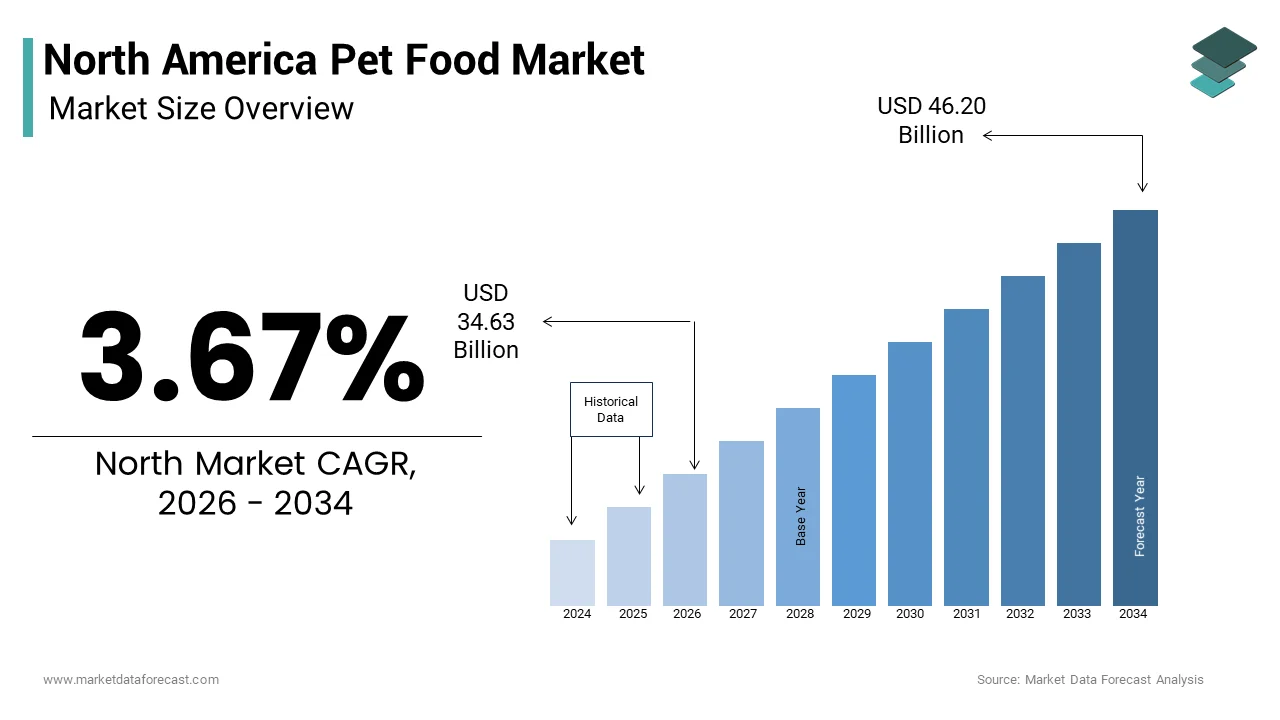
The North American pet food market size was valued at USD 33.40 billion in 2025, is anticipated to reach USD 34.63 billion in 2026, and is projected to scale up to USD 46.20 billion by 2034, registering a compound annual growth rate (CAGR) of 3.67% during the forecast period from 2026 to 2034. Driven by the rising humanization of pets, growing health awareness, and expansion into e-commerce delivery and sustainable product lines, the regional market continues to expand steadily.
Key Executive Metrics (At-a-Glance)
- 2025 Base Valuation: USD 33.40 Billion
- 2026 Current Valuation: USD 34.63 Billion
- 2034 Forecast Valuation: USD 46.20 Billion
- Compound Annual Growth Rate (CAGR): 3.67% (2026–2034)
- Dominant Product / Ingredient Type: Animal Derivatives (holding the largest market share due to essential high-protein requirements)
- Dominant Application Segment: Dog (leading animal type category driven by high domestic household ownership)
- Fastest-Growing Application Segment: Fruits & Vegetables / Bird (propelled by functional nutrition demands and exotic bird popularity)
- Dominant Region: United States (holding primary regional market shares backed by high pet ownership and advanced retail infrastructure)
Core Market Drivers
- Pet Humanization: Emotional bonding driving demand for specialized, breed-specific, and premium diets.
- Health Consciousness: Rising preference for functional foods enriched with probiotics, antioxidants, and omega-3 fatty acids to enhance pet longevity.
- Digital Accessibility: Proliferation of e-commerce channels and subscription models ensuring seamless delivery and recurring engagement.
Primary Market Restraints & Challenges
- Economic Volatility: Inflationary pressures causing price sensitivity and shifting budget-conscious consumers toward cheaper alternatives.
- Regulatory Scrutiny: Strict compliance demands and safety regulations from agencies like the FDA following historical contamination recalls.
North America Pet Food Market Segmentation Breakdown
| Segment Category | Leading Sub-Segment (2025 Base) | Fastest-Growing Sub-Segment (2026–2034) |
|---|---|---|
| By Ingredients | Animal Derivatives (largest market share for high protein content) | Fruits & Vegetables (fastest-growing due to functional and clean-label trends) |
| By Animal Type | Dog (largest consumer segment for tailored and ready-to-feed formulations) | Bird (fastest-growing segment driven by exotic bird adoption and fortified diets) |
| By Country / Region | United States (major regional market leader in volume and revenue) | Canada & Mexico (fastest-growing regional adoption pockets for sustainable and urban pet care) |
Major Industry Players Profiled
Key enterprises shaping the North American pet food market include Mars, Inc., Nestle Purina PetCare, Hills Pet Nutrition, Inc., Del Monte Foods, Unicharm Corporation, Spectrum Brands, INC., and Nippon Formula Feed Manufacturing Company.
North America Pet Food Market Size
The North American pet food market was valued at USD 33.40 billion in 2025 and is anticipated to reach USD 34.63 billion in 2026 from USD 46.20 billion by 2034, growing at a CAGR of 3.67% during the forecast period from 2026 to 2034.
MARKET DRIVERS
Humanization of Pets
The humanization of pets is a cornerstone driving the North American pet food market. This emotional connection has fueled demand for specialized diets tailored to specific breeds, ages, and health conditions. For instance, Royal Canin offers breed-specific formulas that cater to the unique nutritional needs of dogs like Golden Retrievers and French Bulldogs. Besides, the rise of personalized pet nutrition services, such as Tails.com, exhibits this trend. Millennials and Gen Z pet owners, who prioritize quality and customization, represent a significant demographic shift. A survey conducted by Packaged Facts reveals that 45% of millennial pet owners are willing to pay a premium for organic or sustainably sourced ingredients. This growing emphasis on treating pets as companions rather than animals drives innovation and diversification in product offerings, propelling the market forward.
Rising Awareness About Pet Health
Another key driver is the heightened awareness about pet health and wellness. According to the National Pet Nutrition Alliance, over 50% of pet owners actively seek out food options that promote longevity and vitality. Veterinarian-recommended diets, fortified with probiotics, omega-3 fatty acids, and antioxidants, have gained popularity. Blue Buffalo, a leading brand, emphasizes its "LifeSource Bits" formula, which supports immune health and has captured a notable share of the premium pet food segment. Functional foods addressing allergies, joint issues, and digestive health are also witnessing robust growth.
MARKET RESTRAINTS
Economic Sensitivity and Price Volatility
One significant restraint affecting the North American pet food market is its sensitivity to economic fluctuations and price volatility. Inflationary pressures have led to an increase in pet food prices over the past two years, impacting affordability for budget-conscious consumers. Rising costs of raw materials, including meat, grains, and packaging, exacerbate this issue. For instance, disruptions in global supply chains during the pandemic caused shortages of key ingredients like chicken and fish, forcing manufacturers to pass on higher costs to consumers. A study by the Consumer Brands Association highlights that 30% of pet owners have switched to cheaper alternatives or reduced their purchase volumes in response to rising prices. This economic sensitivity disproportionately affects low-income households, where pet food expenses compete with other essential expenditures.
Regulatory Compliance and Ingredient Scrutiny
Another restraint is the stringent regulatory environment and growing scrutiny over ingredient safety. As per the U.S. Food and Drug Administration (FDA), recalls related to contaminants like aflatoxins and melamine have raised concerns about product reliability. In 2021 alone, numerous major pet food recalls were issued due to potential health risks, eroding consumer confidence. Besides, debates surrounding controversial ingredients, such as carrageenan and artificial preservatives, have intensified. A report by the Environmental Working Group indicates that a significant number of pet owners now scrutinize ingredient lists before purchasing, favoring transparent labeling and clean formulations. Manufacturers must invest heavily in compliance, testing, and reformulation, increasing operational costs.
MARKET OPPORTUNITIES
Expansion into E-commerce and Subscription Models
The rapid growth of e-commerce presents a lucrative opportunity for the North American pet food market. According to McKinsey & Company, online pet food sales surged during the pandemic, driven by convenience and doorstep delivery. Platforms like Chewy and Amazon have capitalized on this trend by offering subscription services that ensure timely replenishment of pet food supplies. Smaller brands benefit from direct-to-consumer models, bypassing traditional retail channels and building stronger customer relationships. Personalized recommendations based on pet profiles further enhance user engagement. This digital transformation not only expands market reach but also fosters brand loyalty through seamless shopping experiences.
Development of Sustainable and Eco-friendly Products
Sustainability is another significant opportunity, driven by environmentally conscious consumers seeking eco-friendly pet food options. Companies like Open Farm and Wild Earth are pioneering initiatives such as carbon-neutral production and biodegradable packaging, appealing to this demographic. Plant-based and insect protein-based diets are emerging as innovative solutions to reduce the environmental footprint of traditional livestock farming. A report by the World Resources Institute highlights that insect-based pet food generates 90% fewer greenhouse gas emissions compared to beef-based alternatives. Apart from these, partnerships with organizations promoting circular economies, such as TerraCycle, enable recycling programs for pet food packaging.
MARKET CHALLENGES
Intense Competition and Brand Saturation
The North American pet food market faces the challenge of intense competition and brand saturation, complicating efforts to differentiate products. Smaller brands struggle to gain visibility amidst aggressive marketing campaigns and established distribution networks. Moreover, private-label products offered by retailers like Walmart and Target provide affordable alternatives, intensifying price wars.
Misinformation and Consumer Confusion
Another pressing challenge is the prevalence of misinformation and consumer confusion regarding pet nutrition. Like, conflicting advice from social media influencers, unverified blogs, and anecdotal evidence often misleads pet owners about dietary requirements. For instance, the trend of feeding raw diets has gained popularity despite concerns raised by veterinarians about nutritional imbalances and bacterial contamination. A survey conducted by the Veterinary Nutrition Care organization shows that 40% of pet owners admit to being overwhelmed by contradictory information. This lack of clarity hinders informed decision-making and creates skepticism toward branded products. Manufacturers must invest in educational campaigns to dispel myths and promote scientifically backed formulations.
REPORT COVERAGE
| REPORT METRIC | DETAILS |
| Market Size Available | 2025 to 2034 |
| Base Year | 2025 |
| Forecast Period | 2026 to 2034 |
| CAGR | 3.67% |
| Segments Covered | By Ingredients, Animal Type, and Country |
| Various Analyses Covered | Regional and Country-Level Analysis, Segment-Level Analysis, DROC, PESTLE Analysis, Porter’s Five Forces Analysis, Competitive Landscape, Analyst Overview of Investment Opportunities |
| Regions Covered | US, Canada, and the Rest of North America |
| Market Leaders Profiled | Mars, Inc., Del Monte Foods, Hills Pet Nutrition, Inc., Unicharm Corporation, Nippon Formula Feed Manufacturing Company, Ltd., Pet Center |
SEGMENTAL ANALYSIS
By Ingredients Insights
The animal derivatives segment dominated the North American pet food market by capturing 40.5% of the total share in 2024. This top position is supported by their high protein content, which is essential for muscle development and overall health. The humanization trend has amplified demand. Brands like Blue Buffalo and Hill’s Science Diet have capitalized on this preference, offering meat-first formulations that align with consumer expectations. In addition, the rise of grain-free diets, which rely heavily on animal derivatives, has contributed significantly to this segment’s growth.
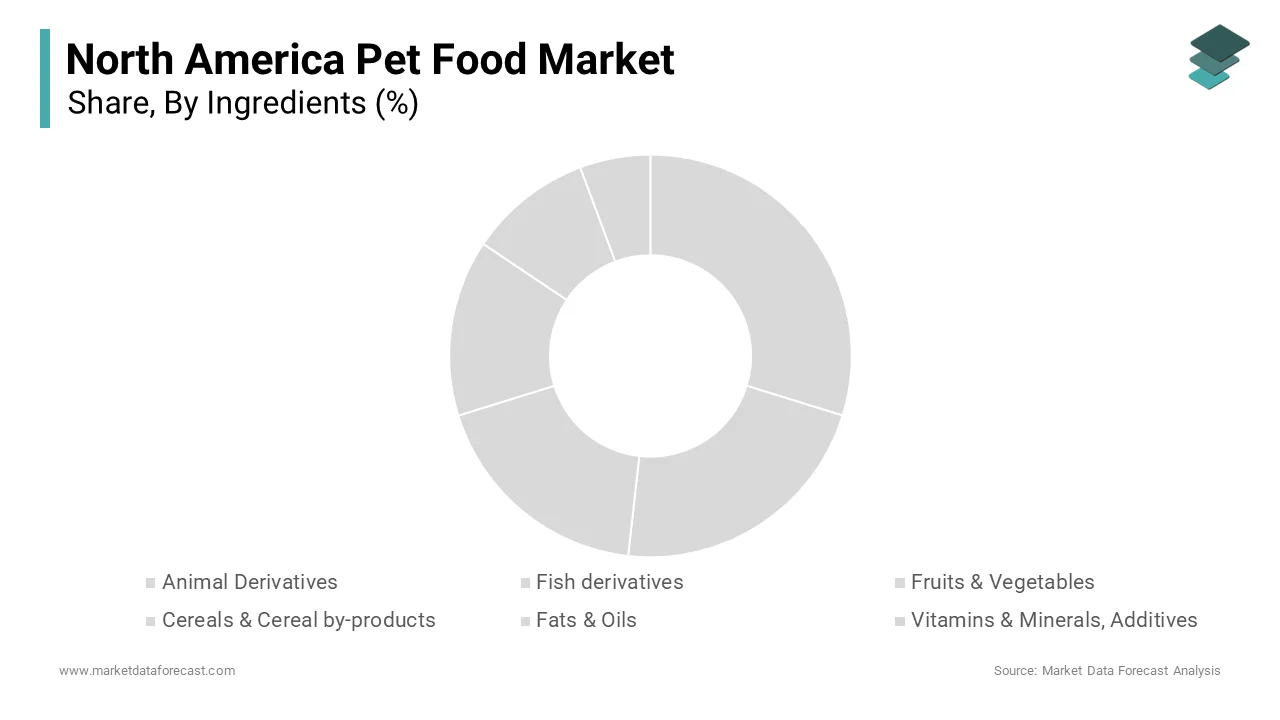
The fruits and vegetables segment represented the fastest-growing category, with a CAGR of 13.2% during the forecast period. This rapid expansion is backed by increasing awareness about functional nutrition and the inclusion of superfoods in pet diets. Companies like Wellness Natural Pet Food incorporate these ingredients into their recipes, appealing to health-conscious consumers. The rise of hybrid diets, combining animal proteins with nutrient-rich produce, has further accelerated demand. A report by Packaged Facts brings to light that vegetable-infused pet foods have grown by 20% annually since 2020, driven by millennial pet owners who prioritize holistic health. Apart from these, the push for clean-label products, free from artificial additives, has elevated the appeal of natural ingredients, strengthening this segment’s position as a key growth driver.
By Animal Type Insights
The dog food segment accounted for the largest share of the North American pet food market, i.e., 50.5% of the total market in 2024. This dominance is underpinned by the sheer number of dog-owning households. Dogs are often viewed as companions requiring specialized nutrition, driving demand for premium and tailored formulations. For instance, brands like Royal Canin offer breed-specific diets that cater to unique nutritional needs, such as joint support for larger breeds. The rise of urbanization has also fueled demand for convenient, ready-to-feed options like kibble and wet food. Apart from these, the growing popularity of dog sports and agility training has increased focus on performance-driven diets, further cementing this segment’s leadership.
The bird segment is the quickest emerging category, with a CAGR of 11.5% from 2025 to 2033. This progression is propelled by the rising popularity of exotic birds, such as parrots and cockatiels, as pets. Also, the demand for specialized diets, including seed mixes fortified with vitamins and minerals, has expanded significantly. Companies like Kaytee and ZuPreem have capitalized on this trend by offering nutritionally balanced formulations tailored to different bird species. Moreover, the emphasis on preventive healthcare has led to increased adoption of fortified diets aimed at enhancing plumage quality and longevity.
REGIONAL ANALYSIS
United Kingdom Pet Food Market Analysis
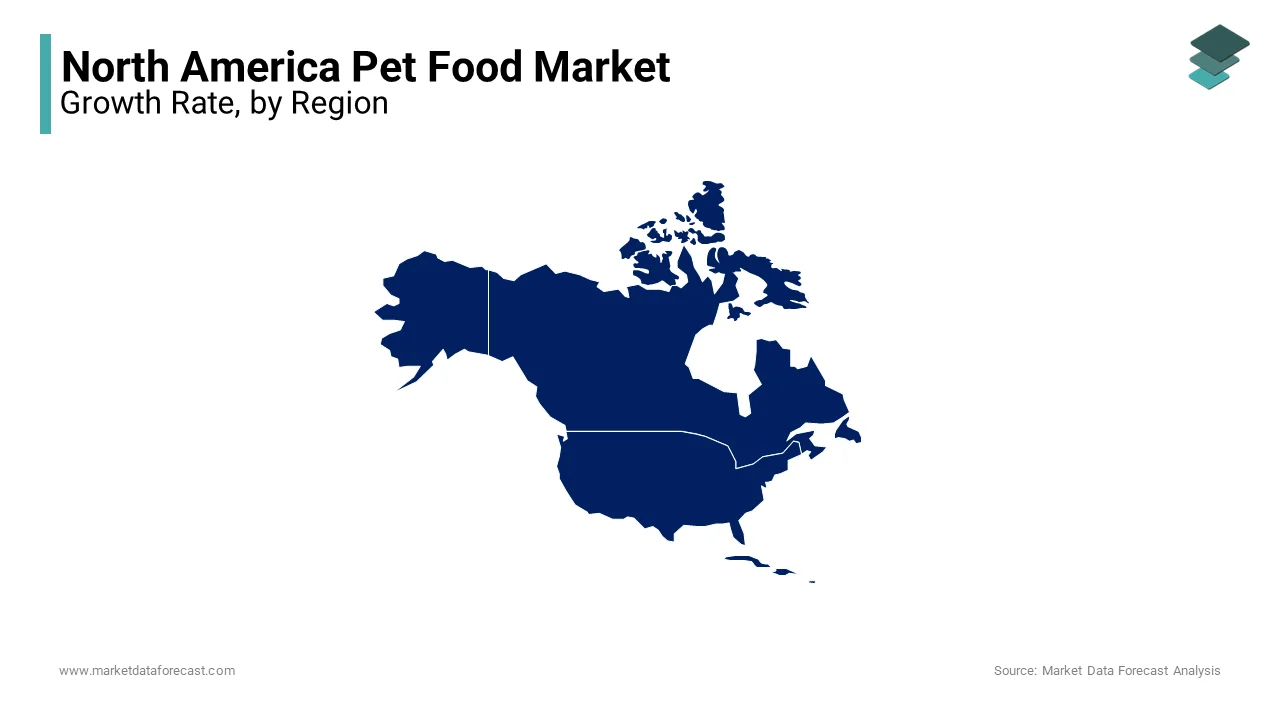
The United States commanded the North American pet food market with a 75.5% share in 2024. This is driven by high pet ownership rates and a strong cultural emphasis on pet care. According to the American Pet Products Association (APPA), a large percentage of households in the U.S. own pets, creating a robust demand for diverse pet food options. The country’s advanced retail infrastructure, including e-commerce platforms like Chewy and Amazon, ensures widespread accessibility to premium and specialty products. Also, the rise of urbanization has fueled demand for convenient, ready-to-feed solutions. The U.S. also leads in innovation, with companies like Nestlé Purina and Mars Petcare introducing cutting-edge formulations tailored to specific breeds and health conditions, further strengthening its dominance.
Canada Pet Food Market Analysis
Canada holds a notable share of the North American pet food market, which is supported by its high disposable incomes and growing urbanization. According to Statistics Canada, pet ownership rates in urban centers like Toronto and Vancouver have surged over the past decade, driving demand for premium pet food products. Canadian consumers prioritize sustainability, with a notable number seeking eco-friendly packaging and responsibly sourced ingredients. Local brands like Open Farm have gained traction by offering transparent sourcing and sustainable practices, aligning with consumer values. In addition, the country’s stringent regulatory environment ensures compliance with nutritional standards, fostering trust among pet owners. Canada’s proximity to the U.S. also facilitates cross-border trade, enabling access to innovative products and strengthening its regional significance.
The Rest of North America is primarily comprised of Mexico. Despite its smaller size, this region exhibits significant growth potential due to rising disposable incomes and urbanization. According to the Mexican Association of the Pet Industry, pet ownership in Mexico has grown significantly over the past five years, driven by changing lifestyles and increased awareness of pet health. The demand for affordable yet nutritious pet food has expanded significantly, with local brands like NutriPet gaining popularity. Besides, international players like Mars Petcare and Nestlé Purina are expanding their presence in Mexico through strategic partnerships with local retailers. A report by the World Bank highlights that urbanization in Mexico is expected to reach 80% by 2030, further boosting demand for convenient pet care solutions.
COMPETITIVE LANDSCAPE
The North American pet food market is characterized by fierce competition, driven by innovation, premiumization, and sustainability. Major players like Nestlé Purina, Mars Petcare, and Hill’s Pet Nutrition dominate the landscape, leveraging their extensive resources to develop cutting-edge products. Smaller brands, however, are gaining traction by focusing on niche segments such as plant-based diets and exotic proteins. The rise of e-commerce has intensified competition, enabling direct-to-consumer models that bypass traditional retail channels. Regulatory compliance and ingredient transparency further elevate barriers to entry, ensuring high standards across the industry. Consumer preferences for personalized, health-focused, and eco-friendly options continue to shape the competitive dynamics. As urbanization and pet humanization trends persist, companies are compelled to innovate while balancing affordability and quality.
KEY MARKET PLAYERS
The North American pet food industry is highly concentrated, with ten major players together accounting for more than 50% of the market share, and the remaining market share is distributed among a large number of small manufacturers.
- Mars, Inc.
- Del Monte Foods
- Hills Pet Nutrition, Inc.
- Unicharm Corporation,
- Nippon Formula Feed Manufacturing Company
- LTD
- Pet Center
- Incorporated (PCI)
- Nestle Purina PetCare
- Nisshin Saifun Group, INC
- Natural Dog Food Company
- Halo
- Purely for Pets
- Marukan CO., LTD.
- Nutrena
- Spectrum Brands, INC.
Top Players In The Market
- Nestlé Purina is a global leader in the pet food industry, renowned for its diverse portfolio of brands like Pro Plan, Purina ONE, and Beneful. The company’s commitment to innovation has enabled it to cater to evolving consumer preferences, including premium and functional diets. Purina emphasizes research-driven formulations, collaborating with veterinarians and nutritionists to ensure product efficacy. Its sustainability initiatives, such as reducing packaging waste and sourcing responsibly, align with modern environmental values. By addressing both health-conscious and eco-friendly trends, Nestlé Purina strengthens its global presence while maintaining a strong foothold in North America.
- Mars Petcare dominates the pet food market with iconic brands such as Pedigree, Whiskas, and Royal Canin. The company focuses on personalized nutrition, offering tailored solutions for specific breeds and health conditions. Mars Petcare’s emphasis on scientific research ensures high-quality standards, earning trust among veterinarians and consumers alike. Beyond pet food, its broader ecosystem includes veterinary services and pet technology, creating a holistic approach to pet care. This integrated strategy enhances brand loyalty and positions Mars Petcare as a comprehensive solution provider in the global market.
- Hill’s Pet Nutrition specializes in science-based pet food, targeting health-conscious pet owners and veterinarians. Its Prescription Diet line addresses specific medical conditions, making it a preferred choice for therapeutic nutrition. Hill’s commitment to quality is reflected in its rigorous testing and ingredient transparency. Additionally, the company actively engages in educational campaigns to promote pet health awareness. By focusing on premium, veterinarian-recommended products, Hill’s strengthens its reputation as a trusted name worldwide, contributing significantly to the global pet food landscape.
Top Strategies Used by Key Market Participants
Product Premiumization and Innovation
Key players are investing heavily in premiumization and innovation to meet rising consumer expectations. Companies are launching specialized formulations, such as grain-free, organic, and plant-based diets, to cater to niche markets. For instance, introducing functional ingredients like probiotics and omega-3 fatty acids enhances product appeal. By emphasizing clean labels and transparent sourcing, brands differentiate themselves in a competitive landscape.
Strategic Partnerships and Collaborations
Collaborations with veterinarians, influencers, and e-commerce platforms are pivotal strategies for market leaders. Partnering with veterinarians ensures credibility and promotes therapeutic diets, while influencer marketing amplifies brand visibility among younger demographics. Additionally, alliances with online retailers like Chewy and Amazon streamline distribution and enhance accessibility.
Sustainability Initiatives
Sustainability is a cornerstone of competitive strategies in the pet food sector. Leading firms are adopting eco-friendly practices, such as recyclable packaging and carbon-neutral production processes. Campaigns promoting responsible sourcing and reduced environmental footprints resonate with environmentally conscious consumers. By aligning with global sustainability goals, companies not only enhance their brand image but also address regulatory pressures and societal expectations. This forward-thinking approach ensures relevance in an increasingly eco-aware marketplace.
RECENT MARKET NEWS
- In March 2023, Nestlé Purina launched a new line of plant-based dog food under its Beyond brand, targeting eco-conscious consumers seeking sustainable pet nutrition options.
- In June 2023, Mars Petcare partnered with TerraCycle to introduce a recycling program for pet food packaging, aiming to reduce environmental impact and enhance brand reputation among sustainability-focused buyers.
- In August 2023, Hill’s Pet Nutrition expanded its Prescription Diet range with a new formula designed to support kidney health in cats, reinforcing its leadership in therapeutic pet nutrition.
- In October 2023, Blue Buffalo introduced a subscription-based delivery service for its premium pet food products, enhancing customer convenience and fostering brand loyalty through recurring engagement.
- In December 2023, Wellness Natural Pet Food collaborated with Chewy to offer exclusive online bundles and discounts, strengthening its e-commerce presence and tapping into the growing trend of online pet food purchases.
MARKET SEGMENTATION
This research report on the North American pet food market is segmented and sub-segmented into the following categories.
By Ingredients
- Animal Derivatives
- Fish derivatives
- Fruits & Vegetables
- Cereals & Cereal by-products
- Fats & Oils
- Vitamins & Minerals, Additives
By Animal Type
- Dog
- Cat
- Bird
- Others
By Country
- US
- Canada
- Rest of North America