- Product Description Description
- Table of Contents TOC
- List of Table & Figure LOT
- Get Free Sample PDF Sample PDF
Market Size, 2025
$3.83 BnMarket Estimate, 2026
$4.96 BnMarket Forecast, 2034
$6.87 BnCAGR, 2026–2034
6.70%Executive Summary: North America Polymerase Chain Reaction Market
- Market Scope: Comprehensive North America polymerase chain reaction market analysis covering product types, application areas, country-level adoption frameworks, and rising clinical and genomic diagnostic drivers.
- Market Valuation: Valued at USD 3.83 billion (2025), estimated at USD 4.09 billion (2026), and projected to reach USD 6.87 billion by 2034, registering a solid CAGR of 6.70% (2026–2034).
- Primary Growth Drivers: Increasing elderly population, rising prevalence of infectious disorders and chronic diseases, and surging demand for precision and personalized medicine. Key operational metrics include government regulatory frameworks supporting emergency diagnostics (such as HHS declarations), expanded R&D investments in biotechnology, and growing direct-to-consumer genetic testing applications.
Key Market Segment Metrics (2026–2034)
| Category | Leading Segment (2025 Position) | Fastest-Growing Segment |
|---|---|---|
| By Types | PCR Consumables & Reagents (dominated market share due to recurring high-volume usage across diagnostic tests and research workflows) | PCR Instruments & Automated Systems (expanding rapidly driven by technological advancements and smart laboratory upgrades) |
| By Type of Application | Gene Expression & Clinical Diagnostics (led market demand for pathogen detection, infectious disease screening, and chronic disease analysis) | DNA Sequencing & Cloning (experiencing rapid growth fueled by genomic medicine, oncology research, and targeted drug discovery) |
| By Country | United States (dominated regional revenue share with ~53% total contribution backed by advanced healthcare infrastructure and strong government backing) | Canada (projected to experience significant continuous market growth through increased genomic research and R&D investments) |
Major Market Players & Market Structure
Market Structure: Highly competitive North American molecular diagnostics and biotechnology landscape featuring established life science providers competing on PCR accuracy, thermal cycler efficiency, high-throughput automation, and customized research applications.
Key Companies: Clontech Laboratories, Eppendorf, Fluidigm, PerkinElmer, bioMérieux, GE, RainDance Technologies, Siemens Healthcare, Beckman Coulter, Becton, Dickinson and Company, Cepheid, Harvard Bioscience, Maxim Biotech, Promega, and Kapa Biosystems.
 Download Free Sample Report
North America Polymerase Chain Reaction Market Size
The North America Polymerase Chain Reaction Market size will be valued at USD 3.83 billion in 2025. and it is projected to reach USD 6.87 billion by 2034 from USD 4.09 billion in 2026, at a CAGR of 6.70% during the forecast period from 2026 to 2034.
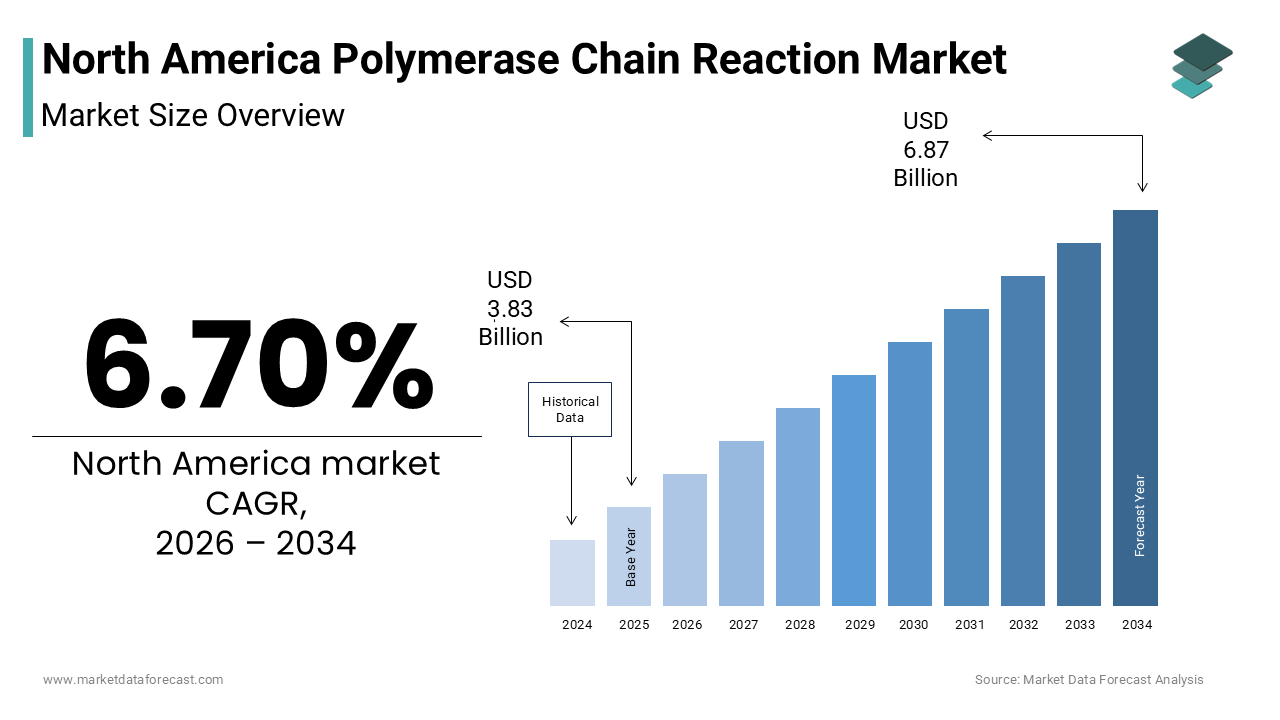
The polymerase chain reaction is modern molecular diagnostics and genomic research by enabling the precise amplification of DNA sequences for diverse clinical and scientific applications. This technology is indispensable for infectious disease detection, oncology profiling, and genetic disorder screening across the United States and Canada. According to the Centers for Disease Control and Prevention, over 100 million diagnostic tests utilizing polymerase chain reaction methodologies are performed annually in the United States alone, amplifying its role in public health surveillance. This high volume of testing drives continuous demand for robust reagents and advanced thermal cyclers. As per the National Institutes of Health, federal funding for genomic research exceeded 6 billion dollars in the recent fiscal year, facilitating the adoption of next generation sequencing and quantitative PCR techniques in academic and clinical settings. The integration of automation and digital platforms further enhances throughput and accuracy in high volume laboratories. Regulatory frameworks established by the Food and Drug Administration ensure the safety and efficacy of diagnostic kits, fostering trust among healthcare providers. The rising prevalence of chronic diseases and the need for personalized medicine strategies amplify the reliance on precise molecular data.
MARKET DRIVERS
Rising Prevalence Of Infectious Diseases And Chronic Conditions Fuels Demand
The escalating burden of infectious diseases and chronic conditions, significantly accelerating the growth of the North America Polymerase Chain Reaction Market. Molecular diagnostics offer superior sensitivity and specificity compared to traditional culture methods, making them the gold standard for pathogen identification. According to the Centers for Disease Control and Prevention, sexually transmitted infections reached record highs with over 2.5 million cases reported in the most recent year, necessitating rapid and accurate diagnostic tools. Polymerase chain reaction assays enable early detection of pathogens such as Chlamydia and Gonorrhea, facilitating timely treatment and preventing transmission. Additionally, the rising incidence of cancer drives the need for precise genetic profiling to guide targeted therapies. The American Cancer Society states that approximately 1.9 million new cancer cases will be diagnosed in the United States this year, creating substantial demand for companion diagnostics. Oncologists rely on PCR based tests to identify specific mutations such as EGFR or KRAS which determine eligibility for novel drug treatments. The ability to detect minimal residual disease using highly sensitive PCR techniques improves patient monitoring and outcomes. Hospitals and reference laboratories are expanding their molecular capabilities to handle this growing workload. Reimbursement policies increasingly cover molecular tests due to their proven clinical utility.
Advancements In Genomic Research And Personalized Medicine Boost Adoption
The rapid advancements in genomic research and the widespread adoption of personalized medicine is elevating the growth of the North America Polymerase Chain Reaction Market. Researchers and clinicians increasingly utilize PCR technologies to decode complex genetic information and tailor medical interventions to individual patients. The cost of whole genome sequencing has dropped below 1000 dollars by making large scale genomic studies feasible and increasing the need for validation tools like PCR. Quantitative PCR remains essential for validating gene expression data and confirming variants identified through sequencing. The Precision Medicine Initiative launched by the federal government aims to integrate genetic data into routine care, driving investment in molecular infrastructure. Academic institutions and pharmaceutical companies conduct extensive clinical trials that rely on PCR for biomarker analysis. The Journal of Molecular Diagnostics notes that over 60% of published clinical trials now incorporate molecular endpoints requiring robust amplification techniques.
MARKET RESTRAINTS
High Operational Costs And Reimbursement Challenges Limit Accessibility
The substantial operational costs associated with advanced polymerase chain reaction systems and limited reimbursement coverage, which is restricting the growth of the North America Polymerase Chain Reaction Market. Establishing a molecular diagnostics laboratory requires significant capital investment in specialized equipment, controlled environments, and highly trained personnel. Ongoing expenses for proprietary reagents and maintenance contracts further strain budgets. Reimbursement policies often lag behind technological innovations, leaving providers with insufficient compensation for complex tests. The delays in assigning Current Procedural Terminology codes can result in payment denials or reduced rates for new molecular assays. This financial uncertainty discourages hospitals from expanding their molecular service offerings. Small independent laboratories struggle to compete with large reference labs that benefit from economies of scale. Patients may face high out of pocket costs if insurance coverage is denied, limiting access to essential diagnostics. The complexity of billing for multiplex panels adds administrative burdens. Financial pressures force some providers to limit test menus or outsource testing, reducing local capacity. These economic constraints restrict market penetration particularly in rural and underserved areas.
Stringent Regulatory Requirements And Compliance Burdens Restrict Innovation
The rigorous regulatory landscape and stringent compliance requirements is also hindering the growth of the North America Polymerase Chain Reaction Market. The Food and Drug Administration enforces strict guidelines for the approval of in vitro diagnostic devices, ensuring safety and efficacy but prolonging time to market. Obtaining clearance for new PCR assays can take several years and require extensive clinical validation data. The FDA reports that the review process for novel molecular diagnostics has become more complex with increased scrutiny on analytical and clinical validity. This regulatory burden increases development costs and risks for manufacturers, particularly small startups with limited resources. Laboratories developing laboratory developed tests face evolving oversight that requires adherence to good laboratory practices and quality system regulations. The Clinical Laboratory Improvement Amendments mandate rigorous proficiency testing and personnel qualifications, adding operational complexity. Non-compliance can result in severe penalties suspension of operations or loss of accreditation. The uncertainty surrounding regulatory changes creates hesitation in investing in new technologies. Manufacturers must navigate different requirements for research use only versus diagnostic use products, complicating product launches. The need for continuous documentation and audits diverts resources from innovation.
MARKET OPPORTUNITIES
Integration Of Digital PCR And Automation Technologies Presents Growth Potential
The integration of digital PCR and automation technologies for innovation and efficiency is likely to promote new opportunities for the growth of the North America Polymerase Chain Reaction Market. Digital PCR provides absolute quantification of nucleic acids with unprecedented sensitivity by enabling the detection of rare mutations and low abundance targets. The Association for Biomolecular Resource Facilities states that adoption of digital PCR systems has grown by 20% annually in research institutions due to their superior precision. This technology is particularly valuable for liquid biopsy applications and viral load monitoring where accuracy is critical. Automation reduces manual handling errors and increases throughput, allowing laboratories to process larger sample volumes efficiently. Robotic liquid handlers integrated with PCR workflows minimize contamination risks and improve reproducibility. The Journal of Clinical Microbiology highlights that automated molecular platforms can reduce turnaround time by 40% compared to manual methods. This efficiency gain is crucial for emergency departments and urgent care settings. Manufacturers are developing closed cartridge systems that simplify operation and reduce training requirements. These user friendly designs expand accessibility to point of care settings. The convergence of artificial intelligence with PCR data analysis enhances interpretation accuracy. Predictive algorithms can identify patterns in complex datasets aiding in diagnosis.
Expansion Into Point Of Care And Decentralized Testing Settings Creates New Avenues
The expansion of polymerase chain reaction technologies into point of care and decentralized testing settings is also to pose lucrative opportunities for the North America polymerase chain reaction market growth. Traditional PCR requires centralized laboratories with specialized infrastructure, but miniaturization and isothermal amplification techniques are enabling portable devices. The Centers for Medicare and Medicaid Services has expanded reimbursement for certain point of care molecular tests, encouraging adoption in clinics and pharmacies. Rapid diagnostic results at the point of care improve clinical decision making and patient flow. The Urgent Care Association reports that over 70% of urgent care centers are seeking rapid molecular testing options to differentiate between viral and bacterial infections. This capability reduces unnecessary antibiotic prescriptions and improves patient satisfaction. Portable PCR devices are being deployed in remote areas and during public health emergencies to facilitate immediate screening. The ease of use allows non specialized staff to perform tests after minimal training. Manufacturers are focusing on developing rugged and battery operated instruments for field use. The shift towards value based care incentivizes providers to adopt technologies that reduce hospital readmissions. Early detection through decentralized testing prevents disease progression and lowers overall healthcare costs.
MARKET CHALLENGES
Supply Chain Vulnerabilities For Critical Reagents Threaten Continuity
The inherent vulnerabilities in the supply chain for reagents and consumables is to pose as a major challenge for the growth of the North America Polymerase Chain Reaction Market. PCR assays rely on specific enzymes primers and probes that often have limited shelf lives and require cold chain logistics. The Association for Diagnostic Manufacturers reports that supply chain disruptions during global crises led to shortages of key components causing delays in testing availability. Dependence on single source suppliers for specialized biological materials increases risk exposure. Any disruption in manufacturing or transportation can halt laboratory operations entirely. The complexity of producing high purity reagents limits the number of qualified vendors. Quality control issues can lead to batch failures resulting in wasted resources and inaccurate results. Laboratories struggle to maintain adequate inventory buffers due to storage constraints and cost implications. The just in time delivery model prevalent in healthcare exacerbates these vulnerabilities. Price volatility for raw materials affects profit margins for both manufacturers and providers. Geopolitical tensions and trade restrictions can further complicate international sourcing. Ensuring consistent quality across different batches is technically challenging. These supply chain uncertainties undermine confidence in service reliability.
Shortage Of Skilled Molecular Technologists Restrains Operational Capacity
The acute shortage of skilled molecular technologists and bioinformaticians is another attribute to decline the growth of the North America Polymerase Chain Reaction Market. Performing and interpreting PCR assays require specialized knowledge in molecular biology genetics and data analysis. This workforce gap limits the number of tests laboratories can process daily leading to backlogs and delayed results. High turnover rates due to burnout and competitive salaries in other sectors exacerbate the problem. Training new staff is time consuming and expensive requiring months of supervised practice. The complexity of next generation sequencing data analysis requires additional bioinformatics expertise which is even scarcer. Laboratories struggle to retain talent due to demanding workloads and limited career advancement opportunities. The aging workforce means many experienced technicians are retiring without adequate replacements. Educational programs have not kept pace with the rapid growth in demand for molecular skills. This human capital constraint restricts the expansion of molecular services. Automation helps but cannot fully replace the need for expert oversight and troubleshooting.
REPORT COVERAGE
| REPORT METRIC | DETAILS |
| Market Size Available | 2025 to 2034 |
| Base Year | 2025 |
| Forecast Period | 2026 to 2034 |
| CAGR | 6.70% |
| Segments Covered | By Types, Type of Application and Region. |
| Various Analyses Covered | Global, Regional & Country Level Analysis, Segment-Level Analysis, DROC, PESTLE Analysis, Porter’s Five Forces Analysis, Competitive Landscape, Analyst Overview of Investment Opportunities |
| Regions Covered | U.S, Canada, Rest of North America |
| Market Leaders Profiled | Clontech Laboratories, Eppendorf, Fluidigm, PerkinElmer, bioMérieux, GE, RainDance Technologies, and Siemens Healthcare, Beckman Coulter, Becton, Dickinson and Company, Cepheid, Harvard Bioscience, Maxim Biotech, Promega, Kapa Biosystems. |
SEGMENTAL ANALYSIS
By Types Insights
The PCR consumables segment held a significant share of the North America Polymerase Chain Reaction Market in 2025 due to their essential and recurring nature in every molecular testing workflow. Unlike instruments which are capital purchases, consumables such as reagents primers probes and plates must be replaced with each test run creating a continuous revenue stream. According to the Centers for Disease Control and Prevention, clinical laboratories in the United States perform over 100 million molecular diagnostic tests annually requiring vast quantities of single use materials. This high testing volume directly translates to sustained demand for consumables across hospitals reference labs and research institutions. Laboratories prioritize consistent quality and supply reliability for consumables to ensure test accuracy and regulatory compliance. Manufacturers leverage this dependency through bundled contracts and proprietary reagent systems that lock in long term customers. The rise of multiplex PCR assays further increases consumable usage per test as multiple primer sets and detection probes are required simultaneously. Public health surveillance programs for infectious diseases maintain steady baseline demand regardless of economic cycles. The shift towards automated high throughput platforms also drives consumption of specialized plates and tips designed for robotic systems.
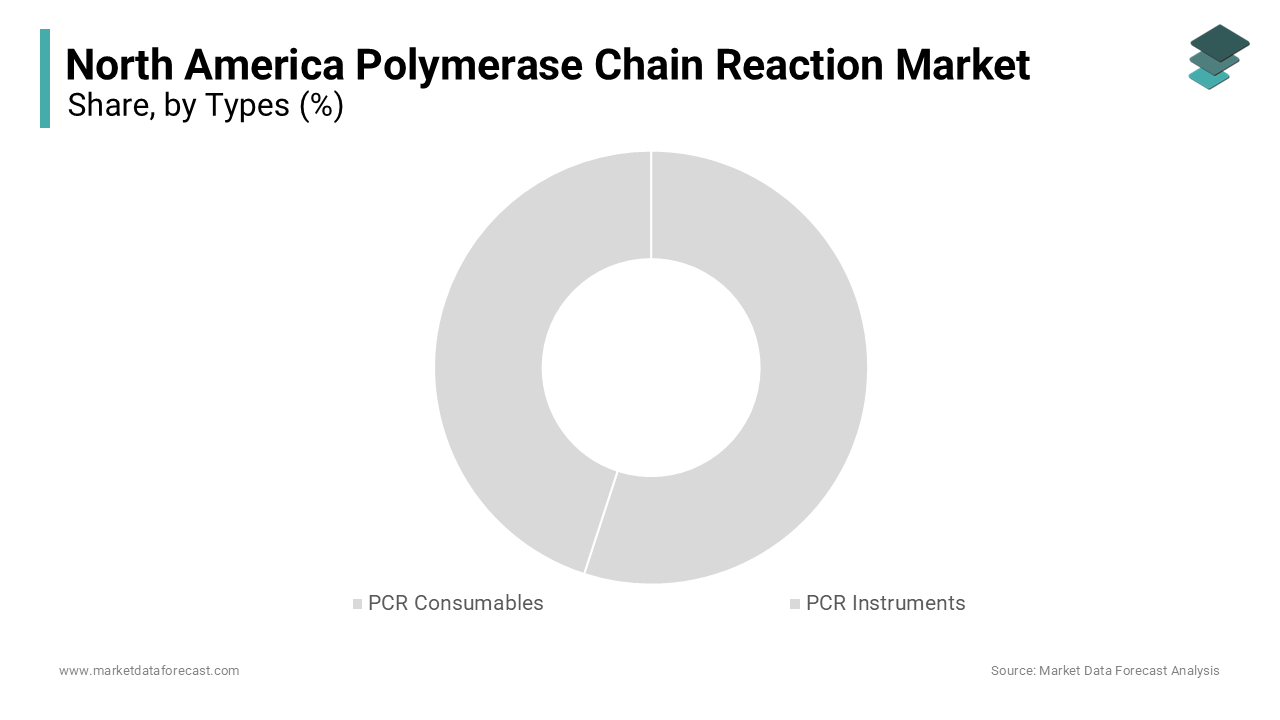
The PCR instruments segment is likely to grow at a fastest CAGR of 9.8% from 2026 to 2034 due to the rapid adoption of point of care and portable molecular testing devices. Traditional thermal cyclers were confined to centralized laboratories but miniaturization has enabled deployment in clinics pharmacies and field settings. The Centers for Medicare and Medicaid Services expanded reimbursement for waived molecular tests encouraging decentralized testing infrastructure. These compact instruments offer faster turnaround times enabling immediate clinical decisions without sample transport delays. Manufacturers are developing user friendly cartridge-based systems that require minimal training expanding accessibility beyond specialized labs. Retail health chains and telemedicine providers are integrating these devices to offer comprehensive diagnostic services. The ability to perform testing at the site of care reduces hospital admissions and antibiotic misuse. Battery operated and ruggedized designs enable use in remote or resource limited environments within North America. This democratization of PCR technology drives instrument sales volumes significantly higher than traditional lab bound systems.
By Type of Application Insights
The DNA sequencing segment was the largest by holding 38.4% of the North America Polymerase Chain Reaction Market share in 2025 due to its foundational role in genomic medicine and biological research. PCR is an indispensable preparatory step for virtually all sequencing workflows including whole genome exome and targeted panel sequencing. This massive research activity generates consistent demand for PCR reagents and instruments dedicated to library preparation. The American College of Medical Genetics and Genomics recommends sequencing as first line testing for numerous genetic disorders embedding PCR into standard diagnostic algorithms. Oncology precision medicine relies heavily on sequencing tumor DNA to identify actionable mutations guiding therapy selection. The decreasing cost of sequencing has increased accessibility broadening the user base from elite academic centers to community hospitals. Each sequencing experiment consumes significant quantities of PCR consumables for amplification and indexing. The complexity of library preparation protocols ensures continued reliance on specialized PCR methodologies. This deep integration secures the dominant position of DNA sequencing as the primary application driver.
The gene expression analysis segment is expected to grow at a fastest CAGR of 11.2% during the forecast period with the rising focus on transcriptomics and functional genomics in drug discovery and disease mechanism research. Quantitative reverse transcription PCR remains the gold standard for validating RNA sequencing data and measuring specific transcript levels. Pharmaceutical companies utilize expression profiling to identify drug targets assess toxicity and understand mechanisms of action. Single cell RNA sequencing technologies have exploded in popularity requiring extensive PCR amplification for cDNA library construction. Immunology and neuroscience research heavily rely on expression analysis to characterize cell states and responses. Core facilities are upgrading to high throughput qPCR systems to handle increasing sample volumes from these studies. The ability to quantify subtle changes in gene regulation provides insights unavailable through DNA sequencing alone.
COUNTRY ANALYSIS
United States Polymerase Chain Reaction Market Analysis
The United States was the top performer in the North America Polymerase Chain Reaction Market by accounting for 85.3% of share in 2025 due to its advanced healthcare infrastructure and substantial research funding. This federal investment sustains a vast network of academic core facilities biotechnology companies and clinical laboratories that consume PCR products daily. The Centers for Medicare and Medicaid Services provides reimbursement for numerous molecular diagnostic tests creating a viable commercial market for clinical applications. The presence of major PCR instrument and reagent manufacturers headquartered in the US facilitates early access to innovations and technical support. The Food and Drug Administration’s regulatory framework while rigorous provides clear pathways for product approval fostering industry confidence. The high prevalence of chronic diseases and aging population drives diagnostic testing volumes. Private equity investment in laboratory services and biotech startups further stimulates market activity. The concentration of pharmaceutical R&D centers creates synergistic demand for PCR in drug development.
Canada Polymerase Chain Reaction Market Analysis
Canada polymerase chain reaction market was positioned second by capturing 9.1% of share in 2025 with the strong public healthcare integration and emerging biotechnology clusters. Provincial healthcare systems cover many diagnostic PCR tests ensuring broad patient access despite budget constraints. The Government of Canada’s Innovation Superclusters Initiative has funded genomics and precision health projects stimulating private sector collaboration. Toronto Montreal and Vancouver host vibrant biotech ecosystems with companies specializing in molecular diagnostics and therapeutics. Public health agencies utilize PCR extensively for infectious disease surveillance and antimicrobial resistance monitoring. The national genomics strategy promotes data sharing and infrastructure standardization enhancing research efficiency. Immigration policies attract international scientific talent addressing workforce shortages in specialized fields.
COMPETITIVE LANDSCAPE
The competition in the North America Polymerase Chain Reaction Market is characterized by the presence of established global leaders and specialized niche players offering diverse molecular solutions. Major companies compete primarily on technological innovation product reliability and comprehensive service support rather than price alone. The market exhibits a moderate level of consolidation with key players holding significant influence through their extensive distribution networks and brand reputation. New entrants face high barriers to entry due to stringent regulatory requirements and the need for substantial research and development investments. However specialized firms focusing on digital PCR or point of care diagnostics find opportunities to differentiate themselves through unique value propositions. Competitive dynamics are driven by the need to continuously innovate and adapt to changing clinical and research needs. Companies invest in strategic alliances and acquisitions to expand their product portfolios and geographic reach. The emphasis on workflow automation and data integration has become a key differentiator in the competitive landscape. Manufacturers who can offer seamless end to end solutions gain a competitive advantage
KEY MARKET PLAYERS
Promising Companies leading the North America Polymerase Chain Reaction Market include
- Clontech Laboratories
- Eppendorf
- Fluidigm
- PerkinElmer
- bioMérieux
- GE
- RainDance Technologies
- Siemens Healthcare
- Beckman Coulter
- Becton, Dickinson and Company
- Cepheid
- Harvard Bioscience
- Maxim Biotech
- Promega
- Kapa Biosystems
Top Players in the Market
Thermo Fisher Scientific Inc
Thermo Fisher Scientific Inc maintains a dominant presence in the North America Polymerase Chain Reaction Market through its comprehensive portfolio of instruments reagents and consumables. The company leverages its extensive distribution network to serve academic clinical and industrial customers with high quality molecular biology products. Thermo Fisher recently expanded its manufacturing capacity for PCR reagents in the United States to ensure supply chain resilience and meet rising demand. This strategic investment strengthens their ability to deliver critical materials without disruption. The firm invests heavily in research and development to introduce advanced digital PCR systems and automated workflows. Their focus on integrating software solutions enhances data analysis capabilities for researchers. Thermo Fisher also collaborates with leading institutions to validate new assays and applications. These initiatives solidify their reputation as a trusted partner in molecular science.
Bio Rad Laboratories Inc
Bio Rad Laboratories Inc plays a pivotal role in the North America Polymerase Chain Reaction Market by delivering innovative life science research and clinical diagnostic solutions. The company is renowned for its high-performance thermal cyclers and quantitative PCR systems used globally. Bio Rad recently launched next generation droplet digital PCR platforms that offer superior sensitivity for rare variant detection. This technological advancement supports precision medicine and oncology research applications. The firm emphasizes customer education through extensive training programs and technical support services. Bio Rad actively engages with the scientific community to develop standardized protocols and best practices. Their commitment to quality ensures consistent results across diverse experimental conditions. The company also expands its product line to include integrated sample preparation tools. These efforts enhance workflow efficiency and reduce manual errors for users.
Agilent Technologies Inc
Agilent Technologies Inc contributes significantly to the North America Polymerase Chain Reaction Market with its robust range of genomic tools and analytical instruments. The company offers reliable PCR systems and reagents designed for high throughput and precision applications. Agilent recently introduced streamlined library preparation kits that simplify next generation sequencing workflows requiring PCR amplification. This innovation reduces turnaround time and improves data quality for researchers. The firm focuses on providing end to end solutions from sample extraction to data analysis. Agilent collaborates with pharmaceutical companies to support drug discovery and biomarker validation studies. Their global service network ensures rapid response to technical issues and maintenance needs. The company also invests in sustainability initiatives to reduce environmental impact of laboratory operations. These actions appeal to environmentally conscious institutions and regulatory bodies.
Top Strategies Used By Key Market Participants
Key players in the North America Polymerase Chain Reaction Market employ product innovation and strategic partnerships to maintain competitive advantage and drive growth. Companies invest heavily in research and development to create advanced digital PCR systems and automated workflows that enhance sensitivity and efficiency. Strategic collaborations with academic institutions and pharmaceutical companies facilitate the validation of new assays and expand application scopes. Manufacturers focus on integrating software and artificial intelligence tools to improve data analysis and interpretation capabilities for users. Expansion of manufacturing capacities within North America ensures supply chain resilience and reduces dependency on global logistics networks. Marketing efforts emphasize total cost of ownership and workflow integration rather than just instrument performance. Companies also pursue acquisitions of niche technology firms to broaden their product portfolios and access specialized customer segments. Customer education and technical support programs build loyalty and ensure proper utilization of complex technologies. Regulatory compliance and quality assurance remain central to maintaining trust and market access.
MARKET SEGMENTATION
This research report on the North America Polymerase Chain Reaction Market has been segmented and sub-segmented into the following categories.
By Types
- PCR Consumables
- PCR Instruments
By Type of Application
- DNA Fingerprinting
- DNA Sequencing
- DNA Cloning
- Gene Expression
By Country
- US
- Canada
- Rest of North America