- Product Description Description
- Table of Contents TOC
- List of Table & Figure LOT
- Get Free Sample PDF Sample PDF
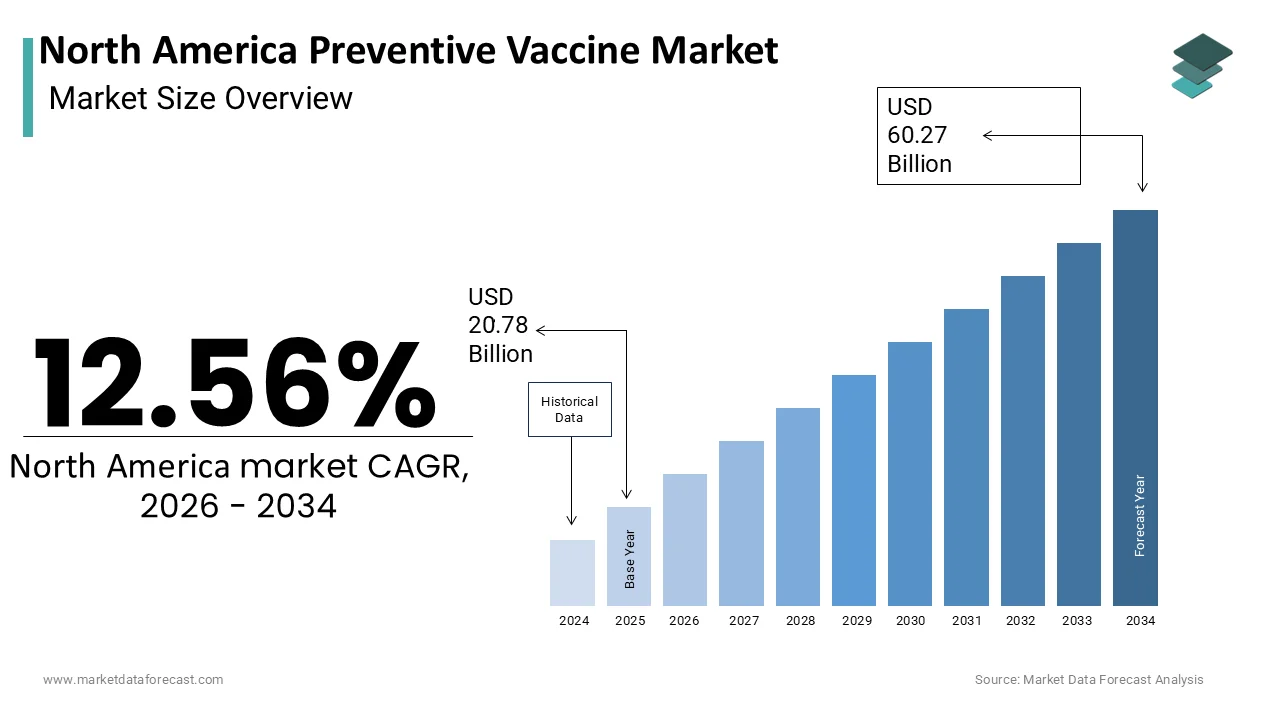
Market Size, 2025
$20.78 BnMarket Estimate, 2026
$23.39 BnMarket Forecast, 2034
$60.27 BnCAGR, 2026–2034
12.56%North America Preventive Vaccine Market Size
The North America Preventive Vaccine Market is projected to grow from USD 20.78 billion in 2025 to USD 23.39 billion in 2026 and reach USD 60.27 billion by 2034, registering a CAGR of 12.56% during the forecast period from 2026 to 2034.
The preventive vaccine is a biological preparations that provide active acquired immunity against specific infectious diseases. The Centers for Disease Control and Prevention states that vaccination prevents between 2 million and 3 million deaths globally each year while significantly reducing morbidity in developed nations. In North America, specifically, the immunization landscape is characterized by high coverage rates for routine childhood vaccines, es yet faces evolving dynamics due to emerging pathogens and shifting demographic patterns. However, adult vaccination rates remain inconsistent, ent with only 45% of adults aged 18 and older receiving the annual influenza vaccine, as per data from the American Lung Association. Technological advancements in messenger RNA platforms have revolutionized development timelines, enabling rapid responses to novel viral threats. Vaccine hesitancy remains a top ten global health threat influencing uptake rates despite scientific consensus on benefits.
MARKET DRIVERS
Rising Prevalence of Infectious Diseases and Emerging Pathogens
The increasing incidence of infectious diseases is propelling the growth of the North American preventive vaccine market. The Centers for Disease Control and Prevention reports that influenza alone causes between 9 million and 41 million illnesses annually in the United States, depending on seasonal severity. This substantial disease burden creates an urgent need for effective prophylactic measures to mitigate healthcare system strain and reduce economic losses associated with workforce absenteeism. Furthermore, the emergence of novel pathogens, such as severe acute respiratory syndrome coronavirus 2, has amplified the importance of robust vaccine development pipelines. The global community witnessed unprecedented collaboration in developing vaccines within months rather than years, with the adaptive capacity of modern biotechnology. In North America, this urgency translates into sustained investment in research and development activities aimed at creating broad-spectrum vaccines capable of addressing variant strains. The National Institute of Allergy and Infectious Diseases emphasizes that zoonotic spillover events are becoming more frequent due to climate change and urbanization, increasing the risk of future pandemics. Consequently, governments and private entities are prioritizing stockpiling and distribution infrastructure to ensure rapid deployment during outbreaks. The aging population in both the United States and Canada further amplifies demand since older adults exhibit higher susceptibility to complications from infectious diseases.
Government Initiatives and Public Health Funding Programs
The substantial government support and dedicated public health funding are also escalating the growth of the North American preventive vaccine market. The United States federal government allocates billions of dollars annually through programs such as the Vaccines for Children initiative, which provides free vaccines to eligible children who might otherwise go unvaccinated. As per the study, this program covers approximately 50% of all children born in the United States, ensuring equitable access to life-saving immunizations regardless of socioeconomic status. Similarly, in Canada, the Pan Canadian Public Health Network coordinates national immunization strategies while provincial governments manage delivery and funding, ng resulting in comprehensive coverage across diverse populations. The Bipartisan Infrastructure Law passed in the United States includes provisions for strengthening public health infrastructure,ure including cold chain logistics and digital tracking systems essential for efficient vaccine distribution. Additionally, tax incentives and grants offered to pharmaceutical companies encourage innovation in vaccine technologies, particularly for rare or neglected diseases. These financial mechanisms reduce commercial risks for manufacturers, thereby accelerating the introduction of new products into the market. State-level mandates also play a crucial role, as many jurisdictions require proof of vaccination for school enrollment, creating a consistent baseline demand.
MARKET RESTRAINTS
Vaccine Hesitancy and Misinformation Campaigns
The vaccine hesitancy fueled by widespread misinformation is limiting the growth of the North American preventive vaccine market. The World Health Organization identifies vaccine hesitancy as one of the top ten threats to global health,th citing its potential to reverse decades of progress in disease control. This awareness is exacerbated by social media platforms where false narratives spread rapidly,dly reaching millions of users within hours. As per the Research, 71% of Americans believe that social media has a mostly negative effect on how accurate health information is disseminated, contributing to confusion and distrust among the public. Historical incidents, such as the discredited link between vaccines and autism,m continue to influence parental decisions despite extensive scientific refutation. The Centers for Disease Control and Prevention notes that measles cases surged to over 1200 in 20,19 primarily due to lower vaccination rates in certain communities influenced by misinformation campaigns. In Canada, similar trends emerge with the Public Health Agency reporting that vaccine confidence varies significantly by region and demographic group. Addressing this restraint requires substantial resources for public education campaigns and community engagement initiatives, which divert funds from other critical areas. Healthcare providers often spend considerable time counseling hesitant patients,s reducing overall clinical efficiency. Furthermore, legal challenges to vaccine mandates create uncertainty for policymakers and manufacturers alike. Numerous lawsuits have been filed challenging employer and government vaccine requirements, ts leading to prolonged litigation and inconsistent enforcement.
High Costs of Research and Development
The exorbitant costs associated with research and development, with the number of players capable of sustaining innovation, are another factor impeding the growth of the North American preventive vaccine market. This financial burden includes preclinical testing, multiple phases of clinical trials, ls regulatory submissions, and post-marketing surveillance activities. The complexity of biological manufacturing processes further escalates expenses since vaccines require stringent quality control measures to ensure purity and potency. For vaccines, the stakes are even higher since they are administered to healthy populations, necessitating exceptional safety profiles. Small and mid-sized biotechnology firms often struggle to secure sufficient capital to advance candidates through late-stage trials, forcing them to partner with larger pharmaceutical corporations or abandon projects entirely. The lengthy timeline from discovery to commercialization, which can span 10 to 15 years,s delays return on investment and discourages speculative funding. According to the study, venture capital investment in vaccine startups declined by 20% in recent years as investors shifted focus toward therapeutic areas with quicker revenue generation potential. Additionally, patent exclusivity periods do not always guarantee market dominance since generic competitors may enter shortly after expiration, eroding profit margins. Regulatory requirements vary between the United States and Canada, requiring separate submissions and compliance efforts, which duplicate costs for manufacturers seeking cross-border market access.
MARKET OPPORTUNITIES
Expansion into Adult and Geriatric Immunization Segments
The expanding focus on adult and geriatric immunization is substantially creating new opportunities for the growth of the North American preventive vaccine market. Historically, vaccination efforts concentrated heavily on pediatric populations,s leaving significant gaps in protection for older adults who face heightened risks from infectious diseases. The Administration for Community Living reports that the population aged 65 and older in the United States is projected to reach 95 million by 20,60 doubling from current levels. This demographic shift creates a vast addressable market for vaccines targeting conditions such as pneumonia,nia shingles, and respiratory syncytial virus. As per the National Foundation for Infectious Diseases, only 60% of seniors currently receive the pneumococcal vaccine,e indicating considerable room for improvement in coverage rates. Pharmaceutical companies are responding by developing specialized formulations with enhanced immunogenicity suitable for aging immune systems. The approval of newer adjuvanted influenza vaccines demonstrates this trend, offering superior protection compared to standard doses for elderly recipients. Additionally, workplace wellness programs are increasingly incorporating adult vaccination benefits, recognizing the economic impact of preventable illnesses on productivity. This corporate interest drives demand for convenient delivery models, such as on-site clinics and mobile vaccination units. Furthermore, telehealth platforms facilitate easier access to prescription-based vaccines like shingles, allowing physicians to recommend and administer protections during virtual consultations. The integration of electronic health records enables automated reminders for due vaccinations,s improving adherence rates among busy adults.
Technological Advancements in mRNA and Platform Technologies
The breakthroughs in messenger RNA and other platform technologies for the development timelines and enhancing efficacare expectedly to escalate the growth of the North America preventive vaccine market. The successful deployment of mRNA vaccines during the recent pandemic validated this approach, proving its ability to induce robust immune responses against novel pathogens. The mRNA technology allows for rapid design and production since it does not require growing viruses in cell cultures, a process that traditionally takes months. This agility enables manufacturers to respond swiftly to emerging variants,s ensuring that vaccine formulations remain relevant against evolving threats. Beyond infectious diseases, es researchers are exploring mRNA applications for cancer prevention and autoimmune disorders, broadening the therapeutic scope of preventive immunization. Modular platform approaches also reduce manufacturing complexity since the same production facilities can produce different vaccines by simply changing the genetic sequence. This flexibility lowers capital expenditure requirements and improves supply chain resilience. Furthermore, lipid nanoparticle delivery systems used in mRNA vaccines are being optimized for stability at higher temperatures, ures reducing reliance on ultra-cold storage infrastructure. Collaborative partnerships between academic institutions and industry players are fostering innovation ecosystems that accelerate the translation of laboratory discoveries into commercial products. The Food and Drug Administration has established expedited review pathways for platform technologies, recognizing their potential to address unmet medical needs efficiently.
MARKET CHALLENGES
Supply Chain Vulnerabilities and Raw Material Shortages
The supply chain vulnerabilities and raw material shortagesares alsquite ate challenge for the growth of the North American preventive vaccine market. The global nature of pharmaceutical manufacturing means that dependencies on single-source suppliers for components, such as vials, stoppers,s and lipids, ds create disruptions during periods of high demand. Many active pharmaceutical ingredients used in the United States are manufactured overseas, primarily in Asia, making the supply chain susceptible to geopolitical tensions and trade disruptions. During peak vaccination campaigns, these constraints become acute, leading to delays in product availability and uneven distribution across regions. The production capacity of pharmaceutical-grade glass cannot be expanded quickly due to the specialized nature of the equipment and skilled labor required. Additionally, transportation logistics face challenges including port congestion and freight cost volatility, which impact the timely delivery of temperature-sensitive products. Cold chain requirements further complicate distribution since many vaccines must be stored at specific temperatures throughout the journey from factory to clinic. Maintaining cold chain integrity requires significant investment in monitoring equipment and trained personnel, which smaller healthcare providers may lack. These logistical hurdles increase operational costs and reduce profit margins for manufacturers, while potentially compromising vaccine efficacy if temperature excursions occur.
Regulatory Complexity and Compliance Burdens
The complex regulatory environment and meeting stringent compliance requirements are also impeding the growth of the North American preventive vaccine market. Both the United States Food and Drug Administration and Health Canada impose rigorous standards for safety, efficacy,y and manufacturing quality that require extensive documentation and validation. The approval process for a new vaccine involves multiple phases of clinical trials involving thousands of participants and can take several years to complete. Any deviations from good manufacturing practices can result in warning letters, import bans, or product recalls, damaging brand reputation and financial standing. The harmonization of regulations between the United States and Canada remains incomplete, requiring manufacturers to maintain separate submission dossiers and comply with differing labeling and packaging requirements. Post-marketing surveillance obligations add another layer of complexity since manufacturers must continuously monitor adverse events and submit periodic safety updates. The Vaccine Adverse Event Reporting System in the United States receives tens of thousands of reports annually, each of which must be investigated and assessed for causality. This ongoing vigilance demands dedicated pharmacovigilance teams and sophisticated data management systems. Furthermore, changing regulatory guidelines regarding environmental sustainability and ethical sourcing introduce new compliance dimensions that manufacturers must address proactively. As per the Environmental Protection Agency,y pharmaceutical facilities face increasing scrutiny regarding waste disposal and emissions, requiring upgrades to infrastructure and processes.
REPORT COVERAGE
| REPORT METRIC | DETAILS |
| Market Size Available | 2025 to 2034 |
| Base Year | 2025 |
| Forecast Period | 2026 to 2034 |
| Segments Covered | By Vaccine Type, End-User, and Region |
| Various Analyses Covered | Global, Regional and Country-Level Analysis, Segment-Level Analysis, Drivers, Restraints, Opportunities, Challenges; PESTLE Analysis; Porter’s Five Forces Analysis, Competitive Landscape, Analyst Overview of Investment Opportunities |
| Countries Covered | United States Canada Rest of North America |
| Market Leaders Profiled | GlaxoSmithKline plc (GSK), Bavarian Nordic A/S, Merck & Co., Inc., CSL Limited, Novartis AG, Emergent BioSolutions Inc., Johnson & Johnson, MedImmune, LLC (AstraZeneca), Pfizer Inc., Sanofi Pasteur. |
SEGMENTAL ANALYSIS
By Vaccine Type Insights
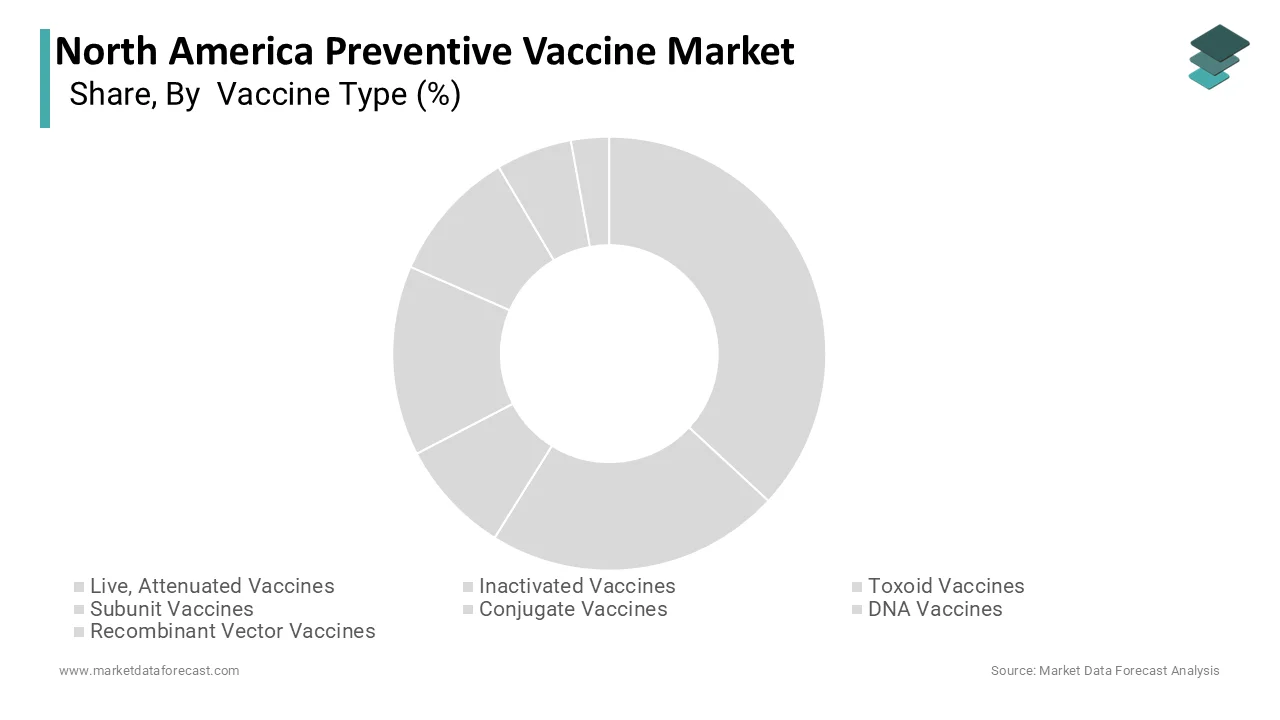
The inactivated vaccines segment was the largest,y holding 44.3% of the North America preventive vaccine market share in 2025 due to their established safety profile and broad application across multiple disease categories. The extensive use of inactivated influenza vaccines constitutes the largest volume of annual vaccinations in the region. As per the Centers for Disease Control and Prevention, over 150 million doses of influenza vaccine are distributed annually in the United States, with inactivated formulations accounting for approximately 80% of this total. This high volume is sustained by universal recommendations for individuals aged six months and older,r creating a consistent and predictable demand cycle. Furthermore, the stability of inactivated vaccines allows for easier storage and distribution compared to live attenuated variants, reducing logistical burdens for healthcare providers. The inactivated vaccines have a long track record of safety with minimal risk of reversion to virulence,ce making them preferred for immunocompromised populations. The regulatory familiarity with inactivated platforms, which accelerates approval processes for new strains or updated formulations. The majority of seasonal flu vaccine approvals utilize well-established manufacturing protocols for inactivated viruses, ensuring rapid market entry each year. Additionally, public trust in traditional vaccine technologies remains higher than newer platforms among certain demographic groups,s further supporting sustained uptake. The ability to combine multiple inactivated antigens into single shots such as DTaP enhances convenience and compliance, driving higher coverage rates.
The messenger RNA vaccines segment is likely to grow at an anticipated CAGR of 28.3%tthroughoutthe forecast period with the proven efficacy and rapid development capabilities demonstrated during recent global health emergencies. The National Institutes of Health reports that mRNA technology reduced vaccine development timelines from several years to under 12 months e, enabling swift responses to emerging viral variants. The versatility of the platform allows for quick adaptation to new pathogens without changing the core manufacturing process, creating a scalable model for future pandemic preparedness. According to the ClinicalTrials.gov database, more than 150mRNA-basedd preventive and therapeutic trials are currently active in the United States, indicating robust pipeline momentum. The modular nature of mRNA production also facilitates decentralized manufacturing,g reducing supply chain vulnerabilities. Regulatory agencies have established expedited review pathways for mRNA platforms, ms recognizing their potential to address unmet medical needs efficiently.
By End User Insights
The pediatric vaccine segment accounted for 46.3% of the North American preventive vaccine market share in 202,5 owing to the mandatory immunization schedules and high parental compliance rates. The comprehensive vaccination requirements for school enrollment across all states and provinces ensure near-universal coverage for routine childhood diseases. As per the Centers for Disease Control and Prevention, vaccination coverage for key vaccines such as MMR and DTaP exceeds 90% among kindergarten entrants in the United States, reflecting strong institutional enforcement. This financial assistance removes economic barriers for low-income families, ensuring equitable access and sustaining high demand volumes. Additionally, the density of pediatric visits provides frequent opportunities for healthcare providers to administer multiple vaccines simultaneously,y enhancing efficiency. The American Academy of Pediatrics recommends up to 24 doses by age two,wo creating a concentrated period of high utilization. Public awareness campaigns emphasizing the protection of vulnerable infants also drive consistent demand. The emotional priority parents place on child health ensures that preventive care remains a non-negotiable expense even during economic downturns.
The adult vaccine segment is expected to grow at the fastest CAGR of 12.3% during the forecast period, with the aging demographic structure of the population, which increases the prevalence ofage-relatedd conditions susceptible to prevention. The Administration for Community Living projects that the number of individuals aged 65 and older in the United States will double to 95 million by 2060, creating a vast and expanding target audience for geriatric immunizations. The introduction of highly effective recombinant zoster vaccines has improved confidence among healthcare providers and patients, leading to higher uptake rates. The Advisory Committee on Immunization Practices recommends shingles vaccination for all adults aged 50 and older,r regardless of prior history,ry expanding the eligible pool substantially. Medicare Part D coverage for adult vaccines further reduces out-of-pocket costs, encouraging adoption among fixed-income populations. Medicare beneficiaries are now eligible for covered preventive vaccines, removing financial obstacles. Workplace wellness programs are also beginning to include adult immunizations,s recognizing the productivity benefits of preventing serious illnesses in older workers. These structural and demographic shifts ensure sustained high growth for the adult vaccine segment,nt particularly for zoster prevention.
COUNTRY LEVEL ANALYSIS
The United States Preventive Vaccine Market Analysis
The United States was the top performer in the North American preventive vaccine market by capturing 85.3% of the market share in 2025 due to its large population and advanced healthcare infrastructure. The high per capita spending on preventive care and a robust network of private and public insurance providers that facilitate widespread access are also bolstering the growth of the market in this region. The significant federal investment in public health initiatives, such as the Vaccines for Children program, which ensures high coverage rates among the pediatric population. As per the Centers for Disease Control and Prevention, the United States distributes over 300 million vaccine doses annually, reflecting the scale of national immunization efforts. The presence of major pharmaceutical companies headquartered in the country fosters innovation and rapid commercialization of new vaccine technologies. The Food and Drug Administration maintains rigorous yet efficient approval processes that encourage manufacturers to launch products in the US market first. Additionally, state-level mandates for school entry create a consistent baseline demand that stabilizes market growth. The high prevalence of chronic conditions among adults also drives demand for preventive vaccines against influenza and pneumonia. As per the American Lung Association, chronic respiratory diseases affect over 30 million Americans, creating a large addressable market for respiratory vaccines.
Canada Preventive Vaccine Market Analysis
Canada's preventive vaccine market was ranked second, holding 12.3% of the share in 2025, owing to its universal healthcare system and coordinated public health strategies. The provincial management of vaccine delivery under the guidance of national frameworks established by the Public Health Agency of Canada. The strong government commitment to equitable access ensures that all residents receive recommended immunizations without direct financial burden. The Pan-Canadian Public Health Network facilitates collaboration between jurisdictions, allowing for harmonized recommendations and efficient resource allocation. Recent investments in domestic manufacturing capacity aim to reduce reliance on imports and enhance supply chain security. The aging population in Canada also contributes to market growth with increasing demand for adult vaccines against shingles and influenza. Cultural trust in public health institutions remains high, supporting consistent vaccine uptake despite global misinformation trends.
COMPETITIVE LANDSCAPE
The competition in the North American preventive vaccine market is characterized by intense rivalry among established pharmaceutical giants and emerging biotechnology firms striving for technological supremacy. Market participants compete primarily on innovation speed, ed product efficacy,acy and supply chain reliability rather than price alone. The dominance of a few key players creates high entry barriers for smaller entities due to substantial capital requirements for research and regulatory compliance. However, niche opportunities exist for specialized firms focusing on novel platforms, such as DNA or viral vector technologies. Strategic alliances between academia, industry,ustry and government bodies shape the competitive landscape by fostering collaborative innovation and shared risk. Intellectual property rights play a pivotal role in maintaining competitive moats as companies protect proprietary formulations and manufacturing processes. The race to secure contracts with federal health agencies further intensifies competition, driving continuous improvement in production efficiency and distribution logistics. Consumer trust and brand reputation also influence competitive dynamics as public perception impacts uptake rates significantly.
KEY MARKET PLAYERS
Some of the companies that are playing a dominant role in the North American Preventive Vaccine Market include
- GlaxoSmithKline plc (GSK)
- Bavarian Nordic A/S
- Merck & Co., Inc.
- CSL Limited
- Novartis AG
- Emergent BioSolutions Inc.
- Johnson & Johnson
- MedImmune, LLC (AstraZeneca)
- Pfizer Inc.
- Sanofi Pasteur
TOP LEADING PLAYERS IN THE MARKET
- Pfizer Inc maintains a formidable presence in the North American preventive vaccine market through its extensive portfolio and robust research capabilities. The company leverages its messenger RNA technology platform to develop innovative solutions for infectious diseases, including influenza and respiratory syncytial virus. Recent strategic moves include the expansion of manufacturing facilities in the United States to ensure reliable supply chains and rapid response to emerging health threats. Pfizer actively collaborates with government agencies to support public health initiatives and enhance vaccination coverage across diverse populations. Their commitment to scientific excellence drives continuous innovation while addressing unmet medical needs.
- Merck and Co Inc plays an important role in thAmerican America preventive vaccine market by dehigh-qualityh quality immunizations for both pediatric and adult populations. The company is renowned for its strong pipeline of vaccines targeting human papillomavirus and measles, mumps, and rubella. Merck recently enhanced its production capacities to meet growing demand and ensure consistent availability of essential vaccines. Strategic partnerships with healthcare providers and public health organizations enable broader access to life-saving interventions. The company prioritizes research into next-generation technologies to improve vaccine efficacy and safety profiles. Merck also engages in global health initiatives that reinforce its commitment to disease prevention and control.
- GlaxoSmithKline plc contributes significantly to the North American preventive vaccine market through its diverse range of products targeting respiratory and herpes zoster infections. The company utilizes advanced adjuvant technologies to enhance immune responses, particularly in older adults who are more vulnerable to severe outcomes. Recent investments in facility upgrades and digital health tools demonstrate GSK's dedication to operational efficiency and patient-centric care. The company collaborates with academic institutions to accelerate the development of novel vaccine candidates. GSK also emphasizes transparency and data sharing to build confidence among healthcare professionals and consumers. Their focus on long-term sustainability and innovation ensures continued relevance and impact in the evolving landscape of infectious disease prevention.
TOP STRATEGIES USED BY THE KEY MARKET PARTICIPANTS
Key players in the North American preventive vaccine market primarily employ strategies focused on technological innovation and strategic collaborations to maintain competitive advantages. Companies invest heavily in research and development to advance messenger RNA and recombinant vector platforms,s enabling faster response times to emerging pathogens. Mergers and acquisitions are frequently utilized to expand product portfolios and access new therapeutic areas such as oncology and autoimmune disorders. Manufacturers also prioritize supply chain resilience by diversifying sourcing locations and enhancing domestic production capabilities to mitigate geopolitical risks. Regulatory engagement remains important as firms work closely with agencies to streamline approval processes and ensure compliance with evolving standards. Public-private partnerships facilitate broader distribution networks and improve access to underserved communities. Additionally, companies implement robust digital marketing and education campaigns to address vaccine hesitancy and promote public trust.
MARKET SEGMENTATION
This research report segmented and sub-segmented the North American Preventive Vaccines Market into the following categories.
By Vaccine Type
- Live, Attenuated Vaccines
- Inactivated Vaccines
- Toxoid Vaccines
- Subunit Vaccines
- Conjugate Vaccines
- DNA Vaccines
- Recombinant Vector Vaccines
By End-User
-
Pediatric Vaccine
-
Pneumococcal
- MMR
- Varicella
- Hepatitis
- Poliovirus
- HIB
- Others
-
- Adult Vaccines
- Influenza
- Cervical Cancer
- Hepatitis
- Zoster
- Others
By Country
- United States
- Canada
- Mexico
- Rest of North America