- Product Description Description
- Table of Contents TOC
- List of Table & Figure LOT
- Get Free Sample PDF Sample PDF
Market Size, 2025
$2.57 BnMarket Estimate, 2026
$2.78 BnMarket Forecast, 2034
$5.23 BnCAGR, 2026–2034
8.21%North America Protective Face Masks Market Size
The Protective face masks market size in North America was valued at USD 2.57 billion in 2025 and is predicted to be worth USD 5.23 billion by 2034 from USD 2.78 billion in 2026 and grow at a CAGR of 8.21% from 2026 to 2034.
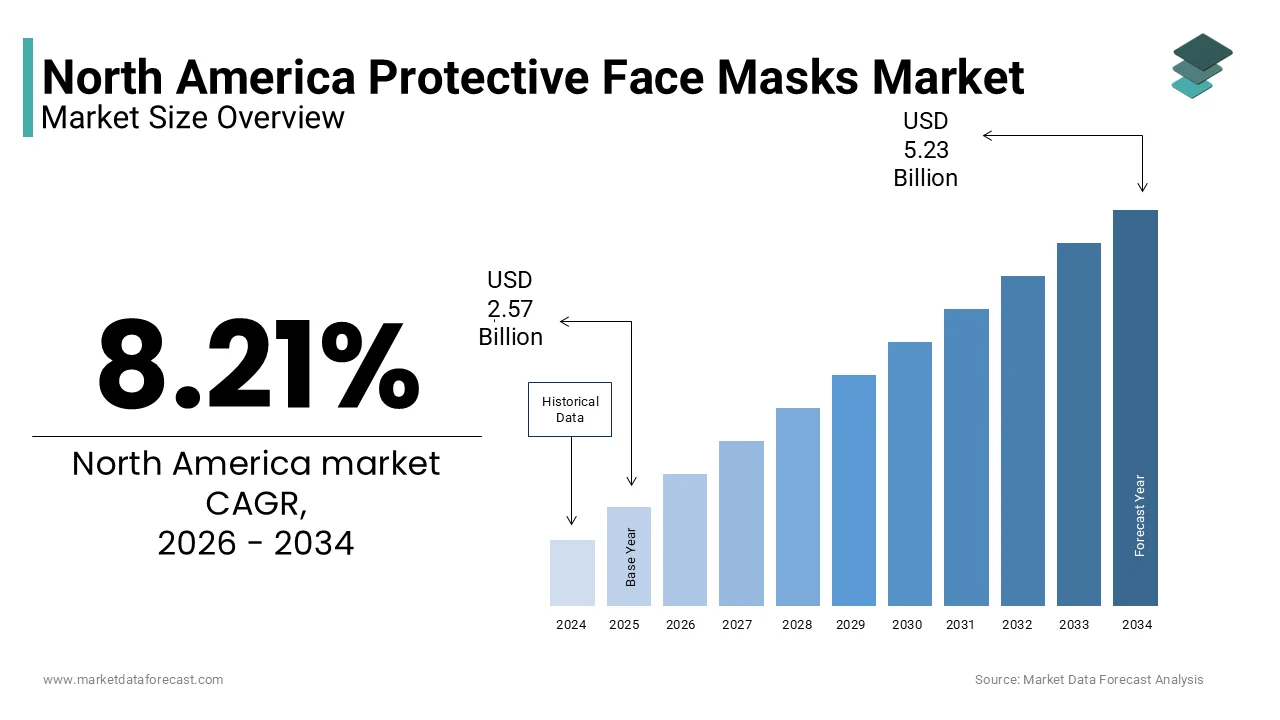
Protective face masks are coverings worn over the mouth and nose to protect the wearer and/or those around them from the transmission of airborne particles, including infectious agents like viruses and bacteria. Initially driven by urgent public health needs, the market has since matured into a more regulated and diversified segment within personal protective equipment (PPE).
The region’s market is also influenced by evolving workplace safety regulations enforced by the Occupational Safety and Health Administration (OSHA), which mandates respiratory protection in high-risk environments. Furthermore, consumer awareness regarding air quality and infectious disease prevention has led to increased adoption beyond clinical settings. This behavioral shift, combined with institutional procurement strategies, underscores a persistent and growing reliance on protective face masks throughout North America.
 MARKET DRIVERS
Escalating Occupational Health and Safety Regulations
Stringent regulatory frameworks across North America have significantly bolstered the demand for certified protective face masks. The Occupational Safety and Health Administration (OSHA) enforces mandatory respiratory protection standards under 29 CFR 1910.134, requiring employers to provide appropriate PPE in environments with airborne contaminants. These regulations directly impact sectors such as construction, mining, and healthcare. The enforcement of these standards has led to an annual growth in industrial-grade mask purchases between 2021 and 2023. Additionally, the National Institute for Occupational Safety and Health (NIOSH) certifies respirators like N95s, which must filter at least 95% of airborne particles. This sustained regulatory oversight ensures a baseline demand for high-quality protective face masks, embedding them into routine occupational safety protocols across the continent.
Rising Awareness of Air Quality and Infectious Disease Prevention
Growing public consciousness regarding air pollution and infectious diseases has substantially increased consumer demand for protective face masks in North America. According to the Environmental Protection Agency (EPA), over 130 million Americans reside in regions with unhealthy levels of air pollutants such as PM2.5 and ozone, prompting individuals to adopt preventive measures including mask usage. During wildfire seasons, particularly in western states like California and Oregon, particulate matter concentrations often exceed 150 µg/m³, far surpassing the EPA’s recommended 24-hour standard of 35 µg/m³. Also, post-pandemic behavioral shifts have entrenched mask-wearing as a preventive practice. In healthcare settings, the CDC recommends N95 or equivalent masks for protection against airborne diseases such as influenza and tuberculosis, further driving institutional adoption. The convergence of environmental health risks and preventive health awareness has created a sustained market for high-efficiency face masks, extending their relevance beyond clinical environments into daily life.
MARKET RESTRAINTS
Supply Chain Disruptions and Raw Material Shortages
The North America protective face masks market has faced persistent challenges due to supply chain vulnerabilities and raw material constraints, particularly following the global health emergency of 2020. The production of N95 respirators and surgical masks relies heavily on specialized materials such as melt-blown polypropylene, nonwoven fabrics, and elastic bands, many of which are sourced from limited global suppliers. Additionally, transportation disruptions caused by port congestion and labor strikes have delayed shipments, with the Port of Los Angeles reporting a drop in container throughput during peak months. These delays have led to stockouts in critical sectors such as healthcare and emergency services. Consequently, manufacturers have been compelled to seek alternative sourcing strategies, often at increased costs, thereby constraining market scalability and profit margins.
Intense Price Competition and Margin Compression
The North America protective face masks market is characterized by heightened price competition, primarily driven by oversupply and commoditization of basic mask variants. Following the surge in production capacity during 2020–2021, the market witnessed an influx of low-cost manufacturers offering substandard or generic masks, eroding profit margins for established players. Furthermore, bulk procurement by government agencies and large healthcare systems has intensified bidding wars, compressing margins even further. Small and mid-sized manufacturers, lacking economies of scale, have struggled to compete. This price-driven competition has also discouraged innovation, as companies prioritize cost-cutting over R&D investments, ultimately limiting the development of next-generation protective solutions.
MARKET OPPORTUNITIES
Technological Advancements in Smart and Reusable Masks
Technological innovation presents a significant growth avenue for the North America protective face masks market, particularly through the development of smart and reusable mask solutions. Emerging products integrate sensors, filtration monitoring, and antimicrobial coatings, offering enhanced protection and user convenience. Companies like Cambridge Mask Co. and Airinum have introduced masks with military-grade filters and replaceable cartridges, targeting health-conscious consumers and professionals. Reusable masks, which align with sustainability goals, are gaining traction among environmentally aware demographics. In addition, manufacturers are investing in materials such as copper-infused fibers and nanofiber layers that offer extended usability. This shift toward technologically advanced and sustainable solutions not only addresses environmental concerns but also opens premium pricing opportunities, enabling differentiation in a saturated market.
Expansion in Industrial and Occupational Applications
The diversification of protective face mask usage across industrial and occupational sectors represents a substantial opportunity for market growth in North America. Beyond healthcare, industries such as manufacturing, construction, and chemical processing require high-efficiency respiratory protection due to exposure to dust, fumes, and hazardous particles. Respirators used in these environments meet specific certification criteria, driving demand for N95 and P100-grade masks. Additionally, the rise in infrastructure development projects, particularly in smart city initiatives, has increased workforce exposure to particulate matter. Furthermore, the adoption of respiratory protection in emerging sectors such as renewable energy and semiconductor manufacturing is gaining momentum. For instance, solar panel installation workers are increasingly required to wear particulate-filtering masks due to silica exposure risks. This industrial expansion, supported by regulatory compliance and safety protocols, positions the protective face masks market for sustained growth beyond traditional healthcare applications.
MARKET CHALLENGES
Regulatory Compliance and Product Certification Complexity
Navigating the complex landscape of regulatory compliance and product certification poses a significant challenge for stakeholders in the North America protective face masks market. The National Institute for Occupational Safety and Health (NIOSH) oversees the certification of respirators, requiring rigorous testing for filtration efficiency, breathability, and biocompatibility. The Food and Drug Administration (FDA) also regulates surgical masks as Class II medical devices, necessitating 510(k) premarket notifications for market entry. Additionally, the European Union’s CE marking requirements for export-import activities further complicate cross-border trade. These regulatory hurdles not only delay market penetration but also discourage innovation, as companies prioritize compliance over product differentiation.
Consumer Skepticism and Brand Trust Issues
Consumer skepticism regarding mask efficacy and brand credibility has emerged as a critical challenge in the North America protective face masks market. The proliferation of counterfeit and substandard masks during the pandemic eroded trust among end-users, leading to cautious purchasing behaviors. Counterfeit masks, often labeled falsely as N95 or KN95, have infiltrated both online and retail channels, undermining market integrity. Additionally, inconsistent messaging from public health authorities regarding mask usage has contributed to consumer confusion. Addressing these trust deficits requires robust authentication systems, transparent labeling, and consumer education—challenges that demand coordinated efforts from regulators, manufacturers, and retailers to rebuild confidence in the market.
REPORT COVERAGE
| REPORT METRIC | DETAILS |
| Market Size Available | 2025 to 2034 |
| Base Year | 2025 |
| Forecast Period | 2026 to 2034 |
| CAGR | 8.21% |
| Segments Covered | By Product Type, End-Use, and Region |
|
Various Analyses Covered | Regional & Country Level Analysis, Segment-Level Analysis, DROC, PESTLE Analysis, Porter’s Five Forces Analysis, Competitive Landscape, Analyst Overview on Investment Opportunities |
| Regions Covered | The United States, Canada, Mexico, and Rest of North America |
| Market Leaders Profiled | 3M, Honeywell, Prestige Ameritech, Crosstex, Fisher Scientific, Dentsply Sirona, Henry Schein, and Moldex, and others |
SEGMENTAL ANALYSIS
By Product Type Insights
The Surgical masks segment represented the dominant part in the North America protective face masks market by accounting for a 45.5% in 2025. This segment's supremacy is due to its widespread adoption across diverse applications and cost-effectiveness compared to specialized alternatives. The fundamental driver sustaining surgical masks' market leadership is their extensive utilization in routine healthcare procedures and everyday protection scenarios. The Centers for Disease Control and Prevention mandates surgical mask usage during non-aerosol generating procedures, further institutionalizing their adoption across healthcare facilities. Additionally, the economic accessibility of surgical masks makes them the preferred choice for mass distribution programs. This cost differential of over 90% positions surgical masks as the go-to solution for budget-conscious procurement strategies across public health initiatives and private sector bulk purchasing.
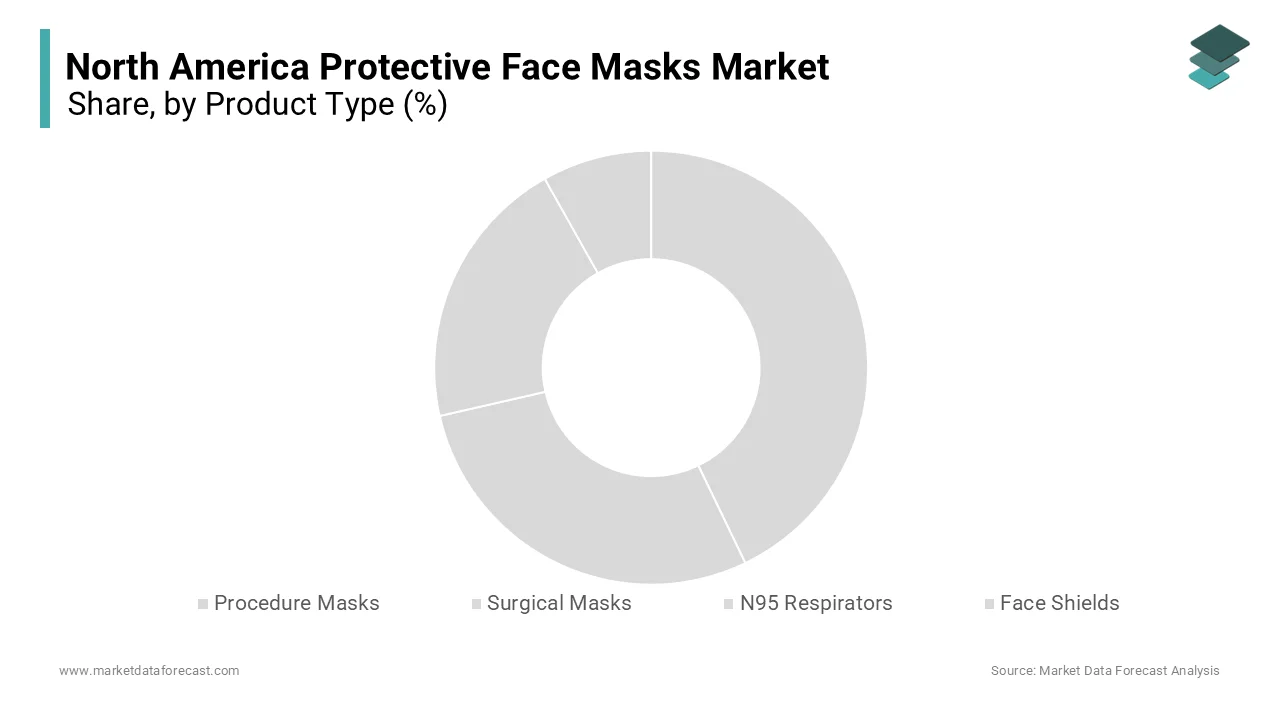
The N95 respirators segment constitute the fastest-growing segment in the North America protective face masks market and is exhibiting a robust compound annual growth rate of 12.4% from 2026 to 2034. The accelerated growth of this segment reflects evolving safety standards and heightened awareness regarding high-efficiency respiratory protection. The primary catalyst propelling N95 respirator expansion is the strengthening of occupational safety regulations across high-risk industries. Furthermore, technological advancements in N95 design have enhanced user comfort and extended wearability, addressing previous adoption barriers. These improvements have expanded N95 applicability beyond healthcare settings into consumer markets.
By End-Use Insights
The hospitals and clinics segment commanded the largest share of the North America protective face masks market with 52.5% share in 2025. This dominant position reflects the intensive and continuous requirement for respiratory protection in diverse clinical environments. The foundational factor supporting this market leadership is the sheer volume of patient interactions and procedural demands within healthcare facilities. Additionally, the expanding scope of healthcare services has amplified mask requirements beyond traditional clinical settings. Outpatient procedures, diagnostic imaging, and rehabilitation services now mandate respiratory protection, increasing per-facility consumption compared to pre-2020 levels according to the Healthcare Supply Chain Association. The integration of mask usage into standard operating procedures for over 200 medical specialties ensures consistent demand regardless of seasonal variations. Furthermore, regulatory compliance requirements enforced by the Joint Commission mandate that 95% of accredited healthcare facilities maintain minimum 30-day PPE inventory reserves, creating sustained baseline procurement volumes.
The individual consumer segment represents the fastest-growing end-use category in the North America protective face masks market and is demonstrating a CAGR of 18.7% from 2026 to 2034. This unprecedented growth reflects shifting consumer behaviors and heightened personal health consciousness post-pandemic. The principal driver accelerating individual market expansion is the sustained public awareness regarding airborne disease prevention and air quality concerns. Additionally, the emergence of premium and specialized mask categories has transformed individual consumption patterns. Smart masks equipped with filtration indicators and reusable designs now command price premiums higher than standard options, yet consumer willingness to pay has increased. The demographic shift toward health-conscious millennials and Gen Z consumers, comprising of individual mask purchasers, has created demand for aesthetically designed products that combine protection with personal expression. Social media influence and celebrity endorsements have further normalized mask usage in non-clinical settings.
REGIONAL ANALYSIS
United States
The United States occupied the preeminent position in the North America protective face masks market by commanding a 83.1% share in 2025. This overwhelming dominance reflects the country's extensive healthcare infrastructure and robust industrial base requiring respiratory protection. The fundamental factor underpinning U.S. market supremacy is the nation's vast healthcare ecosystem comprising a large number of hospitals and millions of hospital beds, generating substantial institutional demand for protective equipment. Government procurement initiatives have further amplified market activity. Additionally, the United States' advanced regulatory framework administered by the Food and Drug Administration and National Institute for Occupational Safety and Health has established stringent quality standards that favor established manufacturers.
Canada
Canada maintains a significant position in the North America protective face masks market. This substantial market presence reflects Canada's comprehensive healthcare system and proactive approach to public health preparedness. The primary driver sustaining Canada's market position is the nation's universal healthcare framework encompassing 17 provincial and territorial health systems that prioritize respiratory protection for healthcare workers and public populations. The country's rigorous winter seasons and increasing wildfire occurrences have expanded mask usage beyond clinical settings. Additionally, Canada's strategic investment in domestic manufacturing capabilities has enhanced supply chain resilience. Provincial procurement policies now mandate that 40% of healthcare PPE purchases originate from Canadian manufacturers, creating sustained demand for domestically produced protective face masks and reinforcing Canada's integral role in the regional market landscape.
Mexico
Mexico holds a notable emerging position in the North America protective face masks market. This growing market presence reflects Mexico's expanding manufacturing sector and increasing healthcare infrastructure development. Cross-border trade dynamics have significantly influenced Mexico's market development, with the United States-Mexico-Canada Agreement facilitating increased PPE imports and technology transfers. Additionally, Mexico's universal healthcare system, Seguro Popular, has expanded access to respiratory protection across many healthcare facilities nationwide.
COMPETITIVE LANDSCAPE
The North America protective face masks market exhibits intense competition characterized by the presence of established multinational corporations alongside emerging specialized manufacturers. Market dynamics are shaped by stringent regulatory requirements that favor companies with robust quality assurance systems and regulatory compliance expertise. Competition intensifies around product differentiation, with manufacturers focusing on advanced filtration technologies, ergonomic designs, and sustainable materials to distinguish their offerings. Price competition remains significant, particularly for standard surgical masks, while premium segments command higher margins based on technological superiority and brand reputation. The market landscape is influenced by supply chain considerations, with companies investing in regional manufacturing capabilities to ensure reliable delivery and reduce logistical complexities. Strategic acquisitions and partnerships have become common as larger players seek to expand their product portfolios and distribution networks. Innovation cycles drive competitive positioning, with companies investing heavily in research and development to introduce next-generation mask technologies. Customer relationships play a crucial role, particularly in institutional markets where long-term contracts and service reliability determine market share retention.
KEY MARKET PLAYERS
3M, Honeywell, Prestige Ameritech, Crosstex, Fisher Scientific, Dentsply Sirona, Henry Schein, and Moldex are key players in the North America protective face masks market.
TOP PLAYERS IN THE MARKET
- 3M stands as a dominant force in the North America protective face masks market through its extensive portfolio of respiratory protection solutions. The company's N95 respirators have become industry standards, leveraging decades of research and development in filtration technology. 3M's strategic focus on innovation has resulted in advanced mask designs incorporating electrostatically charged microfibers for enhanced particle capture efficiency. The company maintains strong relationships with healthcare institutions, government agencies, and industrial clients through comprehensive distribution networks. Their commitment to quality assurance and regulatory compliance has established trust among end-users who depend on reliable respiratory protection. 3M's global manufacturing capabilities ensure consistent supply chain performance, while their investment in sustainable materials addresses growing environmental concerns. The company's extensive patent portfolio protects their technological advantages and supports continued market leadership. Their proactive approach to addressing emerging health threats has positioned them as a preferred supplier for emergency preparedness initiatives.
- Honeywell has established itself as a major player in the North America protective face masks market through strategic innovation and diversified product offerings. The company's respiratory protection division focuses on developing advanced filtration technologies that meet stringent safety standards across multiple industries. Their commitment to ergonomic design has resulted in masks that provide superior comfort during extended wear periods, addressing key user concerns about facial fatigue. Honeywell's manufacturing facilities across North America ensure rapid response to market demands and regulatory requirements. The company's emphasis on worker safety has driven development of specialized masks for construction, chemical processing, and healthcare applications. Their investment in smart technology integration includes masks with real-time filtration monitoring capabilities. Honeywell's strong distribution partnerships with major retailers and institutional suppliers facilitate widespread market penetration. The company's focus on sustainability has led to development of reusable mask solutions that maintain high protection standards while reducing environmental impact.
- Kimberly-Clark has emerged as a significant competitor in the North America protective face masks market through its healthcare-focused product portfolio and strong brand recognition. The company's surgical masks and procedural masks are widely adopted in clinical settings due to their reliability and consistent quality standards. Their research and development efforts emphasize infection control and barrier protection technologies that meet evolving healthcare requirements. Kimberly-Clark's extensive manufacturing infrastructure enables large-scale production to support both routine and emergency demand scenarios. The company's commitment to healthcare worker safety has driven innovation in mask design features including improved breathability and secure fit systems. Their global supply chain capabilities ensure consistent product availability across North American markets. Kimberly-Clark's strategic partnerships with healthcare systems and government agencies have strengthened their market position. The company's focus on sustainable manufacturing practices aligns with growing environmental consciousness among institutional and individual consumers.
TOP STRATEGIES USED BY KEY PLAYERS
Strategic Partnerships and Collaborations
Leading companies in the North America protective face masks market actively pursue strategic partnerships with healthcare institutions, government agencies, and technology providers to enhance their market reach and product development capabilities. These collaborations enable manufacturers to gain insights into evolving safety requirements and develop specialized solutions for specific applications. Partnership strategies also facilitate access to distribution networks and regulatory expertise necessary for market expansion. Companies leverage these relationships to co-develop innovative technologies and share research costs while accelerating time-to-market for new products.
Product Innovation and Technology Development
Market participants heavily invest in research and development to create advanced mask technologies that offer superior protection, comfort, and functionality. This strategy involves developing improved filtration materials, ergonomic designs, and smart features that differentiate products from competitors. Companies focus on creating reusable and sustainable mask solutions to address environmental concerns while maintaining high safety standards. Innovation efforts also target specific user needs such as enhanced breathability, extended wear comfort, and integration with communication devices. These technological advancements help companies command premium pricing and build brand loyalty among discerning customers.
Vertical Integration and Manufacturing Expansion
Key players pursue vertical integration strategies by expanding manufacturing capabilities and securing raw material supply chains to ensure consistent production and cost control. This approach involves establishing regional manufacturing facilities to reduce dependency on international suppliers and improve response times to market demands. Companies invest in automated production systems to enhance efficiency and quality control while reducing labor costs. Vertical integration also enables better inventory management and strategic stockpiling capabilities for emergency preparedness. This strategy provides competitive advantages through improved supply chain resilience and enhanced ability to meet large-volume procurement requirements.
RECENT HAPPENINGS IN THE MARKET
- In March 2025, 3M Company announced the launch of their next-generation N95 respirator featuring enhanced breathability technology and antimicrobial surface treatment, targeting healthcare professionals requiring extended wear protection during complex medical procedures.
- In June 2025, Honeywell International Inc. completed the acquisition of BioSure Technologies, a specialized manufacturer of advanced filtration materials, to strengthen their raw material supply chain and accelerate development of next-generation mask technologies.
- In September 2025, Kimberly-Clark Corporation partnered with the University of Toronto's Materials Science Department to establish a joint research laboratory focused on developing biodegradable mask materials and sustainable manufacturing processes.
- In January 2025, 3M Company signed a five-year supply agreement with the U.S. Department of Health and Human Services to provide 200 million N95 respirators annually, securing their position as a primary supplier for national emergency preparedness initiatives.
- In August 2025, Honeywell International Inc. opened a new $150 million manufacturing facility in Mexico dedicated to producing industrial-grade protective face masks, expanding their regional production capacity and reducing supply chain dependencies.
MARKET SEGMENTATION
This research report on the North America protective face masks market has been segmented and sub-segmented based on the following categories.
By Product Type
- Procedure Masks
- Surgical Masks
- N95 Respirators
- Face Shields
By End-use
- Hospitals & Clinics
- Ambulatory Surgical Centers
- Long-Term Care Centers
- Research Institutions
- Individuals
By Country
- The United States
- Canada
- Rest of North America