- Product Description Description
- Table of Contents TOC
- List of Table & Figure LOT
- Get Free Sample PDF Sample PDF
Market Size, 2025
$503.1 MnMarket Estimate, 2026
$528.1 MnMarket Forecast, 2034
$778.5 MnCAGR, 2026–2034
4.97%North America Soy Isoflavones Market Size, Growth, Trends & Forecast (2026–2034)
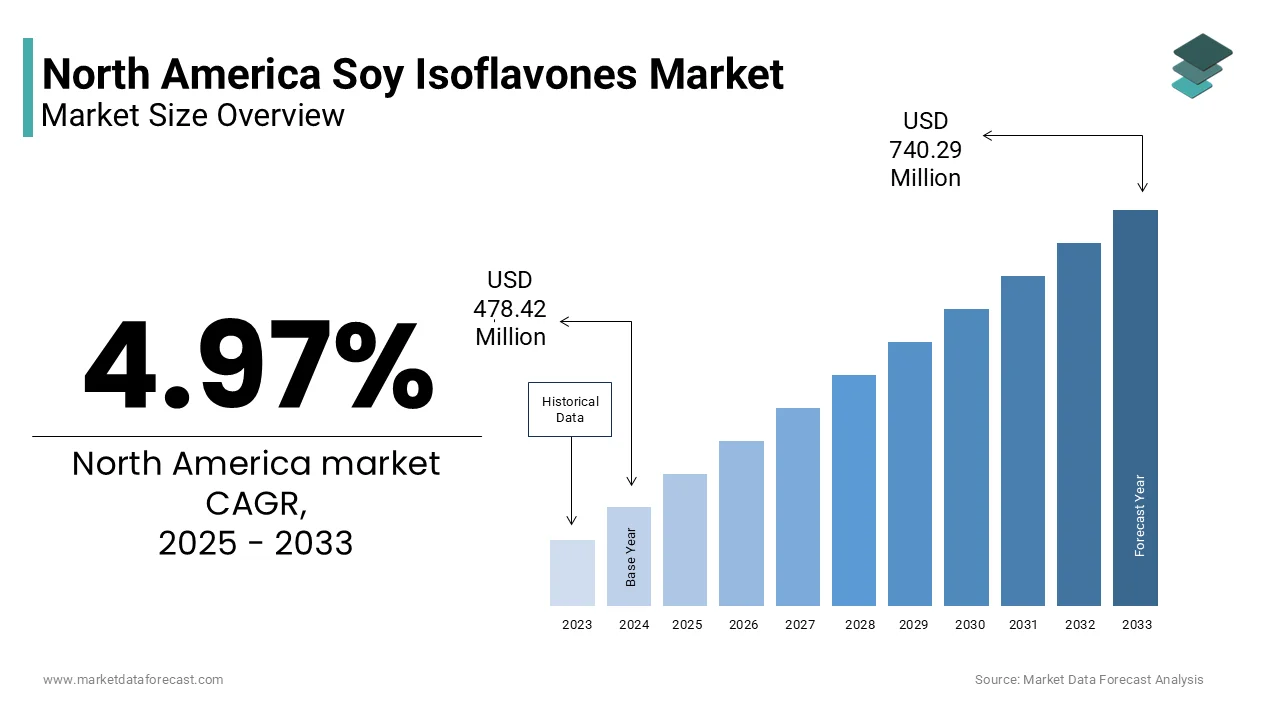
The North America soy isoflavones market size was valued at USD 503.15 million in 2025, is anticipated to reach USD 528.16 million in 2026, and is projected to scale up to USD 778.55 million by 2034, registering a compound annual growth rate (CAGR) of 4.97% during the forecast period from 2026 to 2034. Propelled by growing consumer focus on hormonal health, clean-label plant-based formulations, and advancements in extraction technologies, the regional market continues to expand steadily.
Key Executive Metrics (At-a-Glance)
- 2025 Base Valuation: USD 503.15 Million
- 2026 Current Valuation: USD 528.16 Million
- 2034 Forecast Valuation: USD 778.55 Million
- Compound Annual Growth Rate (CAGR): 4.97% (2026–2034)
- Dominant Application Segment: Nutraceuticals (holding a 58.4% share in 2025)
- Fastest-Growing Application Segment: Cosmetics (growing at a CAGR of 13.4% from 2026 to 2034)
- Dominant Form Segment: Powder Form (holding a commanding market share)
- Fastest-Growing Form Segment: Liquid Form (registering a CAGR of 10.8% from 2026 to 2034)
- Dominant Raw Material Segment: Genetically Modified (GM) Soybeans (accounting for 63.5% of total production)
- Fastest-Growing Raw Material Segment: Non-GM Soybeans (advancing at a CAGR of 12.1%)
- Dominant Product Type Segment: Genistein (capturing 54.3% of the segment share)
- Fastest-Growing Product Type Segment: Daidzein (expanding at a CAGR of 11.7%)
- Dominant Regional Market: The United States (commanding an 85.2% share in 2025)
Core Market Drivers
- Hormonal Health & Menopausal Wellness: Rising demand for non-hormonal, natural interventions to alleviate menopausal symptoms.
- Clean-Label & Plant-Based Growth: Consumer shift toward transparent, sustainable, and naturally derived functional ingredients.
- Technological Innovations: Advanced fractionation, membrane filtration, and nanoemulsion techniques improving bioavailability and purity.
Primary Market Restraints & Challenges
- Regulatory Ambiguity: Inconsistent health claim standards and cautious FDA oversight regarding hormone-related benefits.
- Public Misconceptions: Enduring skepticism and misinformation concerning soy's impact on endocrine function and cancer risks.
- Supply Chain & Competition: Vulnerabilities tied to monoculture farming practices and intensifying competition from alternative phytoestrogen sources.
North America Soy Isoflavones Market Segmentation Breakdown
| Segment Category | Leading Sub-Segment (2026 Base) | Fastest-Growing Sub-Segment (2026–2034) |
|---|---|---|
| By Application | Nutraceuticals (58.4% share) | Cosmetics (13.4% CAGR) |
| By Form | Powder Form (commanding share) | Liquid Form (10.8% CAGR) |
| By Raw Material | Genetically Modified Soybeans (63.5% share) | Non-GM Soybeans (12.1% CAGR) |
| By Product Type | Genistein (54.3% share) | Daidzein (11.7% CAGR) |
| By Region | The United States (85.2% share) | Canada and Rest of North America |
Major Industry Players Profiled
Key enterprises shaping the competitive North American soy isoflavones market include Archer Daniels Midland Company (ADM), Sabinsa Corporation, Naturex (Givaudan SA), Fujicco Co., Ltd, Aushadhi Herbal, Tradichem S.L, Frutarom Ltd., SK Bioland, Medisys Biotech Pvt. Ltd., Guzen Development, Nutra Green Biotechnology Co., Ltd., and HerboNutra.
North America Soy Isoflavones Market Size
The North America soy isoflavones market size was valued at USD 503.15 million in 2025 and is expected to reach USD 778.55 million by 2034 from USD 528.16 million in 2026. The market's promising CAGR for the predicted period is 4.97%.
Soy Isoflavones are naturally occurring phytoestrogens, primarily genistein, daidzein, and glycitein, derived from soybeans (Glycine max ) for use in dietary supplements, functional foods, personal care products, and clinical nutrition formulations. These bioactive compounds are valued for their structural similarity to human estrogen and their potential role in supporting hormonal balance, particularly during menopause, cardiovascular health, and bone density maintenance. Unlike synthetic alternatives, soy isoflavones are classified as natural ingredients, aligning with consumer demand for plant-based wellness solutions. In recent years, increasing scientific validation and integration into evidence-based nutritional protocols have elevated their status within integrative medicine.
According to the United States Department of Agriculture, over 82 million acres of soybeans were harvested across the U.S. in 2023, making it one of the most extensively cultivated crops and ensuring a robust raw material base for isoflavone production. Furthermore, advancements in fractionation technologies, such as membrane filtration and supercritical fluid extraction, have enhanced purity levels and bioavailability, enabling manufacturers to meet stringent quality benchmarks. As per the National Institutes of Health Office of Dietary Supplements, a notable share of American adults regularly consume botanical supplements, with soy-based products ranking among the top ten most used categories. This widespread acceptance is reinforced by regulatory recognition; the U.S. Food and Drug Administration permits qualified health claims linking soy protein consumption, including its isoflavone content, to reduced risk of coronary heart disease. The convergence of agricultural abundance, evolving consumer health consciousness, and scientific legitimacy underpins the strategic significance of soy isoflavones in shaping North America’s nutraceutical landscape.
 MARKET DRIVERS
Growing Consumer Focus on Hormonal Health and Menopausal Wellness
The rising awareness and proactive management of hormonal health, especially among peri- and postmenopausal women seeking non-hormonal alternatives to conventional therapy is a principal driver propelling the North America Soy Isoflavones Market. With an estimated 1.3 million women entering menopause annually in the United States, as reported by the North American Menopause Society, there is mounting demand for safe, natural interventions to alleviate symptoms such as hot flashes, night sweats, and mood fluctuations.
Clinical studies indicate that daily intake of 40–80 mg of soy isoflavones can reduce the frequency of moderate-to-severe hot flashes compared to placebo, reinforcing their therapeutic credibility. This evidence has been instrumental in shifting medical perceptions. Retailers such as CVS Health and Walgreens have responded by expanding shelf space dedicated to menopause-specific supplements, many of which feature standardized soy isoflavone extracts.
Apart from these, direct-to-consumer brands like Reminders and Belsomra Naturals have leveraged digital platforms to educate users on phytoestrogen benefits, driving self-directed purchasing behaviour. The cultural destigmatization of menopause discussions, amplified by celebrity advocacy and media campaigns, further fuels product adoption. So, soy isoflavones are transitioning from niche botanicals to mainstream wellness staples, supported by both clinical validation and consumer empowerment trends.
Expansion of Plant-Based and Clean-Label Product Formulations
The integration of soy isoflavones into plant-based and clean-label food, beverage, and supplement portfolios, reflecting broader shifts toward transparency, sustainability, and ingredient integrity is another pivotal driver. Consumers across North America are scrutinizing product labels more rigorously, favoring formulations free from artificial additives, synthetic hormones, and unpronounceable chemicals.
Like, many U.S. consumers in 2023 stated that “natural origin” was a critical factor in choosing dietary supplements, placing soy isoflavones—recognized as naturally derived—at a competitive advantage. Major food and beverage companies, including Danone North America and General Mills, have reformulated plant-based milk and yogurt alternatives to include added soy isoflavones, promoting dual benefits of lactose-free nutrition and hormonal support.
Moreover, the rise of regenerative agriculture and non-GMO sourcing enhances consumer trust. The inclusion of soy isoflavones in certified organic supplements has also surged, with an increase in new organic botanical product launches between 2021 and 2023. Beyond ingestion, personal care brands such as Alaffia and Dr. Hauschka are incorporating soy isoflavones into anti-aging creams and serums due to their antioxidant and collagen-stabilizing properties. This cross-sectoral penetration underscores the versatility of soy isoflavones as multifunctional, label-friendly actives that align seamlessly with contemporary wellness values, thereby accelerating market expansion beyond traditional supplement channels.
MARKET RESTRAINTS
Regulatory Ambiguity Surrounding Health Claims and Labeling Standards
The inconsistent regulatory treatment of health claims and labeling requirements across federal and state jurisdictions, creating uncertainty for manufacturers and confusion among consumers is one of the most significant restraints affecting the North America Soy Isoflavones Market. While the U.S. Food and Drug Administration permits a qualified health claim linking soy protein to reduced risk of heart disease, it explicitly disallows definitive statements regarding soy isoflavones and hormone-related benefits due to insufficient conclusive evidence. This cautious stance contrasts with more permissive frameworks in countries like Japan and South Korea, where specific disease-risk reduction claims are authorized.
According to the Federal Trade Commission, many dietary supplement firms received warning letters between 2020 and 2023 for making unauthorized claims about soy isoflavones alleviating menopausal symptoms or preventing breast cancer. Such enforcement actions not only incur financial penalties but also damage brand credibility.
Further, discrepancies between FDA guidelines and those of third-party certifiers—such as USP, NSF International, and ConsumerLab—lead to variable product testing standards and potency declarations. Without harmonized verification protocols and clearer claim authorization pathways, companies remain hesitant to invest heavily in large-scale marketing campaigns, limiting public education and slowing mainstream adoption despite growing scientific interest.
Persistent Public Misconceptions Regarding Soy and Hormonal Safety
The enduring skepticism surrounding soy consumption, particularly concerning its potential impact on endocrine function and cancer risk, fueled by outdated research and misinterpreted data is a major impediment to market growth. Despite numerous peer-reviewed studies affirming the safety of moderate soy isoflavone intake, segments of the North American population continue to associate soy with adverse effects on thyroid function, fertility, and hormone-sensitive cancers.
Pediatric concerns also persist; some parents avoid soy-based infant formulas due to fears of early puberty, although the American Academy of Pediatrics affirms their safety and nutritional adequacy. These misconceptions are exacerbated by misinformation circulating on social media and alternative health websites, where anecdotal reports often overshadow clinical evidence. As per the Harvard T.H. Chan School of Public Health, only limited percentage of primary care physicians routinely discuss soy isoflavones with patients experiencing menopausal symptoms, indicating a gap in professional guidance. Till comprehensive public health communication strategies are implemented to correct inaccuracies and reinforce science-based consensus, consumer hesitation will continue to constrain the full realization of soy isoflavones’ market potential.
MARKET OPPORTUNITIES
Integration into Medical Nutrition and Clinically Guided Wellness Programs
The incorporation of soy isoflavones into medical nutrition therapies and clinician-recommended wellness regimens, particularly in preventive cardiology, osteoporosis management, and integrative oncology is an emerging opportunity. With chronic diseases accounting for seven of the top ten causes of death in the United States, as reported by the Centers for Disease Control and Prevention, healthcare providers are increasingly adopting nutrition-centric approaches to complement pharmacological treatments. Institutions such as the Cleveland Clinic and Kaiser Permanente have begun including soy isoflavone recommendations in personalized nutrition plans for high-risk patients. Furthermore, geriatric specialists are exploring their role in mitigating age-related bone loss. The growing acceptance of functional foods within hospital systems and long-term care facilities opens new distribution channels. Partnerships between ingredient suppliers and telehealth platforms like Parsley Health and Roman are enabling real-time monitoring and dosage optimization, enhancing adherence and outcomes.
Advancements in Precision Extraction and Bioavailability Enhancement Technologies
The advent of advanced extraction and delivery technologies that significantly improve compound specificity, purity, and physiological absorption is a transformative opportunity reshaping the North America Soy Isoflavones Market. Traditional solvent-based methods often yield inconsistent isoflavone profiles, but innovations such as countercurrent chromatography and enzyme-assisted hydrolysis now enable selective isolation of active aglycones—genistein and daidzein—in their most bioavailable forms. Companies have developed patented fermentation processes that convert glycoside-bound isoflavones into absorbable aglycones, increasing plasma concentration compared to conventional extracts, as validated in human pharmacokinetic studies cited by the Journal of Agricultural and Food Chemistry. Encapsulation techniques, including liposomal and nanoemulsion delivery systems, further enhance stability and intestinal uptake, allowing for lower effective dosages and improved patient compliance. These technological breakthroughs are attracting investment from pharmaceutical developers exploring nutraceutical-grade interventions for metabolic and inflammatory conditions. Therefore, as intellectual property accumulates around proprietary delivery platforms, first-mover companies are establishing defensible market positions, transforming soy isoflavones from commodity extracts into high-value, performance-driven ingredients tailored for precision health applications.
MARKET CHALLENGES
Supply Chain Vulnerability Due to Monoculture Soybean Farming Practices
The ecological and logistical fragility inherent in large-scale monoculture soybean cultivation, which dominates U.S. agricultural output, is one of the foremost challenges confronting the North America Soy Isoflavones Market.
Most of soybeans grown in the United States are genetically modified for herbicide tolerance, primarily glyphosate, leading to increased weed resistance and escalating chemical inputs.
Additionally, the concentration of soybean farming in the Midwest creates geographic risk; extreme weather events linked to climate change, such as the 2023 Mississippi River drought, disrupted barge transport and delayed harvests, affecting raw material availability for processors in Iowa and Minnesota.
These factors threaten the long-term sustainability and consistency of isoflavone feedstock. Moreover, limited genetic diversity among commercial soy varieties increases susceptibility to pests and pathogens, exemplified by the spread of soybean cyst nematode. Without systemic shifts toward crop rotation, regenerative practices, and diversified sourcing, the supply chain remains exposed to volatility, undermining the industry’s ability to guarantee quality and scale sustainably.
Intensifying Competition from Alternative Phytoestrogen Sources
An escalating challenge is the growing popularity of non-soy phytoestrogens such as red clover isoflavones, hops-derived 8-prenylnaringenin, and lignans from flaxseed, which are increasingly positioned as premium or hypoallergenic substitutes. Red clover, in particular, has gained traction due to its distinct isoflavone profile—rich in biochanin A and formononetin—which some clinical practitioners believe offers superior menopausal symptom relief.
Hops-derived compounds, though less common, are being incorporated into targeted formulations for sleep and anxiety support, capitalizing on their sedative properties alongside hormonal modulation. Brands like Gaia Herbs and MegaFood have launched hybrid blends combining multiple phytoestrogen sources, appealing to consumers seeking synergistic effects.
Furthermore, flaxseed lignans are promoted for their dual action on hormonal balance and digestive health, resonating with fiber-conscious demographics. This diversification fragments the market and pressures soy isoflavone suppliers to differentiate through clinical substantiation, formulation innovation, or cost efficiency.
REPORT COVERAGE
| REPORT METRIC | DETAILS |
| Market Size Available | 2025 to 2034 |
| Base Year | 2025 |
| Forecast Period | 2026 to 2034 |
| CAGR | 4.97% |
| Segments Covered | By Application, Form, Raw Material, Product Type, and Region |
|
Various Analyses Covered | Regional & Country Level Analysis, Segment-Level Analysis, DROC, PESTLE Analysis, Porter’s Five Forces Analysis, Competitive Landscape, Analyst Overview on Investment Opportunities |
| Regions Covered | The United States, Canada, Mexico, and Rest of North America |
| Market Leaders Profiled | Fujicco Co., Ltd, Aushadhi Herbal, Tradichem S.L, Frutarom Ltd., Archer Daniels Midland, SK Bioland, Medisys Biotech Pvt. Ltd., Guzen Development, Nutra Green Biotechnology Co., Ltd., and HerboNutra, and others |
SEGMENTAL ANALYSIS
By Application Insights
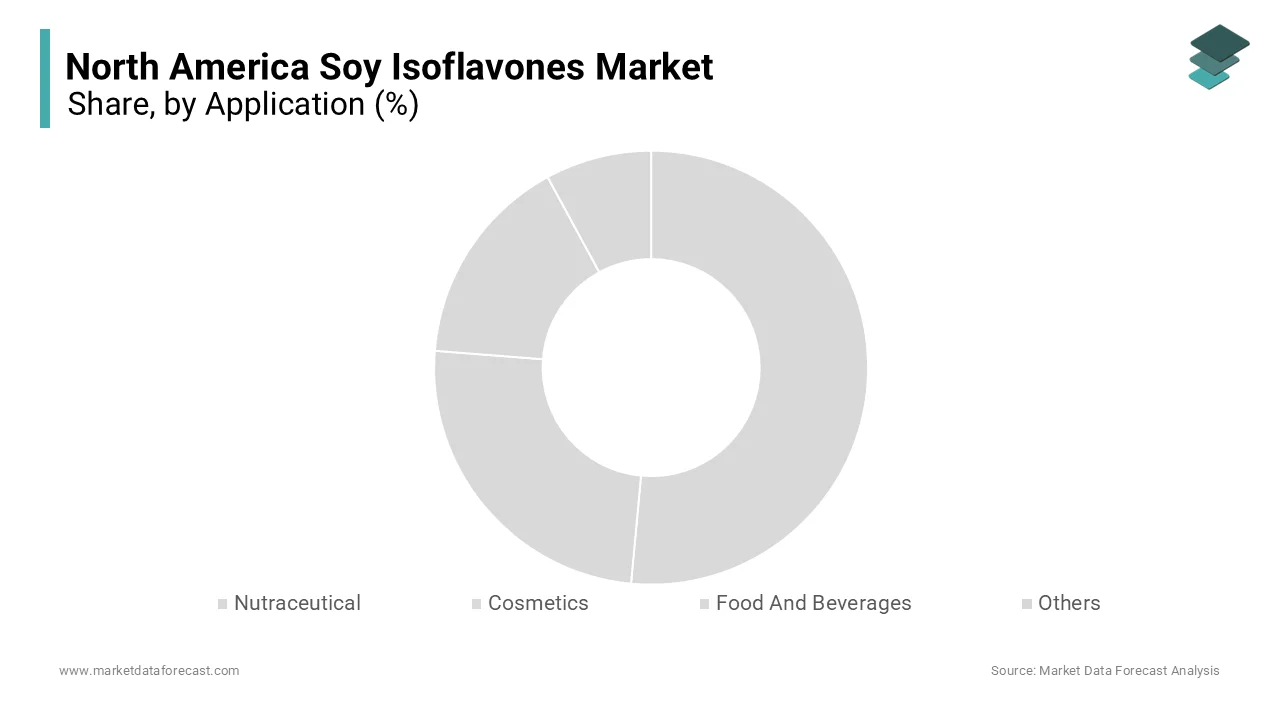
The nutraceutical application segment dominated the North America Soy Isoflavones Market with a 58.4% share in 2025, anchored by its integration into dietary supplements targeting hormonal balance, cardiovascular wellness, and bone health. The lead position is driven by the rising prevalence of hormone-related health concerns, particularly among aging demographics.
Moreover, integrative healthcare providers increasingly recommend soy isoflavone supplements as part of evidence-based wellness protocols. Retail penetration is extensive—Walmart, CVS Health, and Amazon collectively list over 420 soy isoflavone supplement SKUs, many featuring standardized extracts of genistein and daidzein.
Additionally, third-party certification bodies such as NSF International have expanded testing programs for soy-based supplements, improving product transparency and trust. The convergence of demographic shifts, clinical endorsement, and retail accessibility solidifies nutraceuticals as the core application domain for soy isoflavones, far surpassing other end uses in both volume and consumer engagement.
The cosmetics segment is experiencing the most rapid expansion in the North America Soy Isoflavones Market and is growing at a CAGR of 13.4% from 2026 to 2034, propelled by increasing demand for bioactive, plant-derived ingredients in anti-aging and skin-rejuvenating formulations. Soy isoflavones are valued for their ability to inhibit matrix metalloproteinases—enzymes responsible for collagen degradation—and stimulate dermal fibroblast activity, contributing to improved skin elasticity and reduced wrinkle depth.
In addition, the scientific backing has led to widespread adoption by premium skincare brands such as Algenist, Olay, and Drunk Elephant, which now feature soy isoflavones in serums, moisturizers, and eye treatments. Moreover, the rise of gender-inclusive personal care has broadened the user base; male grooming lines from companies like Jack Black and Baxter of California are incorporating soy isoflavones for their antioxidant and barrier-strengthening properties. As consumers prioritize science-backed naturals in their regimens, the cosmetics sector is transforming from an ancillary application into a high-growth innovation frontier for soy isoflavone utilization.
By Form Insights
The Powder form segment holds a commanding share of the North America Soy Isoflavones Market, underpinned by its versatility, stability, and compatibility with large-scale manufacturing processes across nutraceutical and food sectors. The dry format enables precise dosing, extended shelf life, and ease of encapsulation or tablet compression—critical attributes for supplement producers. Most commercial soy isoflavone extracts are standardized to 40%, 80%, or 98% total isoflavones in powder form, allowing manufacturers to tailor potency based on application needs.
The dominance of powder is further reinforced by supply chain efficiency; it requires no refrigeration, resists microbial contamination, and occupies minimal storage space, reducing logistical costs. Major contract manufacturers such as NutraScience Labs and Jarrow Formulas rely heavily on powdered soy isoflavones for private-label production, processing millions of capsules annually. Additionally, food fortification programs incorporate spray-dried soy isoflavone powders into breakfast cereals, protein bars, and meal replacements without altering texture or taste. Hence, powdered soy isoflavones remain the preferred physical form for industrial applications despite emerging alternatives.
The Liquid-form soy isoflavones segment is registering the highest growth rate in the North America market and is expanding at a CAGR of 10.8% from 2026 to 2034, driven by rising consumer preference for fast-absorbing, convenient delivery systems and the proliferation of functional beverages. Unlike powders, liquid extracts offer enhanced bioavailability due to pre-dissolution and faster gastrointestinal absorption, appealing to health-conscious users seeking immediate physiological effects. Also, liquid soy isoflavone formulations achieve peak plasma concentration faster than encapsulated powders, making them ideal for acute symptom management. This advantage is being leveraged in ready-to-drink (RTD) functional beverages; brands like Calm, Olipop, and Kin Euphorics have introduced tonics and sparkling drinks fortified with liquid soy isoflavones, targeting stress resilience and hormonal equilibrium.
Furthermore, liquid formats are gaining traction in pediatric and geriatric nutrition, where swallowing difficulties limit capsule use. Companies such as Enfamil and Ensure have reformulated certain lines to include liquid-stable isoflavone emulsions. Advances in nanoemulsion and liposomal delivery have also improved solubility and oxidative resistance, extending shelf life.
By Raw Material Insights
The genetically modified soybeans segment constituted the dominant raw material source in the North America Soy Isoflavones Market by accounting for 63.5% of total production. It is primarily due to their agronomic efficiency, scalability, and cost-effectiveness in large-scale cultivation. Most of soybeans grown in the United States are genetically engineered for herbicide tolerance, predominantly to glyphosate, enabling farmers to manage weeds more efficiently and achieve higher yields per acre.
Industrial processors favor GM sources because they offer consistent crop performance, predictable chemical composition, and uninterrupted availability across seasons. Major ingredient manufacturers such as Archer Daniels Midland and Cargill operate integrated supply chains rooted in GM agriculture, leveraging economies of scale to maintain competitive pricing. Regulatory approval also supports usage; the U.S. Food and Drug Administration affirms that GM soy is substantially equivalent to non-GM in nutritional profile and safety. Despite public debate, the absence of verified adverse health effects from decades of consumption, has allowed GM-derived isoflavones to remain the backbone of commercial production. While consumer skepticism persists in certain segments, the economic and operational advantages of GM soy ensure its continued dominance in supplying the bulk of North America’s soy isoflavone output.
The non-genetically modified (Non-GM) soy is emerging as the fastest-growing raw material segment in the North America Soy Isoflavones Market and is advancing at a CAGR of 12.1% from 2026 to 2035. It is fueled by escalating consumer demand for transparent, natural, and ethically sourced ingredients. This shift is driven by growing awareness of agricultural sustainability and health implications associated with genetically engineered crops.
Consumers are increasingly scrutinizing labels; a significant number of U.S. shoppers actively avoid GMOs when purchasing wellness products. In response, companies like NOW Foods, Garden of Life, and MegaFood have transitioned to 100% Non-GM soy isoflavone extracts, prominently displaying verification seals on packaging. Additionally, regenerative farming initiatives in states like Iowa and Wisconsin are promoting Non-GM soy cultivation using cover cropping and reduced tillage, enhancing soil health and carbon sequestration. As environmental consciousness and ingredient traceability become central to purchasing decisions, Non-GM soy isoflavones are evolving from a niche alternative into a strategic differentiator in premium and purpose-driven markets.
By Product Type Insights
The genistein segment is the leading individual isoflavone compound in the North America Soy Isoflavones Market by capturing 54.3% of the product-type segment due to its superior biological activity, extensive research validation, and broad therapeutic relevance. Among all soy isoflavones, genistein exhibits the strongest affinity for estrogen receptor beta (ERβ), which mediates protective effects in bone, brain, and cardiovascular tissues without stimulating breast or uterine tissue proliferation.
Its role in inhibiting tyrosine kinases—a mechanism linked to cancer cell suppression—has positioned it as a key subject in oncology-related nutraceutical research. Manufacturers such as Sabinsa and Indena offer ultra-pure (≥98%) genistein powders tailored for high-end formulations. Additionally, its stability in various pH environments makes it suitable for diverse delivery formats, from enteric-coated capsules to functional beverages.
The daidzein segment is experiencing the most accelerated growth within the North America Soy Isoflavones Market and is expanding at a CAGR of 11.7% from 2026 to 2034. It is driven by increased interest in its metabolite equol and its unique physiological benefits. Unlike genistein, daidzein can be converted by specific gut microbiota into S-equol, a compound with even greater estrogenic activity and antioxidant capacity. However, only about 30–50% of the population—known as “equol producers”—possess the necessary intestinal bacteria to perform this conversion, prompting targeted supplementation strategies.
Companies like Supplement Factory and Metagenics have launched dual-action formulations aimed at maximizing metabolic conversion. Furthermore, daidzein’s milder effect profile makes it preferable for younger demographics and men seeking hormonal balance without overstimulation. As microbiome science advances and personalized nutrition gains traction, daidzein is transitioning from a secondary isoflavone to a cornerstone of next-generation hormonal health solutions.
REGIONAL ANALYSIS
United States
The United States stood as the undisputed leader in the North America Soy Isoflavones Market by commanding a 85.2% share in 2025. It is driven by its vast agricultural base, advanced biotech infrastructure, and high consumer adoption of dietary supplements. Major processing hubs in Illinois, Indiana, and Minnesota support large-scale refinement operations by firms like ADM, DuPont Nutrition & Biosciences, and Naturex. The country also leads in clinical research. Retail penetration is unparalleled—a large share of pharmacies and grocery chains stock soy isoflavone supplements, with e-commerce channels like Amazon and iHerb facilitating nationwide access. Regulatory clarity, coupled with strong intellectual property protection, encourages continuous innovation, solidifying the U.S. as the epicenter of soy isoflavone development and commercialization.
Canada
Canada is distinguished by its emphasis on clean-label, science-backed nutraceuticals and progressive regulatory frameworks. Health Canada’s Natural and Non-Prescription Health Products Directorate (NNHPD) maintains rigorous evaluation standards, fostering consumer trust in approved products. Canadian consumers exhibit strong preference for transparency. Companies such as AOR and Genestra have capitalized on this sentiment by launching clinically validated, Non-GMO soy isoflavone lines targeting hormonal and cardiovascular health. Additionally, academic institutions like the University of Toronto are conducting human trials on isoflavone metabolism, contributing to evidence-based guidelines. The rise of telehealth platforms such as Maple and TELUS Health has further enabled remote prescribing of soy-based wellness regimens.
Rest of North America
The Rest of North America, comprising U.S. territories and peripheral regions, representing fragmented yet evolving pockets of demand. Areas such as Puerto Rico and border regions in northern Mexico exhibit growing interest in plant-based wellness solutions, influenced by cross-border trade and cultural exchange. In Puerto Rico, local pharmacies report increased inquiries about menopause management products, with soy isoflavone supplements becoming more visible in urban clinics. Meanwhile, maquiladora zones near the U.S.-Mexico border host contract manufacturing facilities that process soy extracts for export, benefiting from favorable logistics and skilled labor. However, inconsistent regulatory enforcement and limited healthcare integration constrain widespread adoption. Nevertheless, digital commerce and mobile health initiatives are beginning to bridge access gaps, suggesting incremental growth potential.
KEY MARKET PLAYERS AND COMPETITIVE LANDSCAPE
The key players in the North America soy isoflavone market are Fujicco Co., Ltd, Aushadhi Herbal, Tradichem S.L, Frutarom Ltd., Archer Daniels Midland, SK Bioland, Medisys Biotech Pvt. Ltd., Guzen Development, Nutra Green Biotechnology Co., Ltd., and HerboNutra.
The competitive environment in the North America Soy Isoflavones Market is defined by a convergence of scientific rigor, consumer-driven innovation, and strategic differentiation among key participants. Multinational ingredient giants leverage economies of scale, advanced R&D capabilities, and global distribution networks to maintain dominance, particularly in standardized extract supply. However, specialized botanical companies are gaining ground by focusing on high-purity isolates, patented delivery systems, and clinically validated claims that appeal to premium and medical-grade segments. Competition extends beyond price and volume to encompass transparency, sustainability credentials, and alignment with evolving wellness paradigms such as personalized nutrition, hormonal health, and clean beauty. Smaller innovators are carving niches by targeting microbiome synergy, equol production, and gender-specific formulations, challenging legacy perceptions of soy isoflavones as one-dimensional menopause aids. Regulatory navigation plays a crucial role, as companies must balance aggressive marketing with compliance amid cautious FDA oversight on health claims. Brand positioning is increasingly shaped by third-party certifications, ethical sourcing narratives, and digital engagement strategies. As consumer awareness deepens and formulation science advances, the battlefield shifts toward scientific authority, supply chain integrity, and the ability to translate complex bioactivity into tangible health benefits, creating a dynamic and increasingly sophisticated competitive arena.
TOP PLAYERS IN THE MARKET
Archer Daniels Midland Company (ADM)
ADM plays a pivotal role in advancing the global soy isoflavones landscape by integrating large-scale agricultural sourcing with cutting-edge bioprocessing technologies. The company leverages its vast grain-handling infrastructure to ensure consistent, high-quality soy feedstock, which it transforms into standardized isoflavone extracts for nutraceutical, food, and pharmaceutical applications. ADM invests heavily in research to enhance bioavailability and functional performance, supporting clients in developing science-backed formulations. Its global network enables seamless supply across North America, Europe, and Asia, making it a preferred partner for multinational brands seeking reliable, scalable ingredient solutions. By aligning with sustainability initiatives and clean-label trends, ADM has positioned soy isoflavones as essential components in preventive health and wellness innovation worldwide.
Sabinsa Corporation
Sabinsa has emerged as a leader in botanical ingredient innovation, particularly in the development of highly purified, clinically studied soy isoflavone compounds. The company distinguishes itself through proprietary extraction processes and an extensive intellectual property portfolio, ensuring product differentiation and regulatory compliance. Its focus on genistein and daidzein isolates has supported numerous clinical trials validating their role in hormonal balance, cardiovascular function, and skin health. Sabinsa collaborates closely with academic institutions and healthcare practitioners to generate evidence-based data that enhances market credibility. With manufacturing facilities adhering to stringent cGMP standards, the company supplies premium-grade isoflavones to leading supplement and cosmetic brands globally, reinforcing its reputation for quality, transparency, and scientific rigor in plant-derived actives.
Naturex (part of Givaudan SA)
Naturex, now integrated within Givaudan’s Natural Products Division, excels in delivering clean, traceable, and sustainable soy isoflavone ingredients tailored for health and personal care markets. The company emphasizes responsible sourcing, working directly with farmers to promote non-GMO and organic soy cultivation while ensuring full supply chain transparency. Its expertise in natural extraction techniques allows for the preservation of bioactive integrity, meeting the demands of discerning formulators in functional foods and premium cosmetics. Naturex’s innovation centers across North America and Europe drive the development of novel delivery systems that improve stability and efficacy. By combining botanical science with consumer-centric design, the company strengthens the application potential of soy isoflavones in next-generation wellness products, influencing formulation strategies on a global scale.
TOP STRATEGIES USED BY KEY PLAYERS
A primary strategy adopted by leading firms is vertical integration across the supply chain, from seed-level partnerships with soybean growers to final ingredient refinement. This approach ensures control over quality, consistency, and sustainability while reducing dependency on third-party suppliers. Companies are increasingly engaging in contract farming and agronomic support programs to secure non-GMO or organic raw materials, aligning with clean-label expectations.
Another critical strategy is investment in clinical research and intellectual property development to differentiate products in a crowded marketplace. By funding human trials, securing patents on extraction methods, and publishing peer-reviewed findings, key players enhance scientific credibility and build trust among healthcare providers and regulators, facilitating broader acceptance in medical and functional nutrition contexts.
A third strategic focus is brand collaboration and co-development with downstream manufacturers in supplements, functional foods, and skincare. Through technical service partnerships, ingredient suppliers provide formulation guidance, regulatory support, and marketing dossiers, enabling faster time-to-market for finished goods. These alliances strengthen customer loyalty and position soy isoflavones as value-added components rather than commoditized inputs.
RECENT HAPPENINGS IN THE MARKET
- In February 2023, ADM launched a dedicated botanical innovation center in Decatur, Illinois, focused on enhancing the purity and bioavailability of soy isoflavone extracts using proprietary enzymatic hydrolysis technology.
- In May 2023, Sabinsa Corporation secured a new patent for a fermentation-based method to increase the concentration of aglycone-form genistein, improving absorption and efficacy in dietary supplement applications.
- In September 2023, Naturex (Givaudan) partnered with a network of organic soybean farmers in the Midwest to establish a fully traceable, non-GMO supply chain for premium soy isoflavone production.
- In January 2025, NutraScience Labs introduced a private-label line of vegan, hypoallergenic soy isoflavone softgels tailored for women’s health brands, featuring enhanced solubility and rapid-release profiles.
- In June 2025, Genestra Brands collaborated with Canadian integrative medicine clinics to launch an evidence-based soy isoflavone protocol for menopausal symptom management, supported by educational outreach and practitioner training programs.
MARKET SEGMENTATION
This research report on the North America soy isoflavones market has been segmented and sub-segmented based on the following categories.
By Application
- Nutraceutical
- Cosmetics
- Food And Beverages
- Others
By Form
- Powder
- Liquid
- Wax
By Raw Material
- Genetically Modified (GM)
- Non-genetically Modified (Non-GM))
By Product Type
- Genistein
- Daidzein
- Glucitein
By Country
- The United States
- Canada
- Rest of North America