- Product Description Description
- Table of Contents TOC
- List of Table & Figure LOT
- Get Free Sample PDF Sample PDF
Market Size, 2025
$3.14 BnMarket Estimate, 2026
$3.35 BnMarket Forecast, 2034
$5.57 BnCAGR, 2026–2034
6.57%North America Soy Protein Concentrate Market Size, Growth, Trends & Forecast (2026–2034)
The North America Soy Protein Concentrate Market size was calculated to be USD 3.14 billion in 2025, is anticipated to be worth USD 3.35 billion in 2026, and is expected to reach USD 5.57 billion by 2034, growing at a compound annual growth rate (CAGR) of 6.57% during the forecast period from 2026 to 2034. Growth is heavily driven by increasing consumer preference for plant-based nutrition, sustainable ingredients, functional foods and beverages, and expanding applications in pet food formulations.
Key Executive Metrics (At-a-Glance)
- 2025 Base Valuation: USD 3.14 billion
- 2026 Current Valuation: USD 3.35 billion
- 2034 Forecast Valuation: USD 5.57 billion
- Compound Annual Growth Rate (CAGR): 6.57% (2026–2034)
- Dominant Type Segment: Soy protein concentrates (holding 42.3% of the market share in 2025)
- Fastest-Growing Type Segment: Textured soy protein (emerging with a CAGR of 9.8%)
- Dominant Application Segment: Food application segment (capturing a dominant share in 2025 across meat analogs and baked goods)
- Fastest-Growing Application Segment: Feed application segment (registering a CAGR of 8.6% from 2026 to 2034)
- Dominant Form Segment: Dry form (holding a dominant share in 2025 with over 7.5 million metric tons produced domestically)
- Fastest-Growing Form Segment: Liquid form (registering a CAGR of 10.3% from 2026 to 2034)
- Dominant Country: United States (accounting for 74.3% of regional market share in 2025)
- Fastest-Growing Country Hub: Canada (ranking second with 18.3% share in 2025, driven by gluten-free and allergen-friendly formulations)
Core Market Drivers
- Plant-Based Alternatives: Surge in consumer preference for sustainable meat substitutes mimicking animal protein texture and flavor.
- Functional Nutrition: Rapid expansion of functional foods and sports nutrition products incorporating cholesterol-lowering, high-protein formulations.
Primary Market Restraints & Challenges
- GMO Skepticism: Consumer concerns regarding genetically modified soybeans and limited availability of non-GMO acreage.
- Intense Competition: Rapid market intrusion from alternative plant proteins such as pea, rice, and faba bean.
North America Soy Protein Concentrate Market Segmentation Breakdown
| Segment Category | Leading Sub-Segment | Fastest-Growing Sub-Segment |
|---|---|---|
| By Type | Soy Protein Concentrates (42.3% share in 2025) | Textured Soy Protein (CAGR of 9.8%) |
| By Application | Food Application Segment | Feed Application Segment (CAGR of 8.6%) |
| By Form | Dry Form (Dominant share in 2025) | Liquid Form (CAGR of 10.3% from 2026–2034) |
| By Region | United States (74.3% share in 2025) | Canada (18.3% share in 2025, robust allergen-free adoption) |
Major Industry Players Profiled
Key agribusiness and ingredient giants shaping the market include Archer Daniels Midland Company (ADM), Cargill Incorporated, Bunge Limited, DuPont de Nemours Inc., Wilmar International Ltd., Kerry Group plc, CHS Inc., Tate & Lyle, Burcon NutraScience Corporation, The Scoular Company, Foodchem International, Nutra Food Ingredients, Devansoy Inc., and Sojaprotein.
North America Soy Protein Concentrate Market Size
The North America Soy Protein Concentrate Market Size was calculated to be USD 3.14 billion in 2025 and is anticipated to be worth USD 5.57 billion by 2034, from USD 3.35 billion in 2026, growing at a CAGR of 6.57% during the forecast period.
Soy protein concentrate (SPC) is a plant-based protein derived from defatted soy flour, typically containing around 70% protein content. It is widely used in food and feed applications due to its functional properties such as water retention, emulsification, and gel formation. In North America, SPC has gained traction across various sectors, including meat processing, bakery, dairy alternatives, and pet food, driven by increasing consumer preference for plant-based nutrition and sustainable ingredients. Health-conscious consumers and rising veganism have further boosted demand, particularly in the U.S., where plant-based diets are increasingly mainstream.
MARKET DRIVERS
Rising Demand for Plant-Based Meat Alternatives
The surge in popularity of plant-based meat alternatives is driving the growth of the North American soy protein concentrate market. Consumers are increasingly shifting toward sustainable and health-conscious dietary choices, with many opting for meat substitutes that mimic the texture and flavor of animal protein. Soy protein concentrate, with its high protein content and excellent binding properties, plays a crucial role in the formulation of these products. This growth is largely attributed to increased product availability across major grocery chains and foodservice outlets. Leading brands such as Beyond Meat and Impossible Foods rely heavily on soy-derived ingredients, including soy protein concentrate, to achieve desired mouthfeel and nutritional profiles. Additionally, as per the Good Food Institute, over 60 new plant-based meat products were launched in North America in 2023, many of which listed soy protein concentrate as a core ingredient. This trend is reinforced by environmental concerns, as livestock farming accounts for nearly 14.5% of global greenhouse gas emissions, according to the Food and Agriculture Organization.
Expansion of the Functional Food and Beverage Industry
The rapid expansion of the functional food and beverage industry in North America is also expected to accelerate the growth of the soy protein concentrate market. Functional foods those designed to provide additional health benefits beyond basic nutrition, are increasingly incorporating soy protein due to its cholesterol-lowering properties, muscle-building potential, and allergen-friendly nature. The Sports & Fitness Industry Association reports that over 55 million Americans engaged in strength training activities in 2023, leading to heightened demand for plant-based protein supplements. Brands such as Orgain and Garden of Life have integrated soy protein concentrate into their product lines, capitalizing on its ability to enhance texture while delivering essential nutrients. Moreover, as per the U.S. Department of Agriculture’s 2023 Dietary Guidelines, there is a growing emphasis on incorporating plant-based proteins into daily diets to reduce chronic disease risks.
MARKET RESTRAINTS
Consumer Concerns Over Genetically Modified Soybeans
The ongoing consumer skepticism surrounding genetically modified organisms (GMOs) in soybeans is slowly degrading the growth of the North American soy protein concentrate market. According to a 2023 survey conducted by the International Food Information Council, nearly 40% of American consumers expressed concern about the safety of genetically modified foods, with a preference for non-GMO labeled products. The Non-GMO Project is one of the fastest-growing verification programs in North America, reporting a 22% increase in verified products in 2023, including numerous plant-based protein items. As per the U.S. Department of Agriculture, only about 25% of domestic soybean acreage was dedicated to non-GMO varieties in 2023, which is limiting raw material availability for premium soy protein concentrate production.
Price Volatility of Raw Soybeans
The price fluctuations in raw soybeans affect the stability and profitability of the soy protein concentrate market in North America. Soybean prices are influenced by a range of factors, including weather conditions, trade policies, and global demand shifts, all of which can lead to unpredictable input costs for processors. In 2023, the U.S. experienced erratic planting and harvesting cycles due to extreme weather events, including droughts in the Midwest and excessive rainfall in parts of Iowa and Illinois. According to the U.S. Department of Agriculture, soybean prices rose by approximately 12% year-over-year, reaching an average of $14.20 per bushel. Trade tensions between the U.S. and China, historically one of the largest importers of American soybeans, have also contributed to market instability. Although exports rebounded in 2023, disruptions in prior years created uncertainty in sourcing and pricing structures. Furthermore, inflationary pressures across logistics and energy sectors have compounded cost challenges, which are forcing some smaller producers to scale back operations or raise end-product prices.
MARKET OPPORTUNITIES
Innovation in Pet Food Formulations
A growing opportunity for the North American soy protein concentrate market lies in the expanding pet food industry in the development of plant-based and hypoallergenic pet diets. Many of these premium formulations now include soy protein concentrate due to its functional attributes and compatibility with grain-free and allergen-sensitive diets. Leading pet food manufacturers such as Blue Buffalo and Wellness have introduced plant-forward formulas featuring soy protein concentrate as a viable alternative to chicken, beef, or fish-based proteins. This shift presents a strategic avenue for soy protein concentrate suppliers to diversify their customer base and expand into a lucrative segment that aligns with evolving consumer preferences for sustainability and holistic wellness.
Adoption of Nutritional Supplements for Aging Populations
The application of nutritional supplements tailored for aging populations is another attribute fuelling the growth of the North American soy protein concentrate market. According to the U.S. Census Bureau, the number of Americans aged 65 and older surpassed 60 million in 2023, accounting for nearly 18% of the total population. This demographic shift has spurred innovation in elder-focused nutrition, including ready-to-drink shakes, meal replacements, and protein powders, many of which incorporate soy protein concentrate for its bioavailability and low allergenicity. Furthermore, clinical studies cited by the National Institutes of Health affirm the role of soy isoflavones in reducing osteoporosis risk and supporting cardiovascular health, key concerns for older adults.
MARKET CHALLENGES
Competition from Alternative Plant Proteins
The intensifying competition from alternative plant proteins such as pea, rice, hemp, and faba bean is a challenging factor for the growth of the North American soy protein concentrate market. Plant-based protein launches in North America saw a 28% increase in 2023, with pea protein dominating new product formulations. This shift is partly driven by consumer perception that pea protein is less likely to cause allergic reactions and does not carry the same GMO-associated stigma as soy. Manufacturers such as Roquette and Burcon NutraScience have aggressively marketed pea protein isolates as superior alternatives, leveraging partnerships with major food and beverage companies. This has led to a gradual erosion of soy’s dominance in certain categories, particularly in premium plant-based beverages and infant nutrition products. Moreover, as per the USDA Economic Research Service, U.S. imports of pea protein surged by 35% in 2023, indicating a growing reliance on alternative proteins.
Regulatory Scrutiny and Labeling Complexities
The regulatory scrutiny and complex labeling requirements affect soy protein concentrate manufacturers operating in North America. The U.S. Food and Drug Administration (FDA) revised its labeling guidelines in 2023, mandating clearer disclosure of allergens, nutrient content claims, and sourcing information. Additionally, the introduction of the Bioengineered Food Disclosure Standard by the USDA requires manufacturers to disclose the presence of bioengineered ingredients, adding another layer of complexity. These regulatory hurdles, combined with inconsistent state-level initiatives such as California’s Proposition 65 warnings, create operational inefficiencies and marketing constraints.
REPORT COVERAGE
| REPORT METRIC | DETAILS |
| Market Size Available | 2025 to 2034 |
| Base Year | 2025 |
| Forecast Period | 2026 to 2034 |
| CAGR | 6.57% |
| Segments Covered | By Type, Application, Form, And Region |
| Various Analyses Covered | Global, Regional & Country Level Analysis; Segment-Level Analysis; DROC, PESTLE Analysis; Porter’s Five Forces Analysis; Competitive Landscape; Analyst Overview of Investment Opportunities |
| Regions Covered | Us, Canada, and the Rest of North America |
| Market Leaders Profiled | Archer Daniels Midland Company, Cargill Incorporated, DuPont de Nemours Inc., Wilmar International Ltd., Kerry Group plc, Bunge Limited, CHS Inc., Tate & Lyle, Burcon NutraScience Corporation, The Scoular Company, Foodchem International, Nutra Food Ingredients, Devansoy Inc., Sojaprotein |
SEGMENTAL ANALYSIS
By Type Insights
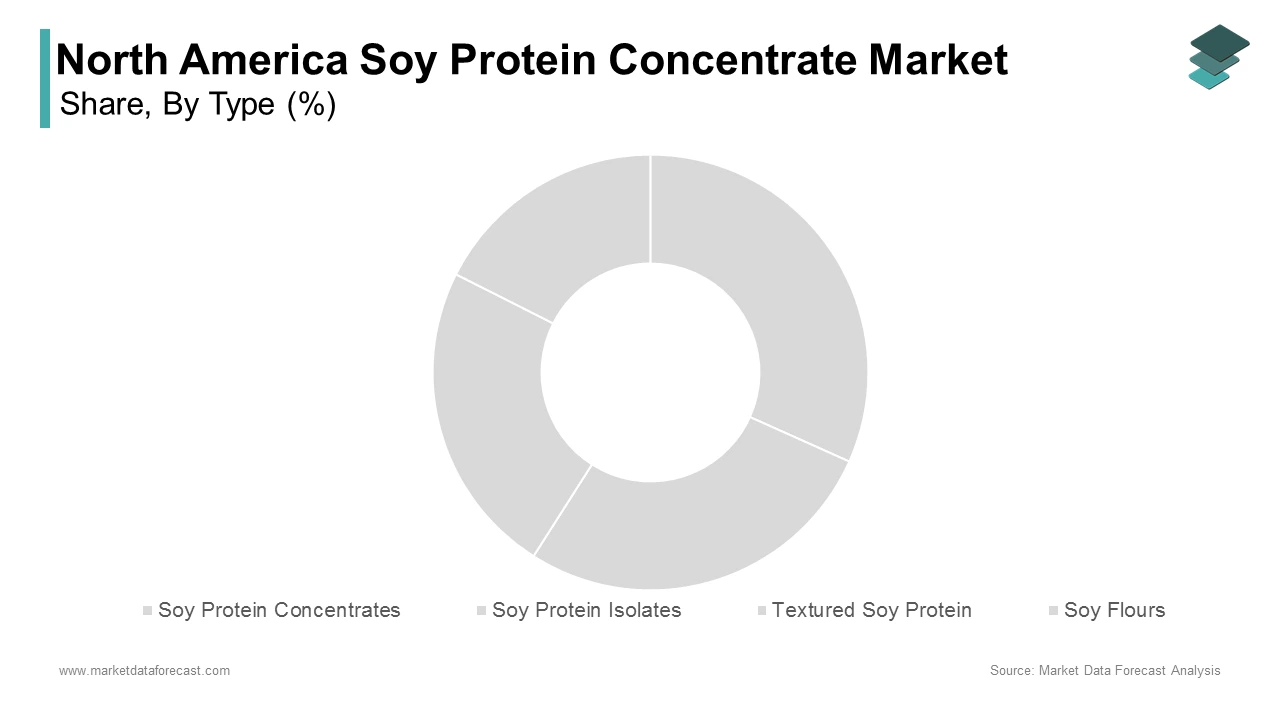
The soy protein was the largest and held 42.3% of the North America soy protein concentrate market share in 2025, with its widespread use across food manufacturing, particularly in meat analogs, bakery products, and nutritional supplements, where moderate protein content and functional properties are essential. Additionally, as per NielsenIQ, retail sales of frozen vegetarian meals containing soy protein concentrate grew by 17% year-over-year, driven by convenience trends and rising health awareness among consumers.
The textured soy protein segment is swiftly emerging with a CAGR of 9.8% in the coming years. Brands like MorningStar Farms and Lightlife have increasingly incorporated textured soy protein into their offerings due to its fibrous structure and ability to mimic meat textures when hydrated. Furthermore, consumer preferences for sustainable and affordable protein sources have reinforced the appeal of textured soy protein, particularly among budget-conscious shoppers.
By Application Insights
The food application segment dominated the North America soy protein concentrate market by capturing a significant share in 2025 with the integration of soy protein concentrate into a wide range of food products, including plant-based meats, dairy alternatives, baked goods, and nutritional supplements. Leading brands like Beyond Meat and Impossible Foods rely on soy protein derivatives to achieve desirable sensory attributes in their products. Additionally, according to the U.S. Department of Agriculture’s Economic Research Service, over 60% of fortified snack bars launched in 2023 listed soy protein concentrate as a key ingredient, leveraging its amino acid profile and neutral taste.
The feed application segment is likely to register a CAGR of 8.6% from 2026 to 2034. According to the American Pet Products Association, U.S. spending on pet food exceeded $130 billion in 2023, with premium and specialty pet food categories witnessing significant growth. Many of these formulations incorporate soy protein concentrate as a digestible, hypoallergenic alternative to traditional animal proteins such as chicken or fish meal. The U.S. Department of Agriculture reported that soy protein concentrate utilization in livestock and poultry feed formulations rose by 11% in 2023, with its favorable amino acid composition and cost-efficiency compared to other protein sources. Additionally, the growing emphasis on reducing reliance on marine-sourced proteins in aquafeed has led to increased adoption of soy-based ingredients.
By Form Insights
The dry form segment was the largest by occupying a dominant share of the North American soy protein concentrate market in 2025. According to the U.S. Department of Agriculture, dry soy protein concentrate constitutes the majority of exports from U.S. soy processors, with over 7.5 million metric tons produced domestically in 2023. Its powdered consistency allows for seamless integration into baked goods, extruded snacks, and protein-enriched beverages, making it a staple ingredient in commercial food production.
The liquid form segment is expected to register a CAGR of 10.3% from 2026 to 2034. The number of liquid plant-based protein drinks launched in North America surged by 28% in 2023, with many utilizing liquid soy protein concentrate for its smooth texture and instant hydration properties. Beverage manufacturers favor liquid forms for their ability to integrate seamlessly into RTD shakes, smoothies, and sports recovery drinks without requiring additional mixing steps.
REGIONAL ANALYSIS
United States Soy Protein Concentrate Market Insights
The United States was the top performer in the North American soy protein concentrate market by accounting for 74.3% of share in 2025. According to the U.S. Department of Agriculture, domestic soybean production reached 120 million metric tons in 2023, with a significant portion allocated to value-added protein extraction. Moreover, the Sports & Fitness Industry Association noted that over 55 million Americans engaged in strength training in 2023, driving demand for soy-based protein supplements. The FDA’s support for clean-label initiatives and the rise of fortified food products further bolster the market expansion, which is positioning the U.S. as the central hub for soy protein concentrate consumption and innovation in North America.
Canada Soy Protein Concentrate Market Insights
Canada was ranked second in the North American soy protein concentrate market with 18.3% of the share in 2025. The Canadian Food Inspection Agency also reported a 19% increase in soy protein concentrate usage in food manufacturing in gluten-free and allergen-friendly formulations.
LEADING PLAYERS IN THE NORTH AMERICA SOY PROTEIN CONCENTRATE MARKET
ADM (Archer Daniels Midland Company)
ADM is a leading global agribusiness and food ingredient supplier with a strong presence in the soy protein concentrate market. The company plays a crucial role in sourcing, processing, and supplying high-quality soy-based ingredients to food manufacturers across North America. ADM focuses on innovation, sustainability, and vertical integration to meet evolving consumer demands for plant-based nutrition.
Cargill Incorporated
Cargill is a major player in the North American soy protein concentrate market, offering a wide range of plant-based protein ingredients derived from soybeans. The company leverages its vast agricultural supply chain and advanced processing technologies to provide functional and nutritious soy protein solutions. Cargill emphasizes strategic partnerships, product diversification, and sustainable sourcing practices to support the growth of plant-based food sectors. Its commitment to quality and innovation has made it a trusted partner for food and beverage companies aiming to enhance their product formulations with clean-label, high-protein ingredients.
Bunge Limited
Bunge is a globally recognized agribusiness and food company with a significant footprint in the soy protein concentrate sector. In North America, Bunge contributes to the market through its integrated operations in soybean processing and value-added ingredient manufacturing. The company prioritizes nutritional enhancement, operational efficiency, and environmental responsibility in its soy protein offerings. Bunge works closely with food processors and animal nutrition producers to deliver functional and sustainable soy-based products. Its continuous investment in R&D and strategic market positioning supports its influence in shaping the future of plant-based proteins across the region.
TOP STRATEGIES USED BY KEY MARKET PARTICIPANTS
One of the primary strategies employed by key players in the North American soy protein concentrate market is product innovation and formulation development. Companies are investing heavily in research to enhance the functional properties of soy protein concentrates, such as texture, solubility, and flavor neutrality. This enables them to better serve evolving consumer preferences in plant-based foods and functional nutrition products.
Another key approach is strategic partnerships and collaborations with food manufacturers and alternative protein startups. The soy protein suppliers can integrate their ingredients into new product launches by ensuring broader market penetration and brand visibility across different end-use applications.
The sustainability-driven sourcing and transparency initiatives have become central to competitive differentiation. Leading firms are emphasizing non-GMO sourcing, carbon footprint reduction, and traceability across the supply chain. These efforts not only align with regulatory expectations but also resonate with health-conscious and environmentally aware consumers, which is strengthening brand loyalty and long-term market positioning.
KEY MARKET PLAYERS AND COMPETITION OVERVIEW
Major Players of the North America Soy Protein Concentrate Market include Archer Daniels Midland Company, Cargill Incorporated, DuPont de Nemours Inc., Wilmar International Ltd., Kerry Group plc, Bunge Limited, CHS Inc., Tate & Lyle, Burcon NutraScience Corporation, The Scoular Company, Foodchem International, Nutra Food Ingredients, Devansoy Inc., and Sojaprotein.
The competition in the North American soy protein concentrate market is marked by a blend of established agribusiness giants and emerging ingredient specialists vying for dominance in a rapidly expanding plant-based ecosystem. With growing consumer demand for sustainable and functional protein sources, companies are intensifying their focus on innovation, supply chain resilience, and market responsiveness. While large-scale players leverage their extensive distribution networks and R&D capabilities to maintain leadership, smaller firms are carving out niche positions through specialized product offerings and clean-label positioning. The market landscape is further shaped by increasing scrutiny around GMO content, allergen labeling, and sustainability claims by prompting firms to differentiate through transparency and responsible sourcing.
RECENT HAPPENINGS IN THE MARKET
- In February 2025, ADM launched a new line of clean-label soy protein concentrates designed specifically for use in plant-based meat alternatives, aiming to improve texture and moisture retention without artificial additives.
- In May 2025, Cargill announced a strategic partnership with a leading U.S.-based plant-based food startup to co-develop next-generation soy protein formulations tailored for ready-to-eat meals and frozen entrees.
- In July 2025, Bunge expanded its soy processing facility in Illinois to increase production capacity for soy protein concentrates, supporting rising demand from both human nutrition and animal feed sectors.
- In September 2025, Roquette, a key alternative protein supplier, introduced a hybrid soy-pea protein blend in the North American market to offer enhanced functionality while addressing consumer concerns about allergens and GMOs.
- In November 2025, Kerry Group acquired a specialty texturizing technology firm to enhance the sensory attributes of soy protein concentrates used in meat analogs, which strengthens its portfolio for food manufacturers seeking premium plant-based ingredients.
MARKET SEGMENTATION
This research report on the North America Soy Protein Concentrate Market has been segmented and sub-segmented based on type, application, form, and region.
By Type
- Soy Protein Concentrates
- Soy Protein Isolates
- Textured Soy Protein
- Soy Flours
By Application
- Food
- Feed
By Form
- Dry
- Liquid
By Region
- US
- Canada
- Rest of North America