- Product Description Description
- Table of Contents TOC
- List of Table & Figure LOT
- Get Free Sample PDF Sample PDF
Market Size, 2025
$26.68 BnMarket Estimate, 2026
$27.77 BnMarket Forecast, 2034
$38.56 BnCAGR, 2026–2034
4.1%North America Specialty Animal Feed Additives Market Summary
North America’s specialty animal feed additives market, valued at USD 26.68 billion in 2025, is projected to reach USD 38.56 billion by 2034, growing at a CAGR of 4.1%, driven by antibiotic-free meat demand, precision nutrition adoption, and sustainability-led feed innovation.
Key Market Highlights
- 2025 Market Size: USD 26.68 billion
- 2026 Market Size: USD 27.96 billion
- 2034 Forecast: USD 38.56 billion
- CAGR (2026–2034): 4.1%
- Base Year: 2025
- Forecast Period: 2026–2034
Quick Growth Drivers
- Rising demand for antibiotic-free poultry, pork, and beef
- Regulatory pressure limiting antibiotic growth promoters (AGPs)
- Adoption of precision nutrition and AI-based feed formulation
- Expansion of intensive poultry and swine production systems
- Growing use of enzymes, probiotics, phytogenics, and organic minerals
Principal Restraints
- Stringent FDA CVM and CFIA regulatory approval processes
- High compliance and post-market surveillance costs
- Volatility in prices of amino acids, vitamins, and fermentation inputs
- Supply chain dependence on global raw material sources
High-Value Opportunities
- Growth of organic and pasture-raised livestock farming
- Expansion of natural-source feed additives (phytogenics, probiotics)
- Circular economy models using by-products, algae, and fermentation waste
- ESG-driven procurement by large food and agribusiness companies
Key Market Challenges
- Lack of standardized efficacy evaluation protocols
- High variability in performance outcomes across farm conditions
- Limited technical awareness among small and mid-sized producers
- Declining reach of extension-based animal nutrition programs
Fastest-Growing Segments
- Antibiotics (VFD-compliant): 6.8% CAGR — targeted disease control
- Natural-source additives: 8.9% CAGR — clean-label meat demand
- Liquid feed additives: 7.4% CAGR — bioavailability and precision dosing
Regional Leadership & Dynamics
- United States (89.3%) — large-scale commercial livestock, advanced feed technology adoption
- Canada (11.2%) — premium export-driven production, strong regulatory confidence
What Wins Commercially
- Proven efficacy data and on-farm validation
- Regulatory expertise and fast approval pathways
- Cost stability through vertical integration and sourcing control
- Solutions aligned with antibiotic-free, organic, and ESG standards
- Strong technical advisory and producer education support
Top Strategic Ask for Executives
Invest in precision nutrition, natural additive innovation, and regulatory-ready formulations that support antibiotic-free production while protecting feed economics.
Leading Players
Some of the companies that are playing a dominating role in the North America specialty animal feed additives market include:
- Alltech
- Cargill, Incorporated
- ADM (Archer Daniels Midland Company)
- DSM Nutritional Products
- Evonik Industries AG
- Kemin Industries, Inc.
- BASF SE
- Novus International, Inc.
- Purina Animal Nutrition
- Nutreco N.V.
- Elanco Animal Health
- Zoetis Inc.
- Chr. Hansen Holding A/S
- Ingredion Incorporated
- Balchem Corporation
North America Specialty Animal Feed Additives Market Size
The north america specialty animal feed additives market was valued at USD 26.68 billion in 2025 and increased to USD 27.96 billion in 2026. The market is projected to reach USD 38.56 billion by 2034, growing at a CAGR of 4.1% from 2026 to 2034.
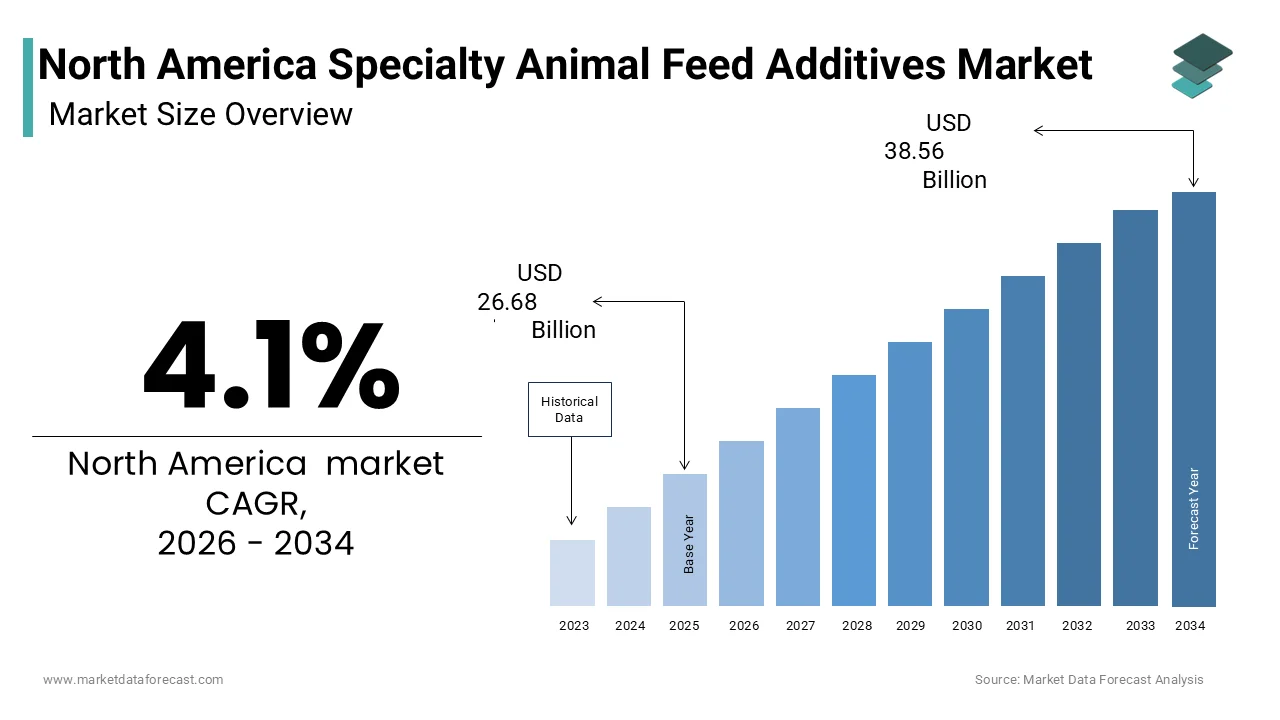
The specialty animal feed additives are a sophisticated and highly regulated segment within the broader animal nutrition sector. These additives, which include amino acids, enzymes, probiotics, prebiotics, organic minerals, and phytogenics, are incorporated into animal diets to enhance growth performance, improve feed conversion efficiency, and support overall animal health. As per the U.S. Food and Drug Administration (FDA), feed additives must undergo rigorous safety and efficacy evaluations before commercial use. In Canada, the Canadian Food Inspection Agency (CFIA) oversees similar regulatory frameworks. According to the National Agricultural Statistics Service (NASS), the United States alone produced over 9 billion broiler chickens in 2024, indicating a massive underlying demand for performance-enhancing feed solutions. Furthermore, the rising consumer preference for antibiotic-free poultry and livestock products has accelerated the adoption of alternative feed additives such as essential oils and organic trace minerals.
MARKET DRIVERS
Rising Demand for Antibiotic-Free Meat and Poultry Products
The consumer consciousness regarding the health implications of antibiotic residues in animal protein has significantly reshaped dietary preferences, driving the growth of the North American specialty animal feed additives market. This shift is directly influencing livestock producers to replace antibiotic growth promoters (AGPs) with effective alternatives such as phytogenics, organic acids, and enzyme-based feed additives. Feed additives like essential oils and probiotics offer antimicrobial properties without contributing to antibiotic resistance, a concern highlighted by the Centers for Disease Control and Prevention (CDC). Additionally, major foodservice providers and retailers, including McDonald’s and Tyson Foods, have committed to sourcing antibiotic-free chicken, further pressuring producers to adopt specialty feed solutions. The economic incentive is also compelling; producers using alternatives report up to 8% improvement in feed conversion ratios when using enzyme and probiotic blends, according to research by the American Feed Industry Association (AFIA). These developments collectively underscore the role of consumer-driven demand in expanding the specialty animal feed additives market in North America.
Technological Advancements in Precision Nutrition and Feed Formulation
Technological innovations in animal nutrition science are enabling more precise and targeted use of specialty feed additives is specifically leveraging the growth of North America specialy animal feed additives market. Precision feeding systems, powered by data analytics and real-time monitoring, allow producers to tailor nutrient delivery based on individual animal needs, thereby optimizing performance outcomes. According to the North American Competitiveness Council, investments in agricultural biotechnology and digital farming tools reached $3.2 billion in 2024, with a significant portion allocated to animal nutrition technologies. Moreover, the integration of artificial intelligence (AI) in feed formulation has enabled manufacturers to predict optimal additive inclusion rates, minimizing waste and maximizing return on investment. The rise of functional feed additives, such as encapsulated probiotics and slow-release organic minerals, has also been accelerated by advancements in microencapsulation techniques.
MARKET RESTRAINTS
Stringent Regulatory Frameworks and Compliance Costs
The complex web of regulatory requirements that pose significant barriers to entry and expansion is restraining the growth of the North American specialty animal feed additives market. In the United States, the FDA’s Center for Veterinary Medicine (CVM) mandates comprehensive safety and efficacy data for every new feed additive, often requiring multi-year studies and substantial financial investment. Similarly, in Canada, the CFIA enforces strict guidelines under the Feeds Act and Regulations, which include mandatory licensing and periodic facility inspections. These stringent protocols not only delay product commercialization but also discourage smaller firms from entering the market. Additionally, post-market surveillance and labeling requirements add to ongoing compliance burdens. For instance, the FDA’s Veterinary Feed Directive (VFD), introduced in 2017, restricts the use of certain medicated feed additives, compelling manufacturers to reformulate products or seek alternative approvals. According to the National Renderers Association, nearly 30% of small and medium-sized feed additive producers have exited the market since 2018 due to escalating regulatory costs. The high compliance burden also limits innovation, as companies prioritize low-risk, already-approved compounds over novel solutions. Consequently, regulatory stringency remains a critical restraint, particularly for emerging biotech firms and startups seeking to introduce next-generation feed additives.
Price Volatility of Raw Materials and Supply Chain Disruptions
The fluctuations in the prices of raw materials such as amino acids, vitamins, and microbial cultures are another attribute hindering the growth of the North American specialty animal feed additives market. For instance, lysine is a key amino acid used in poultry diets, and experienced price surges of over 35% in early 2024 due to supply constraints in China, which accounts for more than 60% of global production, as per the U.S. Department of Agriculture Economic Research Service (ERS). Similarly, the cost of fermentation-derived additives like probiotics has risen due to energy price hikes and logistical bottlenecks post-pandemic. The Russia-Ukraine conflict has further exacerbated supply chain instability, particularly for mineral-based additives reliant on imported raw materials. These disruptions not only inflate production costs but also compromise consistency in product availability. Small-scale producers, lacking diversified sourcing strategies, are especially vulnerable to such volatility. A 2024 survey by the National Grain and Feed Association (NGFA) revealed that 27% of feed mills had to reduce their use of specialty additives due to cost pressures.
MARKET OPPORTUNITIES
Expansion of Organic and Pasture-Raised Livestock Production
The increasing consumer preference for ethically produced, chemical-free animal protein is fueling the expansion of organic and pasture-raised livestock farming, which is creating new opportunities for the growth of the North American specialty animal feed additives market. Organic livestock production, which prohibits the use of synthetic additives and antibiotics, relies heavily on natural alternatives such as plant-based phytogenics, organic trace minerals, and microbial probiotics. Specialty feed additives play a crucial role in maintaining animal health and productivity in these systems, where conventional growth promoters are restricted. The USDA’s National Organic Program (NOP) has also updated its guidelines to permit certain feed enzymes and probiotics, opening new regulatory pathways for additive manufacturers. Furthermore, pasture-raised systems, which are gaining traction among premium poultry and beef producers, require feed additives that support gut health and stress resilience in free-range environments. These developments indicate a growing market niche for specialty additives tailored to organic and alternative farming models, presenting significant growth opportunities for innovative feed solution providers.
Integration of Sustainable and Circular Economy Principles in Feed Production
The shift toward sustainability, driven by increasing environmental regulations and corporate sustainability commitments, is primarily to limit the growth of north America specialty animal feed additives market. Manufacturers are exploring circular economy models that utilize agricultural by-products, algae, and fermentation waste as sources for feed additive production. For instance, companies are deriving protein-rich microbial additives from distiller’s grains and food processing waste, reducing dependency on resource-intensive raw materials. According to a 2024 report by the Sustainable Agriculture Research and Education (SARE) program, over 60% of feed additive producers in the Midwest have initiated sustainability audits, with 35% investing in waste-to-value technologies. Additionally, the use of insect protein and microbial fermentation for producing amino acids and enzymes is gaining traction. The FDA has approved several insect-derived feed ingredients for poultry and aquaculture, signaling regulatory support. Companies like EnviroFlight and Ynsect have expanded operations in North America, targeting the growing demand for eco-friendly feed solutions. A study by the University of British Columbia in 2024 estimated that sustainable feed additives could reduce the carbon footprint of animal production by up to 20%. As environmental, social, and governance (ESG) criteria become integral to procurement decisions among large agribusinesses, the integration of circular economy principles offers a compelling growth avenue for specialty feed additive manufacturers in North America.
MARKET CHALLENGES
Lack of Standardization in Efficacy Evaluation and Performance Metrics
One of the persistent challenges facing the North American specialty animal feed additives market is the absence of standardized protocols for evaluating the efficacy of various feed additives. Unlike pharmaceuticals, feed additives are often assessed under variable conditions, including differences in animal breeds, housing systems, and climatic factors, which can lead to inconsistent performance outcomes. For example, a 2024 meta-analysis by the Journal of Animal Science revealed significant variability in the reported effectiveness of phytogenic feed additives, with performance improvements ranging from 3% to 22% depending on trial conditions. This inconsistency undermines producer confidence and complicates product selection. Moreover, the lack of harmonized testing methodologies across research institutions and commercial trials hampers comparative analysis and market transparency. The National Institute of Food and Agriculture (NIFA) has acknowledged that only 38% of peer-reviewed studies on feed additives include standardized metrics for feed conversion ratio, average daily gain, and mortality rate. Additionally, small-scale producers often lack the resources to conduct rigorous field trials, relying instead on anecdotal evidence or supplier claims. This knowledge gap is particularly pronounced in emerging categories such as marine-based omega-3 supplements and yeast-derived prebiotics.
Limited Awareness and Technical Knowledge Among Small-Scale Producers
Despite advancements in feed additive technology, a significant portion of North America’s livestock producers, particularly small and mid-sized farms, remain underinformed about the benefits and proper use of specialty feed additives. The limited awareness and technical knowledge among small-scale producers are expected to impede the growth of the North American specialty animal feed additives market. According to the USDA’s 2022 Census of Agriculture, over 65% of U.S. farms operate with fewer than 100 head of cattle or poultry, and many lack access to technical extension services or specialized nutritionists. This knowledge deficit often results in underutilization or improper application of feed additives, limiting their effectiveness. A 2024 survey conducted by the Ontario Ministry of Agriculture, Food and Rural Affairs (OMAFRA) found that only 41% of small-scale poultry producers in Canada were aware of the benefits of enzyme-based additives, and even fewer understood optimal inclusion rates. Misapplication can lead to suboptimal animal performance or, in some cases, adverse health outcomes. Additionally, the complexity of integrating multiple additives into existing feed formulations without antagonistic interactions poses a technical barrier. Extension programs and agricultural universities play a crucial role in bridging this gap, but funding constraints have reduced outreach efforts in recent years. The American Society of Animal Science (ASAS) reported a 22% decline in extension-based animal nutrition programs between 2018 and 2024.
REPORT COVERAGE
| REPORT METRIC | DETAILS |
| Market Size Available | 2025 to 2034 |
| Base Year | 2025 |
| Forecast Period | 2026 to 2034 |
| Segments Covered | By Product, Source, Form, and Region. |
| Various Analyses Covered | Global, Regional, and Country-Level Analysis, Segment-Level Analysis, Drivers, Restraints, Opportunities, Challenges; PESTLE Analysis; Porter’s Five Forces Analysis, Competitive Landscape, Analyst Overview of Investment Opportunities |
| Countries Covered | United States |
| Market Leaders Profiled | Alltech, Cargill, Incorporated, ADM (Archer Daniels Midland Company), DSM Nutritional Products, Evonik Industries AG, Kemin Industries, Inc., BASF SE, Novus International, Inc., Purina Animal Nutrition (Nestlé S.A.), Nutreco N.V. (Trouw Nutrition), Elanco Animal Health, Zoetis Inc., Chr. Hansen Holding A/S, ForFarmers N.V., Ingredion Incorporated, Balchem Corporation, Diamond V (ADM subsidiary), Micronutrients, Inc., Land O’Lakes, Inc. (Purina Animal Nutrition) |
SEGMENTAL ANALYSIS
By Product Insights
The vitamins segment accounted in holding 38.2% of the North America specialty animal feed additives market share in 2025. This segment's leadership stems from the essential role vitamins play in animal metabolism, immune function, and reproductive health. Vitamins A, D, E, and K are indispensable for maintaining optimal health in intensive livestock systems, particularly in poultry and swine operations where animals are housed in controlled environments with limited natural vitamin synthesis. According to the National Chicken Council, the U.S. broiler industry alone processes over 9 billion birds annually, requiring consistent vitamin supplementation to maintain growth rates and prevent deficiency-related disorders. These performance benefits translate into substantial economic value for producers, making vitamin additives a non-negotiable component of modern animal nutrition programs. Government regulations and industry standards have institutionalized vitamin supplementation in animal feed across North America, creating sustained demand that drives market dominance. The Association of American Feed Control Officials (AAFCO) establishes minimum vitamin requirements for different animal species and life stages, ensuring consistent market demand for vitamin premixes. As per AAFCO guidelines updated in 2024, poultry feeds must contain minimum levels of 12 different vitamins, while swine diets require 10 essential vitamins to meet nutritional adequacy standards. Additionally, major food retailers and fast-food chains have implemented animal welfare standards that mandate optimal nutrition, including adequate vitamin levels, in their supply chains. McDonald's global animal welfare standards, for instance, require all poultry suppliers to provide feeds meeting or exceeding AAFCO vitamin recommendations, affecting over 2,000 farms across North America. The National Pork Board's Pork Quality Assurance Plus program similarly emphasizes proper vitamin nutrition as a core component of responsible pork production. These institutional drivers create a stable, regulated market environment where vitamin additives represent a fundamental rather than discretionary expense, ensuring consistent revenue streams for manufacturers and explaining the segment's commanding market position.
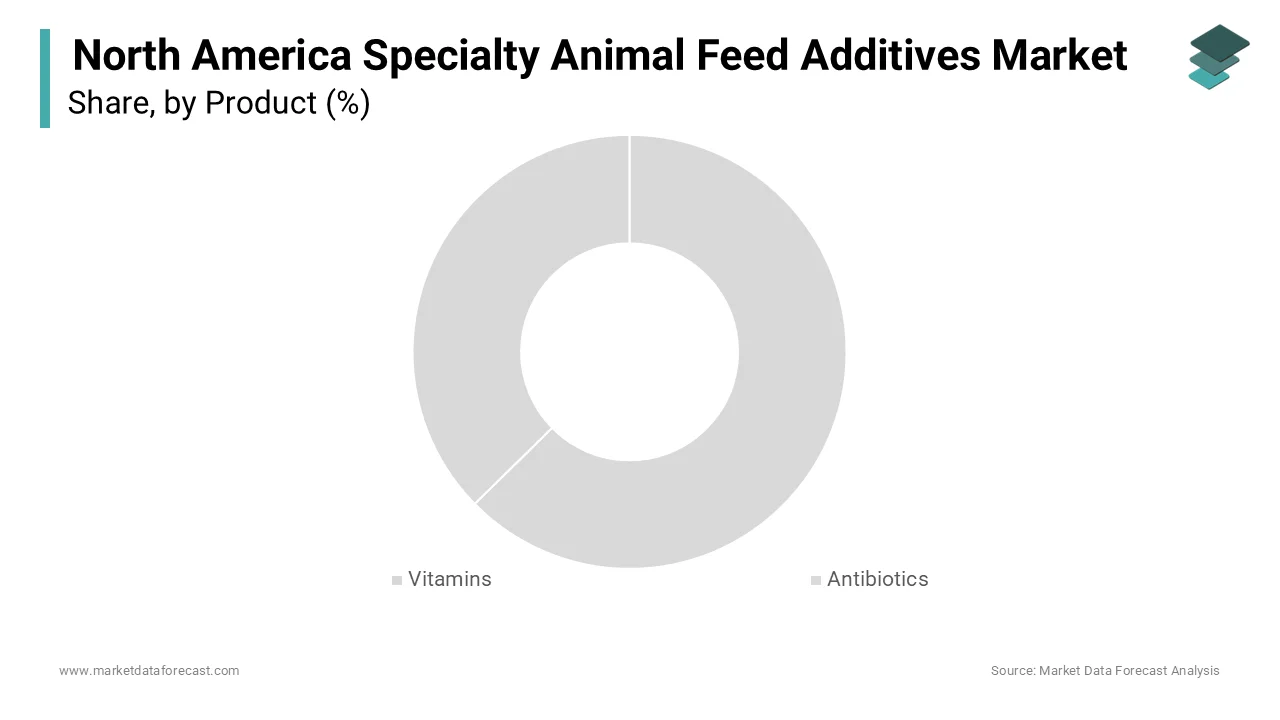
The antibiotics segment is projected to grow at the fastest CAGR of 6.8% from 2026 to 2034, owing to the continued need for disease prevention and growth promotion in intensive livestock operations, despite regulatory restrictions. The implementation of the Veterinary Feed Directive (VFD) in 2017 fundamentally transformed the antibiotics segment by requiring veterinary oversight for medically important antibiotics used in animal feed. This regulatory shift initially caused market contraction but ultimately drove innovation toward more targeted, VFD-compliant products. The transition has created opportunities for premium-priced, veterinarian-directed antibiotic solutions that offer enhanced efficacy and reduced resistance potential. The University of Minnesota's College of Veterinary Medicine documented that farms using VFD-compliant antibiotics experienced 15% lower mortality rates compared to those relying solely on alternative health management strategies. Additionally, the requirement for veterinary involvement has increased the perceived value of antibiotic products, allowing manufacturers to command higher prices while ensuring proper usage protocols. This professionalization of antibiotic use has paradoxically strengthened market demand by positioning antibiotics as precision tools rather than routine additives, driving segment growth through value-based purchasing decisions rather than volume-based consumption. Intensive livestock production systems in North America continue to rely on antibiotics for disease prevention, particularly in high-density operations where biosecurity challenges are magnified. The economic stakes of disease outbreaks in modern production facilities justify strategic antibiotic use despite public scrutiny and regulatory constraints. The swine sector similarly depends on targeted antibiotic interventions, with the National Pork Board reporting that strategic antibiotic use during periods, such as weaning, can improve feed conversion ratios by 12-18%. Furthermore, the development of narrow-spectrum antibiotics and targeted delivery systems has improved the segment's appeal by minimizing environmental impact while maximizing therapeutic efficacy, supporting continued market expansion in an increasingly regulated environment.
By Source Insights
The synthetic source segment was the largest by capturing 62.3% of the North America specialty animal feed additives market share in 2025, owing to the consistent quality, cost-effectiveness, and scalable production capabilities that synthetic additives offer to commercial livestock producers. Synthetic feed additives offer significant cost advantages over natural alternatives, making them the preferred choice for price-sensitive commercial producers operating in competitive markets. The ability to manufacture synthetic vitamins, amino acids, and minerals at inan dustrial scale results in substantially lower production costs compared to natural extraction processes. The American Feed Industry Association's 2024 pricing survey revealed that synthetic vitamin premixes cost 35-50% less than organic-certified natural alternatives, directly influencing purchasing decisions among commercial feed producers. Major synthetic additive manufacturers like DSM and BASF have invested heavily in production capacity expansion, with combined North American capacity increasing by 28% between 2020 and 2024. The University of Illinois Agricultural Economic Research Office documented that feed mills using predominantly synthetic additives reported 15% lower feed costs compared to those relying on natural sources. These economic advantages are particularly pronounced in commodity livestock production whe, re profit margins are thin, making synthetic additives essential for maintaining competitive pricing. The cost differential becomes even more significant when considering the consistent availability and predictable pricing of synthetic materials compared to the seasonal fluctuations and supply constraints that affect natural ingredient markets. The National Institute of Food and Agriculture's 2024 feed quality assessment found that synthetic vitamin A maintained 98% of labeled potency throughout 12 months of storage, compared to only 72% retention in natural vitamin A sources. Feed manufacturers require this level of consistency to ensure optimal animal performance and regulatory compliance in large-scale operations, where minor variations can result in significant economic losses.
The natural source segment is expected to registerthea fastest CAGR of 8.9% from 2026 to 2034. Consumer preferences for natural, minimally processed animal products have created substantial market demand for feed additives derived from plant extracts, essential oils, and microbial fermentation. According to the International Food Information Council's 2024 Food and Health Survey, 71% of North American consumers actively seek animal products labeled as "no antibiotics added" or "naturally raised," directly driving demand for natural feed additives. Major food retailers have responded to consumer demand by implementing sourcing standards that favor natural production methods. Whole Foods Market's animal welfare standards require all meat suppliers to use only natural-source feed additives, affecting over 1,200 farms in North America. Thisconsumer'sr willingness to pay premiums translates into economic incentives for producers to adopt natural feed additives despite higher costs. Advances in biotechnology and extraction techniques have significantly improved the efficacy, consistency, and cost-effectiveness of natural feed additives, making them more competitive with synthetic alternatives. Modern encapsulation technologies and fermentation processes have enhanced the stability and bioavailability of plant-based compounds, addressing previous limitations that hindered widespread adoption. The development of standardized extraction protocols has reduced batch-to-batch variability, with 2024 research from North Carolina State University showing that encapsulated essential oil additives now maintain 92% potency throughout typical feed processing conditions, compared to only 65% for earlier formulations. Companies like Novozymes and DuPont have commercialized enzyme-based natural additives that demonstrate performance comparable to synthetic alternatives, with phytase enzymes derived from microbial fermentation showing 15% better phosphorus utilization efficiency than traditional synthetic versions, according to University of California Davis trials. The advancement of precision fermentation technologies has enabled cost-effective production of complex natural compounds previously limited by extraction constraints. These technological improvements have made natural additives viable options for commercial producers who previously relied exclusively on synthetic sources, driving segment expansion through improved performance characteristics and economic feasibility.
By Form Insights
The dry form segment held a dominant share of the North America specialty animal feed additives market in 2025 wit, with the practical advantages that dry additives offer in terms of storage, handling, and compatibility with existing feed manufacturing processes. The prevalence of dry form additives reflects the operational requirements of commercial feed production systems that prioritize efficiency, consistency, and cost-effectiveness. Dry form feed additives demonstrate superior storage stability and extended shelf life compared to liquid alternatives, which is making them the preferred choice for commercial feed manufacturers who require long-term inventory management and consistent product quality. The moisture-free nature of dry additives prevents degradation, microbial growth, and chemical interactions that can compromise efficacy during storage and transportation. The reduced moisture content in dry additives also eliminates the risk of caking and clumping that can occur with liquid products during temperature fluctuations, ensuring consistent flowability in automated feed manufacturing systems. Feed mills operating continuous production lines require additives that can be reliably dispensed without equipment downtime, and dry forms consistently meet these requirements. The extended shelf life of dry additives, typically 18-24 months compared to 6-12 months for liquids, as documented by the National Grain and Feed Association, allows for strategic bulk purchasing and inventory optimization that reduces overall procurement costs. These storage advantages are particularly valuable in North America's diverse climate conditions, where temperature and humidity variations can significantly impact liquid additive stability and performance. The dry form segment's dominance is reinforced by its seamless compatibility with established feed manufacturing infrastructure and processes across North America's commercial feed industry. The vast majority of feed mills are designed for dry ingredient handling, mixing, and pelleting operations, making dry additives the most practical choice for integration into existing production systems. The capital investment required to retrofit feed mills for liquid additive handling, including specialized pumps, storage tanks, and cleaning systems, can exceed $500,000 per facility, making dry additives economically attractive for manufacturers seeking to avoid infrastructure upgrades. This processing compatibility ensures that dry additives maintain their intended efficacy while fitting seamlessly into established manufacturing workflows, explaining their continued preference among commercial feed producers.
The liquid form segment is likely to grow at a theastest CAGR of 7.4% from 2025 to 2033 ow, owing to the increasing recognition of liquid additives' unique advantages in terms of bioavailability, precise dosing, and targeted application in specialized feeding systems. The segment's growth trajectory is supported by technological advances that have addressed previous limitations while expanding application opportunities. Liquid feed additives offer superior bioavailability and faster absorption rates compared to dry formulations, making them increasingly attractive for applications where immediate physiological effects are desired. The dissolved state of active ingredients in liquid formulations eliminates the need for digestive breakdown by allowing for more efficient nutrient uptake and faster onset of biological activity. The enhanced bioavailability of liquid additives is particularly valuable in stress situations where animals may have compromised digestive function, such as during weaning, transportation, or disease recovery periods. The liquid form segment's rapid growth is accelerated by advances in precision dosing capabilities and integration with automated feeding systems that enable individual animal management and real-time nutritional adjustments. Modern liquid additive delivery systems can achieve dosing accuracy within 0.1% tolerance by allowing for precise nutrient delivery that matches individual animal requirements and production objectives. The development of micro-dosing pumps and inline injection systems has revolutionized liquid additive application, with the International Association of Feed Manufacturers reporting that 65% of new feed mill installations in 2024 included automated liquid additive systems. Individual animal feeding systems, increasingly adopted in dairy and swine operations, require liquid additives for accurate delivery to specific animals based on production stage, health status, or performance metrics.
COUNTRY LEVEL ANALYSIS
United States Specialty Animal Feed Additives Market Analysis
The United States was the top performer in the North America specialty animal feed additives market by holding 89.3% of the share in 2025, with the world's largest producer of poultry, beef, and pork, creating massive underlying demand for performance-enhancing feed solutions. The sophistication of the U.S. livestock industry, characterized by large-scale commercial operations and advanced production technologies, drives consistent demand for premium specialty additives that optimize animal performance and health outcomes. The American Feed Industry Association reports that over 95% of commercial feed manufacturers utilize specialty additives in their formulations, reflecting industry-wide recognition of their value proposition. The concentration of livestock production in specific regions, including the Corn Belt for swine and the Southeast for poultry, creates geographic clusters of additive demand that support efficient supply chain operations. Major additive manufacturers have established regional production facilities and technical support centers to serve these production zones effectively. The economic scale of U.S. livestock operations, with individual farms often managing tens of thousands of animals, generates substantial volume requirements that justify investments in specialized additive formulations and application technologies. The presence of leading research institutions and land-grant universities provides continuous technical support and product development validation that enhances market sophistication. The integration of specialty additives with precision feeding technologies, including automated feed delivery systems and real-time performance monitoring, represents the cutting edge of U.S. animal nutrition practices. Major foodservice companies and retail chains have established sourcing standards that mandate specific feed additive protocols, creating institutional demand that supports market stability and growth. The regulatory environment, while stringent, provides clear pathways for product approval and market entry that encourage innovation while ensuring safety and efficacy standards.
Canada Specialty Animal Feed Additives Market Analysis
Canada was ranked second by holding 11.2% of the North American specialty animal feed additives market share in 2025, with Canada's significant livestock production capacity and its reputation for high-quality animal protein exports that demand premium nutritional inputs. The country's agricultural sector is characterized by efficient, technologically advanced operations that prioritize animal welfare and environmental sustainability by creating demand for sophisticated feed additive solutions. The Canadian market's growth trajectory is supported by strong regulatory frameworks that ensure product safety while facilitating innovation and market access. The Canadian Food Inspection Agency's rigorous approval processes create consumer confidence in feed additive safety and efficacy, supporting premium pricing for specialty products. The country's position as a major exporter of beef, pork, and poultry to premium markets, including the European Union and Japan, drives demand for feed additives that support antibiotic-free production and enhanced meat quality characteristics. The integration of feed additives with environmental management strategies, including methane reduction and nutrient utilization optimization, represents an emerging growth driver that differentiates Canadian market demand. Research institutions such as the University of Guelph and Agriculture and Agri-Food Canada provide technical validation and innovation support that enhances market sophistication. The concentration of livestock production in provinces like Alberta, Ontario, and Quebec creates regional demand clusters that support efficient distribution and technical service delivery. Canadian producers' emphasis on animal welfare and food safety has accelerated the adoption of probiotics, prebiotics, and phytogenic additives that support natural health management approaches. The country's commitment to sustainable agriculture practices has created opportunities for feed additives that reduce environmental impact while maintaining production efficiency. Government support programs for agricultural innovation and environmental stewardship provide additional incentives for specialty additive adoption, positioning Canada as a progressive market that influences regional trends and standards development.
COMPETITIVE LANDSCAPE
The NorthAmericana specialty animal feed additives market is characterized by intense competition among established multinational corporations, specialized regional players, and emerging biotechnology companies vying for market share through innovation and differentiation. The competitive landscape is shaped by the presence of large integrated players like Cargill, ADM, and DSM wh, who leverage their extensive research capabilities, global supply chains, and comprehensive product portfolios to maintain dominant positions. These industry leaders compete primarily on technical expertise, product efficacy, and customer service while investing heavily in research and development to stay ahead of emerging trends. Regional specialty manufacturers focus on niche market segments and customized solutions, often providing more personalized service and faster response times than larger competitors. The market also sees increasing participation from biotechnology startups developing novel feed additives based on fermentation technologies, precision nutrition concepts, and sustainable ingredient sources. Competition is further intensified by the growing demand for natural and organic feed additives, creating opportunities for specialized producers to challenge established players. Price competition remains significant, particularly for commodity-type additives, while premium products command higher margins based on proven efficacy and technical support. The regulatory environment creates additional competitive dynamics, as companies with strong regulatory expertise and compliance capabilities gain advantages in market access and product approval timelines. Customer relationships and technical support services have become critical differentiators, with successful companies investing in field technical teams and customized formulation services. The market's evolution toward precision nutrition and data-driven feeding solutions is creating new competitive battlegrounds where technology integration and digital capabilities increasingly determine success.
KEY MARKET PLAYERS
Some of the companies that are playing a dominating role in the globalNorth Americaa specialty animal feed additives market include
- Alltech
- Cargill, Incorporated
- ADM (Archer Daniels Midland Company)
- DSM Nutritional Products
- Evonik Industries AG
- Kemin Industries, Inc.
- BASF SE
- Novus International, Inc.
- Purina Animal Nutrition (Nestlé S.A.)
- Nutreco N.V. (Trouw Nutrition)
- Elanco Animal Health
- Zoetis Inc.
- Chr. Hansen Holding A/S
- ForFarmers N.V.
- Ingredion Incorporated
- Balchem Corporation
- Diamond V (ADM subsidiary)
- Micronutrients, Inc.
- Land O’Lakes, Inc. (Purina Animal Nutrition)
TOP LEADING PLAYERS IN THE MARKET
- Cargill Incorporated Cargill stands as a dominant force in the North American specialty animal feed additives market through its comprehensive portfolio of nutritional solutions and extensive global research capabilities. The company's contribution to the market stems from its vertically integrated approach that combines ingredient sourcing, formulation expertise, and customer technical support. Cargill's specialty additives division focuses on enzyme technologies, probiotics, and organic mineral solutions that address specific animal health and performance challenges. Their innovation centers across North America conduct extensive research on additive efficacy and safety, ensuring products meet stringent regulatory standards while delivering measurable production benefits. The company's strong relationships with major livestock producers and feed manufacturers enable rapid product adoption and market penetration. Cargill's commitment to sustainable sourcing and environmental responsibility has positioned them as a preferred supplier for producers seeking eco-friendly feed solutions. Their technical support teams work directly with customers to optimize additive usage and maximize return on investment. The company's global supply chain infrastructure ensures consistent product availability and quality, supportiitseir leadership position in the North American market.
- ADM (Archer Daniels Midland Company) has established itself as a key player in the North AmeAmericanecialty animal feed additives market through strategic innovation and comprehensive product development capabilities. The company's market contribution is built on extensive research and development investments that focus on creating next-generation feed additives using biotechnology and fermentation processes. ADM's specialty additives portfolio includes advanced enzyme systems, yeast-derived nutrients, and customized vitamin premixes designed for specific animal production systems. Their approach emphasizes precision nutrition, providing tailored solutions that optimize feed efficiency and animal health outcomes. The company's global network of production facilities and research centers enables rapid product development and commercialization. ADM's technical expertise spans multiple animal species and production environments, allowing them to address diverse customer needs effectively. Their commitment to scientific validation and regulatory compliance ensures product safety and efficacy across various applications. The company's strategic partnerships with academic institutions and research organizations facilitate continuous innovation and market responsiveness. ADM's integrated approach, combining ingredient expertise with additive formulationcapabilitiese strengthens its competitive position and market influence.
- DSM Nutritional Products has carved out a significant position in the North American specialty animal feed additives market through its science-based approach and innovative product portfolio focused on animal health and nutrition. The company's market contribution centers on developing evidence-based feed additives that address contemporary challenges in animal production, including antibiotic reduction and sustainability requirements. DSM's specialty additives division offecomprehensiveive solutions includinging vitamins, carotenoids, amino acids, and functional feed ingredients designed to enhance animal performance and welfare. Their research-driven approach involves extensive collaboration with universities and research institutions to validate product efficacy and safety. The company's commitment to quality and regulatory compliance has established strong trust among producers and feed manufacturers. DSM's global presence and local market expertise enablitem to provide region-specific solutions that address North American production challenges. Their technical support services include on-farm consultation and feed formulation assistance, creating strong customer relationships and product loyalty. The company's focus on sustainable innovation aligns with growing market demands for environmentally responsible feed solutions. DSM's integrated approach co, combining nutritional science with application expertise p, positions them as a trusted partner for progressive livestock producers seeking advanced feed technologies.
TOP STRATEGIES USED BY KEY MARKET PARTICIPANTS
- Strategic Partnerships and Collaborative Research Initiatives Leading players in the North America specialty animal feed additives market actively pursue strategic partnerships with academic institutions, research organizations, and technology companies to accelerate innovation and expand their product portfolios. These collaborations enable companies to access cutting-edge research capabilities, specialized expertise, and emerging technologies that would be difficult to develop internally. By partnering with universities and government research agencies, market participants can conduct extensive validation studies and gain early insights into emerging trends and consumer preferences. These strategic alliances also facilitate knowledge transfer and technical expertise sharing, enhancing the scientific credibility of new products. Collaborative research initiatives often focus on addressing specific industry challenges such as antibiotic reduction, sustainability requirements, and precision nutrition applications. The partnerships enable companies to share development costs and risks while accelerating time-to-market for innovative solutions. Additionally, these strategic relationships help companies establish thought leadership positions and strengthen their technical support capabilities, creating competitive advantages in an increasingly sophisticated market environment.
- Product Portfolio Diversification and Specialized Formulation Development Ke.y market participants focus heavily on diversifying their product portfolios to address the varied needs of different animal species, production systems, and market segments within the North American specialty animal feed additives market. This strategy involves developing specialized formulations tailored to specific applications such as organic production, antibiotic-free protocols, and precision feeding systems. Companies invest significantly in research and development to create innovative product combinations that deliver enhanced efficacy and convenience for end-users. The diversification approach includes expanding into emerging categories such as phytogenics, organic minerals, and functional feed ingredients that address contemporary market demands. Market leaders also focus on developing customized solutions for specific customer requirements, including regional production challenges and unique animal health concerns. This strategy enables companies to capture value across multiple market segments while reducing dependency on any single product category. The development of integrated solution packages combining multiple additive technologies creates additional value propositions and strengthens customer relationships. Product diversification also helps companies mitigate market risks and capitalize on emerging opportunities in rapidly evolving market segments.
- Vertical Integration and Supply Chain Optimization Major players in the North America specialty animal feed additives market increasingly pursue vertical integration strategies to control raw material sourcing, manufacturing processes, and distribution channels. This approach enables companies to ensure consistent product quality, secure supply availability, and optimize cost structures while maintaining competitive pricing. Vertical integration involves acquiring or developing capabilities in key areas such as fermentation facilities, encapsulation technologies, and specialized manufacturing equipment required for producing high-quality feed additives. Companies also invest in backward integration by securing long-term contracts with raw material suppliers and developing proprietary production processes for critical ingredients. The strategy includes establishing regional production facilities and distribution centers to improve service levels and reduce delivery times. Supply chain optimization efforts focus on implementing advanced logistics systems, inventory management technologies, and quality control processes that enhance operational efficiency. This approach enables companies to respond quickly to market changes, maintain product consistency, and provide reliable service to customers. Vertical integration also provides strategic flexibility and reduces dependency on external suppliers for critical components.
MARKET SEGMENTATION
This research report on the north america specialty animal feed additives market is segmented and sub-segmented into the following categories.
By. Product
- Vitamins
- Antibiotics
By Source
- Synthetic
- Natural
By Form
- Dry
- Liquid
By Country
- United States
- Canada