- Product Description Description
- Table of Contents TOC
- List of Table & Figure LOT
- Get Free Sample PDF Sample PDF
Market Size, 2025
$41 MnMarket Estimate, 2026
$45.75 MnMarket Forecast, 2034
$110 MnCAGR, 2026–2034
11.59%Executive Summary: North America Theranostics Market
- Market Scope: Comprehensive North American theranostics market analysis covering chronic disease prevalence (cancer and cardiovascular disorders), precision medicine adoption, companion diagnostics expansion, and molecular diagnostic advancements integrating diagnostics with targeted therapeutics.
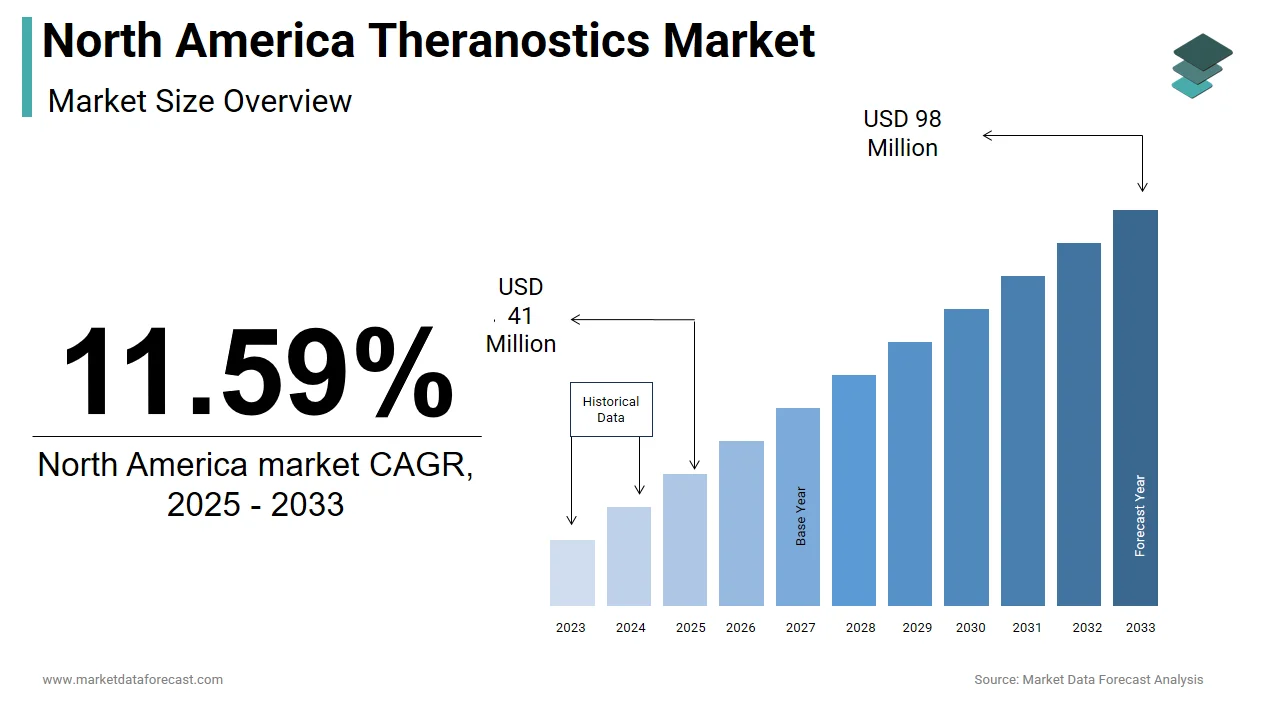
- Market Valuation: Valued at USD 41 million (2025), estimated at USD 45.75 million (2026), and projected to reach USD 110 million by 2034, registering a robust CAGR of 11.59% (2026–2034).
- Primary Growth Drivers: Precision medicine demand, companion diagnostics usage, targeted therapy advancements, and personalized treatment approaches improving clinical outcomes. Key challenges include high healthcare infrastructure costs, stringent regulatory approvals, and skilled professional shortages.
Key Market Segment Metrics (2026–2034)
| Category | Leading Segment (Position) | Fastest-Growing Segment |
|---|---|---|
| By Disease Type, Technology, End-User & Country | Oncology (leading disease type) & Hospitals (leading end-user segment) & United States (accounts for largest regional share) | Advanced sequencing and molecular diagnostic technologies alongside specialized diagnostic laboratories |
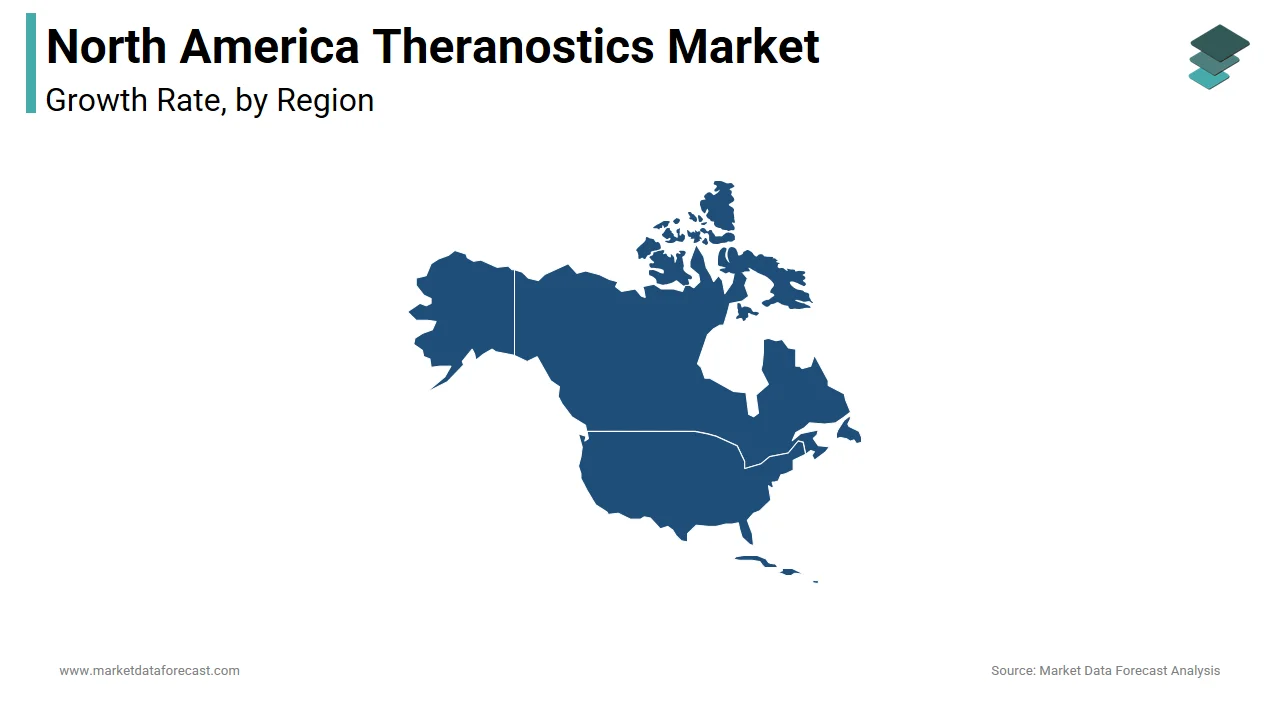
| By Regional Leadership | United States (largest share due to advanced healthcare infrastructure, biotech ecosystem, and high healthcare expenditure) | Canada (healthy growth supported by government biotech investments, early diagnosis awareness, and rising chronic disease incidence) |
Major Market Players & Market Structure
Market Structure: Highly collaborative North American healthcare, biotechnology, and diagnostic landscape featuring major medical corporations driving molecular diagnostic capabilities, precision medicine innovations, and personalized healthcare solutions.
Key Companies: Abbott Laboratories, AmeriPath, Becton, Dickinson and Company (BD), BIOTEC Laboratories, Dade Behring, Dianon Systems, Dynacare Laboratories, Enterix, Focus Diagnostics, Pfizer, and Beckman Coulter.
North America Theranostics Market Size
The size of the North America theranostics market was worth USD 41 million in 2025. The North America market is anticipated to grow at a CAGR of 11.59% from 2026 to 2034 and be worth USD 110 million by 2034, up from USD 45.75 million in 2026.
Theranostics is a sophisticated clinical paradigm that integrates diagnostic imaging and targeted radionuclide therapy into a unified patient management strategy. This approach utilizes specific molecular biomarkers to first visualize disease pathology through diagnostic tracers and subsequently deliver precise therapeutic radiation to the same cellular targets. According to the American Cancer Society, an estimated 299,010 new cases of prostate cancer will be diagnosed in the United States in 2024, expanding the patient population for targeted medical therapies. Furthermore, according to the Centers for Medicare and Medicaid Services, local Medicare Administrative Contractors retain discretionary authority to determine regional coverage policies for oncologic diagnostic positron emission tomography radiopharmaceuticals. This market is distinct from conventional oncology because it relies on a closed-loop ecosystem involving cyclotron production, radiochemistry synthesis, specialized logistics, and nuclear medicine infrastructure. The operational definition extends beyond product sales to include the entire care pathway, where diagnostic confirmation is an absolute prerequisite for therapeutic administration, ensuring that treatment is reserved exclusively for patients with confirmed target expression, thereby maximizing efficacy and minimizing unnecessary toxicity.
MARKET DRIVERS
Regulatory Approvals Expanding Clinical Eligibility Criteria
The acceleration of regulatory clearances for novel radioligand therapies is a key driver of the North America Theranostics market. This factor is transforming theranostics from niche interventions into standard-of-care options. According to the U.S. Food and Drug Administration, regulatory milestones for radiopharmaceutical drug conjugates are supported by tailored expedited review programs to streamline early clinical development. Each approval expands the addressable patient population by validating specific biomarker targets and establishing safety protocols that payers subsequently adopt. As per the Journal of Nuclear Medicine, the addition of novel radioligand therapies into standardized oncologic workflows expanded the therapeutic options available for metastatic prostate cancer management. These regulatory milestones de-risk adoption for community hospitals by providing standardized treatment frameworks and liability protection. Moreover, according to the U.S. Food and Drug Administration, the Real-Time Oncology Review program enables regulators to review clinical data before the official submission of a complete marketing application to accelerate oncology drug approvals. Consequently, the market grows not merely through organic demand but through systematic expansion of labeled indications that convert experimental science into reimbursable clinical practice across diverse healthcare settings in North America.
Demographic Shifts and Rising Cancer Prevalence in Aging Populations
The region's aging demographic profile creates a sustained biological demand for precision therapies, which in turn fuels the growth of the North America theranostics market. These treatments are highly valued because they offer more manageable toxicity profiles than traditional chemotherapy. According to the U.S. Census Bureau, the population aged 65 and older is projected to reach 80 million by 2040, expanding the demographic segment most vulnerable to chronic conditions. As per the American Cancer Society, the average age at the time of an initial cancer diagnosis across all tumor sites is approximately 65 years. Older patients frequently present with comorbidities that preclude aggressive cytotoxic regimens, making targeted radionuclide therapy an attractive alternative due to its favorable side effect profile. As per the Surveillance, Epidemiology, and End Results Program, survival rates for metastatic cancers have improved steadily yet prevalence continues rising, meaning more patients live longer with chronic disease requiring ongoing management. This epidemiological reality ensures that theranostics addresses a growing unmet need for effective palliative and life-extending treatments in a frail elderly cohort. Therefore, demographic inevitability acts as a fundamental volume driver independent of technological innovation or marketing efforts.
MARKET RESTRAINTS
Acute Shortage of Specialized Nuclear Medicine Workforce
A critical human capital deficit severely constrains the capacity of the region’s healthcare systems to deliver theranostic services despite available technology and approved drugs, which restricts the growth of the North America theranostics market. According to the Society of Nuclear Medicine and Molecular Imaging, the healthcare sector is adapting clinical workflows and medical imaging protocols to manage structural market shortages of essential isotopes and radiopharmacy products. As per the American Society of Health-System Pharmacists, nationwide drug shortages remain stubbornly elevated across hospital systems, driving strategic administrative challenges for oncology pharmacy managers. Training a qualified nuclear medicine physician requires several years of postgraduate education creating a long lag time for workforce expansion. According to the Society of Nuclear Medicine and Molecular Imaging, healthcare providers navigating the expansion of medical theranostic centers are restructuring clinical infrastructure and care team coordination pathways. This barrier forces existing staff to manage unsustainable caseloads leading to burnout and further attrition. Without parallel investment in educational pipelines and retention incentives, the physical capacity to administer treatments will remain capped regardless of patient eligibility or drug availability. This effectively places a hard ceiling on market realization
Complex Reimbursement Landscapes and Administrative Burden
Fragmented payment policies and administrative friction create significant barriers to consistent patient access across different payer types and geographic regions, and ultimately hamper the expansion of the North America theranostics market. According to the American Medical Association, clinical medical groups are seeking modifications to outpatient prospective payment system rules to preserve administrative stability for complex nuclear imaging workflows. As per the American Society of Health-System Pharmacists, changing health system guidelines have introduced a heightened administrative burden on specialty oncology providers during medication procurement. Out-of-pocket costs for patients can exceed a notable portion of annual income under high-deductible plans, creating financial toxicity that deters acceptance even when clinically indicated. According to the Society of Nuclear Medicine and Molecular Imaging, medical associations are actively advising federal regulators to change current diagnostic radiopharmaceutical prospective pricing frameworks that package high-cost diagnostic agents under broader hospital outpatient indices. Additionally, site of service payment differentials penalize hospital outpatient departments relative to freestanding sites, distorting care delivery decisions. This reimbursement uncertainty suppresses provider willingness to build comprehensive programs and creates geographic disparities in access based on local payer mix rather than clinical need.
MARKET OPPORTUNITIES
Expansion Beyond Oncology Into Neurology and Cardiology
Diversification into non-oncologic indications offers a transformative opportunity for the North America theranostics market. This helps to broaden the theranostic addressable market beyond current cancer-centric limitations. According to the Alzheimer's Association, over 6 million Americans are currently living with Alzheimer's disease, driving an expansion of diagnostic neuroimaging procedures across regional nuclear medicine departments. As per research published in The Lancet Neurology, the introduction of tau and amyloid-beta biomarker tracking establishes chronological timelines for clinical trials evaluating early therapeutic interventions. According to the American Society of Nuclear Cardiology, the adoption of non-invasive technetium-99m-based bone-avid tracer scanning has expanded the diagnostic identification of wild-type transthyretin amyloid cardiomyopathy. Unlike oncology, where competition intensifies, these adjacent fields face minimal competitive saturation and leverage existing regulatory pathways. Pharmaceutical companies developing neurological and cardiovascular agents increasingly incorporate imaging biomarkers as trial endpoints, creating co-development opportunities. Repurpose established capabilities for high-prevalence chronic diseases. This allows the market to achieve scale and sustainability independent of oncology cycle volatility.
Development of Alpha Emitting Radiopharmaceuticals
Alpha particle emitters present a next-generation technological opportunity, offering superior potency and reduced off-target toxicity compared to current beta-emitting standards, which is expected to accelerate the expansion of the North American theranostics market. According to Nature Reviews Drug Discovery, the clinical development of targeted radiopharmaceutical therapies focuses on optimizing the linear energy transfer and cytotoxic profile of particulate-emitting nuclides. As per clinical trial data reviewed by AiroMedical, targeted alpha therapy using Actinium-225 PSMA-617 induces a prostate-specific antigen decline of at least 50% in over half of the evaluated patients previously refractory to Lutetium-177 treatments. According to the National Isotope Development Center, a multi-laboratory federal initiative under the Department of Energy Isotope Program has scaled up the domestic production and availability of Actinium-225 to support investigational oncology clinical trials. As per data tracked by DataIntelo, medical networks in North America are expanding advanced radiopharmaceutical clinical trial pipelines for targeted alpha therapy agents across multiple solid tumor indications. Successful commercialization would create premium pricing tiers and extend treatment sequences, allowing patients to receive multiple lines of radioligand therapy. This technological evolution positions North America at the forefront of precision radiation medicine while creating new intellectual property and manufacturing ecosystems.
MARKET CHALLENGES
Fragile Radioisotope Supply Chains and Production Dependencies
Alpha particle emitters present a next-generation technological opportunity offering superior potency and reduced off-target toxicity compared to current beta-emitting standards, which is expected to accelerate the expansion of the North American theranostics market. According to the National Academies of Sciences, Engineering, and Medicine, historical vulnerabilities in global medical isotope supply chains emphasize the ongoing need to monitor production disruptions across international nuclear reactors. According to data published by The Lancet Oncology, the commercial distribution of therapeutic isotopes like Lutetium-177 is adapting to meet complex logistical demands and global production requirements in medical theranostics. As per the Nuclear Science Advisory Committee, strategic federal isotope planning aims to maintain a continuous dialogue with stakeholders to balance realistic demand with achievable domestic production capabilities. Half-lives of key isotopes range from hours to days, making inventory buffering impossible and requiring just-in-time logistics vulnerable to transportation disruptions. According to the World Nuclear Association, healthcare facilities coordinate precise logistical windows to manage the rapid physical decay of medical radioisotopes utilized in routine diagnostic and therapeutic procedures. Diversified domestic production has not yet achieved commercial scale. Because of this, supply fragility remains an existential operational risk that limits reliable market expansion.
Radiation Safety Infrastructure and Regulatory Compliance Costs
Stringent radiation safety requirements impose substantial capital and operational burdens, which slow down the growth of the North American theranostics market. These costs limit program feasibility outside well-resourced institutions. According to the U.S. Nuclear Regulatory Commission, federal regulatory revisions adjust the annual fee schedules and specific project assessment metrics required for radioactive materials licenses. As per the National Council on Radiation Protection and Measurements, standardized operational guidelines dictate specialized shielding, environmental surveys, and dosage protocols to maintain structural safety inside nuclear medicine environments. According to the U.S. Department of Energy, a substantial percentage of the professional radiation safety workforce is employed across federal institutions, national laboratories, and commercial contractors. As per the Health Physics Society, updated administrative position statements outline the critical frameworks necessary for the management and disposal of low-level radioactive waste. Community hospitals serving rural populations often cannot justify these fixed costs given lower patient volumes, creating access deserts. Additionally, state-level regulations vary significantly, adding complexity for multi-site health systems. These regulatory overheads create high entry barriers that consolidate care in urban academic centers and perpetuate geographic inequities despite widespread patient need across North America.
REPORT COVERAGE
| REPORT METRIC | DETAILS |
| Market Size Available | 2025 to 2034 |
| Base Year | 2025 |
| Forecast Period | 2026 to 2034 |
| Segments Covered | By Disease Type, Technology, End-User, and Country. |
| Various Analyses Covered | Global, Regional, and Country-Level Analysis, Segment-Level Analysis, Drivers, Restraints, Opportunities, Challenges; PESTLE Analysis; Porter’s Five Forces Analysis, Competitive Landscape, Analyst Overview of Investment Opportunities |
| Regions Covered |
|
| Market Leaders Profiled | Abbott Laboratories, AmeriPath, Dickinson and Company, BIOTEC Laboratories, Dade Behring, Dianon Systems, Novartis Pharmaceuticals Corporation, Dynacare Laboratories, Enterix, Lantheus Holdings Inc, Focus Diagnostics, Bayer AG, Pfizer, and Beckman Coulter. |
SEGMENTAL ANALYSIS
By Disease Type Insights
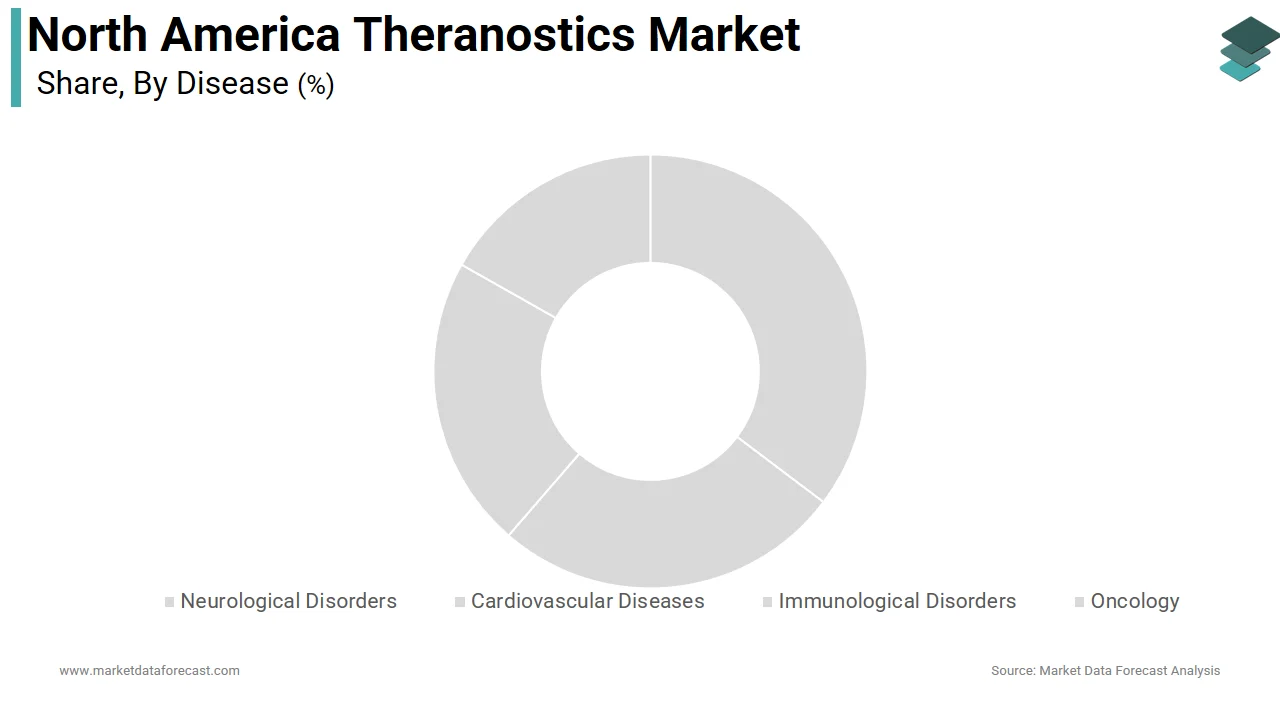
In 2025, the oncology segment held the majority share of the North America theranostics market because of mature clinical evidence bases and comprehensive regulatory approvals that have standardized care pathways. According to the U.S. Food and Drug Administration, targeted prostate-specific membrane antigen radioligand therapies received regulatory clearance in 2022 to treat progressive, metastatic castration-resistant prostate cancer. According to the Society of Nuclear Medicine and Molecular Imaging, regional nuclear medicine networks are expanding specialized clinical infrastructure to support an increased volume of targeted radiopharmaceutical therapeutic procedures. As per the National Comprehensive Cancer Network guidelines, Lutetium-177 PSMA-617 is a recommended therapeutic agent for adult patients with advanced prostate-specific membrane antigen-positive metastatic castration-resistant prostate cancer. Neuroendocrine tumor treatments like Lutathera have similar guideline integration with documented progression-free survival benefits exceeding several months. This depth of validation reduces physician hesitation and payer resistance, creating self-reinforcing adoption cycles. Non-oncologic applications lack comparable evidence maturity, forcing reliance on off-label use or investigational protocols that inherently limit volume. Consequently, oncology’s evidentiary superiority translates directly into market hegemony through institutionalized clinical confidence.
Favorable and predictable reimbursement policies for oncologic theranostics create viable economic models that non-oncologic indications cannot yet match. According to the Centers for Medicare and Medicaid Services, local Medicare coverage guidelines dictate the specific administrative regional review procedures and reimbursement structures for diagnostic oncologic imaging radiopharmaceuticals. As per the Kaiser Family Foundation, commercial employer-sponsored healthcare plans provide insurance coverage options for a significant segment of the non-elderly population residing within the United States. According to data published by The Lancet Oncology, healthcare facilities manage volatile acquisition costs and supply constraints to stabilize institutional budgets during the administration of specialized radioligand therapies. Diagnostic companion tests also receive separate payment under distinct Current Procedural Terminology codes, ensuring revenue capture across the entire care continuum. As per the American Medical Association, physicians are advocating for regulatory adjustments to complex hospital outpatient prospective payment rules to reduce billing friction for non-invasive medical imaging workflows. The reimbursement asymmetry makes oncology programs financially sustainable while other indications remain economically precarious regardless of clinical promise, thereby concentrating capital allocation and operational focus within the oncology segment.
The neurological disorders segment is predicted to witness the highest CAGR of 24.6% from 2026 to 2034, due to regulatory approvals of disease-modifying Alzheimer's treatments requiring confirmatory biomarker verification. According to the U.S. Food and Drug Administration, the therapeutic administration of novel anti-amyloid monoclonal antibodies requires clinical confirmation of amyloid-beta plaque pathology before the initiation of treatment. As per the Alzheimer's Association, an estimated 6.9 million Americans aged 65 and older are currently living with Alzheimer's dementia within the United States. As per JAMA Neurology, the commercial availability of advanced neurotherapeutics has increased institutional utilization of diagnostic biomarker evaluations across specialized reference clinics. Unlike oncology, where diagnostics are optional adjuncts, neurological theranostics requires mandatory confirmation, making testing inseparable from treatment access. Pharmaceutical manufacturers actively support diagnostic infrastructure buildout through patient assistance programs and provider education, recognizing that diagnostic capacity constrains drug sales. This structural coupling between therapeutic availability and diagnostic necessity creates exponential growth dynamics absent in mature segments where testing saturation has already occurred.
Emerging tau protein tracers enable earlier disease detection and staging capabilities that expand the addressable population beyond symptomatic patients to preclinical cohorts. According to research published in Nature Aging, investigations into distinct biological subtypes of Alzheimer's disease highlight variations in protein pathways to guide targeted molecular therapeutic development. As per the National Institute on Aging, federal research allocations support the continuous development and analytical validation of sensitive blood-based and imaging biomarkers for neurodegenerative diseases. According to the Alzheimer's Disease Neuroimaging Initiative, multi-center neuroimaging protocols establish standardized appropriate use criteria for tau and amyloid-beta positron emission tomography scans in clinical practice. Commercial entities like Eli Lilly and Biogen incorporate tau imaging as enrollment criteria for next-generation prevention studies, creating guaranteed demand independent of current therapeutic approvals. Academic centers leverage tau capabilities to attract research funding and patient referrals, enhancing institutional prestige. This dual utility in both clinical care and drug development creates diversified demand streams insulating growth from single product dependencies. As prevention paradigms gain traction, tau imaging positions neurology for sustained expansion beyond current therapeutic limitations.
By Technology Insights
The immunohistochemistry segment maintained dominance in the North America theranostics market and accounted for a substantial share in 2025. This dominance of the segment was driven by universal availability in pathology laboratories and deep integration into routine diagnostic workflows. According to the College of American Pathologists, accredited reference laboratories integrate standardized quality control protocols to validate clinical immunohistochemistry slides before diagnostic interpretation. The technology serves as a primary screening modality for prostate-specific membrane antigen and somatostatin receptor expression, determining eligibility for subsequent radionuclide therapy. As per the Association for Molecular Pathology, international guidelines recommend that specialized molecular profiling turnaround windows should remain at ten business days or fewer from sample reception to final reporting. Reagent supply chains are mature, with multiple vendors offering standardized kits, ensuring consistent quality and competitive pricing. Training programs in pathology residencies universally include immunohistochemistry interpretation, creating workforce competency that newer technologies lack. Regulatory bodies have extensive experience evaluating immunohistochemistry-based companion diagnostics, enabling streamlined approval processes. This technological incumbency creates path dependency where continued use is reinforced by existing infrastructure, workforce expertise, and economic efficiency even as advanced modalities emerge for complex cases.
Superior affordability relative to molecular techniques makes immunohistochemistry the only economically viable first-line screening option for high-volume patient populations. According to the American Society of Clinical Oncology, value frameworks evaluate the systemic health disparities, therapeutic toxicity, and overall survival benefits of advanced biomarker diagnostics during drug registration trials. As per the Centers for Medicare and Medicaid Services, local Medicare carriers determine regional coverage guidelines for somatic biomarker testing in advanced or hereditary cancer cases based on clinical risk factors. According to The Lancet Oncology, healthcare networks manage specific sample acquisition hurdles and material logistics to preserve the clinical integrity of downstream companion diagnostic pathways. Rural healthcare facilities lacking molecular pathology capabilities can still participate in theranostic programs through immunohistochemistry screening, referring only positive cases for advanced confirmation. This tiered approach maximizes population-level access while preserving specialized resources for confirmed candidates. Economic pragmatism thus sustains immunohistochemistry leadership not through technological superiority but through alignment with prevailing resource constraints across diverse North American healthcare settings.
The sequencing segment is estimated to register the fastest CAGR of 19.8% during the forecast period owing to its ability to identify novel biomarkers and resistance mechanisms invisible to traditional methods. As per the National Comprehensive Cancer Network guidelines, somatic genomic sequencing panel evaluations are recommended diagnostic workflows to determine patient eligibility for matched therapeutic regimens. According to commercial data reported by Tempus AI, independent molecular diagnostic laboratories expand their service capacity through automated genomic and multi-omics technology workflows. As per data published in Nature Medicine, the cost-effectiveness and accessibility of high-throughput genomic assays are increasingly reviewed alongside localized targeted drug value indices. According to the American Society of Clinical Oncology, multi-gene somatic and germline panel selection criteria prioritize identifying specific alterations associated with targeted medication pathways. Pharmaceutical sponsors increasingly require sequencing data for clinical trial enrollment, creating captive demand. This informational advantage transforms sequencing from an optional add-on to essential infrastructure for precision medicine evolution, ensuring growth continues as target landscapes expand beyond current approved indications.
Rapid improvements in sequencing economics and operational efficiency are eliminating historical barriers that previously restricted use to elite academic centers. According to the National Human Genome Research Institute, clinical value-based analysis framework evaluations examine the specific integration of large next-generation sequencing systems into community medicine environments. As per Association for Molecular Pathology surveys, clinical laboratories implement internal quality improvements and optimized laboratory tracking layouts to lower the median wait times for oncological panels. Cloud-based bioinformatics platforms reduce local computational requirements, allowing small laboratories to offer sophisticated interpretation without capital-intensive infrastructure. Commercial reference laboratories now offer standardized panels with guaranteed reporting windows, integrating seamlessly with electronic health records. These operational improvements democratize access, transforming sequencing from a niche research tool to a routine clinical capability accessible across diverse healthcare settings, thereby accelerating adoption velocity beyond historical constraints.
By End User Insights
The hospitals segment led the North America theranostics market and captured a significant share in 2025. This leading position of the segment was attributed to its unique capacity to deliver integrated diagnostic, therapeutic, and supportive care under unified operational control. According to the American Hospital Association, institutional health systems are seeking adjustments to diagnostic radiopharmaceutical prospective pricing frameworks to protect community patient access inside outpatient settings. Complex patients receiving theranostics frequently have comorbidities requiring concurrent management by oncologists, cardiologists, nephrologists, and palliative care specialists, all typically co-located within hospital systems. As per the Journal of Nuclear Medicine, specialized multidisciplinary tumor boards and structured clinical spaces expand residential care quality for patients undergoing targeted radioligand therapies. Academic medical centers serve as regional referral hubs concentrating rare disease expertise and clinical trial access that attracts complex cases from broader geographies. Integrated electronic health records facilitate seamless coordination between diagnostic imaging, therapeutic administration, and follow-up monitoring, reducing fragmentation. This operational comprehensiveness makes hospitals indispensable nodes in theranostic care networks, ensuring continued volume concentration despite the emergence of alternative sites.
Stringent regulatory frameworks governing radioactive materials handling inherently favor large institutional settings over smaller independent practices. According to the U.S. Nuclear Regulatory Commission, federal licensing frameworks for medical isotope use adapt oversight pathways to monitor commercial radioactive material tracking across multiple distribution layers. State regulations often impose additional requirements, including minimum patient volumes and staffing ratios that only hospitals can reliably meet. As per the National Academies of Sciences, Engineering, and Medicine, standard administrative rules define explicit exemption thresholds to exclude low-activity medical compounds from broad nuclear materials licensing procedures. Hospital legal and compliance departments manage complex documentation and inspection requirements, reducing individual practitioner liability exposure. Accreditation bodies like The Joint Commission conduct regular safety audits, providing external validation that payers and patients trust. These regulatory moats create high entry barriers protecting hospital market share against disaggregation trends seen in other specialties. Until regulatory modernization enables safer decentralized models, licensing requirements will continue concentrating theranostic delivery within hospital ecosystems.
The diagnostics laboratories segment is anticipated to witness the fastest CAGR of 21.3% between 2026 and 2034. This rapid growth of the segment is fuelled by hospital outsourcing of complex testing and the emergence of specialized reference laboratories. According to the U.S. Food and Drug Administration, a phased federal rule enforcement approach regulates laboratory-developed diagnostic assays as traditional medical devices to protect public safety. As per the Centers for Medicare and Medicaid Services, clinical oncology practices acquire high-complexity testing certifications under federal laboratory guidelines to guarantee the analytical precision of diagnostic findings. They also maintain deeper biomarker expertise and participate in proficiency testing programs, ensuring quality consistency across geographic regions. This specialization value proposition accelerates outsourcing, particularly among community hospitals lacking nuclear medicine depth, ensuring laboratory segment growth outpaces traditional hospital-based delivery models.
Laboratories are proactively expanding market reach through direct marketing initiatives that bypass traditional referral gatekeepers and stimulate demand. According to the Association for Molecular Pathology, expert clinical committees recommend keeping next-generation sequencing report turnaround windows within a 10-day operational threshold. As per Physicians Office Resource, an expanding segment of consumer digital platforms integrates smartphone at-home testing data to enhance medical provider tracking pipelines. Online ordering portals and telehealth consultation services reduce friction for rural providers lacking local specialist support. Laboratories partner with pharmaceutical companies to offer subsidized testing programs, removing financial barriers for uninsured patients. These proactive commercialization strategies transform laboratories from passive service providers to active demand generators, creating growth dynamics independent of hospital referral patterns and accelerating market penetration in underserved communities.
COUNTRY LEVEL ANALYSIS
COMPETITIVE LANDSCAPE
Competition in the North America theranostics market is characterized by supply chain mastery and clinical evidence depth rather than traditional pharmaceutical pricing dynamics. Established players compete primarily through proprietary isotope access, manufacturing redundancy, and validated treatment protocols that create high switching costs for healthcare providers. New entrants face substantial barriers, including multi-year regulatory timelines, capital-intensive facility buildouts, and specialized workforce requirements favoring incumbents with existing infrastructure. Differentiation occurs through technological innovation such as alpha emitters or novel targets rather than generic competition because each radiopharmaceutical possesses unique physical and biological properties. Reimbursement negotiations serve as critical battlegrounds where demonstrated cost-effectiveness determines commercial viability more than list prices alone. Academic medical centers function as kingmakers whose guideline endorsements and trial participation validate emerging players while marginalizing those lacking institutional credibility. Supply reliability often outweighs marginal efficacy differences because treatment interruptions compromise outcomes irreversibly, creating loyalty premiums for dependable suppliers. This unique competitive environment rewards organizations balancing operational excellence with scientific innovation while penalizing those pursuing either dimension in isolation within this complex interdependent ecosystem.
KEY MARKET PLAYERS
The leading companies operating in the North America theranostics market include:
- Abbott Laboratories
- AmeriPath
- Becton, Dickinson and Company
- BIOTEC Laboratories
- Dade Behring
- Dianon Systems
- Novartis Pharmaceuticals Corporation
- Dynacare Laboratories
- Enterix
- Lantheus Holdings Inc.
- Focus Diagnostics
- Bayer AG
- Pfizer
- Beckman Coulter
TOP PLAYERS IN THE MARKET
- Novartis contributes significantly to the North American theranostics landscape through its pioneering radioligand therapies Pluvicto and Lutathera, which established clinical benchmarks for prostate and neuroendocrine cancers. The company recently expanded manufacturing capacity to address persistent supply constraints limiting patient access across the United States. Novartis partnered with multiple academic medical centers to establish dedicated therapy administration sites, reducing geographic disparities in care delivery. By integrating diagnostic confirmation with therapeutic delivery under unified commercial infrastructure, Novartis created operational templates that competitors now emulate while continuing to shape reimbursement policies and clinical guidelines through sustained evidence generation and stakeholder engagement across the continent.
- Lantheus strengthens North American theranostics through a comprehensive diagnostic imaging portfolio including Piflufolastat F18 for prostate cancer detection that serves as a critical companion to therapeutic agents. The company recently secured long term isotope supply agreements with domestic producers, mitigating foreign dependency risks that previously disrupted regional availability. Strategic partnerships with community hospital networks expand access beyond elite academic centers, reaching underserved populations. By focusing on diagnostic infrastructure that enables therapeutic eligibility determination, Lantheus occupies an essential gateway position in care pathways, creating sustainable demand drivers independent of therapeutic competition while building integrated ecosystem presence across diverse healthcare settings throughout North America.
- Bayer contributes to North America theranostics through Xofigo radium-223 dichloride and pipeline development of next-generation alpha-emitting conjugates targeting broader oncology indications. Educational initiatives targeting community oncologists increase awareness of alpha emitter mechanisms, differentiating them from conventional therapies. Clinical collaborations with National Cancer Institute-designated cancer centers generate real-world evidence supporting label expansions. By pursuing technological differentiation through alpha particle platforms rather than competing directly in crowded beta emitter space, Bayer creates distinct market positioning while addressing unmet needs in refractory disease populations across North American oncology practices.
TOP STRATEGIES USED BY KEY MARKET PARTICIPANTS
Key participants prioritize vertical integration of isotope production and drug manufacturing to control supply chains vulnerable to geopolitical disruptions and single-source dependencies. Companies invest heavily in domestic cyclotron and reactor infrastructure, reducing reliance on foreign suppliers while securing government partnerships for strategic isotope reserves. Leading firms pursue clinical trial designs incorporating biomarker stratification and adaptive endpoints, accelerating regulatory approvals and demonstrating value to payers simultaneously. Market leaders establish Centers of Excellence networks providing standardized training protocols and quality assurance frameworks that elevate community hospital capabilities while ensuring brand consistency. Participants increasingly develop companion diagnostic assays internally or through exclusive partnerships, controlling patient identification funnels and creating competitive moats around therapeutic franchises. Strategic acquisitions target specialized radiochemistry expertise and niche isotope access, filling capability gaps faster than organic development allows. These multifaceted strategies collectively strengthen competitive positioning through supply security, clinical differentiation, and ecosystem control rather than price competition alone in this capital-intensive, highly regulated therapeutic domain.
MARKET SEGMENTATION
This research report on the North America theranostics market is segmented and sub-segmented into the following categories.
By Disease
- Neurological Disorders
- Cardiovascular Diseases
- Immunological Disorders
- Oncology
- Others
By Technology
- Polymerase Chain Reaction (PCR)
- Immunohistochemistry
- In Situ Hybridization
- Sequencing
- Others
By End-User
- Hospitals
- Diagnostics Laboratories
- Others
By Country
- United States
- Canada
- Mexico
- Rest of North America