- Product Description Description
- Table of Contents TOC
- List of Table & Figure LOT
- Get Free Sample PDF Sample PDF
Market Size, 2025
$1.65 BnMarket Estimate, 2026
$1.76 BnMarket Forecast, 2034
$2.93 BnCAGR, 2026–2034
6.6%Executive Summary: North America Tissue Diagnostics Market
- Market Scope: Comprehensive market evaluation of the North American tissue diagnostics sector, examining product types, disease indications, clinical applications, laboratory end-users, and country-level frameworks.
- Market Valuation: Valued at USD 1.65 billion in 2025, estimated at USD 1.76 billion in 2026, and projected to reach USD 2.93 billion by 2034, registering a steady CAGR of 6.60% from 2026 to 2034.
- Primary Growth Drivers: Escalating incidence of cancer and chronic conditions driving diagnostic sample volumes, rapid adoption of precision medicine and molecular profiling, and the integration of artificial intelligence and digital pathology workflows.
Key Market Segment Metrics (2026–2034)
| Category | Leading Segment Position | Fastest-Growing / Key Growth Segment |
|---|---|---|
| By Product Type | Consumables (dominant share in 2025 due to recurring testing needs, single-use requirements, and steady reagent consumption) | Instruments (projected to register the fastest CAGR of 7.5% driven by lab automation, digital pathology upgrades, and AI integration) |
| By Disease | Breast Cancer (accounted for 34.2% market share in 2025, backed by routine screening protocols and mandatory biomarker panels) | Lung Cancer (growing at the fastest CAGR of 8.2% supported by comprehensive genomic profiling and next-gen sequencing panels) |
| By End User | Diagnostic Laboratories (largest segment holding 44.3% share in 2025, anchoring high-throughput reference testing and specialized pathology) | Contract Research Organizations (projected at the fastest CAGR of 9.0% fueled by outsourced clinical trial biomarker validation) |
| By Country | United States (top market performer capturing 85.2% share in 2025 via advanced infrastructure, high cancer incidence, and robust FDA pathways) | Canada (holding 11.2% share, driven by public health investments in digital pathology networks and regional biotech clusters) |
Major Market Players & Market Structure
Market Structure: Moderately consolidated industry landscape dominated by multinational medical technology leaders competing across automated staining platforms, companion diagnostics co-development, and AI-powered digital pathology tools.
Key Companies: Roche Diagnostics, Sigma-Aldrich Co. LLC, Leica Biosystems, Abbott Laboratories, Agilent Technologies, BioGenex, Danaher Corporation, Cell Signaling Technology, and Ventana Medical Systems.
 Download Free Sample Report
North America Tissue Diagnostics Market Size
The North America tissue diagnostics market was valued at USD 1.65 billion in 2025. The market is estimated at USD 1.76 billion in 2026 and is projected to reach USD 2.93 billion by 2034, growing at a CAGR of 6.60% from 2026 to 2034.

Tissue diagnostics are technologies and services utilized for the microscopic examination of tissue samples to diagnose diseases, primarily cancer and other pathological conditions. According to the American Cancer Society, approximately 1.9 million new cancer cases are diagnosed annually in the United States, underscoring the indispensable role of tissue diagnostics in clinical decision-making. Cancer remains the second leading cause of death in the country, necessitating accurate and timely diagnostic interventions. The integration of artificial intelligence into pathology workflows is transforming traditional practices, with the College of American Pathologists noting that nearly 30% of large academic medical centers have adopted digital pathology systems for primary diagnosis. Regulatory frameworks established by the Food and Drug Administration ensure rigorous validation of diagnostic assays, maintaining high standards of accuracy. As precision medicine gains traction, the demand for sophisticated tissue diagnostic tools continues to rise, supporting personalized treatment strategies and improving patient outcomes across the continent.
MARKET DRIVERS
Rising Prevalence Of Cancer And Chronic Diseases Driving Diagnostic Volume
The escalating incidence of cancer and chronic diseases is accelerating the growth of the North America Tissue Diagnostics Market. With an aging population and lifestyle factors contributing to higher disease rates, the volume of tissue samples requiring analysis has surged significantly. According to the study, 1 in 3 women and 1 in 2 men in the United States will develop cancer during their lifetime, creating a sustained demand for diagnostic services. The National Cancer Institute projects that the number of new cancer cases will increase by 25% by 2030 due to demographic shifts. This growing patient pool necessitates robust diagnostic infrastructure capable of handling high throughput while maintaining accuracy. Immunohistochemistry and molecular pathology tests are increasingly used to identify specific biomarkers, which guide targeted therapy decisions. The shift toward early detection programs further amplifies the need for sensitive diagnostic tools. Hospitals and reference laboratories are expanding their capacity to process biopsies and surgical specimens efficiently. This consistent influx of samples ensures steady revenue streams for diagnostic manufacturers and service providers.
Adoption Of Precision Medicine And Personalized Therapeutic Approaches
The widespread adoption of precision medicine and personalized therapeutic approaches is propelling the growth of the North America Tissue Diagnostics Market. Modern oncology relies heavily on molecular profiling of tumor tissues to match patients with the most effective treatments, minimizing trial and error. According to the study, over 40% of new drug approvals by the Food and Drug Administration in recent years have been accompanied by companion diagnostics that require tissue testing. These diagnostics identify genetic mutations, protein expression levels, and other biomarkers that predict response to specific therapies. Pharmaceutical companies are increasingly collaborating with diagnostic firms to develop co-approved tests, accelerating the growth of the market. The ability to stratify patients based on molecular characteristics improves clinical outcomes and reduces healthcare costs associated with ineffective treatments. This paradigm shift from one size fits all to tailored therapy drives investment in advanced tissue diagnostic platforms.
MARKET RESTRAINTS
High Costs Associated With Advanced Diagnostic Technologies
The high costs associated with advanced diagnostic technologies is restricting the growth of the North America tissue diagnostics market. Next-generation sequencing, multiplex immunohistochemistry, and digital pathology systems require substantial capital investment and ongoing operational expenses. Reimbursement policies often lag behind technological advancements, leaving many innovative tests without adequate coverage. Small community hospitals and independent pathology practices struggle to afford expensive instrumentation and specialized reagents, leading to disparities in care quality. The complexity of billing codes for molecular diagnostics further complicates reimbursement processes, causing delays and denials. Manufacturers face pressure to lower prices while maintaining profitability, which can hinder research and development efforts. Limited budget allocations in public healthcare facilities restrict the procurement of state-of-the-art equipment. These financial constraints slow the diffusion of cutting-edge diagnostic tools, particularly in rural and underserved areas.
Shortage Of Qualified Pathologists And Technical Staff
The shortage of qualified pathologists and technical staff is affecting turnaround times and diagnostic accuracy, which is also impeding the growth of the Asia Pacific tissue diagnostics market. The increasing volume of complex cases requires specialized expertise that is in short supply across the region. The Bureau of Labor Statistics projects a gap of over 5000 pathologists by 2030, exacerbating workforce challenges. This scarcity leads to burnout among existing professionals and delays in reporting results, which can impact patient care timelines. Training new pathologists takes several years, creating a lag in addressing immediate needs. Technical staff responsible for sample processing and staining also face retention issues due to competitive job markets in other sectors. The lack of standardized training programs for emerging technologies like digital pathology further limits workforce readiness. Hospitals must invest heavily in recruitment and retention strategies, increasing operational costs. Without sufficient human resources, the full potential of advanced diagnostic technologies cannot be realized.
MARKET OPPORTUNITIES
Integration Of Artificial Intelligence In Digital Pathology
The integration of artificial intelligence in digital pathology by enhancing diagnostic accuracy and workflow efficiency is likely to create new opportunities for the growth of the North America tissue diagnostics market. AI algorithms can analyze vast amounts of histological data, rapidly identifying patterns and anomalies that may be overlooked by human eyes. Major technology companies and startups are developing validated AI tools for specific applications such as prostate cancer grading and lymph node metastasis detection. The cleared several AI based pathology algorithms facilitating their clinical adoption. These tools assist pathologists by prioritizing urgent cases and reducing manual screening time. Academic institutions are incorporating AI training into residency programs, preparing the next generation of diagnosticians. The ability to quantify biomarkers precisely supports more objective treatment decisions. This technological synergy promises to alleviate workforce shortages and standardize diagnostic quality across diverse healthcare settings.
Expansion Of Companion Diagnostics For Targeted Therapies
The expansion of companion diagnostics for targeted therapies is likely to escalate the growth of the North America Tissue Diagnostics Market. As pharmaceutical companies develop increasingly specific drugs, the need for corresponding diagnostic tests to identify eligible patients becomes paramount. This trend drives collaboration between drug developers and diagnostic manufacturers, creating integrated solutions. The National Institutes of Health supports initiatives to validate new biomarkers, accelerating the development of novel tests. Data from the Pharmaceutical Research and Manufacturers of America shows that the pipeline for targeted therapies has doubled in the last five years, increasing demand for tissue-based assays. Laboratories are expanding their capabilities to perform complex molecular tests, such as next-generation sequencing panels. Reimbursement agencies are beginning to recognize the value of companion diagnostics in optimizing healthcare spending. The rise of liquid biopsy as a complement to tissue diagnostics also opens new avenues for monitoring treatment response. By aligning diagnostic development with drug pipelines, manufacturers can secure long-term contracts and stable revenue streams.
MARKET CHALLENGES
Regulatory Complexity and Compliance Burdens
The regulatory complexity and compliance burdens for participants are a major challenge for the growth of the North America Tissue Diagnostics Market. New regulations mandate that high-risk diagnostic tests undergo premarket review similar to medical devices. This shift increases the time and cost required to bring new tests to market. Small and medium-sized enterprises often lack the resources to manage these extensive regulatory processes effectively. Variability in state-level regulations further complicates operations for national laboratory networks. The lack of harmonization between federal and state guidelines creates uncertainty for manufacturers and providers. Delays in approval can hinder the introduction of innovative diagnostics, impacting patient access. Companies must invest in dedicated regulatory affairs teams to ensure adherence to changing standards. This administrative burden diverts resources from research and development, slowing innovation.
Data Privacy and Security Concerns in Digital Pathology
The data privacy and security concerns in digital pathology, as healthcare systems increasingly digitize patient records, are also impeding the growth of the North America tissue diagnostics market. The storage and transmission of high-resolution whole slide images require robust cybersecurity measures to protect sensitive health information. Compliance with the Health Insurance Portability and Accountability Act imposes strict penalties for data mishandling, increasing liability risks for providers. Laboratories must invest in encrypted storage, secure cloud platforms, and regular security audits to safeguard data. The integration of third-party AI tools introduces additional security risks requiring thorough vendor assessment. Patient trust is paramount, and any breach can damage reputation and lead to legal consequences. The complexity of managing large datasets while ensuring privacy slows the adoption of cloud-based pathology solutions. Manufacturers and providers must prioritize cybersecurity in product design and operational protocols.
REPORT COVERAGE
| REPORT METRIC | DETAILS |
| Market Size Available | 2025 to 2034 |
| Base Year | 2025 |
| Forecast Period | 2026 to 2034 |
| Segments Covered | By Product Type, Disease, Application, End User, and Country. |
| Various Analyses Covered | Global, Regional, and Country-Level Analysis, Segment-Level Analysis, Drivers, Restraints, Opportunities, Challenges; PESTLE Analysis; Porter’s Five Forces Analysis, Competitive Landscape, Analyst Overview of Investment Opportunities |
| Countries Covered |
|
| Market Leaders Profiled | Roche Diagnostics, Sigma-Aldrich Co. LLC, Leica Biosystems, Abbott Laboratories, Agilent Technologies, BioGenex, Danaher Corporation, Cell Signaling Technology, and Ventana Medical Systems. |
SEGMENTAL ANALYSIS
By Product Type Insights
The consumables segment held a prominent share of the North America Tissue Diagnostics Market in 2025 with the recurring nature of diagnostic testing and the essential role of reagents and kits in daily laboratory operations. The high volume of tissue samples processed annually necessitates a steady supply of high-quality reagents to maintain diagnostic accuracy. The shift toward personalized medicine has increased the complexity of tests requiring specialized multiplex kits and molecular probes, which command higher prices and drive revenue growth. Manufacturers benefit from long-term contracts with large hospital networks and reference laboratories, ensuring stable cash flows. The inability to reuse single-use items due to contamination risks further sustains demand. As diagnostic volumes rise with increasing cancer incidence, the consumption of these materials scales proportionally. This structural dependency on consumables for routine and advanced diagnostics solidifies their market leadership over instrumentation.
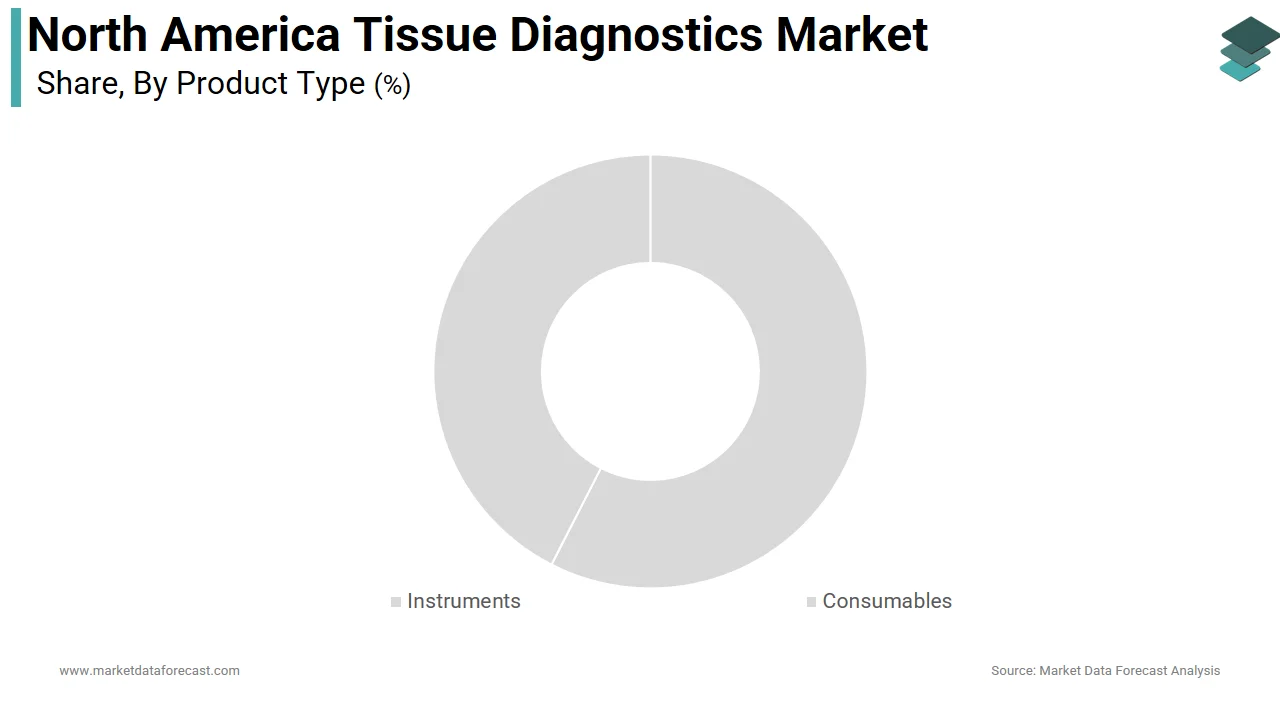
The instruments segment is expected to register the fastest CAGR of 7.5% during the forecast period owing to the rapid adoption of digital pathology and automation technologies. Laboratories are upgrading from manual to automated systems to improve throughput consistency and reduce human error. The need for high-resolution digital images for remote diagnosis and AI analysis requires advanced microscopy and scanning equipment. Automation reduces the variability associated with manual staining and improves reproducibility, which is crucial for regulatory compliance. The aging workforce of pathologists also drives the need for efficiency-enhancing tools that streamline sample processing. Manufacturers are introducing integrated platforms that combine staining, scanning, and analysis capabilities, appealing to large reference laboratories. Government grants supporting modernization of healthcare infrastructure further facilitate instrument upgrades.
By Disease Insights
The breast cancer segment accounted for 34.2% of the North America Tissue Diagnostics Market share in 2025 due to the high prevalence of the disease and the extensive use of tissue-based biomarker testing for treatment planning. Breast cancer is the most common cancer among women in the United States, necessitating rigorous diagnostic evaluation. According to the American Cancer Society, approximately 300000 new cases of invasive breast cancer are diagnosed annually in the United States. Each case typically requires immunohistochemistry testing for estrogen receptor, progesterone receptor, and HER2 status to determine eligibility for hormonal and targeted therapies. The availability of effective targeted therapies, such as trastuzumab and pertuzumab, drives the demand for accurate HER2 testing. Screening programs and awareness campaigns have increased early detection rates, leading to more biopsies and subsequent tissue analysis. The complexity of breast cancer subtypes requires detailed pathological characterization to guide personalized treatment strategies. Reference laboratories and hospitals have established specialized breast pathology units equipped with advanced diagnostic tools.
The lung cancer segment is likely to grow at the fastest CAGR of 8.2% during the forecast period owing to the increasing complexity of molecular profiling and the rise of targeted therapies. Lung cancer remains the leading cause of cancer death in North America, prompting aggressive diagnostic efforts. According to the American Lung Association, over 230000 new cases of lung cancer are diagnosed annually in the United States. The shift from broad chemotherapy to precise targeted therapy requires comprehensive genomic profiling of tumor tissue. The guidelines now recommend testing for multiple genetic alterations, including EGFR, ALK, ROS1, and KRAS. Next-generation sequencing panels have become standard of care, increasing the volume and complexity of tissue diagnostics. The approval of immunotherapies has added PD-L1 testing to the routine panel, further driving demand. Smoking cessation efforts have not yet fully offset the burden of disease, ensuring steady case volumes. Advances in minimally invasive biopsy techniques allow for safer tissue acquisition, facilitating more frequent testing.
By End User Insights
The diagnostic laboratories segment was the largest by occupying 44.3% of the North America Tissue Diagnostics Market share in 2025 due to their central role in processing high volumes of tissue samples for hospitals and clinics. Independent and reference laboratories offer specialized expertise, advanced technology, and economies of scale that smaller hospital labs may lack. These facilities invest heavily in automation and digital pathology to handle large throughput efficiently. Diagnostic laboratories serve multiple clients, including community hospitals, physician groups, and surgical centers, creating a diverse revenue base. They employ specialized pathologists and technicians who can manage complex cases such as rare cancers and molecular profiling. The ability to offer rapid turnaround times and comprehensive test menus attracts healthcare providers seeking to optimize their operations. Consolidation trends in the laboratory industry have created large national players with extensive distribution networks.
The contract research organizations segment is likely to grow at the fastest CAGR of 9.0% during the forecast period, driven by the increasing outsourcing of clinical trial diagnostics by pharmaceutical companies. CROs provide specialized tissue diagnostic services for drug development, including biomarker validation and central pathology review. The complexity of oncology trials requiring centralized reading of tissue samples has boosted demand for CRO services. CROs offer standardized protocols and blinded reading capabilities that are essential for regulatory approval. The rise of adaptive trial designs requires flexible and rapid diagnostic support, which CROs are well positioned to provide. Pharmaceutical companies prefer CROs to avoid capital investment in specialized infrastructure.
COUNTRY LEVEL ANALYSIS
U.S. Tissue Diagnostics Market Analysis
The United States was the top performer of the North America Tissue Diagnostics Market by accounting for 85.2% of the share in 2025, with its advanced healthcare infrastructure, high cancer prevalence, and robust research ecosystem. The country is home to major pharmaceutical companies and leading academic medical centers that drive innovation in diagnostic technologies. The Food and Drug Administration provides a clear regulatory pathway for diagnostic approvals, encouraging investment. Data from the American Cancer Society indicates that the high incidence of cancer in the US creates a large addressable market for tissue diagnostics. The presence of major diagnostic laboratory chains and CROs further supports market growth. Reimbursement policies, although complex, provide coverage for many advanced diagnostic tests. The strong intellectual property protection encourages innovation and commercialization. The concentration of talent and capital in hubs like Boston and San Francisco accelerates technological advancement.
Canada Tissue Diagnostics Market Analysis
Canada tissue diagnostics market was next, holding 11.2% of the share in 2025, with the healthcare system and strong emphasis on equitable access to diagnostics. The country has a well-developed network of provincial laboratories and academic hospitals that utilize advanced tissue diagnostic technologies. The Canadian Institutes of Health Research supports projects focused on personalized medicine and biomarker discovery. Data from the Canadian Cancer Society shows that cancer incidence rates are rising due to an aging population driving demand for diagnostics. Provincial health authorities are investing in digital pathology to improve access in rural areas. Regulatory harmonization with the United States facilitates the entry of new diagnostic products. The presence of emerging biotechnology clusters in Toronto and Vancouver drives local innovation. Collaborative partnerships between government and industry support the adoption of new technologies.
COMPETITIVE LANDSCAPE
The North America Tissue Diagnostics Market features a moderately consolidated competitive landscape dominated by established multinational corporations with strong brand recognition and extensive distribution networks. Large players leverage their comprehensive product portfolios and global resources to maintain leadership in high-value segments such as immunohistochemistry and digital pathology. Niche specialists compete by offering specialized instruments or reagents for specific applications, focusing on cost-effectiveness and unique features. Competition intensifies around technological advancements such as automation, artificial intelligence, and multiplexing capabilities. Companies differentiate themselves through superior customer support, comprehensive training programs, and reliable after-sales service. Price competition exists in the commoditized reagent sector, but value-based differentiation prevails in complex diagnostic solutions. Barriers to entry include high research and development costs, complex intellectual property landscapes, and the need for proven regulatory compliance. Customer loyalty is driven by data reliability, instrument durability, and seamless integration with existing workflows.
KEY MARKET PLAYERS
The leading companies operating in the North America tissue diagnostics market include:
- Roche Diagnostics
- Sigma-Aldrich Co. LLC
- Leica Biosystems
- Abbott Laboratories
- Agilent Technologies
- BioGenex
- Danaher Corporation
- Cell Signaling Technology
- Ventana Medical Systems
TOP PLAYERS IN THE MARKET
- Leica Biosystems maintains a strong presence in the North America Tissue Diagnostics Market by providing comprehensive solutions for histology and cytology workflows. The company offers advanced tissue processors, stainers, and embedding centers that enhance laboratory efficiency and diagnostic accuracy. Recent actions include the launch of integrated digital pathology platforms that streamline slide scanning and image analysis. Leica has also expanded its reagent portfolio with specialized antibodies for immunohistochemistry, catering to the growing demand for precision oncology diagnostics. The company invests heavily in customer training programs to ensure optimal instrument utilization and compliance with regulatory standards. By focusing on workflow automation and high-quality consumables, Leica strengthens its position as a trusted partner for pathology laboratories.
- Agilent Technologies contributes significantly to the North America Tissue Diagnostics Market through its Dako brand, which is renowned for innovative immunohistochemistry and in situ hybridization solutions. The company provides a wide range of antibody stains and automated staining systems that support accurate biomarker detection. Recent efforts include the development of companion diagnostics aligned with new targeted therapies, facilitating personalized treatment strategies. Agilent has also enhanced its digital pathology capabilities by integrating artificial intelligence tools for quantitative image analysis. The company collaborates closely with pharmaceutical partners to validate diagnostic assays, ensuring regulatory approval and clinical utility. By leveraging its expertise in life sciences and diagnostics, Agilent delivers robust solutions that improve patient outcomes.
- Roche Diagnostics plays a pivotal role in the North America Tissue Diagnostics Market by offering integrated solutions for anatomical pathology and molecular testing. The company provides automated tissue processing systems and a broad portfolio of immunohistochemistry reagents known for their reliability and consistency. Recent actions include the expansion of its Ventana platform with new biomarkers for cancer diagnosis and prognosis. Roche has also invested in digital pathology infrastructure to support remote diagnosis and data sharing among healthcare providers. The company emphasizes regulatory compliance and quality control, ensuring that its products meet stringent safety standards. These efforts enable the company to address the complex diagnostic needs of modern healthcare systems, while driving innovation in tissue analysis.
TOP STRATEGIES USED BY KEY MARKET PARTICIPANTS
Key players in the North America Tissue Diagnostics Market employ several strategic approaches to maintain competitiveness and drive growth. Product innovation remains central with companies developing automated systems and AI-driven software to enhance diagnostic accuracy and workflow efficiency. Strategic partnerships with pharmaceutical companies facilitate the co-development of companion diagnostics, aligning with precision medicine trends. Expansion into digital pathology allows firms to offer integrated solutions for remote diagnosis and data management. Investment in customer training and technical support services builds trust and ensures proper instrument utilization. Manufacturers also focus on expanding their reagent portfolios with specialized antibodies for emerging biomarkers. Regulatory compliance and quality assurance are prioritized to meet stringent FDA requirements. Mergers and acquisitions enable companies to acquire new technologies and expand their geographic reach.
MARKET SEGMENTATION
This research report on the North America Tissue Diagnostics Market has been segmented and sub-segmented into the following categories:
By Product Type
- Instruments
- Microscope
- Non-contact Handheld IR Thermometer
- Haemocytometer
- NMR Tube
- Others
- Consumables
- Reagent kits
- Others
By Disease
- Lung Cancer
- Lymphoma
- Pancreatic Cancer
- Breast Cancer
- Others
By Application
- Immunohistochemistry
- Hematoxylin and Eosin
- In-Situ Hybridization
By End User
- Contract Research Organizations
- Hospitals
- Diagnostic Laboratories
- Research Organizations
- Biotechnology Companies
By Country
- The U.S.
- Canada
- Rest of North America