- Product Description Description
- Table of Contents TOC
- List of Table & Figure LOT
- Get Free Sample PDF Sample PDF
Market Size, 2025
$3.30 BnMarket Estimate, 2026
$3.56 BnMarket Forecast, 2034
$6.59 BnCAGR, 2026–2034
8.01%North America Veterinary Diagnostics Market Size, Growth, Trends & Forecast (2026–2034)
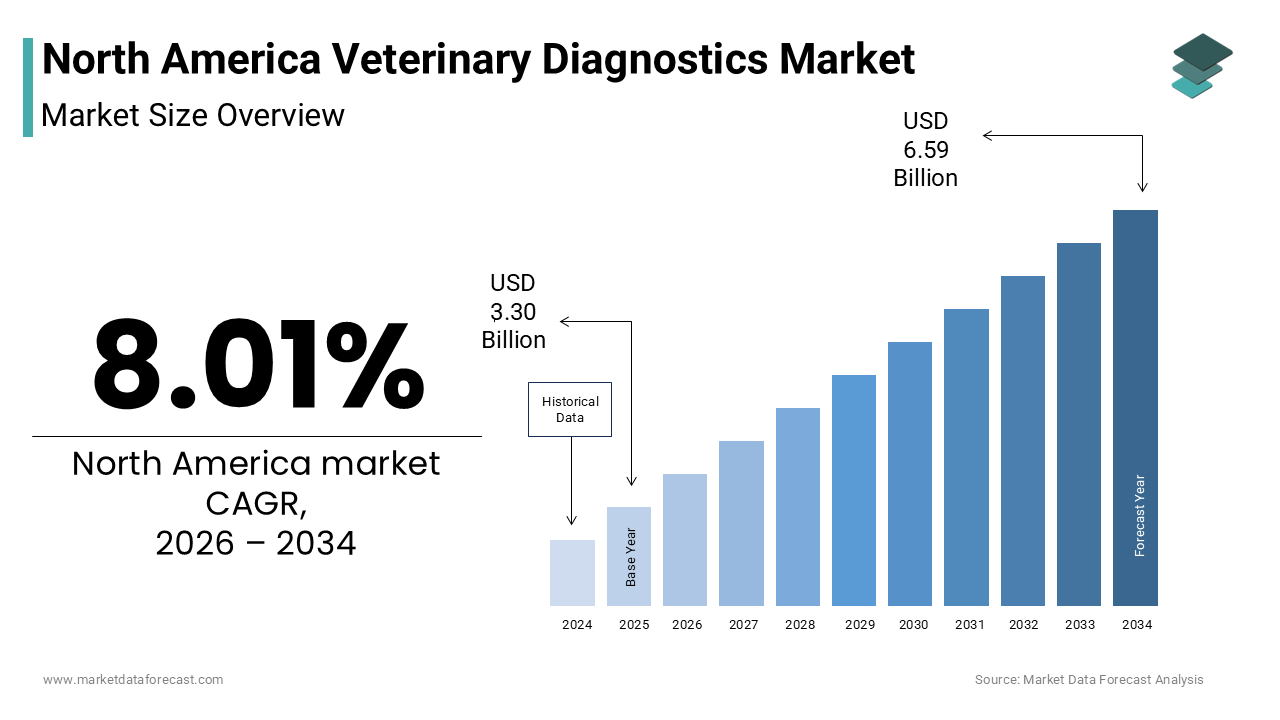
The North American veterinary diagnostics market size was valued at USD 3.30 billion in 2025, reached USD 3.56 billion in 2026, and is projected to expand up to USD 6.59 billion by 2034, registering a compound annual growth rate (CAGR) of 8.01% during the forecast period from 2026 to 2034. Fueled by accelerating pet humanization, rising zoonotic disease surveillance, and advanced point-of-care testing innovations, the market is transforming clinical practices across the region.
Key Executive Metrics (At-a-Glance)
- 2025 Base Valuation: USD 3.30 Billion
- 2026 Current Valuation: USD 3.56 Billion
- 2034 Forecast Valuation: USD 6.59 Billion
- Compound Annual Growth Rate (CAGR): 8.01% (2026–2034)
- Leading Country Market: United States (Anchored by high per capita pet expenditure, extensive specialty infrastructure, and federal research funding)
- Prominent Country Market: Canada (Supported by government-backed laboratory modernizations and food safety surveillance initiatives)
- Leading Product Segment: Immunodiagnostics (Commanded the highest share in 2025 due to immediate clinical decision-making and lateral flow utility)
- Fastest-Growing Product Segment: Molecular Diagnostics (Projected at a CAGR of 10.5% driven by definitive pathogen identification and antimicrobial stewardship)
- Leading Animal Segment: Companion Animals (Held the dominant share in 2025, driven by preventive care and pet humanization trends)
- Fastest-Growing Animal Segment: Food-Producing Animals (Projected at a CAGR of 9.04% propelled by strict government mandates for disease surveillance)
Core Market Drivers
- Rising Zoonotic & Chronic Diseases: High prevalence of obesity, diabetes, and infectious pathogens requiring regular screening and early detection mechanisms.
- Pet Humanization & Spending: Growing willingness among pet owners to invest in human-grade diagnostic evaluations and pet insurance coverages.
Primary Market Restraints & Challenges
- High Equipment Costs: Substantial capital expenses for advanced radiography, automated hematology, and maintenance restricting smaller independent clinics.
- Skilled Labor Scarcity: Critical shortages of licensed veterinary technicians and professionals impacting operational efficiency and diagnostic scaling.
North America Veterinary Diagnostics Market Segmentation Highlights
| Segment Category | Leading / Dominant Segment | Fastest-Growing / Prominent Segment |
|---|---|---|
| By Product Type | Immunodiagnostics (Highest market share in 2025) | Molecular Diagnostics (CAGR of 10.5%) |
| By Animals | Companion Animals (Dominant share in 2025) | Food-Producing Animals (CAGR of 9.04%) |
| By Country | The U.S. (Major market share leader) | Canada (Resilient growth via public-private lab modernization) |
Major Industry Players Profiled
Key operators leading the North American market include IDEXX Laboratories Inc., Zoetis, Thermo Fisher Scientific, VCA Inc., Heska Corporation, Abaxis Inc., VIRBAC, Bio-Rad Laboratories Inc., and Pfizer Inc.
North America Veterinary Diagnostics Market Size
The North America veterinary diagnostics market size was valued at USD 3.30 billion in 2025 and is anticipated to reach USD 3.56 billion in 2026 from USD 6.59 billion by 2034, growing at a CAGR of 8.01% during the forecast period from 2026 to 2034.
The North America veterinary diagnostics market encompasses a comprehensive suite of tools and technologies designed to identify diseases and monitor health conditions in companion and livestock animals across the United States, Canada, and Mexico. This sector integrates clinical pathology, molecular diagnostics, and imaging solutions to enhance diagnostic accuracy and treatment efficacy. According to the Centers for Disease Control and Prevention, 6 out of every 10 known infectious diseases in people can be spread from animals, which necessitate robust surveillance systems to manage the rising prevalence of zoonotic diseases. Furthermore, according to the American Pet Products Association, 70% of US households own a pet, which translates to approximately 90 million families prioritizing advanced healthcare services. These demographic shifts drive the adoption of sophisticated diagnostic platforms in veterinary clinics and reference laboratories. The integration of artificial intelligence and point-of-care testing further refines diagnostic capabilities, ensuring timely interventions. As pet humanization trends accelerate, owners increasingly demand human-grade medical standards for their animals, thereby fostering an environment where precise and rapid diagnostic solutions become indispensable for maintaining animal welfare and public health safety.
MARKET DRIVERS
Rising Prevalence of Zoonotic and Chronic Diseases in Companion Animals
The escalating incidence of zoonotic and chronic conditions among pets is majorly driving the expansion of the North American veterinary diagnostics market expansion. According to the World Health Organization, zoonoses account for 20% of all infectious diseases globally, creating an urgent need for early detection mechanisms in veterinary practices. In North America, according to the American Veterinary Medical Association, 56% of dogs are overweight or obese, leading to secondary complications such as diabetes and cardiovascular issues that require regular diagnostic monitoring. This high burden of chronic illness drives veterinarians to adopt advanced biochemical analyzers and imaging systems to manage long-term patient care effectively. The correlation between disease prevalence and diagnostic utilization is direct, as early identification significantly improves prognosis and reduces treatment costs. Consequently, veterinary clinics are increasingly investing in comprehensive diagnostic panels to address these complex health challenges. The growing awareness among pet owners regarding preventive care further amplifies demand for routine screening tests. This shift towards proactive health management ensures sustained revenue growth for diagnostic manufacturers who provide reliable and accurate testing solutions tailored to the specific needs of aging pet populations.
Increasing Pet Humanization and Willingness to Spend on Advanced Healthcare
The profound emotional bond between owners and their pets has transformed veterinary care into a premium service sector characterized by high expenditure on advanced diagnostics, which is further aiding the regional market growth. According to the American Pet Products Association, pet owners spent 147 billion USD on their pets in 2023, with veterinary care and product sales accounting for a significant portion of this expenditure. This financial commitment reflects a societal shift where pets are viewed as family members deserving of sophisticated medical interventions. According to the North American Pet Health Insurance Association, insurance claims for diagnostic procedures increased by 15% year-over-year, indicating a growing reliance on detailed health assessments. Pet owners are increasingly willing to pay for magnetic resonance imaging, computed tomography, and genetic testing to ensure accurate diagnoses for complex conditions. This willingness to invest in high-cost diagnostic services enables veterinary practices to upgrade their equipment and offer specialized care. The trend towards personalized medicine in veterinary science further drives the adoption of bespoke diagnostic protocols. As owners seek transparency and precision in treatment plans, the demand for cutting-edge diagnostic technologies continues to surge, supporting robust market growth across the region.
MARKET RESTRAINTS
High Cost of Advanced Diagnostic Equipment and Procedures
The substantial financial burden associated with acquiring and maintaining sophisticated diagnostic infrastructure is a significant restraint on the North American veterinary diagnostics market. According to the American Animal Hospital Association, the average cost for a comprehensive diagnostic workup including blood panels and imaging can exceed 500 USD per visit, which limits accessibility for price-sensitive consumers. Many independent veterinary clinics struggle to afford high-end equipment such as digital radiography systems or automated hematology analyzers, which often require initial investments surpassing 50,000 USD. This financial barrier prevents smaller practices from offering advanced diagnostic services, forcing them to refer cases to larger specialty centers. The high operational costs also include regular calibration, maintenance, and skilled personnel training, which further strain limited budgets. According to the Bureau of Labor Statistics, the median annual wage for veterinary technologists is 38,000 USD, yet the cost of living increases make it challenging for clinics to retain qualified staff capable of operating complex machinery. These economic constraints hinder the widespread adoption of state-of-the-art diagnostic tools, particularly in rural areas where revenue volumes are lower. Consequently, many potential users remain underserved, limiting the overall market expansion despite the clear clinical benefits of advanced diagnostics.
Shortage of Skilled Veterinary Professionals and Technicians
A critical scarcity of qualified veterinary professionals and technical staff impedes the efficient deployment and operation of advanced diagnostic systems. According to the American Veterinary Medical Association, a shortage of up to 3,000 veterinarians is projected by 2030, exacerbating workforce pressures in clinical settings. This deficit directly impacts the capacity of veterinary practices to perform and interpret complex diagnostic tests accurately. According to the National Association of Veterinary Technicians in America, only 45 states currently require licensure for veterinary technicians, leading to inconsistencies in skill levels and operational standards across the region. Without adequately trained personnel, even the most sophisticated diagnostic equipment cannot deliver optimal results, leading to potential misdiagnoses and reduced client trust. The high turnover rate in veterinary support roles further disrupts continuity of care and increases training burdens for clinic owners. According to the Bureau of Labor Statistics, employment of veterinary technologists is projected to grow 19% from 2023 to 2033, yet this growth fails to meet the surging demand for skilled labor. This workforce gap limits the ability of clinics to scale their diagnostic services, thereby restraining market growth. The inability to fully utilize installed diagnostic capacity due to staffing shortages remains a persistent challenge for the industry.
MARKET OPPORTUNITIES
Integration of Artificial Intelligence and Machine Learning in Diagnostics
The incorporation of artificial intelligence and machine learning algorithms is a prominent opportunity for the North American veterinary diagnostics market. According to the Journal of the American Veterinary Medical Association, AI-driven image analysis can improve the detection rate of abnormalities in radiographs by up to 30% compared to manual interpretation alone. This technological advancement allows veterinarians to identify subtle patterns indicative of early-stage diseases that might otherwise go unnoticed. Companies are developing cloud-based platforms that aggregate data from thousands of cases to refine predictive models, enabling more precise prognoses. According to the American Informatics Society, 60% of veterinary practices plan to adopt AI-assisted tools within the next five years to streamline workflow and reduce diagnostic errors. These systems facilitate rapid processing of large datasets, providing instant insights that support clinical decision-making. The ability to integrate historical patient data with real-time diagnostic results creates a comprehensive health profile for each animal. This holistic approach enhances treatment personalization and improves patient outcomes. As regulatory bodies establish guidelines for AI usage in veterinary medicine, the adoption of these intelligent systems will accelerate, opening new revenue streams for technology providers and improving standard of care across the industry.
Expansion of Point-of-Care Testing Solutions in Rural and Remote Areas
The development and deployment of portable point-of-care testing devices offer significant opportunities to extend diagnostic services to underserved rural and remote communities. According to the United States Department of Agriculture, 14% of rural Americans lack access to basic veterinary services, creating a substantial unmet need for decentralized diagnostic solutions. Compact handheld analyzers capable of performing blood chemistry and hematology tests enable mobile veterinarians to deliver immediate results without relying on central laboratories. According to the Rural Health Information Hub, telemedicine combined with point-of-care diagnostics can reduce travel time for pet owners by 40%, improving compliance with recommended health screenings. These devices empower local practitioners to manage acute cases effectively, reducing the burden on urban specialty centers. The ease of use and minimal maintenance requirements of modern point-of-care systems make them ideal for resource-limited settings. As connectivity improves in rural areas, the integration of these devices with digital health records facilitates seamless data sharing with specialists. This expansion not only broadens the customer base for diagnostic manufacturers but also enhances public health surveillance by enabling earlier detection of outbreaks in livestock and companion animals in isolated regions.
MARKET CHALLENGES
Regulatory Complexity and Lack of Standardized Approval Pathways
Navigating the intricate regulatory landscape for veterinary diagnostic devices is a substantial challenge for the North American veterinary diagnostics market. The United States Food and Drug Administration regulates veterinary diagnostics under different frameworks depending on whether they are for companion animals or food-producing species, creating confusion and delays. According to the Center for Veterinary Medicine, approval timelines for novel diagnostic assays can extend beyond 18 months due to rigorous validation requirements. This prolonged process increases development costs and delays revenue generation for innovators. Additionally, the lack of harmonized standards between the United States, Canada, and Mexico complicates cross-border commercialization efforts. According to the Canadian Food Inspection Agency, separate evaluations are required for tests used in livestock, adding another layer of bureaucratic hurdle. Manufacturers must invest heavily in clinical trials and documentation to satisfy diverse regulatory bodies, which disproportionately affects small and medium-sized enterprises. The absence of a unified North American regulatory framework leads to fragmented market access strategies. These regulatory ambiguities discourage investment in groundbreaking diagnostic technologies, as companies face uncertainty regarding compliance obligations. Streamlining these processes remains a critical need to foster innovation and ensure timely availability of advanced diagnostic tools for veterinary practitioners.
Data Privacy Concerns and Cybersecurity Vulnerabilities in Digital Platforms
The increasing digitization of veterinary diagnostic data raises significant concerns regarding privacy protection and cybersecurity resilience. The Health Information Technology for Economic and Clinical Health Act does not explicitly cover veterinary records, leaving a regulatory gap in data protection standards. According to the American Veterinary Medical Association, 25% of veterinary clinics experienced a cyberattack in the past two years, compromising sensitive client and patient information. These breaches erode trust among pet owners who expect confidentiality similar to human healthcare standards. The lack of mandatory encryption protocols for veterinary practice management software exposes diagnostic results to unauthorized access. As cloud-based diagnostic platforms become prevalent, the risk of large-scale data leaks intensifies. According to the Federal Trade Commission, businesses handling consumer data must implement reasonable security measures, yet many veterinary practices lack the resources to deploy robust cybersecurity infrastructure. This vulnerability discourages the adoption of connected diagnostic devices that transmit data over networks. Manufacturers must prioritize secure architecture design to mitigate these risks, but the added complexity increases product development costs. Addressing these cybersecurity challenges is essential to maintain consumer confidence and ensure the sustainable growth of digital diagnostic ecosystems in the veterinary sector.
REPORT COVERAGE
| REPORT METRIC | DETAILS |
| Market Size Available | 2025 to 2034 |
| Base Year | 2025 |
| Forecast Period | 2026 to 2034 |
| CAGR | 11.99% |
| Segments Covered | By Product, Animals, and Region. |
| Various Analyses Covered | Global, Regional & Country Level Analysis, Segment-Level Analysis, DROC, PESTLE Analysis, Porter’s Five Forces Analysis, Competitive Landscape, Analyst Overview of Investment Opportunities |
| Regions Covered | The United States, Canada, Rest of North America |
| Market Leaders Profiled | VCA Inc., Heska Corporation, Abaxis Inc., VIRBAC, IDEXX Laboratories Inc., Life Technologies Corporation, Bio-Rad Laboratories Inc., Prionics AG, and Pfizer Inc. |
SEGMENTAL ANALYSIS
By Product Type Insights
The immunodiagnostics segment commanded for the highest share of the North American market in 2025. The dominance of immunodiagnostics segment in the North American market can be credited to its critical role in immediate clinical decision-making and infectious disease management. According to the American Animal Hospital Association, 85% of general veterinary practices utilize lateral flow rapid tests as their primary screening tool for common pathogens like parvovirus and heartworm. This ubiquity stems from the need for same-visit results, which directly influences treatment plans and client satisfaction. According to the Companion Animal Parasite Council, heartworm antigen testing volumes increased by 12% annually across North America, reflecting heightened compliance with preventive care guidelines driven by immunodiagnostic availability. These statistics demonstrate a direct correlation between test accessibility and market dominance, as clinics prioritize assays that deliver actionable data within minutes rather than days. The low technical barrier for performing these tests allows veterinary technicians to integrate them seamlessly into routine wellness exams without requiring specialized laboratory infrastructure. Furthermore, the recurring nature of parasite screening creates a consistent revenue stream that stabilizes this segment against economic fluctuations. Manufacturers have capitalized on this demand by developing multiplex platforms that detect multiple analytes simultaneously, thereby increasing the value proposition per test. This entrenched utility in daily practice solidifies immunodiagnostics as the foundational pillar of veterinary diagnostic revenue.
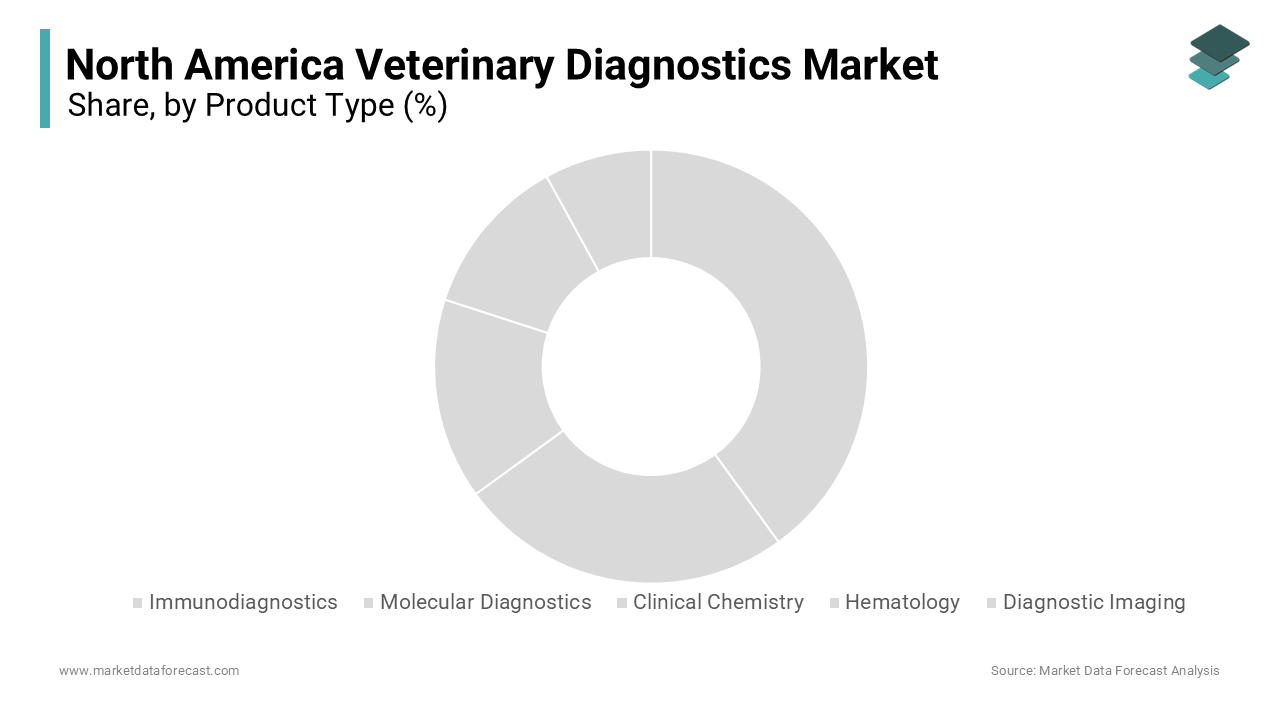
On the other end, the molecular diagnostics segment is anticipated to showcase a CAGR of 10.5% over the forecast period in the regional market owing to the escalating need for definitive pathogen identification in complex clinical cases. According to the Cornell University College of Veterinary Medicine, PCR test submissions for respiratory and gastrointestinal panels grew by 22% year-over-year as clinicians seek to distinguish between clinically similar infectious agents. This growth correlates directly with the limitations of traditional culture methods, which often fail to detect fastidious organisms or provide timely results during acute outbreaks. According to the World Organisation for Animal Health, molecular confirmation is now mandatory for reporting notifiable diseases, compelling diagnostic laboratories to upgrade their capabilities to meet regulatory standards. The precision offered by nucleic acid amplification tests reduces diagnostic ambiguity, allowing veterinarians to prescribe targeted antimicrobial therapies instead of broad-spectrum drugs. This shift towards antimicrobial stewardship aligns with public health priorities and accelerates adoption in both companion animal and livestock sectors. As reagent costs decrease and turnaround times shorten, molecular diagnostics transitions from a niche referral service to a mainstream clinical tool. The statistical evidence confirms that superior diagnostic resolution is the primary engine propelling this segment’s accelerated expansion across North America.
By Animals Insights
The companion animals segment led the market by holding the highest share of the regional market in 2025 because pet owners increasingly view preventive diagnostics as essential components of responsible ownership. According to the American Pet Products Association, spending on veterinary care for dogs and cats reached 38 billion USD in 2023, representing the largest category of pet-related expenditure. This financial commitment translates directly into higher utilization of diagnostic services, as the Banfield State of Pet Health Report indicates that 78% of dogs and 69% of cats received at least one diagnostic blood panel during annual wellness visits in 2023. The strong correlation between owner spending intent and diagnostic volume underscores how emotional bonds drive market supremacy for this segment. Unlike food-producing animals where diagnostics are tied to production economics, companion animal testing is insulated from commodity price cycles and driven purely by discretionary healthcare budgets. Veterinarians leverage this willingness to pay by recommending comprehensive senior profiles and breed-specific screenings that generate substantial recurring revenue. The cultural normalization of pet insurance further removes financial barriers to advanced testing. This deep-seated consumer behavior ensures companion animals remain the primary revenue generator, accounting for the majority of diagnostic test kits sold and equipment installed across the continent.
However, the food producing animals segment is anticipated to showcase a CAGR of 9.04% over the forecast period in the regional market owing to the stringent government mandates for disease surveillance and food safety assurance. According to the United States Department of Agriculture, federal funding for animal disease diagnostic programs increased by 18% in fiscal year 2024 to combat threats like Highly Pathogenic Avian Influenza and African Swine Fever. This regulatory pressure forces producers to implement rigorous testing protocols as a condition of interstate commerce and export eligibility, directly stimulating diagnostic consumption. According to the Canadian Food Inspection Agency, mandatory bovine tuberculosis and brucellosis testing volumes rose by 15% annually as part of enhanced eradication efforts. The relationship between policy enforcement and market acceleration is causal, as noncompliance carries severe economic penalties including herd depopulation and trade embargoes. Producers view diagnostics not as optional healthcare but as essential risk management infrastructure. Public health concerns regarding zoonotic spillover further justify expanded surveillance budgets at state and provincial levels. This top-down driver creates guaranteed demand independent of individual farm profitability. As global trade networks become more interconnected, the requirement for certified disease-free status intensifies, ensuring this segment outpaces others in growth rate due to its non-discretionary regulatory foundation.
COUNTRY ANALYSIS
U.S. Veterinary Diagnostics Market Analysis
The U.S. accounted for the major share of the North American veterinary diagnostics market in 2025 and is likely to maintain its dominant position in the North American veterinary diagnostics market over the next few years, backed by continuous technological advancements and expanding pet care expenditure. According to the American Pet Products Association, 69 million US households own at least one dog, creating an unparalleled base for diagnostic service consumption. This demographic scale combines with high per capita veterinary spending to sustain market leadership, as the Bureau of Economic Analysis reports that personal consumption expenditures on veterinary services grew 6.2% in 2023 alone. The relationship between national wealth and diagnostic utilization is evident in the widespread availability of specialty referral centers equipped with MRI and CT scanners that are rare elsewhere. Federal research funding through the National Institutes of Health and USDA also drives innovation in diagnostic development, keeping domestic companies at the technological forefront. The presence of major diagnostic corporations headquartered in the US ensures early access to new products and favorable pricing structures. Additionally, the mature pet insurance market reduces out-of-pocket costs for owners, further stimulating demand. These structural advantages create a gravitational center for the industry that neighboring markets cannot replicate, ensuring continued US hegemony in market share and technological advancement.
Canada Veterinary Diagnostics Market Analysis
Canada is likely to experience steady and resilient market expansion over the next few years, supported by government-backed laboratory modernizations and increasing public-private investments in animal health infrastructure. According to Statistics Canada, 58% of Canadian households own pets, with veterinary care expenditures reaching 4.2 billion CAD in 2023, reflecting robust domestic demand. The country’s unique position is reinforced by federal-provincial partnerships that subsidize diagnostic testing for food safety and wildlife disease monitoring, as the Canadian Food Inspection Agency allocated 120 million CAD specifically for animal health laboratory modernization in 2024. This public investment creates a stable baseline demand that buffers against private sector volatility. The relationship between government policy and market stability distinguishes Canada from the US model, as diagnostic capacity is treated as critical national infrastructure. Urban centers like Toronto and Vancouver exhibit companion animal diagnostic patterns similar to US cities, while rural provinces drive livestock testing volumes. Trade dependencies with the US also necessitate harmonized diagnostic standards, facilitating cross-border technology transfer. However, geographic dispersion and smaller population density limit the proliferation of high-end specialty equipment compared to the southern neighbor. Despite these constraints, Canada’s integrated approach to animal and public health ensures it remains a vital and stable component of the North American diagnostic ecosystem.
COMPETITIVE LANDSCAPE
The competitive landscape of the North America Veterinary Diagnostics Market is characterized by intense rivalry among established multinational corporations and emerging niche innovators. Major players compete on the basis of technological sophistication, product reliability, and comprehensive service support rather than price alone. The market exhibits high barriers to entry due to stringent regulatory requirements and significant capital investment needed for research and development. Incumbent firms leverage their extensive distribution networks and brand recognition to retain customer loyalty in a fragmented practitioner base. Competition is further intensified by the rapid pace of technological advancement which renders older equipment obsolete quickly. Companies must continuously innovate to offer multiplex testing capabilities and artificial intelligence driven interpretation tools. Strategic alliances with veterinary software providers have become essential for creating integrated ecosystems that lock in users. The presence of large corporate veterinary groups exerts downward pressure on pricing while demanding higher service levels. Smaller specialized firms compete by offering unique assays for rare diseases or specific species that larger companies overlook. This dynamic environment fosters constant improvement in diagnostic accuracy and turnaround times benefiting end users.
KEY MARKET PLAYERS
A few prominent companies in the North American veterinary diagnostics market include
- VCA Inc.
- Heska Corporation
- Abaxis Inc.
- VIRBAC
- IDEXX Laboratories Inc.
- Life Technologies Corporation
- Bio-Rad Laboratories Inc.
- Prionics AG
- Pfizer Inc.
Top Players in the Market
Idexx Laboratories
Idexx Laboratories maintains a dominant position through its extensive network of reference laboratories and innovative point of care diagnostic solutions. The company recently expanded its flagship Catalyst One chemistry analyzer capabilities by introducing new proprietary tests for early kidney disease detection. This strategic enhancement allows veterinarians to identify chronic conditions earlier, thereby improving patient outcomes and increasing test volume. Idexx also invested heavily in digital connectivity platforms that integrate diagnostic results directly into practice management software. These actions streamline clinical workflows and strengthen customer loyalty by reducing administrative burdens. The company continues to prioritize research and development in molecular diagnostics to address emerging infectious diseases. By focusing on comprehensive ecosystem integration rather than isolated product sales, Idexx ensures high switching costs for clients. Their commitment to data driven insights empowers veterinary professionals to make evidence based decisions. This holistic approach solidifies their leadership in delivering value beyond mere hardware provision.
Zoetis
Zoetis leverages its strong pharmaceutical heritage to offer integrated diagnostic solutions that complement its therapeutic portfolio. The company recently launched advanced immunoassay platforms designed specifically for rapid detection of respiratory pathogens in companion animals. This launch addresses the growing demand for same day results in emergency veterinary settings. Zoetis also strengthened its market position by partnering with leading veterinary schools to validate novel biomarkers for cancer detection. These collaborations enhance scientific credibility and drive adoption among specialist practitioners. The company focuses on educating veterinarians about the clinical utility of diagnostics in preventive care protocols. By bundling diagnostic tools with vaccine programs, Zoetis creates synergistic value propositions for clinics. Their global supply chain resilience ensures consistent product availability during periods of high demand. This reliability builds trust with large corporate veterinary groups seeking stable partners. Zoetis continues to innovate in lateral flow technology to improve sensitivity and ease of use.
Thermo Fisher Scientific
Thermo Fisher Scientific contributes significantly to the market through its broad portfolio of laboratory instruments and reagents used in reference settings. The company recently introduced automated molecular testing systems capable of high throughput screening for zoonotic diseases. This innovation supports public health surveillance efforts while providing revenue opportunities for large diagnostic laboratories. Thermo Fisher also expanded its manufacturing capacity in North America to reduce lead times for critical diagnostic consumables. This expansion addresses supply chain vulnerabilities exposed during recent global disruptions. The company actively engages in strategic acquisitions of niche biotechnology firms specializing in next generation sequencing technologies. These acquisitions enhance their ability to offer customized genomic solutions for complex cases. Thermo Fisher provides robust technical support and training programs to ensure optimal instrument performance. Their focus on scalability makes them a preferred partner for centralized diagnostic hubs. This infrastructure strength enables them to serve both academic institutions and commercial laboratories effectively.
Top Strategies Used by Key Market Participants
Key players in the North America Veterinary Diagnostics Market primarily employ product innovation and strategic partnerships to maintain competitive advantage. Companies invest heavily in research and development to create faster and more accurate testing platforms that meet evolving clinical needs. They frequently collaborate with veterinary associations and academic institutions to validate new biomarkers and establish clinical guidelines. Mergers and acquisitions serve as another critical strategy allowing firms to expand their technological portfolios and enter new geographic segments rapidly. Leading participants also focus on digital integration by connecting diagnostic devices with cloud based data analytics platforms. This connectivity enhances workflow efficiency for veterinary practices and provides valuable insights for population health management. Pricing strategies often involve bundling equipment with recurring reagent contracts to ensure long term revenue stability. Additionally, companies prioritize regulatory compliance and quality assurance to build trust with clinicians and pet owners. Educational initiatives and continuous professional development programs help drive adoption of advanced diagnostic technologies among practitioners.
MARKET SEGMENTATION
This research report on the North American veterinary diagnostics market has been segmented and sub-segmented into the following categories.
By Product Type
- Immunodiagnostics
- Immunoassay Analysers
- ELISA Tests
- Lateral-Flow Strip Readers
- Lateral-Flow Rapid Tests
- Allergen-specific Immunodiagnostic Tests
- Molecular Diagnostics
- Micro Arrays
- PCR Tests
- Other Molecular Diagnostics Tests
- Clinical Chemistry
- Urine Analysis
- Glucose Monitoring
- Blood Gas Electrolyte Analysis
- Hematology
- Hematology Analysers
- Hematology Cartridges
- Diagnostic Imaging
- Radiography Systems
- Ultrasound Imaging Systems
- CT Scanners
- MRI Scanners
By Animals
- Companion Animals
- Canine Diagnostics
- Feline Diagnostics
- Other Veterinary Diagnostics
- Food-Producing Animals
- Bovine Diagnostics
- Porcine Diagnostics
- Ovine Diagnostics
- Poultry Diagnostics
- Piscine Diagnostics
By Country
- The U.S.
- Canada
- Mexico
- Rest of North America