- Product Description Description
- Table of Contents TOC
- List of Table & Figure LOT
- Get Free Sample PDF Sample PDF
Market Size, 2025
$196 MnMarket Estimate, 2026
$209.72 MnMarket Forecast, 2034
$360 MnCAGR, 2026–2034
7%North America Animal Health Monitoring and Surveillance Software Market Summary
The North American animal health monitoring and surveillance software market is experiencing steady growth, driven by rising zoonotic disease concerns, increasing adoption of digital veterinary technologies, and expanding use of IoT-enabled monitoring across livestock and companion animals.
Market Snapshot (2026 to 2034)
- Current Market Value (2026): USD 209.72 million
- Projected Market Value (2034): USD 360 million
- Growth Velocity (CAGR): 7%
- Base Year Value (2025): USD 196 million
- Primary Deployment Model: Cloud-based platforms
- Dominant Animal Segment: Livestock animals
- Top Regional Hub: United States (82.2% share)
Strategic Market Segments
- Dominant Deployment Model (Cloud-Based Software): Cloud-based solutions dominate the market due to their scalability, real-time data accessibility, and lower upfront infrastructure requirements. These platforms enable seamless integration with wearable devices, sensors, and mobile applications, making them particularly attractive to veterinary practices and livestock operations seeking cost-efficient digital health management.
- Animal Segment Focus (Livestock): Livestock monitoring remains the primary revenue driver, supported by stringent food safety regulations, traceability mandates, and the high economic impact of disease outbreaks. Health monitoring software plays a critical role in disease prevention, productivity optimization, and regulatory compliance across cattle, poultry, swine, and equine operations.
Country-Level Performance
- United States (82.2%): The regional leader, driven by a large livestock population, high companion animal ownership, advanced veterinary infrastructure, and strong adoption of digital agriculture and animal health technologies.
- Canada: The second-largest market, supported by government-backed electronic identification programs, food safety regulations, and increasing adoption of digital livestock health monitoring systems across key provinces.
- Mexico: An emerging market, benefiting fromthe gradual modernization of livestock management practices and growing awareness of animal health surveillance for trade and food safety compliance.
Competitive Landscape & Market Trends
The market is defined by a transition from reactive veterinary care to predictive, data-driven animal health management.
- Zoonotic Disease Surveillance: Rising public health concerns and One Health initiatives are strengthening demand for integrated monitoring platforms that support early disease detection and outbreak prevention.
- IoT and Wearable Integration: Smart collars, ear tags, and implantable sensors are increasingly paired with software platforms to deliver continuous health insights and predictive analytics.
- Data Security and Compliance: Growing emphasis on cybersecurity, data privacy, and regulatory compliance is shaping software design and deployment strategies, particularly among large veterinary organizations.
Leading Companies
The market features a mix of global animal health leaders and specialized veterinary technology providers:
- Animal Health & Diagnostics: Thermo Fisher Scientific Inc., Merck & Co. Inc., Vetoquinol SA, HIPRA
- Veterinary Software & Monitoring Platforms: IDEXX Laboratories, VetXpertise, FarmIQ Systems, Afimilk Agricultural Cooperative Ltd., PetPace Ltd.
- Specialized Technology Providers: Virtual Chemistry, Evonik Industries AG
North America Animal Health Monitoring and Surveillance Software Market Size
The North American animal health monitoring and surveillance software market was valued at USD 196 million in 2025. The regional market is projected to grow from USD 209.72 million in 2026 to reach USD 360 million by 2034, exhibiting a compound annual growth rate (CAGR) of 7% from 2026 to 2034.

Animal health monitoring and surveillance software are digital tools using sensors, AI, and cloud tech to track animal vitals (temp, heart rate, activity) and behaviors, enabling early disease detection, performance optimization, and managing health trends for better food safety, welfare, and trade. According to multiple sources, the substantial population of companion animals and livestock across North America necessitates efficient and comprehensive digital health management solutions to support veterinary care and monitoring. The software systems typically integrate with wearable devices, sensors, and mobile applications to collect vital signs, behavioral data, and environmental conditions that influence animal wellness. As per research, the utilization of digital health monitoring technologies is increasing among farms in the United States, with software platforms serving as central repositories for health data management to enhance efficiency and decision-making. To comply with national food safety and traceability regulations, a high percentage of livestock operations in Canada employ mandatory electronic identification and tracking systems through an industry-government partnership. These platforms support disease surveillance programs, enabling early detection of zoonotic diseases and supporting public health initiatives. The integration of artificial intelligence and machine learning algorithms has enhanced predictive analytics capabilities, which allows veterinarians and animal health professionals to identify health trends and implement preventive care measures. The convergence of Internet of Things connectivity and cloud-based computing has revolutionized data accessibility and sharing among stakeholders, including veterinarians, producers, and regulatory agencies.
MARKET DRIVERS
Increasing Zoonotic Disease Concerns and Public Health Surveillance Requirements
The growing awareness of zoonotic disease transmission and the critical need for comprehensive public health surveillance systems contribute to the growth of the North America animal health monitoring and surveillance software market. According to various studies, a substantial majority of emerging infectious diseases in humans originate from animal populations, underscoring the critical need for robust monitoring systems to detect and prevent potential outbreaks. The recent pandemic experiences have heightened awareness among public health officials and veterinary professionals regarding the importance of early disease detection and rapid response capabilities. As per sources, zoonotic disease incidents occur regularly across North America, requiring ongoing and coordinated surveillance efforts between human and animal health sectors to manage public health risks effectively. The One Health approach, which recognizes the interconnectedness of human, animal, and environmental health, has gained substantial momentum following recent disease outbreaks. Canada has implemented detailed monitoring protocols for zoonotic diseases that rely on modern software platforms for effective data collection and analysis. The implementation of these protocols requires the capability for real-time data handling. Surveys of livestock health conditions generate extensive data that necessitate sophisticated analytical tools for interpretation. These advanced software platforms help manage the large volume of information effectively. Veterinary diagnostic laboratories increasingly rely on integrated software platforms to manage sample tracking, test results, and outbreak investigation data. These surveillance requirements, combined with international trade regulations that mandate health certification and disease-free status documentation, create sustained demand for comprehensive animal health monitoring solutions that support both domestic and export market requirements.
Technological Advancement in IoT and Wearable Devices for Animals
The rapid advancement of Internet of Things technology and the proliferation of wearable devices specifically designed for animal health monitoring are propelling the expansion of the North American animal health monitoring and surveillance software market. This is due to the enhanced data collection capabilities and real-time health insights they provide. These devices include smart collars, ear tags, and implantable sensors that continuously monitor vital signs, activity levels, and behavioral patterns to provide comprehensive health assessments. The use of technology in agriculture is a growing area of research and application. Various studies related to the Agricultural Research Service (ARS) show that modern livestock monitoring devices utilize various sensors to track health and behavior, providing valuable data for proactive animal management. The miniaturization of sensor technology has enabled the development of lightweight, durable devices suitable for various animal species and operating conditions. Companion animal applications have particularly benefited from advanced GPS tracking, activity monitoring, and health alert systems that provide pet owners with detailed wellness information. The integration of wireless communication protocols allows for continuous data transmission to cloud-based platforms where sophisticated algorithms analyze trends and identify potential health issues. Veterinary practices increasingly rely on these data streams to make informed treatment decisions and implement preventive care protocols. The convergence of sensor technology, wireless connectivity, and advanced analytics has created unprecedented opportunities for proactive animal health management that drives demand for sophisticated monitoring and surveillance software platforms.
MARKET RESTRAINTS
High Implementation Costs and Return on Investment Uncertainty
The substantial capital investment required for comprehensive animal health monitoring and surveillance software implementations hampers the growth of the North American animal health monitoring and surveillance software market. This is particularly true for small and medium-sized veterinary practices and livestock operations with limited financial resources. According to research, a considerable majority of farms, particularly smaller operations, typically operate with limited annual revenues, which creates budget constraints that consequently tend to limit their investments in new agricultural technologies. The total cost of implementation includes not only software licensing fees but also hardware components, installation services, staff training programs, and ongoing maintenance expenses. As reported by the American Association of Bovine Practitioners, veterinary practices serving rural communities face particular challenges in justifying technology investments due to lower client volumes and limited technical support resources. The complexity of calculating return on investment for health monitoring systems creates additional barriers, as benefits such as disease prevention and improved animal welfare are difficult to quantify in monetary terms. Small animal veterinary clinics, which constitute a notable share of veterinary practices according to research,h often lack the technical infrastructure and IT expertise necessary for successful software implementations. The ongoing costs associated with software updates, data storage, and technical support add to the initial investment requirements annually. Many potential users must secure financing or grants to proceed with implementations, which creates dependency on external funding sources that may not always be available. The extended timeframe required to realize benefits and achieve positive return on investment further complicates adoption decisions, particularly in budget-constrained environments where competing priorities exist.
Data Privacy and Security Concerns in Veterinary Operations
Growing cybersecurity threats and data privacy concerns are major obstacles to the North American animal health monitoring and surveillance software market expansion. This is because veterinary practices and livestock operations express apprehension about sensitive health data collection and storage vulnerabilities. The general healthcare industry, which includes veterinary practices as part of a connected ecosystem, is experiencing a substantial rise in cyberattacks, raising significant awareness of risks associated with connected health monitoring and information systems, as per various studies. The sensitive nature of animal health data, including breeding records, medication histories, and genetic information, creates particular concerns regarding unauthorized access and data breaches. Data security incidents, including compromised client information and operational disruptions, are an increasing concern for veterinary practices, leading industry groups like the American Animal Hospital Association (AAHA) and the American Veterinary Medical Association (AVMA) tguideon protection. The complexity of securing communication networks, managing encryption protocols, and protecting client data creates additional implementation burdens for veterinary operations. Regulatory compliance adds further complexity, with varying state and provincial data protection laws requiring specific security measures and breach notification procedures that differ across jurisdictions. The Health Insurance Portability and Accountability Act extensions to veterinary operations create legal frameworks that necessitate extensive data governance policies and client consent mechanisms. These security and privacy concerns have led to resistance among some veterinary practices, with several organizations delaying or modifying software deployment plans following security assessments. Veterinary operations must invest in comprehensive security frameworks and staff training programs to address these concerns, adding both cost and timeline pressures to implementation efforts while potentially limiting market penetration in security-conscious environments.
MARKET OPPORTUNITIES
Integration with Precision Livestock Farming and Smart Agriculture Initiatives
The convergence of animal health monitoring software with broader precision livestock farming and smart agriculture development programs gives new growth possibilities across regional agricultural operations, which in turn provides potential opportunities for the North American animal health monitoring and surveillance software market. According to research, a considerable percentage of large-scale livestock operations in North America now incorporate precision farming technologies that include health monitoring components as core operational elements. These integrated systems typically combine animal health data with feed management, environmental monitoring, and reproductive tracking platforms to create comprehensive farm management solutions. As per sources, farms implementing integrated health monitoring systems achieve average productivity improvements through optimized feeding programs and reduced disease incidence. The integration opportunities extend to supply chain management systems, where health data supports traceability requirements and quality assurance programs that enhance market access and premium pricing opportunities. Agricultural cooperatives and producer groups increasingly adopt shared platforms that enable benchmarking and best practice sharing across member operations. Universities and research institutions demonstrate successful implementation models through pilot programs that showcase return on investment and operational benefits. These integration capabilities not only enhance system value propositions but also create opportunities for recurring revenue through data analytics services and consulting support that extend beyond basic software licensing.
Expansion into Companion Animal Wellness and Preventive Care Markets
The extension of animal health monitoring software technology into companion animal wellness and preventive care markets offers expansion opportunities beyond traditional livestock applications, which is expected to drive the growth of the North American animal health monitoring and surveillance software market. The growing trend toward pet humanization has created demand for sophisticated health tracking capabilities that provide detailed insights into pet wellness and enable early intervention for potential health issues. Mobile applications and cloud-based platforms that integrate with wearable devices have gained particular popularity among tech-savvy pet owners seeking comprehensive health management tools. Veterinary practices specializing in companion animal care demonstrate a strong interest in software solutions that enhance client engagement and support preventive care protocols. The telemedicine market for companion animals has expanded rapidly, with platforms requiring integrated health data management capabilities to support remote consultations and ongoing care recommendations. Insurance companies offering pet health coverage increasingly require detailed health monitoring data to assess risk and support claims processing. These companion animal applications typically involve higher-value contracts and recurring revenue streams, creating attractive opportunities for software providers seeking to diversify beyond traditional agricultural markets.
MARKET CHALLENGES
Technical Complexity and Interoperability Issues
The complexity of these software systems introduces implementation hurdles in areas such as system integration, interoperability, and ongoing maintenance, which hold back the growth of the North America animal health monitoring and surveillance software market. According to multiple sources, a notable share of software implementations in veterinary practices experience technical difficulties during initial deployment phases, primarily due to communication protocol incompatibilities and data format standardization issues. The diversity of existing veterinary practice management systems, laboratory information systems, and farm management platforms complicates standardization efforts and increases deployment complexity. As per research, veterinary practices typically operate with many different software systems simultaneously, requiring extensive integration work to establish unified data collection platforms. Communication network reliability presents ongoing challenges, particularly in rural areas where cellular coverage may be insufficient to support continuous data transmission from remote monitoring devices. Radio frequency interference from agricultural equipment and environmental factors can degrade signal quality, affecting data accuracy and system performance. The complexity of data management platforms creates additional burdens, as veterinary operations must integrate health monitoring data with existing practice management systems, laboratory results, and regulatory reporting requirements. Canada has identified numerous technical specifications that may apply to animal health monitoring software deployments, which creates compliance challenges for system providers. These technical complexities require specialized expertise and extended implementation timelines, which increase project costs and ccreatesbarriers to adoption for smaller veterinary practices lacking technical resources.
Regulatory Compliance and Standardization Requirements
The varied and intricate rules for animal health software pose significant hurdles for companies aiming to build and implement compliant systems across different jurisdictions, which ultimately slows down the expansion of the North American animal health monitoring and surveillance software market. The variation in data reporting standards, privacy requirements, and certification processes creates substantial compliance burdens for software developers and veterinary operations. As reported by the International Committee on Animal Recording, regulatory requirements for livestock health data differ significantly between countries, with North American standards varying by state and province in ways that complicate cross-border data sharing and system deployment. The approval process for veterinary software applications can take several months, during which time regulatory requirements may change, necessitating additional modifications and compliance updates. Food safety regulations add further complexity, with systems used in livestock operations requiring specific data retention and audit trail capabilities that must meet inspection requirements. The coordination required between federal agencies, including the FDA, USDA, and CFIA, creates overlapping jurisdiction issues that increase compliance costs and timeline pressures. These regulatory challenges require substantial investment in legal expertise and compliance management systems, creating barriers to market entry for smaller technology companies while increasing costs and development timelines for established players.
REPORT COVERAGE
| REPORT METRIC | DETAILS |
| Market Size Available | 2025 to 2034 |
| Base Year | 2025 |
| Forecast Period | 2026 to 2034 |
| Segments Covered | By Development, Animal Type, and County. |
| Various Analyses Covered | Global, Regional,l and Country-Level Analysis, Segment-Level Analysis, Drivers, Restraints, Opportunities, Challenges; PESTLE Analysis; Porter’s Five Forces Analysis, Competitive Landscape, Analyst Overview of Investment Opportunities |
| Countries Covered | United States, Canada, Mexico, Rest of North America |
| Market Leaders Profiled | Thermo Fisher Scientific Inc., Virtual Chemistry, VetXpertise, Vetoquinol SA, HIPRA, IDEXX Laboratories, Afimilk Agricultural Cooperative Ltd., Evonik Industries AG, FarmIQ Systems, Merck & Co. Inc., PetPace Ltd., and Others. |
SEGMENTAL ANALYSIS
By Deployment Insights
The cloud deployment segment dominated the North America animal health monitoring and surveillance software market and accounted for a substantial share in 2025. The scalability, accessibility, and cost-effectiveness advantages that cloud-based solutions offer to veterinary practices and livestock operations of all sizes have largely contributed to the dominance of the cloud deployment segment. Cloud deployment eliminates the need for extensive on-premise infrastructure while providing real-time data access and automatic software updates that enhance user experience and system performance. The economic advantages of cloud-based animal health monitoring software make it particularly attractive for veterinary practices and livestock operations seeking to minimize upfront capital investments and ongoing maintenance costs. According to sources, cloud deployment reduces initial software implementation costs compared to traditional on-premise solutions, making advanced monitoring capabilities accessible to smaller operations with limited IT budgets. The subscription-based pricing model of cloud platforms enables predictable monthly expenses rather than large capital expenditures, allowing practices to better manage cash flow and budget planning. The elimination of server hardware, storage infrastructure, and dedicated IT personnel requirements reduces operational expenses. Rural veterinary practices, which constitute a portion of North American veterinary operations according to research, particularly benefit from cloud solutions that eliminate the need for extensive local infrastructure and technical support. These cost advantages, combined with automatic software updates and scalable storage capabilities, ensure continued preference for cloud deployment among budget-conscious animal health monitoring users. The superior accessibility and remote monitoring capabilities of cloud-based animal health monitoring software create substantial demand among veterinary professionals and livestock producers who require real-time data access from multiple locations and devices. According to research, cloud-based platforms enable a significant percentage of veterinary practices to provide remote consultation services and real-time health monitoring capabilities that were previously impossible with on-premise systems. The ability to access animal health data from smartphones, tablets, and laptops allows veterinarians to make informed decisions while away from their primary practice locations, supporting emergency response and after-hours care requirements. Livestock operations benefit from remote monitoring dashboards that provide real-time alerts and health status updates, enabling producers to respond quickly to potential health issues regardless of their physical location. The integration of cloud platforms with mobile applications and wearable devices creates seamless data flow that supports continuous monitoring and immediate intervention when necessary. These accessibility advantages, combined with collaborative features that enable data sharing among multiple stakeholders, make cloud deployment the preferred choice for modern animal health monitoring applications.
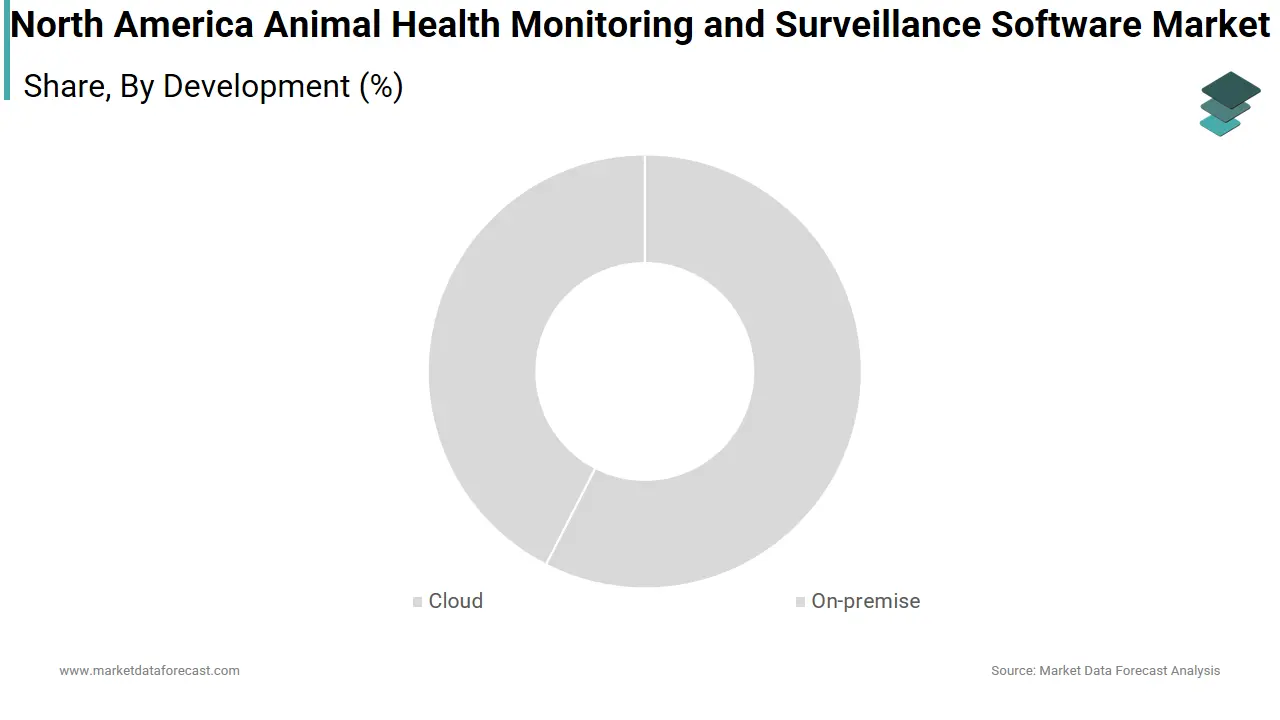
The on-premise deployment segment is expected to exhibit a noteworthy CAGR of 9.2% from 2026 to 2034 due to increasing demand for data security, customization capabilities, and integration with existing legacy systems among large veterinary organizations and livestock operations with specific operational requirements. The growing emphasis on data security and privacy control among large veterinary organizations and livestock operations drives rapid adoption of on-premise deployment solutions that provide complete ownership and management of sensitive animal health information. Large veterinary hospital networks and livestock corporations prefer on-premise solutions to maintain direct oversight of data encryption, access controls, and backup procedures that may not be fully transparent in cloud environments. As per studies, a portion of veterinary practices managing high-value breeding stock or genetic information require on-premise deployment to comply with proprietary data protection requirements and intellectual property security protocols. The complexity of regulatory compliance for animal health data, including varying state and federal requirements for data retention and access, makes local control particularly attractive for organizations operating in multiple jurisdictions. Food safety regulations add further complexity, with systems used in livestock operations requiring specific data retention and audit trail capabilities that must meet inspection requirements. These security advantages, combined with the ability to customize security protocols and maintain direct control over data access, drive rapid adoption among security-conscious veterinary organizations. The need for seamless integration with existing legacy systems and extensive customization capabilities drives rapid adoption of on-premise deployment solutions among large veterinary organizations and livestock operations with established technology infrastructures. According to research, a notable share of large veterinary hospital networks operate with legacy practice management systems that require direct integration with new animal health monitoring software to maintain operational efficiency and data continuity. The complexity of existing veterinary information systems, laboratory interfaces, and financial management platforms creates particular challenges for cloud-based solutions that may not support all required data formats and communication protocols. Large livestock operations with established farm management systems, feed monitoring platforms, and environmental control networks benefit from on-premise solutions that can be directly integrated with existing infrastructure without requiring extensive middleware or third-party integration services. The ability to customize user interfaces, reporting formats, and workflow processes to match specific operational requirements makes on-premise deployment particularly attractive for organizations with unique business processes or specialized animal care protocols. These integration advantages, combined with the flexibility to modify system functionality and maintain direct control over data flow, drive rapid adoption among organizations with complex technology requirements.
By Animal Type Insights
The livestock segment led the North America animal health monitoring and surveillance software market by capturing a significant share in 2025. The extensive health monitoring requirements of commercial livestock operations and the critical importance of disease prevention and food safety compliance in agricultural production systems drive the leading position of the livestock segment. The livestock segment includes diverse animal categories, including poultry, swine, cattle, and equine operations that require sophisticated monitoring capabilities to ensure animal welfare, regulatory compliance, and economic viability. Stringent food safety regulations and comprehensive traceability requirements serve as primary catalysts for livestock health monitoring software adoption across North American agricultural operations. These regulations require detailed documentation of animal health events, medication administration, and movement tracking that can only be effectively managed through sophisticated software platforms. The complexity of international trade requirements adds further pressure, with export markets demanding detailed health documentation and disease-free status verification that necessitates comprehensive digital record keeping. The integration of health monitoring software with supply chain management systems enables seamless traceability from farm to processing facility, supporting both domestic food safety requirements and international trade compliance. These regulatory imperatives, combined with consumer demand for transparency in food production practices, create sustained demand for comprehensive livestock health monitoring solutions that support operational compliance and market access requirements. The substantial economic consequences of livestock disease outbreaks and the critical importance of production efficiency drive widespread adoption of health monitoring software among commercial livestock operations seeking to minimize losses and optimize performance. Livestock disease outbreaks result in substantial financial losses, including expenses for treatment and disruptions to production. Early detection and rapid response capabilities are effective methods for reducing these costs. The financial impact of a single disease event on a commercial operation varies based on herd size and the severity of the illness. Implementing health monitoring systems can help mitigate these risks and support the economic viability of an operation. Comprehensive monitoring allows for earlier intervention and optimized treatment. These systems are associated with lower mortality rates and improved feed conversion efficiency in cattle operations. Poultry operations demonstrate particularly strong adoption rates. The integration of health monitoring data with feeding programs, breeding schedules, and environmental controls enables sophisticated management decisions that optimize production parameters while maintaining animal welfare standards. These economic drivers, combined with the ability to generate detailed performance analytics and benchmarking data, make health monitoring software essential for competitive livestock operations seeking to maximize profitability and operational efficiency.
The companion animal segment is predicted to witness the highest CAGR of 14.8% over the forecast period, owing to increasing pet ownership, rising healthcare spending on companion animals, and the growing trend toward pet humanization that drives demand for sophisticated health monitoring and wellness management solutions. The increasing prevalence of pet ownership and the growing trend toward pet humanization create substantial demand for sophisticated health monitoring software solutions that provide comprehensive wellness management and preventive care capabilities for companion animals. The pet humanization phenomenon, where pets are increasingly viewed as family members rather than property, has created demand for advanced healthcare services and monitoring capabilities that mirror human health management approaches. Mobile applications and cloud-based platforms that integrate with wearable devices have gained particular popularity among millennial and Gen Z pet owners who seek comprehensive health tracking and real-time monitoring capabilities. Veterinary practices specializing in companion animal care demonstratea strong interest in software solutions that enhance client engagement and support preventive care protocols. The telemedicine market for companion animals has expanded rapidly, with platforms requiring integrated health data management capabilities to support remote consultations and ongoing care recommendations. These ownership and humanization trends create substantial market opportunities for software providers seeking to capitalize on the growing demand for sophisticated companion animal health management solutions. The rapid adoption of connected devices and technology solutions among companion animal owners creates significant growth opportunities for health monitoring software platforms that integrate with wearable devices, mobile applications, and smart home ecosystems. The miniaturization of sensor technology and improvements in battery life have enabled the development of lightweight, durable devices suitable for various companion animal species and sizes. The integration of wireless communication protocols allows for continuous data transmission to cloud-based platforms where sophisticated algorithms analyze trends and identify potential health issues. Pet owners increasingly rely on these data streams to make informed care decisions and implement preventive measures that support animal longevity and quality of life. Veterinary practices benefit from detailed health histories and trend analysis that enhance diagnostic accuracy and treatment planning capabilities. Insurance companies offering pet health coverage increasingly require detailed health monitoring data to assess risk and support claims processing. These technology adoption trends, combined with the proliferation of connected devices and consumer demand for comprehensive health insights, drive rapid market expansion in the companion animal health monitoring software segment.
COUNTRY-LEVEL ANALYSIS
United States Animal Health Monitoring and Surveillance Software Market Analysis
The United States was the top performer in the North American animal health monitoring and surveillance software market by holding a 82.2% share in 2024. The supremacy of the US market is driven by the country's vast agricultural sector, extensive companion animal population, and comprehensive regulatory framework supporting animal health technology adoption. The U.S. market is characterized by diverse regional adoption patterns, with agricultural states showing particularly strong growth due to livestock production requirements and progressive veterinary practice management approaches. The American market benefits from substantial federal and state-level support mechanisms that drive widespread adoption of advanced animal health monitoring technologies. The United States necessitates substantial annual investments in agricultural technology, particularly within the sector of animal health monitoring. State-level initiatives play a crucial role, with California leading through its comprehensive livestock health monitoring requirements and companion animal wellness programs. A significant number of livestock animals are managed through electronic health systems, marking a major regional deployment of this technology. Federal initiatives support the advancement of animal health technology through dedicated funding programs. The convergence of supportive policies, technological advancement, and consumer education continues to solidify the United States' commanding position in the regional market. Major metropolitan areas, including New York, Los Angeles, and Chicago,o have implemented comprehensive companion animal health monitoring programs that serve as models for smaller veterinary practices across the country.
Canada Animal Health Monitoring and Surveillance Software Market Analysis
Canada was the second-largest player in the North American animal health monitoring and surveillance software systems. It exhibits some of the highest adoption rates in the region, driven by strong government support and increasing awareness of animal welfare benefits. The Canadian market is also supported by concentrated adoption in provinces like Ontario, Alberta, and British Columbia, where supportive policies and veterinary practice standards favor advanced monitoring technology. Canadian adoption patterns reflect strong policy support and veterinary engagement with advanced animal health technologies. Livestock operations across Canada are increasingly adopting electronic health monitoring systems to help ensure compliance with food safety regulations and to support the requirements of various export markets. This transition is further supported by governmental funding initiatives designed to improve agricultural technology within the country. Provincial initiatives further amplify this support. Ontario's Ministry of Agriculture, Food and Rural Affairs offers comprehensive rebate programs, which result in the province accounting for a portion of Canadian animal health software installations. These factors, combined with rising pet ownership and environmental awareness, position Canada as a rapidly growing segment within the North American market.
COMPETITIVE LANDSCAPE
The North American animal health monitoring and surveillance software market exhibits intense competition characterized by the presence of established global manufacturers alongside emerging regional players and veterinary technology specialists. Market dynamics are shaped by technological innovation, pricing strategies, and brand recognition, with competition intensifying as veterinary practices and livestock operations increasingly recognize the value of digital health management solutions. Established players leverage extensive distribution networks, comprehensive product portfolios, and strong brand equity to maintain market positions, while newer entrants focus on disruptive technologies and competitive pricing strategies that challenge traditional market leaders. The competitive landscape is influenced by varying regional preferences, with different manufacturers achieving stronger positions in specific geographic areas based on local partnerships and market understanding. Veterinary practice relationships play a crucial role in market competition, as implementation expertise and ongoing service capabilities significantly influence purchasing decisions. Companies compete through product differentiation, warranty offerings, and customer support services. The market also experiences competition from alternative monitoring technologies and communication solutions, requiring manufacturers to continuously demonstrate value propositions. Brand loyalty remains important, though changing veterinary requirements and evolving technology preferences create opportunities for market share shifts. Competition extends beyond product features to include financing options, implementation support, and integration capabilities that address comprehensive veterinary and agricultural operational needs.
KEY MARKET PLAYERS
The leading companies operating in the North America animal health monitoring and surveillance software market include:
- Thermo Fisher Scientific Inc
- Virtual Chemistry
- VetXpertise
- Vetoquinol SA
- HIPRA
- IDEXX Laboratories
- Afimilk Agricultural Cooperative Ltd
- Evonik Industries Ag
- FarmIQ Systems
- Merck & Co. Inc
- PetPace Ltd.
TOP PLAYERS IN THE MARKET
- VetXpertise stands as a leading provider of comprehensive animal health monitoring and surveillance software solutions in North America, specializing in integrated platforms that support both livestock and companion animal health management requirements. The company's contribution to the global market extends through its innovative cloud-based veterinary practice management systems and real-time health monitoring capabilities that enable veterinarians to deliver enhanced care services and improve operational efficiency. Their end-to-end solutions encompass patient record management, diagnostic integration, and preventive care scheduling that streamline veterinary workflows while ensuring regulatory compliance. VetXpertise has established strong partnerships with major veterinary practices and livestock operations across North America, supporting large-scale deployment initiatives that demonstrate the scalability and reliability of their platforms. Their global presence enables technology transfer from international markets, incorporating best practices and innovations from worldwide veterinary operations into North American product offerings. The company's focus on cybersecurity and data protection has positionithem as a trusted partner for veterinary organizations seeking secure and compliant health monitoring solutions.
- FarmIQ Systems maintains a prominent position in the North America animal health monitoring and surveillance software market through its comprehensive portfolio of livestock management solutions and advanced analytics platforms that support agricultural operational excellence. The company's contribution to the global market includes pioneering wireless monitoring technology and sophisticated data management systems that enable livestock producers to optimize herd health and improve production outcomes. Their Livestock Intelligence platform represents a significant advancement in farm management technology, providing producers with real-time health monitoring, feeding optimization, and regulatory compliance capabilities. FarmIQ Systems' commitment to innovation drives continuous development of new features and functionalities that address evolving livestock management requirements for health monitoring and disease prevention. The company's extensive service network and training programs support producer partnerships throughout North America, ensuring successful implementation and ongoing system optimization. Their research initiatives in artificial intelligence and machine learning position them at the forefront of digital transformation in livestock operations. FarmIQ Systems' global technology development centers enable continuous innovation, with North American operations benefiting from worldwide research initiatives and product development efforts.
- PetPace holds a significant position in the North American animal health monitoring and surveillance software market through its innovative wearable technology and comprehensive health monitoring platforms that provide veterinarians and pet owners with precise wellness data and early warning capabilities. The company's contribution to the global market stems from decades of expertise in veterinary technology development, particularly in non-invasive health monitoring solutions that offer superior accuracy and reliability in diverse operating conditions. Their PetPace collar technology represents a breakthrough in companion animal health monitoring, providing continuous vital sign tracking and behavioral analysis that reduces maintenance requirements and operational costs. PetPace's focus on customer-centric solutions has established strong relationships with veterinary practices seeking tailored approaches to companion animal health management challenges. The company's commitment to quality manufacturing and reliability has established strong brand loyalty among veterinary professionals and pet owners. The extensive training programs and technical support infrastructure support widespread adoption of their solutions. PetPace's global technology development enables continuous innovation, with North American operations benefiting from international research initiatives and product development efforts that enhance system performance and functionality.
TOP STRATEGIES USED BY KEY MARKET PARTICIPANTS
Strategic Partnerships with Veterinary Organizations and Agricultural Cooperatives Leading manufacturers in the North American animal health monitoring and surveillance software market actively pursue strategic partnerships with veterinary organizations, agricultural cooperatives, and producer groups to expand their market reach and enhance solution capabilities. These partnership strategies focus on collaborative development initiatives that combine veterinary expertise with manufacturer technological capabilities to create innovative solutions. Companies work closely with major veterinary practices and livestock operations to develop pilot programs and demonstration projects that validate new technologies and build market acceptance. Technology partnerships with sensor manufacturers, communication providers, and data analytics firms enable manufacturers to offer comprehensive solutions that address evolving veterinary and agricultural requirements. These collaborative approaches also include working with government agencies and regulatory bodies to ensure compliance with emerging standards and requirements. Partnership development strategies enable manufacturers to leverage existing market relationships while expanding their reach into previously untapped geographic regions and customer segments.
Product Innovation and Specialized Solution Development. Key players continuously invest in research and development to advance animal health monitoring technology and address specific veterinary and agricultural requirements for different animal species and operating conditions. Innovation strategies focus on improving monitoring accuracy, enhancing user interface design, and integrating advanced analytics capabilities that optimize veterinary practice operations and livestock management outcomes. Companies develop customized solutions for different animal types, climate conditions, and regulatory requirements that vary across North American regions and veterinary practice types. Product development efforts also emphasize reducing implementation complexity and improving mobile accessibility for veterinary professionals and livestock producers. Manufacturers invest in testing facilities and certification programs to validate performance claims and ensure regulatory compliance across different jurisdictions. These innovation strategies enable companies to differentiate their offerings while addressing evolving customer requirements for precision health monitoring and comprehensive data management capabilities.
Acquisition of Complementary Technology Companies and Service Providers Market leaders pursue strategic acquisitions to expand their technology portfolios and enhance system capabilities through the integration of complementary technologieses including sensor networks, data analytics platforms, and specialized veterinary software components. These acquisition strategies target innovative startups and established technology providers to accelerate product development timelines and gain access to emerging market segments. Integration strategies also include acquiring regional distributors and service providers to expand market reach and improve customer support capabilities. These strategic moves enable manufacturers to offer comprehensive end-to-end solutions while reducing dependency on third-party components and technologies. The consolidation trend allows larger players to achieve economies of scale and develop competitive advantages through proprietary technology integration. Acquisition strategies also focus on gaining access to specialized expertise in veterinary medicine, livestock management, and regulatory compliance that enhances overall solution effectiveness and market positioning.
MARKET SEGMENTATION
This research report on the North America animal health monitoring and surveillance software market has been segmented and sub-segmented into the following categories.
By Development
- Cloud
- On-premise
By Animal Type
- Livestock animals
- Poultry
- Swine
- Cattle
- Equine
By Country
- United States
- Canada
- Mexico
- Rest of North America