- Product Description Description
- Table of Contents TOC
- List of Table & Figure LOT
- Get Free Sample PDF Sample PDF
Market Size, 2025
$282.3 MnMarket Estimate, 2026
$304.4 MnMarket Forecast, 2034
$555.1 MnCAGR, 2026–2034
7.8%Executive Summary: Global Organ Preservation Market Analysis & Growth Forecast (2026-2034)
- Market Scope: Comprehensive global industry analysis covering preservation solutions, transportation techniques, specific organ types, regional adoption frameworks, and primary global demand drivers.
- Market Valuation: Valued at USD 282.38 million in 2025, estimated at USD 304.41 million in 2026, and projected to reach USD 555.14 million by 2034, registering a robust CAGR of 7.8% from 2026 to 2034.
- Primary Growth Drivers: Rising volume of global organ transplantation surgeries, increasing incidence of multi-organ dysfunction syndrome and chronic failures, aging populations, and technological innovations in long-distance transport and preservation solutions.
Key Global Organ Preservation Market Segment Metrics (2026-2034)
| Category | Leading Segment (2025 Position) | Fastest-Growing Segment |
|---|---|---|
| By Preservation Solution | University of Wisconsin (U.W.) Solution (held significant share due to rising organ transplantation prevalence) | Custodial HTK & Perfadex (growing rapidly through expanding multi-organ clinical applications) |
| By Transportation Technique | Static Cold Storage (accounts for a large share due to widespread clinical familiarity and Ice preservation) | Hypothermic Machine Perfusion (experiencing fast growth through advanced waste-removal capabilities) |
| By Organ Type | Kidney (holds largest share driven by high prevalence of renal failure and exchange programs) | Liver (driving demand via physiological 37°C maintenance solutions reducing post-transplant tissue injury) |
| By Region | North America (predicts significant share due to high healthcare expenditure and advanced transplant infrastructure) | Asia-Pacific (fastest-growing regional market driven by severe renal/liver failure burdens in India and China) |
Major Global Organ Preservation Market Players & Industry Structure
Market Structure: Highly specialized global medical technology landscape characterized by strict regulatory approvals, strategic FDA clearances for transport systems, and a focus on expanding organ viability windows.
Key Companies: Essential Pharmaceuticals (U.S.), Dr. Franz Kohler Chemie GmbH (Germany), Organ Recovery Systems (U.S.), Xvivo Perfusion AB (Sweden), and Waters Medical Systems LLC (U.S.).
 Download Free Sample Report
Global Organ Preservation Market Size
The global organ preservation market was valued at USD 282.38 million in 2025 and is expected to be worth USD 304.41 million in 2026 and reach USD 555.14 million by 2034, registering a CAGR of 7.8% during the forecast period from 2026 to 2034.
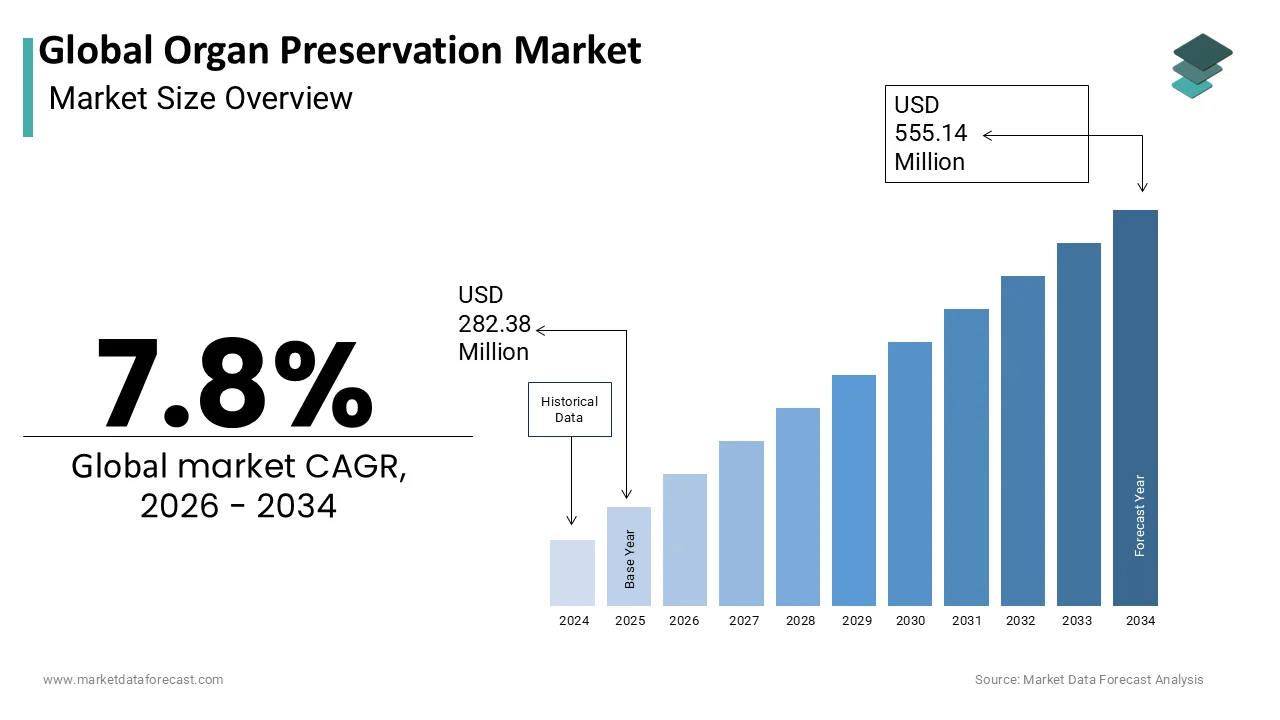
Organ preservation is a specialized solution designed to maintain the viability and functionality of donor organs during ex vivo storage and transport before transplantation. There is an urgent need for technologies that can extend preservation windows and expand the pool of usable marginal donors. As per the data from the World Health Organization, kidney disease affects over 850 million people globally, escalating the massive potential patient base for renal transplants.
MARKET DRIVERS
Crucial Shortage of Donor Organs and Rising Waitlist Mortality
The persistent deficit of viable donor organs is accelerating investment in preservation technologies that can salvage marginal grafts, which is propelling the growth of the organ preservation market. Traditional static cold storage limits the time organs can remain viable, often resulting in discarded kidneys and livers deemed too high-risk for immediate transplantation. According to the Scientific Registry of Transplant Recipients, nearly 20% of deceased donor kidneys are discarded annually due to concerns about quality or prolonged ischemia times. This wastefulness creates immense pressure on healthcare systems to adopt advanced perfusion methods that allow for real-time assessment of organ function before implantation. By keeping organs metabolically active, these systems enable surgeons to evaluate viability dynamically rather than relying on static metrics. The economic burden of dialysis and lifelong immunosuppression further incentivizes payers to fund technologies that maximize successful transplant outcomes. The structural scarcity of healthy organs ensures sustained demand for preservation solutions that expand the donor pool and reduce discard rates, making this driver fundamental to market expansion globally.
Technological Advancements in Normothermic Machine Perfusion
The rapid innovations in normothermic machine perfusion, from passive cooling to active metabolic support, are also fuelling the growth of the organ preservation market. Unlike traditional hypothermia, which slows cellular processes, these systems maintain organs at physiological temperatures while supplying oxygenated nutrients and removing waste products. This clinical superiority drives adoption among transplant centers seeking to improve patient outcomes and reduce hospital stays. Moreover, portable perfusion devices now allow for longer transport distances by enabling regional sharing of organs that would otherwise be discarded due to time constraints. The integration of sensors for continuous monitoring of p, H lactate levels, ls and bile production provides objective data for decision-making by enhancing confidence in using marginal donors. Manufacturers are leveraging these technological leaps to secure premium pricing and long-term service contracts with hospitals.
MARKET RESTRAINTS
High Capital Expenditure and Operational Costs
The prohibitive upfront costs for acquiring sophisticated perfusion machines and associated consumables, particularly in resource-limited healthcare settings, are hampering the growth of the organ preservation market. Advanced normothermic systems can cost tens of thousands of dollars per unit plus recurring expenses for sterile circuits, oxygenators, and specialized preservation fluids. Moreover, the budget constraints lead to deferred upgrades of aging equipment, resulting in operational inefficiencies and potential safety risks. Smaller transplant programs cannot maintain the inventory of expensive disposables needed for high-volume usage,e leading to stockouts during peak demand periods. Reimbursement policies often fail to cover the full cost of these technologies, leaving facilities to absorb losses. The disparity between premium and basic preservation availability creates a fragmented market where quality varies significantly based on institutional wealth.
Complexity of Regulatory Approval and Standardization Issues
The inconsistent legal frameworks for manufacturers seeking pan-regional entry are additionally hindering the growth of the organ preservation market. Each country maintains distinct registration processes, clinical trial requirements,s and labeling standards, complicating compliance strategies. This delay increases R&D costs,s deterring smaller startups from entering the space. Lack of harmonized technical documentation standards means redundant testing and paperwork,rk draining resources. Clinical guidelines also vary regarding acceptable preservation durations and viability metrics, creating confusion among practitioners trained in different systems.
MARKET OPPORTUNITIES
Development of Portable Battery-Operated Perfusion Units
Creating compact mobile perfusion devices to enhance organ transport logistics and expand geographic reach for transplantation networks, solely to promote new opportunities for the growth of the organ preservation market. Traditional systems are bulky and require stationary power sources, limiting their use to fixed hospital locations. The portable units have demonstrated equivalent viability maintenance for kidneys over 12-hour transports compared to large console-based systems. This mobility enables regional organ sharing networks to utilize marginal donors from distant hospitals,s reducing discard rates significantly. Moreover, emergency medical services are increasingly equipped with such devices for inter-facility transfers of ill patients requiring immediate intervention. Manufacturers can leverage miniaturization technologies to lower production costs while maintaining performance standards appealing to budget-conscious buyers. Strategic partnerships with logistics firms facilitate seamless integration into existing transport infrastructures, es ensuring rapid deployment during emergencies.
Integration of Biomarkers for Real-Time Viability Assessment
Embedding biosensors into preservation circuits provides objective data on organ health during storage, replacing subjective visual assessments. The integration of biomarkers for real-time viability assessment is also expected to accelerate the growth of the organ preservation market. Current methods rely heavily on surgeon experience, which introduces variability and risk. This predictive capability allows clinicians to make informed decisions about accepting or discarding organs, thereby maximizing utilization rates. Moreover, AI-driven analysis of these biomarkers can forecast rejection risks weeks before clinical symptoms appear by enabling preemptive therapeutic interventions. Developers can create subscription-based software licenses providing recurring revenue streams beyond hardware sales. Regulatory bodies are beginning to recognize digital health components, facilitating faster approvals for combined hardware-software solutions.
MARKET CHALLENGES
Risk of Ischemia-Reperfusion Injury Despite Preservation
The advanced technologiesand the inherent biological damage caused by restoring blood flow to preserved tissues impede the growth of the organ preservation market. Ischemia-reperfusion injury triggers inflammatory cascades that can lead to primary non-function or chronic allograft nephropathy. The complication erodes patient trust and increases healthcare costs, necessitating additional interventions. Moreover, the variability in preservation protocols across centers contributes to inconsistent outcomes by making it difficult to establish universal best practices. Surgeons may hesitate to adopt new methods if they perceive increased complexity without guaranteed benefits. The lack of effective pharmacological agents to completely mitigate reperfusion injury limits the efficacy of current preservation strategies. Consequently, the persistence of this biological challenge requires continuous research into adjunct therapies during perfusion runs to truly unlock the potential of extended preservation windows and ensure superior patient outcomes globally.
Shortage of Trained Specialists in Perfusion Technologies
A deficit of skilled professionals proficient in operating complex machine perfusion systems also hinders the growth of the organ preservation market. Proper management requires a deep understanding of hemodynamics, biochemistry,y and troubleshooting mechanical faults, which takes years to master. The scarcity forces hospitals to rely on less experienced staff, increasing the risk of human error during critical phases of storage. Moreover, training programs are unevenly distributed, ted with rural areas lacking accredited institutions to produce qualified personnel. The complexity of modern consoles requires continuous education to keep pace with software updates and new safety features. Without adequate staffing, even the most advanced systems cannot deliver optimal outcomes, leading to underutilization of installed bases. Hospitals may postpone acquisitions if they cannot guarantee operational readiness.
REPORT COVERAGE
| REPORT METRIC | DETAILS |
| Market Size Available | 2025 to 2035 |
| Base Year | 2025 |
| Forecast Period | 2026 to 2034 |
| Segments Covered | By Preservation Solution, Transportation Technique, Organ Type, and Region |
| Various Analyses Covered | Global, Regional & Country-Level Analysis, Segment-Level Analysis; DROC, PESTLE Analysis; Porter’s Five Forces Analysis, Competitive Landscape, Analyst Overview of Investment Opportunities |
| Regions Covered | North America, Europe, Asia Pacific, Latin America, Middle East & Africa |
| Market Leaders Profiled | Essential Pharmaceuticals (U.S.), Dr. Franz Kohler Chemie GmbH (Germany), Organ Recovery Systems (U.S.), Xvivo Perfusion AB (Sweden), and Waters Medical Systems LLC (U.S.). |
SEGMENTAL ANALYSIS
By Preservation Solution Insights
The University of Wisconsin solution segment was the largest,y accounting for a significant share of the organ preservation market in 2025 due to its status as the gold standard for static cold storage, particularly in liver and pancreas transplants. This intracellular-type solution provides superior protection against cellular swelling and metabolic acidosis during prolonged ischemia times. This widespread clinical adoption ensures consistent high-volume demand from transplant centers globally. Furthermore, organs preserved in UW solution exhibit significantly lower rates of early graft failure compared to simpler saline-based alternatives. The formulation’s high potassium concentration and colloids mimic the intracellular environment,t preventing edema, which is important for delicate tissues like the liver. Hospitals prefer UW because it offers a reliable balance between cost and performance without requiring complex machinery.
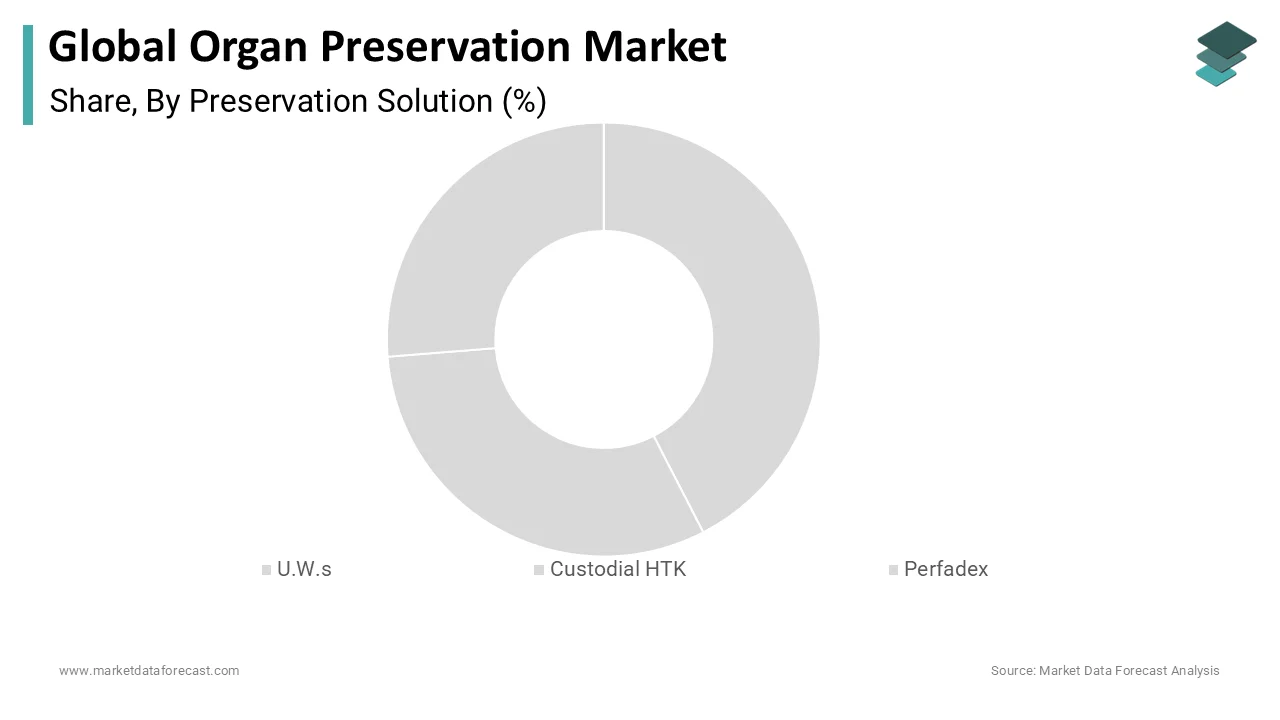
The Perfadex segment is likely to grow at the fastest CAGR of 11.5% from 2026 to 2034, with its specific formulation designed to reduce pulmonary edema, making it indispensable for lung transplantation, which has seen rising volumes. Unlike general-purpose solutions, Perfadex contains dextran-40, which lowers capillary permeability and prevents fluid accumulation in alveolar spaces. According to the study, lungs preserved in Perfadex show improved oxygenation metrics post-transplant compared to those stored in standard UW solution. This clinical advantage compels surgeons to adopt Perfadex, despite its higher per-unit cost. The increasing use of ex-vivo lung perfusion protocols relies heavily on Perfadex-based flushes to maintain graft viability during assessment. Manufacturers are responding by optimizing production scales to meet this niche but high-value demand.
By Transportation Technique Insights
Static cold storage accounted for 49.1% of the organ preservation market share in 2025 due to its simplicity, low cost,t and universal applicability across all solid organ types. This method involves flushing the organ with preservation solution and storing it in an ice slurry,ry maintaining temperatures between 4°C and 10°C. The technique’s reliability is well-documented over decades, providing a familiar workflow for surgical teams.
The normothermic machine perfusion segment is expected to grow at the fastest CAGR of 14.8% during the forecast period, with the ability to maintain organs at physiological temperature, while supplying oxygenated nutrients and enabling real-time functional assessment. Moreover, the portable normothermic devices now facilitate longer transport distances by allowing regional sharing of marginal donors that would otherwise be discarded. The technology transforms passive preservation into active therapy,y permitting interventions such as drug delivery or gene editing during transit. Although capital costs remain high,gh the long-term savings from reduced re-hospitalizations justify investment for healthcare systems. Regulatory bodies are increasingly recognizing these benefits, facilitating faster approvals for new indications beyond li, vers including hearts and lungs. Thus, the convergence of superior clinical results,sults technological portability,bility and expanding donor pool potential positions normothermic perfusion as the most transformative growth vector reshaping the future of organ logistics globally.
By Organ Type Insights
The kidneys segment was the largest, holding 46.2% of the organ preservation market share in 2025, with the sheer volume of renal replacement therapies required for end-stage renal disease patients. This high procedural frequency creates a massive baseline demand for preservation solutions and transport containers. Furthermore, kidney disease affects hundreds of millions globally,y with dialysis dependency rising steadily in aging populations. The relative robustness of renal tissue allows for successful outcomes using both static cold storage and emerging perfusion techniques, es encouraging broad market participation. Insurance coverage for kidney transplants is generally more established than for otherorgansg,ans reducing financial barriers for patients. The epidemiological burden of chronic kidney disease combined with the technical feasibility of preserving renal function securkidneysys, as the dominant application area generating substantial consistent revenue streams across all preservation modalities worldwide.
The lungs segment is likely to groat the a fastest CAGR of 12.3% during the forecast period, with advancements in ex vivo lung perfusion, which have dramatically increased the number of usable donor lungs previously deemed unsuitable due to edema or infection. According to the International Society for Heart and Lung Transplantation, registry data show that lung transplant volumes have doubled over the past decde ,driven by better patient selection and improved surgical techniques. Moreover, the integration of normothermic perfusion for lungs has reduced primary graft dysfunction rates by enhancing survival prospects. The complexity of pulmonary physiology requires precise control over ventilation and perfusion parameters during storage, driving demand for sophisticated dual-channel preservation systems.
COUNTRY LEVEL ANALYSIS
North America Organ Preservation Market Analysis
North America was the top performer of the global organ preservation market by capturing 55.4% of the share in 2025 with the advanced healthcare infrastructure and high adoption rates of novel perfusion technologies. The region benefits from robust reimbursement frameworks and a strong emphasis on maximizing donor utilization to address waitlist mortality. This proactive approach supports steady demand for premium preservation devices and consumables.According tor the Centers for Disease Control and Prevention, obesity and diabetes rates continue to rise, which is fueling the need for kidney and liver transplants. The presence of key industry players headquartered in the US fosters rapid innovation cycles and strong distribution channels. High disposable incomes allow patients to access cutting-edge care, including experimental preservation protocols.
Europe Organ Preservation Market Analysis
Europe's organ preservation market growth was ranked second, holding 29.8% of the share in 2025, with universal healthcare systems and stringent regulatory frameworks under the Medical Device Regulation. Western European nations like Germany, France, and the UK lead in adopting eco-friendly and reusable perfusion components to align with sustainability goals. This cooperation drives demand for standardized preservation solutions compatible across multiple jurisdictions. Furthermore, centralized tenders often favor cost-effective gravity-driven systems by limiting premium device penetration in some sectors. However, Eastern Europe shows emerging growth due to infrastructure improvements and foreign direct investment in private clinics. Harmonized CE marking facilitates cross-bordertraded,e though compliance costs remain high for smaller manufacturers.
Asia-Pacific Organ Preservation Market Analysis
Asia Pacific organ preservation market growth is likely to register the fastest CAGR from 2026 to 2034, with rapid urbanization increasing cardiac and renal disease incidence and expanding healthcare access. Countries like China, India, and Japan are witnessing a surge in middle-class populations able to afford elective transplant surgeries. According to the World Health Organization, cardiovascular and renal diseases are becoming leading causes of death in the region, creating urgent demand for organ availability. This trend stimulates massive procurement of basic preservation kits and oxygenators in newly established tertiary care centers. Furthermore, an aging society driving high volumes of kidney transplants, which require precise preservation management. Government initiatives promoting domestic manufacturing in China and India are reducing import dependencies, fostering local competition, and price sensitivity. While awareness remains lower than in Western markets, educational campaigns by professional societies are accelerating adoption of modern techniques.
Latin America Organ Preservation Market Analysis
Latin America organ preservation market growth is likely to be driven by high rates of hypertensive and diabetic nephropathy. Brazil, Mexico, and Argentina serve as key hubs where public health systems struggle with resourceallocationo,n leading to variable device availability. The chronic kidney disease prevalence is rising sharply,ly correlating with lifestyle changes and limited preventive care. This reality pushes NGOs and international donors to supply essential preservation consumables to underserved communities.Howeverr, lack of standardized training protocols persists, limiting effective utilization in rural zones. Currency fluctuations impact import costs, favoring durable reusable systems over disposables.
Middle East and Africa Organ Preservation Market Analysis
The Middle East and Africa organ preservation market is likely to grow with high healthcare spending, while Sub-Saharan Africa faces significant access barriers. Nations like Saudi Arabia and the UAE invest heavily in advanced emergency response systems, including perfusion capabilities. The conflict zones and refugee crises in parts of Africa generate massive displacement requiring rapid medical stabilization tools. Humanitarian organizations thus form a critical customer base for ruggedized preservation devices. Furthermore, non-communicable diseases are rising alongside infectious threats, straining existing emergency capacities. Limited local manufacturing relies on imports, exposing markets to supply chain disruptions. Educational gaps among frontline workers hinder optimal device usage despite availability.
COMPETITIVE LANDSCAPE
The competitive environment of the Organ Preservation Market features intense rivalry between established medical device giants and agile biotech startups, vying for dominance in transplant logistics. Major incumbents leverage extensive distribution networks and deep relationships with hospital procurement committees to maintain influence over purchasing decisions in large transplant centers. New entrants face significant hurdles due to stringent FDA and CE marking requirements, demanding rigorous clinical validation for safety and efficacy in life-critical applications. Differentiation occurs through unique thermal management technologies and biochemical formulations, each offering distinct advantages for specific organ types and ischemia durations. Companies engage in aggressive patent litigation to protect intellectual property rights, preventing imitation of proprietary cooling algorithms and circuit designs. Price competition remains moderate at the premium level, but intensifies sharply in mid-range segments where generic alternatives emerge, particularly in price-sensitive public tenders.
KEY MARKET PLAYERS
Some of the noteworthy companies dominating the global organ preservation market profiled in this report are
- Essential Pharmaceuticals (U.S.)
- Franz Kohler Chemie GmbH (Germany)
- Organ Recovery Systems (U.S.)
- Xvivo Perfusion AB (Sweden)
- Waters Medical Systems LLC (U.S.)
TOP LEADING PLAYERS IN THE MARKET
- Transmedics operates as a pivotal entity in the Organ Preservation Market through its proprietary Organ Care System, which enables normothermic machine perfusion. The company focuses on extending viability windows for hearts, livers, and lungs, allowing for real-time functional assessment before transplantation. Recent actions include expanding clinical trial data to support broader regulatory approvals in Europe and Asia. Their strategic partnerships with logistics providers ensure seamless integration into existing organ sharing networks. These initiatives reinforce their brand authority as an innovator in dynamic preservation and are expected to drive sustained demand for their premium perfusion consoles and consumable kits across diverse healthcare settings globally today.
- XVIVO Perfusion plays a crucial role by offering specialized lung preservation solutions, including the OCS Lung system designed to rehabilitate marginal donor organs. The company prioritizes evidence-based medicine, demonstrating improved post-transplant outcomes through rigorous clinical studies. Recent initiatives involve launching next-generation portable units that enhance mobility for inter-hospital transports, reducing ischemic time significantly. Their focus on sustainability includes developing recyclable components for single-use circuits by appealing to eco-conscious institutions.
- Paragonix Technologies sustains its position in the transfection reagents and equipment market through its ThermoSave devices, which provide controlled temperature rewarming for kidney preservation. The company emphasizes ease of use and compatibility with standard static cold storage protocols, minimizing disruption to existing workflows. Recent actions include securing FDA clearance for expanded indications covering liver and pancreas transplants, broadening their addressable market. Paragonix leverages its strong distribution network to ensure rapid adoption in community hospitals lacking specialized perfusion infrastructure. They invest in R&D for smart sensors that monitor tissue health during transport by enhancing decision-making capabilities for clinicians.
TOP STRATEGIES USED BY KEY MARKET PARTICIPANTS
Key players in the Organ Preservation Market primarily employ differentiation strategies by focusing on organ-specific solutions rather than generic platforms. Companies invest heavily in clinical validation studies, demonstrating superior graft survival rates compared to traditional static cold storage, thereby justifying premium pricing. Another dominant tactic involves forming strategic alliances with transplant networks and logistics firms to integrate preservation devices seamlessly into existing supply chains by ensuring widespread accessibility. Product bundling is achieved by pairing hardware consoles with proprietary disposable circuits, creating recurring revenue streams and locking in customers through high switching costs. Additionally, participants engage in academic collaborations to publish peer-reviewed data, building credibility among key opinion leaders.
GLOBAL ORGAN PRESERVATION MARKET NEWS
- On February 06, 2020, the first series of pediatric donor hearts were preserved and transported using the Paragonix SherpaPak Cardiac Transport system at the University of Florida and Le Bonheur Children's Hospital.
- On February 10, 2020, Paragonix Technologies, Inc. announced the clearance bythe FDA for its Donor Lung Preservation System- LUNGguard.
- On January 13, 2020, Paragonix Technologies Inc. published that it had received approval from the US FDA for the Pancreas Transport System, which is commercially available to Pancreas transplant centers and organ preservation organizations.
- In 2021, the French medical technology Industry established a manufacturing facility for organ preservation solutions in Tamil Nadu. This facility will provide improved quality and advanced technology for organ preservation.
- In 2022, TransMedics Group, Inc. received U.S. Food and Drug Administration clearance (PMA) for a Heart System for use with organs from donors.
MARKET SEGMENTATION
This research report on the global organ preservation market has been segmented and sub-segmented based on preservation solutions, transportation technique, organ type, and region.
By Preservation Solution
- U.W.s
- Custodial HTK
- Perfadex
By Transportation Technique
- Static Cold Storage
- Hypothermic Machine Perfusion
- Normothermic Machine Perfusion
By Organ Type
- Kidney
- Liver
- Lung
By Region
- North America
- Europe
- Asia-Pacific
- Latin America
- The Middle East and Africa